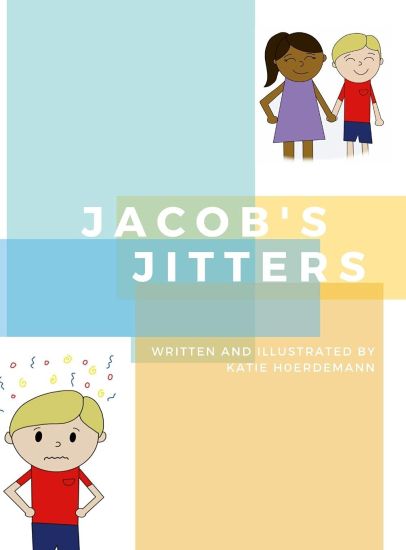
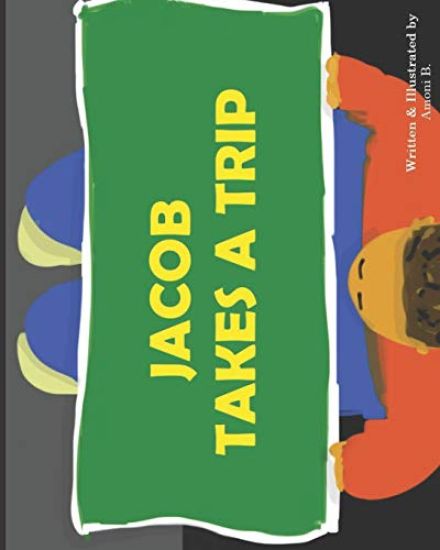
This book was written and used as an educational tool when Jacob was being mainstreamed with neurotypical children for the 1st time. The book was read to the children before Jacob started each grade at school and before joining any recreational activity. A marked difference was seen in how Jacob was received and accepted when the children were educated on his specific disability. We were encouraged to publish this book so it could be used as an educational resource for others.
Jacob's Room is the third novel by Virginia Woolf, first published on 26 October 1922. The novel centres, in a very ambiguous way, around the life story of the protagonist Jacob Flanders and is presented almost entirely through the impressions other characters have of Jacob. Thus, although it could be said that the book is primarily a character study and has little in the way of plot or background, the narrative is constructed with a void in place of the central character if, indeed, the novel can be said to have a 'protagonist' in conventional terms. Motifs of emptiness and absence haunt the novel and establish its elegiac feel. Jacob is described to us, but in such indirect terms that it would seem better to view him as an amalgam of the different perceptions of the characters and narrator. He does not exist as a concrete reality, but rather as a collection of memories and sensations. Plot summary Set in pre-war England, the novel begins in Jacob's childhood and follows him through college at Cambridge and into adulthood. The story is told mainly through the perspectives of the women in Jacob's life, including the repressed upper-middle-class Clara Durrant and the uninhibited young art student Florinda, with whom he has an affair. His time in London forms a large part of the story, though towards the end of the novel he travels to Italy and then Greece........... Adeline Virginia Woolf ( 25 January 1882 - 28 March 1941) was an English writer, who is considered one of the most important modernist 20th-century authors and a pioneer in the use of stream of consciousness as a narrative device. Virginia Stephen was born into an affluent household in South Kensington, London. She was the seventh child in a blended family of eight. Her mother, Julia Stephen, celebrated as a Pre-Raphaelite artist's model, had three children from her first marriage, her father Leslie Stephen, a notable man of letters, had one previous daughter, and four children were born in her parents' second marriage, of whom the most well known was the modernist painter Vanessa Stephen (later Vanessa Bell). While the boys in the family were educated at university, the girls were home-schooled in English classics and Victorian literature. An important influence in Virginia's early life was the summer home the family used in St Ives, Cornwall, where she first saw the Godrevy Lighthouse, which was to become iconic in her novel To the Lighthouse (1927). Virginia's childhood came to an abrupt end in 1895 with the death of her mother and her first mental breakdown. This was soon followed by the death of her stepsister and surrogate mother, Stella Duckworth, two years later. The Stephen sisters were then able to attend the Ladies' Department of King's College, where they studied classics and history (1897-1901) and came into contact with early reformers of women's higher education and the women's rights movement. Other important influences were their Cambridge-educated brothers and unfettered access to their father's vast library. Virginia's father encouraged her to become a writer and she began writing professionally in 1900. Their father's death in 1905 was a major turning point in their lives and the cause of another breakdown, following which the Stephens moved from Kensington to the more bohemian Bloomsbury, where they adopted a free-spirited lifestyle. It was there, that in conjunction with their brothers' intellectual friends, they formed the artistic and literary Bloomsbury Group. With Vanessa's marriage in 1907, Virginia became more independent, marrying Leonard Woolf in 1912. With Leonard she founded the Hogarth Press in 1917, which published much of her work. In 1910, Virginia started to feel the need to have a retreat away from London, in Sussex, and following the destruction of their London home during the war, in 1940, the Woolfs moved there permanently....
Jacob's Room is Virginia Woolf's first truly experimental novel. It is a portrait of a young man, who is both representative and victim of the social values which led Edwardian society into war. Jacob's life is traced from the time he is a small boy playing on the beach, through his years in Cambridge, then in artistic London, and finally making a trip to Greece, but this is no orthodox Bildungsroman. Jacob is presented in glimpses, in fragments, as Woolf breaks down traditional ways of representing character and experience. The novel's composition coincided with the consolidation of Woolf's interest in feminism, and she criticizes the privilege thoughtless smugness of patriarchy, "the other side," "the men in clubs and Cabinets." Her stylistic innovations are conscious attempts to realize and develop women's writing and the novel dramatizes her interest in the ways both language and social environments shape differently the lives of men and women.
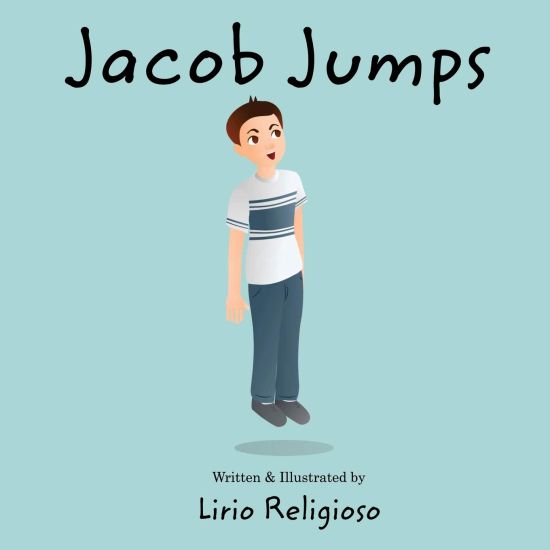
Jacob, a boy on the autism spectrum, loves to jump. He loves trains, planes, and birds. Find out what makes this wonderful boy jump for joy Jacob Jumps is an easy to read book for all ages. It focuses on the understanding and appreciation of autistic children's reactions towards their surroundings. A reaction which is referred to as stimming. It is written with the intention of giving families important topics to talk about regarding autism awareness.
Jacob and Bobby are brothers left in an orphanage by their mother Bobby is taken away from Jacob as soon as their mother leaves them to the anger of Jacob who was told to look after his brother. They only see each other once a month at visiting days, but no one comes to see them, after six months Jacob is told by the doctor that Bobby has died of some rare illness and had to be cremated which makes Jacob very sad. But things are not what they seem the doctor and some of the nuns have a lucrative business going selling young children to couples who cannot have them, in another part of the home is a wing for unmarried mothers taken in the home till the babies are born just in case the neighbors suspect anything, and then they are taken off the mother never to be seen again.They are also told that their children have died but have been sold to the highest bidder, one nun sister Foley can not stand what is going on and blows the whistle on the scam, Sister Foley has left Jacob a legacy of secrets and Jacob wants to find out the truth. The story unfolds with some really bizarre circumstances and many family secrets are uncovered to the surprise of everyone then Scotland Yard gets involved. And the investigator tracks down the doctor and after the interview the doctor shoots himself because of the shame, and the trail leads further on down the line until a big secret is revealed that surprises Jacob and his wife and throws them off guard, as things unfold they had no idea about.
Jacob's trouble is about a young boys journey into self discovery. Meeting new friends is hard but having a friend who is ill and who's future is uncertain is challenging. The boys discover the joy of friendship and joy.
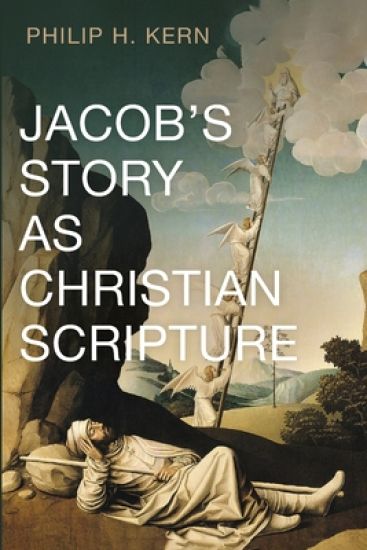
Jacob is all too often underappreciated in works on biblical theology. He nevertheless stands squarely in the line of promise and is the man who becomes Israel. His blessings come not because he is virtuous but because God remains faithful. In this, his story contributes to the themes of Genesis and of the Pentateuch as a whole, and extends into the life of the church. Jacob's Story as Christian Scripture begins with a reading of Genesis 25 to 35, and then moves beyond the boundaries of Genesis to track the words he pronounces over his twelve sons. Jacob's blessings give shape to Balaam's oracles and ultimately to subsequent prophecies concerning the lion of the tribe of Judah. Prophetic appropriation of Jacob's story, presented here via a fresh investigation of OT passages from Jeremiah, Obadiah, Micah, and others, includes troubling elements of Jacob's character to indict the nation--in the hope that God's people, like the patriarch, will stop being Jacob and become Israel.
Jacob Michaels...er, Robert Wagner...is tired. Hollywood has been kind. But it's also left him skinny, exhausted, unsure of who he is, whom he wants to be...and without love. A decade earlier, he ran away from home to pursue fame. Unlike many before him, he actually succeeded. Now he's back in his hometown of Point Worth, trying to make amends with his grandmother, trying to regain his health, trying to not be recognized, and trying to figure out who he really is. Maybe he'll find love along the way...if people and things weren't so...weird.
Among all the biblical heroes, Jacob's story is peculiar. In many ways, he is more like a villain. He manipulates his brother, deceives his father and father-in-law, and raises up ruthless children who murder the men of a village and sell their own brother into slavery. However, with Jacob, we learn that God can redeem and change the worst of sinners-people like us. We are all part of God's redemption story, in which he transforms people from Jacobs to Israels-from sinners to saints. As God layers grace upon us and our failures, he transforms us into people he can use greatly to bless the world. Let's study God's gracious work in Jacob, so we can better recognize and respond to God's amazing grace and help others do the same. Thank you, Lord Amen "The Bible Teacher's Guide ... will help any teacher study and get a better background for his/her Bible lessons. In addition, it will give direction and scope to teaching of the Word of God. Praise God for this contemporary introduction to the Word of God." --Dr. Elmer Towns; Co-founder of Liberty University; Former Dean, Liberty Baptist Theological Seminary "Expositional, theological, and candidly practical I highly recommend The Bible Teacher's Guide for anyone seeking to better understand or teach God's Word."--Dr. Young-Gil Kim; Founding President, Handong Global University
This book teaches children about eight flowers and the primary, secondary, and tertiary colors. It provides eight colorful illustrations of popular flowers native to countries all over the world. The book intends to capture children's imagination while developing their ability to learn about different flower species. Children will have an opportunity to reinforce their knowledge of the colors taught by coloring sketches of each flower. It will be especially useful for elementary teachers as they can use the book to create lessons on color, build student awareness of flowers and apply learning to practice.
This book teaches children about the Coronavirus (Covid-19) and 10 ways to protect themselves and other people from the disease. This book provides colorful illustrations to capture children's imagination while developing their reading and thinking skills. Children can color the illustrations on each page, which further enhances the learning process. It will be especially useful for elementary teachers and homeschool parents as they can use the book to facilitate classroom instructions on COVID-19, build student vocabulary and apply learning to practice.
Partners... Both young men had much in common coming from Germany. Jacob Waltz, and Jacob Weiser nicknamed Dutch, formed a friendship as close as any two brothers. Perhaps it was there difficult journey from oceans away. Some could say it was from the difficult and demanding times. They became so close as partners that each would give his life, to save the other.And so it was - No greater love can any man have than to lay down his life for another...
Jacob's Room is the third novel by Virginia Woolf, first published on 26 October 1922. Virginia Woolf's first original and distinguished work, Jacob's Room is the story of a sensitive young man named Jacob Flanders. The life story, character and friends of Jacob are presented in a series for separate scenes and moments from his childhood, through college at Cambridge, love affairs in London, and travels in Greece, to his death in the war. Jacob's Room established Virginia Woolf's reputation as a highly poetic and symbolic writer who places emphasis not on plot or action but on the psychological realm of occupied by her characters.
Young Jacob takes a ride to his grandmother's home. Along the way he states his activities using a short poem. Illustrations accompany his words. ACTIVITIES included