Kirjojen hintavertailu. Mukana 12 055 059 kirjaa ja 12 kauppaa.

Kirjahaku

Etsi kirjoja tekijän nimen, kirjan nimen tai ISBN:n perusteella.

1000 tulosta hakusanalla Janet B. Croft

Leadership, Discourse, and Ethnicity

Leadership, Discourse, and Ethnicity

Janet Holmes; Meredith Marra; Bernadette Vine

Oxford University Press Inc
2012
sidottu
This is the first book in the field of workplace discourse to examine the relationships among leadership, ethnicity, and language use. Taking a social constructionist approach to the ways in which leadership is enacted through discourse, Leadership, Discourse, and Ethnicity problematizes the concept of ethnicity and demonstrates the importance of context-particularly the community of practice-in determining what counts as relevant in the analysis of ethnicity. The authors analyse everyday workplace interactions supplemented by interview data to examine the ways in which workplace leaders use language to achieve their transactional and relational goals in contrasting "ethnicized" contexts, two of which are Maori and two European/Pakeha. Their analysis pays special attention to the roles of ethnic values, beliefs and orientations in talk.
Philosophy of Science after Feminism

Philosophy of Science after Feminism

Janet A. Kourany

Oxford University Press Inc
2010
nidottu
In this monograph Janet A. Kourany argues for a philosophy of science more socially engaged and socially responsible than the philosophy of science we have now, a philosophy of science that can help to promote a science more socially engaged and socially responsible than the science we have now. The central questions feminist scientists, philosophers, and historians have been raising about science during the last three decades form Kourany's point of departure and her response to these questions builds on their insights. This way of approaching science differs from mainstream philosophy of science in two crucial respects: it locates science within its wider societal context rather than treating science as if it existed in a social, political, and economic vacuum; and it points the way to a more comprehensive understanding of scientific rationality, one that integrates the ethical with the epistemic. Kourany develops her particular response, dubbed by her the ideal of socially responsible science, beyond the gender-related questions and contexts that form its origins and she defends it against a variety of challenges, epistemological, historical, sociological, economic, and political. She ends by displaying the important new directions philosophy of science can take and the impressive new roles philosophers of science can fill with the approach to science she offers.
Philosophy of Science after Feminism

Philosophy of Science after Feminism

Janet A. Kourany

Oxford University Press Inc
2010
sidottu
In this monograph Janet A. Kourany argues for a philosophy of science more socially engaged and socially responsible than the philosophy of science we have now. The central questions feminist scientists, philosophers, and historians have been raising about science during the last three decades form Kourany's point of departure and her response to these questions builds on their insights. This way of approaching science differs from mainstream philosophy of science in two crucial respects: it locates science within its wider societal context rather than treating science as if it existed in a social, political, and economic vacuum; and it points the way to a more comprehensive understanding of scientific rationality, one that integrates the ethical with the epistemic. Kourany develops her particular response, dubbed by her the ideal of socially responsible science, beyond the gender-related questions and contexts that form its origins and she defends it against a variety of challenges, epistemological, historical, sociological, economic, and political. She ends by displaying the important new directions philosophy of science can take and the impressive new roles philosophers of science can fill with the approach to science she offers.
The Gospel of Kindness

The Gospel of Kindness

Janet M. Davis

Oxford University Press Inc
2016
sidottu
When we consider modern American animal advocacy, we often think of veganism, no-kill shelters, Internet campaigns against trophy hunting, or celebrities declaring that they would "rather go naked" than wear fur. Contemporary critics readily dismiss animal protectionism as a modern secular movement that privileges animals over people. Yet the movement's roots are deeply tied to the nation's history of religious revivalism and social reform. The Gospel of Kindness explores the broad cultural and social influence of the American animal welfare movement at home and overseas from the Second Great Awakening to the Second World War. Dedicated primarily to laboring animals at its inception in an animal-powered world, the movement eventually included virtually all areas of human and animal interaction. Embracing animals as brethren through biblical concepts of stewardship, a diverse coalition of temperance groups, teachers, Protestant missionaries, religious leaders, civil rights activists, policy makers, and anti-imperialists forged an expansive transnational "gospel of kindness," which defined animal mercy as a signature American value. Their interpretation of this "gospel" extended beyond the New Testament to preach kindness as a secular and spiritual truth. As a cultural product of antebellum revivalism, reform, and the rights revolution of the Civil War era, animal kindness became a barometer of free moral agency, higher civilization, and assimilation. Yet given the cultural, economic, racial, and ethnic diversity of the United States, its empire, and other countries of contact, standards of kindness and cruelty were culturally contingent and potentially controversial. Diverse constituents defended specific animal practices, such as cockfighting, bullfighting, songbird consumption, and kosher slaughter, as inviolate cultural traditions that reinforced their right to self-determination. Ultimately, American animal advocacy became a powerful humanitarian ideal, a barometer of inclusion and national belonging at home and abroad that endures to this day.
At the Limits of Art

At the Limits of Art

Janet Downie

Oxford University Press Inc
2013
sidottu
Aelius Aristides' Hieroi Logoi present a unique first-person narrative from the ancient world--a narrative that seems at once public and private, artful and naive. While scholars have embraced the Logoi as a rich source for Imperial-era religion, politics, and elite culture, the style of the text has presented a persistent stumbling block to literary analysis. Setting this dream-memoir of illness and divine healing in the context of Aristides' professional concerns as an orator, this book investigates the text's rhetorical aims and literary aspirations. At the Limits of Art argues that the Hieroi Logoi are an experimental work. Incorporating numerous dream accounts and narratives of divine cure in a multi-layered and open text, Aristides works at the limits of rhetorical convention to fashion an authorial voice that is transparent to the divine. Reading the Logoi in the context of contemporary oratorical practices, and in tandem with Aristides' polemical orations and prose hymns, the book uncovers the professional agendas motivating this unusual self-portrait. Aristides' sober view of oratory as a sacred pursuit was in conflict with a widespread contemporary preference for spectacular public performance. In the Hieroi Logoi, Aristides claims a place in the world of the Second Sophistic on his own terms, offering a vision of his professional inspiration in a style that pushes the limits of literary convention.
Race, Space, and Riots in Chicago, New York, and Los Angeles

Race, Space, and Riots in Chicago, New York, and Los Angeles

Janet L. Abu-Lughod

Oxford University Press Inc
2012
nidottu
American society has been long plagued by cycles of racial violence, most dramatically in the 1960s when hundreds of ghetto uprisings erupted across American cities. Though the larger, underlying causes of contentious race relations have remained the same, the lethality, intensity, and outcomes of these urban rebellions have varied widely. What accounts for these differences? And what lessons can be learned that might reduce the destructive effects of riots and move race relations forward? This impressive, meticulously detailed study is the first attempt to compare six major race riots that occurred in the three largest American urban areas during the course of the twentieth century: in Chicago in 1919 and 1968; in New York in 1935/1943 and 1964; and in Los Angeles in 1965 and 1992. Race, Space, and Riots in Chicago, New York, and Los Angeles weaves together detailed narratives of each riot, placing them in their changing historical contexts and showing how urban space, political regimes, and economic conditions--not simply an abstract "race conflict"--have structured the nature and extent of urban rebellions. Building on her previous groundbreaking comparative history of these three cities, Janet Abu-Lughod draws upon archival research, primary sources, case studies, and personal observations to reconstruct events--especially for the 1964 Harlem-Bedford Stuyvesant uprising and Chicago's 1968 riots where no documented studies are available. By focusing on the similarities and differences in each city, identifying the unique and persisting issues, and evaluating the ways political leaders, law enforcement, and the local political culture have either defused or exacerbated urban violence, this book points the way toward alleviating long-standing ethnic and racial tensions. A masterful analysis from a renowned urbanist, Race, Space, and Riots in Chicago, New York, and Los Angeles offers a deeper understanding of past--and future--urban race relations while emphasizing that until persistent racial and economic inequalities are meaningfully resolved, the tensions leading to racial violence will continue to exist in America's cities and betray our professed democratic values. "Well researched, clearly written, and even more comprehensive than it claims...offers readers a concise study of twentieth-century urban racial violence in the three selected cities and serves as a good starting point for those interested in researching urban racial violence in more depth."--African American Review "[Abu-Lughod] brings to this new book on riots an enormous amount of knowledge about the economic context of [New York, Chicago, and Los Angeles]...[this book] provide[s] good fodder for debate...[and] contains some provocative commentary and thoughtful discussion of riots, American style."--Political Science Quarterly "Seeks to shed light on the ever changing nature of race relations in American cities and in America at large... The individual chapters on politics, race relations and civil unrest in Chicago, New York, and Los Angeles are masterful, describing the long-term transformations of the each city's spatial, racial, and political character and locating each riot event within those transformative moments... ultimately a rewarding read."--Urban Affairs "In this new book, she [Abu-Lughod] neatly balances the historical facts of each of these cities with a deeply informed interpretation that clearly advances our knowledge of how both large and small riots unfold... rich with evidence and insight... As an urbanist, the author is without parallel when she dissects the U.S. federal effort to address the housing needs of the population."--Anthropological Quarterly "Abu-Lughod should be commended for her scholarly contribution and for drawing attention to these pivotal events as important signs or indicators of "tectonic shifts" (pp. 255, 260) taking place in the racial and political landscape of American cities...As Abu-Lughod convincingly argues, the future of urban areas, and the likelihood of future riots, will indeed depend on how American society chooses to deal with the enduring issues of racial and spatial inequality."--City & Community "Interesting and provocative... Abu-Lughod provides a detailed and compelling analysis of the grim consequences of racism in US society. Well-written and accessible, this book is a "must buy" for all university libraries. Summing Up: Essential."--Choice "Professor Abu-Lughod's well-documented study offers an unbiased historical account of six major American race riots. But this book is so much more... Race, Space, and Riots is not only superb scholarship, it is valuable wisdom on pragmatic strategies to prevent and cope with urban racial unrest."--The Journal of Blacks in Higher Education "Janet Abu-Lughod, a luminary in the field of urban sociology, has published a compelling comparative analysis of twentieth-century race riots in the nations' three largest cities... adroitly synthesizes enormous amounts of historical data from the three cities in question, and her comparative method is illuminating."--H-Net Reviews "With the drama of a storyteller and the rigor of a social scientist, Janet Abu-Lughod bares the institutional underbelly of ethnic conflict in America's three largest cities. She shows how long-standing patterns of repressive policing and unresponsive politicians can drive African Americans to riot--and how efforts at 'containment' have moved to prisons from the streets. This is not just a comparative history of urban conflict, but a call for new national priorities. It should be required reading for all students, teachers, and elected officials."--Sharon Zukin, author of The Cultures of Cities "Marshalling her unparalleled knowledge of the ecology, economy, culture and politics of New York, Los Angeles, and Chicago, Janet Abu-Lughod has produced the first in-depth comparative analysis of the major race riots that rocked America during the sweep of the twentieth century. Construing black-white clashes as 'urban disasters,' she skillfully reveals how the ramifying fissures of caste, class, and power were angled and entangled differently in these three cities. Her historically grounded case comparison invites us to move beyond structural accounts of collective violence to map the varied configurations of time, space, and conflict that cause, dampen, or thwart rioting. A fitting capstone to the lifework of the leading urban scholar of her generation, this bold book will stimulate scholars to revise their models of racial domination and urban protest."--Loic Wacquant, author of Body and Soul and Urban Outcasts "Janet Abu-Lughod, a truly original thinker among urbanists, offers a well-crafted analysis probing decades of riot and rebellion in Chicago, Los Angeles, and New York City. Abu-Lughod provides rich detail on riot contexts and trajectories, traces innovatively critical patterns (riots of control versus riots of rebellion) and explores sagely the racialized ecology and demography of major U.S. uprisings."--Joe R. Feagin, author of Ghetto Revolts and Systemic Racism "This profound examination of race and violence in America's three most important and global urban sites deepens our understanding of how distinctive spatial situations and political cultures affect the expression of discontent. Written by a brilliant scholar of cities, the book's learned comparisons of six racial conflagrations offer a model of engaged and systematic historical social science concerned with the deepest vectors of inequality in the United States."--Ira Katznelson, author of When Affirmative Action Was White "Janet Abu-Lughod's new book provides a superb scholarly study that compares and contrasts race riots through time and across cities. A penetrating look into the causes and consequences of American race riots, Abu-Lughod's study may well jolt readers by her somber conclusion that we should expect future race riots in our major cities, the breeding grounds for past riots, where problems are festering unabated. Abu-Lughod makes clear that if fundamental racial inequalities are not addressed, violent racial confrontations will flare once again, claming lives, destroying property, and sowing seeds of racial hatred that will make the pursuit of the American Dream appear to be pure folly. This is a scientific work that should influence public policy."--Aldon Morris, author of The Origins of the Civil Rights Movement
The Inventurers

The Inventurers

Janet Hagberg; Richard Leider

Basic Books
1988
pokkari
Over the past ten years, The Inventurers has helped thousands of people discover what they truly want to do in their lives and careers. Whatever your lifestyle or career stage, Hagberg and Leider will lead you through a process called "inventuring"--an excursion into self-discovery that will help you clarify your inner values and achieve personal success.Through exercises, checklists, and reflection questions you'll learn how to: map out an individual plan for your life and career, discover your skills and abilities, create options for your key interests, match your goals with your values, renew your career. Reading this book can be the first step of an exciting life adventure.
The Sophisticated Sandwich

The Sophisticated Sandwich

Janet Hazen

Da Capo Press Inc
1989
pokkari
Stylish, unusual, toothsome and pleasurably challenging sandwiches.Smoked duck with apple-pear chutney on chili bread grilled flank steak with cucumber and radish on walnut bread with orange butter pita with curried lamb, feta cheese and spinach Stilton cheese and pear-walnut chutney with port butter on a baguette are just a few.
Blood Relations

Blood Relations

Janet Adelman

University of Chicago Press
2008
sidottu
In "Blood Relations", Janet Adelman confronts her resistance to "The Merchant of Venice" as both a critic and a Jew. With her distinctive psychological acumen, she argues that Shakespeare's play frames the uneasy relationship between Christian and Jew specifically in familial terms in order to recapitulate the vexed familial relationship between Christianity and Judaism.Adelman locates the promise - or threat - of Jewish conversion as a particular site of tension in the play. Drawing on a variety of cultural materials, she demonstrates that, despite the triumph of its Christians, "The Merchant of Venice" reflects Christian anxiety and guilt about its simultaneous dependence on and disavowal of Judaism. In this startling psycho-theological analysis, both the insistence that Shylock's daughter Jessica remain racially bound to her father after her conversion and the depiction of Shylock as a bloody-minded monster are understood as antidotes to Christian uneasiness about a Judaism it can neither own nor disown.In taking seriously the religious discourse of "The Merchant of Venice", Adelman offers in "Blood Relations" an indispensable book on the play and on the fascinating question of Jews and Judaism in Renaissance England and beyond.
The Compass: The Improvisational Theatre That Revolutionized American Comedy
Janet Coleman brilliantly recreates the time, the place, the personalities, and the neurotic magic whereby the Compass made theater history in America. The Compass began in a storefront theater near the University of Chicago campus in the summer of 1955 and lasted only a few years before its players--including David Shepherd, Paul Sills, Elaine May, Mike Nichols, Barbara Harris, and Shelley Berman--moved on. Out of this group was born a new form: improvisational theater and a radically new kind of comedian. "They did not plan to be funny or to change the course of comedy," writes Coleman. "But that is what happened." "For anyone who is interested in theatre, underground theatre, improvisational theatre, and the sheer madness of trying something new with a repertory group, The Compass will prove a welcome history with fascinating details."--Norman Mailer "Janet Coleman has done a spectacular job of capturing the history, the almost alarmingly diverse cultural influences, and the extraordinary people who made up the Compass."--Neal Weaver, Los Angeles Village View "Engrossing. . . . An open window on a part of the theater that should be known."--Arthur Miller "A valuable chronicle of an important chapter in the history of comedy and theater."--William Wolf, New York Observer "The eruptive, disruptive talents who made the theater memorable are the same ones who make The Compass a good read."--Jay Cocks, Time "A moving, inspirational, anecdote-studded feast."--Publishers Weekly
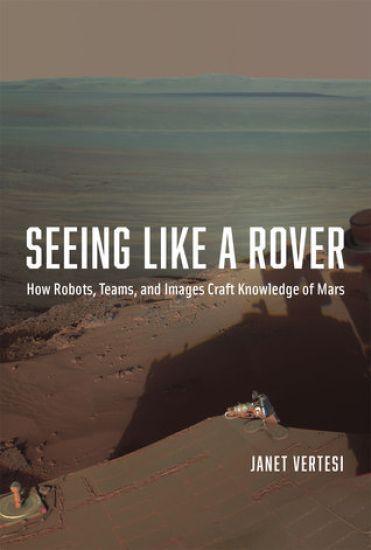
Seeing Like a Rover

Seeing Like a Rover

Janet Vertesi

University of Chicago Press
2015
sidottu
In the years since the Mars Exploration Rovers Spirit and Rover first began transmitting images from the surface of Mars, we have become familiar with the harsh, rocky, rusty-red Martian landscape. But those images are much less straightforward than they may seem to a layperson: each one is the result of a complicated set of decisions and processes involving the large team behind the Rovers. With Seeing Like a Rover, Janet Vertesi takes us behind the scenes to reveal the work that goes into creating our knowledge of Mars. Every photograph that the Rovers take, she shows, must be processed, manipulated, and interpreted - and all that comes after team members negotiate with each other about what they should even be taking photographs of in the first place. Vertesi's account of the inspiringly successful Rover project reveals science in action, a world where digital processing uncovers scientific truths, where images are used to craft consensus, and where team members develop an uncanny intimacy with the sensory apparatus of a robot that is millions of miles away. Ultimately, Vertesi shows, every image taken by the Mars Rovers is not merely a picture of Mars - it's a portrait of the whole Rover team, as well.
Writing Fiction, Tenth Edition

Writing Fiction, Tenth Edition

Janet Burroway; Elizabeth Stuckey-French; Ned Stuckey-French

University of Chicago Press
2019
sidottu
More than a quarter million copies sold! A creative writer’s shelf should hold at least three essential books: a dictionary, a style guide, and Writing Fiction. Janet Burroway’s best-selling classic is the most widely used creative writing text in America, and for more than three decades it has helped hundreds of thousands of students learn the craft. Now in its tenth edition, Writing Fiction is more accessible than ever for writers of all levels—inside or outside the classroom. This new edition continues to provide advice that is practical, comprehensive, and flexible. Burroway’s tone is personal and nonprescriptive, welcoming learning writers into the community of practiced storytellers. Moving from freewriting to final revision, the book addresses “showing not telling,” characterization, dialogue, atmosphere, plot, imagery, and point of view. It includes new topics and writing prompts, and each chapter now ends with a list of recommended readings that exemplify the craft elements discussed, allowing for further study. And the examples and quotations throughout the book feature a wide and diverse range of today’s best and best-known creators of both novels and short stories. This book is a master class in creative writing that also calls on us to renew our love of storytelling and celebrate the skill of writing well. There is a very good chance that one your favorite authors learned the craft with Writing Fiction. And who knows what future favorite will get her start reading this edition?
Writing Fiction, Tenth Edition

Writing Fiction, Tenth Edition

Janet Burroway; Elizabeth Stuckey-French; Ned Stuckey-French

University of Chicago Press
2019
pokkari
More than a quarter million copies sold! A creative writer’s shelf should hold at least three essential books: a dictionary, a style guide, and Writing Fiction. Janet Burroway’s best-selling classic is the most widely used creative writing text in America, and for more than three decades it has helped hundreds of thousands of students learn the craft. Now in its tenth edition, Writing Fiction is more accessible than ever for writers of all levels—inside or outside the classroom. This new edition continues to provide advice that is practical, comprehensive, and flexible. Burroway’s tone is personal and nonprescriptive, welcoming learning writers into the community of practiced storytellers. Moving from freewriting to final revision, the book addresses “showing not telling,” characterization, dialogue, atmosphere, plot, imagery, and point of view. It includes new topics and writing prompts, and each chapter now ends with a list of recommended readings that exemplify the craft elements discussed, allowing for further study. And the examples and quotations throughout the book feature a wide and diverse range of today’s best and best-known creators of both novels and short stories. This book is a master class in creative writing that also calls on us to renew our love of storytelling and celebrate the skill of writing well. There is a very good chance that one your favorite authors learned the craft with Writing Fiction. And who knows what future favorite will get her start reading this edition?
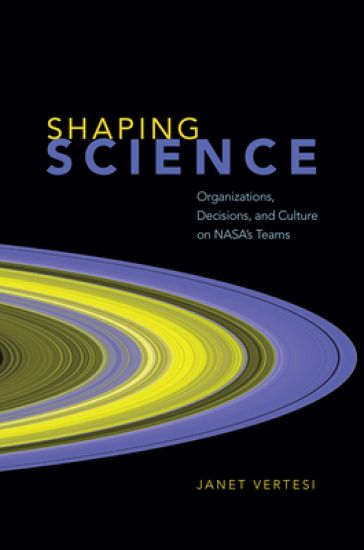
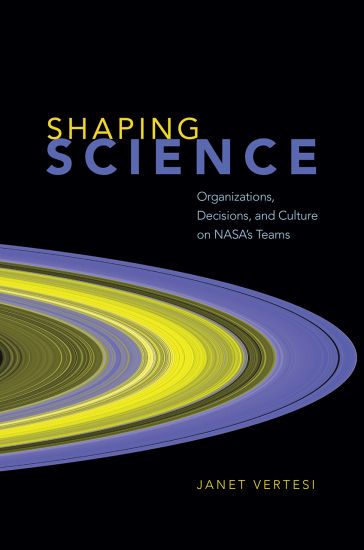
Shaping Science

Shaping Science

Janet Vertesi

University of Chicago Press
2020
sidottu
In Shaping Science, Janet Vertesi draws on a decade of immersive ethnography with NASA's robotic spacecraft teams to create a comparative account of two great space missions of the early 2000s. Although these missions appear to feature robotic explorers on the frontiers of the solar system, bravely investigating new worlds, their commands were issued from millions of miles away by a very human team. By examining the two teams' formal structures, decision-making techniques, and informal work practices in the day-to-day process of mission planning, Vertesi shows just how deeply entangled a team's local organizational context is with the knowledge they produce about other worlds. Using extensive, embedded experiences on two NASA spacecraft teams, this is the first book to apply organizational studies of work to the laboratory environment in order to analyze the production of scientific knowledge itself. Engaging and deeply researched, Shaping Science demonstrates the significant influence that the social organization of a scientific team can have on the practices of that team and the results they produce.
From the Seashore to the Seafloor

From the Seashore to the Seafloor

Janet Voight; David Quammen

THE UNIVERSITY OF CHICAGO PRESS
2022
sidottu
An octopus expert and celebrated artist offer a deep dive to meet the enchanting inhabitants of the world's marine ecosystems. Have you ever walked along the beach and wondered what kind of creatures can be found beneath the waves? Have you pictured what it would be like to see the ocean not from the shore, but from its depths? These questions drive Janet Voight, an expert on mollusks who has explored the seas in the submersible Alivn that can dive some 14,000 feet below the water's surface. In this book, she partners with artist Peggy Macnamara to invite readers to share her undersea journeys of discovery. With accessible scientific description, Voight introduces the animals that inhabit rocky and sandy shores, explains the fragility of coral reefs, and honors the extraordinary creatures that must search for food in the ocean's depths, where light and heat are rare. These fascinating insights are accompanied by Macnamara's stunning watercolors, illuminating these ecosystems and other scenes from Voight's research. Together, they show connections between life at every depth-and warn of the threats these beguiling places and their eccentric denizens face.
Shaping Science

Shaping Science

Janet Vertesi

THE UNIVERSITY OF CHICAGO PRESS
2023
nidottu
Drawing on a decade of immersive ethnography with NASA’s robotic spacecraft teams to create a comparative account of two great space missions of the early 2000s, Janet Vertesi uncovers how the social organization of a scientific team affects their scientific practices and results. In Shaping Science, Janet Vertesi draws on a decade of immersive ethnography with NASA’s robotic spacecraft teams to create a comparative account of two great space missions of the early 2000s. Although these missions featured robotic explorers on the frontiers of the solar system bravely investigating new worlds, their commands were issued from millions of miles away by a very human team. By examining the two teams’ formal structures, decision-making techniques, and informal work practices in the day-to-day process of mission planning, Vertesi shows just how deeply entangled a team’s local organizational context is with the knowledge they produce about other worlds. Using extensive, embedded experiences on two NASA spacecraft teams, this is the first book to apply organizational studies of work to the laboratory environment in order to analyze the production of scientific knowledge itself. Engaging and deeply researched, Shaping Science demonstrates the significant influence that the social organization of a scientific team can have on the practices of that team and the results they yield.
Disposable Camera

Disposable Camera

Janet Foxman

University of Chicago Press
2012
nidottu
"Disposable Camera" For Karen To a disposable camera I have confined the paradise where my sister lives - palisades, sycamores, Sunbathers mistaken for statuary. People with shears, shrubbery cut into sea creatures. Lemon trees bloom in front of houses. Trophy wives escort children through mazes of palm trees. In the shadows of palms the children paw their toys delicately while the youngest one rides his plastic motorcycle toward his mother with a confidence so absolute, so heartbreakingly beautiful, everybody at the pier hopes nothing will ever humiliate it, that it will persist after the camera runs out of film. Although "Disposable Camera" is Janet Foxman's first book-length collection, you would not know it given the wry sophistication of the poems found within. The notion of the disposable camera permeates the entire book, where Foxman considers the instabilities in even our deepest attachments. Here gulfs expand, for instance, between twins, between the musician and his instrument, between the recluse and his inconsolable solitude. Whether a hermit; a twin; a filmgoer utterly taken with Triumph of the Will; or Masaccio, just after he's painted the Expulsion - the poems' speakers share a nagging anxiety that satisfaction may not exist outside the effort to imagine it, and that efforts at art and making, however compulsory to their executor, are probably regrettable from the start. A formally inventive and daring book, and one that displays a sophistication well beyond the poet's years, "Disposable Camera" will be a valuable addition to American poetry.
Looking After Miss Alexander

Looking After Miss Alexander

Janet Weston

MCGILL-QUEEN'S UNIVERSITY PRESS
2023
sidottu
In July 1939, at the Royal Courts of Justice in London, fifty-nine-year-old Beatrice Alexander was found incapable of managing her own property and affairs. Although Alexander and those living with her insisted that she was perfectly well, the official solicitor took control of her home and money, evicted her “friends,” and hired a live-in companion to watch over her. Alexander remained legally incapable for the next thirty years. In the mid-twentieth century, Alexander was one of about thirty thousand people in England and Wales who were, at any time, legally “incapable” and under the auspices of what is now the Court of Protection. Focusing on the period between the 1920s and the 1960s, Looking After Miss Alexander explains the workings of the court, using Alexander’s unusual case to consider the complexities of this aspect of mental health law. Drawing on Court of Protection archives – some of which were made publicly available for the first time in 2019 – and micro-historical methods, Janet Weston also highlights the role of chance, subjectivity, and uncertainty in shaping how events unfolded then, and the stories we tell about those events today.An engaging and accessible history of mental capacity law, Looking After Miss Alexander examines ideas of citizenship and welfare, gender and vulnerability, care and control, and the role of the state. It also offers reflections on historical research and writing itself.
Looking After Miss Alexander

Looking After Miss Alexander

Janet Weston

MCGILL-QUEEN'S UNIVERSITY PRESS
2023
nidottu
In July 1939, at the Royal Courts of Justice in London, fifty-nine-year-old Beatrice Alexander was found incapable of managing her own property and affairs. Although Alexander and those living with her insisted that she was perfectly well, the official solicitor took control of her home and money, evicted her “friends,” and hired a live-in companion to watch over her. Alexander remained legally incapable for the next thirty years. In the mid-twentieth century, Alexander was one of about thirty thousand people in England and Wales who were, at any time, legally “incapable” and under the auspices of what is now the Court of Protection. Focusing on the period between the 1920s and the 1960s, Looking After Miss Alexander explains the workings of the court, using Alexander’s unusual case to consider the complexities of this aspect of mental health law. Drawing on Court of Protection archives – some of which were made publicly available for the first time in 2019 – and micro-historical methods, Janet Weston also highlights the role of chance, subjectivity, and uncertainty in shaping how events unfolded then, and the stories we tell about those events today.An engaging and accessible history of mental capacity law, Looking After Miss Alexander examines ideas of citizenship and welfare, gender and vulnerability, care and control, and the role of the state. It also offers reflections on historical research and writing itself.
Trees and Shrubs of Mount Pleasant Cemetery
Established in 1876, Mount Pleasant Cemetery is a plant lover's paradise in the middle of Canada's largest city, Toronto. It is ecologically important, acting as a carbon sink as well as one of the country's largest arboretums. Its hundreds of varieties of trees represent all the species that can grow in this area of Canada, including very rare species, and the cemetery is renowned for its picturesque landscaping and beautifully maintained grounds, making it a desirable place for both locals and visitors to explore. In Trees and Shrubs of Mount Pleasant Cemetery, author and photographer Janet Davis captures the magic of the cemetery's flora through the seasons, from early spring cherry blossoms and summer hydrangeas, to the brilliant colors of fall and, at last, the soaring conifers that stand out against the snowy backdrop of winter. Beginning with a brief introduction to the cemetery and its dedicated teams of arborists and gardeners, this handsome guide introduces you to hundreds of plant species that call Mount Pleasant Cemetery home -- doing so through lively, detailed captions and breathtaking photographs. This book, small enough to tuck into a bag, will aid you in identifying and enjoying all the plants and trees you will encounter on your next visit to Mount Pleasant as well as enhance your encounters with the same plants elsewhere. It will also cover topics, such as animals, birds, diseases and pests, and it includes an arboretum map and several lists of plants to look for.