Kirjojen hintavertailu. Mukana 11 699 587 kirjaa ja 12 kauppaa.

Kirjahaku

Etsi kirjoja tekijän nimen, kirjan nimen tai ISBN:n perusteella.

1000 tulosta hakusanalla Jean Rotrou

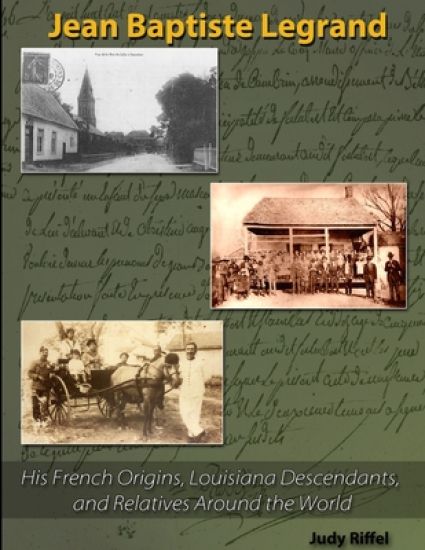
Jean Baptiste Legrand: His French Origins, Louisiana Descendants, and Relatives Around the World
Judy Riffel is a native and life-long resident of Baton Rouge, Louisiana. She and her mother, Ann, became interested in genealogy during the United States Bicentennial. In tracing their roots, they discovered that all but one of their ancestors came to Louisiana prior to 1800. The latecomer was Judy's maternal grandmother's grandfather, a Frenchman named Jean Baptiste Legrand. Arriving in New Orleans in 1848, he settled on the banks of the Atchafalaya River among the Cajuns of South Louisiana. This is the story of his family, his life, and his descendants. Now a professional genealogist, Judy has authored and edited numerous books and articles on genealogy. Her research, which has spanned five decades, has culminated in this, her first family history book.
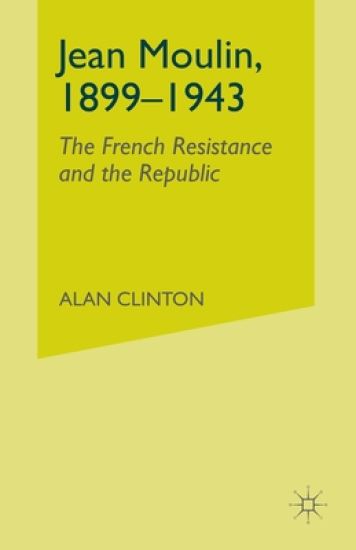
Jean Moulin, 1899 - 1943

Jean Moulin, 1899 - 1943

A. Clinton

Palgrave Macmillan
2002
nidottu
Jean Moulin is a universally recognized French hero, celebrated as the delegate of General de Gaulle to Nazi-occupied France in 1942-3 and founder of the National Resistance Council in May 1943. He is known for defiance of the German invaders in June 1940 and for his death in the hands of Gestapo chief Klaus Barbie in July 1943. This book is the fist fully documented account in English of his republican background, his resistance activities, and of his death and reputation.
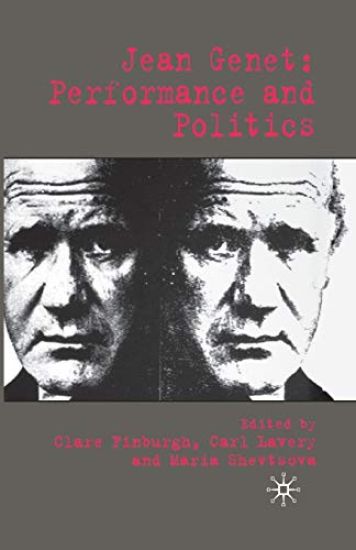
Jean Genet: Performance and Politics
This is the first book to explore the broad political significance of Genet's performance practice by focusing on his radical experiments, polemical subjects and formal innovations in theatre, film and dance. Its new approach brings together the diverse aspects of Genet's work through essays by international scholars and interviews.
Jean-Paul Sartre's Anarchist Philosophy

Jean-Paul Sartre's Anarchist Philosophy

William L. Remley

Bloomsbury Academic
2018
sidottu
The influence of anarchists such as Proudhon and Bakunin is apparent in Jean-Paul Sartres’ political writings, from his early works of the 1920s to Critique of Dialectical Reason, his largest political piece. Yet, scholarly debate overwhelmingly concludes that his political philosophy is a Marxist one. In this landmark study, William L. Remley sheds new light on the crucial role of anarchism in Sartre’s writing, arguing that it fundamentally underpins the body of his political work. Sartre’s political philosophy has been infrequently studied and neglected in recent years. Introducing newly translated material from his early oeuvre, as well as providing a fresh perspective on his colossal Critique of Dialectical Reason, this book is a timely re-invigoration of this topic.It is only in understanding Sartre’s anarchism that one can appreciate the full meaning not only of the Critique, but of Sartre’s entire political philosophy. This book sets forth an entirely new approach to Sartre’s political philosophy by arguing that it espouses a far more radical anarchist position than has been previously attributed to it. In doing so, Jean-Paul Sartre's Anarchist Philosophy not only fills an important gap in Sartre scholarship but also initiates a much needed revision of twentieth century thought from an anarchist perspective.
Jean-Francois Lyotard

Jean-Francois Lyotard

Jean-Francois Lyotard

Bloomsbury Academic
2020
sidottu
Jean-François Lyotard (1924-1998) was one of the most important French philosophers of the Twentieth Century. His impact has been felt across many disciplines: sociology; cultural studies; art theory and politics. This volume presents a diverse selection of interviews, conversations and debates which relate to the five decades of his working life, both as a political militant, experimental philosopher and teacher. Including hard-to-find interviews and previously untranslated material, this is the first time that interviews with Lyotard have been presented as a collection.Key concepts from Lyotard’s thought – the differend, the postmodern, the immaterial – are debated and discussed across different time periods, prompted by specific contexts and provocations. In addition there are debates with other thinkers, including Emmanuel Levinas and Jacques Derrida, which may be less familiar to an Anglophone audience. These debates and interviews help to contextualise Lyotard, highlighting the importance of Marx, Freud, Kant and Wittgenstein, in addition to the Jewish thought which accompanies the questions of silence, justice and presence that pervades Lyotard’s thinking.
Jean-Francois Lyotard

Jean-Francois Lyotard

Jean-Francois Lyotard

Bloomsbury Academic
2020
nidottu
Jean-François Lyotard (1924-1998) was one of the most important French philosophers of the Twentieth Century. His impact has been felt across many disciplines: sociology; cultural studies; art theory and politics. This volume presents a diverse selection of interviews, conversations and debates which relate to the five decades of his working life, both as a political militant, experimental philosopher and teacher. Including hard-to-find interviews and previously untranslated material, this is the first time that interviews with Lyotard have been presented as a collection.Key concepts from Lyotard’s thought – the differend, the postmodern, the immaterial – are debated and discussed across different time periods, prompted by specific contexts and provocations. In addition there are debates with other thinkers, including Emmanuel Levinas and Jacques Derrida, which may be less familiar to an Anglophone audience. These debates and interviews help to contextualise Lyotard, highlighting the importance of Marx, Freud, Kant and Wittgenstein, in addition to the Jewish thought which accompanies the questions of silence, justice and presence that pervades Lyotard’s thinking.
Jean-Jacques Rousseau and British Romanticism
Bringing together leading scholars from the USA, UK and Europe, this is the first substantial study of the seminal influence of Jean-Jacques Rousseau on British Romanticism.Reconsidering Rousseau’s connection to canonical Romantic authors such as Wordsworth, Byron and Percy Bysshe Shelley, Jean-Jacques Rousseau and British Romanticism also explores his impact on a wide range of literature, including anti-Jacobin fiction, educational works, familiar essays, nature writing and political discourse. Convincingly demonstrating that the relationship between Rousseau’s thought and British Romanticism goes beyond mere reception or influence to encompass complex forms of connection, transmission and appropriation, Jean-Jacques Rousseau and British Romanticism is a vital new contribution to scholarly understanding of British Romantic literature and its transnational contexts.
Jean-Paul Sartre's Anarchist Philosophy

Jean-Paul Sartre's Anarchist Philosophy

William L. Remley

Bloomsbury Academic
2019
nidottu
The influence of anarchists such as Proudhon and Bakunin is apparent in Jean-Paul Sartres’ political writings, from his early works of the 1920s to Critique of Dialectical Reason, his largest political piece. Yet, scholarly debate overwhelmingly concludes that his political philosophy is a Marxist one. In this landmark study, William L. Remley sheds new light on the crucial role of anarchism in Sartre’s writing, arguing that it fundamentally underpins the body of his political work. Sartre’s political philosophy has been infrequently studied and neglected in recent years. Introducing newly translated material from his early oeuvre, as well as providing a fresh perspective on his colossal Critique of Dialectical Reason, this book is a timely re-invigoration of this topic.It is only in understanding Sartre’s anarchism that one can appreciate the full meaning not only of the Critique, but of Sartre’s entire political philosophy. This book sets forth an entirely new approach to Sartre’s political philosophy by arguing that it espouses a far more radical anarchist position than has been previously attributed to it. In doing so, Jean-Paul Sartre's Anarchist Philosophy not only fills an important gap in Sartre scholarship but also initiates a much needed revision of twentieth century thought from an anarchist perspective.
Jean Rhys's Modernist Bearings and Experimental Aesthetics
Addressing Jean Rhys’s composition and positioning of her fiction, this book invites and challenges us to read the tacit, silent and explicit textual bearings she offers and reveals new insights about the formation, scope and complexity of Rhys’s experimental aesthetics.Tracing the distinctive and shifting evolution of Rhys’s experimental aesthetics over her career, Sue Thomas explores Rhys’s practices of composition in her fiction and drafts, as well as her self-reflective comment on her writing. The author examines patterns of interrelation, intertextuality, intermediality and allusion, both diachronic and synchronic, as well as the cultural histories entwined within them. Through close analysis of these, this book reveals new experimental, thematic, generic and political reaches of Rhys’s fiction and sharpens our insight into her complex writerly affiliations and lineages.
Jean Rhys's Modernist Bearings and Experimental Aesthetics
Addressing Jean Rhys’s composition and positioning of her fiction, this book invites and challenges us to read the tacit, silent and explicit textual bearings she offers and reveals new insights about the formation, scope and complexity of Rhys’s experimental aesthetics.Tracing the distinctive and shifting evolution of Rhys’s experimental aesthetics over her career, Sue Thomas explores Rhys’s practices of composition in her fiction and drafts, as well as her self-reflective comment on her writing. The author examines patterns of interrelation, intertextuality, intermediality and allusion, both diachronic and synchronic, as well as the cultural histories entwined within them. Through close analysis of these, this book reveals new experimental, thematic, generic and political reaches of Rhys’s fiction and sharpens our insight into her complex writerly affiliations and lineages.
Jean-Francois Lyotard

Jean-Francois Lyotard

Jean-Francois Lyotard

BLOOMSBURY PUBLISHING PLC
2025
sidottu
With contributions selected from the last fifteen years of his life, this second volume of Jean-François Lyotard’s interviews and debates includes hard-to-find and previously untranslated material. Taking place between 1984 and 1997 they follow in the wake of Lyotard’s most notable publications, including The Postmodern Condition (1979) and The Differend (1983). Whilst continuing to contest and reconfigure the claims of these writings, Lyotard and his interlocutors help to contextualise the questions raised within the fields of art, philosophy, literature and politics.Discussions in Paris and London include contributions from thinkers such as Philippe Lacoue-Labarthe; Christine Buci-Glucksmann and Alain Badiou whilst significant interviews elsewhere in Europe, North and South America elucidate the consequences of the varied reception given to his work. The importance of Kant, Freud and Wittgenstein is readily apparent as are the themes now closely associated with Lyotard: the inhuman, infancy and resistance to ‘the system’. These interviews and debates record an evident delight in the activity of thinking which is not about rhetorical flourish or rehashing staid assumptions but of grappling with some of the most important questions confronting thought today.
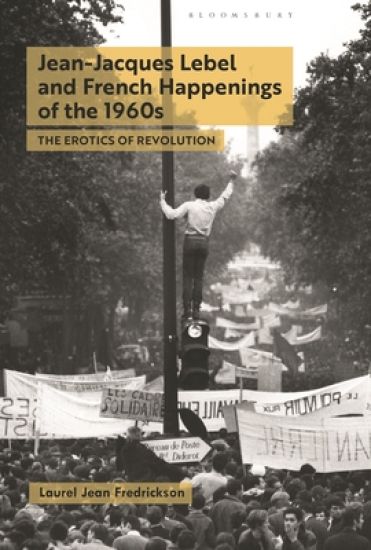
Jean-Jacques Lebel and French Happenings of the 1960s

Jean-Jacques Lebel and French Happenings of the 1960s

Laurel Jean Fredrickson

BLOOMSBURY PUBLISHING PLC
2023
nidottu
Combining a broad overview of Jean-Jacques Lebel’s coming-of-age among Surrealists and his rupture with the movement, Laurel Jean Fredrickson focuses on two landmark happenings in this book: the first, “Funeral of the Thing of Tinguely” (1960), and the most scandalous, “120 Minutes dedicated to the Divine Marquis” (1966). This study illustrates the development and significance of French happenings in relation to cultural and political changes of the 1960s.Research in Lebel’s archives, and others like the Archives nationale d’outre-mer are indispensable in the telling of this extraordinary historical and theoretical narrative. It illuminates sensitive, often veiled dimensions of postwar French society, from torture during the Algerian War, to government censorship, to the sexual politics of nudity in art. This volume shows how Lebel synthesized the lessons of Dada and surrealism and 1960s experimentalism, electrified by political radicalism, to participate in shaping the erotics and forms of revolution in May 1968.
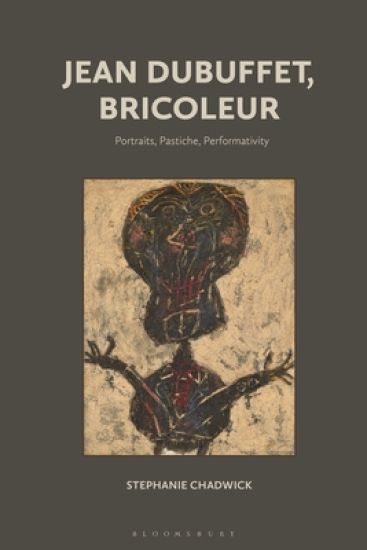
Jean Dubuffet, Bricoleur

Jean Dubuffet, Bricoleur

Stephanie Chadwick

BLOOMSBURY PUBLISHING PLC
2023
nidottu
One of the most prolific and influential artists of the 20th century, Jean Dubuffet has featured in a multitude of exhibitions and catalogues. Yet he remains one of the most misunderstood—and least interrogated—postwar French artists. Celebrating Art Brut (the art of ostensible outsiders) while posing as an outsider himself, Dubuffet mingled with many great artists, writers, and theorists, developing an elaborate and nuanced stream of conceptual resources to reconfigure painting and reframe postwar anticultural discourses. This book reexamines Dubuffet’s art through the lens of these portraits (a veritable who’s who of the Parisian art and intellectual scene) in tandem with his writings and the art and writings of his Surrealist sitters. Investigating Dubuffet’s painting as bricolage, this book reveals his reliance upon an anticulture culture and the appropriation of motifs from Surrealism to the South Pacific to explore the themes of multivalence, performativity, and multifaceted identity in his portraits.
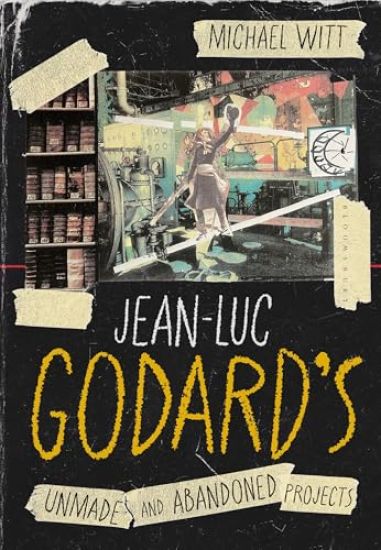
Jean-Luc Godard’s Unmade and Abandoned Projects

Jean-Luc Godard’s Unmade and Abandoned Projects

Michael Witt

BLOOMSBURY PUBLISHING PLC
2025
sidottu
This book offers the first study of the French-Swiss filmmaker Jean-Luc Godard's vast body of over 380 unmade, unfinished and abandoned projects over the course of his career from the late 1940s to the 2020s. While Godard is widely recognised as one of the most important and influential filmmakers of the post-war period, extremely little has been written about his largely invisible and unknown corpus of unrealised works. This includes many unmade films, videos and television programmes alongside a wide range of unfinished non-audiovisual ventures such as plays, books, exhibitions, a CD, a camera, a film journal, and even an architectural maquette. Drawing on extensive research on the surviving traces of these projects in archives and private collections, Michael Witt's comprehensive survey establishes the extent and constitution of the Godardian corpus of unrealised and abandoned works for the first time and examines them in detail in six key perspectives: literature, cinema, theatre, television, politics and history. The volume includes in-depth case studies of numerous major unfinished initiatives by Godard and his collaborators in locations around the globe (France, the Middle East, the USA, Quebec, the People's Republic of Mozambique), charts the extensive connections between his abandoned projects and his completed works, casts in relief his creative process, and offers a fresh way of thinking about and approaching his practice and oeuvre as a whole. A full annotated list of his unrealised and abandoned projects is included as an appendix.
Jean-Luc Nancy after the Theological Turn

Jean-Luc Nancy after the Theological Turn

Nikolaas Cassidy-Deketelaere

BLOOMSBURY PUBLISHING PLC
2025
sidottu
A novel and profound reading of Jean-Luc Nancy’s deconstruction of Christianity in the context of French phenomenology’s ‘theological turn’, this is an important contribution to continental philosophy of religion. Deftly exploring Nancy’s work alongside major twentieth-century philosophers of religion including Jean-Luc Marion, Michel Henry, Jean-Louis Chrétien and Emmanuel Falque, Jean-Luc Nancy after the Theological Turn argues that only by turning to theology can phenomenology come into its own as philosophy. Following Derrida’s treatment of Nancy, Nikolaas Cassidy-Deketelaere thinks ‘after’ the theological turn by deconstructing phenomenology’s inherent theological structure which made that turn possible: starting from the theological turn phenomenology was structurally inclined to produce, this book seeks to move beyond it (i.e., to ‘de-theologise’ phenomenology). This parallels Nancy’s engagement with Christianity: drawing on Paul’s kenosis—according to which God empties himself of his divinity in the Incarnation—he understands Christianity as deconstructing or de-theologising itself. Written in elegant and clear prose, in elaborating Nancy’s little-discussed writing on Christianity this volume clarifies the philosophical project of one of the most influential contemporary thinkers. Cassidy-Deketelaere persuasively establishes the radical significance of theology for phenomenology and explains the consequences of that relationship for the recent history of contemporary philosophy.