Kirjojen hintavertailu. Mukana 11 699 587 kirjaa ja 12 kauppaa.

Kirjahaku

Etsi kirjoja tekijän nimen, kirjan nimen tai ISBN:n perusteella.

1000 tulosta hakusanalla Jeff Codori

The Manhattan Project

The Manhattan Project

Jeff Hughes

Columbia University Press
2003
sidottu
Launched in 1942, the Manhattan Project was a well-funded, secret effort by the United States, the United Kingdom, and Canada to develop an atomic bomb before the Nazis. The results-the bombs named "Little Boy" and "Fat Man"-were dropped on Hiroshima and Nagasaki in August of 1945. A vast state within a state, the Manhattan Project employed 130,000 people and cost the United States and its allies 2 billion dollars, but its contribution to science as a prestigious investment was invaluable. After the bombs were dropped, states began allocating unprecedented funds for scientific research, leading to the establishment of many of twentieth century's major research institutions. Yet the union of science, industry, and the military did not start with the development of the atomic bomb; World War II only deepened the relationship. This absorbing history revisits the interactions among science, the national interest, and public and private funding that was initiated in World War I and flourished in WWII. It then follows the Manhattan Project from inception to dissolution, describing the primary influences that helped execute the world's first successful plan for nuclear research and tracing the lineages of modern national nuclear agencies back to their source.

The Manhattan Project

The Manhattan Project

Jeff Hughes

Columbia University Press
2016
pokkari
Launched in 1942, the Manhattan Project was a well-funded, secret effort by the United States, the United Kingdom, and Canada to develop an atomic bomb before the Nazis. The results—the bombs named "Little Boy" and "Fat Man"—were dropped on Hiroshima and Nagasaki in August of 1945.A vast state within a state, the Manhattan Project employed 130,000 people and cost the United States and its allies 2 billion dollars, but its contribution to science as a prestigious investment was invaluable. After the bombs were dropped, states began allocating unprecedented funds for scientific research, leading to the establishment of many of twentieth century's major research institutions. Yet the union of science, industry, and the military did not start with the development of the atomic bomb; World War II only deepened the relationship. This absorbing history revisits the interactions among science, the national interest, and public and private funding that was initiated in World War I and flourished in WWII. It then follows the Manhattan Project from inception to dissolution, describing the primary influences that helped execute the world's first successful plan for nuclear research and tracing the lineages of modern national nuclear agencies back to their source.
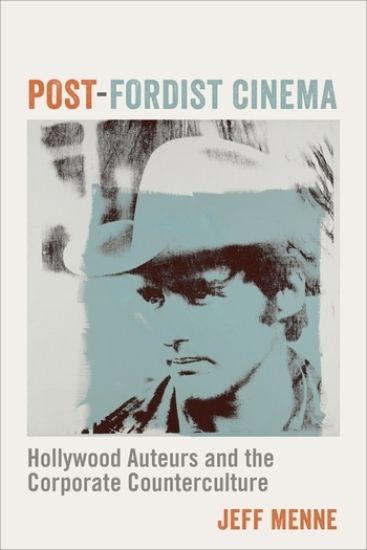
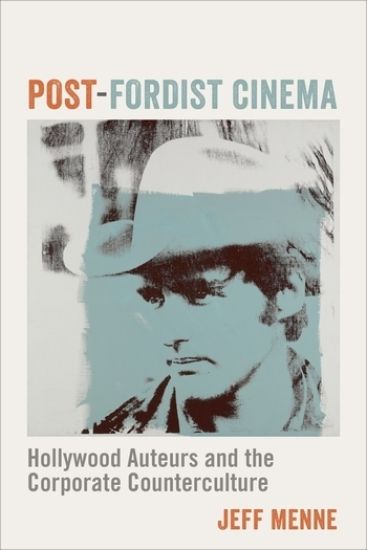
Post-Fordist Cinema

Post-Fordist Cinema

Jeff Menne

Columbia University Press
2019
sidottu
The New Hollywood boom of the late 1960s and 1970s is celebrated as a time when maverick directors bucked the system. Against the backdrop of counterculture sensibilities and the prominence of auteur theory, New Hollywood directors such as Robert Altman and Francis Ford Coppola seemed to embody creative individualism. In Post-Fordist Cinema, Jeff Menne rewrites the history of this period, arguing that auteur theory served to reconcile directors to Hollywood’s corporate project.Menne traces the surprising affinities between auteur theory and management gurus such as Peter Drucker, who envisioned a more open and flexible corporate style. In founding production companies, New Hollywood filmmakers took part in the creation of new corporate models that emphasized entrepreneurial creativity. For firms such as Kirk Douglas’s Bryna Productions, Altman’s Lion’s Gate Films, the Zanuck-Brown Company, and BBS Productions, the counterculture ethos limbered up the studio system’s sclerotic production process—with striking parallels to how management theory conceived of the role of the individual within the firm. Menne offers insightful readings of how films such as Lonely Are the Brave, Brewster McCloud, Jaws, and The King of Marvin Gardens narrate the conditions in which they were created, depicting shifting notions of work and corporate structure. While auteur theory allowed directors to cast themselves as independent creators, Menne argues that its most consequential impact came as a management doctrine. An ambitious rethinking of New Hollywood, Post-Fordist Cinema sheds new light on the cultural myth of the great director and the birth of the “creative economy.”
Post-Fordist Cinema

Post-Fordist Cinema

Jeff Menne

Columbia University Press
2019
pokkari
The New Hollywood boom of the late 1960s and 1970s is celebrated as a time when maverick directors bucked the system. Against the backdrop of counterculture sensibilities and the prominence of auteur theory, New Hollywood directors such as Robert Altman and Francis Ford Coppola seemed to embody creative individualism. In Post-Fordist Cinema, Jeff Menne rewrites the history of this period, arguing that auteur theory served to reconcile directors to Hollywood’s corporate project.Menne traces the surprising affinities between auteur theory and management gurus such as Peter Drucker, who envisioned a more open and flexible corporate style. In founding production companies, New Hollywood filmmakers took part in the creation of new corporate models that emphasized entrepreneurial creativity. For firms such as Kirk Douglas’s Bryna Productions, Altman’s Lion’s Gate Films, the Zanuck-Brown Company, and BBS Productions, the counterculture ethos limbered up the studio system’s sclerotic production process—with striking parallels to how management theory conceived of the role of the individual within the firm. Menne offers insightful readings of how films such as Lonely Are the Brave, Brewster McCloud, Jaws, and The King of Marvin Gardens narrate the conditions in which they were created, depicting shifting notions of work and corporate structure. While auteur theory allowed directors to cast themselves as independent creators, Menne argues that its most consequential impact came as a management doctrine. An ambitious rethinking of New Hollywood, Post-Fordist Cinema sheds new light on the cultural myth of the great director and the birth of the “creative economy.”
The Black Circle

The Black Circle

Jeff Love

Columbia University Press
2018
sidottu
Alexandre Kojève (1902–1968) was an important and provocative thinker. Born in Russia, he spent most of his life in France. His interpretation of Hegel and his notorious declaration that history had come to an end exerted great influence on French thinkers and writers such as Raymond Aron, Georges Bataille, Maurice Merleau-Ponty, Jacques Lacan, and Raymond Queneau. An unorthodox Marxist, he was a critic of Martin Heidegger and interlocutor of Leo Strauss who played a significant role in establishing the European Economic Community; a polyglot with many unusual interests, he wrote works, mostly unpublished in his lifetime, on quantum physics, the problem of the infinite, Buddhism, atheism, and Vassily Kandinsky’s paintings.In The Black Circle, Jeff Love reinterprets Kojève’s works, showing him to be an essential thinker who challenged modern society and its valuation of individuality, self-interest, and freedom from death. Emphasizing Kojève’s neglected Russian roots, The Black Circle puts him in the context of the late-nineteenth- and early-twentieth-century Russian debates over the proper ends of human life. Love explores notions of perfection, freedom, and finality in Kojève’s account of Hegel and his neglected later works, clarifying Kojève’s emancipatory thinking and the meaning of the oft-misinterpreted “end of history.” Combining intellectual history, close textual analysis, and philosophy, The Black Circle reveals Kojève’s thought as a profound critique of capitalist individualism and a timely meditation on human freedom.
The Black Circle

The Black Circle

Jeff Love

Columbia University Press
2021
pokkari
Alexandre Kojève (1902–1968) was an important and provocative thinker. Born in Russia, he spent most of his life in France. His interpretation of Hegel and his notorious declaration that history had come to an end exerted great influence on French thinkers and writers such as Raymond Aron, Georges Bataille, Maurice Merleau-Ponty, Jacques Lacan, and Raymond Queneau. An unorthodox Marxist, he was a critic of Martin Heidegger and interlocutor of Leo Strauss who played a significant role in establishing the European Economic Community; a polyglot with many unusual interests, he wrote works, mostly unpublished in his lifetime, on quantum physics, the problem of the infinite, Buddhism, atheism, and Vassily Kandinsky’s paintings.In The Black Circle, Jeff Love reinterprets Kojève’s works, showing him to be an essential thinker who challenged modern society and its valuation of individuality, self-interest, and freedom from death. Emphasizing Kojève’s neglected Russian roots, The Black Circle puts him in the context of the late-nineteenth- and early-twentieth-century Russian debates over the proper ends of human life. Love explores notions of perfection, freedom, and finality in Kojève’s account of Hegel and his neglected later works, clarifying Kojève’s emancipatory thinking and the meaning of the oft-misinterpreted “end of history.” Combining intellectual history, close textual analysis, and philosophy, The Black Circle reveals Kojève’s thought as a profound critique of capitalist individualism and a timely meditation on human freedom.
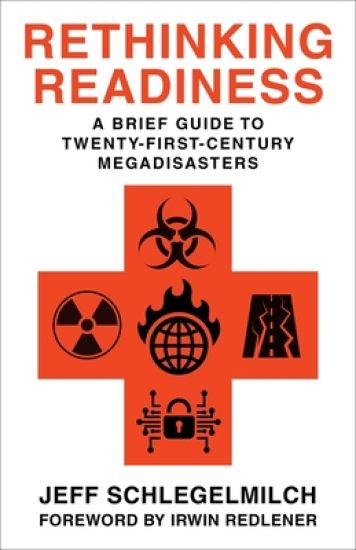
Rethinking Readiness

Rethinking Readiness

Jeff Schlegelmilch; Irwin Redlener

Columbia University Press
2020
sidottu
As human society continues to develop, we have increased the risk of large-scale disasters. From health care to infrastructure to national security, systems designed to keep us safe have also heightened the potential for catastrophe. The constant pressure of climate change, geopolitical conflict, and our tendency to ignore what is hard to grasp exacerbates potential dangers. How can we prepare for and prevent the twenty-first-century disasters on the horizon?Rethinking Readiness offers an expert introduction to human-made threats and vulnerabilities, with a focus on opportunities to reimagine how we approach disaster preparedness. Jeff Schlegelmilch identifies and explores the most critical threats facing the world today, detailing the dangers of pandemics, climate change, infrastructure collapse, cyberattacks, and nuclear conflict. Drawing on the latest research from leading experts, he provides an accessible overview of the causes and potential effects of these looming megadisasters. The book highlights the potential for building resilient, adaptable, and sustainable systems so that we can be better prepared to respond to and recover from future crises. Thoroughly grounded in scientific and policy expertise, Rethinking Readiness is an essential guide to this century’s biggest challenges in disaster management.
Rethinking Readiness

Rethinking Readiness

Jeff Schlegelmilch; Irwin Redlener

Columbia University Press
2020
pokkari
As human society continues to develop, we have increased the risk of large-scale disasters. From health care to infrastructure to national security, systems designed to keep us safe have also heightened the potential for catastrophe. The constant pressure of climate change, geopolitical conflict, and our tendency to ignore what is hard to grasp exacerbates potential dangers. How can we prepare for and prevent the twenty-first-century disasters on the horizon?Rethinking Readiness offers an expert introduction to human-made threats and vulnerabilities, with a focus on opportunities to reimagine how we approach disaster preparedness. Jeff Schlegelmilch identifies and explores the most critical threats facing the world today, detailing the dangers of pandemics, climate change, infrastructure collapse, cyberattacks, and nuclear conflict. Drawing on the latest research from leading experts, he provides an accessible overview of the causes and potential effects of these looming megadisasters. The book highlights the potential for building resilient, adaptable, and sustainable systems so that we can be better prepared to respond to and recover from future crises. Thoroughly grounded in scientific and policy expertise, Rethinking Readiness is an essential guide to this century’s biggest challenges in disaster management.
Catastrophic Incentives

Catastrophic Incentives

Jeff Schlegelmilch; Ellen Carlin

Columbia University Press
2023
sidottu
Silver Award Winner, 2024 Nonfiction Book AwardsSocieties are vulnerable to any number of potential disasters: earthquakes, hurricanes, infectious diseases, terrorist attacks, and many others. Even though the dangers are often clear, there is a persistent pattern of inadequate preparation and a failure to learn from experience. Before disasters, institutions pay insufficient attention to risk; in the aftermath, even when the lack of preparation led to a flawed response, the focus shifts to patching holes instead of addressing the underlying problems.Examining twenty years of disasters from 9/11 to COVID-19, Jeff Schlegelmilch and Ellen Carlin show how flawed incentive structures make the world more vulnerable when catastrophe strikes. They explore how governments, the private sector, nonprofits, and academia behave before, during, and after crises, arguing that standard operational and business models have produced dysfunction. Catastrophic Incentives reveals troubling patterns about what does and does not matter to the institutions that are responsible for dealing with disasters. The short-termism of electoral politics and corporate decision making, the funding structure of nonprofits, and the institutional dynamics shaping academic research have all contributed to a failure to build resilience.Offering a comprehensive and incisive look at disaster governance, Catastrophic Incentives provides timely recommendations for reimagining systems and institutions so that they are better equipped to manage twenty-first-century threats.
Catastrophic Incentives

Catastrophic Incentives

Jeff Schlegelmilch; Ellen Carlin

Columbia University Press
2023
pokkari
Silver Award Winner, 2024 Nonfiction Book AwardsSocieties are vulnerable to any number of potential disasters: earthquakes, hurricanes, infectious diseases, terrorist attacks, and many others. Even though the dangers are often clear, there is a persistent pattern of inadequate preparation and a failure to learn from experience. Before disasters, institutions pay insufficient attention to risk; in the aftermath, even when the lack of preparation led to a flawed response, the focus shifts to patching holes instead of addressing the underlying problems.Examining twenty years of disasters from 9/11 to COVID-19, Jeff Schlegelmilch and Ellen Carlin show how flawed incentive structures make the world more vulnerable when catastrophe strikes. They explore how governments, the private sector, nonprofits, and academia behave before, during, and after crises, arguing that standard operational and business models have produced dysfunction. Catastrophic Incentives reveals troubling patterns about what does and does not matter to the institutions that are responsible for dealing with disasters. The short-termism of electoral politics and corporate decision making, the funding structure of nonprofits, and the institutional dynamics shaping academic research have all contributed to a failure to build resilience.Offering a comprehensive and incisive look at disaster governance, Catastrophic Incentives provides timely recommendations for reimagining systems and institutions so that they are better equipped to manage twenty-first-century threats.
Choosing Life?

Choosing Life?

Jeff Astley

Darton,Longman Todd Ltd
2000
pokkari
Jeff Astley helps readers reflect on critical issues in personal and social morality using the resources of Christian tradition and their own insights and reasoning. Moral issies dicussed include abortion and euthanasia, war and punishment, work and health, sex and society.
Exploring God-talk

Exploring God-talk

Jeff Astley

Darton,Longman Todd Ltd
2004
nidottu
Exploring God-talk maps the contours of religious language. It surveys the variety of ways in which religious believers both speak to God and speak about God, and tries to respond to the serious criticisms that have been raised of different aspects of our 'God-talk'. Beginning with an overview of the variety of ways in which language is used in faith and religion, the book moves on to consider the functions of language in religious experience and the religious life, particularly in prayer and worship. Two chapters are the devoted to a consideration of the important area of 'descriptive' God-talk, both figurative and literal. Problems relating to the meaningfulness of religious language and the interpretation of the Scripture are also addressed, and the pastoral and ethical significance of God-talk explored. Illustrations are drawn throughout from both everyday speech and the Christian tradition.
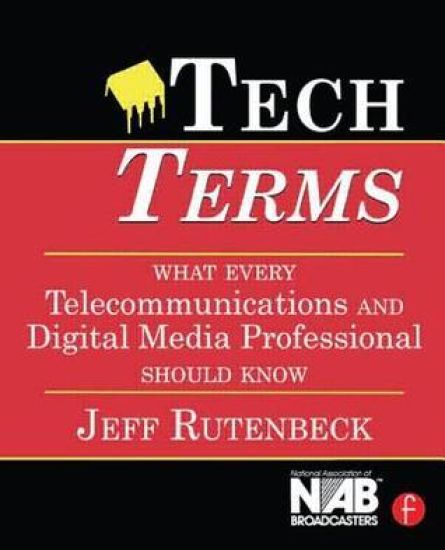
Tech Terms

Tech Terms

Jeff Rutenbeck

Focal Press
2006
nidottu
An avalanche of acronyms, terms-of-art, buzz words, and short-hand phraseology confronts today's busy communications professionals. Now in its 3rd edition, Tech Terms is an invaluable learning tool to help grasp key aspects of the television and video, PC hardware and software markets, multimedia authoring tools, and the exploding wireless Internet and mobile telecomputing worlds. With more than 1000 terms described in four sentences or less, Tech Terms is perfect the perfect desk reference.
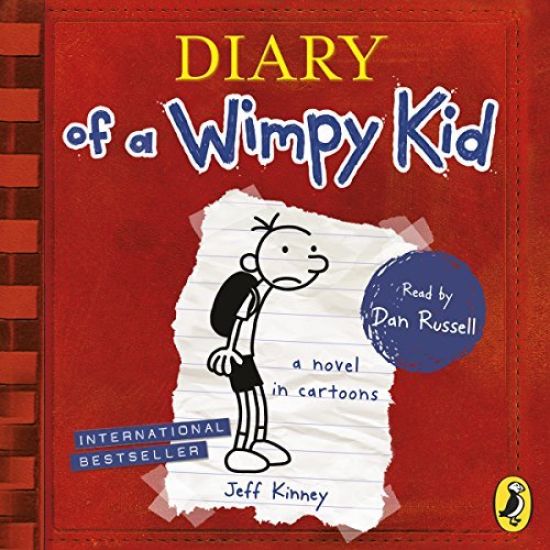
Diary of a Wimpy Kid (Book 1)
Penguin presents the audio CD edition of Diary of a Wimpy Kid by Jeff Kinney, read by Dan Russell. Let me get something straight: this is a JOURNAL, not a diary. This was Mom's idea, not mine. But if she thinks I'm going to write down my "feelings" in here or whatever, she's crazy.The only reason I agreed to do this at all is because I figure later on when I'm rich and famous, this book is gonna come in handy.But for now I'm stuck with a bunch of morons. Today is the first day of school, so I figured I might as well write in this book to pass the time.Just don't expect me to be all "Dear Diary" this and "Dear Diary" that.
Diary of a Wimpy Kid: Rodrick Rules (Book 2)
Penguin presents the audio CD edition of Diary of a Wimpy Kid: Rodrick Rules by Jeff Kinney, read by Dan Russell. Whatever you do, don't ask Greg about his summer vacation because he definitely doesn't want to talk about it . . .It's a brand-new year and a brand-new journal and Greg is keen to put the humiliating (and secret!) events of last summer firmly behind him. But someone knows everything - someone whose job it is to most definitely not keep anything embarrassing of Greg's private - his big brother, Rodrick. How can Greg make it through this new school year with his not-quite-cool reputation intact?
Diary of a Wimpy Kid: The Ugly Truth (Book 5)
Penguin presents the audio CD edition of The Ugly Truth by Jeff Kinney, read by Dan Russell.Greg Heffley has always been in a hurry to grow up. But is getting older really all it's cracked up to be?Suddenly Greg is dealing with the pressures of boy-girl parties, increased responsibilities, and even the awkward changes that come with getting older. And after a fight with his best friend Rowley, it looks like Greg is going to have to face the "ugly truth" all by himself . . .
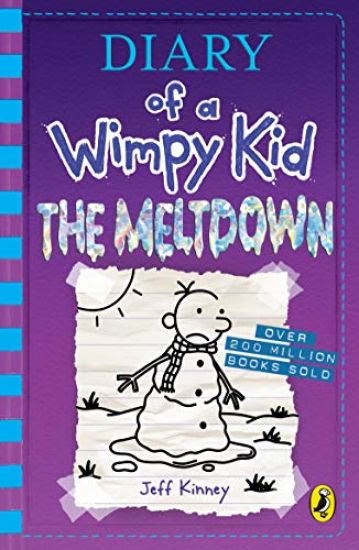
Diary of a Wimpy Kid: The Meltdown (Book 13)
When snow shuts down Greg Heffley's middle school, his neighbourhood transforms into a wintry battlefield. Rival groups fight over territory, build massive snow forts, and stage epic snowball fights. And in the crosshairs are Greg and his trusty best friend, Rowley Jefferson. It's a fight for survival as Greg and Rowley navigate alliances, betrayals, and warring gangs in a neighbourhood meltdown. When the snow clears, will Greg and Rowley emerge as heroes? Or will they even survive to see another day? 'The world has gone crazy for Jeff Kinney's Diary of a Wimpy Kid' - Sun With millions of books sold around the world in 65 editions and 56 languages, Wimpy Kid has turned millions of kids into readers.
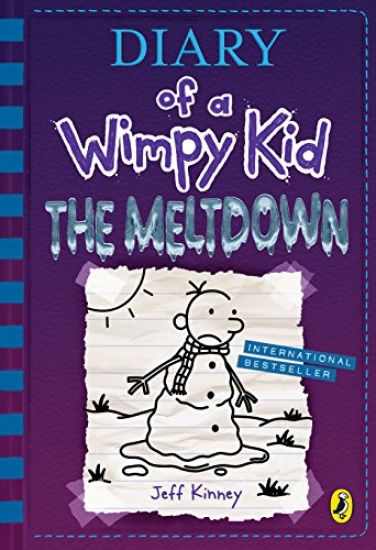
Diary of a Wimpy Kid: The Meltdown
When snow shuts down Greg Heffley's middle school, his neighbourhood transforms into a wintry battlefield. Rival groups fight over territory, build massive snow forts, and stage epic snowball fights. And in the crosshairs are Greg and his trusty best friend, Rowley Jefferson. It's a fight for survival as Greg and Rowley navigate alliances, betrayals, and warring gangs in a neighbourhood meltdown. When the snow clears, will Greg and Rowley emerge as heroes? Or will they even survive to see another day?
Diary of a Wimpy Kid: Wrecking Ball (Book 14)
THE ONE WITH THE HOME IMPROVEMENTSThe fourteenth laugh-out-loud, fully-illustrated Diary of a Wimpy Kid book from #1 international bestselling author Jeff Kinney! A global phenomenon with 250 million copies of the series sold worldwide!Big changes are in store for Greg Heffley and his family. They are making home improvements!But with unwelcome critters, toxic mould and the walls coming down, soon Greg discovers renovations aren't all they are cracked up to be.When the dust finally settles, will the Heffleys be able to stay . . . or will they need to get out of town?WHAT'S IN DIARY OF A WIMPY KID?50% words, 50% cartoons, 100% hilarious!Stories that all readers can't wait to get their hands onLaughter guaranteed!*BRAND NEW* DIARY OF A WIMPY KID: THE DEEP END IS OUT NOW! And DON'T MISS an all-new fantasy from Greg's best friend in Rowley Jefferson's Awesome Friendly Adventure, the follow-up to the instant #1 bestseller Diary of an Awesome Friendly Kid: Rowley Jefferson's Journal.'Kinney is right up there with J K Rowling as one of the bestselling children's authors on the planet' IndependentHave you read all the DIARY OF A WIMPY KID series?Diary of a Wimpy KidDiary of a Wimpy Kid: Roderick RulesDiary of a Wimpy Kid: The Last StrawDiary of a Wimpy Kid: Dog DaysDiary of a Wimpy Kid: The Ugly TruthDiary of a Wimpy Kid: Cabin FeverDiary of a Wimpy Kid: The Third WheelDiary of a Wimpy Kid: Hard LuckDiary of a Wimpy Kid: The Long HaulDiary of a Wimpy Kid: Old SchoolDiary of a Wimpy Kid: Double DownDiary of a Wimpy Kid: The GetawayDiary of a Wimpy Kid: The MeltdownDiary of a Wimpy Kid: Wrecking BallDiary of a Wimpy Kid: The Deep End - the BRAND NEW Wimpy Kid book - out now!!
Diary of a Wimpy Kid: The Deep End (Book 15)
In The Deep End, book 15 of the Diary of a Wimpy Kid series from #1 international bestselling author Jeff Kinney, Greg Heffley and his family hit the road for a cross-country camping trip, ready for the adventure of a lifetime. But things take an unexpected turn, and they find themselves stranded at a campsite that's not exactly a summertime paradise. When the skies open up and the water starts to rise, the Heffleys wonder if they can save their vacation - or if they're already in too deep. And don't miss Rowley Jefferson's Awesome Friendly Adventure, an all-new fantasy from Greg's best friend - the follow-up to the instant #1 bestseller Diary of an Awesome Friendly Kid: Rowley Jefferson's Journal.