An engaging introduction to standards, the invisible infrastructure that shapes the built and digital environments of the modern world.Standards are the DNA of the built environment, encoded in nearly all objects that surround us in the modern world. In Standards, Jeffrey Pomerantz and Jason Griffey provide an essential introduction to this invisible but critical form of infrastructure—the rules and specifications that govern so many elements of the physical and digital environments, from the color of school buses to the shape of shipping containers. In an approachable, often outright funny fashion, Pomerantz and Griffey explore the nature, function, and effect of standards in everyday life. Using examples of specific standards and contexts in which they are applied—in the realms of technology, economics, sociology, and information science—they illustrate how standards influence the development and scope, and indeed the very range of possibilities of our built and social worlds. Deeply informed and informally written, their work makes a subject generally deemed boring, complex, and fundamentally important comprehensible, clear, and downright engaging.
Leading American and European economists discuss monetary and fiscal policy from an international macroeconomic perspective in a companion volume to the NBER Macroeconomics Annual: cutting-edge research on macroeconomic issues and topical questions concerning the eastward expansion of the European Monetary Union.The NBER International Seminar on Macroeconomics brings together leading American and European economists to discuss a broad range of current issues in global macroeconomics. An international companion to the more American-focused NBER Macroeconomics Annual, the 2005 volume first explores macroeconomic issues of interest to all advanced economies, then analyzes topical questions concerning the eastward expansion of the European Monetary Union.
A study in the systematic policy analysis of the MIT Libraries. The study identifies two principal missions for the MIT library system: provide material for students' course work and provide material in general support of research at MIT. The problem is how to organize future library resources into a set of programs that best fulfill these objectives.
This is the essential companion to the second edition of Jeffrey Wooldridge's widely used graduate econometrics text. The text provides an intuitive but rigorous treatment of two state-of-the-art methods used in contemporary microeconomic research. The numerous end-of-chapter exercises are an important component of the book, encouraging the student to use and extend the analytic methods presented in the book. This manual contains advice for answering selected problems, new examples, and supplementary materials designed by the author, which work together to enhance the benefits of the text. Users of the textbook will find the manual a necessary adjunct to the book.
In The Rise and Fall of Theological Enlightenment, Jeffrey D. Burson analyzes the history of the French Enlightenment and its relationship to the French Revolution by casting it as a diverse constellation of Theological Enlightenment discourses, compromised between about 1730 and 1762 by high-stakes cultural and political controversies involving the royal court, the government, and the Catholic Church. Burson places the Abbé Jean-Martin de Prades at the center of the storm. In 1749, Prades was working on his doctorate in theology at the University of Paris. An ambitious young theologian, Prades, like his teachers at the Sorbonne and like many lay and clerical apologists in mid-eighteenth-century France, had been deeply inspired by the spirit of the Enlightenment. Burson reinterprets the Jesuit Enlightenment and its influence on French society, arguing that Jesuits had pioneered ways of synthesizing Locke, Malebranche, and Newton in light of the expansion of the public sphere. Hoping to defend Catholic theology against the Radical Enlightenment by adapting these Jesuit Enlightenment discourses with natural history and Enlightenment theological debates, Prades inadvertently sparked a public scandal that galvanized members of the royal court and the Parlement of Paris, Jansenists, Jesuits, and philosophes, alike—all of whom refashioned the person and work of Prades to suit their own ends. Ultimately, the controversy polarized the cultural politics of pre-Revolutionary France into two camps, that of a self-consciously secular Enlightenment and that of a staunchly opposed Counter-Enlightenment. Prades's history provides Burson with a lens through which to reevaluate the intersections of theology and Enlightenment philosophy, of French politics and the French Catholic church, and of conservatives, moderates, and radicals on all sides in order to provide us with a newly-capacious Enlightenment historiography.
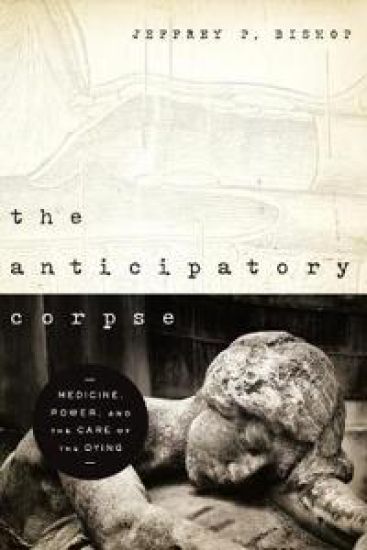
In this original and compelling book, Jeffrey P. Bishop, a philosopher, ethicist, and physician, argues that something has gone sadly amiss in the care of the dying by contemporary medicine and in our social and political views of death, as shaped by our scientific successes and ongoing debates about euthanasia and the "right to die"—or to live. The Anticipatory Corpse: Medicine, Power, and the Care of the Dying, informed by Foucault's genealogy of medicine and power as well as by a thorough grasp of current medical practices and medical ethics, argues that a view of people as machines in motion—people as, in effect, temporarily animated corpses with interchangeable parts—has become epistemologically normative for medicine. The dead body is subtly anticipated in our practices of exercising control over the suffering person, whether through technological mastery in the intensive care unit or through the impersonal, quasi-scientific assessments of psychological and spiritual "medicine." The result is a kind of nihilistic attitude toward the dying, and troubling contradictions and absurdities in our practices. Wide-ranging in its examples, from organ donation rules in the United States, to ICU medicine, to "spiritual surveys," to presidential bioethics commissions attempting to define death, and to high-profile cases such as Terri Schiavo's, The Anticipatory Corpse explores the historical, political, and philosophical underpinnings of our care of the dying and, finally, the possibilities of change. This book is a ground-breaking work in bioethics. It will provoke thought and argument for all those engaged in medicine, philosophy, theology, and health policy.
Ivan Sergeevich Gagarin analyzes questions of nationality and religious identity in nineteenth-century Russian history as reflected in the life of Jesuit priest Ivan Gagarin. A descendent of one of Russia's most ancient and politically powerful families, Father Ivan Gagarin, S.J. (1814–1882) dedicated his life to creating a union between the Orthodox and Catholic churches that would preserve the dogmatic and traditional beliefs of both. Traditional understandings of Russian identity have emanated from the perspective of the dominant Orthodox religion; this captivating study uses the unionist work of Gagarin to illumine Russia's national identity from the perspective of Roman Catholicism. Seeing his unionist proposals as necessary for the preservation of Russian stability, Gagarin found himself in frequent opposition to the Orthodox Church. While Gagarin believed that Church union would preserve Russia from the threats of communism and revolution, the Russian Orthodox Church believed that union would mean the sacrifice of religious truth, ecclesial independence and religious orthodoxy. Jeffrey Beshoner's even-handed analysis reveals that the Roman Catholic Church presented its own share of barriers to attempts at church union. Ivan Sergeevich Gagarin examines Roman Catholic attitudes of superiority vis-à-vis the Orthodox Church and argues that the nineteenth-century Roman Catholic Church simply did not possess the humility or respect for Eastern beliefs that church union required. Despite the failure of his unionist activity, Gagarin exerted important influence on such contemporary and later Roman Catholic and Russian thinkers as Pope Pius IX, Alexei Khomiakov and Vladimir Solovev. As the collapse of communism has permitted Russia to again seek its national identity in Russian Orthodoxy, Gagarin's ideas and perspectives on the relationship between national and religious identity continue to prove relevant.
This fascinating biography of the late Colin Powell brings to light his towering achievements and errors in judgment during a lifetime devoted to public service. Until he passed away in 2021, Colin Powell was revered as one of America's most trusted and admired leaders. This biography demonstrates that Powell's decades-long development as an exemplary subordinate is crucial to understanding his astonishing rise from a working-class immigrant neighborhood to the highest echelons of military and political power, including his roles as the country's first Black national security advisor, chairman of the Joint Chiefs of Staff, and secretary of state. Once an aimless, ambitionless teenager who barely graduated from college, Powell became an extraordinarily effective and staunchly loyal subordinate to many powerful superiors who, in turn, helped to advance his career. By the time Powell became chairman of the Joint Chiefs of Staff, he had developed into the consummate follower—motivated, competent, composed, honorable, and independent. The quality of Powell's followership faltered at times, however, while in Vietnam, during the Iran-Contra scandal, and after he became George W. Bush's secretary of state. Powell proved a fallible patriot, and in the course of a long and distinguished career he made some grave and consequential errors in judgment. While those blunders do not erase the significance of his commendable achievements amid decades of public service, we can learn much from his good and bad leadership.
This fascinating biography of the late Colin Powell brings to light his towering achievements and errors in judgment during a lifetime devoted to public service. Until he passed away in 2021, Colin Powell was revered as one of America's most trusted and admired leaders. This biography demonstrates that Powell's decades-long development as an exemplary subordinate is crucial to understanding his astonishing rise from a working-class immigrant neighborhood to the highest echelons of military and political power, including his roles as the country's first Black national security advisor, chairman of the Joint Chiefs of Staff, and secretary of state. Once an aimless, ambitionless teenager who barely graduated from college, Powell became an extraordinarily effective and staunchly loyal subordinate to many powerful superiors who, in turn, helped to advance his career. By the time Powell became chairman of the Joint Chiefs of Staff, he had developed into the consummate follower—motivated, competent, composed, honorable, and independent. The quality of Powell's followership faltered at times, however, while in Vietnam, during the Iran-Contra scandal, and after he became George W. Bush's secretary of state. Powell proved a fallible patriot, and in the course of a long and distinguished career he made some grave and consequential errors in judgment. While those blunders do not erase the significance of his commendable achievements amid decades of public service, we can learn much from his good and bad leadership.
Recent scholarly and popular attempts to define the Enlightenment, account for its diversity, and evaluate its historical significance suffer from a surprising lack of consensus at a time when the social and political challenges of today cry out for a more comprehensive and serviceable understanding of its importance. This book argues that regnant notions of the Enlightenment, the Radical Enlightenment, and the multitude of regional and religious enlightenments proposed by scholars all share an entangled intellectual genealogy rooted in a broader revolutionary "culture of enlightening" that took shape over the long-arc of intellectual history from the waning of the sixteenth-century Reformations to the dawn of the Atlantic Revolutionary era. Generated in competition for a changing readership and forged in dialog and conflict, dynamic and diverse notions of what it meant to be enlightened constituted a broader culture of enlightening from which the more familiar strains of the Enlightenment emerged, often ironically and accidentally, from originally religious impulses and theological questioning. By adapting, for the first time, methodological insights from the scholarship of historical entanglement (l'histoire croisée) to the study of the Enlightenment, this book provides a new interpretation of the European republic of letters from the late 1600s through the 1700s by focusing on the lived experience of the long-neglected Catholic theologian, historian, and contributor to Diderot's Encyclopédie, Abbé Claude Yvon. The ambivalent historical memory of Yvon, as well as the eclectic and global array of his sources and endeavors, Burson argues, can serve as a gauge for evaluating historical transformations in the surprisingly diverse ways in which eighteenth-century individuals spoke about enlightening human reason, religion, and society. Ultimately, Burson provocatively claims that even the most radical fruits of the Enlightenment can be understood as the unintended offspring of a revolution in theology and the cultural history of religious experience.
Ivan Sergeevich Gagarin analyzes questions of nationality and religious identity in nineteenth-century Russian history as reflected in the life of Jesuit priest Ivan Gagarin. A descendent of one of Russia's most ancient and politically powerful families, Father Ivan Gagarin, S.J. (1814–1882) dedicated his life to creating a union between the Orthodox and Catholic churches that would preserve the dogmatic and traditional beliefs of both. Traditional understandings of Russian identity have emanated from the perspective of the dominant Orthodox religion; this captivating study uses the unionist work of Gagarin to illumine Russia's national identity from the perspective of Roman Catholicism. Seeing his unionist proposals as necessary for the preservation of Russian stability, Gagarin found himself in frequent opposition to the Orthodox Church. While Gagarin believed that Church union would preserve Russia from the threats of communism and revolution, the Russian Orthodox Church believed that union would mean the sacrifice of religious truth, ecclesial independence and religious orthodoxy. Jeffrey Beshoner's even-handed analysis reveals that the Roman Catholic Church presented its own share of barriers to attempts at church union. Ivan Sergeevich Gagarin examines Roman Catholic attitudes of superiority vis-à-vis the Orthodox Church and argues that the nineteenth-century Roman Catholic Church simply did not possess the humility or respect for Eastern beliefs that church union required. Despite the failure of his unionist activity, Gagarin exerted important influence on such contemporary and later Roman Catholic and Russian thinkers as Pope Pius IX, Alexei Khomiakov and Vladimir Solovev. As the collapse of communism has permitted Russia to again seek its national identity in Russian Orthodoxy, Gagarin's ideas and perspectives on the relationship between national and religious identity continue to prove relevant.
In this original and compelling book, Jeffrey P. Bishop, a philosopher, ethicist, and physician, argues that something has gone sadly amiss in the care of the dying by contemporary medicine and in our social and political views of death, as shaped by our scientific successes and ongoing debates about euthanasia and the "right to die"—or to live. The Anticipatory Corpse: Medicine, Power, and the Care of the Dying, informed by Foucault's genealogy of medicine and power as well as by a thorough grasp of current medical practices and medical ethics, argues that a view of people as machines in motion—people as, in effect, temporarily animated corpses with interchangeable parts—has become epistemologically normative for medicine. The dead body is subtly anticipated in our practices of exercising control over the suffering person, whether through technological mastery in the intensive care unit or through the impersonal, quasi-scientific assessments of psychological and spiritual "medicine." The result is a kind of nihilistic attitude toward the dying, and troubling contradictions and absurdities in our practices. Wide-ranging in its examples, from organ donation rules in the United States, to ICU medicine, to "spiritual surveys," to presidential bioethics commissions attempting to define death, and to high-profile cases such as Terri Schiavo's, The Anticipatory Corpse explores the historical, political, and philosophical underpinnings of our care of the dying and, finally, the possibilities of change. This book is a ground-breaking work in bioethics. It will provoke thought and argument for all those engaged in medicine, philosophy, theology, and health policy.
U.S. flag officers are intended to be exemplary defenders of duty, honor, and country—but what can we learn by exposing the bad leaders lurking within these venerable ranks? There is an ugly strain of criminal and unethical leadership in the upper ranks of the American military. Despite the exemplary service of most American military members, a persistent minority of U.S. flag officers (Navy admirals and Army, Air Force, and Marine generals) have embroiled the profession in scandal since the Revolutionary War. In Generals and Admirals, Criminals and Crooks, award-winning author Jeffrey J. Matthews examines bad leadership in American military history over the past one hundred years, beginning with war crimes in the Philippine-American War and ending with the recent Fat Leonard corruption scandal. Scrutinizing a range of leadership failures, including moral cowardice, sex crimes, insubordination, toxic leadership, and obstruction of justice, Matthews offers a fascinating analysis of the bases and motives leading to these missteps and explores what could be done to curtail future misconduct of generals and admirals. The book also includes an up-to-date examination of President Trump's term in office that highlights the vital role honorable military leadership plays in our democracy. Confronting the dark side of criminal and unethical conduct among U.S. flag officers, this frank and historically grounded book offers valuable lessons in leadership that will stimulate further debate and critical self-assessment within the U.S. military..
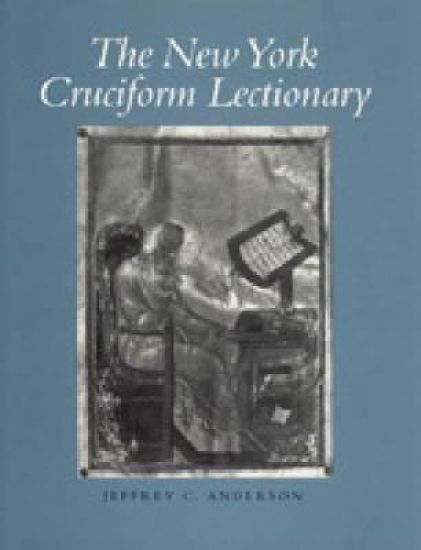
For elegance and beauty, the Constantinopolitan scribes set standards rarely surpassed. The Gospel lectionary was among the books that attracted the most enthusiastic attention of scribes, illuminators, and their patrons. As an important liturgical item, the lectionary was often exquisitely decorated. The subject of this study, the lectionary in the Pierpont Morgan Library, is unusual even among such luxury manuscripts because its scribe laboriously copied every page of text in the shape of a cross. It is one of just three such manuscripts made in Constantinople around the middle of twelfth century, and it is the only one that contains narrative illustration. Jeffrey Anderson provides a full description of the manuscript, and he has translated and indexed its calendar of saints. Each of the miniatures is reproduced, described, and discussed, and Anderson relates some scenes to versions found in other Byzantine lectionaries and Gospels. The illustrations are attributed to two illuminators, and in a separate chapter Anderson situates their contributions with regard to the ruling, writing, and illumination of the pages. He also relates, through style, the cruciform lectionaries to dated twelfth-century monuments to establish their place in the history of Byzantine art.
"[P]ractically everyone I know is nursing fantasies about escaping the life they're trapped in and creating one that makes more sense," writes the editor of Utne Reader in a recent issue. "The people I most admire, though, are those who actually do it—who break free and pursue a higher calling no matter how great the risk." New Pioneers is about one such group of people—the hundreds of thousands of urban North Americans who over the past three decades have given up their city or suburban homes for a few acres of land in the countryside.Jeffrey Jacob's new pioneers are ordinary people who have tried to break away from the mainstream consumer culture and return to small-town and rural America. He traces the development of the movement and identifies seven different kinds of back-to-the-lander: the weekender, country romantic, purist, country entrepreneur, pensioner, micro-farmer, and apprentice. From over 1,300 survey responses, interviews, and in-depth case studies, at both the regional and national levels, of representative back-to-the-landers, Jacob analyzes their values, use of appropriate technology, family division of labor on their acreages, and predisposition toward environmental activism.Jacob finds that back-to-the-landers for the most part are not completely independent of the mainstream economy, and consequently, their lives do reflect the contradictions between the available conveniences of a high-technology culture and the movement's goals of self-reliant labor. He analyzes their ambivalent attitudes toward technology—hoes and shovels versus mini-hydroelectric systems, wood stoves versus microwave ovens, and so on. After examining the experiences of the back-to-the-country people who live on the margins of a postindustrial society, Jacob creates a clearer appreciation of the preconditions necessary to translate the idea of sustainable living into concrete action on a society-wide scale.While New Pioneers describes an important social movement, it also shows how far a group of highly motivated individuals and families can go, by themselves, in breaking away from the prevailing consumer culture. The dilemmas, frustrations, adaptations, and triumphs of these neo-homesteaders offer valuable insights to anyone contemplating a move "back to the land."
"[P]ractically everyone I know is nursing fantasies about escaping the life they're trapped in and creating one that makes more sense," writes the editor of Utne Reader in a recent issue. "The people I most admire, though, are those who actually do it—who break free and pursue a higher calling no matter how great the risk." New Pioneers is about one such group of people—the hundreds of thousands of urban North Americans who over the past three decades have given up their city or suburban homes for a few acres of land in the countryside.Jeffrey Jacob's new pioneers are ordinary people who have tried to break away from the mainstream consumer culture and return to small-town and rural America. He traces the development of the movement and identifies seven different kinds of back-to-the-lander: the weekender, country romantic, purist, country entrepreneur, pensioner, micro-farmer, and apprentice. From over 1,300 survey responses, interviews, and in-depth case studies, at both the regional and national levels, of representative back-to-the-landers, Jacob analyzes their values, use of appropriate technology, family division of labor on their acreages, and predisposition toward environmental activism.Jacob finds that back-to-the-landers for the most part are not completely independent of the mainstream economy, and consequently, their lives do reflect the contradictions between the available conveniences of a high-technology culture and the movement's goals of self-reliant labor. He analyzes their ambivalent attitudes toward technology—hoes and shovels versus mini-hydroelectric systems, wood stoves versus microwave ovens, and so on. After examining the experiences of the back-to-the-country people who live on the margins of a postindustrial society, Jacob creates a clearer appreciation of the preconditions necessary to translate the idea of sustainable living into concrete action on a society-wide scale.While New Pioneers describes an important social movement, it also shows how far a group of highly motivated individuals and families can go, by themselves, in breaking away from the prevailing consumer culture. The dilemmas, frustrations, adaptations, and triumphs of these neo-homesteaders offer valuable insights to anyone contemplating a move "back to the land."
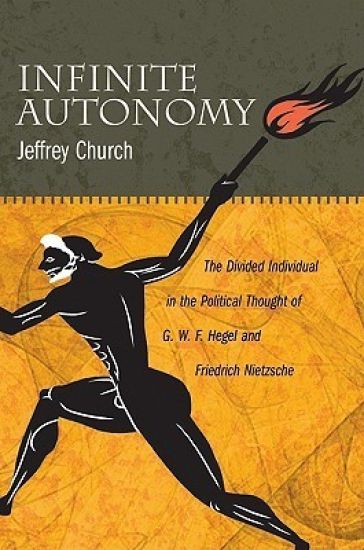
G. W. F. Hegel and Friedrich Nietzsche are often considered the philosophical antipodes of the nineteenth century. In Infinite Autonomy, Jeffrey Church draws on the thinking of both Hegel and Nietzsche to assess the modern Western defense of individuality—to consider whether we were right to reject the ancient model of community above the individual. The theoretical and practical implications of this project are important, because the proper defense of the individual allows for the survival of modern liberal institutions in the face of non-Western critics who value communal goals at the expense of individual rights. By drawing from Hegelian and Nietzschean ideas of autonomy, Church finds a third way for the individual—what he calls the “historical individual,” which goes beyond the disagreements of the ancients and the moderns while nonetheless incorporating their distinctive contributions.
G. W. F. Hegel and Friedrich Nietzsche are often considered the philosophical antipodes of the nineteenth century. In Infinite Autonomy, Jeffrey Church draws on the thinking of both Hegel and Nietzsche to assess the modern Western defense of individuality—to consider whether we were right to reject the ancient model of community above the individual. The theoretical and practical implications of this project are important, because the proper defense of the individual allows for the survival of modern liberal institutions in the face of non-Western critics who value communal goals at the expense of individual rights. By drawing from Hegelian and Nietzschean ideas of autonomy, Church finds a third way for the individual—what he calls the “historical individual,” which goes beyond the disagreements of the ancients and the moderns while nonetheless incorporating their distinctive contributions.
During the nineteenth century, Albrecht Dürer’s art, piety, and personal character were held up as models to inspire contemporary artists and—it was hoped—to return Germany to international artistic eminence. In this book, Jeffrey Chipps Smith explores Dürer’s complex posthumous reception during the great century of museum building in Europe, with a particular focus on the artist’s role as a creative and moral exemplar for German artists and museum visitors.In an era when museums were emerging as symbols of civic, regional, and national identity, dozens of new national, princely, and civic museums began to feature portraits of Dürer in their elaborate decorative programs embellishing the facades, grand staircases, galleries, and ceremonial spaces. Most of these arose in Germany and Austria, though examples can be seen as far away as St. Petersburg, Stockholm, London, and New York City. Probing the cultural, political, and educational aspirations and rivalries of these museums and their patrons, Smith traces how Dürer was painted, sculpted, and prominently placed to accommodate the era’s diverse needs and aspirations. He investigates what these portraits can tell us about the rise of a distinct canon of famous Renaissance and Baroque artists—addressing the question of why Dürer was so often paired with Raphael, who was considered to embody the greatness of Italian art—and why, with the rise of German nationalism, Hans Holbein the Younger often replaced Raphael as Dürer’s partner.Accessibly written and comprehensive in scope, this book sheds new light on museum building in the nineteenth century and the rise of art history as a discipline. It will appeal to specialists in nineteenth-century and early modern art, the history of museums and collecting, and art historiography.
First realized commercially in the late eighteenth century, stereotyping—the creation of solid printing plates cast from moveable type—fundamentally changed the way in which books were printed. Publishing Plates chronicles the technological and cultural shifts that resulted from the introduction of this technology in the United States.The commissioning of plates altered shop practices, distribution methods, and even the author-publisher relationship. Drawing on archival records, Jeffrey M. Makala traces the first uses of stereotyping in Philadelphia in 1812, its adoption by printers in New York and Philadelphia, and its effects on the trade. He looks closely at the printers, typefounders, authors, and publishers who watched small, regional, artisan-based printing traditions rapidly evolve, clearing the way for the industrialized publishing industry that would emerge in the United States at midcentury. Through case studies of the publisher Mathew Carey and the American Bible Society, one of the first publishers of cheap Bibles, Makala explores the origins of the American publishing industry and American mass media. In addition, Makala examines changes in the notion of authorship, copyright, and language and their effects on writers and literary circles, giving examples from the works and lives of Herman Melville, Sojourner Truth, Edgar Allan Poe, Henry David Thoreau, and Walt Whitman, among others. Incorporating perspectives from the fields of book history, the history of technology, material culture studies, and American studies, this book presents a rich, detailed history of an innovation that transformed American culture.