Kirjojen hintavertailu. Mukana 11 434 107 kirjaa ja 12 kauppaa.

Kirjahaku

Etsi kirjoja tekijän nimen, kirjan nimen tai ISBN:n perusteella.

1000 tulosta hakusanalla John Butler Johnson

The Remarkable Life of John Murray Spear

The Remarkable Life of John Murray Spear

John Benedict Buescher

University of Notre Dame Press
2006
sidottu
John Murray Spear was one of nineteenth-century America's most interesting characters. A leading social agitator against slavery and capital punishment, Spear also became the nation's most flamboyant spiritualist, inventor of "spirit machines," and advocate of free love. In his captivating biography, John Buescher brings to life Spear's superlatively odd story. While no photograph or engraving of Spear exists, and his letters and personal papers are scarce, Buescher recreates in this book a sympathetic, even heroic, figure who spent the most energetic decades of his career absent, in a sense, from his own life, displaced by other spirits. Born in 1804, John Murray Spear started his career as a Universalist minister. He later was a close colleague of William Lloyd Garrison and Theodore Parker in the abolitionist movement, an operator on the underground railroad in Boston, an influential leader in the effort to end the death penalty and to reform prison conditions, and a public advocate of the causes of pacifism, women's rights, labor reform, and socialism. Buescher chronicles Spear's work as an activist among the New England reformers and Transcendentalists such as Bronson Alcott, Lydia Maria Child, and Dorothea Dix. In mid-life Spear turned to the new revelation of spiritualism and came under the thrall of what he believed were spirit messages. Spear's spirits dictated that he and a small group of associates embark on plans for a perpetual motion machine, an electric ship propelled by psychic batteries, a vehicle that would levitate in the air, and a sewing machine that would work with no hands. As Buescher documents, Spear's spirit-guided efforts to harness technology to human liberation—sexual and otherwise—were far stranger than anyone outside his closest associates imagined, and were aimed at the eventual manufacturing of human beings and the improvement of the race. Buescher also examines the way in which Spear's story was minimized by his embarrassed fellow radicals. In the last years of his life, retired by the spirits and regarded by fellow Gilded Age progressives as a visitor from another age, if not another planet, Spear helped organize support for anarchist, socialist, peace, and labor causes. Buescher portrays Spear's life as an odd mixture of comic absurdity and serious foreshadowing of the future—for both good and ill—that provides us with a unique perspective on nineteenth-century American religious and social life.
John Buridan

John Buridan

Jack Zupko

University of Notre Dame Press
2003
sidottu
John Buridan (ca. 1300–1361) was the most famous philosophy teacher of his time, and probably the most influential. In this important new book, Jack Zupko offers the first systematic exposition of Buridan's thought to appear in any language. Zupko uses Buridan's own conception of the order and practice of philosophy to depict the most salient features of his thought, beginning with his views on the nature of language and logic and then illustrating their application to a series of topics in metaphysics, natural philosophy, and ethics. Part 1 of John Buridan considers the picture of language and logic developed in Buridan's Summulae de dialectica. Buridan systematically overhauled the logic he first learned and later taught at the University of Paris, redeeming the older tradition of Aristotelian logic in terms, propositions, and arguments. This made possible newer and more powerful forms of philosophical discourse. The second part of this volume provides a reading of Buridan's philosophy, showing how this discourse shaped his treatment of speculative questions such as the relation between soul and body, the nature of knowledge, the proper subject of psychology, the function of the virtues, and the freedom of the will. This groundbreaking book is sure to become the standard work on John Buridan.
John Buridan

John Buridan

Jack Zupko

University of Notre Dame Press
2003
nidottu
John Buridan (ca. 1300–1361) was the most famous philosophy teacher of his time, and probably the most influential. In this important new book, Jack Zupko offers the first systematic exposition of Buridan's thought to appear in any language. Zupko uses Buridan's own conception of the order and practice of philosophy to depict the most salient features of his thought, beginning with his views on the nature of language and logic and then illustrating their application to a series of topics in metaphysics, natural philosophy, and ethics. Part 1 of John Buridan considers the picture of language and logic developed in Buridan's Summulae de dialectica. Buridan systematically overhauled the logic he first learned and later taught at the University of Paris, redeeming the older tradition of Aristotelian logic in terms, propositions, and arguments. This made possible newer and more powerful forms of philosophical discourse. The second part of this volume provides a reading of Buridan's philosophy, showing how this discourse shaped his treatment of speculative questions such as the relation between soul and body, the nature of knowledge, the proper subject of psychology, the function of the virtues, and the freedom of the will. This groundbreaking book is sure to become the standard work on John Buridan.
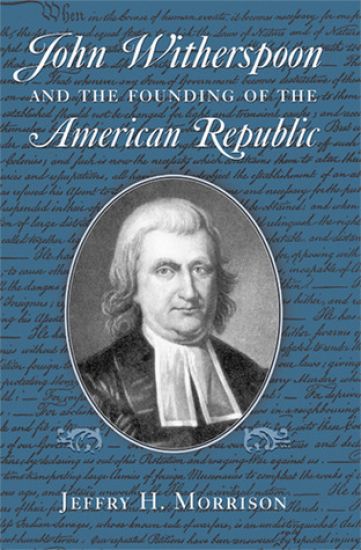
John Witherspoon and the Founding of the American Republic: Catholicism in American Culture
Jeffry H. Morrison offers readers the first comprehensive look at the political thought and career of John Witherspoon--a Scottish Presbyterian minister and one of America's most influential and overlooked founding fathers. Witherspoon was an active member of the Continental Congress and was the only clergyman both to sign the Declaration of Independence and to ratify the federal Constitution. During his tenure as president of the College of New Jersey at Princeton, Witherspoon became a mentor to James Madison and influenced many leaders and thinkers of the founding period. He was uniquely positioned at the crossroads of politics, religion, and education during the crucial first decades of the new republic. Morrison locates Witherspoon in the context of early American political thought and charts the various influences on his thinking. This impressive work of scholarship offers a broad treatment of Witherspoon's constitutionalism, including his contributions to the mediating institutions of religion and education, and to political institutions from the colonial through the early federal periods. This book will be appreciated by anyone with an interest in American political history and thought and in the relation of religion to American politics.
John Witherspoon and the Founding of the American Republic

John Witherspoon and the Founding of the American Republic

Jeffry H. Morrison

University of Notre Dame Press
2003
nidottu
Jeffry H. Morrison offers readers the first comprehensive look at the political thought and career of John Witherspoon—a Scottish Presbyterian minister and one of America's most influential and overlooked founding fathers. Witherspoon was an active member of the Continental Congress and was the only clergyman both to sign the Declaration of Independence and to ratify the federal Constitution. During his tenure as president of the College of New Jersey at Princeton, Witherspoon became a mentor to James Madison and influenced many leaders and thinkers of the founding period. He was uniquely positioned at the crossroads of politics, religion, and education during the crucial first decades of the new republic. Morrison locates Witherspoon in the context of early American political thought and charts the various influences on his thinking. This impressive work of scholarship offers a broad treatment of Witherspoon's constitutionalism, including his contributions to the mediating institutions of religion and education, and to political institutions from the colonial through the early federal periods. This book will be appreciated by anyone with an interest in American political history and thought and in the relation of religion to American politics.
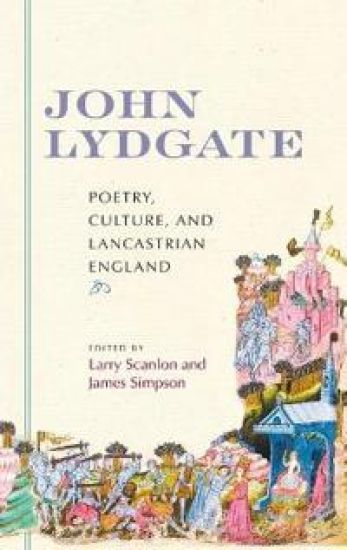
John Lydgate

John Lydgate

James Simpson

University of Notre Dame Press
2006
sidottu
Essays in this volume argue that it is time for a powerful reassessment of John Lydgate's poetic projects. The pre-eminent poet of his own century, Lydgate (c. 1370-1449) addressed the historical challenges of war with France, of looming civil war, and of new theological forces in the vernacular. He wrote for household, parish, city, monastery, Church, and state. Although an official poet of sorts—perhaps the first major official poet in the English poetic tradition—he was not by any means a merely celebratory or sycophantic writer. Instead, he drew on his authority as monk to shape a contestative poetic space, underlining the grief and treacherousness of power. Despite his exceptional cultural significance, Lydgate has, for different reasons, been marginalized by many literary historical movements since the sixteenth century. John Lydgate is energized by the challenge of an oeuvre so large and so ripe for reevaluation. Each essay here makes a decisive contribution to an area of Lydgate's corpus, and opens fresh perspectives for further investigation. Contributors write about Lydgate from a variety of critical perspectives and underscore the poet's diverse writings, which included beast fables, mummings, hagiographical and devotional poetry, and civic pageants. The essays also reassess better-known works and themes in the field of Lydgate studies, including Lydgate's unofficial laureateship, his relations to his patrons, and his relationship to Chaucer. This book makes an important contribution to medieval scholarship and it will be welcomed by scholars and students alike.
John Lydgate

John Lydgate

James Simpson

University of Notre Dame Press
2006
nidottu
Essays in this volume argue that it is time for a powerful reassessment of John Lydgate's poetic projects. The pre-eminent poet of his own century, Lydgate (c. 1370-1449) addressed the historical challenges of war with France, of looming civil war, and of new theological forces in the vernacular. He wrote for household, parish, city, monastery, Church, and state. Although an official poet of sorts—perhaps the first major official poet in the English poetic tradition—he was not by any means a merely celebratory or sycophantic writer. Instead, he drew on his authority as monk to shape a contestative poetic space, underlining the grief and treacherousness of power. Despite his exceptional cultural significance, Lydgate has, for different reasons, been marginalized by many literary historical movements since the sixteenth century. John Lydgate is energized by the challenge of an oeuvre so large and so ripe for reevaluation. Each essay here makes a decisive contribution to an area of Lydgate's corpus, and opens fresh perspectives for further investigation. Contributors write about Lydgate from a variety of critical perspectives and underscore the poet's diverse writings, which included beast fables, mummings, hagiographical and devotional poetry, and civic pageants. The essays also reassess better-known works and themes in the field of Lydgate studies, including Lydgate's unofficial laureateship, his relations to his patrons, and his relationship to Chaucer. This book makes an important contribution to medieval scholarship and it will be welcomed by scholars and students alike.
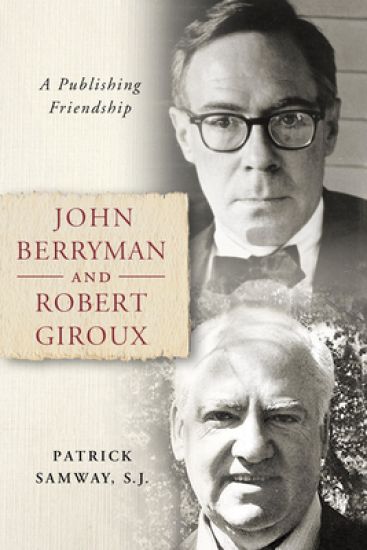
John Berryman and Robert Giroux

John Berryman and Robert Giroux

Patrick Samway

University of Notre Dame Press
2020
sidottu
This engaging study provides new perspectives on the lives and work of two major figures in American poetry and publishing in the second half of the twentieth century: Robert Giroux (1914-2008), editor-in-chief of Harcourt, Brace and Company and later of Farrar, Straus and Giroux, and John Berryman (1914-1972), Pulitzer Prize-winning poet and Shakespearean scholar who also received a National Book Award and a Bollingen Prize for Poetry. From their first meeting as undergraduates at Columbia College in New York City in the early 1930s, Giroux and Berryman became lifelong friends and publishing partners. Patrick Samway received unprecedented access to Giroux's letters and essays. By incorporating either sections or whole letters of the correspondence between Berryman and Giroux into this book, Samway makes available for the first time a historical account of their relationship, including revealing portraits of their personal lives.As Giroux edited over a dozen books by Berryman, his letters to the poet were often filled with editorial details and pertinent observations, emanating from his genuine affection for his friend, whose talent he never doubted, even as Berryman endured prolonged periods of hospitalization due to his alcoholism. Giroux gave Berryman the greatest gift he could: sustained encouragement to continue writing without trying to manipulate or discourage him in any way. But Giroux also had a deep-seated secret desire to surpass the essays written about Shakespeare by Berryman, as well as the book on Shakespeare written by their mutual professor Mark Van Doren. Giroux's volume, The Book Known as Q: A Consideration of Shakespeare's Sonnets, was finally published in 1982. Samway's fascinating account of a gifted but troubled poet and his devoted yet conflicted editor will interest fans of Berryman and all readers and students of American poetry.
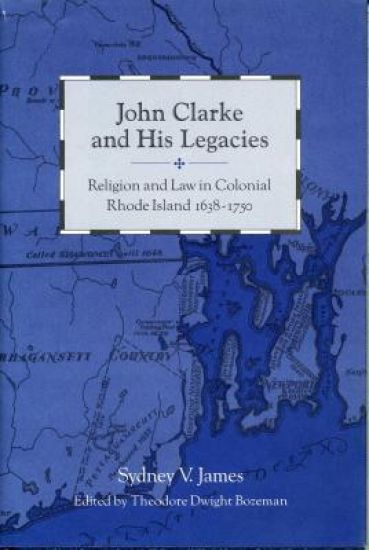
John Clarke and His Legacies

John Clarke and His Legacies

Sydney James

Pennsylvania State University Press
1999
sidottu
John Clarke and His Legacies is the first full-length biography of John Clarke (1609–76), a principal founder of colonial Rhode Island. Although Roger Williams usually gets most of the attention, Sydney James shows that Clarke made a lasting contribution to the colony—perhaps more so than Williams. Williams was the first Baptist minister in America, but he left his church after a very short time. And although Williams won the first charter for Rhode Island, the charter soon had to be replaced. Clarke, however, founded the first Baptist church in Newport, where he continued to contribute to the Baptist community. And in 1663 he procured the royal charter that would remain the foundation of government in Rhode Island until 1842.This inquiry into Clarke's life engages a variety of intriguing topics. It surveys a formative stage in American Baptist history, one that spurned dependency upon government more thoroughly than any part of the United States does today. Through the experience of Clark, we see pioneering American religious volunteerism, problems of church-state relations, and the peculiar nature of colonial relations with the parent country.
Letters of General John Forbes

Letters of General John Forbes

John Forbes

Pennsylvania State University Press
2006
pokkari
This volume is made up of the letters of British general John Forbes, who led the campaign against Fort Duquesne, a pivotal episode in the French and Indian War. Primarily from the year 1758, the letters, to William Pitt, Governor Denny of Pennsylvania, General Sharpe of Maryland, and others, offer readers a firsthand glimpse of the campaign, from the preparation through the expedition to Fort Duquesne and the eventual British capture of the fort, where Pittsburgh now stands. The correspondence is accompanied by various related letters between other key players in the expedition.
John Clarke and His Legacies

John Clarke and His Legacies

Sydney James

Pennsylvania State University Press
1999
pokkari
John Clarke and His Legacies is the first full-length biography of John Clarke (1609–76), a principal founder of colonial Rhode Island. Although Roger Williams usually gets most of the attention, Sydney James shows that Clarke made a lasting contribution to the colony—perhaps more so than Williams. Williams was the first Baptist minister in America, but he left his church after a very short time. And although Williams won the first charter for Rhode Island, the charter soon had to be replaced. Clarke, however, founded the first Baptist church in Newport, where he continued to contribute to the Baptist community. And in 1663 he procured the royal charter that would remain the foundation of government in Rhode Island until 1842.This inquiry into Clarke's life engages a variety of intriguing topics. It surveys a formative stage in American Baptist history, one that spurned dependency upon government more thoroughly than any part of the United States does today. Through the experience of Clark, we see pioneering American religious volunteerism, problems of church-state relations, and the peculiar nature of colonial relations with the parent country.
John Dewey and the Artful Life

John Dewey and the Artful Life

Scott R. Stroud

Pennsylvania State University Press
2011
sidottu
Aesthetic experience has had a long and contentious history in the Western intellectual tradition. Following Kant and Hegel, a human’s interaction with nature or art frequently has been conceptualized as separate from issues of practical activity or moral value. This book examines how art can be seen as a way of moral cultivation. Scott Stroud uses the thought of the American pragmatist John Dewey to argue that art and the aesthetic have a close connection to morality. Dewey gives us a way to reconceptualize our ideas of ends, means, and experience so as to locate the moral value of aesthetic experience in the experience of absorption itself, as well as in the experience of reflective attention evoked by an art object.
John Dewey and the Artful Life

John Dewey and the Artful Life

Scott R. Stroud

Pennsylvania State University Press
2011
pokkari
Aesthetic experience has had a long and contentious history in the Western intellectual tradition. Following Kant and Hegel, a human’s interaction with nature or art frequently has been conceptualized as separate from issues of practical activity or moral value. This book examines how art can be seen as a way of moral cultivation. Scott Stroud uses the thought of the American pragmatist John Dewey to argue that art and the aesthetic have a close connection to morality. Dewey gives us a way to reconceptualize our ideas of ends, means, and experience so as to locate the moral value of aesthetic experience in the experience of absorption itself, as well as in the experience of reflective attention evoked by an art object.
John Andrew Frey

John Andrew Frey

Charles Lopeman

Praeger Publishers Inc
1999
sidottu
Lopeman examines the impact advocacy of intentional judicial activism by a justice of a state supreme court can have on establishing the court as a policy maker. He examines the attitudinal model and the judicial role model of decision making and concludes that, while the attitudinal model might describe the decision-making process in the U.S. Supreme Court, the judicial role model better describes decision making in state supreme courts. This judicial role model allows the activist to transform a court into a policy maker.The traditions, recent history, and biographies of recent justices of the Indiana, West Virginia, and Ohio courts are examined to establish a significant relationship between the presence of an activist advocate justice and active policy making by the courts. These courts' decisions in cases with policy making potential are contrasted with decisions in similar cases of three state supreme courts that did not have an advocate justice. Lopeman argues that the presence of an activist advocate explains a court's transformation to active policy making, and that other apparent explanations are insufficient. He emphasizes that the motives of an activist advocate are likely to determine the permanence of policy making in the court. This volume is an important resource for political scientists, legal scholars, and other researchers involved with judicial decision making, state politics, and state constitutional law.
John Basil Turchin and the Fight to Free the Slaves

John Basil Turchin and the Fight to Free the Slaves

Stephen Chicoine

Praeger Publishers Inc
2003
sidottu
This book highlights the contributions of a Russian immigrant who became a Union officer during the Civil War. John Basil Turchin left Czarist Russia to embrace democracy in America. When the Civil War began, he rushed to defend the Union, his formal training in the Imperial Russian Army and his combat experience in the Crimean making him a valuable officer. A man of conviction, he refused to be intimidated by commanding officers that were lenient toward rebels and the return of fugitive slaves to their masters. His subsequent court martial turned the trial into a focal point for Northern debate on the conduct of the war and the issue of slavery.John Basil Turchin left Czarist Russia to embrace democracy in America. When the Civil War began, he rushed to defend the Union, his formal training in the Imperial Russian Army and his combat experience in the Crimean making him a valuable officer. He was among those determined to see the war as revolutionary—a vehicle by which to put an end to Southern aristocracy and the institution of slavery. A man of conviction, he refused to be intimidated by commanding officers that were lenient toward rebels and the return of fugitive slaves to their masters. His actions during the Union thrust into northern Alabama in the spring of 1862 led to his court martial. The national attention given to the proceedings turned the trial into a focal point for Northern debate on the conduct of the war and the issue of slavery.Turchin took advantage of his exposure during the trial to express his position to the nation. His reinstatement by Lincoln in the aftermath of the court-martial and his promotion to brigadier general signaled that the administration was beginning to take a stronger position. The Emancipation Proclamation, delivered by Lincoln shortly thereafter, transformed the war into a crusade to free the slaves. John Basil Turchin returned to the field and played important roles on the battlefields of Chickamauga and Missionary Ridge.
John Jebb and the Enlightenment Origins of British Radicalism
A supporter of the American rebellion and advocate of radical ideas on religion, philosophy, education, law, medicine, and politics, John Jebb (1736-1786) provides an ideal case to examine the nature of radicalism in 18th-century Britain. Jebb began his career as a clergyman and academic at Cambridge in the 1760s and died as a doctor and leading figure among political reformers in Enlightenment London. Profoundly influenced by David Hartley's attempt to combine a Christian theology of universal salvation with a materialist and determinist account of the mind, Jebb's philosophical and religious radicalism inspired him to work tirelessly for reform. This is the first modern extended study of his life.While at Cambridge, Jebb provoked strong conservative opposition to his religious views and proposals for academic reform. Increasingly marginalized in church and university, as a tide of loyalism swept the country in response to rebellion in America, Jebb resigned as a clergyman and moved to London to work as a doctor. As the American war dragged on with no end in sight, a popular movement urging political reform developed. Jebb became a leader of this movement and was instrumental in establishing a platform that called for universal suffrage and annual elections. British radicals would continue to campaign for this platform until the mid-19th century.