
Kirjahaku
Etsi kirjoja tekijän nimen, kirjan nimen tai ISBN:n perusteella.
1000 tulosta hakusanalla John R. Howe

Syntactic Change and Syntactic Reconstruction
John R Costello
Sil International, Global Publishing
1984
pokkari

Cultural Diversity and Canadian Education
John R. Mallea; Young
Carleton University Press,Canada
1984
nidottu
This thorough study will be of assistance to those seeking to understand the role of education in contemporary Canada. Education policy and practice regarding language and culture are highlighted, as is the crucially important question of cultural transmission.
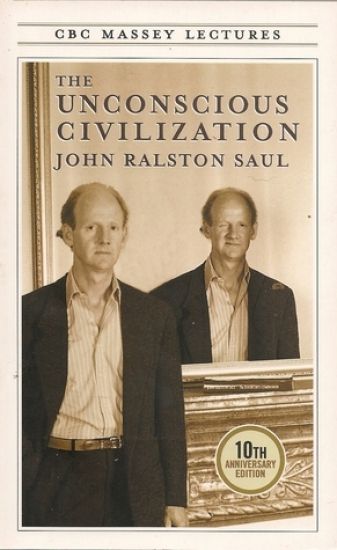
Governor General's Award WinnerTenth Anniverary Edition, with a new prefaceOur society, John Ralston Saul argues in his 1995 CBC Massey Lectures, is only superficially based on the individual and democracy. Increasingly it is conformist and corporatist, a society in which legitimacy lies with specialist or interest groups and decisions are made through constant negotiations between these groups.The paradox of our situation is that knowledge has not made us conscious. Instead, we have sought refuge in a world of illusion where language is cut off from reality. Reconnecting language to reality, clarifying what we mean by individualism and democracy, making these realities central to the citizen's life, identifying ideologies in order to control them, these are among the first elements of equilibrium which Saul proposes in these lectures.John Ralston Saul argues that our society is only superficially based on democracy, and that increasingly it is conformist and corporatist.

Valuesâthose intangible guidepostsâserve as standards and perceptual screens which assist us in selecting our priorities for reflection and action. Our quest is to clarify, compare, and form values expressed in defensible and consistent value judgements and actions.
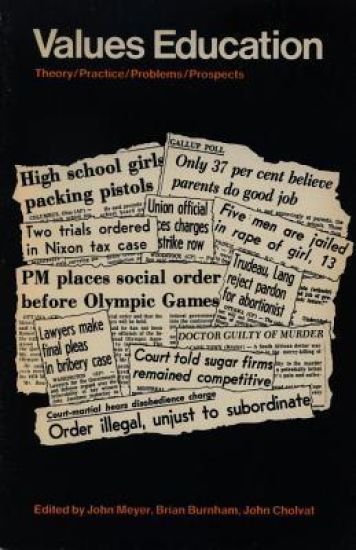
Valuesâthose intangible guidepostsâserve as standards and perceptual screens which assist us in selecting our priorities for reflection and action. Our quest is to clarify, compare, and form values expressed in defensible and consistent value judgements and actions.
Religious and Spiritual Issues in Psychiatric Diagnosis
John R. Peteet; Francis G. Lu; William E. Narrow
American Psychiatric Association Publishing
2010
pokkari
Religious and Spiritual Issues in Psychiatric Diagnosis: A Research Agenda for DSM-V examines the role of spiritual and religious considerations in the DSM revision process. The volume includes chapters on each major category of psychiatric disorder, with an analysis of the implications of religion and spirituality for their diagnosis, course, and outcome. Based on the work presented by the prominent clinicians and researchers who participated in the 2006 Corresponding Committee on Religion, Spirituality, and Psychiatry of the American Psychiatric Association, the volume addresses the spiritual and philosophical issues involved in distinguishing a psychiatric disorder from a spiritual condition. This volume is unique in reviewing the literature on spirituality and major psychiatric disorders with the objective of clarifying where existing descriptions of diagnostic criteria and of the course and outcome of these disorders require revision. In addition, the contributors identify areas that demand further research. Only in this book can clinicians find a comprehensive treatment of this important topic, as well as features that enhance understanding and encourage future scholarship. • Each chapter makes specific recommendations for revising the wording of the DSM, and each is followed by two commentaries that contextualize, analyze, and critique the chapter's recommendations.• Other chapter contributors make the case for updating the V Code for a Spiritual or Religious Problem, and discuss the place of spiritual and religious considerations in the Outline for a Cultural Formulation. • Mental health practitioners from all disciplines who seek to practice in a more integrated, holistic fashion will find in this volume a foundation for including religious and spiritual considerations in their cases, as well as recognition and validation that these problems are worthy of clinical attention. Psychiatry has often been viewed as hostile to religion, and the DSM has been criticized for neglecting this vital dimension of human experience. As interest in the intersection between spirituality and mental health continues to grow, Religious and Spiritual Issues in Psychiatric Diagnosis: A Research Agenda for DSM-V will become an ever more relevant and necessary resource for addressing these concerns in a positive, practical, and systematic way.
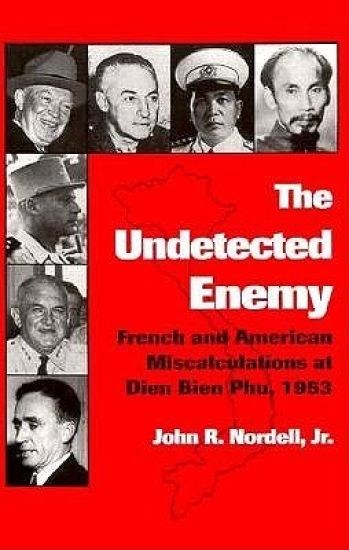
The French Indo-China War of 1946-54 was one of the longest and bloodiest conflicts of the twentieth century. The French had attempted to reinstate their colonial rule over the region after World War II, but by 1953 it was obvious that they were slowly losing the war to the Viet-Minh, supported by Communist China. In late 1953 the French High Command decided to occupy the valley of Dien Bien Phu in northwestern Vietnam. Dien Bien Phu became the site of the most decisive battle of the French Indo-China War. Indeed, the outcome at Dien Bien Phu set the stage for America's military involvement in Vietnam a decade later. Yet despite its importance, there is still uncertainty about why the French chose to make a stand at a place that, in hindsight, involved such risks. In The Undetected Enemy, John Nordell examines that question by telling the full story of the strategic, tactical, logistical, and intelligence considerations that underlay the French decision. This book also gives close attention to the reaction of the Eisenhower administration to the Dien Bien Phu operation, an important part of the story that, until now, has been overlooked. Historians have preferred to focus on the climactic siege of Dien Bien Phu in the spring of 1954, when the issue of U.S. intervention hung in the balance. The Undetected Enemy looks at the period preceding the battle for the valley, when U.S. officials, including the president, responded with optimism or, even worse, indifference to the French operations. Using war memoirs and archived documents only recently declassified, the author weaves a compelling narrative of rapidly unfolding developments during the buildup to the siege. For military enthusiasts and historians, this story, written from the perspective of the participants themselves, answers the decades-old question, "PourquoiDien Bien Phu?"


Lectionary Preaching Workbook, Series B, is a sermon resource book on all three texts for every Sunday of the church year. Printed with side margins for work space, it is the one book you will look at every week to get started on your Sunday sermons. Included in the text are: - An introduction to Mark's gospel. - An overview of each church season, including its meaning, message, mood, liturgical propers, theology, observance, customs, contemporary, understanding, and preaching goals. - Lesson context and suggested outlines, themes, and thoughts on each of the three texts for each Sunday, including what Brokhoff calls Preaching Possibilities for every text. - A general list of resources, commentaries, and preaching aids that deal with Series B. John R. Brokhoff, a pastor and eminently successful preacher for more than three decades, is Professor of Emeritus of Homiletics, Emory University, Candler School of Theology, Atlanta. A graduate of Muhlenberg College and the Lutheran Theological Seminary at Philadelphia, Dr. Brokhoff was awarded the Doctor of Divinity Degree from Muhlenberg. He has served parishes in Pennsylvania, North Carolina, Georgia, and Virginia.
In 1928, it was discovered that copper was essential for normal human metabolism. A decade later, in 1938, it was observed that patients with rheu matoid arthritis exhibited a higher than normal serum copper concentration that returned to normal with remission of this disease. Thirteen years later, it was found that copper complexes were effective in treating arthritic dis eases. The first report that copper complexes had antiinflammatory activity in an animal model of inflammation appeared twenty-two years after the dis covery of essentiality. In 1976, it was suggested that the active forms of the antiarthritic drugs are their copper complexes formed in vivo. This sugges tion has been confirmed and extended in the interim in over 200 recent publications. Individual biomedical scientists from many countries who have published in these areas recently saw a need for a meeting to exchange current re supporting new hypotheses. We search results and discuss the evidence met on the University of Arkansas Medical Sciences campus in Little Rock, Arkansas, August 10-13, 1981. Participants came from Australia, England, France, Germany, Israel, Italy, The Netherlands, Norway, Poland, Scotland, Sweden, Switzerland, Wales, Zimbabwe, and over twenty of the United States.

In 1928, it was discovered that copper was essential for normal human metabolism. Ten years later, 1938, it was observed that patients with rheumatoid arthritis had a higher than normal serum copper concentration, which returned to normal wi th remission of this disease. Thirteen years later, it was found that copper complexes were effective in treating arthritic diseaseS. The first report that copper complexes had antiinflammatory activity in an animal model of in flammation appeared twenty-two years after the discovery of essen tiality. In 1976, it was suggested that the active forms of the anti arthritic drugs are their copper complexes formed in vivo. This suggestion was confirmed and extended in the interim with over 1000 recent publications, and many of these were addressed in the proceed ings of our first symposium, published in 1982. The present symposium was organized to present new normal physiological, nutritional, and biochemical aspects of essential metal loelement metabolism as well as variations in metabolism associated with disease states. In addition new data concerning antimicrobial, antiinflammatory, antiulcer, anticancer, anticarcinogenic, analgesic, and radioprotectant activities of copper complexes were presented. These activities are consistent with the notion that they represent the facilitation of normal copper-dependent metabolic processes in dis ease states. The presentations and interactive discussions that fol lowed are contained in these proceedings. John R. J. Sorenson Dedication These proceedings are dedicated to those who made this truly memorable scientific and social Arkansas experience possible.

7he a1m 0f EL15A: 7he0ry and Pract1ce t0 1ntr0duce the expe- menter t0 the techn0109y kn0wn the En2yme L1nked 1mmun050r6ent A55ay (EL15A). 7he 600k d1rected at w0rker5 w1th vary1n9 de9ree5 0f exper1ence, 6ut f0r th05e w1th0ut any prev10u5 c0ntact w1th the a55ay. 1mmun0a55ay5 f0rm the 6ack60ne 0f u5ed te5t5 the 5tudy 0f 1nf- d15ea5e5 t10u5 and end0cr1n0109y, and hence can 6e u5ed t01d- a9ent5 cau5at1ve t1fy 0f the extent and nature (ep1dem10109y) 0f d15ea5e, and mea5ure h0rm0ne5 at EL15A5 pr0v1de h19h1y and prec15e meth0d5 f0r the mat10n 0f parameter5, w1th the added advanta9e that they can hand1e 1ar9e num6er5 0f 5amp1e5 that may then 6e ana1y2ed rap1d1y. 7he5e a55ay5 are ver5at11e, hav1n9 6een app11ed t0 a w1de ran9e 0f e.9., v1ru5e5, 6acter1a, fun91, and pr0t020an and meta- 20an 51nce para51te5. 1971, when the effect1ve en2yme-1a6e1ed a55ay wa5 de5cr16ed (1), th0u5and5 0f have 6een pu6115hed de- w1th the 4uant1f1cat10n 0f ant19en5 and ant160d1e5 f0r re5earch and app11ed purp05e5. EL15A and re1ated a55ay5 1nv01v1n9 u5e 0f en2yme5 t0 06ta1n c010r1metr1c re5u1t5 have n0w rep1aced rad101mmun0a55ay (R1A) f0r m05t d1a9n05t1c purp05e5, 51nce the f0rmer 0ffer5 a p0tent1a1 w1th 1ncrea5ed ver5at111ty t0 a w1der 9r0up 0f Examp1e5 0f 5pec1f1c area5 t0 wh1ch EL15A5 have 6een app11ed re5earch and are: Detect10n and 0f wh01e 0r part5 0f a9ent5, e.9., typ1n9; 2. 0f a9ent5, e.9., 5u6typ1n9; d15ea5e D15cr1m1nat10n d15ea5e 1dent1f1cat10n 1. d1a9n0515 1n 5c1ent15t5.
John R. Crowther provides today's premier practical guide to the understanding and application of ELISA. Updating and greatly expanding his widely appreciated earlier publication, ELISA Theory and Practice (1995), this important work introduces chapters on such major new topics as checkerboard titrations, quality control of testing, kit production and control, novel monoclonal antibodies, validation of assays, statistical requirements for data examination, and epidemiological considerations. With its numerous worked examples, detailed instructions, and extensive illustrations, The ELISA Guidebook offers a powerful synthesis of all the basic concepts and practical experimental details investigators need to understand, develop, and apply the new ELISA methodology successfully in day-to-day basic and clinical research.

Now it is time for you to read the letters of Mari Sandoz. If it has been a clear summer day and it is near sundown, take this book and a cool drink outside and soak in the wisdom of a writer with a cause. —John R. Wunder, from the forewordAuthor Mari Sandoz was as passionate about Plains peoples as she was about language and literary acclaim. That the mastery of Crazy Horse’s biographer spilled into her zealous advocacy for Native Americans is scarcely surprising. An avid letter writer, Sandoz kept carbons of everything. Fortunately these came into the Sandoz Collection at the University of Nebraska Archives, organized by Kimberli A. Lee, foremost expert on Sandoz’s writings.Though Sandoz richly deserves attention, recent scholarship is scant. In arranging and analyzing this correspondence, Lee reinstates Sandoz as one of the most significant non-Native chroniclers and advocates for Plains Indian cultures. There is much here for historians and other scholars of American Indian, Great Plains, rhetorical, and women’s studies. Yet Sandoz’s wider fan base should not be surprised to hearken to a voice and ardor they will find well familiar.
Published in 1976, Language, Memory, and thought is a valuable contribution to the field of Cognitive Psychology. This book presents a theory about human cognitive functioning, a set of experiments testing that theory, and a review of some of the literature relevant to the theory. The theory is embodied in a computer simulation model called ACT.
First published in 1973. This book proposes and tests a theory about human memory, about how a person encodes, retains, and retrieves information from memory. The book is especially concerned with memory for sentential materials. We propose a theoretical framework which is adequate for describing comprehension of linguistic materials, for exhibiting the internal representation of propositional materials, for characterizing the interpretative processes which encode this information into memory and make use of it for remembering, for answering questions, recognizing instances of known categories, drawing inferences, and making deductions.
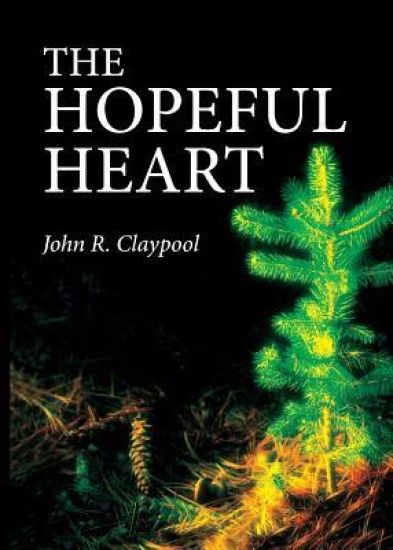
Hope is to the human spirit what breath is to the physical body—the very fuel that animates our being. So says best-selling author John Claypool. But with hopefulness comes the possibility of disappointment. How can we hope and yet be realistic about what we hope for? What is a hope that doesn’t disappoint? In his inimitable pastoral and gentle way, Claypool explores biblically based avenues to hopefulness. Beginning with what we can and cannot know of God's promises, he discusses the value of humility in the face of the Great Mystery that is God. Claypool then examines what we can expect by letting God be God, and he looks at the place of forgiveness and second chances in seeking hope. His conclusion addresses the greatest hope, that of the life to come beyond the grave. This very personal book, written without theological jargon, will be a welcome companion to anyone who is struggling with disappointment, fear, or loss.
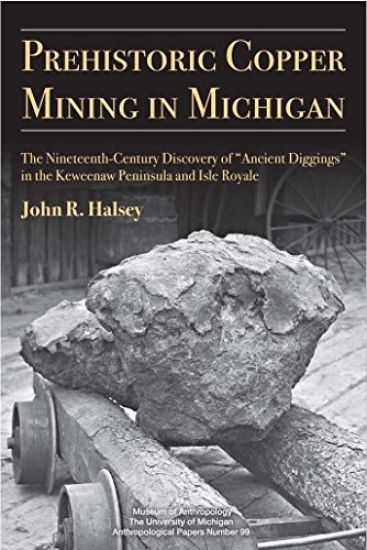
Isle Royale and the counties that line the northwest coast of Michigan’s Upper Peninsula are called Copper Country because of the rich deposits of native copper there. In the nineteenth century, explorers and miners discovered evidence of prehistoric copper mining in this region. They used those “ancient diggings” as a guide to establishing their own, much larger mines, and in the process, destroyed the archaeological record left by the prehistoric miners. Using mining reports, newspaper accounts, personal letters, and other sources, this book reconstructs what these nineteenth-century discoverers found, how they interpreted the material remains of prehistoric activity, and what they did with the stone, wood, and copper tools they found at the prehistoric sites. “This volume represents an exhaustive compilation of the early written and published accounts of mines and mining in Michigan’s Upper Peninsula. It will prove a valuable resource to current and future scholars. Through these early historic accounts of prospectors and miners, Halsey provides a vivid picture of what once could be seen.” —John M. O’Shea, curator of Great Lakes Archaeology, University of Michigan Museum of Anthropological Archaeology