Kirjojen hintavertailu. Mukana 11 342 296 kirjaa ja 12 kauppaa.

Kirjahaku

Etsi kirjoja tekijän nimen, kirjan nimen tai ISBN:n perusteella.

1000 tulosta hakusanalla Jon B. Fish

The Identification of Northern European Woods
This technical and well-illustrated guide for archaeologists and conservators aims to `provide a methodology for the identification of the woody taxa used to manufacture artefacts recovered from archaeological excavations', to provide the anatomical descriptions of the taxa and to present a list of characters of the taxa. The guide is heavily illustrated with photographs, maps, and tables to allow easy identification.
Artificial Intelligence, Automation and the Future of Competence at Work
Artificial intelligence and the autonomous robots of the Fourth Industrial Revolution will render certain jobs and competences obsolete but will also create new roles, which in turn require new sets of skills. They will also transform how we produce, distribute and consume, as well as how we think. Rather than a linear understanding of evolutionary processes, we will develop a more interactive and circular interpretation. This book offers a unique and holistic perspective on the future of work in the context of industry 4.0. It discusses the globalization of capital markets, how artificial intelligence can help organizations to be more competitive and the new role of leadership in this technological landscape. The author argues that there are four categories of competences, which will be required in order to maintain the relevance of human skills and expertise in the innovation economy. The new jobs that come into being will lend themselves to a particular set of skills. General competences will be necessary for roles involving the 4Cs of communication, creativity, collaboration and change. Specific or STEM competences will be called for across the science, technology, engineering and mathematics sectors. Human competences will lend themselves to positions comprising the SELC framework of social, emotional, leadership and cultural skills. Critical or REVE competences will be in demand for roles embracing reflection, ethics, values and the environment. The book provides a human-centric view of the current technological advancements of artificial intelligence and robotics and offers a positive outlook for human actors seeking continued relevance. It will appeal to scholars and students of the innovation economy, the knowledge society and the coming Fourth Industrial Revolution.
Artificial Intelligence, Automation and the Future of Competence at Work
Artificial intelligence and the autonomous robots of the Fourth Industrial Revolution will render certain jobs and competences obsolete but will also create new roles, which in turn require new sets of skills. They will also transform how we produce, distribute and consume, as well as how we think. Rather than a linear understanding of evolutionary processes, we will develop a more interactive and circular interpretation. This book offers a unique and holistic perspective on the future of work in the context of industry 4.0. It discusses the globalization of capital markets, how artificial intelligence can help organizations to be more competitive and the new role of leadership in this technological landscape. The author argues that there are four categories of competences, which will be required in order to maintain the relevance of human skills and expertise in the innovation economy. The new jobs that come into being will lend themselves to a particular set of skills. General competences will be necessary for roles involving the 4Cs of communication, creativity, collaboration and change. Specific or STEM competences will be called for across the science, technology, engineering and mathematics sectors. Human competences will lend themselves to positions comprising the SELC framework of social, emotional, leadership and cultural skills. Critical or REVE competences will be in demand for roles embracing reflection, ethics, values and the environment. The book provides a human-centric view of the current technological advancements of artificial intelligence and robotics and offers a positive outlook for human actors seeking continued relevance. It will appeal to scholars and students of the innovation economy, the knowledge society and the coming Fourth Industrial Revolution.
International Regimes and Norway's Environmental Policy
Since the former Norwegian prime minister, Gro Harlem Brundtland, led the World Commission on Sustainable Development, Norway has played an important role in international environmental co-operation. This volume looks at how this one state engaged international regimes in order to pursue its own national goals in the following issue areas: climate change, biodiversity, ozone depletion, air pollution, marine pollution and whaling. In doing so, it offers an innovative new approach to the study of international regime effectiveness and on linkages or interactions between international regimes.
How to Think Like a Behavior Analyst

How to Think Like a Behavior Analyst

Jon Bailey; Mary R. Burch

TAYLOR FRANCIS LTD
2022
nidottu
How to Think Like a Behavior Analyst is a revolutionary resource for understanding complex human behavior and making potentially significant quality-of-life improvements. Practical and clearly written, this second edition addresses basic questions like how behavior analysts work, why specific methods and procedures are used, what alternative "fad" treatments are, and more. The updated text answers 70 frequently asked questions about behavior analysis using an accessible question-and-answer format. Each question now includes a Quick Take, which is a simple and easy-to-read answer to the question, and then a more in-depth Technically Speaking answer that is more challenging. A brand-new chapter discusses ways of advancing one’s career in the field and how to go to graduate school and become board certified. This text is written for all professionals concerned with behavior, including undergraduate students in psychology and behavior analysis, parents, teachers, employers, and employees. The book can easily be used as a supplement to primary texts in introductory psychology courses, and the exercises that follow each question can be used to stimulate lively discussion in role-play and other active learning situations.
How to Think Like a Behavior Analyst

How to Think Like a Behavior Analyst

Jon Bailey; Mary R. Burch

TAYLOR FRANCIS LTD
2022
sidottu
How to Think Like a Behavior Analyst is a revolutionary resource for understanding complex human behavior and making potentially significant quality-of-life improvements. Practical and clearly written, this second edition addresses basic questions like how behavior analysts work, why specific methods and procedures are used, what alternative "fad" treatments are, and more. The updated text answers 70 frequently asked questions about behavior analysis using an accessible question-and-answer format. Each question now includes a Quick Take, which is a simple and easy-to-read answer to the question, and then a more in-depth Technically Speaking answer that is more challenging. A brand-new chapter discusses ways of advancing one’s career in the field and how to go to graduate school and become board certified. This text is written for all professionals concerned with behavior, including undergraduate students in psychology and behavior analysis, parents, teachers, employers, and employees. The book can easily be used as a supplement to primary texts in introductory psychology courses, and the exercises that follow each question can be used to stimulate lively discussion in role-play and other active learning situations.
Moving Beyond Modern Portfolio Theory

Moving Beyond Modern Portfolio Theory

Jon Lukomnik; James P. Hawley

Routledge
2021
nidottu
Moving Beyond Modern Portfolio Theory: Investing That Matters tells the story of how Modern Portfolio Theory (MPT) revolutionized the investing world and the real economy, but is now showing its age. MPT has no mechanism to understand its impacts on the environmental, social and financial systems, nor any tools for investors to mitigate the havoc that systemic risks can wreck on their portfolios. It’s time for MPT to evolve.The authors propose a new imperative to improve finance’s ability to fulfil its twin main purposes: providing adequate returns to individuals and directing capital to where it is needed in the economy. They show how some of the largest investors in the world focus not on picking stocks, but on mitigating systemic risks, such as climate change and a lack of gender diversity, so as to improve the risk/return of the market as a whole, despite current theory saying that should be impossible. "Moving beyond MPT" recognizes the complex relations between investing and the systems on which capital markets rely, "Investing that matters" embraces MPT’s focus on diversification and risk adjusted return, but understands them in the context of the real economy and the total return needs of investors. Whether an investor, an MBA student, a Finance Professor or a sustainability professional, Moving Beyond Modern Portfolio Theory: Investing That Matters is thought-provoking and relevant. Its bold critique shows how the real world already is moving beyond investing orthodoxy.
The Organisation of Crime and Harm in the Construction Industry
Drawing on empirical work and secondary analysis from the UK and Finnish construction industries, this book contributes a deep-rooted analysis of construction industry harms that originate from corporate-industrialstate processes.The UK context arguably represents a classic ‘neoliberal’ system categorised by privatisation of services and minimal regulation, whereas Finland broadly provides a ‘social democratic’ alternative with its relatively strong national regulation and public sector oversight of industry. These concepts interlink strongly with the notion of state-corporate crime, since this perspective shifts attention away from individualistic explanations for crime and harm towards symbiosis between states and corporations. This book argues that existing explanations based on organised crime and individual ‘rogues’ are insufficient to account for the wider range and subtlety of harms that occur in construction, and therefore offers a unique perspective into organisational, industry, and state dynamics in this sector.An accessible and compelling read, this book will appeal to students and scholars of criminology, sociology, organized crime, and those interested in harms in the construction industry.
The Organisation of Crime and Harm in the Construction Industry
Drawing on empirical work and secondary analysis from the UK and Finnish construction industries, this book contributes a deep-rooted analysis of construction industry harms that originate from corporate-industrialstate processes. The UK context arguably represents a classic ‘neoliberal’ system categorised by privatisation of services and minimal regulation, whereas Finland broadly provides a ‘social democratic’ alternative with its relatively strong national regulation and public sector oversight of industry. These concepts interlink strongly with the notion of state-corporate crime, since this perspective shifts attention away from individualistic explanations for crime and harm towards symbiosis between states and corporations. This book argues that existing explanations based on organised crime and individual ‘rogues’ are insufficient to account for the wider range and subtlety of harms that occur in construction, and therefore offers a unique perspective into organisational, industry, and state dynamics in this sector. An accessible and compelling read, this book will appeal to students and scholars of criminology, sociology, organized crime, and those interested in harms in the construction industry.
Flow Assurance Solids in Oil and Gas Production
The precipitation and deposition of solids are a major challenge in the production of oil and gas. Flow assurance solids are formed because of unavoidable changes in temperature, pressure and composition of the oil-gas-water flowstream, from reservoir conditions to processing conditions. The advent of subsea production and the increased exploitation of heavy crudes have made flow assurance issues dominant in ensuring efficient and safe exploitation of hydrocarbon assets. Five troublesome flow assurance solids are described in the book: asphaltene, paraffin wax, natural gas hydrate, naphthenate and inorganic scale. These big-five solids are presented in stand-alone chapters. Each chapter is designed to be readable without clutter. Derivations of equations and descriptions of supporting details are given in several appendices. The book is intended for professional engineers and natural scientist working in E&P companies, engineering companies, service companies and specialized companies. An understanding of the big-five solids is required throughout the lifetime of oil and gas assets, from early development to abandonment. The technical, safety and environmental risks associated with deposition problems in near-wellbore formations, production tubing, wellhead equipment, flowlines and processing facilities, are relevant for decisions in the oil and gas industry and in outside regulatory and financial entities.
The Routledge Companion to Twentieth and Early Twenty-First Century Urban Design
The Routledge Companion to Twentieth and Early Twenty-First Century Urban Design is a fully illustrated descriptive and explanatory history of the development of urban design ideas and paradigms of the past 150 years. The ideas and projects, hypothetical and built, range in scale from the city to the urban block level. The focus is on where the generic ideas originated, the projects that were designed following their precepts, the functions they address and/or afford, and what we can learn from them.The morphology of a city—its built environment—evolves unselfconsciously as private and governmental investors self-consciously erect buildings and infrastructure in a pragmatic, piecemeal manner to meet their own ends. Philosophers, novelists, architects, and social scientists have produced myriad ideas about the nature of the built environment that they consider to be superior to those forms resulting from a laissez-faire attitude to urban development.Rationalist theorists dream of ideal futures based on assumptions about what is good; empiricists draw inspirations from what they perceive to be working well in existing situations. Both groups have presented their advocacies in manifestoes and often in the form of generic solutions or illustrative designs. This book traces the history of these ideas and will become a standard reference for scholars and students interested in the history of urban spaces, including architects, planners, urban historians, urban geographers, and urban morphologists.
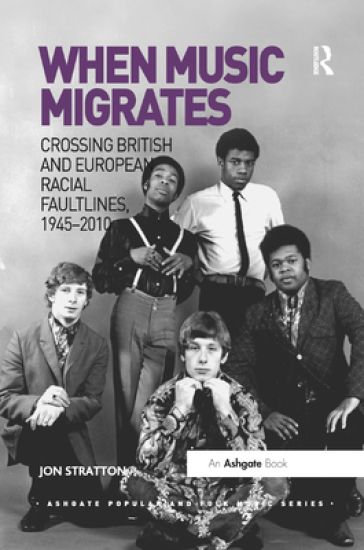
When Music Migrates

When Music Migrates

Jon Stratton

Routledge
2019
nidottu
When Music Migrates uses rich material to examine the ways that music has crossed racial faultlines that have developed in the post-Second World War era as a consequence of the movement of previously colonized peoples to the countries that colonized them. This development, which can be thought of in terms of diaspora, can also be thought of as postmodern in that it reverses the modern flow which took colonizers, and sometimes settlers, from European countries to other places in the world. Stratton explores the concept of ’song careers’, referring to how a song is picked up and then transformed by being revisioned by different artists and in different cultural contexts. The idea of the song career extends the descriptive term ’cover’ in order to examine the transformations a song undergoes from artist to artist and cultural context to cultural context. Stratton focuses on the British faultline between the post-war African-Caribbean settlers and the white Britons. Central to the book is the question of identity. For example, how African-Caribbean people have constructed their identity in Britain can be considered through an examination of when ’Police on My Back’ was written and how it has been revisioned by Lethal Bizzle in its most recent iteration. At the same time, this song, written by the Guyanese migrant Eddy Grant for his mixed-race group The Equals, crossed the racial faultline when it was picked up by the punk-rock group, The Clash. Conversely, ’Johnny Reggae’, originally a pop-ska track written about a skinhead by Jonathan King and performed by a group of studio artists whom King named The Piglets, was revisioned by a Jamaican studio group called The Roosevelt Singers. After this, the character of Johnny Reggae takes on a life of his own and appears in tracks by Jamaican toasters as a Rastafarian. Johnny’s identity is, then, totally transformed. It is this migration of music that will appeal not only to those studying popular music, but
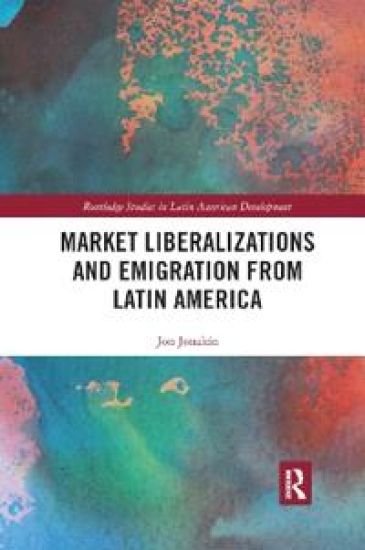
Market Liberalizations and Emigration from Latin America
Market Liberalizations and Emigration From Latin America provides a comprehensive analysis of the impact of the era of liberalization in Latin America, focusing in particular on labor markets and emigration from the region. Starting in 1980, liberalization in Latin America was expected to improve market functioning, efficiency, and welfare. Instead, it yielded slower growth, unexpectedly high levels of unemployment and income inequality, flat or falling wages, an increase in non-tradeable (service sector) and informal activity, and, finally, waves of emigration from Mexico, Central America, and Ecuador, among other countries. This book provides a heterodox narrative explanation of why the orthodox economic model that underwrote the standard ‘trickle-down’ account served more to obscure and obfuscate than to explain and clarify the state-of-affairs. The book investigates the impact of the global-scale liberalizations of markets for goods and physical and finance capital and the mere national-scale liberalization of regional labor markets, arguing that these asymmetric liberalizations, together, resulted in labor market failure and contributed in turn to the subsequent, undocumented migrant flow. The ultimate effect of the skewed scale of market liberalizations in Latin America disproportionately benefited capital at the expense of labor. Market Liberalizations and Emigration From Latin America will be of interest to researchers of economics and development in Latin America.
The Limits of Westernization

The Limits of Westernization

Jon Davidann

Routledge
2020
nidottu
The goal of this project is to locate the origins and development of modern thought in the United States and East Asia in the late nineteenth and early twentieth century. While a strong literature on post-war modernization exists, there is a gap in the pre-war origins and development of modern ideas. This book re-evaluates the influence of the United States on East Asia in the twentieth century and gives greater voice to East Asians in the construction of their own ideas of modernity.
Debating Relational Psychoanalysis
In Debating Relational Psychoanalysis, Jon Mills provides an historical record of the debates that had taken place for nearly two decades on his critique of the relational school, including responses from his critics. Since he initiated his critique, relational psychoanalysis has become an international phenomenon with proponents worldwide. This book hopes that further dialogue may not only lead to conciliation, but more optimistically, that relational theory may be inspired to improve upon its theoretical edifice, both conceptually and clinically, as well as develop technical parameters to praxis that help guide and train new clinicians to sharpen their own theoretical orientation and therapeutic efficacy. Because of the public exchanges in writing and at professional symposiums, these debates have historical significance in the development of the psychoanalytic movement as a whole simply due to their contentiousness and proclivity to question cherished assumptions, both old and new. In presenting this collection of his work, and those responses of his critics, Mills argues that psychoanalysis may only advance through critique and creative refinement, and this requires a deconstructive praxis within the relational school itself. Debating Relational Psychoanalysis will be of interest to psychoanalysts of all orientations, psychotherapists, mental health workers, psychoanalytic historians, philosophical psychologists, and the broad disciplines of humanistic, phenomenological, existential, and analytical psychology.
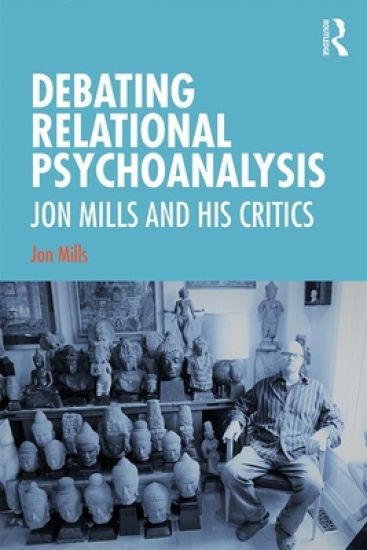
Debating Relational Psychoanalysis
In Debating Relational Psychoanalysis, Jon Mills provides an historical record of the debates that had taken place for nearly two decades on his critique of the relational school, including responses from his critics. Since he initiated his critique, relational psychoanalysis has become an international phenomenon with proponents worldwide. This book hopes that further dialogue may not only lead to conciliation, but more optimistically, that relational theory may be inspired to improve upon its theoretical edifice, both conceptually and clinically, as well as develop technical parameters to praxis that help guide and train new clinicians to sharpen their own theoretical orientation and therapeutic efficacy. Because of the public exchanges in writing and at professional symposiums, these debates have historical significance in the development of the psychoanalytic movement as a whole simply due to their contentiousness and proclivity to question cherished assumptions, both old and new. In presenting this collection of his work, and those responses of his critics, Mills argues that psychoanalysis may only advance through critique and creative refinement, and this requires a deconstructive praxis within the relational school itself. Debating Relational Psychoanalysis will be of interest to psychoanalysts of all orientations, psychotherapists, mental health workers, psychoanalytic historians, philosophical psychologists, and the broad disciplines of humanistic, phenomenological, existential, and analytical psychology.

Overcoming Harm OCD

Overcoming Harm OCD

Jon Hershfield

ReadHowYouWant
2020
pokkari
People with harm OCD-a form of obsessive-compulsive disorder (OCD)-suffer from violent, unwanted thoughts and a crippling fear of harming others. They may also resist seeking treatment for fear of being judged. In Overcoming Harm OCD, psychotherapist and OCD expert Jon Hershfield offers powerful cognitive behavioral therapy (CBT) and mindfulness tools to help readers break the endless cycle of pain and self-doubt caused by their disorder, and overcome their most debilitating symptoms.
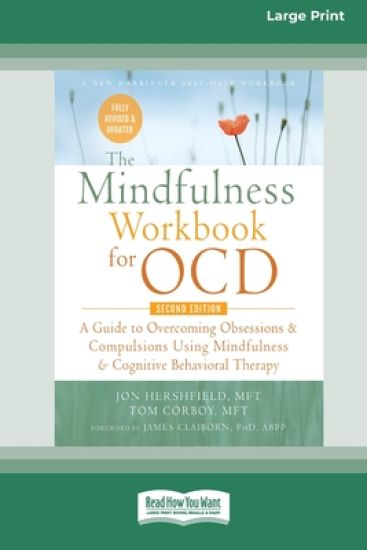
The Mindfulness Workbook for OCD

The Mindfulness Workbook for OCD

Jon Hershfield and Tom Corboy

Readhowyouwant
2021
pokkari
Combining mindfulness practices with cognitive behavioral therapy (CBT), this fully revised and updated second edition of The Mindfulness Workbook for OCD offers practical and accessible tools for managing the unwanted thoughts and compulsive urges associated with obsessive-compulsive disorder (OCD). With this powerful workbook, readers will develop present-moment awareness, learn to challenge their own distorted thinking, and stop treating thoughts as threats and feelings as facts.
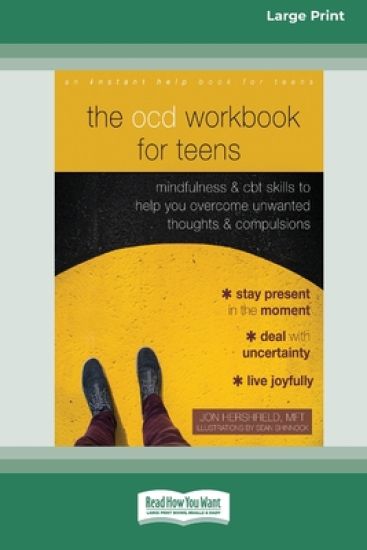
The OCD Workbook for Teens

The OCD Workbook for Teens

Jon Hershfield

Readhowyouwant
2021
pokkari
In The OCD Workbook for Teens, therapist and OCD expert Jon Hershfield offers proven-effective mindfulness and cognitive behavioral therapy (CBT) skills to help teens with OCD symptoms stay present in the moment, tolerate and accept obsessive thoughts, and move forward joyfully in life without being slowed down by compulsions.