Kirjojen hintavertailu. Mukana 11 627 362 kirjaa ja 12 kauppaa.

Kirjahaku

Etsi kirjoja tekijän nimen, kirjan nimen tai ISBN:n perusteella.

1000 tulosta hakusanalla Jon F. Merz

Unarmed and Dangerous

Unarmed and Dangerous

Jon Shane; Zoë Swenson

Routledge
2020
nidottu
There is tremendous controversy across the United States (and beyond) when a police officer uses deadly force against an unarmed citizen, but often the conversation is devoid of contextual details. These details matter greatly as a matter of law and organizational legitimacy. In this short book, authors Jon Shane and Zoë Swenson offer a comprehensive analysis of the first study to use publicly available data to reveal the context in which an officer used deadly force against an unarmed citizen. Although any police shooting, even a justified shooting, is not a desired outcome—often termed "lawful but awful" in policing circles—it is not necessarily a crime. The results of this study lend support to the notion that being unarmed does not mean "not dangerous," in some ways explaining why most police officers are not indicted when such a shooting occurs. The study’s findings show that when police officers used deadly force during an encounter with an unarmed citizen, the officer or a third person was facing imminent threat of death or serious injury in the vast majority of situations. Moreover, when police officers used force, their actions were almost always consistent with the accepted legal and policy principles that govern law enforcement in the overwhelming proportion of encounters (as measured by indictments).Noting the dearth of official data on the context of police shooting fatalities, Shane and Swenson call for the U.S. government to compile comprehensive data so researchers and practitioners can learn from deadly force encounters and improve practices. They further recommend that future research on police shootings should examine the patterns and micro-interactions between the officer, citizen, and environment in relation to the prevailing law. The unique data and analysis in this book will inform discussions of police use of force for researchers, policymakers, and students involved in criminal justice, public policy, and policing.
A Journey into Open Science and Research Transparency in Psychology
A Journey into Open Science and Research Transparency in Psychology introduces the open science movement from psychology through a narrative that integrates song lyrics, national parks, and concerns about diversity, social justice, and sustainability. Along the way, readers receive practical guidance on how to plan and share their research, matching the ideals of scientific transparency.This book considers all the fundamental topics related to the open science movement, including: (a) causes of and responses to the Replication Crisis, (b) crowdsourcing and meta-science research, (c) preregistration, (d) statistical approaches, (e) questionable research practices, (f) research and publication ethics, (g) connections to career topics, (h) finding open science resources, (i) how open science initiatives promote diverse, just, and sustainable outcomes, and (j) the path moving forward. Each topic is introduced using terminology and language aimed at intermediate-level college students who have completed research methods courses. But the book invites all readers to reconsider their research approach and join the Scientific Revolution 2.0. Each chapter describes the associated content and includes exercises intended to help readers plan, conduct, and share their research.This short book is intended as a supplemental text for research methods courses or just a fun and informative exploration of the fundamental topics associated with the Replication Crisis in psychology and the resulting movement to increase scientific transparency in methods.
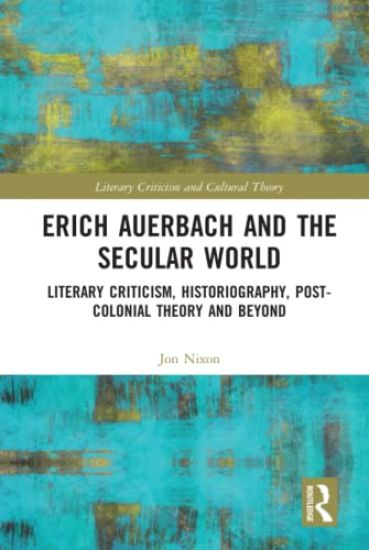
Erich Auerbach and the Secular World

Erich Auerbach and the Secular World

Jon Nixon

TAYLOR FRANCIS LTD
2022
sidottu
Auerbach was one of the foremost literary critics of the 20th century whose work has relevance within the fields of literary criticism, historiography and postcolonial theory. The opening chapter of this book explains how he understood the task of interpretation and his role as an interpreter. The following chapter outlines the important phases in his life with reference to the writers and thinkers who influenced him in his thinking and practice. The central chapters of the book focus on specific themes in his work: the historical grounding of the ‘figural’ imagination; the relation between the secular and the sacred; the emergence of tragic realism; and the notion of ‘inner history’ as a defining feature of early 20th-cenntury modernism. The final two chapters focus on broader issues relating to the development of Auerbach’s understanding of the development of an educated readership within Europe and of his concerns regarding the emergence of what he terms ‘a world literature’.
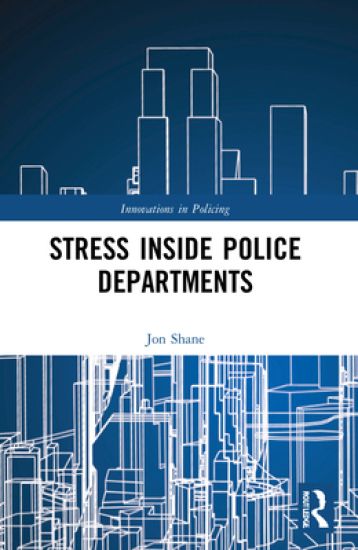
Stress Inside Police Departments
This book offers researchers, police practitioners, and policymakers a platform for organizational reform and an understanding of how the police organization creates stress, which contributes to reduced officer performance.This book, based on an in-depth study exploring the relationship between perceived organizational stressors and police performance, indicates which features of the police organization generate the most stress affecting performance, and provides a model of organizational stress that applies to police agencies. While much stress research portrays the operation of policing as the greatest source of contention among officers, this research shows the ever-present rigid hierarchical design of the police agency to be contributing factor of stress that affects performance.Ideal for scholars, police personnel, and policymakers who are interested in how the police organization contributes to lower officer performance, this book has implications for policing agencies in the United States and worldwide.
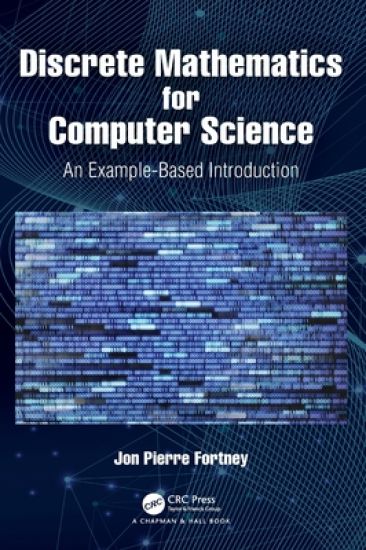
Discrete Mathematics for Computer Science

Discrete Mathematics for Computer Science

Jon Pierre Fortney

CRC Press
2020
sidottu
Discrete Mathematics for Computer Science: An Example-Based Introduction is intended for a first- or second-year discrete mathematics course for computer science majors. It covers many important mathematical topics essential for future computer science majors, such as algorithms, number representations, logic, set theory, Boolean algebra, functions, combinatorics, algorithmic complexity, graphs, and trees. Features Designed to be especially useful for courses at the community-college level Ideal as a first- or second-year textbook for computer science majors, or as a general introduction to discrete mathematics Written to be accessible to those with a limited mathematics background, and to aid with the transition to abstract thinking Filled with over 200 worked examples, boxed for easy reference, and over 200 practice problems with answers Contains approximately 40 simple algorithms to aid students in becoming proficient with algorithm control structures and pseudocode Includes an appendix on basic circuit design which provides a real-world motivational example for computer science majors by drawing on multiple topics covered in the book to design a circuit that adds two eight-digit binary numbersJon Pierre Fortney graduated from the University of Pennsylvania in 1996 with a BA in Mathematics and Actuarial Science and a BSE in Chemical Engineering. Prior to returning to graduate school, he worked as both an environmental engineer and as an actuarial analyst. He graduated from Arizona State University in 2008 with a PhD in Mathematics, specializing in Geometric Mechanics. Since 2012, he has worked at Zayed University in Dubai. This is his second mathematics textbook.
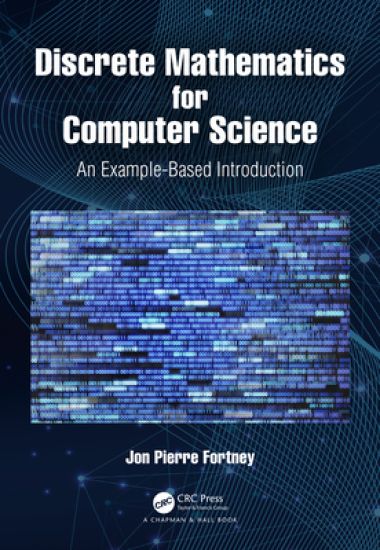
Discrete Mathematics for Computer Science

Discrete Mathematics for Computer Science

Jon Pierre Fortney

CRC Press
2020
nidottu
Discrete Mathematics for Computer Science: An Example-Based Introduction is intended for a first- or second-year discrete mathematics course for computer science majors. It covers many important mathematical topics essential for future computer science majors, such as algorithms, number representations, logic, set theory, Boolean algebra, functions, combinatorics, algorithmic complexity, graphs, and trees. Features Designed to be especially useful for courses at the community-college level Ideal as a first- or second-year textbook for computer science majors, or as a general introduction to discrete mathematics Written to be accessible to those with a limited mathematics background, and to aid with the transition to abstract thinking Filled with over 200 worked examples, boxed for easy reference, and over 200 practice problems with answers Contains approximately 40 simple algorithms to aid students in becoming proficient with algorithm control structures and pseudocode Includes an appendix on basic circuit design which provides a real-world motivational example for computer science majors by drawing on multiple topics covered in the book to design a circuit that adds two eight-digit binary numbersJon Pierre Fortney graduated from the University of Pennsylvania in 1996 with a BA in Mathematics and Actuarial Science and a BSE in Chemical Engineering. Prior to returning to graduate school, he worked as both an environmental engineer and as an actuarial analyst. He graduated from Arizona State University in 2008 with a PhD in Mathematics, specializing in Geometric Mechanics. Since 2012, he has worked at Zayed University in Dubai. This is his second mathematics textbook.
Literature and Understanding

Literature and Understanding

Jon Phelan

TAYLOR FRANCIS LTD
2022
nidottu
Literature and Understanding investigates the cognitive gain from literature by focussing on a reader’s close analysis of a literary text. It examines the meaning of ‘literature’, outlines the most prominent positions in the literary cognitivism debate, explores the practice of close reading from a philosophical perspective, provides a fresh account of what we mean by ‘understanding’ and in so doing opens up a new area of research in the philosophy of literature.This book provides a different reply to the challenge that we can’t learn anything worthwhile from reading literary fiction. It makes the innovative case that reading literary fiction as literature rather than as fiction stimulates five relevant senses of understanding. The book uses examples of irony, metaphor, play with perspective and ambiguity to illustrate this contention. Before arguing that these five senses of understanding bridge the gap between our understanding of a literary text and our understanding of the world beyond that text.The book will be of great interest for researchers, scholars and post-graduate students in the fields of aesthetics, literary theory, literature in education and pedagogy.
The Routledge Companion to Twentieth and Early Twenty-First Century Urban Design
The Routledge Companion to Twentieth and Early Twenty-First Century Urban Design is a fully illustrated descriptive and explanatory history of the development of urban design ideas and paradigms of the past 150 years. The ideas and projects, hypothetical and built, range in scale from the city to the urban block level. The focus is on where the generic ideas originated, the projects that were designed following their precepts, the functions they address and/or afford, and what we can learn from them.The morphology of a city—its built environment—evolves unselfconsciously as private and governmental investors self-consciously erect buildings and infrastructure in a pragmatic, piecemeal manner to meet their own ends. Philosophers, novelists, architects, and social scientists have produced myriad ideas about the nature of the built environment that they consider to be superior to those forms resulting from a laissez-faire attitude to urban development.Rationalist theorists dream of ideal futures based on assumptions about what is good; empiricists draw inspirations from what they perceive to be working well in existing situations. Both groups have presented their advocacies in manifestoes and often in the form of generic solutions or illustrative designs. This book traces the history of these ideas and will become a standard reference for scholars and students interested in the history of urban spaces, including architects, planners, urban historians, urban geographers, and urban morphologists.
Film and Colonialism in the Sixties
Relations between Western nations and their colonial subjects changed dramatically in the second half of the twentieth century. As nearly all of the West’s colonies gained their independence by 1975, attitudes toward colonialism in the West also changed, and terms such as empire and colonialism, once used with pride, became strongly negative. While colonialism has become discredited, precisely when or how that happened remains unclear. This book explores changing Western attitudes toward colonialism and decolonization by analyzing American, British, and French popular cinema and its reception from 1960 to 1973.
The Workplace of the Future

The Workplace of the Future

Jon-Arild Johannessen

Routledge
2020
nidottu
The Fourth Industrial Revolution is a global development that shows no signs of slowing down. In his book, The Workplace of the Future: The Fourth Industrial Revolution, the Precariat and the Death of Hierarchies, Jon-Arild Johannessen sets a chilling vision of how robots and artificial intelligence will completely disrupt and transform working life. The author contests that once the dust has settled from the Fourth Industrial Revolution, workplaces and professions will be unrecognizable and we will see the rise of a new social class: the precariat. We will live side by side with the 'working poor' – people who have several jobs, but still can’t make ends meet. There will be a small salaried elite consisting of innovation and knowledge workers. Slightly further into the future, there will be a major transformation in professional environments. Johannessen also presents a typology for the precariat, the uncertain work that is created and develops a framework for the working poor, as well as for future innovation and knowledge workers, and sets out a new structure for the social hierarchy.A fascinating and thought-provoking insight into the impact of the Fourth Industrial Revolution, The Workplace of the Future will be of interest to professionals and academics alike. The book is particularly suited to academic courses in management, economy, political science and social sciences.
Automation, Innovation and Economic Crisis

Automation, Innovation and Economic Crisis

Jon-Arild Johannessen

Routledge
2020
nidottu
The fourth industrial revolution is developing globally, with no geographical centre. It is also taking place at enormous speed. This development will shape the workplaces of the future, which will be entirely different from the workplaces created by the first, second and third industrial revolutions. Industry created the industrial worker. The knowledge society will create a new type of "industrial worker", the knowledge worker. While the third industrial revolution was concerned with the digitalization of work, in the fourth industrial revolution, robots will bring about the informatization of work. Many of these robots will be systematically connected, such that they can obtain updated information and learn from their own and others’ mistakes. The way we work, where we work, what we work on, and our relationships with our colleagues and employers are all in a state of change. The workplace of the future will not necessarily be a fixed geographical location, but may be geographically distributed and functionally divided. In his book, Jon-Arild Johannessen argues that a "perfect" social storm occurs when inequality grows at a catastrophic rate, unemployment increases, job security is threatened for a growing number and robotization takes over even the most underpaid jobs. Thus, the ingredients for a perfect social storm will be brought forward by cascades of innovations that will most likely lead to economic and social crises and he argues that it is reasonable to assume that it will only take a small spark for this social storm to develop into a social revolution.
The Identification of Northern European Woods
This technical and well-illustrated guide for archaeologists and conservators aims to `provide a methodology for the identification of the woody taxa used to manufacture artefacts recovered from archaeological excavations', to provide the anatomical descriptions of the taxa and to present a list of characters of the taxa. The guide is heavily illustrated with photographs, maps, and tables to allow easy identification.
Artificial Intelligence, Automation and the Future of Competence at Work
Artificial intelligence and the autonomous robots of the Fourth Industrial Revolution will render certain jobs and competences obsolete but will also create new roles, which in turn require new sets of skills. They will also transform how we produce, distribute and consume, as well as how we think. Rather than a linear understanding of evolutionary processes, we will develop a more interactive and circular interpretation. This book offers a unique and holistic perspective on the future of work in the context of industry 4.0. It discusses the globalization of capital markets, how artificial intelligence can help organizations to be more competitive and the new role of leadership in this technological landscape. The author argues that there are four categories of competences, which will be required in order to maintain the relevance of human skills and expertise in the innovation economy. The new jobs that come into being will lend themselves to a particular set of skills. General competences will be necessary for roles involving the 4Cs of communication, creativity, collaboration and change. Specific or STEM competences will be called for across the science, technology, engineering and mathematics sectors. Human competences will lend themselves to positions comprising the SELC framework of social, emotional, leadership and cultural skills. Critical or REVE competences will be in demand for roles embracing reflection, ethics, values and the environment. The book provides a human-centric view of the current technological advancements of artificial intelligence and robotics and offers a positive outlook for human actors seeking continued relevance. It will appeal to scholars and students of the innovation economy, the knowledge society and the coming Fourth Industrial Revolution.
Artificial Intelligence, Automation and the Future of Competence at Work
Artificial intelligence and the autonomous robots of the Fourth Industrial Revolution will render certain jobs and competences obsolete but will also create new roles, which in turn require new sets of skills. They will also transform how we produce, distribute and consume, as well as how we think. Rather than a linear understanding of evolutionary processes, we will develop a more interactive and circular interpretation. This book offers a unique and holistic perspective on the future of work in the context of industry 4.0. It discusses the globalization of capital markets, how artificial intelligence can help organizations to be more competitive and the new role of leadership in this technological landscape. The author argues that there are four categories of competences, which will be required in order to maintain the relevance of human skills and expertise in the innovation economy. The new jobs that come into being will lend themselves to a particular set of skills. General competences will be necessary for roles involving the 4Cs of communication, creativity, collaboration and change. Specific or STEM competences will be called for across the science, technology, engineering and mathematics sectors. Human competences will lend themselves to positions comprising the SELC framework of social, emotional, leadership and cultural skills. Critical or REVE competences will be in demand for roles embracing reflection, ethics, values and the environment. The book provides a human-centric view of the current technological advancements of artificial intelligence and robotics and offers a positive outlook for human actors seeking continued relevance. It will appeal to scholars and students of the innovation economy, the knowledge society and the coming Fourth Industrial Revolution.
International Regimes and Norway's Environmental Policy
Since the former Norwegian prime minister, Gro Harlem Brundtland, led the World Commission on Sustainable Development, Norway has played an important role in international environmental co-operation. This volume looks at how this one state engaged international regimes in order to pursue its own national goals in the following issue areas: climate change, biodiversity, ozone depletion, air pollution, marine pollution and whaling. In doing so, it offers an innovative new approach to the study of international regime effectiveness and on linkages or interactions between international regimes.
How to Think Like a Behavior Analyst

How to Think Like a Behavior Analyst

Jon Bailey; Mary R. Burch

TAYLOR FRANCIS LTD
2022
nidottu
How to Think Like a Behavior Analyst is a revolutionary resource for understanding complex human behavior and making potentially significant quality-of-life improvements. Practical and clearly written, this second edition addresses basic questions like how behavior analysts work, why specific methods and procedures are used, what alternative "fad" treatments are, and more. The updated text answers 70 frequently asked questions about behavior analysis using an accessible question-and-answer format. Each question now includes a Quick Take, which is a simple and easy-to-read answer to the question, and then a more in-depth Technically Speaking answer that is more challenging. A brand-new chapter discusses ways of advancing one’s career in the field and how to go to graduate school and become board certified. This text is written for all professionals concerned with behavior, including undergraduate students in psychology and behavior analysis, parents, teachers, employers, and employees. The book can easily be used as a supplement to primary texts in introductory psychology courses, and the exercises that follow each question can be used to stimulate lively discussion in role-play and other active learning situations.
How to Think Like a Behavior Analyst

How to Think Like a Behavior Analyst

Jon Bailey; Mary R. Burch

TAYLOR FRANCIS LTD
2022
sidottu
How to Think Like a Behavior Analyst is a revolutionary resource for understanding complex human behavior and making potentially significant quality-of-life improvements. Practical and clearly written, this second edition addresses basic questions like how behavior analysts work, why specific methods and procedures are used, what alternative "fad" treatments are, and more. The updated text answers 70 frequently asked questions about behavior analysis using an accessible question-and-answer format. Each question now includes a Quick Take, which is a simple and easy-to-read answer to the question, and then a more in-depth Technically Speaking answer that is more challenging. A brand-new chapter discusses ways of advancing one’s career in the field and how to go to graduate school and become board certified. This text is written for all professionals concerned with behavior, including undergraduate students in psychology and behavior analysis, parents, teachers, employers, and employees. The book can easily be used as a supplement to primary texts in introductory psychology courses, and the exercises that follow each question can be used to stimulate lively discussion in role-play and other active learning situations.
Moving Beyond Modern Portfolio Theory

Moving Beyond Modern Portfolio Theory

Jon Lukomnik; James P. Hawley

Routledge
2021
nidottu
Moving Beyond Modern Portfolio Theory: Investing That Matters tells the story of how Modern Portfolio Theory (MPT) revolutionized the investing world and the real economy, but is now showing its age. MPT has no mechanism to understand its impacts on the environmental, social and financial systems, nor any tools for investors to mitigate the havoc that systemic risks can wreck on their portfolios. It’s time for MPT to evolve.The authors propose a new imperative to improve finance’s ability to fulfil its twin main purposes: providing adequate returns to individuals and directing capital to where it is needed in the economy. They show how some of the largest investors in the world focus not on picking stocks, but on mitigating systemic risks, such as climate change and a lack of gender diversity, so as to improve the risk/return of the market as a whole, despite current theory saying that should be impossible. "Moving beyond MPT" recognizes the complex relations between investing and the systems on which capital markets rely, "Investing that matters" embraces MPT’s focus on diversification and risk adjusted return, but understands them in the context of the real economy and the total return needs of investors. Whether an investor, an MBA student, a Finance Professor or a sustainability professional, Moving Beyond Modern Portfolio Theory: Investing That Matters is thought-provoking and relevant. Its bold critique shows how the real world already is moving beyond investing orthodoxy.
The Organisation of Crime and Harm in the Construction Industry
Drawing on empirical work and secondary analysis from the UK and Finnish construction industries, this book contributes a deep-rooted analysis of construction industry harms that originate from corporate-industrialstate processes.The UK context arguably represents a classic ‘neoliberal’ system categorised by privatisation of services and minimal regulation, whereas Finland broadly provides a ‘social democratic’ alternative with its relatively strong national regulation and public sector oversight of industry. These concepts interlink strongly with the notion of state-corporate crime, since this perspective shifts attention away from individualistic explanations for crime and harm towards symbiosis between states and corporations. This book argues that existing explanations based on organised crime and individual ‘rogues’ are insufficient to account for the wider range and subtlety of harms that occur in construction, and therefore offers a unique perspective into organisational, industry, and state dynamics in this sector.An accessible and compelling read, this book will appeal to students and scholars of criminology, sociology, organized crime, and those interested in harms in the construction industry.
The Organisation of Crime and Harm in the Construction Industry
Drawing on empirical work and secondary analysis from the UK and Finnish construction industries, this book contributes a deep-rooted analysis of construction industry harms that originate from corporate-industrialstate processes. The UK context arguably represents a classic ‘neoliberal’ system categorised by privatisation of services and minimal regulation, whereas Finland broadly provides a ‘social democratic’ alternative with its relatively strong national regulation and public sector oversight of industry. These concepts interlink strongly with the notion of state-corporate crime, since this perspective shifts attention away from individualistic explanations for crime and harm towards symbiosis between states and corporations. This book argues that existing explanations based on organised crime and individual ‘rogues’ are insufficient to account for the wider range and subtlety of harms that occur in construction, and therefore offers a unique perspective into organisational, industry, and state dynamics in this sector. An accessible and compelling read, this book will appeal to students and scholars of criminology, sociology, organized crime, and those interested in harms in the construction industry.