This analysis of Hans Kelsen's international law theory takes into account the context of the German international legal discourse in the first half of the twentieth century, including the reactions of Carl Schmitt and other Weimar opponents of Kelsen. The relationship between his Pure Theory of Law and his international law writings is examined, enabling the reader to understand how Kelsen tried to square his own liberal cosmopolitan project with his methodological convictions as laid out in his Pure Theory of Law. Finally, Jochen von Bernstorff discusses the limits and continuing relevance of Kelsenian formalism for international law under the term of 'reflexive formalism', and offers a reflection on Kelsen's theory of international law against the background of current debates over constitutionalisation, institutionalisation and fragmentation of international law. The book also includes biographical sketches of Hans Kelsen and his main students Alfred Verdross and Joseph L. Kunz.
Title: Die Feldzu ge der Regimenter Ufm Keller und von Hornumb von Hessen-Cassel in dem Reichskriege gegen Schweden ... 1677 und 1678, etc.Publisher: British Library, Historical Print EditionsThe British Library is the national library of the United Kingdom. It is one of the world's largest research libraries holding over 150 million items in all known languages and formats: books, journals, newspapers, sound recordings, patents, maps, stamps, prints and much more. Its collections include around 14 million books, along with substantial additional collections of manuscripts and historical items dating back as far as 300 BC.The MILITARY HISTORY & WARFARE collection includes books from the British Library digitised by Microsoft. This series offers titles on warfare from ancient to modern times. It includes detailed accounts of campaigns, battles, weapons, as well as the soldiers and commanders who devised, initiated, and supported war efforts throughout history. Specific analyses discuss the impact of war on societies, cultures, economies, and changing international relationships. ++++The below data was compiled from various identification fields in the bibliographic record of this title. This data is provided as an additional tool in helping to insure edition identification: ++++ British Library Stamford, Carl von.; 1882. vii, 199 p.; 8 . 9365.eee.3.
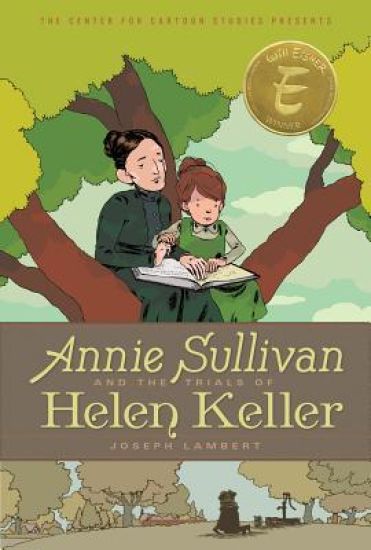
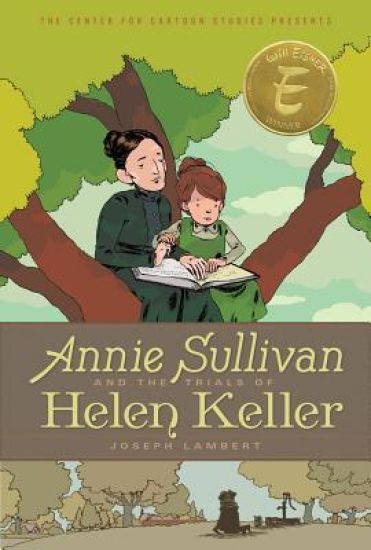
Helen Keller lost her ability to see and hear before she turned two years old. But in her lifetime, she learned to ride horseback and dance the foxtrot. She graduated from Radcliffe. She became a world famous speaker and author. She befriended Mark Twain, Charlie Chaplin, and Alexander Graham Bell. And above all, she revolutionized public perception and treatment of the blind and the deaf.The catalyst for this remarkable life's journey was Annie Sullivan, a young woman who was herself visually impaired. Hired as a tutor when Helen was six years old, Annie broke down the barriers between Helen and the wider world, becoming a fiercely devoted friend and lifelong companion in the process.In Annie Sullivan and the Trials of Helen Keller, author and illustrator Joseph Lambert examines the powerful bond between teacher and pupil, forged through the intense frustrations and revelations of Helen's early education. The result is an inspiring, emotional, and wholly original take on the story of these two great Americans.
Helen Keller lost her ability to see and hear before she turned two years old. But in her lifetime, she learned to ride horseback and dance the foxtrot. She graduated from Radcliffe. She became a world famous speaker and author. She befriended Mark Twain, Charlie Chaplin, and Alexander Graham Bell. And above all, she revolutionized public perception and treatment of the blind and the deaf.The catalyst for this remarkable life's journey was Annie Sullivan, a young woman who was herself visually impaired. Hired as a tutor when Helen was six years old, Annie broke down the barriers between Helen and the wider world, becoming a fiercely devoted friend and lifelong companion in the process.In Annie Sullivan and the Trials of Helen Keller, author and illustrator Joseph Lambert examines the powerful bond between teacher and pupil, forged through the intense frustrations and revelations of Helen's early education. The result is an inspiring, emotional, and wholly original take on the story of these two great Americans.
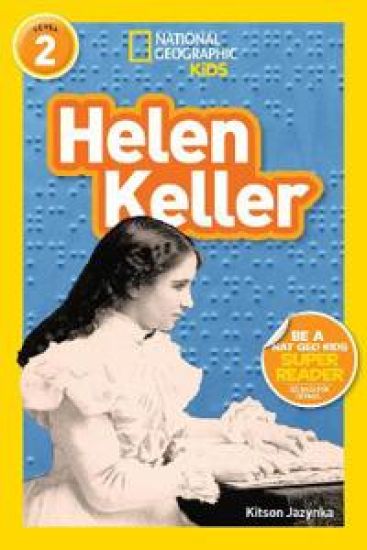
Readers will be inspired by the amazing story of Helen Keller in this informative biography. They will learn all about her life, her achievements, and the challenges she faced along the way. The Level 2 text provides accessible, yet wide-ranging, information for independent readers.
Originally published in 1949, this volume contains a skillful analysis of the concepts of Natur and Freiheit and their influence on Keller's ideas in the fields of ethics, aesthetics, and politics, supported by pertinent passages from Keller's work. Reichert divides Keller's works into two time periods, and includes a discussion of Schiller's influence on Keller.
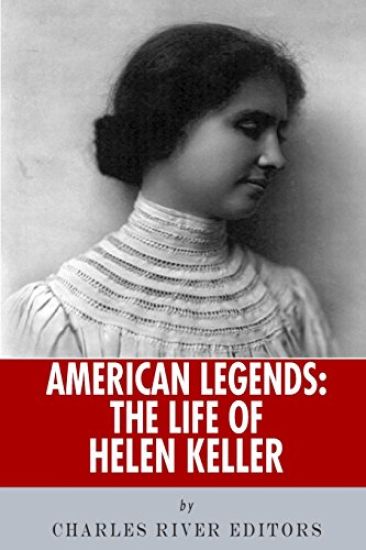
*Includes pictures of Helen Keller and important people in her life. *Includes Helen's quotes on politics, religion, inspiration, and more. *Includes a Bibliography for further reading. "Most people measure their happiness in terms of physical pleasure and material possession. Could they win some visible goal which they have set on the horizon, how happy they could be Lacking this gift or that circumstance, they would be miserable. If happiness is to be so measured, I who cannot hear or see have every reason to sit in a corner with folded hands and weep. If I am happy in spite of my deprivations, if my happiness is so deep that it is a faith, so thoughtful that it becomes a philosophy of life, - if, in short, I am an optimist, my testimony to the creed of optimism is worth hearing.." - Helen Keller A lot of ink has been spilled covering the lives of history's most influential figures, but how much of the forest is lost for the trees? In Charles River Editors' American Legends series, readers can get caught up to speed on the lives of America's most important men and women in the time it takes to finish a commute, while learning interesting facts long forgotten or never known. To say Helen Keller is one of the most unique figures in American history would be an understatement. As a young child, Helen lost both her vision and hearing, leaving her deafblind, an almost hopelessly debilitating condition that left her literally trapped, unable to communicate with anyone. As she would later write, "My life was without past or future; death, the pessimist would say, 'a consummation devoutly to be wished.'" Nobody would have blamed her for being hopelessly frustrated and imprisoned by her disabilities; in fact, that was to be expected. When her famous teacher, Anne Sullivan, brought Helen a doll and tried to teach her a few words by spelling them into her hand, the child became so frustrated that she broke the doll. As every American now knows, Helen eventually overcame the frustration and used unimaginable perseverance to overcome her disability. With Sullivan's help and the sense of touch, Helen eventually broke through and learned to communicate. Helen later recalled that after Sullivan put one of her hands in water and spelled water on the other hand, "I stood still, my whole attention fixed upon the motions of her fingers. Suddenly I felt a misty consciousness as of something forgotten - a thrill of returning thought; and somehow the mystery of language was revealed to me." Helen's story would have been remarkable enough if it had ended simply with her ability to communicate with the outside world, but "I had now the key to all language, and I was eager to learn to use it." With unbridled ambition, Helen became the first deafblind individual to earn a bachelor's degree from a college, published her own autobiography when she was just 22, and in the early 20th century became famous across the world as both an author and speaker. Naturally, Helen was a walking embodiment and advocate for people with disabilities, both the blind and deaf, but she was just as interested in other social and political causes, eventually becoming one of the most outspoken figures of her time. Those who were inspired by her story were surprised that she was willing to voice what they believed were radical beliefs on behalf of causes like women's suffrage, pacifism, and socialism. Helen also added actions to her words, founding both the Helen Keller International organization for research in vision, health and nutrition, and helping found the American Civil Liberties Union. American Legends: The Life of Helen Keller chronicles the amazing life and work of one of America's most famous women, explaining how she suffered and overcame her disabilities. Along with pictures of important people, places, and events in her life, you will learn about Helen Keller like you never have before, in no time at all.
Who was Helen Keller and why is she so important? Well, imagine being able to read, speak, and write just like everyone else that you know, but also imagine that you learned to do these things even though you are blind and deaf Helen Keller was able to not only learn to speak, read, and write but she also wrote more than ten books, spoke to large crowds of people, traveled all around the world, and even met 12 United States Presidents This was not done in the modern day with all of the electronic devices and well-developed systems that we have for people with a visual or hearing handicap. It all began back in the 1880s when Helen Keller was a very young girl Find out more about this fascinating life in this biography Adults Turn away This book is not for you eKids Books is proud to present a new series of books for all the readers who matter the most: Kids, of course Visit eKidsPress.com to learn more
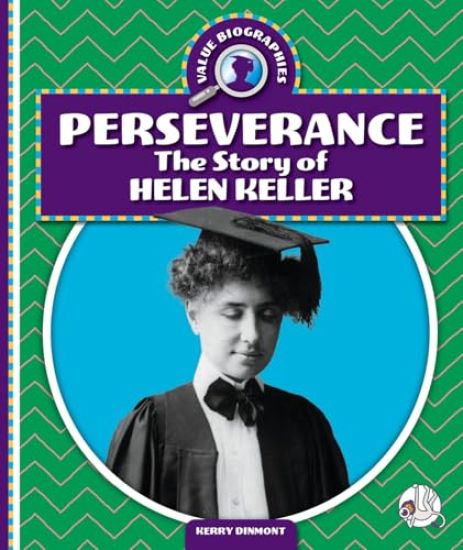
Explores the value of perseverance through the lens of Helen Keller. A blind and deaf child who grew up to be a staunch activist for women's rights, worker's rights, and more, Helen Keller exemplified perseverance through her work to understand the world around her and make it a better place. Vivid images and a helpful diagram will aid in comprehension. Additional features include a table of contents, sidebars, critical thinking questions, Fast Facts, an activity for further learning, a phonetic glossary, an index, an introduction to the author, and sources for further research.
This timely and compelling book delves into the dynamic interpretation of Hans Kelsen’s General Theory of Norms through the lens of 21st-century jurisprudential debates. Engaging with key contemporary philosophical concepts such as fictionalism in the philosophy of science, explanation and understanding, and supervenience, this book sheds new light on Kelsen’s original ideas.By offering a contemporary interpretation of his later work, it re-examines classic concepts known from the ‘Pure Theory of Law’ like the basic norm, the separation of ‘is’ and ‘ought,’ validity and efficacy, imputation, and the concept of the legal norm. Integrating modern philosophy with Kelsen’s lasting ideas, this book presents a novel theoretical landscape, inviting readers to explore fresh perspectives on Kelsen’s contributions to legal theory and emphasising its enduring relevance.
This timely and compelling book delves into the dynamic interpretation of Hans Kelsen's General Theory of Norms through the lens of 21st-century jurisprudential debates. Engaging with key contemporary philosophical concepts such as fictionalism in the philosophy of science, explanation and understanding, and supervenience, this book sheds new light on Kelsen's original ideas. By offering a contemporary interpretation of his later work, it re-examines classic concepts known from the 'Pure Theory of Law' like the basic norm, the separation of 'is' and 'ought, ' validity and efficacy, imputation, and the concept of the legal norm. Integrating modern philosophy with Kelsen's lasting ideas, this book presents a novel theoretical landscape, inviting readers to explore fresh perspectives on Kelsen's contributions to legal theory and emphasising its enduring relevance.