Kirjojen hintavertailu. Mukana 12 083 983 kirjaa ja 12 kauppaa.

Kirjahaku

Etsi kirjoja tekijän nimen, kirjan nimen tai ISBN:n perusteella.

1000 tulosta hakusanalla Kevin van Whye

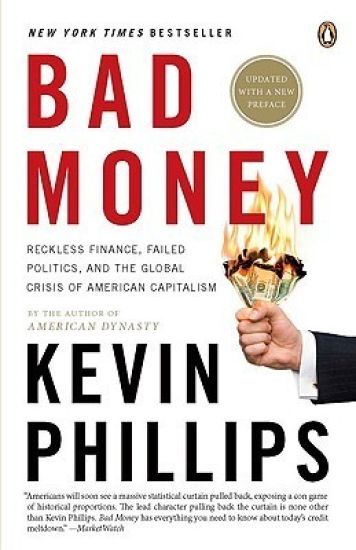
Bad Money

Bad Money

Kevin Phillips

Penguin Books Ltd
2009
pokkari
In his acclaimed book "American Theocracy", Kevin Phillips warned of the perilous interaction of debt, financial recklessness, and the spiking cost (and growing scarcity) of oil - warnings that are proving to be frighteningly accurate. Now, in his most significant and timely book yet, Phillips takes the full measure of this crisis. They are part of what he calls 'bad money' - not just the depreciated dollar, but also the dangerous attitudes and the flawed products of wayward mega-finance. His devastating conclusion: In its hubris, the financial sector has hijacked the American economy and put our very global future at risk - and it may be too late to stop it.
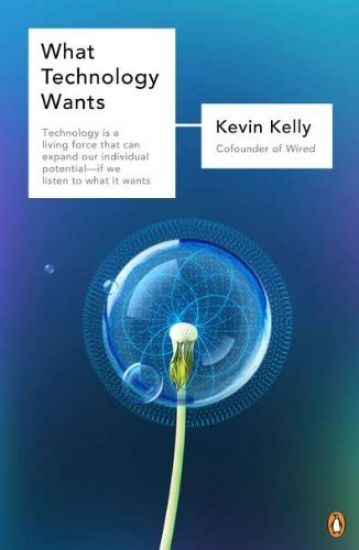
What Technology Wants

What Technology Wants

Kevin Kelly

PENGUIN BOOKS
2011
nidottu
From the author of the New York Times bestseller The Inevitable-- a sweeping vision of technology as a living force that can expand our individual potential In this provocative book, one of today's most respected thinkers turns the conversation about technology on its head by viewing technology as a natural system, an extension of biological evolution. By mapping the behavior of life, we paradoxically get a glimpse at where technology is headed-or "what it wants." Kevin Kelly offers a dozen trajectories in the coming decades for this near-living system. And as we align ourselves with technology's agenda, we can capture its colossal potential. This visionary and optimistic book explores how technology gives our lives greater meaning and is a must-read for anyone curious about the future.
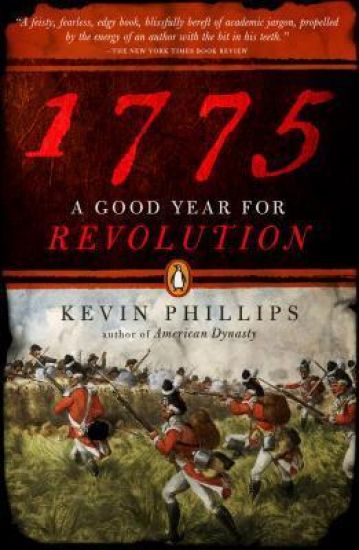
1775: A Good Year for Revolution

1775: A Good Year for Revolution

Kevin Phillips

PENGUIN BOOKS
2013
nidottu
A groundbreaking account of the American Revolution--from the bestselling author of American Dynasty In this major new work, iconoclastic historian and political chronicler Kevin Phillips upends the conventional reading of the American Revolution by debunking the myth that 1776 was the struggle's watershed year. Focusing on the great battles and events of 1775, Phillips surveys the political climate, economic structures, and military preparations of the crucial year that was the harbinger of revolution, tackling the eighteenth century with the same skill and perception he has shown in analyzing contemporary politics and economics. The result is a dramatic account brimming with original insights about the country we eventually became.
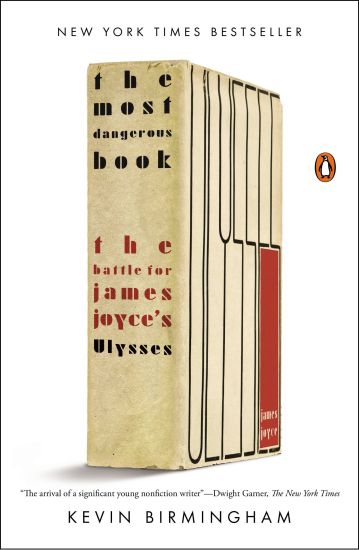
The Most Dangerous Book: The Battle for James Joyce's Ulysses

The Most Dangerous Book: The Battle for James Joyce's Ulysses

Kevin Birmingham

Penguin Publishing Group
2015
nidottu
Recipient of the 2015 PEN New England Award for Nonfiction "The arrival of a significant young nonfiction writer . . . A measured yet bravura performance." --Dwight Garner, The New York Times James Joyce's big blue book, Ulysses, ushered in the modernist era and changed the novel for all time. But the genius of Ulysses was also its danger: it omitted absolutely nothing. Joyce, along with some of the most important publishers and writers of his era, had to fight for years to win the freedom to publish it. The Most Dangerous Book tells the remarkable story surrounding Ulysses, from the first stirrings of Joyce's inspiration in 1904 to the book's landmark federal obscenity trial in 1933. Written for ardent Joyceans as well as novices who want to get to the heart of the greatest novel of the twentieth century, The Most Dangerous Book is a gripping examination of how the world came to say Yes to Ulysses.
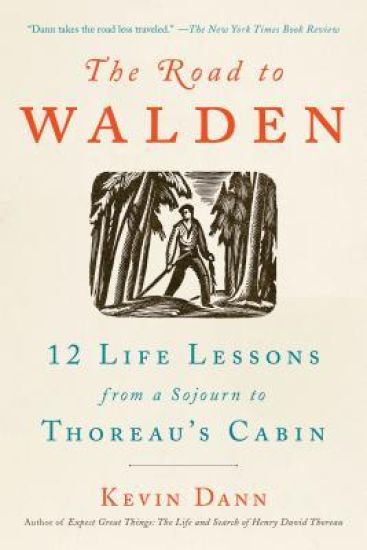
The Road to Walden

The Road to Walden

Kevin Dann

J.P.Tarcher,U.S./Perigee Bks.,U.S.
2018
nidottu
The acclaimed author of Expect Great Things: The Life and Search of Henry David Thoreau traverses on foot from Manhattan to Walden Pond, retracing Thoreau's steps and unlocking the practical principles of the mystic's life in the woods. When Henry David Thoreau launched his experiment in living at Walden Pond, he began by walking beyond the narrow limits of his neighbors, simply by putting himself at a mile remove from Concord's bourgeois epicenter - and a thousand-mile remove from stasis, complacency, and conformity. Kevin Dann emulates and extends Thoreau's experiment in radical self-education. Alternating between personal anecdotes from his spring 2017 walking pilgrimage and other "traveler" encounters and episodes told by Thoreau, Dann structures his book around 12 "injunctions"--distillations of seminal stories about overcoming convention and stasis. In this essential reading for every Thoreau enthusiast, naturalist and historian Kevin Dann brings to life an essential American icon in refreshing and modern way.
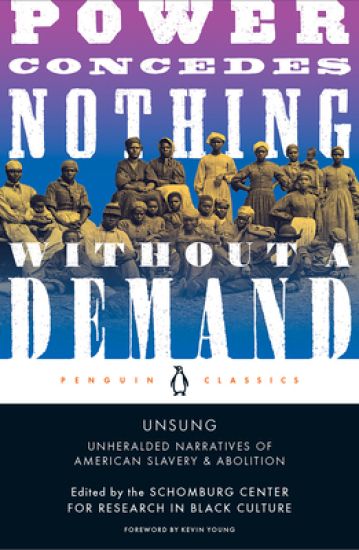
Unsung

Unsung

Kevin Young

Penguin Classics
2021
pokkari
A groundbreaking collection of abolitionist writing from throughout the history of American slaveryFrom the beginning of the transatlantic slave trade to the ambiguity of the reconstruction era, resistance and protest writing were a central part of slavery in America, and - ultimately - played a crucial role in its abolition. Placing well-known abolitionist writing alongside less celebrated and little-known accounts of everyday lives and activism, Unsung makes the case for focusing on the histories of black people as agents and architects of their own struggle and ultimate liberation.
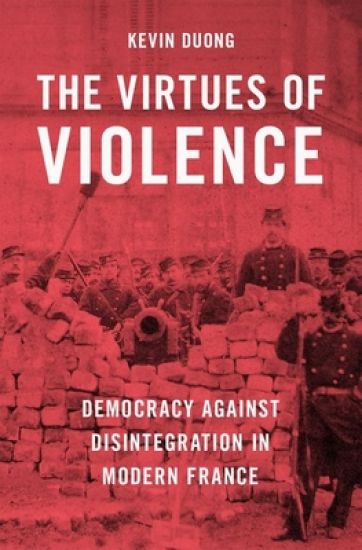
The Virtues of Violence

The Virtues of Violence

Kevin Duong

Oxford University Press Inc
2020
sidottu
If democracy liberates individuals from their inherited bonds, what can reunite them into a sovereign people? In The Virtues of Violence, Kevin Duong argues that one particular answer captivated modern French thinkers: popular violence as social regeneration. In this tradition of political theory, the people's violence was not a sign of anarchy or disorder. Instead, it manifested a redemptive power capable of binding and repairing a society on the cusp of social disintegration. This was not a fringe view of French democracy at the time, but central to its momentous development. Duong analyzes the recurring role of the people's redemptive violence across four historical moments: the French Revolution, the imperial conquest of Algeria, the Paris Commune, and the years leading up to World War I. Bringing together democratic theory and intellectual history, he reveals how political thinkers across the spectrum proclaimed that violence by the people could repair the social fabric, even as they experienced democratization as social disintegration. The path from an anarchic multitude to an organized democratic society required the virtuous expression of violence by the people--not its prohibition. Duong's book urges us to reject accounts that view redemptive violence as an antidemocratic pathology. It challenges the long-held view that popular violence is a sign of anarchy or disorder. As shocking and unsettling as redemptive violence could be, it appealed to thinkers across the spectrum, because it answered a fundamental dilemma of political modernity: how to replace the severed bonds of the old regime with a superior democratic social bond. The Virtues of Violence argues we do not properly understand modern democracy unless we can understand why popular redemptive violence could be invoked on its behalf.
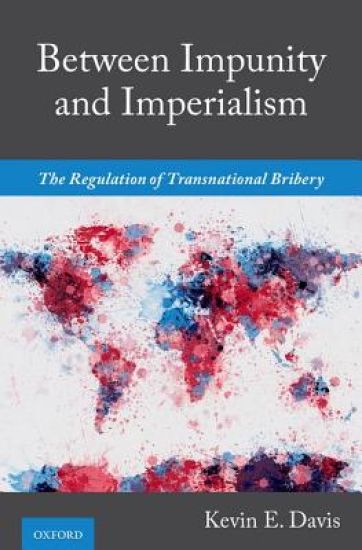
Between Impunity and Imperialism

Between Impunity and Imperialism

Kevin E. Davis

Oxford University Press Inc
2019
sidottu
When people pay bribes to foreign public officials, how should the law respond? This question has been debated ever since the enactment of the U.S. Foreign Corrupt Practices Act of 1977, and some of the key arguments can be traced back to Cicero in the last years of the Roman Republic and Edmund Burke in late eighteenth-century England. In recent years, the U.S. and other members of the OECD have joined forces to make anti-bribery law one of the most prominent sources of liability for firms and individuals who operate across borders. The modern regime is premised on the idea that transnational bribery is a serious problem which invariably merits a vigorous legal response. The shape of that response can be summed up in the phrase "every little bit helps," which in practice means that: prohibitions on bribery should capture a broad range of conduct; enforcement should target as broad a range of actors as possible; sanctions should be as stiff as possible; and as many agencies as possible should be involved in the enforcement process. An important challenge to the OECD paradigm, labelled here the "anti-imperialist critique," accepts that transnational bribery is a serious problem but questions the conventional responses. This book uses a series of high-profile cases to illustrate key elements of transnational bribery law in action, and analyzes the law through the lenses of both the OECD paradigm and the anti-imperialist critique. It ultimately defends a distinctively inclusive and experimentalist approach to transnational bribery law.
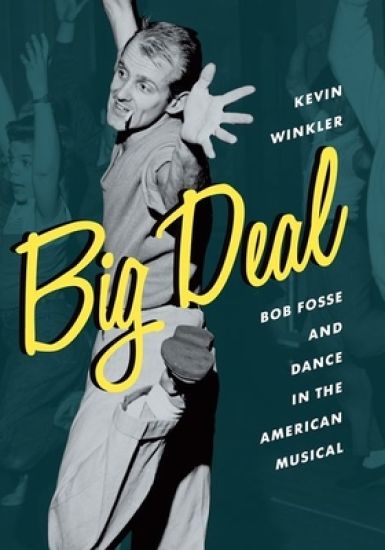
Big Deal

Big Deal

Kevin Winkler

Oxford University Press Inc
2020
nidottu
Bob Fosse (1927-1987) is recognized as one of the most significant figures in post-World War II American musical theater. With his first Broadway musical, The Pajama Game in 1954, the "Fosse style" was already fully developed, with its trademark hunched shoulders, turned-in stance, and stuttering, staccato jazz movements. Fosse moved decisively into the role of director with Redhead in 1959 and was a key figure in the rise of the director-choreographer in the Broadway musical. He also became the only star director of musicals of his era--a group that included Jerome Robbins, Gower Champion, Michael Kidd, and Harold Prince--to equal his Broadway success in films. Following his unprecedented triple crown of show business awards in 1973 (an Oscar for Cabaret, Emmy for Liza with a Z, and Tony for Pippin), Fosse assumed complete control of virtually every element of his projects. But when at last he had achieved complete autonomy, his final efforts, the film Star 80 and the musical Big Deal, written and directed by Fosse, were rejected by audiences and critics. A fascinating look at the evolution of Fosse as choreographer and director, Big Deal: Bob Fosse and Dance in the American Musical considers Fosse's career in the context of changes in the Broadway musical theater over four decades. It traces his early dance years and the importance of mentors George Abbott and Jerome Robbins on his work. It examines how each of the important women in his adult life--all dancers--impacted his career and influenced his dance aesthetic. Finally, the book investigates how his evolution as both artist and individual mirrored the social and political climate of his era and allowed him to comfortably ride a wave of cultural changes.
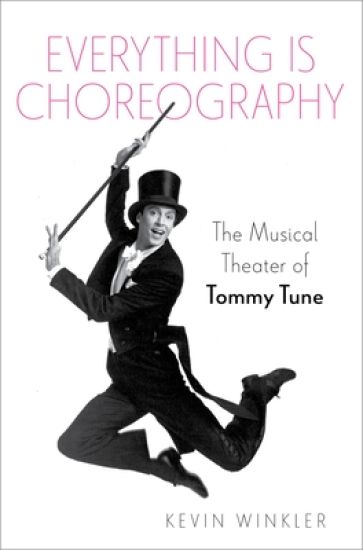
Everything is Choreography

Everything is Choreography

Kevin Winkler

Oxford University Press Inc
2022
sidottu
Grand Hotel. My One and Only. Nine. The Best Little Whorehouse in Texas. A Day in Hollywood/A Night in the Ukraine. The Will Rogers Follies. For two decades, Tommy Tune was the maestro presiding over a string of glittering Broadway musicals that took the tradition of complete musical staging by a director-choreographer into a new era defined by spectacle and technology. He was last in a grand lineage led by Jerome Robbins, Gower Champion, Bob Fosse, and Michael Bennett, but also provided a link to a new generation of choreographers-turned-directors like Susan Stroman, Jerry Mitchell, and Casey Nicholaw. Unlike his fellow director-choreographers, Tune also maintained a successful performing career. His nine Tony Awards (plus a tenth, for Lifetime Achievement) were earned across four categories, not only for choreography and direction, but also as both featured and lead actor in a musical, for Seesaw and My One and Only--a distinction no one else can claim. Tune took the musical forward by looking backward, bringing satiric energy and contemporary style to a trove of show business antecedents--from clog dancing to showgirl formations, from precision kick lines to Fred Astaire and Ginger Rogers-style ballroom glides. He did the same with his concert and cabaret performances, drawing on classics from the Gershwins, Irving Berlin, and Cole Porter and performing them not as nostalgia but as vital, immediate statements of personal philosophy. Everything is Choreography: The Musical Theater of Tommy Tune is the first full scale book about the career of this prodigious artist. It celebrates and examines with a critical eye his major projects, and summons for readers a glorious period of dance, performance, and theatrical imagination.
The China Triangle

The China Triangle

Kevin P. Gallagher

Oxford University Press Inc
2016
sidottu
In less than a quarter century, China has gone from one of the poorest to one of the largest economies in the world. As China grew from a rural economy to the largest industrial powerhouse since the Industrial Revolution, it demanded more and more steel for factories and new cities, copper for electronic wires, petroleum for cars and manufacturing plants, and soybeans to feed people and cattle in a country with an increasing standard of living and diversified diet. Many Latin American countries rode China's coattails and prospered. From the turn of the century when China entered the World Trade Organization until 2013, Latin America served as a strategic location that supplied China with these primary commodities and more, allowing it to log one of the region's most impressive periods of economic growth in a fifty years. In The China Triangle, Boston University political economist Kevin P. Gallagher argues that Latin American nations have little to show for riding the coattails of the "China Boom" and now face significant challenges for the next decades as China's economy slows down and transforms itself in a variety of ways. While the region saw significant economic growth due to China's rise over the past decades, Latin Americans saved very little of the windfall profits it earned while the region saw a significant hollowing of its industrial base. What is more, commodity-led growth during the China boom reignited social and environmental conflicts across the region. Scholars and reporters have covered the Chinese expansion into East Asia, Southeast Asia, Australasia, Africa, the US, and Europe. Yet China's penetration Latin America is as little understood as it is significant. Gallagher provides a clear overview of China's growing economic ties with Latin America and points to ways that Latin American nations, China, and even the United States can act in order to make the next decades of China-Latin America economic activity more prosperous for all involved.
Baptized with the Soil

Baptized with the Soil

Kevin M. Lowe

Oxford University Press Inc
2015
sidottu
In the early twentieth century, many Americans were troubled by the way agriculture was becoming increasingly industrial and corporate. Mainline Protestant churches and cooperative organizations began to come together to promote agrarianism: the belief that the health of the nation depended on small rural communities and family farms. In Baptized with the Soil Kevin M. Lowe offers for the first time a comprehensive history of the Protestant commitment to rural America. Christian agrarians believed that farming was the most moral way of life and a means for people to serve God by taking care of the earth that they believed God created. When the Great Depression hit, Christian agrarians worked harder to keep small farmers on the land. They formed alliances with state universities, cooperative extension services, and each other's denominations. They experimented with ways of revitalizing rural church life-including new worship services like Rural Life Sunday, and new strategies for raising financial support like the Lord's Acre. Because they believed that the earth was holy, Christian agrarians also became leaders in promoting soil conservation. Decades before the environmental movement, they inspired in their congregations an ethic of environmental stewardship. They may not have been able to prevent industrial agribusiness, but their ideas have helped define significant and long-lasting currents in American culture.
A Tapestry of Values

A Tapestry of Values

Kevin C. Elliott

Oxford University Press Inc
2017
sidottu
The role of values in scientific research has become an important topic of discussion in both scholarly and popular debates. Pundits across the political spectrum worry that research on topics like climate change, evolutionary theory, vaccine safety, and genetically modified foods has become overly politicized. At the same time, it is clear that values play an important role in science by limiting unethical forms of research and by deciding what areas of research have the greatest relevance for society. Deciding how to distinguish legitimate and illegitimate influences of values in scientific research is a matter of vital importance. Recently, philosophers of science have written a great deal on this topic, but most of their work has been directed toward a scholarly audience. This book makes the contemporary philosophical literature on science and values accessible to a wide readership. It examines case studies from a variety of research areas, including climate science, anthropology, chemical risk assessment, ecology, neurobiology, biomedical research, and agriculture. These cases show that values have necessary roles to play in identifying research topics, choosing research questions, determining the aims of inquiry, responding to uncertainty, and deciding how to communicate information. Kevin Elliott focuses not just on describing roles for values but also on determining when their influences are actually appropriate. He emphasizes several conditions for incorporating values in a legitimate fashion, and highlights multiple strategies for fostering engagement between stakeholders so that value influences can be subjected to careful and critical scrutiny.
A Tapestry of Values

A Tapestry of Values

Kevin C. Elliott

Oxford University Press Inc
2017
nidottu
The role of values in scientific research has become an important topic of discussion in both scholarly and popular debates. Pundits across the political spectrum worry that research on topics like climate change, evolutionary theory, vaccine safety, and genetically modified foods has become overly politicized. At the same time, it is clear that values play an important role in science by limiting unethical forms of research and by deciding what areas of research have the greatest relevance for society. Deciding how to distinguish legitimate and illegitimate influences of values in scientific research is a matter of vital importance. Recently, philosophers of science have written a great deal on this topic, but most of their work has been directed toward a scholarly audience. This book makes the contemporary philosophical literature on science and values accessible to a wide readership. It examines case studies from a variety of research areas, including climate science, anthropology, chemical risk assessment, ecology, neurobiology, biomedical research, and agriculture. These cases show that values have necessary roles to play in identifying research topics, choosing research questions, determining the aims of inquiry, responding to uncertainty, and deciding how to communicate information. Kevin Elliott focuses not just on describing roles for values but also on determining when their influences are actually appropriate. He emphasizes several conditions for incorporating values in a legitimate fashion, and highlights multiple strategies for fostering engagement between stakeholders so that value influences can be subjected to careful and critical scrutiny.
Sergei Prokofiev's Alexander Nevsky

Sergei Prokofiev's Alexander Nevsky

Kevin Bartig

Oxford University Press Inc
2017
sidottu
Audiences have long enjoyed Sergei Prokofievs musical score for Sergei Eisensteins 1938 film Alexander Nevsky. The historical epic cast a thirteenth-century Russian victory over invading Teutonic Knights as an allegory of contemporary Soviet strength in the face of Nazi warmongering. Prokofievs and Eisensteins work proved an enormous success, both as a collaboration of two of the twentieth centurys most prominent artists and as a means to bolster patriotismand national pride among Soviet audiences. Arranged as a cantata for concert performance, Prokofievs music for Alexander Nevsky music proved malleable, its meaning reconfigured to suit different circumstances and times. Author Kevin Bartig draws on previously unexamined archival materials to follow ProkofievsAlexander Nevsky from its inception through the present day. He considers the musics genesis as well as the surprisingly different ways it has engaged listeners over the past eighty years, from its beginnings as state propaganda in the 1930s to showpiece for high-fidelity recording in the 1950s to open-air concert favorite in the post-Soviet 1990s.
Sergei Prokofiev's Alexander Nevsky

Sergei Prokofiev's Alexander Nevsky

Kevin Bartig

Oxford University Press Inc
2017
nidottu
Audiences have long enjoyed Sergei Prokofievs musical score for Sergei Eisensteins 1938 film Alexander Nevsky. The historical epic cast a thirteenth-century Russian victory over invading Teutonic Knights as an allegory of contemporary Soviet strength in the face of Nazi warmongering. Prokofievs and Eisensteins work proved an enormous success, both as a collaboration of two of the twentieth centurys most prominent artists and as a means to bolster patriotismand national pride among Soviet audiences. Arranged as a cantata for concert performance, Prokofievs music for Alexander Nevsky music proved malleable, its meaning reconfigured to suit different circumstances and times. Author Kevin Bartig draws on previously unexamined archival materials to follow ProkofievsAlexander Nevsky from its inception through the present day. He considers the musics genesis as well as the surprisingly different ways it has engaged listeners over the past eighty years, from its beginnings as state propaganda in the 1930s to showpiece for high-fidelity recording in the 1950s to open-air concert favorite in the post-Soviet 1990s.
Pursuing Social Holiness

Pursuing Social Holiness

Kevin M. Watson

Oxford University Press Inc
2015
nidottu
Kevin M. Watson offers the first in-depth examination of an essential early Methodist tradition: the band meeting, a small group of five to seven people who focused on the confession of sin in order to grow in holiness. Watson shows how the band meeting, which figured significantly in John Wesley's theology of discipleship, united Wesley's emphasis on the importance of holiness with his conviction that Christians are most likely to make progress in the Christian life together, rather than in isolation. Demonstrating that neither John Wesley's theology nor popular Methodism can be understood independent of each other, Watson explores how Wesley synthesized important aspects of Anglican piety (an emphasis on a disciplined practice of the means of grace) and Moravian piety (an emphasis on an experience of justification by faith and the witness of the Spirit) in his own version of the band meeting. Pursuing Social Holiness is an essential contribution to understanding the critical role of the band meeting in the development of British Methodism and shifting concepts of community in eighteenth-century British society.
Neurotrauma

Neurotrauma

Kevin K. W. Wang

Oxford University Press Inc
2018
sidottu
Neurotrauma: A Comprehensive Textbook on Traumatic Brain Injury and Spinal Cord Injury aims to bring together the latest clinical practice and research in the filed of two forms of trauma to the central nervous system: namely traumatic brain injury (TBI) and spinal cord injury (SCI). Nationally, more 1.9 million Americans sustain a traumatic brain injury annually. In parallel, there are an estimate of 12,000 new cases of SCI in the United States annually. In addition, approximately 1.2 million people live with paralysis due to SCI. In recent years, dramatic advancements in the field have resulted in much improved outcomes for patients and higher standards of care. This volume details the latest research and clinical practice in the treatment of neurotrauma, in a comprehensive but easy-to-follow format. Neurotrauma is a valuable resource for any clinician involved in caring for TBI and SCI patients, clinical research professionals, researchers, medical and graduate students, and nurse specialists.
George Washington: A Life in Books

George Washington: A Life in Books

Kevin J. Hayes

Oxford University Press Inc
2017
sidottu
When it comes to the Founding Fathers, Thomas Jefferson, Ben Franklin, and Alexander Hamilton are generally singled out as the great minds of early America. Up until the present day, George Washington has never been taken seriously as an intellectual. Indeed, John Adams once snobbishly dismissed him as "too illiterate, unlearned, unread for his station and reputation." Yet Adams and most of the men who knew Washington were unaware of his regular devotion to reading as a program of self-improvement. Based on an exhaustive amount of research at the Library of Congress, the collections at Mount Vernon, and rare book archives scattered across the country, Kevin J. Hayes draws on juvenilia, letters, diaries, pamphlets, and the close to 1,000 books owned by Washington to reconstruct the active intellectual life that has gone largely unnoticed in conventional narratives of the first US president. Despite being a lifelong reader, Washington felt a sense of acute embarrassment about his relative lack of formal education and cultural sophistication, and in this lively literary biography, Hayes reconstructs how Washington worked tirelessly to improve his mind. Beginning with the primers, forgotten periodicals, conduct books, and classic eighteenth-century novels such as Tom Jones that shaped Washington's early life, Hayes engages with Washington's letters and journals, charting the many ways the books of his upbringing affected decisions before and during the Revolutionary War. The final section of the book covers the voluminous reading that occurred during Washington's presidency and his retirement at Mount Vernon. Throughout, Hayes also engages with Washington's writings as well as his readings, starting with The Journal of Major George Washington and going through his Farewell Address. The sheer breadth of titles under review here allow readers to glimpse Washington's views on foreign policy, economics, the law, art, slavery, marriage, and religion. Ultimately, The Books of George Washington's Life offers a startling new perspective on the mind of America's Father, uncovering the ideas that shaped his intellectual journey and, subsequently, the development of young America.
The Elephant in the Brain

The Elephant in the Brain

Kevin Simler; Robin Hanson

Oxford University Press Inc
2018
sidottu
Human beings are primates, and primates are political animals. Our brains, therefore, are designed not just to hunt and gather, but also to help us get ahead socially, often via deception and self-deception. But while we may be self-interested schemers, we benefit by pretending otherwise. The less we know about our own ugly motives, the better - and thus we don't like to talk or even think about the extent of our selfishness. This is "the elephant in the brain." Such an introspective taboo makes it hard for us to think clearly about our nature and the explanations for our behavior. The aim of this book, then, is to confront our hidden motives directly - to track down the darker, unexamined corners of our psyches and blast them with floodlights. Then, once everything is clearly visible, we can work to better understand ourselves: Why do we laugh? Why are artists sexy? Why do we brag about travel? Why do we prefer to speak rather than listen? Our unconscious motives drive more than just our private behavior; they also infect our venerated social institutions such as Art, School, Charity, Medicine, Politics, and Religion. In fact, these institutions are in many ways designed to accommodate our hidden motives, to serve covert agendas alongside their "official" ones. The existence of big hidden motives can upend the usual political debates, leading one to question the legitimacy of these social institutions, and of standard policies designed to favor or discourage them. You won't see yourself - or the world - the same after confronting the elephant in the brain.