Kirjojen hintavertailu. Mukana 11 627 220 kirjaa ja 12 kauppaa.

Kirjahaku

Etsi kirjoja tekijän nimen, kirjan nimen tai ISBN:n perusteella.

1000 tulosta hakusanalla Laran Mithras

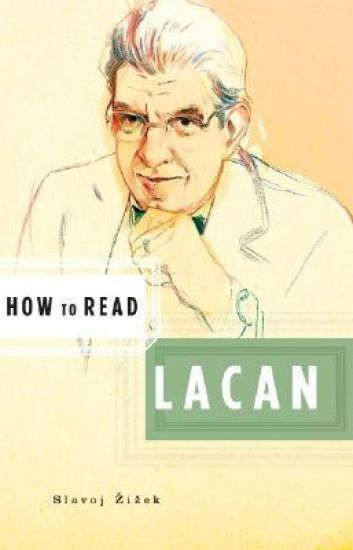
How to Read Lacan

How to Read Lacan

Slavoj Zizek

WW Norton Co
2007
pokkari
The How to Read series provides a context and an explanation that will facilitate and enrich your understanding of texts vital to the canon. These books use excerpts from the major texts to explain essential topics, such as Jacques Lacan's core ideas about enjoyment, which re-created our concept of psychoanalysis. Lacan s motto of the ethics of psychoanalysis involves a profound paradox. Traditionally, psychoanalysis was expected to allow the patient to overcome the obstacles which prevented access to "normal" sexual enjoyment; today, however, we are bombarded by different versions of the injunction "Enjoy!" Psychoanalysis is the only discourse in which you are allowed not to enjoy. Slavoj i ek s passionate defense of Lacan reasserts Lacan s ethical urgency. For Lacan, psychoanalysis is a procedure of reading and each chapter reads a passage from Lacan as a tool to interpret another text from philosophy, art or popular ideology."

History After Lacan

History After Lacan

Teresa Brennan

Routledge
1993
sidottu
Lacan was not an ahistorical post-structuralist. Starting from this controversial premiss, Teresa Brennan tells the story of a social psychosis. She begins by recovering Lacan's neglected theory of history which argued that we are in the grip of a psychotic's era which began in the seventeenth century and climaxes in the present. By extending and elaborating Lacan's theory, Brennan develops a general theory of modernity. Contrary to postmodern assumptions, she argues, we need general historical explanation. An understanding of historical dynamics is essential if we are to make the connections between the outstanding facts of modernity - ethnocentrism, the relationship between the sexes and ecological catastrophe.
History After Lacan

History After Lacan

Teresa Brennan

Routledge
1993
nidottu
Lacan was not an ahistorical post-structuralist. Starting from this controversial premiss, Teresa Brennan tells the story of a social psychosis. She begins by recovering Lacan's neglected theory of history which argued that we are in the grip of a psychotic's era which began in the seventeenth century and climaxes in the present. By extending and elaborating Lacan's theory, Brennan develops a general theory of modernity. Contrary to postmodern assumptions, she argues, we need general historical explanation. An understanding of historical dynamics is essential if we are to make the connections between the outstanding facts of modernity - ethnocentrism, the relationship between the sexes and ecological catastrophe.
Routledge Library Editions: Lacan
A major influence on French intellectuals in the twentieth century, Jacques Lacan has been referred to as ‘the most controversial psychoanalyst since Freud’. Routledge Library Editions: Lacan offers a selection of titles, which examine the influence of Lacan’s theories in a number of disciplines and includes an annotated bibliography of his works. It brings together as a set, or individual volumes, a series of previously out-of-print titles, originally published between 1983 and 1991.
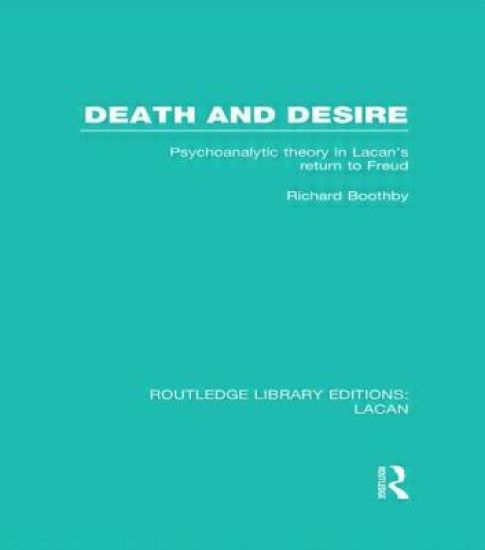
Death and Desire (RLE: Lacan)

Death and Desire (RLE: Lacan)

Richard Boothby

Routledge
2013
sidottu
The immensely influential work of Jacques Lacan challenges readers both for the difficulty of its style and for the wide range of intellectual references that frame its innovations. Lacan’s work is challenging too, for the way it recentres psychoanalysis on one of the most controversial points of Freud’s theory – the concept of a self-destructive drive or ‘death instinct’. Originally published in 1991, Death and Desire presents in Lacanian terms a new integration of psychoanalytic theory in which the battery of key Freudian concepts – from the dynamics of the Oedipus complex to the topography of ego, id, and superego – are seen to intersect in Freud’s most far-reaching and speculative formulation of a drive toward death. Boothby argues that Lacan repositioned the theme of death in psychoanalysis in relation to Freud’s main concern – the nature and fate of desire. In doing so, Lacan rediscovered Freud’s essential insights in a manner so nuanced and penetrating that prevailing assessments of the death instinct may well have to be re-examined. Although the death instinct is usually regarded as the most obscure concept in Freud’s metapsychology, and Lacan to be the most perplexing psychoanalytic theorist, Richard Boothby’s straightforward style makes both accessible. He illustrates the coherence of Lacanian thought and shows how Lacan’s work comprises a ‘return to Freud’ along new and different angles of approach. Written with an eye to the conceptual structure of psychoanalytic theory, Death and Desire will appeal to psychoanalysts and philosophers alike.
Outside the Dream (RLE: Lacan)

Outside the Dream (RLE: Lacan)

Martin Stanton

Routledge
2013
sidottu
Originally published in 1983, Martin Stanton has written an intriguing and original guide to French styles of psychoanalysis. He describes the development of psychoanalytic technique and shows how it has transformed the contemporary French literary and philosophical thought and writing, as well as making inroads in the English-speaking cultural world. He argues that psychoanalysis has outgrown the individual setting and needs to evolve new methods of group work – in this respect, he believes, it has a special role to play in educational institutions.The book examines the grounds on which analysis has evolved subversive and deconstructive strategies and created radical alternatives. It relates the ‘Lacan effect’ on the psychoanalytic movement to long-standing debates on patriarchy and authoritarianism, and considers, in a clinical section, variant diagnoses of paranoia and schizophrenia. It also discusses the future direction of psychoanalysis in the light of contemporary French research.
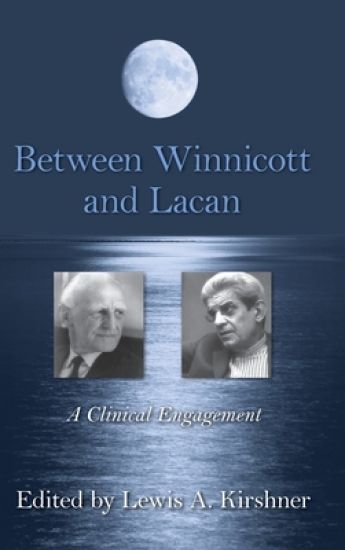
Between Winnicott and Lacan
D. W. Winnicott and Jacques Lacan, two of the most innovative and important psychoanalytic theorists since Freud, are also seemingly the most incompatible. And yet, in different ways, both men emphasized the psychic process of becoming a subject or of developing a separate self, and both believed in the possibility of a creative reworking or new beginning for the person seeking psychoanalytic help. The possibility of working between their contrasting perspectives on a central issue for psychoanalysis - the nature of the human subject and how it can be approached in analytic work - is explored in this book. Their differences are critically evaluated, with an eye toward constructing a more effective psychoanalytic practice that takes both relational and structural-linguistic aspects of subjectivity into account. The contributors address the Winnicott-Lacan relationship itself and the evolution of their ideas, and provide detailed examples of how they have been utilized in psychoanalytic work with patients. Contributors: Jeanne Wolff Bernstein, James Gorney, Andre Green, Mardi Ireland, Lewis Kirshner, Deborah Luepnitz, Mari Ruti, Alain Vanier, Francois Villa .
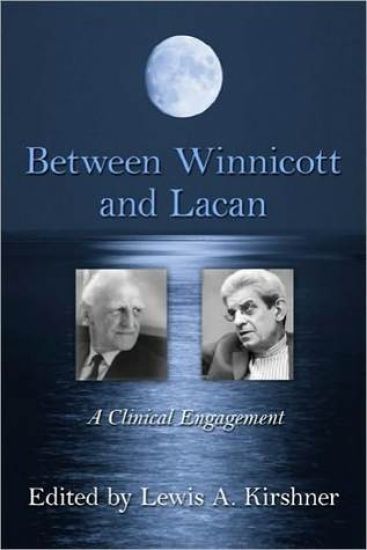
Between Winnicott and Lacan
D. W. Winnicott and Jacques Lacan, two of the most innovative and important psychoanalytic theorists since Freud, are also seemingly the most incompatible. And yet, in different ways, both men emphasized the psychic process of becoming a subject or of developing a separate self, and both believed in the possibility of a creative reworking or new beginning for the person seeking psychoanalytic help. The possibility of working between their contrasting perspectives on a central issue for psychoanalysis - the nature of the human subject and how it can be approached in analytic work - is explored in this book. Their differences are critically evaluated, with an eye toward constructing a more effective psychoanalytic practice that takes both relational and structural-linguistic aspects of subjectivity into account. The contributors address the Winnicott-Lacan relationship itself and the evolution of their ideas, and provide detailed examples of how they have been utilized in psychoanalytic work with patients. Contributors: Jeanne Wolff Bernstein, James Gorney, Andre Green, Mardi Ireland, Lewis Kirshner, Deborah Luepnitz, Mari Ruti, Alain Vanier, Francois Villa .
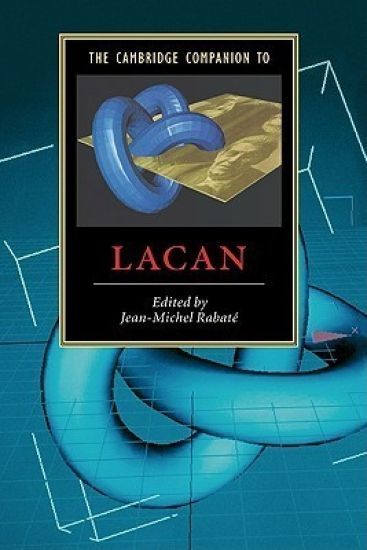
The Cambridge Companion to Lacan

The Cambridge Companion to Lacan

Cambridge University Press
2003
pokkari
This collection of specially commissioned essays by academics and practising psychoanalysts, explores key dimensions of Jacques Lacan’s life and works. Lacan is renowned as a theoretician of psychoanalysis whose work is still influential in many countries. He refashioned psychoanalysis in the name of philosophy and linguistics at the time when it underwent a certain intellectual decline. Advocating a ‘return to Freud’, by which he meant a close reading in the original of Freud’s works, he stressed the idea that the unconscious functions ‘like a language’. All essays in this Companion focus on key terms in Lacan’s often difficult and idiosyncratic developments of psychoanalysis. This volume will bring fresh, accessible perspectives to the work of this formidable and influential thinker. These essays, supported by a useful chronology and guide to further reading will prove invaluable to students and teachers alike.
Rhetoric and Culture in Lacan

Rhetoric and Culture in Lacan

Gilbert D. Chaitin

Cambridge University Press
1996
sidottu
This is the first book to explore the full range and import of Lacan's theory of poetry and its relationship to his understanding of the subject and historicity. Gilbert Chaitin's lucid and accessible study of this famously complex thinker shows how Lacan moves beyond the traditionally hostile polarities of mythos and logos, poetics and philosophy, to conceive of the subject as a complex interplay between psychoanalysis, rationality and history. Lacan's incorporation of historical necessity into the formation of subjectivity enables him to illuminate the role literature plays in the creation of selfhood. Lacan's metaphor of the subject, Chaitin argues, draws not only on Saussure, Jakobson, Freud, Heidegger and Hegel but on hitherto unacknowledged sources such as Bertrand Russell and I.A. Richards. Chaitin explores the ambiguities, contradictions and singularities of Lacan's immensely influential work to provide a definitive account of the theoretical development across his entire career.
Rhetoric and Culture in Lacan

Rhetoric and Culture in Lacan

Gilbert D. Chaitin

Cambridge University Press
1996
pokkari
This is the first book to explore the full range and import of Lacan’s theory of poetry and its relationship to his understanding of the subject and historicity. Gilbert Chaitin’s lucid and accessible study of this famously complex thinker shows how Lacan moves beyond the traditionally hostile polarities of mythos and logos, poetics and philosophy, to conceive of the subject as a complex interplay between psychoanalysis, rationality and history. Lacan’s incorporation of historical necessity into the formation of subjectivity enables him to illuminate the role literature plays in the creation of selfhood. Lacan’s metaphor of the subject, Chaitin argues, draws not only on Saussure, Jakobson, Freud, Heidegger and Hegel but on hitherto unacknowledged sources such as Bertrand Russell and I.A. Richards. Chaitin explores the ambiguities, contradictions and singularities of Lacan’s immensely influential work to provide a definitive account of the theoretical development across his entire career.
The Cambridge Companion to Lacan

The Cambridge Companion to Lacan

Cambridge University Press
2003
sidottu
This collection of specially commissioned essays by academics and practising psychoanalysts, first published in 2003, explores key dimensions of Jacques Lacan's life and works. Lacan is renowned as a theoretician of psychoanalysis whose work is still influential in many countries. He refashioned psychoanalysis in the name of philosophy and linguistics at the time when it underwent a certain intellectual decline. Advocating a 'return to Freud', by which he meant a close reading in the original of Freud's works, he stressed the idea that the unconscious functions 'like a language'. All essays in this Companion focus on key terms in Lacan's often difficult and idiosyncratic developments of psychoanalysis. This volume will bring fresh, accessible perspectives to the work of this formidable and influential thinker. These essays, supported by a useful chronology and guide to further reading will prove invaluable to students and teachers alike.
From Bakunin to Lacan

From Bakunin to Lacan

Saul Newman

Lexington Books
2001
sidottu
In its comparison of anarchist and poststructuralist thought, From Bakunin to Lacan contends that the most pressing political problem we face today is the proliferation and intensification of power. Saul Newman targets the tendency of radical political theories and movements to reaffirm power and authority, in different guises, in their very attempt to overcome it. In his examination of thinkers such as Bakunin, Lacan, Stirner, and Foucault Newman explores important epistemological, ontological, and political questions: Is the essential human subject the point of departure from which power and authority can be opposed? Or, is the humanist subject itself a site of domination that must be unmasked? As it deftly charts this debate's paths of emergence in political thought, the book illustrates how the question of essential identities defines and re-defines the limits and possibilities of radical politics today.
From Bakunin to Lacan

From Bakunin to Lacan

Saul Newman

Lexington Books
2007
nidottu
In its comparison of anarchist and poststructuralist thought, From Bakunin to Lacan contends that the most pressing political problem we face today is the proliferation and intensification of power. Saul Newman targets the tendency of radical political theories and movements to reaffirm power and authority, in different guises, in their very attempt to overcome it. In his examination of thinkers such as Bakunin, Lacan, Stirner, and Foucault Newman explores important epistemological, ontological, and political questions: Is the essential human subject the point of departure from which power and authority can be opposed? Or, is the humanist subject itself a site of domination that must be unmasked? As it deftly charts this debate's paths of emergence in political thought, the book illustrates how the question of essential identities defines and re-defines the limits and possibilities of radical politics today.
Derrida and Lacan

Derrida and Lacan

Michael Lewis

Edinburgh University Press
2008
sidottu
Derrida and Lacan: Another Writing argues that Jacques Derrida's philosophical understanding of language should be supplemented by Jacques Lacan's psychoanalytic approach to the symbolic order. Lacan adopts a non-philosophical, genetic or developmental approach to the question of language and in doing so isolates a dimension that Derrida cannot properly envisage: the imaginary. Michael Lewis argues that the real must be understood not just in relation to the symbolic but also in relation to the imaginary. The existence of an alternative approach to the real that is other than language allows us to identify the idiosyncrasies of Derrida's purely transcendental approach, an approach that addresses language in terms of its conditions of possibility. Lacan shows us that an attention to the genesis of the symbolic order of language and culture should lead us to understand this real other in a different way. This book relates transcendental thought to the insights of non-philosophical thought, and, more specifically, it proposes a way in which philosophy might relate to the insights of the human and natural sciences. By critically juxtaposing Derrida and Lacan, Derrida and Lacan: Another Writing attempts to systematise Slavoj ae'iae'ek's presentation of a Lacanian alternative to Derridean deconstruction. This work should be of interest to all readers in continental thought and transcendental philosophy, deconstruction, psychoanalysis, and literary studies.
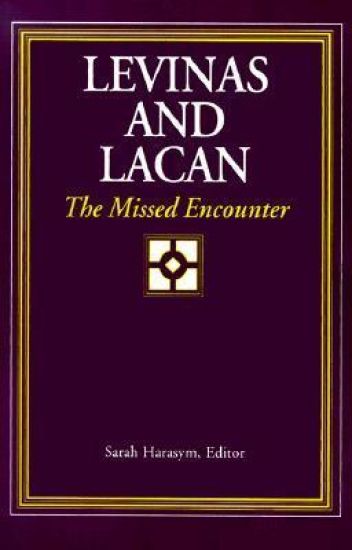
Levinas and Lacan

Levinas and Lacan

State University of New York Press
1998
pokkari
Draws attention to the enigmatic missed encounter between Emmanuel Levinas and Jacques Lacan, and articulates the theoretical stakes and practical consequences of such a disjunctive encounter for ethics.Levinas and Lacan traces the similar concepts and logics of Jacques Lacan and Emmanuel Levinas, to explicitly render the rigorous questioning of the philosophic tradition undertaken by these thinkers, and to articulate the theoretical stakes and practical consequences of such a conjunction for ethics. In this book, contemporary philosophers examine this missed encounter between Levinas and Lacan by tracing their preoccupation with issues that emerge in late modernity: language, subjectivity, alterity, and ethics.