
Kirjahaku
Etsi kirjoja tekijän nimen, kirjan nimen tai ISBN:n perusteella.
1000 tulosta hakusanalla Lee Read
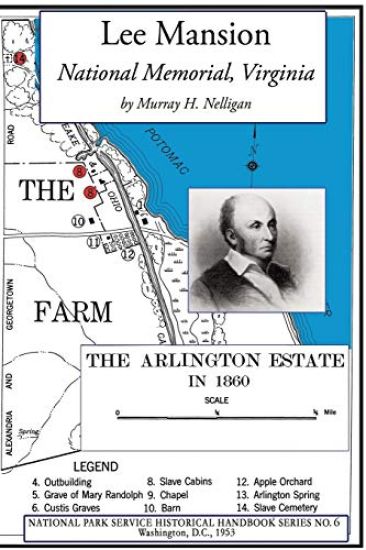
This is a reprint of the National Park Service Handbook Series Number 6. Which is a guide book for the Lee Mansion in Virginia. Built by his father-in-law, George Wahington Parke Custis, the adpoted son of General George Washington, the mansion was for many years a principal repository of the George Washington tradition.
In early 1864, Robert E. Lee began experimenting with tactical innovations for the upcoming spring campaign. To this end, he ordered the organization of sharpshooter battalions. William S. Dunlop was the commander of the sharpshooter battalion formed from the 1st, 12th, 13th, and 14th South Carolina, and Orr's Rifles. In Lee's Sharpshooters he chronicles the training processes, the ordnance tests and the marksmanship exercises the soldiers went through to become skilled and confident skirmishers.Robert E. Lee's decision didn't turn the tide of the war, but it did give rise to the specialized soldier whose " intelligence, marksmanship and unfaltering courage" was remarkable. Contributions from other battalions such as those of Lt. Robert F. Ward from Davis's Mississippi brigade provide first hand accounts of the sharpshooters' part in the battles of Wilderness and Spotsylvania.

The beautiful companion volume to Lee Ufan's largest site-specific outdoor sculpture project in the U.S.In fall 2019, the Hirshhorn Museum and Sculpture Garden debuted 10 new specially commissioned outdoor sculptures from celebrated Korean artist Lee Ufan. This book accompanies the expansive installation, which features sculptures from the artist's signature and continuing "Relatum" series and marks the first exhibition of Lee's work in the nation's capital. For the first time in the Hirshhorn Museum's 44-year history, its 4.3-acre outdoor plaza will be devoted entirely to the work of a single artist, and this book is a beautiful commemoration or keepsake of that event. Lee is a founder of the late 1960s artistic movement Mono-ha, or "School of Things," so his artwork represents an encounter between the viewer, the materials, and the site. The sculptures in this installation and book reflect this: all of the sculptures respond to the museum's unique architecture and continue Lee's iconic practice of placing contrasting materials, such as stainless steel plates and boulders, in dialogue with one another to heighten awareness of the world. The book features more than 100 color illustrations, including preliminary sketches, photographs of the artist selecting materials for the work, images of the installation process, shots of installed sculptures, details of installed sculptures, and more. Accompanying these powerful images are a foreword, essays, artist interview, and short captions that highlight how the works are rooted in contemplation and sensation rather than static representation. Lee Ufan: Open Dimension offers readers an intimate look at the work, artistic process, and impact of one of the pioneering figures of postwar art.
Lee Compton is about to discover that when it comes to falling in love, there are no rules Socialite Lee Compton thought she knew what path lay ahead of her. Leaving her controlling husband after a five-year marriage, she approaches thirty ready to find her own happiness. She can't imagine that attending a birthday party at a local lesbian bar will force her to rewrite everything she believes she knows about herself. Ray Elliot's decidedly blue-collar existence is exactly the way she wants it. A reputation that guarantees no shortage of entanglement-free encounters suits her unwillingness let anyone into her emotions. When beautiful--and very straight--Lee walks through the back door of her favorite hangout, Ray has no idea that her perfect world is about to be turned upside down. As the two women struggle to resist the growing attraction between them, each finds her supposedly ideal life anything but. Ray fights to keep Lee from breaking through the walls around her heart while watching her dream job become a nightmare. Meanwhile, Lee's ex-husband isn't willing to let her go so easily, and she discovers that happiness may come at a heavy price.
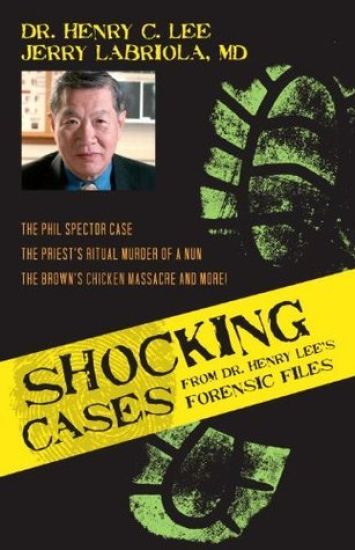
Shocking Cases from Dr. Henry Lee's Forensic Files
Lee Henry C.; Labriola Jerry
Prometheus Books
2010
sidottu
Dr. Henry C. Lee is highly regarded throughout the law-enforcement community as one of the most talented and experienced forensic scientists in the world. He has also received widespread public recognition and media attention through his association with sensational criminal investigations, including the JFK assassination, the suicide of White House counsel Vincent Foster, the Chandra Levy homicide, the O.J. Simpson and JonBenet Ramsey cases, and, most recently, the Caylee Anthony case. In this new book, Dr. Lee and critically acclaimed mystery writer Jerry Labriola, MD, team up again to present another true-crime page-turner on five notorious incidents: · The Phil Spector case: Legendary music mogul Phil Spector was charged with murder in the death of actress Lana Clarkson, found slain in his mansion. But has Dr. Lee produced forensic evidence suggesting her death was a suicide? · The Brown's Chicken massacre: The savage murder of helpless employees of a restaurant in Palatine, Illinois, was left unsolved for over a decade until the painstaking forensic skills of Task Force and Dr. Lee eventually identified the killers. · Murder in the Sacristy: The brutal murder of a nun in a Toledo, Ohio, church had bizarre ritualistic overtones and remained unsolved until a priest was prosecuted twenty-six years later-the same priest who had conducted the nun's funeral service! Dr. Lee testified at the trial of the priest and here he demonstrates how the perseverance of law enforcement officials and forensic scientists eventually solved the crime. · The shooting of a Connecticut state trooper and the shooting death of a fourteen-year-old young man: Dr. Lee discusses the dual hazards of police work-being killed or injured in the line of duty and the accidental killing of innocent victims or suspects. In Hartford, while racial tensions threatened to spin out of control, Dr. Lee reconstructed the shooting of a young African American by a police officer. His diligent work defused hostilities that nearly led to a riot. · Genocide in Bosnia-Herzegovina: Dr. Lee discusses his role in the excavation and, in some cases, the identification of hundreds of bodies in the former Yugoslavia. The evidence he uncovered was later used to build a case against suspects indicted by the International War Crimes Tribunal. Combining fascinating details of forensic science with a vivid narrative, Shocking Cases from Dr. Henry Lee's Forensic Files is must reading for true-crime readers and forensic science lovers.


Countless books have examined the battle of Gettysburg, but the retreat of the armies to the Potomac River and beyond has not been as thoroughly covered. “Lee is Trapped, and Must be Taken”: Eleven Fateful Days after Gettysburg: July 4 to July 14, 1863, by Thomas J. Ryan and Richard R. Schaus goes a long way toward rectifying this oversight. This comprehensive study focuses on the immediate aftermath of the battle and addresses how Maj. Gen. George G. Meade organized and motivated his Army of the Potomac in response to President Abraham Lincoln’s mandate to bring about the “literal or substantial destruction” of Gen. Robert E. Lee’s retreating Army of Northern Virginia. As far as the president was concerned, if Meade aggressively pursued and confronted Lee before he could escape across the flooded Potomac River, “the rebellion would be over.” The long and bloody three-day battle exhausted both armies. Their respective commanders faced difficult tasks, including the rallying of their troops for more marching and fighting. Lee had to keep his army organized and motivated enough to conduct an orderly withdrawal away from the field. Meade faced the same organizational and motivational challenges, while assessing the condition of his victorious but heavily damaged army, to determine if it had sufficient strength to pursue and crush a still-dangerous enemy. Central to the respective commanders’ decisions was the information they received from their intelligence-gathering resources about the movements, intentions, and capability of the enemy. The eleven-day period after Gettysburg was a battle of wits to determine which commander better understood the information he received, and directed the movements of his army accordingly. Prepare for some surprising revelations. Woven into this account is the fate of thousands of Union prisoners who envisioned rescue to avoid incarceration in wretched Confederate prisons, and a characterization of how the Union and Confederate media portrayed the ongoing conflict for consumption on the home front. The authors utilized a host of primary sources to craft their study, including letters, memoirs, diaries, official reports, newspapers, and telegrams, and have threaded these intelligence gems in an exciting and fast-paced narrative that includes a significant amount of new information. “Lee is Trapped, and Must be Taken” is a sequel to Thomas Ryan’s Spies, Scouts, and Secrets in the Gettysburg Campaign, the recipient of the Bachelder-Coddington Literary Award and Gettysburg Civil War Round Table Distinguished Book Award.
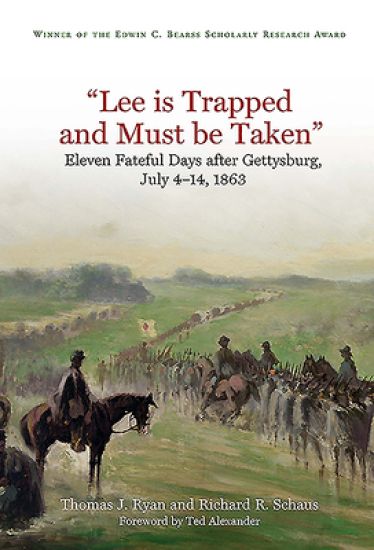
Thousands of books and articles examine nearly every aspect of the Civil War, but the important retreat of the armies from the Gettysburg battlefield to the Potomac River has been but little covered. Until now, no one had produced a critical analysis of the command decisions made during that fateful time based upon available intelligence. “Lee is Trapped and Must be Taken”: Eleven Fateful Days after Gettysburg, July 4 to July 14, 1863, by Thomas J. Ryan and Richard R. Schaus, now available in paperback, rectifies this oversight. This comprehensive day-by-day account, which begins after the end of the Gettysburg battle, examines how Maj. Gen. George G. Meade organized and motivated his Army of the Potomac in response to President Abraham Lincoln’s mandate to bring about the “literal or substantial destruction” of Gen. Robert E. Lee’s defeated and retreating Army of Northern Virginia. As far as Lincoln was concerned, if Meade aggressively pursued and confronted Lee before he could escape across the flooded Potomac River, “the rebellion would be over.” The long and bloody three-day battle exhausted both armies. Both commanders faced the difficult tasks of rallying their troops for more marching and fighting. Lee had to keep his army organized and motivated enough to conduct an orderly withdrawal into Virginia. Meade faced the same organizational and motivational challenges with the added expectation of catching and defeating a still-dangerous enemy. Central to their decision-making was the information they received from their intelligence gathering resources about the movements, intentions, and capability of the enemy. The eleven-day period after Gettysburg was a battle of wits to determine which commander better understood the information he received and directed his army accordingly. Prepare for some surprising revelations. Ryan and Schaus rely on a host of primary sources to craft their study, including letters, memoirs, diaries, official reports, newspapers, and telegrams. The threading of these intelligence gems creates a gripping narrative with a significant amount of new information—which the authors use to offer their own direct and often damning conclusions. “Lee is Trapped and Must be Taken” is a sequel to Thomas Ryan’s Spies, Scouts, and Secrets in the Gettysburg Campaign (Savas Beatie, 2015), the recipient of the Bachelder-Coddington Literary Award and Gettysburg Civil War Round Table Distinguished Book Award.
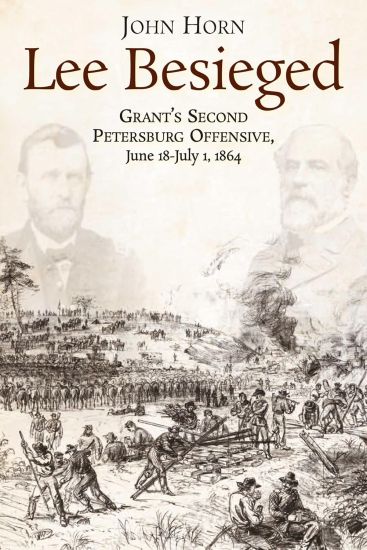
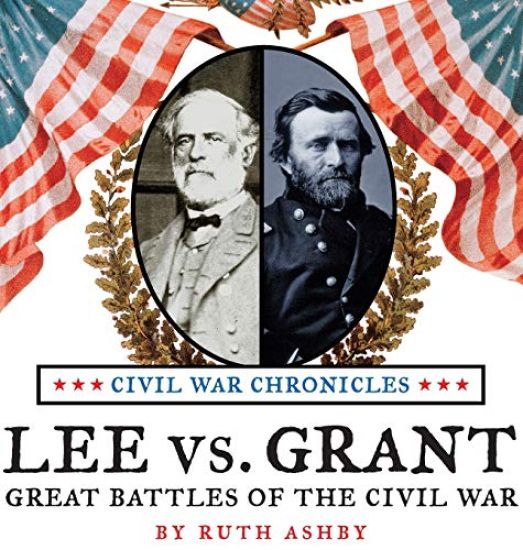
The nine-month siege of Petersburg was the longest continuous operation of the Civil War. Contrary to popular belief, it was anything but static trench warfare, as John Horn ably demonstrates in Lee Besieged: Grant’s Second Petersburg Offensive, June 18-July 1, 1864. Large-scale Union “offensives”—grand maneuvers that triggered some of the large-scale battles—broke the monotony of siege warfare. Once his First Offensive (the assaults of June 15-18) failed to capture the city, the Union commander planned and launched his next major effort within hours. This Second Offensive was one of the most dramatic operations of the entire war. To pave the way for success, Grant brought the city’s bridges under the fire of his siege guns to slow the transfer of enemy troops in and out of Petersburg. He also seized a bridgehead at Deep Bottom on James River’s north bank to draw Confederate forces out of Petersburg by menacing Richmond. Next, he took more ambitious measures by sending infantry to hem in Petersburg from the Appomattox River above and below the city. The move was designed to cut the critical Weldon and South Side railroads and force the Rebels to abandon Petersburg and Richmond. As his infantry went to work, his cavalry set out to cut the Confederate railroads below Petersburg to slow reinforcements coming up from the south and west. Grant’s opponent, however, was General Robert E. Lee with his veteran infantry, not the inept John Floyd of Fort Donelson or the distracted John C. Pemberton of Vicksburg. Lee and his infantry subordinate William Mahone marched to meet the enemy and in a stunning turn of events routed Grant’s foot soldiers at Jerusalem Plank Road. Together, Confederate cavalry leader Wade Hampton and Mahone smashed Grant’s troopers at the battles of Sappony Church and First Reams Station. Thousands of Federal prisoners of war flooded into Confederate camps. Not until April 1865, after seven more offensives, would Grant reach the Appomattox above Petersburg and force Lee to relinquish that city and the capital of Richmond. This is tactical battle action at is finest. Horn’s explanation for the context and consequences of every decision is grounded in hundreds of primary sources and supported by 40 original maps. Lee Besieged: Grant’s Second Petersburg Offensive, June 18-July 1, 1864 is the first full-length book to put Grant’s second effort into its proper perspective—not only in the context of Petersburg’s siege and the Civil War, but in the context of warfare’s history.
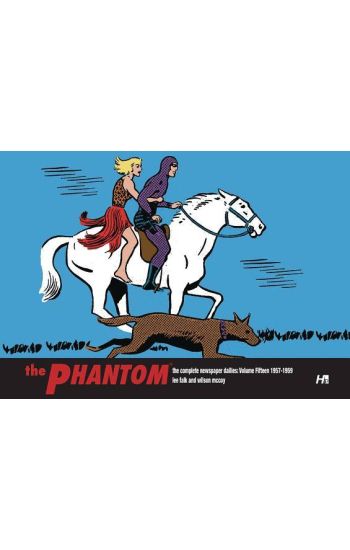
The Phantom the Complete Newspaper Dailies by Lee Falk and Wilson McCoy: Volume Fifteen 1957-1958
Lee Falk
Hermes Press
2019
sidottu
The critically acclaimed, best selling complete reprint of The Phantom continues! Referred to by comic strip historian Maurice Horn as the “granddaddy of all costumed superheroes,” The Phantom was created in 1936 by Lee Falk with artwork by Ray Moore. The strip hit the funny pages of newspapers well before the Dark Knight or Superman made their first appearances and has been acknowledged as an influence on every “masked man of mystery” since. The Phantom set the standard for action, adventure, intrigue, and romance in adventure comic strips and comic books – it has frequently been copied but never equaled. Included in this volume are six complete continuities, reprinted for the first time in their entirety, “The Calyle’s Good Mark,” “The Crybaby” “The Underwater Diamond Thieves,” “The Betrothal,” “The Swamp Rats,” and “Oogooru and the Witchmen.” Strips from this issue are taken directly from King Feature’s proofs. Included in the volume is a comprehensive essay and documentary materials.
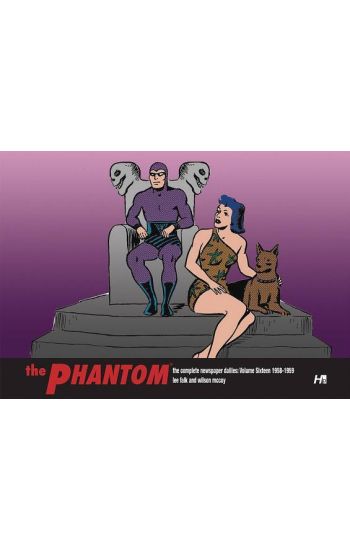
The Phantom the Complete Newspaper Dailies by Lee Falk and Wilson McCoy: Volume Sixteen 1958-1959
Lee Falk
Hermes Press
2019
sidottu
The critically acclaimed, best selling complete reprint of The Phantom continues! Referred to by comic strip historian Maurice Horn as the “granddaddy of all costumed superheroes,” The Phantom was created in 1936 by Lee Falk with artwork by Wilson McCoy. The strip hit the funny pages of newspapers well before the Dark Knight or Superman made their first appearances and has been acknowledged as an influence on every “masked man of mystery” since. The Phantom set the standard for action, adventure, intrigue, and romance in adventure comic strips and comic books - it has frequently been copied but never equaled.Included in this volume are six complete continuities, reprinted for the first time in their entirety, “The Reporter,” “The Monkey Tail (The Diamond Hijackers” “The Gurk Twins,” “The 50th Wife,” “The Iron Dragon,” and “The Werewolf.” Strips from this issue are taken directly from King Feature's proofs. Included in the volume is a comprehensive essay and documentary materials.
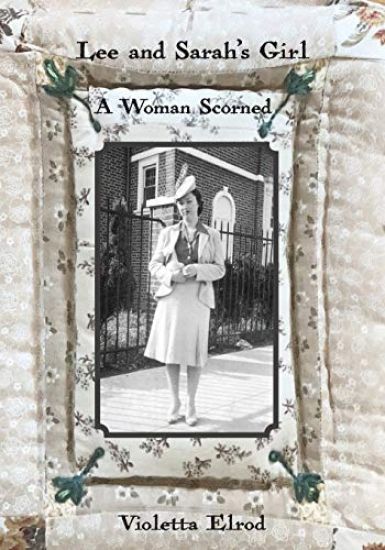
The second book in the series, A Woman Scorned, is the true story of Violetta Elrod's mother, Virginia, who demonstrated that same indomitable spirit needed to survive the hard times of the 1930s and 1940s. The first book, My Family Quilt, tells the true story of her grandparent's life on the Eastern Shore of Maryland in the early 1900s. Violetta passed away in March of 2019 with several books in various stages of completion. Because Violetta's children knew how important these books and their messages were to her and as a way of honoring her wishes and memory, they collaborated on its completion. These books and their message of hope are her way of reaching into the future to remind the young people of today that as Lee Bahnum used to say, "it ain't over as long as you're above ground." And in this case maybe it's not even over then.
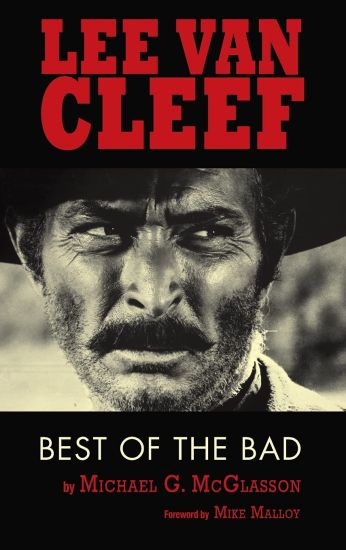
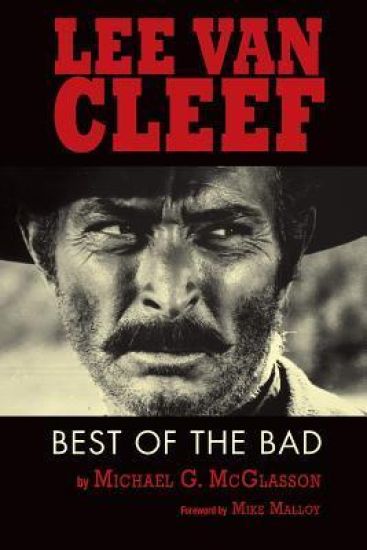
He had the face of a true villain, chiseled to perfection. Director Sergio Leone, best-known for "The Man With No Name" spaghetti western trilogy, once described Van Cleef as having the face of a hawk; actor Eli Wallach called it "wonderfully alive" and full of wickedness. As an actor, Van Cleef portrayed some of the best movie villains of all time-Angel Eyes in The Good, The Bad, and The Ugly, and Frank Talby in Day of Anger. Although more than twenty years have passed since his premature death in 1989, Lee Van Cleef remains a cinematic icon for millions of film fans worldwide, and his legacy as the "Best of the Bad" is set in granite. Lee Van Cleef: Best of the Bad explores the life and career of this great actor, a man with unbounded talent and a heart of finely-polished gold. Through interviews and numerous sources, Best of the Bad reveals the real Lee Van Cleef and discusses his roles in For A Few Dollars More, The Good, The Bad, and The Ugly, and Day of Anger, along with chapters on mythic archetypes and historical gunfighters and bounty hunters. Also included is a foreword by Mike Malloy, author of Lee Van Cleef: A Biographical, Film, and Television Reference.
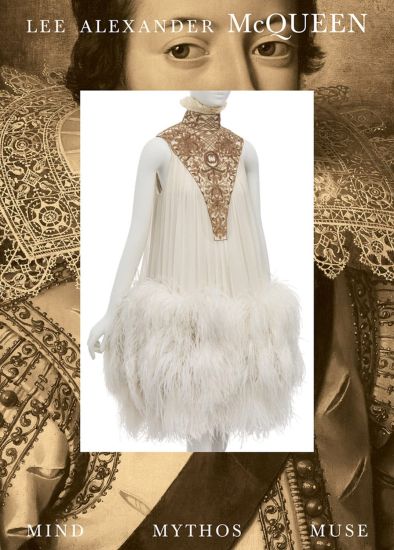
Lee Alexander McQueen: Mind, Mythos, Muse
DISTRIBUTED ART PUBLISHERS
2022
sidottu
McQueen’s iconic fashion juxtaposed with historic textiles and works of art, revealing the designer’s dynamic approach to storytelling One of the most significant contributors to fashion between 1990 and 2010, British designer Lee Alexander McQueen was both a conceptual and a technical virtuoso. His critically acclaimed collections synthesized his unique training in Savile Row tailoring, theatrical design and haute couture with a remarkable breadth and depth of encyclopedic and autobiographical references spanning time, geography, mediums and technology. McQueen’s singular viewpoint produced exquisitely constructed, thought-provoking, often subversive or allegorical fashion. Taking a reflective look at McQueen’s artful design process, this book documents the designer’s diverse sources of inspiration by displaying McQueen’s imaginative fashions alongside related artworks. McQueen's encyclopedic references range from ancient Greece and Rome to Tibetan silk brocade patterns, 17th-century Dutch painting, the prints of Goya and the films of Stanley Kubrick. In each of these cases and beyond, examples of McQueen’s imaginative and extraordinary work are displayed alongside artworks from LACMA’s permanent collection. Spanning art from a multitude of mediums, eras and cultures, this publication provides a new and innovative assessment of McQueen’s work and highlights his mindful approach to storytelling and construction through fashion. Lee Alexander McQueen (1969–2010) was one of the most important fashion designers at the turn of the 21st century. In 2011, following his death, the Costume Institute in New York organized an enormously successful retrospective of his work at the Metropolitan Museum of Art.