Kirjojen hintavertailu. Mukana 11 342 296 kirjaa ja 12 kauppaa.

Kirjahaku

Etsi kirjoja tekijän nimen, kirjan nimen tai ISBN:n perusteella.

1000 tulosta hakusanalla Maral Atmaca

Moral Pluralism and the Complexity of Punishment

Moral Pluralism and the Complexity of Punishment

Nicolas Nayfeld

TAYLOR FRANCIS LTD
2023
sidottu
This book advances a new interpretation of Hart’s penal philosophy. Positioning itself in opposition to current interpretations, the book argues that Hart does not defend a mixed theory of punishment, nor a rule utilitarian theory of punishment, nor a liberal form of utilitarianism, nor a goal/constraint approach. Rather, it is argued, his penal philosophy is based on his moral pluralism, which comprises two aspects: value pluralism and pluralism with respect to forms of moral reason. It is held that this means, on the one hand, that criminal law has an irreducible complexity due to the compromises it makes to accommodate competing values, and on the other hand, that there need not be one single justification of punishment. This original interpretation is not based only on Hart’s key volume on the subject Punishment and Responsibility, but on a careful reading of his complete works. The book will be a valuable resource for academics and researchers interested in Hart’s philosophy, the philosophy of law and criminal law.
Moral Pluralism and the Complexity of Punishment

Moral Pluralism and the Complexity of Punishment

Nicolas Nayfeld

TAYLOR FRANCIS LTD
2024
nidottu
This book advances a new interpretation of Hart’s penal philosophy. Positioning itself in opposition to current interpretations, the book argues that Hart does not defend a mixed theory of punishment, nor a rule utilitarian theory of punishment, nor a liberal form of utilitarianism, nor a goal/constraint approach. Rather, it is argued, his penal philosophy is based on his moral pluralism, which comprises two aspects: value pluralism and pluralism with respect to forms of moral reason. It is held that this means, on the one hand, that criminal law has an irreducible complexity due to the compromises it makes to accommodate competing values, and on the other hand, that there need not be one single justification of punishment. This original interpretation is not based only on Hart’s key volume on the subject Punishment and Responsibility, but on a careful reading of his complete works. The book will be a valuable resource for academics and researchers interested in Hart’s philosophy, the philosophy of law and criminal law.
Moral Partiality

Moral Partiality

Yong Li

TAYLOR FRANCIS LTD
2022
sidottu
Situated within the framework of Confucian family-oriented ethics, this book explores the issue of familial partiality and specifically discusses whether it is morally praiseworthy to love one’s family partially. In reviewing the tension between familial partiality and egalitarian impartiality from different perspectives while also drawing on binary metrics to understand the issue – that is, the weak and strong sense of familial partiality in Confucian moral theory – the author carefully discusses the efficacy of three major arguments to justify moral partiality. It is concluded that the tree argument fails to justify moral partiality in Confucianism, the evolutionary argument only justifies moral partiality in the weak sense that we should devote more resources to our family, and the care argument fails to justify moral partiality in the strong sense that family takes priority in any case even at the expense of the principle of justice. Seeking to address the quandary, the author advances an alternative argument based on Thomas Aquinas’ theory of love to interpret Confucian view of partial relationships, holding that partial treatment is assumed in partial relationships. The title will appeal to scholars and students interested in Confucianism, Chinese philosophy, moral philosophy, and comparative philosophy.
Moral Partiality

Moral Partiality

Yong Li

TAYLOR FRANCIS LTD
2024
nidottu
Situated within the framework of Confucian family-oriented ethics, this book explores the issue of familial partiality and specifically discusses whether it is morally praiseworthy to love one’s family partially. In reviewing the tension between familial partiality and egalitarian impartiality from different perspectives while also drawing on binary metrics to understand the issue – that is, the weak and strong sense of familial partiality in Confucian moral theory – the author carefully discusses the efficacy of three major arguments to justify moral partiality. It is concluded that the tree argument fails to justify moral partiality in Confucianism, the evolutionary argument only justifies moral partiality in the weak sense that we should devote more resources to our family, and the care argument fails to justify moral partiality in the strong sense that family takes priority in any case even at the expense of the principle of justice. Seeking to address the quandary, the author advances an alternative argument based on Thomas Aquinas’ theory of love to interpret Confucian view of partial relationships, holding that partial treatment is assumed in partial relationships. The title will appeal to scholars and students interested in Confucianism, Chinese philosophy, moral philosophy, and comparative philosophy.
Moral Challenges in a Pandemic Age
The COVID-19 pandemic, whose consequences will be felt in the long term, can be interpreted as a signal that we have been living in a pandemic age. A pandemic is humanity's common ground, so the moral problems inherent in it are of interest to everyone from now on. It brought a set of moral challenges that cannot be ignored. This book – which emerged amid the novel coronavirus crisis – is designed to fill the gap in the current literature on the topic, offering an original approach to its moral implications. It can be taken as a guide in the face of these pandemic-age challenges for human relations. The pandemic is a multifaceted phenomenon, and its debate involves a wide variety of practical philosophical concerns. All the chapters of this book, divided into four sections, aim to clarify its central aspects, while each chapter provides an original approach to the debate’s leading issues and relies on each most significant collaborator’s expertise. Also, they reflect their unique pandemic experiences under the scrutiny of philosophical unrest.Since the pandemic is an ongoing event, Moral Challenges in a Pandemic Age will be of interest to professors, students, and researchers engaged in understanding the ethical dimension of the age we are experiencing. The problems addressed in this collection transcend the boundaries of the philosophical field, offering an innovative approach to individuals keen on discussing the pandemic from a moral point of view. Such a discussion encompasses the philosophical inquiry but is not restricted to it. Those interested in related areas such as psychology, sociology, biology, public health, education, anthropology, and cultural studies – to name a few – will find connections with parallel themes in this book. In addition, the collection brings a theoretically supported approach to several related debates in a language accessible to anyone who wants to know more about the topic.
Moral Challenges in a Pandemic Age
The COVID-19 pandemic, whose consequences will be felt in the long term, can be interpreted as a signal that we have been living in a pandemic age. A pandemic is humanity's common ground, so the moral problems inherent in it are of interest to everyone from now on. It brought a set of moral challenges that cannot be ignored. This book – which emerged amid the novel coronavirus crisis – is designed to fill the gap in the current literature on the topic, offering an original approach to its moral implications. It can be taken as a guide in the face of these pandemic-age challenges for human relations. The pandemic is a multifaceted phenomenon, and its debate involves a wide variety of practical philosophical concerns. All the chapters of this book, divided into four sections, aim to clarify its central aspects, while each chapter provides an original approach to the debate’s leading issues and relies on each most significant collaborator’s expertise. Also, they reflect their unique pandemic experiences under the scrutiny of philosophical unrest.Since the pandemic is an ongoing event, Moral Challenges in a Pandemic Age will be of interest to professors, students, and researchers engaged in understanding the ethical dimension of the age we are experiencing. The problems addressed in this collection transcend the boundaries of the philosophical field, offering an innovative approach to individuals keen on discussing the pandemic from a moral point of view. Such a discussion encompasses the philosophical inquiry but is not restricted to it. Those interested in related areas such as psychology, sociology, biology, public health, education, anthropology, and cultural studies – to name a few – will find connections with parallel themes in this book. In addition, the collection brings a theoretically supported approach to several related debates in a language accessible to anyone who wants to know more about the topic.
Moral Injury After Abortion

Moral Injury After Abortion

Tara C. Carleton; Jill L. Snodgrass

TAYLOR FRANCIS LTD
2023
nidottu
Moral Injury After Abortion delves deeply into the psychospiritual responses that some women experience when an abortive act conflicts with their moral beliefs and values. The book is grounded in a qualitative, phenomenological study that examined the lived experiences of thirty Christian women after abortion. The study participants’ voices are woven throughout the book in a way that offers the reader a narrative understanding of their experiences and a thick description of the psychospiritual impact of moral injury after abortion. The book provides mental health scholars and professionals with strategies for assessing for moral injury experiences among women post-abortion as well as a guide for addressing the spiritual and psychological impact of post-abortive moral injury.
Moral Obligations and Sovereignty in International Relations
How has contemporary humanitarianism become the dominant framework for how states construct their moral obligations to non-citizens? To answer this question, this book examines the history of humanitarianism in international relations by tracing the relationship between transnational moral obligation and sovereignty from the 16th century to the present. Whereas existing studies of humanitarianism examine the diffusion of such norms or their transmission by non-state actors, this volume explicitly links humanitarianism to the broader concept of sovereignty. Rather than only focusing on the expansion of humanitarian norms, it examines how sovereignty both challenges and sets limits on them. Humanitarian norms are shown to act just as much to reinforce the logic of sovereignty as they do to challenge it. Contemporary humanitarianism is often described in universalist terms, which suggests that humanitarian activity transcends borders in order to provide assistance to those who suffer. In contrast, this book suggests a more counterintuitive and complex understanding of moral obligation, namely that humanitarian discourse not only provides a framework for legitimate humanitarian action, but it also establishes the limits of moral obligation. It will be of great interest to a wide audience of scholars and students in international relations theory, constructivism and norms, and humanitarianism and politics.
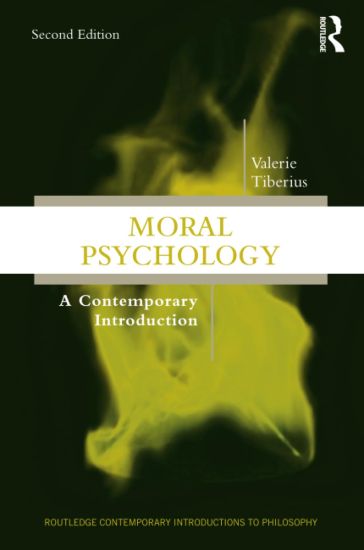
Moral Psychology

Moral Psychology

Valerie Tiberius

TAYLOR FRANCIS LTD
2023
nidottu
Released in 2014, this was the first philosophy textbook in moral psychology, introducing students to a range of philosophical topics and debates such as: what is moral motivation? Do reasons for action always depend on desires? Is emotion or reason at the heart of moral judgment? Under what conditions are people morally responsible? Are there self-interested reasons for people to be moral?The Second Edition of Moral Psychology: A Contemporary Introduction, updates its responses to these questions, taking advantage of the explosion of recent research from philosophers and psychologists on these topics, and adding a chapter on the question of whether morality is innate or learned. As before, the book emphasizes the relationship between traditional and interdisciplinary approaches to moral psychology and aims to carefully explain how empirical research is (or is not) relevant to philosophical inquiry. The bulleted summaries, study questions, and lists for further readings at the end of each chapter have been updated.Key Updates to the Second Edition:Includes a new opening section on human nature, borrowing material from elsewhere in the bookAdds a new chapter on evolutionary and developmental arguments for the innateness of moralityExpands coverage of the challenges to psychological research, including the replication crisis and the WEIRDness challengeProvides a new section on implicit bias and moral responsibilityOffers enhanced clarity and accessibility throughoutIncludes up-to-date further reading sections and bibliography
Moral Psychology

Moral Psychology

Valerie Tiberius

TAYLOR FRANCIS LTD
2023
sidottu
Released in 2014, this was the first philosophy textbook in moral psychology, introducing students to a range of philosophical topics and debates such as: what is moral motivation? Do reasons for action always depend on desires? Is emotion or reason at the heart of moral judgment? Under what conditions are people morally responsible? Are there self-interested reasons for people to be moral?The Second Edition of Moral Psychology: A Contemporary Introduction, updates its responses to these questions, taking advantage of the explosion of recent research from philosophers and psychologists on these topics, and adding a chapter on the question of whether morality is innate or learned. As before, the book emphasizes the relationship between traditional and interdisciplinary approaches to moral psychology and aims to carefully explain how empirical research is (or is not) relevant to philosophical inquiry. The bulleted summaries, study questions, and lists for further readings at the end of each chapter have been updated.Key Updates to the Second Edition:Includes a new opening section on human nature, borrowing material from elsewhere in the bookAdds a new chapter on evolutionary and developmental arguments for the innateness of moralityExpands coverage of the challenges to psychological research, including the replication crisis and the WEIRDness challengeProvides a new section on implicit bias and moral responsibilityOffers enhanced clarity and accessibility throughoutIncludes up-to-date further reading sections and bibliography
Moral Education in China

Moral Education in China

Wangbei Ye

TAYLOR FRANCIS LTD
2023
sidottu
The book presents up-to-date research on moral education teaching and teachers in China. By providing an accessible, practical, yet scholarly source of moral education, education aims and teachers’ ethical roles in China, which is also an international concern, the author systematically reviews Moral Education curriculum, moral education pre-service teacher education, current policies and practices of Moral Education teaching and teachers. The book will be resourceful for researchers, practitioners and policymakers in moral education, citizenship education and teacher education.
Moral Education in China

Moral Education in China

Wangbei Ye

TAYLOR FRANCIS LTD
2024
nidottu
The book presents up-to-date research on moral education teaching and teachers in China. By providing an accessible, practical, yet scholarly source of moral education, education aims and teachers’ ethical roles in China, which is also an international concern, the author systematically reviews Moral Education curriculum, moral education pre-service teacher education, current policies and practices of Moral Education teaching and teachers. The book will be resourceful for researchers, practitioners and policymakers in moral education, citizenship education and teacher education.
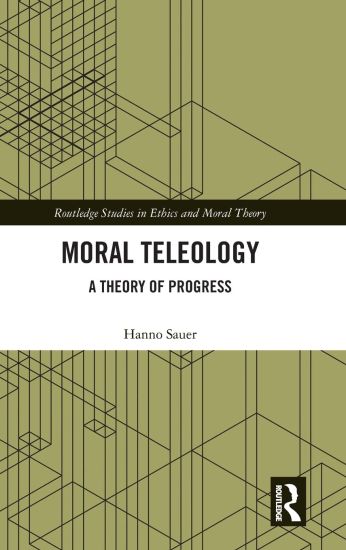
Moral Teleology

Moral Teleology

Hanno Sauer

TAYLOR FRANCIS LTD
2023
sidottu
This book develops a unified theory of moral progress. The author argues that there are mechanisms in place that consistently drive societies towards moral improvement and that a sophisticated, naturalistically respectable form of teleology can be defended.The book’s main aim is to flesh out the process of moral progress in more detail, and to show how, when the right mechanisms and institutions of moral progress are matched together, they create pressure for the desired types of moral gains to manifest. The first part of the book deals with two issues: the conceptual one about what moral progress is, and the broadly empirical one whether it is possible. It shows that cultural evolution successfully explains the origins of modern forms of morally welcome change. The second part argues that there is logical space for a moderate, scientifically credible form of teleology, and that the converse case for moral decline is weak. It addresses the types, drivers, and institutions of moral progress that allow for the storage, transmission, and cumulative improvement of our normative infrastructure over time. Finally, the third part demonstrates why moral progress cannot be accounted for in metaethically realist terms.Moral Teleology will be of interest to researchers and advanced students working in ethics, moral epistemology, and moral psychology.The Open Access version of this book, available at http://www.taylorfrancis.com, has been made available under a Creative Commons Attribution-Non Commercial-No Derivatives (CC-BY-NC-ND) 4.0 license.
Moral Teleology

Moral Teleology

Hanno Sauer

TAYLOR FRANCIS LTD
2024
nidottu
This book develops a unified theory of moral progress. The author argues that there are mechanisms in place that consistently drive societies towards moral improvement and that a sophisticated, naturalistically respectable form of teleology can be defended.The book’s main aim is to flesh out the process of moral progress in more detail, and to show how, when the right mechanisms and institutions of moral progress are matched together, they create pressure for the desired types of moral gains to manifest. The first part of the book deals with two issues: the conceptual one about what moral progress is, and the broadly empirical one whether it is possible. It shows that cultural evolution successfully explains the origins of modern forms of morally welcome change. The second part argues that there is logical space for a moderate, scientifically credible form of teleology, and that the converse case for moral decline is weak. It addresses the types, drivers, and institutions of moral progress that allow for the storage, transmission, and cumulative improvement of our normative infrastructure over time. Finally, the third part demonstrates why moral progress cannot be accounted for in metaethically realist terms.Moral Teleology will be of interest to researchers and advanced students working in ethics, moral epistemology, and moral psychology.The Open Access version of this book, available at http://www.taylorfrancis.com, has been made available under a Creative Commons Attribution-Non Commercial-No Derivatives (CC-BY-NC-ND) 4.0 license.
Mural Painting in Britain 1630-1730

Mural Painting in Britain 1630-1730

Lydia Hamlett

TAYLOR FRANCIS LTD
2023
nidottu
This book illuminates the original meanings of seventeenth- and early-eighteenth-century mural paintings in Britain.At the time, these were called ‘histories’. Throughout the eighteenth century, though, the term became directly associated with easel painting and, as ‘history painting’ achieved the status of a sublime genre, any link with painted architectural interiors was lost. Whilst both genres contained historical ?gures and narratives, it was the ways of viewing them that differed. Lydia Hamlett emphasises the way that mural paintings were experienced by spectators within their architectural settings. New iconographical interpretations and theories of effect and affect are considered an important part of their wider historical, cultural and social contexts.This book is intended to be read primarily by specialists, graduate and undergraduate students with an interest in new approaches to British art of the seventeenth and eighteenth centuries.
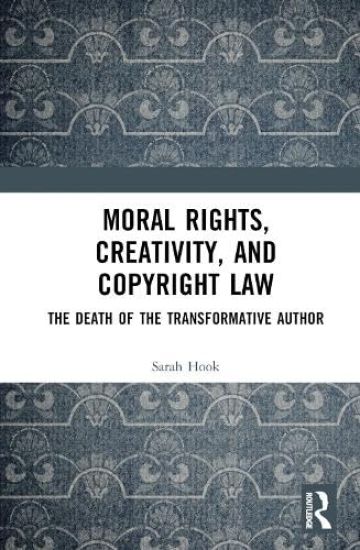
Moral Rights, Creativity, and Copyright Law

Moral Rights, Creativity, and Copyright Law

Sarah Hook

TAYLOR FRANCIS LTD
2023
sidottu
This book argues that moral rights provisions in copyright law rest on a misunderstanding, or romanticisation, of the role of the author.The Romantic conception of authorship, as a lone genius, creating from nothing, sensitive and vulnerable, has helped publishers push for strong copyright reform. But is this conception borne out in practice – especially in a world of meme culture, of artificial intelligence generated art and poetry, and of open source and fan fiction? This book probes the romantic vignette of the author through its legal adoption. Moral rights are rights that attach to the non-economic – for example, intellectual or emotional – interests of an author in their work. Much like defamation, moral rights see the right of reputation as superior to the right of freedom of expression. However, unlike defamation, moral rights are not protecting against defamatory actions against a person. In most jurisdictions, they are provisions set within copyright regimes; regimes whose purpose is to incentivise innovation. Challenging the way we think about authorship and how it should be protected by law, the book draws on a wide range of historical and contemporary examples to demonstrate how moral rights can constitute a barrier to transformative creativity. While authors and artists require strong rights to protect their ability to earn an income and incentivise creativity, moral rights, the book argues, may in turn actually harm their ability to do so.This timely criticism of moral rights will appeal to researchers, students, policy makers and lawyers working in the area of intellectual property law, as well as legal theorists, sociolegal scholars and legal historians with relevant interests.
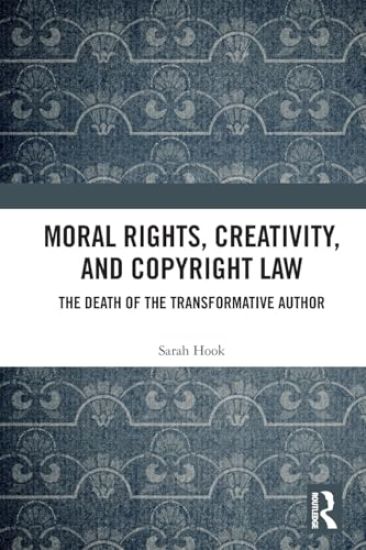
Moral Rights, Creativity, and Copyright Law

Moral Rights, Creativity, and Copyright Law

Sarah Hook

TAYLOR FRANCIS LTD
2025
nidottu
This book argues that moral rights provisions in copyright law rest on a misunderstanding, or romanticisation, of the role of the author.The Romantic conception of authorship, as a lone genius, creating from nothing, sensitive and vulnerable, has helped publishers push for strong copyright reform. But is this conception borne out in practice – especially in a world of meme culture, of artificial intelligence generated art and poetry, and of open source and fan fiction? This book probes the romantic vignette of the author through its legal adoption. Moral rights are rights that attach to the non-economic – for example, intellectual or emotional – interests of an author in their work. Much like defamation, moral rights see the right of reputation as superior to the right of freedom of expression. However, unlike defamation, moral rights are not protecting against defamatory actions against a person. In most jurisdictions, they are provisions set within copyright regimes; regimes whose purpose is to incentivise innovation. Challenging the way we think about authorship and how it should be protected by law, the book draws on a wide range of historical and contemporary examples to demonstrate how moral rights can constitute a barrier to transformative creativity. While authors and artists require strong rights to protect their ability to earn an income and incentivise creativity, moral rights, the book argues, may in turn actually harm their ability to do so.This timely criticism of moral rights will appeal to researchers, students, policy makers and lawyers working in the area of intellectual property law, as well as legal theorists, sociolegal scholars and legal historians with relevant interests.
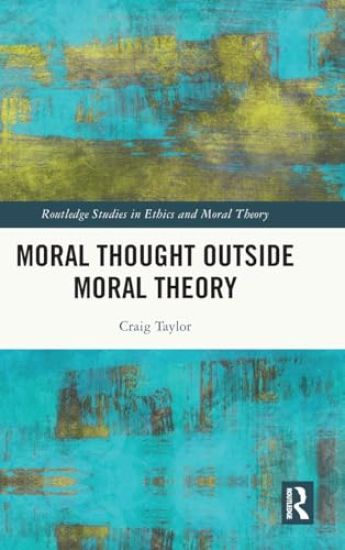
Moral Thought Outside Moral Theory

Moral Thought Outside Moral Theory

Craig Taylor

TAYLOR FRANCIS LTD
2023
sidottu
This book argues there can be no theory of ethics and that any attempt at such a theory ends up distorting the moral phenomena that it is supposed to explain. It presents clear examples of moral thought outside moral theorising through literature and Wittgenstein’s later philosophy.The book’s precise target is moral theory understood as a theory of right action. The author begins by arguing against the assumption central to moral theory that moral judgments are universalizable; that what it is right for one agent to do in a given situation is what is right for any agent in that same situation. Rather, moral judgements are essentially first personal. The author's specific contention here is that our understanding of moral thought in literature provides grounds for rejecting the assumption that moral judgements are universalizable. The author then goes on to argue that there is some determinate and objective content to ethics connected to recognising another human being as a limit to our will. He presents several literary examples that have influenced his thinking about the nature of moral value. He combines these readings with insights from Wittgenstein’s later writings to demonstrate the ways in which moral theorising fails to capture important aspects of moral thought.Moral Thought Outside Moral Theory will be of interest to scholars and advanced students working in ethics and moral theory, literature and philosophy, and Wittgenstein.
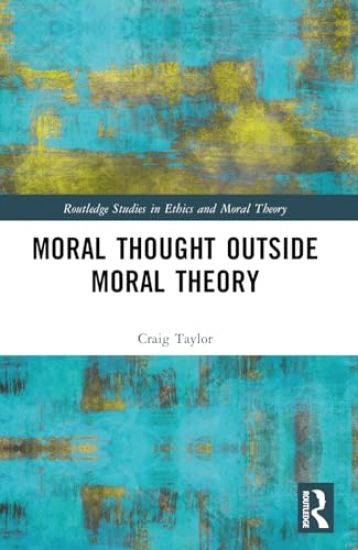
Moral Thought Outside Moral Theory

Moral Thought Outside Moral Theory

Craig Taylor

TAYLOR FRANCIS LTD
2025
nidottu
This book argues there can be no theory of ethics and that any attempt at such a theory ends up distorting the moral phenomena that it is supposed to explain. It presents clear examples of moral thought outside moral theorising through literature and Wittgenstein’s later philosophy.The book’s precise target is moral theory understood as a theory of right action. The author begins by arguing against the assumption central to moral theory that moral judgments are universalizable; that what it is right for one agent to do in a given situation is what is right for any agent in that same situation. Rather, moral judgements are essentially first personal. The author's specific contention here is that our understanding of moral thought in literature provides grounds for rejecting the assumption that moral judgements are universalizable. The author then goes on to argue that there is some determinate and objective content to ethics connected to recognising another human being as a limit to our will. He presents several literary examples that have influenced his thinking about the nature of moral value. He combines these readings with insights from Wittgenstein’s later writings to demonstrate the ways in which moral theorising fails to capture important aspects of moral thought.Moral Thought Outside Moral Theory will be of interest to scholars and advanced students working in ethics and moral theory, literature and philosophy, and Wittgenstein.
Moral Panics and Social Control in the COVID-19 Pandemic
Moral Panics and Social Control in the Covid-19 Pandemic presents a series of case studies which focus on particular social processes and interactions during the COVID-19 pandemic, applying the tools offered by classical studies on moral panic and moral panic theory to illuminate both political and popular responses. Each case study explores the emergence, development, and impact of forms of moral panic in response to the coronavirus outbreak. In doing so, each chapter addresses the intersectional impact of moral panics upon vulnerable and/or stigmatised groups and outlines how moral panics have informed policies, interventions and social mechanisms introduced by governments. Incorporating case studies from across the globe and drawing upon approaches from different disciplines, the chapters in this volume offer a wide-ranging and multi-faceted analysis of the varying responses to the coronavirus outbreak. The book highlights aspects of interest for students and scholars in the social sciences, educators, policymakers and practitioners with an interest in moral panics, responses to the COVID-19 pandemic, and mechanisms of social control.