Marcel Proust was in his twenties when he wrote most of the texts included in this volume. Through various genres, the author evokes, in a darkly tragic way, how he became aware of his homosexuality.
'the metamorphosis of Monsieur de Charlus into a new person was so complete that... everything which had appeared incoherent to me until then, was becoming intelligible, and self-evident' The fourth volume of Proust's In Search of Lost Time extends the protagonist's journey of discovery into the social world of fin-de-siècle France. As the biblically inflected title, Sodom and Gomorrah, suggests, however, this world has taken on a new colouring. Through a succession of observations--both voyeuristic and overt--Proust's protagonist encounters and begins to appreciate the great diversity of sexual identities and proclivities that underpin human relations. At the heart of this volume that buzzes with chatter, gossip, and position-taking, is the Baron de Charlus, whose relationship with the working-class Charlie Morel is a central preoccupation of the narrative. This volume lays bare the ways in which ambitions and desires are nurtured, projected, masked, and exposed. Suffering, in love, is rarely far away. Sodom and Gomorrah explores frictions between the social classes via the Verdurins' upward climb and the ways in which the impulses of desire can cut across society's arbitrary boundaries. The narrator recounts his retrospective devastation at the death of his grandmother, and while his connection to Albertine deepens, it is his uncertainty about the true nature of her sexual identity that binds him closer to her, leading to a fraught denouement that paves the way for the next, fateful phase of their relationship. ABOUT THE SERIES: For over 100 years Oxford World's Classics has made available the widest range of literature from around the globe. Each affordable volume reflects Oxford's commitment to scholarship, providing the most accurate text plus a wealth of other valuable features, including expert introductions by leading authorities, helpful notes to clarify the text, up-to-date bibliographies for further study, and much more.
'the social kaleidoscope was shifting' The Guermantes Way, the third volume of Marcel Proust's In Search of Lost Time, provides a transition from the realm of adolescence into the adult social world of Belle Epoque Paris. Its pages buzz with worldly conversations, with bravado and posturing, infatuation, scandal, prejudice, and intrigue. To the fore is Proust's ear for spoken language and how it provides a stage for human foibles as well as inventiveness and panache. This is a broad canvas studded with amusing anecdotes, surprising vignettes and touching scenes, as well as fascinating characters including the indomitable Duchesse de Guermantes and her enigmatic relation the Baron de Charlus. The Guermantes Way immerses readers into a society in flux, as the old aristocracy cedes to a wealthy, rising bourgeoisie and everyone, regardless of class or standing, must navigate the perilous waters of the Dreyfus Affair. Through these lenses, Proust explores questions of substance and superficiality, and identity and belonging, in highly memorable scenes concerning friendship, love, mortality, and loss. The novel is an extraordinary chronicle of pre-war Paris as well as a vital stepping stone in Proust's novel, building on the formative, partially learned lessons of the second volume, In the Shadow of Girls in Blossom, and preparing the ground for the portentous challenges of the volumes that lie ahead. ABOUT THE SERIES: For over 100 years Oxford World's Classics has made available the widest range of literature from around the globe. Each affordable volume reflects Oxford's commitment to scholarship, providing the most accurate text plus a wealth of other valuable features, including expert introductions by leading authorities, helpful notes to clarify the text, up-to-date bibliographies for further study, and much more.
This work has been selected by scholars as being culturally important and is part of the knowledge base of civilization as we know it.This work is in the public domain in the United States of America, and possibly other nations. Within the United States, you may freely copy and distribute this work, as no entity (individual or corporate) has a copyright on the body of the work.Scholars believe, and we concur, that this work is important enough to be preserved, reproduced, and made generally available to the public. To ensure a quality reading experience, this work has been proofread and republished using a format that seamlessly blends the original graphical elements with text in an easy-to-read typeface.We appreciate your support of the preservation process, and thank you for being an important part of keeping this knowledge alive and relevant.
This work has been selected by scholars as being culturally important and is part of the knowledge base of civilization as we know it.This work is in the public domain in the United States of America, and possibly other nations. Within the United States, you may freely copy and distribute this work, as no entity (individual or corporate) has a copyright on the body of the work.Scholars believe, and we concur, that this work is important enough to be preserved, reproduced, and made generally available to the public. To ensure a quality reading experience, this work has been proofread and republished using a format that seamlessly blends the original graphical elements with text in an easy-to-read typeface.We appreciate your support of the preservation process, and thank you for being an important part of keeping this knowledge alive and relevant.
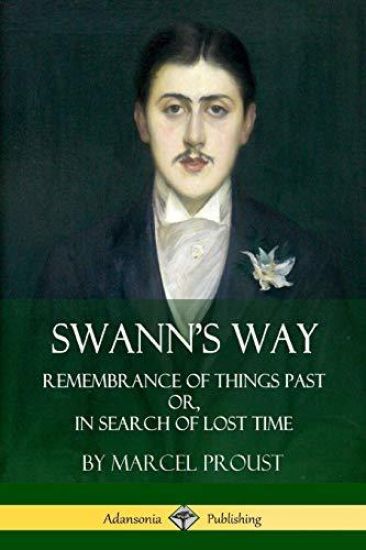
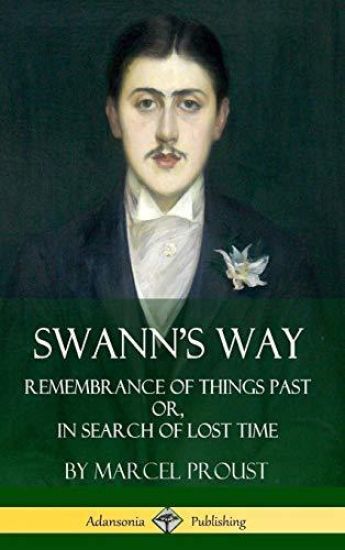
Marcel Proust's classic novel Swann's Way is replete with recollections of the distant past. This is the first volume of the acclaimed series: Remembrance of Things Past, also named In Search of Lost Time. Originally written and published in 1909, this premier entry in Proust's series contains some of the finest prose fiction Proust ever authored. Although lengthy, no sacrifice is made with the signature style Proust had cultivated by the time he commenced Swann's Way - recollections are written relentlessly, of places, names, items and other such paraphernalia of life. The narrator gradually builds up a plot surrounding his own life and activities. The titular character, Charles Swann is an associate of the narrator's family who receives particular interest in the story. The first scene recounts a dinner in which Swann was in attendance, noting his characteristics. By stages, a compelling story unfolds with Swann's affections for the former courtesan Odette de Crecy explored.
Marcel Proust's classic novel Swann's Way is replete with recollections of the distant past. This is the first volume of the acclaimed series: Remembrance of Things Past, also named In Search of Lost Time. Originally written and published in 1909, this premier entry in Proust's series contains some of the finest prose fiction Proust ever authored. Although lengthy, no sacrifice is made with the signature style Proust had cultivated by the time he commenced Swann's Way - recollections are written relentlessly, of places, names, items and other such paraphernalia of life. The narrator gradually builds up a plot surrounding his own life and activities. The titular character, Charles Swann is an associate of the narrator's family who receives particular interest in the story. The first scene recounts a dinner in which Swann was in attendance, noting his characteristics. By stages, a compelling story unfolds with Swann's affections for the former courtesan Odette de Crecy explored.
Now available for the first time in the United States, a celebrated translation of the first volume of Proust's In Search of Lost Time. Swann's Way, the first of the seven volumes that constitute Marcel Proust's lifework, In Search of Lost Time, introduces the larger themes of the whole sequence while standing on its own as a brilliant evocation of the French Belle poque. Here we encounter Proust's narrator, restless and unfulfilled in middle age, his life weighing on him as a burden of things forgotten and things undone, until quite by chance he is brought to remember the world of his childhood, his clinging attachment to his mother, his dread of his father, summers in the country and the two walks his family regularly took, one by a great aristocratic estate, the other by the house of a certain Charles Swann, to whom a mystery was attached. A child's world and the world of adults the child can only begin to imagine unfurl before us, and Proust's pages spill over with incident and puzzlement, pathos and humor. The novel then takes a further step into the past to tell of the goings-on at the Parisian salon of the bourgeois Verdurins, where social climbing and artistic accomplishment exist in incongruous and comic conjunction, and of Swann's infatuation with the courtesan Odette. Swann, man about town and familiar of royalty, is soon reduced to walking after midnight, unrecognizable to himself and to his friends, forlorn as a child awaiting a goodnight kiss, no thought in his head but love--and in Proust's universe there is no more terrible affliction. James Grieve began his career as a translator of Proust in the early 1970s, driven by his dismay at how many readers deemed In Search of Lost Time to be too difficult for them to take on. Grieve's artful and celebrated version of Swann's Way--only now available outside his native Australia--shows that this is hardly the case. Proust's great narrative covers the whole gamut of human experiences and emotions, but to read it is to know joy.
"Suppose for a moment that Catholicism had been dead for centuries, that the traditions of its worship had been lost. Only the unspeaking and forlorn cathedrals remain; they have become unintelligible yet remain admirable."So begins Marcel Proust's Death Comes for the Cathedrals (La mort des cath drales), originally published in Le Figaro (1904). Proust addresses the political and religious debate concerning the "the Briand bill," a parliamentary proposal which imperiled the fate of French Cathedrals-"the first and most perfect masterpieces" of Gothic architecture. The great author of In Search of Lost Time gives prophetic voice to his own fear that "France would be transformed into a shore where giant chiseled conches seemed to have run aground, emptied of the life that inhabited them and no longer bringing an attentive ear to the distant murmur of the past, simply museum objects, themselves frozen." As Proust makes plain, though the cathedrals of France and the traditional liturgy of the Roman rite are the spiritual inheritance of the Church, they are part of the patrimony of all humanity and, pending preservation, their loss would leave all the world impoverished. This Wiseblood Books edition of Death Comes for the Cathedrals includes an introduction by its translator, Dr. John Pepino, and an afterword by Dr. Peter Kwasniewski, who wonders whether life may yet return to the cathedrals. Throughout, beautiful color images of Chartres and its architectural features grace the pages.