

Kirjahaku
Etsi kirjoja tekijän nimen, kirjan nimen tai ISBN:n perusteella.
1000 tulosta hakusanalla Maria F Davis


"One of the main theses of the Marienthal study was that prolonged unemployment leads to a state of apathy in which the victims do not utilize any longer even the few opportunities left to them. The vicious cycle between reduced opportunities and reduced level of aspiration has remained the focus of all subsequent discussions." So begin the opening remarks to the English-language edition of what has become a major classic in the literature of social stratification.

`The basic premise of this provocative book is a startling one - that sex ratios among people on the marriage market have profound consequences for a wide variety of attitudes, values, and behaviors, from sexual mores and behavior to shifts in economic power...the authors share with the reader a wealth of fascinating data and information...a book which is...fascinating, scholarly, provocative and exceedingly well-written.' -- Canadian Journal of Sociology, Vol 10 No 2 `Written by social scientists with training and considerable publication in social psychology, this book is a unique contribution to the literature on women, sex roles, and the history of relations between men and women. No similar book is available to the academic community.' -- Sociology, September//October 1983 `Here is a highly original contribution to the 'feminist debate' which should be of interest to demographers, whether male or female. A review can only give an indication of the many stimulating, well-documented ideas and arguments advanced.' -- Biology and Society, Vol 1 No 2, June 1984 `Too Many Women? is useful for courses on the family and social change but is a necessary reference for those interested in social changes in relationships. The argument is soundly convincing, the case artfully presented, and the book designed to generate considerable interest.' -- Family Relations, Vol 34 No 1 `This volume is well written...Bibliography and references are more than adequate. Useful as suggested or supplementary reading in undergraduate courses in sociology of the family, gender roles, or family studies.' -- Choice, December 1983 `...this is a book well worth reading. It is controversial, ambitious, consciousness-raising, and informative.' -- Contemporary Psychology, Vol 29 No 5, 1984 `this book should be read for the originality of its authors' ideas and the promise of their hypotheses.' -- Signs, Summer 1987
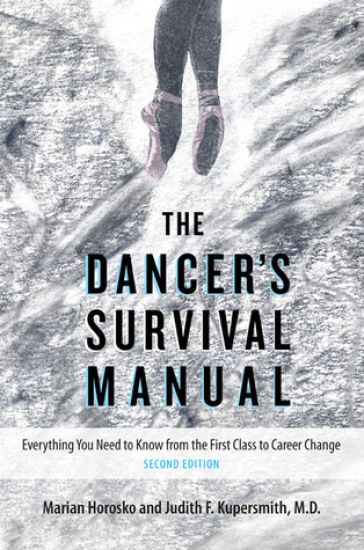
The Dancer's Survival Manual
Marian Horosko; Judith R.F. Kupersmith
University Press of Florida
2009
nidottu
The process of beginning a career in dance can be intimidating and overwhelming. In choosing a school and a teacher, auditioning, competing, and signing a contract, a young dancer has to play many roles and make many difficult, life-altering choices. The older dancer faces a different set of concerns: dealing with the management and the press, navigating backstage politics, working through injuries, staying healthy, and eventually coping with the prospect of moving to a new profession. In ""The Dancer's Survival Manual"", former New York City Ballet dancers Marian Horosko and Judith Kupersmith, MD., draw upon their vast experience to carefully explain and demystify a career in dance. Written in a highly readable style, this comprehensive guide covers all the major decisions and challenges a dancer may face over the course of his or her career, and emphasizes the importance of caring for both the mind and body at every stage. Horosko and Kupersmith write with the knowledge that the most frightening aspect of any new venture is the unknown. They draw upon their vast experience to carefully explain and demystify a career in dance - engaging with and debunking common misconceptions about subjects in both the professional and personal realms. No dancer's collection is complete without this honest and engaging guide! This is a road map to plan your career in dance.
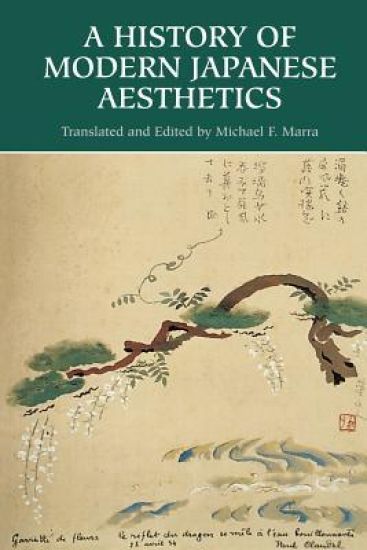
This collection of essays constitutes the first history of modern Japanese aesthetics in any language. It introduces readers through lucid and readable translations to works on the philosophy of art written by major Japanese thinkers from the late nineteenth century to the present. Selected from a variety of sources (monographs, journals, catalogues), the essays cover topics related to the study of beauty in art and nature.The translations are organized into four parts. The first, "The Introduction of Aesthetics," traces the formation of notions of "beauty," "culture," and "art" in Japan. It includes discussion of the creation of the museum in Japan and the frenetic efforts of Nishi Amane, Okakura Tenshin, Ernest Fenollosa, and Mori Ogai to introduce German, British, and French aesthetic thought to the Japanese. This is followed by three sections that examine the transformation of the aesthetic field into an academic discipline that flourished at three major Japanese universities."Aesthetics at Waseda University" begins with an essay on the spiritualism and idealism of Onishi Hajime and continues with essays on the impact of German Lebensphilosophie ("philosophy of life") on Shimamura Hogetsu and Takayama Chogyu, and work by the major Waseda aesthetician of the twentieth century, Aizu Yaichi. Thinkers of the Tokyo School adopted a "scientific" method in the study of art theory. Part 3, "Aesthetics at the University of Tokyo," focuses on the ideas of Otsuka Yasuji (holder of the world’s first Chair of Aesthetics), Onishi Yoshinori, Watsuji Tetsuro, Abe Jiro, Takeuchi Toshio, and Imamichi Tomonobu. The section concludes with a look at the contemporary philosopher Sakabe Megumi. The last section, "Aesthetics at the University of Kyoto," includes essays on Nakagawa Shigeki and Fukada Yasukazu, pioneers in the field of aesthetics, and on the philosophy of art of the "Kyoto School," which was deeply inspired by the thought of Nishida Kitaro. Finally the work of Kuki Shuzo, an influential teacher of Western philosophy at the University of Kyoto, is examined.A History of Modern Japanese Aesthetics is a companion volume to Modern Japanese Aesthetics: A Reader (UH Press, 1999).
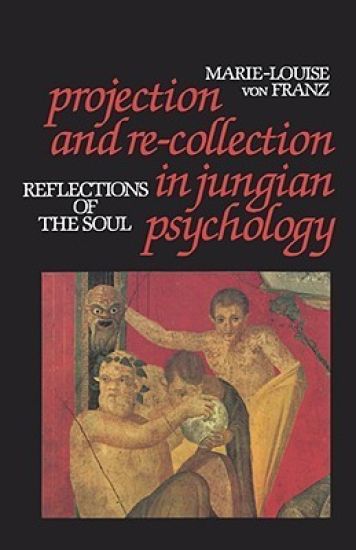
Projection and Re-Collection in Jungian Psychology
von F. Marie-Louise
Open Court Publishing Co ,U.S.
1999
nidottu
"Marie Louise von Franz's Projection and Re-Collection is thorough in its wide-ranging exploration as both a map and a guide to the recognition and reclaiming of projection. Von Franz skillfully brings theory to life as she builds on and further develops C.G. Jung's research on projection". -- Julia Jewett Jungian Analyst "The book is stimulating in going to the core of psychotherapeutic work, and invites a response from psychotherapists in general and from Jungian analysts in particular". -- San Francisco Jung Institute Library Journal


"One of the main theses of the Marienthal study was that prolonged unemployment leads to a state of apathy in which the victims do not utilize any longer even the few opportunities left to them. The vicious cycle between reduced opportunities and reduced level of aspiration has remained the focus of all subsequent discussions." So begin the opening remarks to the English-language edition of what has become a major classic in the literature of social stratification.

Anatomia Patologica, Ultimo Curso de Javier Bichat (1829)
Marie Franois Xavier Bichat; F. G. Boifseau
KESSINGER PUBLISHING, LLC
2010
pokkari

Catalogue De La Bibliotheque Et Des Autographes (1882)
Hippolyte F. Jules Marie Cocheris
KESSINGER PUBLISHING, LLC
2010
pokkari
Gospel Initiations for Each Sunday of the Year
Marie Chabanel; Philip F. Pocock; Gregory Baum
Literary Licensing, LLC
2012
nidottu

The Fever Bark Tree: The Pageant of Quinine
Marie Louise Duran-Reynals; John F. Fulton
Literary Licensing, LLC
2012
sidottu
The Fever Bark Tree: The Pageant of Quinine is a book written by Marie Louise Duran-Reynals that explores the history and significance of quinine, a natural substance derived from the bark of the cinchona tree that was used to treat malaria. The book traces the origins of quinine from its discovery by the indigenous peoples of South America to its widespread use by European colonizers as a cure for malaria. Duran-Reynals also delves into the cultural and economic impact of quinine, as well as the scientific advancements that were made in order to better understand the substance and its effects on the human body. The Fever Bark Tree is a comprehensive and engaging exploration of the history and significance of quinine, and its impact on the world of medicine and beyond.This scarce antiquarian book is a facsimile reprint of the old original and may contain some imperfections such as library marks and notations. Because we believe this work is culturally important, we have made it available as part of our commitment for protecting, preserving, and promoting the world's literature in affordable, high quality, modern editions, that are true to their original work.

The Fever Bark Tree: The Pageant of Quinine
Marie Louise Duran-Reynals; John F. Fulton
Literary Licensing, LLC
2012
nidottu

Studies of Spontaneous Chromosome Breakage in Interspecific Hybrids of Bromus: University of California Publications in Botany, V28, No. 6
Marta Sherman Walters; F. T. Addicott; M. E. Mathias
Literary Licensing, LLC
2013
nidottu
Cet ouvrage, crit en 2009 et publi en 2016, traite de l'initiation philosophique de l' tre humain, de ce qui, subitement ou lentement, lui fait abandonner ses superstitions et le rend l ment subjectif dans l'univers, responsable de lui m me, contraint apporter sa r ponse la question supr me: Qu'est-ce que le monde?

St. Francis and the Foolishness of God
Marie Dennis; O.F.M. Nangle; Cynthia Moe-Lobeda; Stewart Taylor
Orbis Books (USA)
2015
pokkari
This truly wonderful book introduces you anew to the person of Francis--the 'truly catholic' and always contemporary saint. There will be no Christianity as usual for those who read this book." --Richard Rohr, O.F.M."We atSojourners heartily welcom this fresh look at the Poverello and his gentle challenge to the non-poor. Our dear friends who authored this work offer profound insights to all who find their faith and lifestyle questioned by the widening chasm between have's and have-not's." --Jim WallisRetelling the most significant events in the life of St. Francis along with social and theological reflections for today, the authors--Catholic and Protestant--present a new picture of the ever-popular saint. Francis' way speaks most loudly to those who long to do something about inequality and poverty, about consumerism and spiritual emptiness. His spirituality combines the mystical and the earthly, liberation and faithfulness, literal poverty as well as the blessed poverty of the spirit. For everyone who has been touched by St. Francis, this book will deepen that understanding and provide a new perspective on his enduring legacy.
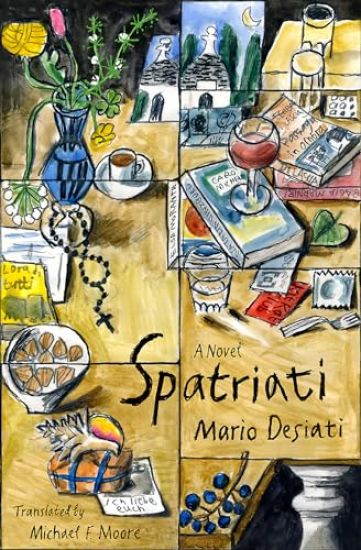
Following two outcasts' tumultuous friendship, this brilliant, Strega Prize-winning novel captures the probing, passionate nature of a generation of global citizens, exploring sexuality and identity. I never understood, of the two of us, which one was warm and which cold, but I consider myself lucky to have met my opposite front in Claudia Fanelli, the spatriata, the name people around here use for the uncertain, the odd, the unclassifiable and sometimes the shiftless or orphans, as well as unmarried men or women, vagrants and vagabonds, or even, in the case that concerns us, the emancipated. Claudia enters Francesco's life on a sunny morning, in the school's entrance hall: it's a bolt of lightning, the birth of an entirely new kind of desire, which is, above all, the desire for life. Claudia is peerless and self-assured, extravagant; Francesco is introverted, burning with erotic curiosity, dominated by rustic faith, uncertain. She provokes him: "Did you know that your mother and my father were lovers?" But in the eyes of that meek boy, she glimpses a spark of rebellion: she sees herself in him. They become adults together, in a symbiotic game of escape and pursuit, in which they always end up finding each other. Mario Desiati captures the complexities of a fluid, uprooted generation: his own. A generation around forty years old today, who weren't afraid to stray far from home to find their place in the world, who truly feel like citizens of Europe. With a poetic yet biting style, capable of great tenderness, Desiati depicts the myriad forms that desire can assume when given free rein. Without any fear of plucking the chords of romanticism, without any false modesty as he delves into the coarsest details of sensuality and instinct.