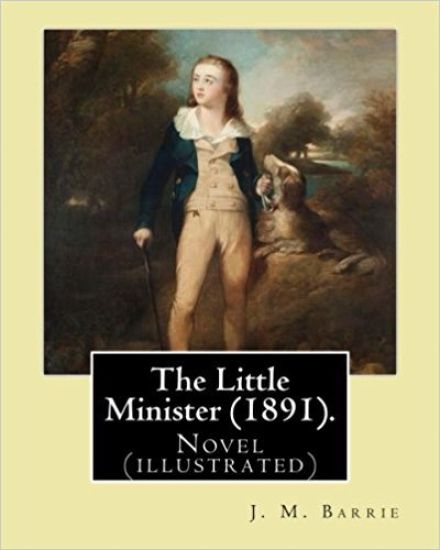
Sir James Matthew Barrie, 1st Baronet, OM (9 May 1860 - 19 June 1937) was a Scottish novelist and playwright, best remembered today as the creator of Peter Pan. He was born and educated in Scotland but moved to London, where he wrote a number of successful novels and plays. There he met the Llewelyn Davies boys, who inspired him to write about a baby boy who has magical adventures in Kensington Gardens (included in The Little White Bird), then to write Peter Pan, or The Boy Who Wouldn't Grow Up, a "fairy play" about an ageless boy and an ordinary girl named Wendy who have adventures in the fantasy setting of Neverland. Although he continued to write successfully, Peter Pan overshadowed his other work, and is credited with popularising the then-uncommon name Wendy.Barrie unofficially adopted the Davies boys following the deaths of their parents. Barrie was made a baronet by George V on 14 June 1913, and a member of the Order of Merit in the 1922 New Year Honours. Before his death, he gave the rights to the Peter Pan works to Great Ormond Street Hospital for Children in London, which continues to benefit from them
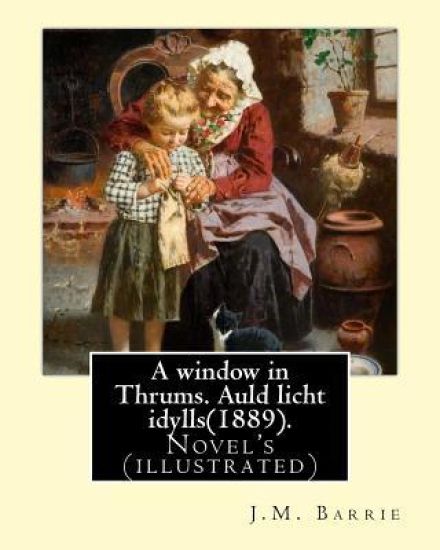
A Window in Thrums - the story of the "untrue son" - is one of several novels about the fictional village of Thrums, said to be modeled on Barrie's home town of Kirriemuir.Written by J. M. Barrie, the Scottish novelist and dramatist who is best known for inventing the character of Peter Pan. Barrie's first novels were set in Kirriemuir, Scotland, which he referred to as "Thrums" (his father worked as a weaver). His Thrums novels were hugely successful when they were published, including Auld Licht Idylls (1888) and The Little Minister (1891)......... Sir James Matthew Barrie, 1st Baronet, OM (9 May 1860 - 19 June 1937) was a Scottish novelist and playwright, best remembered today as the creator of Peter Pan. He was born and educated in Scotland but moved to London, where he wrote a number of successful novels and plays. There he met the Llewelyn Davies boys, who inspired him to write about a baby boy who has magical adventures in Kensington Gardens (included in The Little White Bird), then to write Peter Pan, or The Boy Who Wouldn't Grow Up, a "fairy play" about an ageless boy and an ordinary girl named Wendy who have adventures in the fantasy setting of Neverland. Although he continued to write successfully, Peter Pan overshadowed his other work, and is credited with popularising the then-uncommon name Wendy.Barrie unofficially adopted the Davies boys following the deaths of their parents. Barrie was made a baronet by George V on 14 June 1913, and a member of the Order of Merit in the 1922 New Year Honours.Before his death, he gave the rights to the Peter Pan works to Great Ormond Street Hospital for Children in London, which continues to benefit from them. James Matthew Barrie was born in Kirriemuir, Angus to a conservative Calvinist family. His father David Barrie was a modestly successful weaver. His mother Margaret Ogilvy had assumed her deceased mother's household responsibilities at the age of eight. Barrie was the ninth child of ten (two of whom died before he was born), all of whom were schooled in at least the three Rs in preparation for possible professional careers. When he was 6 years old, Barrie's next-older brother David (his mother's favourite) died two days before his 14th birthday in an ice-skating accident. This left his mother devastated, and Barrie tried to fill David's place in his mother's attentions, even wearing David's clothes and whistling in the manner that he did. One time, Barrie entered her room and heard her say, "Is that you?" "I thought it was the dead boy she was speaking to", wrote Barrie in his biographical account of his mother Margaret Ogilvy (1896), "and I said in a little lonely voice, 'No, it's no' him, it's just me.'" Barrie's mother found comfort in the fact that her dead son would remain a boy forever, never to grow up and leave her.Eventually, Barrie and his mother entertained each other with stories of her brief childhood and books such as Robinson Crusoe, works by fellow Scotsman Walter Scott, and The Pilgrim's Progress.....
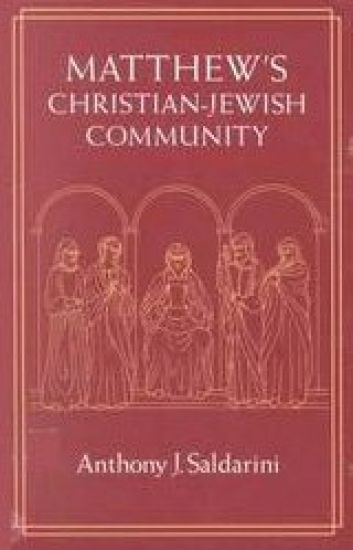
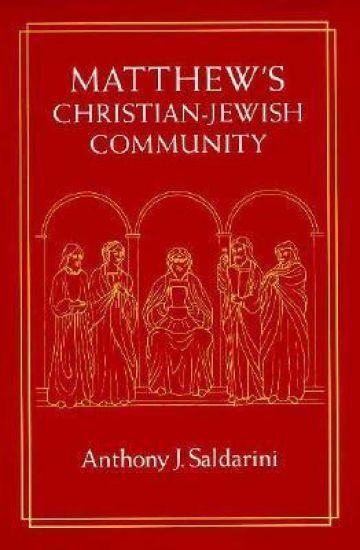
The most Jewish of gospels in its contents and yet the most anti-Jewish in its polemics, the Gospel of Matthew has been said to mark the emergence of Christianity from Judaism. This text overturns the interpretation by showing us how Matthew, far from proclaiming the replacement of Israel by the Christian church, wrote from within Jewish tradition to a distinctly Jewish audience. Recent research reveals that among both Jews and Christians of the first century, many groups believed in Jesus while remaining close to Judaism. Saldarini argues that the author of the Gospel of Matthew belonged to such a group, supporting his claim with an informed reading of Matthew's text and historical context. Matthew emerges as a Jewish teacher competing for the commitment of his people after the catastrophic loss of the Temple in 70 C.E., his polemics aimed not at all Jews but at those who oppose him. Saldarini shows that Matthew's teaching about Jesus fits into first-century Jewish thought, with its tradition of God-sent leaders and heavenly mediators. In Saldarini's account, Matthew's Christian-Jewish community is a Jewish group, albeit one that deviated from the larger Jewish community.
The most Jewish of gospels in its contents and yet the most anti-Jewish in its polemics, the Gospel of Matthew has been said to mark the emergence of Christianity from Judaism. This text overturns the interpretation by showing us how Matthew, far from proclaiming the replacement of Israel by the Christian church, wrote from within Jewish tradition to a distinctly Jewish audience. Recent research reveals that among both Jews and Christians of the first century, many groups believed in Jesus while remaining close to Judaism. Saldarini argues that the author of the Gospel of Matthew belonged to such a group, supporting his claim with an informed reading of Matthew's text and historical context. Matthew emerges as a Jewish teacher competing for the commitment of his people after the catastrophic loss of the Temple in 70 C.E., his polemics aimed not at all Jews but at those who oppose him. Saldarini shows that Matthew's teaching about Jesus fits into first-century Jewish thought, with its tradition of God-sent leaders and heavenly mediators. In Saldarini's account, Matthew's Christian-Jewish community is a Jewish group, albeit one that deviated from the larger Jewish community.
The NIV Application Commentary helps you communicate and apply biblical text effectively in today's context. To bring the ancient messages of the Bible into today's world, each passage is treated in three sections: Original Meaning. Concise exegesis to help readers understand the original meaning of the biblical text in its historical, literary, and cultural context. Bridging Contexts. A bridge between the world of the Bible and the world of today, built by discerning what is timeless in the timely pages of the Bible. Contemporary Significance. This section identifies comparable situations to those faced in the Bible and explores relevant application of the biblical messages. The author alerts the readers of problems they may encounter when seeking to apply the passage and helps them think through the issues involved. This unique, award-winning commentary is the ideal resource for today's preachers, teachers, and serious students of the Bible, giving them the tools, ideas, and insights they need to communicate God's Word with the same powerful impact it had when it was first written.
Brimming with photos and graphics, the Zondervan Illustrated Bible Backgrounds Commentary walks you verse by verse through all the books of the New Testament. It’s like slipping on a set of glasses that lets you read the Bible through the eyes of a first-century reader! Discoveries await you that will snap the world of the New Testament into gripping immediacy. Things that seem mystifying, puzzling, or obscure will take on tremendous meaning when you view them in their ancient context. You'll deepen your understanding of the teachings of Jesus. You'll discover the close, sometimes startling interplay between God's kingdom and the practical affairs of the church. Best of all, you'll gain a deepened awareness of the Bible’s relevance for your life. Written in a clear, engaging style, this beautiful set provides a new and accessible approach that more technical expository and exegetical commentaries don't offer.
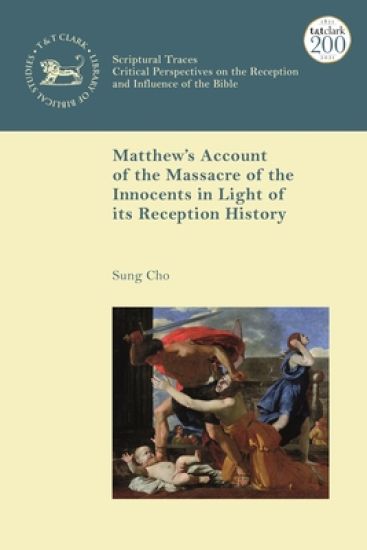
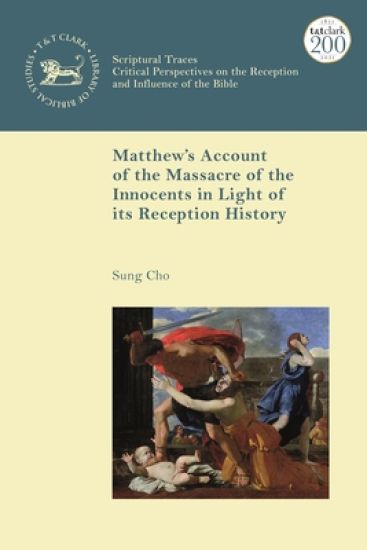
Sung Cho addresses the seeming contradiction of Herod the Great’s massacre in Matthew 2:16-18, questioning why such a tragedy had to occur, why it was included in the good news of Jesus, and what connection it has to ancient prophecies. In creating a reception history of the Massacre of the Innocents, Cho progresses through two millennia worth of interpretation and depiction to highlight key works for discussion. Beginning with a close reading of Matthew 2:16-18, Cho moves to analyse depictions of the tragedy in the Early Patristic Tradition, from the sixth century to the early modern period, and thus to the present day; complete with an examination of visual interpretations of the massacre. Cho's examination provides a positive step to understanding the depths of human suffering with the help of many diverse perspectives.
Sung Cho addresses the seeming contradiction of Herod the Great’s massacre in Matthew 2:16-18, questioning why such a tragedy had to occur, why it was included in the good news of Jesus, and what connection it has to ancient prophecies. In creating a reception history of the Massacre of the Innocents, Cho progresses through two millennia worth of interpretation and depiction to highlight key works for discussion. Beginning with a close reading of Matthew 2:16-18, Cho moves to analyse depictions of the tragedy in the Early Patristic Tradition, from the sixth century to the early modern period, and thus to the present day; complete with an examination of visual interpretations of the massacre. Cho's examination provides a positive step to understanding the depths of human suffering with the help of many diverse perspectives.
Why the 17:18 series? In Deuteronomy 17, Moses is leaving final instructions concerning the future of Israel. As a prophet of God, Moses foretells of when Israel will place a king over the nation (v. 14). In verse 18, the king is commanded to not simply acquire a copy of the law (the entire book of Deuteronomy) from the "scroll publishing house," but to hand write his own copy of the law. Thirty-four hundred years later, educators are "discovering" that students that physically write out their notes by hand have a much greater retention rate than simply hearing or visually reading the information. Apparently, God knew this to be true of the kings of Israel also. From such understanding came the conception of this series of books.


![The Gospel According To Saint Matthew, A New Tr. With Notes And A Harmony [by J.h. Godwin]](/covers/9781024370034.jpg)
![The Gospel According To Saint Matthew, A New Tr. With Notes And A Harmony [by J.h. Godwin]](/covers/9781024375015.jpg)