
Kirjahaku
Etsi kirjoja tekijän nimen, kirjan nimen tai ISBN:n perusteella.
1000 tulosta hakusanalla Michael J. Perry

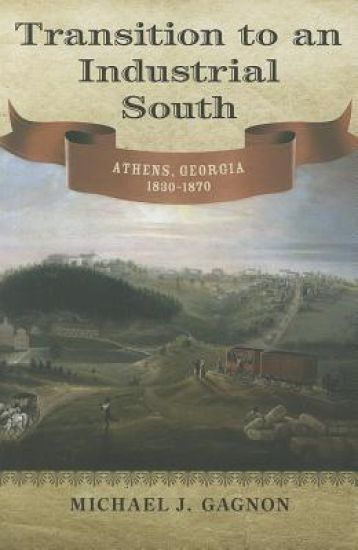
Renowned New South booster Henry Grady proposed industrialization as a basis of economic recovery for the former Confederacy. Born in 1850 in Athens, Georgia, to a family involved in the city's thriving manufacturing industries, Grady saw firsthand the potential of industrialization for the region. In Transition to an Industrial South, Michael J. Gagnon explores the creation of an industrial network in the antebellum South by focusing on the creation and expansion of cotton textile manufacture in Athens.By 1835, local entrepreneurs had built three cotton factories in Athens, started a bank, and created the Georgia Railroad. Although known best as a college town, Athens became an industrial center for Georgia in the antebellum period and maintained its stature as a factory hub even after competing cities supplanted it in the late nineteenth century. Georgia, too, remained the foremost industrial state in the South until the 1890s.Gagnon reveals the political nature of procuring manufacturing technology and building cotton mills in the South, and demonstrates the generational maturing of industrial laboring, managerial, and business classes well before the advent of the New South era. He also shows how a southern industrial society grew out of a culture of social and educational reform, economic improvements, and business interests in banking and railroading. Using Athens as a case study, Gagnon suggests that the connected networks of family, business, and financial relations provided a framework for southern industry to profit during the Civil War and served as a principal guide to prosperity in the immediate postbellum years.
Composition and the Rhetoric of Science
Michael J. Zerbe
Southern Illinois University Press
2007
nidottu
Composition and the Rhetoric of Science: Engaging the Dominant Discourse calls for instructors of first-year writing courses to employ primary scientific discourse in their teaching and for rhetoricians of science to think about teaching scientific discourse as a literacy skill. Author Michael J. Zerbe argues that inclusion of scientific discourse is crucial because of this rhetoric's status as the dominant discourse in western culture. The volume draws on Lyotard, Zizek, Foucault, and Althusser to argue that while important theorists such as these have recognized the dominance of scientific discourse, rhetoric and composition has not - to its detriment. The text illustrates that scientific discourse remains a miniscule part of the enterprise of rhetoric and composition and thus the field is not fulfilling its mission of providing students with the writing and reading skills they need to live and work in a science - and technology - dependent society. Zerbe provides an analysis of science popularizations and demonstrates how these works can be used to contextualize primary scientific research. He also presents three pedagogical scenarios, each built around a carefully chosen, accessible example of scientific discourse, that demonstrate how articles from scientific journals can be used in writing courses. Only by gaining a meaningful fluency in this discourse - one that is not offered by science textbooks - can a more sophisticated scientific literacy be assured. ""Composition and the Rhetoric of Science"" effectively explores the relatively limited amount of work done in rhetoric and composition on scientific discourse and questions this state of affairs. Zerbe presents for the first time cultural studies and science literacy as gateways for incorporating scientific discourse into first-year writing courses.

During the nearly sixty years of filmmaking, the always uneasy and often fractious Soviet-American relationship has been mirrored in Hollywood's portrayal of Russians and the Soviet Union. Friend or Foe? examines the portrayal of the Soviet Union in American film, and shows how these films reflect the attitudes of Americans, as well as how each portrayal changed with the often uneasy relations between the two countries. The authors show how films, as rich repositories of national consciousness, can be analyzed to reveal time-bound insights into popular fears and obsessions. History lovers and film buffs will appreciate the tongue-in-cheek approach to many of the absurdist films. Scholars in history, film studies, and political science will find the depth and breadth of research useful. A filmography, bibliography, and photographs further complement the study.
One of the great American authors of the 20th century, John Steinbeck (1902-1968) continues to be a focus of academic study and the source of interest to readers around the globe. All of the Nobel-prize winner's major works remain in print, as new generations discover the power of such novels as Of Mice and Men, East of Eden, and The Grapes of Wrath, as well as nonfiction works like Travels with Charley, The Log from the Sea of Cortez and America and Americans. In addition to reissued works by Steinbeck, each year new articles and books are written about him, examining the themes of his works and his impact on literature. With such a prolific output, bibliographic resources have become a necessity, and in 1967, Scarecrow Press published the first Steinbeck bibliography, with subsequent volumes following in 1974, 1981, and 1998. In the latest volume, Steinbeck scholar and historian Michael J. Meyer has compiled Steinbeck material written or published between 1996 and 2006. The John Steinbeck Bibliography: 1996-2006 includes thousands of citations that cover a broad range of publications, including newspaper articles, full length critical studies, dissertations, theses, book reviews in English, and missed work from previous volumes, as well as websites and other media. The bibliography also cites foreign language translations of Steinbeck's works as well as foreign language books, journals and reviews. The comprehensive index will help scholars determine which entries are related to various novels, themes and historical events that are part of the Steinbeck canon. As a resource for literature scholars and researchers, The John Steinbeck Bibliography: 1996-2006 will prove to be as invaluable as the previous volumes.
The Essential Criticism of John Steinbeck's Of Mice and Men
Michael J. Meyer
Scarecrow Press
2009
sidottu
First published in 1937, Of Mice and Men has been a staple of American literature ever since. Divided by decade, The Essential Criticism of John Steinbeck's Of Mice and Men provides an overview of criticism over the 70 years the book has been in print. Michael J. Meyer has assembled significant articles and book excerpts from critics and reviewers, citing the early book reviews and highlighting some of the most significant essays. While not all critical studies are included, those assessments not present in the text are evaluated by summaries and their bibliographic citations are given. The essays express various critical approaches, including those that criticize the book and examine what some consider the book's flaws. Ideal for research work at all levels, this volume collects in one place the most significant contributions to the study of the novel, making it a welcome addition to the canon of Steinbeck criticism.
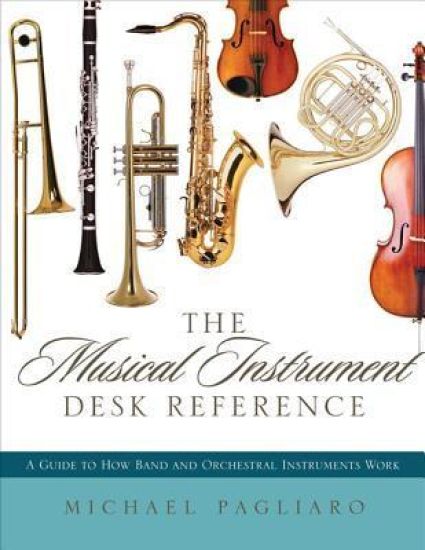
In The Musical Instrument Desk Reference, Michael Pagliaro, musical instrument authority extraordinaire, provides the one-stop shop for those in need of a quick, visually-rich reference guide to band and orchestral instruments. Descriptions and illustrations of everything from the physics of sound to detailed discussions of each orchestra and band instrument make this work the ideal desktop reference tool for the working musician. Through its Quick Start and In Depth features, readers can quickly decide how deeply they want to delve into the instrument at hand. Following a contemporary format designed to facilitate what any musician or music instructor needs to know, The Musical Instrument Desk Reference eliminates the need to leaf through multiple method books or trawl through websites to find information. The Musical Instrument Desk Reference includes general information on fingering, the anatomy of musical instruments, sound production, amplification, and control, as well as the science of sound. Readers will find individual chapters on woodwinds, brass instruments, non-fretted string instruments, and percussion instruments. In each category, Pagliaro delves deeper, describing for woodwinds such things as tuning, key systems, fingerings, sound production, tone holes, assembly, materials, embouchures, and reed use; for brass instruments such matters as valve systems, fingering patterns, French horn types, mouthpiece selection, and intonation; for non-fretted string instruments such issues as tuning and fingering, playing position, bowing technique, instrument parts, and materials; and for percussion instruments such elements as instrument types and their classifications, tuning procedures, and accessories. The Musical Instrument Desk Reference is the perfect guide for anyone interested in or responsible for working with varieties of instruments and their players. Teachers, students, teachers in training, music instructors, instrument technicians, and musicians can quickly locate any specific detail related to any band or orchestral instrument.
The String Instrument Owner's Handbook
Michael J. Pagliaro
Rowman Littlefield Publishers
2015
sidottu
In The String Instrument Owner’s Guide, Michael Pagliaro surveys the complete “ownership life cycle” of bowed string instruments. A touchstone work for uninitiated and advanced players, The String Instrument Owner’s Guide provides a roadmap for every step of the owning process, from selecting and buying (or renting ) to maintaining, repairing, modifying, upgrading and even re-selling your instrument. The String Instrument Owner’s Guide answers, chapter by chapter, such key questions as: Where did string instruments come from? How do they work? What are the different kinds of string instruments? How they are made? How should you choose one? How do you care for string instruments? What accessories are needed and what do you need to know about them? How do string instruments compare to one another? How does one learn to play? And so much more. This work should sit in the library of not only every professional musician but also of students, teachers, technicians, and parents.
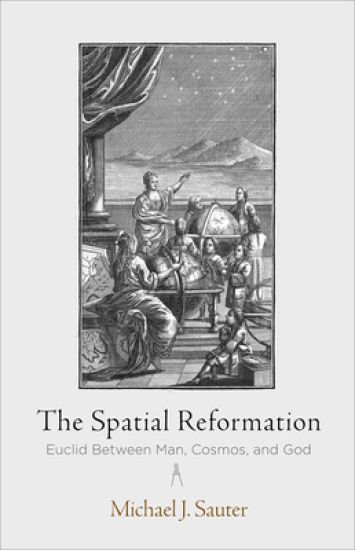
In The Spatial Reformation, Michael J. Sauter offers a sweeping history of the way Europeans conceived of three-dimensional space, including the relationship between Earth and the heavens, between 1350 and 1850. He argues that this "spatial reformation" provoked a reorganization of knowledge in the West that was arguably as important as the religious Reformation. Notably, it had its own sacred text, which proved as central and was as ubiquitously embraced: Euclid's Elements. Aside from the Bible, no other work was so frequently reproduced in the early modern era. According to Sauter, its penetration and suffusion throughout European thought and experience call for a deliberate reconsideration not only of what constitutes the intellectual foundation of the early modern era but also of its temporal range. The Spatial Reformation contends that space is a human construct: that is, it is a concept that arises from the human imagination and gets expressed physically in texts and material objects. Sauter begins his examination by demonstrating how Euclidean geometry, when it was applied fully to the cosmos, estranged God from man, enabling the breakthrough to heliocentrism and, by extension, the discovery of the New World. Subsequent chapters provide detailed analyses of the construction of celestial and terrestrial globes, Albrecht Dürer's engraving Melencolia, the secularization of the natural history of the earth and man, and Hobbes's rejection of Euclid's sense of space and its effect on his political theory. Sauter's exploration culminates in the formation of a new anthropology in the eighteenth century that situated humanity in reference to spaces and places that human eyes had not actually seen. The Spatial Reformation illustrates how these disparate advancements can be viewed as resulting expressly from early modernity's embrace of Euclidean geometry.
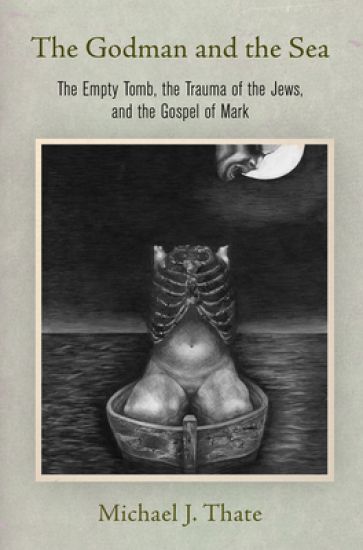
If scholars no longer necessarily find the essence and origins of what came to be known as Christianity in the personality of a historical figure known as Jesus of Nazareth, it nevertheless remains the case that the study of early Christianity is dominated by an assumption of the force of Jesus's personality on divergent communities. In The Godman and the Sea, Michael J. Thate shifts the terms of this study by focusing on the Gospel of Mark, which ends when Mary Magdalene, Mary the mother of James, and Salome discover a few days after the crucifixion that Jesus's tomb has been opened but the corpse is not there. Unlike the other gospels, Mark does not include the resurrection, portraying instead loss, puzzlement, and despair in the face of the empty tomb. Reading Mark's Gospel as an exemplary text, Thate examines what he considers to be retellings of other traumatic experiences-the stories of Jesus's exorcising demons out of a man and into a herd of swine, his stilling of the storm, and his walking on the water. Drawing widely on a diverse set of resources that include the canon of western fiction, classical literature, the psychological study of trauma, phenomenological philosophy, the new materialism, psychoanalytic theory, poststructural philosophy, and Hebrew Bible scholarship, as well as the expected catalog of New Testament tools of biblical criticism in general and Markan scholarship in particular, The Godman and the Sea is an experimental reading of the Gospel of Mark and the social force of the sea within its traumatized world. More fundamentally, however, it attempts to position this reading as a story of trauma, ecstasy, and what has become through the ruins of past pain.

At least 100 non-native tick species have been introduced into the continental United States during the past century. These introductions of invasive ticks have increased markedly in recent years as the international trade in live animals, and in particular reptiles, has burgeoned. Many of these ticks are vectors of serious diseases affecting both humans and animals, and several also cause direct damage to their hosts. Despite the risks posed to public and animal health, current measures to prevent introduction of invasive ticks are both inadequate and poorly enforced. Michael Burridge’s comprehensive study of invasive ticks provides a detailed account of all non-native ticks introduced into the continental United States, documenting their methods of introduction, hosts, geographic distribution, life cycle and habitat, and disease associations. The first work of its kind, the book also provides a concise review of the risks that these ticks pose to the health of humans and animals and of methods for their control and eradication. Burridge also outlines specific actions that should be taken to minimise the harm invasive ticks could do to human and animal health, to the environment, and to the economy if they were to become established in the United States. Based upon years of investigation and fieldwork, this is an indispensable volume for scientists, physicians, veterinarians, and governmental officials involved in wildlife management, disease control, and live animal import.

The Having of Negroes Is Become a Burden
Michael J. Crawford
University Press of Florida
2014
nidottu
Michael Crawford presents the compelling story of colonial manumission movements among North Carolina Quakers in this illuminating volume. Embedding complete primary documents within the context of his own interpretive analysis, Crawford effectively shows how the consequences of this group's antislavery activism radiated out from a few individuals to the region, the state, and, eventually, the nation.Students and scholars will be able to draw their own insights from the important documents presented in The Having of Negroes Is Become a Burden, many of them obscure or recently discovered. Through diaries, petitions, legislative debates, and letters, well-known as well as unknown players in the struggle for manumission are allowed to tell their own stories in their own words. This approach has the effect of highlighting the personal motivation of figures both prominent and obscure in the movement.
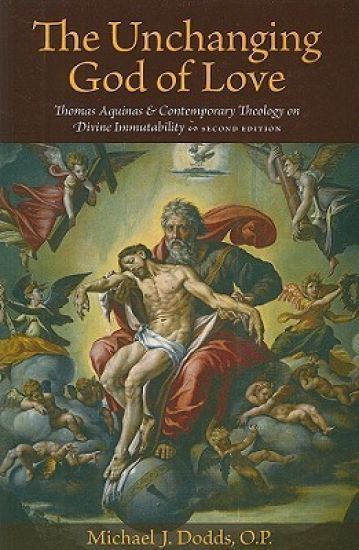
Much contemporary debate surrounds the traditional teaching that God is unchanging. It is frequently argued that an immutable God must be cold, remote, indifferent, and uncaring - that an unchanging God cannot be the triune God of love revealed in Scripture. Those who reject divine immutability often single out Thomas Aquinas as its most prominent proponent. Unfortunately, such critics of his theology frequently misunderstand the fundamentals of Aquinas' actual teaching.""The Unchanging God of Love"" provides a clear and comprehensive account of what Aquinas really says about divine immutability, presented in a way that allows his theology to address contemporary criticisms. The book first reviews the various ways Aquinas applies the notion of immutability to creatures, showing that he is well aware of both the positive and negative implications of the concept. It then analyzes all of his arguments for divine immutability that are presented in his writings, noting his care in determining which aspects of immutability are to be affirmed and which are to be denied of God. It also demonstrates the distinctiveness of Aquinas' teaching by examining the biblical, patristic, and philosophical sources he employs.Aquinas' unchanging God proves to be no static deity, but the dynamic, trinitarian plenitude of knowledge, love, and life, to whom not only immutability but also motion may in some way be attributed. A study of 'the motion of the motionless God' reveals how the concepts of both motion and immutability function in Aquinas' understanding of the Trinity, the Incarnation, Creation, and Providence. Through this study, it becomes clear that the unchanging God of Aquinas, far from being indifferent or remote, is truly the God of compassion and love revealed in Scripture, who shares a most intimate friendship with the people he has created and redeemed.
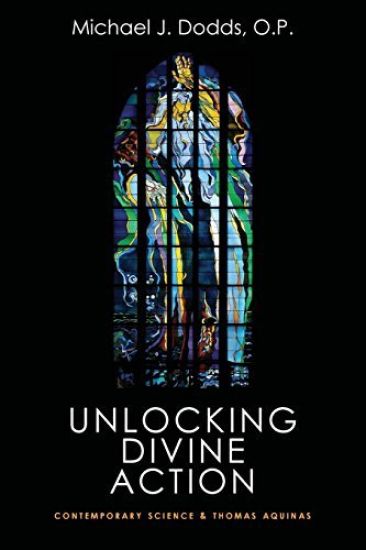
Our ability to talk about God's action in the world is closely tied to our understanding of causality. With the advent of modern Newtonian science the conception of causality narrowed, and the discussion of divine action became locked into that contracted understanding. There seemed to be simply no room for God to act in the world without interfering with nature and the laws of science that describe it.Fortunately, the idea of causality has been greatly expanded through developments in contemporary science. Discoveries in quantum mechanics, cosmology, chaos theory, and biology have all led to a broader understanding of causality. These developments have opened two fundamentally new ways for theologians to ""unlock"" the discussion of divine action. One is to use the developments of science themselves to speak of God's action. The other is to speak of divine action not directly through the theories and interpretations of science, but rather through the broader understanding of causality that they suggest.,br>This book explores both approaches and argues that the latter provides a more effective way for discussing divine action. After showing that the idea of causality in contemporary science is remarkably reminiscent of key concepts in the philosophy of Thomas Aquinas, it then retrieves those notions and applies them to the discussion of divine action. In this way, it provides a sustained account of how the thought of Aquinas may be used in conjunction with contemporary science to deepen our understanding of divine action and address such issues as creation, providence, prayer, and miracles.
The One Creator God in Thomas Aquinas & Contemporary Theology
Michael J. Dodds
The Catholic University of America Press
2020
nidottu
This book provides a fundamental introduction to Aquinas's theology of the One Creator God. Aimed at making that thought accessible to contemporary audiences, it gives a basic explanation of his theology while showing its compatibility with contemporary science and its relevance to current theological issues. Opening with a brief account of Aquinas’s life, it then describes the purpose and nature of the Summa Theologica and gives a short review of current varieties of Thomism. Without neglecting other works, it then focuses primarily on the discussion of the One God in the first part of the Summa Theologica. God's transcendence and immanence is a recurrent theme in that discussion. Evidence of God's immanent causality in the natural world grounds Aquinas's five arguments for the existence of God (the Five Ways) which then open onto God's transcendence. The subsequent discussion of the divine attributes builds on the modes of God's causality established in the Five Ways. It also shows the need for a language of analogy to preserve God's transcendence and prevent us from reducing God to the level of creatures, even as qualities such as ""goodness"" and ""love,"" which we first know from creatures, are applied to God. The discussion of God's providence and governance establishes that the transcendent Creator God is most intimately present in creation. God acts in all creatures in a way that does not diminish their proper causality, but is rather its source. As there is no contradiction between God's transcendence and immanence, so there is no competition between the primary causality of God and the secondary causality of creatures. Empirical science, which is limited by its method to the secondary causality of creatures, is shown to be compatible with the broader discipline of theology which also embraces the primary causality of the Creator.
Exploring the Maastricht Treaty process and the politics of European integration, the author argues that the end of the cold war and German unification have created a new set of geopolitical realities in Europe that have affected the nature and dynamics of European union.
Angry, bored, and confused,three words that aptly describe the typical American's view toward the world of politics. But it doesn't have to stay this way, argues Michael Kryzanek, in Angry, Bored, Confused. Kryzanek discusses issues central to American politics,citizenship, power, leadership, problem solving, initiating change,through a series of straightforward questions, with sometimes surprising answers. Angry, Bored, and Confused examines American politics from the perspective of an anxious consumer seeking to understand the political world, and to change it for the better.
"Comparative Politics: A Policy Approach is a unique text that integrates a comprehensive study of eight nations with critical policy issues facing those nations. The individual chapters on the United States, the United Kingdom, the Russian Federation, Japan, China, Mexico, South Africa, and Iraq provide a wide ranging examination of nations that are representative of the diversity in decision-making frameworks and political development in the international community. Comparative Politics is designed to guide the reader through a series of discussions in each nation's history, including: Key political milestones The structure of government The relationship of citizen to state The role played by political parties, groups and elections The shape and influence of the political elite The current status of the political economy The future direction of the nation in a global environment To further the goals of Comparative Politics, this book features in every chapter: Policy Briefs outlining the policy issues and debates in the forefront of the governing agenda ""Point of Fact"" items highlighting observations and sidebars on politics and life in each country Boxed features providing deeper commentary and factual information"