Kirjojen hintavertailu. Mukana 11 342 296 kirjaa ja 12 kauppaa.

Kirjahaku

Etsi kirjoja tekijän nimen, kirjan nimen tai ISBN:n perusteella.

1000 tulosta hakusanalla Michael Perry

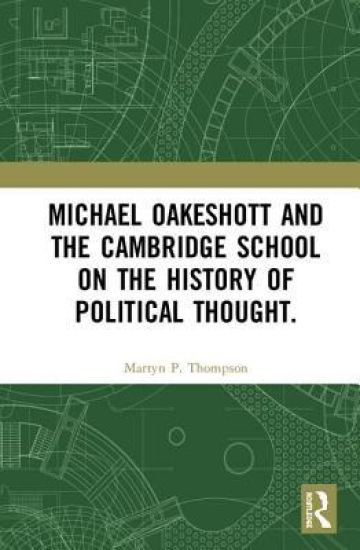
Michael Oakeshott and the Cambridge School on the History of Political Thought
This book is a critique of Cambridge School Historical Contextualism as the currently dominant mode of history of political thought, drawing upon Michael Oakeshott’s analysis of the logic of historical enquiry. While acknowledging that the early Cambridge School work represented a considerable advance towards genuinely historical histories of political thought, this work identifies two major historiographical problems that have become increasingly acute. The first is general: an insufficiently rigorous understanding of the key concept of "pastness" necessarily presupposed in historical enquiry of all kinds. The second is specific to histories of political thought: a failure to do justice to the varieties of past political thinking, especially differences between ideology and philosophy. In addressing these problems, the author offers a comprehensive account of the history of political thought that establishes the parameters not just of histories of ideological thinking but also of the much disputed character of histories of political philosophy. Since rethinking history of political thought in Oakeshottian terms requires resisting current pressures to turn history into the servant of currently felt needs, the book offers a sustained defence of the cultural value of modernist historical enquiry against its opponents. An important work for political theorists, historians of political thought and those researching intellectual history, the philosophy of history and proposed new directions in contemporary historical studies.
Michael Tippett’s Fifth String Quartet

Michael Tippett’s Fifth String Quartet

Thomas Schuttenhelm

Routledge
2017
sidottu
Thomas Schuttenhelm provides a detailed account of the events leading up to and throughout the compositional process associated with Michael Tippett’s Fifth String Quartet and a comprehensive analysis of the entire quartet. The commentary discusses this work in the context of Tippett’s creative development and places it within the historical context of the genre of the string quartet. The commentary includes interviews with the members of the Lindsay String Quartet, who premiered the work, as well as previously unpublished letters from the composer and interviews with Tippett in which he discusses the quartet in detail. Special attention is given to Tippett’s preliminary attempts, which were only recently discovered (2011) and to the evidence that suggests he altered the original ending. Included are images from the composer’s sketchbooks and manuscripts, as well as the original beginning and the altered ending.
Michael Nyman: Collected Writings

Michael Nyman: Collected Writings

Pwyll ap Siôn

Routledge
2016
nidottu
For over three decades Michael Nyman's music has succeeded in reaching beyond the small community of contemporary music aficionados to a much wider range of listeners. An important element in unlocking the key to Nyman's success lies in his writings about music, which preoccupied him for over a decade from the late 1960s to the early 1980s. During this time Nyman produced over 100 articles, covering almost every conceivable musical style and genre - from the Early Music revival and the West's interest in 'world' music, or from John Cage and minimalism to rock and pop. Nyman initiated a number of landmark moments in the course of late twentieth-century music along the way: he was one of the first to critique the distinction between the European avant-garde and the American experimental movement; he was the first to coin the term 'minimalism' in relation to the music of (then largely unknown) Steve Reich and Terry Riley, and later Philip Glass; the first to seriously engage with the music of the English experimental tradition and the importance of Cornelius Cardew, and to identify the importance of Art Colleges in nurturing and developing a radical alternative to modernism; and one of the first writers to grasp the significance of post-minimalists such as Brian Eno and Harold Budd, and to realize how these elements could be brought together into a new aesthetic vision for his own creative endeavours, which was formulated during the late 1970s and early 80s. Much of what transformed and defined Nyman's musical character may be found within the pages of this volume of his writings, comprehensively edited and annotated for the first time, and including previously unpublished material from Nyman's second interview with Steve Reich in 1976. There is also much here to engage the minds of those who are interested in pre-twentieth century music, from Early and Baroque music (Handel and Purcell in particular) to innovative features in Haydn, spatial elements in Berlioz, or Bruckner and Mahler's symphonic works.
Michael William Balfe

Michael William Balfe

William Tyldesley

Routledge
2016
nidottu
Without doubt, Michael William Balfe (1808-1870) was the most successful composer of English opera in the mid nineteenth century. During his lifetime he enjoyed an international reputation and worked with some of the leading singers of the time, including Jenny Lind, Malibran and Grisi. Drawing on previously unused source materials such as letters, legal documents and playbills, this biography of Balfe and in-depth study of his English operas overturns many of the previously accepted 'facts' of the composer's lifestyle. Using London as his base, Dublin-born Balfe spent long periods in Paris and travelled widely in Europe. William Tyldesley discusses the continental influences evident in Balfe's operas and offers new suggestions as to the draw that Paris held for the composer. Far from leading a fairly prosperous and unexceptional life, Balfe is shown to have found himself in financial straits on more than one occasion, and to have employed possibly unethical means of extracting himself from them. Those wishing to perform Balfe's works or to do further research into them, will find Tyldesley's re-examination of the composer a necessary first port of call.
Michael Jackson and the Blackface Mask

Michael Jackson and the Blackface Mask

Harriet J. Manning

Routledge
2016
nidottu
Blackface minstrelsy, the nineteenth-century performance practice in which ideas and images of blackness were constructed and theatricalized by and for whites, continues to permeate contemporary popular music and its audience. Harriet J. Manning argues that this legacy is nowhere more evident than with Michael Jackson in whom minstrelsy’s gestures and tropes are embedded. During the nineteenth century, blackface minstrelsy held together a multitude of meanings and when black entertainers took to the stage this complexity was compounded: minstrelsy became an arena in which black stereotypes were at once enforced and critiqued. This body of contradiction behind the blackface mask provides an effective approach to try and understand Jackson, a cultural figure about whom more questions than answers have been generated. Symbolized by his own whiteface mask, Jackson was at once ’raced’ and raceless and this ambiguity allowed him to serve a whole host of others’ needs - a function of the mask that has run long and deep through its tortuous history. Indeed, Manning argues that minstrelsy’s assumptions and uses have been fundamental to the troubles and controversies with which Jackson was beset.
Michael A. Weinstein
This book is a major reassessment of Michael Weinstein’s political philosophy. It situates his singular contribution, designated as "critical vitalism," in the context of both canonical American and contemporary continental theory. Weinstein is presented as a philosopher of life and as an American Nietzsche. Yet the contributors also persuasively argue for this form of thinking as a prescient prophecy addressing contemporary society’s concern over the management of life as well as the technological changes that both threaten and sustain intimacy. This is the first full scale study of Weinstein’s work which reveals surprising aspects of a philosophic journey that has encompassed most of the major American (pragmatic or vitalist) or Continental (phenomenological or existential) traditions. Weinstein is read as a comparative political theorist, a precursor to post-structuralism, and as a post-colonial border theorist. A different aspect of his oeuvre is highlighted in each of the book’s three sections. The opening essays comprising the "Action" diptych contrasts meditative versus extrapolative approaches; "Contemplation" stages a series of encounters between Weinstein and his philosophic interlocutors; "Vitalism" presents Weinstein as a teacher, media analyst, musician, and performance artist. The book contains an epilogue written by Weinstein in response to the contributors.
Michael Dummett and the Theory of Meaning
Published in 1998, this book argues that in recent decades, Anglo-American philosophy of language has been captivated by the idea that the key to progress in this area of philosophy lies in investigating the possibility of constructing a theory of meaning. This text provides an in-depth critique of the Davidsonian suggestion that Tarski's work on formal definitions of truth is an important element in allowing us to understand the form that the theory of meaning should take.
Michael Dummett and the Theory of Meaning
Published in 1998, this book argues that in recent decades, Anglo-American philosophy of language has been captivated by the idea that the key to progress in this area of philosophy lies in investigating the possibility of constructing a theory of meaning. This text provides an in-depth critique of the Davidsonian suggestion that Tarski's work on formal definitions of truth is an important element in allowing us to understand the form that the theory of meaning should take.
Michael Dudok de Wit

Michael Dudok de Wit

Andrijana Ruzic

CRC Press
2020
nidottu
This unique survey of the career of Michael Dudok de Wit discusses all of his works and offers a glimpse into his private life. The biography of this European master of 2D animation, born in the Netherlands and based in London, is the first complete overview of the well-defined and canonic opus of this humble genius. Visually and thematically, Dudok de Wit’s poetic and singular style of animation differs from the rest of contemporary independent animation production. This book reveals what still challenges and thrills Dudok de Wit in the art of animation and why he persistently continues to believe in the beauty of hand-drawn animation.Key Features The complete animation production of Michael Dudok de Wit, never-before reviewed in one volume An all-embracing approach regarding this auteur, unavailable elsewhere in one place (his biography, his peculiar method of work, his extracurricular activities) An ad hoc glossary of animation written by Michael Dudok de Wit and a critical reception of his body of work with a wide contribution of his colleagues and collaborators Filmography and bibliographyAuthorAndrijana Ružic graduated in History and Criticism of Art at the Universita degli Studi in Milan, Italy, where she fell in love with the medium of animation. She specialised in the History of Animated Film under Giannalberto Bendazzi’s mentorship. For the past six years, she has curated the section dedicated to animated films at the International Comics Festival in Belgrade, Serbia. She is a member of the Selection Board of Animafest Scanner, the symposium for Contemporary Animation Studies at the World Festival of Animated Film held annually in Zagreb, Croatia. She writes about animation and art for the Belgrade weekly magazine Vreme.
Michael Dudok de Wit

Michael Dudok de Wit

Andrijana Ruzic

CRC Press
2020
sidottu
This unique survey of the career of Michael Dudok de Wit discusses all of his works and offers a glimpse into his private life. The biography of this European master of 2D animation, born in the Netherlands and based in London, is the first complete overview of the well-defined and canonic opus of this humble genius. Visually and thematically, Dudok de Wit’s poetic and singular style of animation differs from the rest of contemporary independent animation production. This book reveals what still challenges and thrills Dudok de Wit in the art of animation and why he persistently continues to believe in the beauty of hand-drawn animation.Key Features The complete animation production of Michael Dudok de Wit, never-before reviewed in one volume An all-embracing approach regarding this auteur, unavailable elsewhere in one place (his biography, his peculiar method of work, his extracurricular activities) An ad hoc glossary of animation written by Michael Dudok de Wit and a critical reception of his body of work with a wide contribution of his colleagues and collaborators Filmography and bibliographyAuthorAndrijana Ružic graduated in History and Criticism of Art at the Universita degli Studi in Milan, Italy, where she fell in love with the medium of animation. She specialised in the History of Animated Film under Giannalberto Bendazzi’s mentorship. For the past six years, she has curated the section dedicated to animated films at the International Comics Festival in Belgrade, Serbia. She is a member of the Selection Board of Animafest Scanner, the symposium for Contemporary Animation Studies at the World Festival of Animated Film held annually in Zagreb, Croatia. She writes about animation and art for the Belgrade weekly magazine Vreme.
Michael Morpurgo

Michael Morpurgo

Sally Wilkinson

Routledge
2017
sidottu
This innovative series is designed to help primary teachers plan focused sessions on the work of popular, well-loved and valued authors, both classic and contemporary. Each book contains a range of activities for use directly in the classroom, covering biographical information about the author; a review of the author's work and a summary of major themes in his/her key texts; key language features of the author; frameworks to help children analyze, evaluate and compare texts, and to develop personal opinions of authors' works; ideas for writing modeled on or developed from key texts; speaking and listening opportunities; drama and role play ideas; and references to video, CD-ROM, websites and ICT activities. Inside each book is a full-color pullout poster illustrating the work of the author, which also has a set of challenges for children on the back. Michael Morpurgo is the author of over 60 books for children, including Sam's Duck, The Butterfly
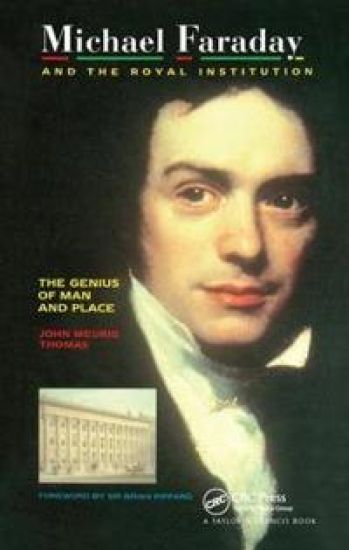
Michael Faraday and The Royal Institution
A self-educated man who knew no mathematics, Michael Faraday rose from errand boy to become one of Britain's greatest scientists. Faraday made the discoveries upon which most of twentieth-century technology is based and readers of this book will enjoy finding out in how many ways we are indebted to him. The story of his life speaks to us across the years and is a fascinating read, especially when the tale is told with the understanding and gusto that Professor Thomas-one of the UK's leading scientists-brings to the telling. Faraday took great trouble to make the latest discoveries of science, his own and others', intelligible to the layman, and the tradition he fostered has been kept alive ever since, so that the Royal Institution is as well known for its contributions to education as for its research. Written in a concise, nontechnical style, Michael Faraday and the Royal Institution: The Genius of Man and Place is a human account that provides an introduction to the roots of modern science and ways in which scientists work. The book is lavishly illustrated with drawings, cartoons, photographs, and letters-many never before published. There is no similar book on Faraday that interprets his genius in modern, everyday terms, making it understandable, interesting, and exciting reading for scientists and nonscientists alike.
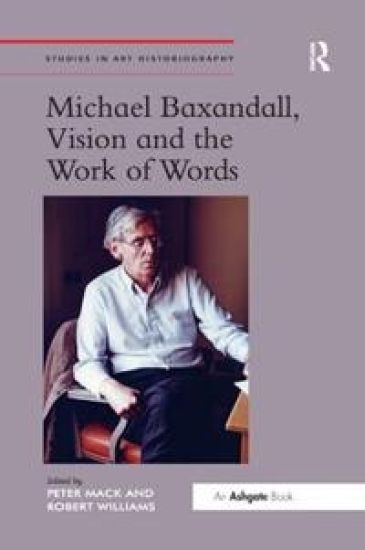
Michael Baxandall, Vision and the Work of Words

Michael Baxandall, Vision and the Work of Words

Peter Mack; Robert Williams

Routledge
2018
nidottu
'The most important art historian of his generation’ is how some scholars have described the late Michael Baxandall (1933-2007), Professor of the Classical Tradition at the Warburg Institute, University of London, and of the History of Art at the University of California, Berkeley. Baxandall’s work had a transformative effect on the study of European Renaissance and eighteenth-century art, and contributed to a complex transition in the aims and methods of art history in general during the 1970s, ’80s and ’90s. While influential, he was also an especially subtle and independent thinker - occasionally a controversial one - and many of the implications of his work have yet to be fully understood and assimilated. This collection of 10 essays endeavors to assess the nature of Baxandall’s achievement, and in particular to address the issue of the challenges it offers to the practice of art history today. This volume provides the most comprehensive assessment of Baxandall’s work to date, while drawing upon the archive of Baxandall papers recently deposited at the Cambridge University Library and the Warburg Institute.
Michael Chekhov

Michael Chekhov

Franc Chamberlain

Routledge
2018
sidottu
Following in the footsteps of his renowned teacher Konstantin Stanislavsky, Michael Chekhov’s work as an actor, author and theatre practitioner gave great insight into how to access the creative self. This revised and updated edition of Michael Chekhov includes: • A biographical introduction to Chekhov’s life • A clear explanation of his key writings • An analysis of his work as a director • A practical guide to Chekhov’s unique actor-training exercises. As a first step towards critical understanding, and as an initial exploration before going on to further, primary research, Routledge Performance Practitioners offer unbeatable value for today’s student.
Michael Chekhov

Michael Chekhov

Franc Chamberlain

Routledge
2018
nidottu
Following in the footsteps of his renowned teacher Konstantin Stanislavsky, Michael Chekhov’s work as an actor, author and theatre practitioner gave great insight into how to access the creative self. This revised and updated edition of Michael Chekhov includes: • A biographical introduction to Chekhov’s life • A clear explanation of his key writings • An analysis of his work as a director • A practical guide to Chekhov’s unique actor-training exercises. As a first step towards critical understanding, and as an initial exploration before going on to further, primary research, Routledge Performance Practitioners offer unbeatable value for today’s student.
Michael Fried and Philosophy
This volume brings philosophers, art historians, intellectual historians, and literary scholars together to argue for the philosophical significance of Michael Fried’s art history and criticism. It demonstrates that Fried’s work on modernism, artistic intention, the ontology of art, theatricality, and anti-theatricality can throw new light on problems in and beyond philosophical aesthetics. Featuring an essay by Fried and articles from world-leading scholars, this collection engages with philosophical themes from Fried’s texts, and clarifies the relevance to his work of philosophers such as Ludwig Wittgenstein, Stanley Cavell, Morris Weitz, Elizabeth Anscombe, Arthur Danto, George Dickie, Immanuel Kant, Friedrich Schiller, G. W. F. Hegel, Arthur Schopenhauer, Friedrich Nietzsche, Denis Diderot, Maurice Merleau-Ponty, Roland Barthes, Jacques Rancière, and Søren Kierkegaard. As it makes a case for the importance of Fried for philosophy, this volume contributes to current debates in analytic and continental aesthetics, philosophy of action, philosophy of history, political philosophy, modernism studies, literary studies, and art theory.