Kirjojen hintavertailu. Mukana 12 390 323 kirjaa ja 12 kauppaa.

Kirjahaku

Etsi kirjoja tekijän nimen, kirjan nimen tai ISBN:n perusteella.

1000 tulosta hakusanalla Monet Thompson

Money, Information and Uncertainty

Money, Information and Uncertainty

C.A.E. Goodhart

Red Globe Press
1989
nidottu
This is a completely revised edition of the well-known monetary textbook. The book discusses the latest analytical developments in monetary economic theory in a comprehensible and practical policy- orientated form for graduates and undergraduates specialising in monetary economics. The book provides a comprehensive survey of monetary economics, with the first nine chapters primarily concerned with micro issues, such as the role of, and demand for, money, the role and functions of banks and of the Central Bank; and the final nine chapters covering macro-economic issues, such as the transmission mechanism of monetary policy and international monetary problems.
Money

Money

PALGRAVE MACMILLAN
1989
nidottu
This is an excerpt from the 4-volume dictionary of economics, a reference book which aims to define the subject of economics today. 1300 subject entries in the complete work cover the broad themes of economic theory. This extract concentrates on money.
Money in Motion

Money in Motion

Palgrave Macmillan
1996
sidottu
In analyzing money, contemporary economics has focused its attention on money's function as a store of value, neglecting its role as medium of circulation. When circulation is put center stage, it becomes apparent that the supply of money does indeed adapt to the needs of trade - and does so in many different ways, often ways that are difficult for a central bank to control, because they reflect the responses of banks and other financial institutions to market incentives. But money's role in circulation must be coordinated with its store of value function, and both with finance. Failure here can lead to instability. The essays in this volume by internationally renowned economists cover these issues in original and contrasting analyses, presenting the American post-Keynesian perspective, on the one hand, and the point of view of the French Circulation School, on the other.
Money and Banking

Money and Banking

Palgrave Macmillan
1993
sidottu
The turbulent 1980s and 1990s have seen important developments in the area of money and banking; these are discussed in this volume, focusing on financial innovations, the EMS and international monetary systems, monetary policy is an interdependent world, liquidity constraints and monetary policy, and monetary problems of developing countries.
Money, Pricing, Distribution and Economic Integration
This book reviews the paradigm which has come to be known as post-Keynesian economics, concentrating on the main issues that form the heart of this paradigm: money and finance; conflict in wage and price settings; the degree of monopoly and pricing in an open economy; divergence rather than convergence in the European Union; financial and economic development; economic policy and methodological issues.
Money, Politics and 1992

Money, Politics and 1992

D. Josselin

Palgrave Macmillan
1997
sidottu
The book investigates British, French and EU-wide responses to the Single Financial Market initiative. It outlines the contexts of the globalization of financial markets and the pressures towards competitive deregulation. The '1992' package is assessed and its differing impact in Britain and France explained by comparing the different regulatory regimes through detailed case-studies. A policy network approach is applied throughout to European integration in this field.
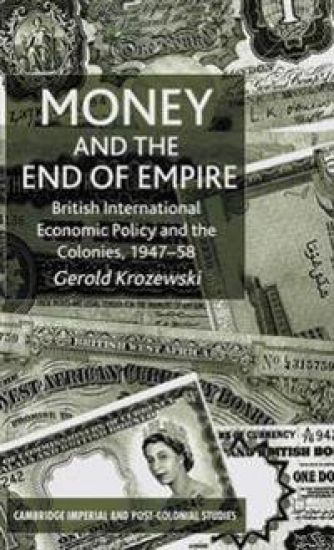
Money and the End of Empire

Money and the End of Empire

G. Krozewski

Palgrave Macmillan
2001
sidottu
This book presents a penetrating new analysis of the end of the empire, located at the intersection of politics, economy and society in Britain and the colonies. In the late 1940s and early 1950s, when political control was feasible, discriminatory management of the colonies sustained Britain's postwar recovery. But synergy turned into conflict as Britain moved towards economic liberalization and financial cosmopolitanism, and found it increasingly difficult to reconcile established relations with emerging priorities. Based on a wide range of archival and other sources, this study relates political and economic developments in Britain and the colonies in original ways to overcome the gulf between peripheralist and Euro-centric explanations of postwar British imperial relations, and helps redress the neglect of the empire in modern international history. Money and the End of Empire will nourish debates in British and international economic and political history and is essential reading for historians of Britain and the empire.
Money, Sex and Power

Money, Sex and Power

Richard Foster

Hodder Stoughton
2009
pokkari
No issues touch us more profoundly or universally,' writes Richard Foster. 'No topics cause more controversy. No human realities have greater power to bless or curse. No three things have been more sought after or are more in need of a Christian response.'Money, Sex and Power discerns the biblical principles that enable us to live out a relevant and authentic response to the three greatest temptations of our age.Gerard Kelly writes: 'Foster follows a road few in recent years have travelled, and does so with depth, wit and down-to-earth wisdom. Don't assume for one moment that this book is anti-money, anti-sex or anti-power: the author has a healthy respect and admiration for all three as sacred gifts of a loving creator. What he does urge us to do, though, is to "live rightly" in respect of these key ares, and so to be freed into a life of creative celebration.'
Money Magic

Money Magic

Alvin Hall

Hodder Stoughton
2010
pokkari
The essential guide to handling your money from the nation's favourite money man - new for the Quick Reads series.Do you worry about bills?Are you finding it difficult to save?Is it hard to budget when you don't have much money?No matter how you handle your cash, or how little money you have, Alvin Hall's Money Magic is the first step to making money work for you. As he takes you through his seven steps to success, Alvin gives you advice that really works.Find out how to:-Track your money habits-Learn about your money personality-Get out of debt-Start to save-Make money work in a relationship-Become a money magic family-Chase your money dreamsBased on years of experience, Alvin's Money Magic is full of easy-to-follow tips and advice. It will get you started on the road to financial freedom, whatever your current situation.A short, sharp shot of advice from the Quick Reads series.
Money Drunk, Money Sober

Money Drunk, Money Sober

M. Bryan

Ballantine Books Inc.
1999
nidottu
In a society where it is often easier to discuss sex than money, many of us have hidden issues about personal finances. But when fending off bill collectors, begging for salary advances, or borrowing from relatives becomes a way of life, unresolved money problems can lead to enormous stress and destroy relationships, careers, and lives. Do you recognize yourself or someone you love in any of these descriptions?THE COMPULSIVE SPENDERDo you buy things and hide them?THE BIG DEAL CHASERDo you refuse to watch your money because one big deal is going to make everything all right?THE MAINTENANCE MONEY DRUNKIs the pay the only thing you like about your job?THE POVERTY ADDICTDo you feel morally superior to people with money?THE CASH CODEPENDENTAre you afraid to say no to your partner about money?Through their highly effective seminars, Mark Bryan and Julia Cameron have helped many people free themselves from the painful cycle of acting out with money. The Money Drunk offers new perspectives on the real roots of money problems, showing how to dismantle negative family and societal programming about money and how to undo the destructive patterns that sabotage your financial success. The program teaches new, more constructive habits to anyone who has ever had a problem with money. "Most of us are a little 'money crazy' from part to nearly all the time. This book points the way back to sanity."--CAROL ORSBORN Author of Inner Excellence: Spiritual Principles of Life-Driven Business
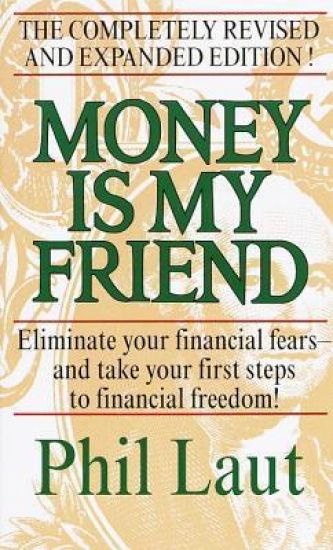
Money Is My Friend: Eliminate Your Financial Fears--And Take Your First Steps to Financial Freedom!
DISCOVER HOW THE PLEASURE PRINCIPLE CAN HELP YOU MAKE A PROFIT, ESTABLISH A SECURE FINANCIAL FOUNDATION, AND CREATE A PROSPEROUS FUTURE FOR YOU AND YOUR FAMILY.Making money can be a fun, fascinating, creative enterprise. Phil Laut, whose financial seminars have helped thousands of men and women from all walks of life dramatically increase their incomes, demonstrates how you can overcome the principle obstacles to making money: guilt, fear, and feelings of helplessness or pressure. Once you have made money your friend, you'll discover that increasing your income is a simple matter of using your imagination. Inside this unique book, you'll find exercises and self-tests to help you understand and utilize- The four Laws of Wealth- The helpful six-step method for developing a purpose in life- The simple seven-stage plan for finding the perfect career- Twelve ideal techniques for creating a new self-image- Fifteen priceless affirmations to change the way you think about money- And much more!
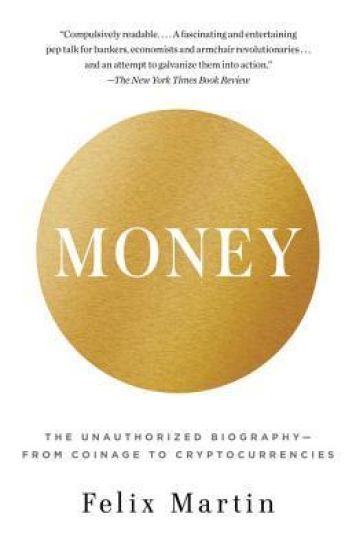
Money: The Unauthorized Biography--From Coinage to Cryptocurrencies
What is money, and how does it work? In this tour de force of political, cultural, and economic history, Felix Martin challenges nothing less than our conventional understanding of one of humankind's greatest inventions. Martin describes how the Western idea of money emerged in the ancient world, and was shaped over the centuries by tensions between sovereigns and the emerging middle classes. Money, he argues, has always been an intensely political instrument, and that it is our failure to remember this that led to the crisis in our financial system and the Great Recession. He concludes with practical solutions for making money serve us--and, in an introduction and epilogue new to this edition, a discussion of what Bitcoin and other cryptocurrencies mean for money's future. From John Locke to Montesquieu, from Sparta to the Soviet Union, Money is a far-ranging and magisterial work of history and economics, with profound implications for the world today.
Money, Money, Money... Where's My Money Fool?
It's hard out here for a hustler mang We tryin' ta stack chips and surrounded by marks and bustas. Straight stress man. This booklet helps track the dough as it comes in and when it don't. It has: *Intro sheet, where we can be a little more explicit in our speech... one page] *Sample sheet ta show how we can use it... It's your book, you do how you do... (1 sheet) *Double-entry pages with some serious gangsta quotes to help you focus on the loot. Keep ya mind on ya money (25 pages 50 clients]) *I got sum mutha f*ckin dough sheets. Enough ta track 54 payments (10 sheets) 540 total ] *Pay Me B*tch Enough ta track 43 payments... (10 sheets) 430 total... gettin' paid ] Aight fool, handle ya business
Money, Elections, and Democracy
This book is concerned with how the system of congressional campaign financing and proposals for its reform affect key values. It focuses on specific problems with the sources of campaign funds, undesirable consequences of the campaign finance system, and difficulties with reforming the system.
Money, Inflation and Business Cycles

Money, Inflation and Business Cycles

Arkadiusz Sieron

Routledge
2019
sidottu
Who would disagree that money matters? Economists have yet to sufficiently explore issues related to monetary inflation in relation to the Cantillon effect, i.e. distribution and price effects resulting from uneven changes in the money supply and their impact on the economy. This book fills this important gap in the existing literature. The author classifies the various channels through which new money can be injected into the economy and demonstrates that it is not only the increase in money supply that is important, but also the way in which it occurs. Since the increase in money supply does not affect the cash balance of all economic entities in the same proportion and at the same time – new money is introduced into the economy through specific channels – a distribution of income and changes in the structure of relative prices and production occur. The study of money supply growth, carried out in the spirit of Richard Cantillon, offers an important analytical framework that facilitates the development of a number of sub-disciplines within economics and provides a better understanding of many economic processes. It significantly explores the theory of money and inflation, the business cycle and price bubbles, but also the theory of banking and central banking, income distribution, income and wealth inequalities, and the theory of public choice.This book is therefore an important voice in the fundamental debate on the role of monetary factors in the economy, as well as on the effects and legitimacy of a loose monetary policy. In 2017, the doctoral dissertation on which the book is based was awarded the Polish Prime Minister’s prize. In these times of non-standard monetary policy and rising income inequalities in OECD countries, the focus on the distribution effect of monetary inflation makes this a must read for researchers and policy-makers and for anyone working in monetary economics. This title was translated from Polish by Martin Turnau.
Money In the House

Money In the House

Marian Currinder

Routledge
2019
sidottu
Money in the House provides a compelling look at how the drive to raise campaign money has come to dominate congressional party politics. Author Marian Currinder examines the rise of member-to-member and member-to-party giving as part of a broader process that encourages ambitious House members to compete for power by raising money for the party and its candidates. As the margin between parties in the House has narrowed, the political environment has become fiercely competitive. Because electoral success is largely equated with fundraising success, the party that raises the most money is at a distinct advantage. In addition to relying on outside interests and individuals for campaign contributions, the congressional parties increasingly call on their own members to give for the good of the whole. As a result, lawmakers must devote ever-increasing amounts of time to fundraising. The fundraising expectations for members who wish to advance in the chamber are even higher. By requiring their members to raise and redistribute tremendous amounts of money in order to gain power in the chamber, the parties benefit from their members' ambitious pursuits. Currinder argues that the new 'rule of money' is fundamentally altering the way House members pursue power and the way congressional parties define and reward loyalty.
Money, Elections, and Democracy
This book is concerned with how the system of congressional campaign financing and proposals for its reform affect key values. It focuses on specific problems with the sources of campaign funds, undesirable consequences of the campaign finance system, and difficulties with reforming the system.