Kirjojen hintavertailu. Mukana 11 699 587 kirjaa ja 12 kauppaa.

Kirjahaku

Etsi kirjoja tekijän nimen, kirjan nimen tai ISBN:n perusteella.

1000 tulosta hakusanalla Napolean Hill

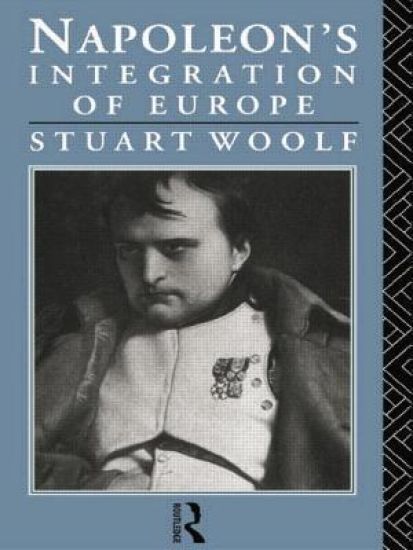
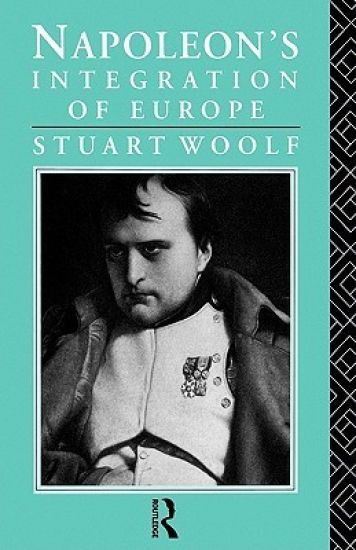
Napoleon's Integration of Europe

Napoleon's Integration of Europe

Stuart Woolf

Routledge
1991
sidottu
Histories of the Napoleonic period are almost exclusively biographies of the man, or political-military accounts of his wars. But such wars were only the first stage in a far more ambitious programme; the establishment of a rational state which would force the pace of modernising society. Through an examination of the experiences of French domination, Napoleon's Integration of Europe explores the implications of such a project for France and its relationship with the rest of Europe. It examines the problems of ruling a progressively expanding empire, as seen through the eyes of a trained corps of bureaucrates who were convinced that their scientific methods would enable them to understand and govern the mechanisms of society. However it also looks at the populations subjected to French rule, at the nature of their resistance and adaptation to the principles of the Napoleonic project. This book is the first overall comparative study of Europe in the Napoleonic years. It is a study not only of an early exercise in imperialism, but of the conflict that is aroused between the rationalising tendencies of the modern state and the spatial and cultural heterogeneity of individual societies. As well as a history of France, it is also a history of Italy, Germany, Belgium, Holland, Switzerland, Poland and Spain at a crucial moment in the history of each nation state.
Napoleon III and the Second Empire

Napoleon III and the Second Empire

Roger D. Price

Routledge
1997
nidottu
In Napoleon III and the Second Empire, Roger D. Price considers the mid-century crisis which provided Louis-Napoleon Bonaparte with the opportunity to gain elective office as President. The author outlines the objectives of Napoleon III and provides: * A historiographical review of the ruler and his regime * Details of changing historical attitudes to the period * A survey of Napoleon III's economic, social and political impact * An outline of the man's reign and his achievements
Napoleon

Napoleon

Georges Lefebvre

Routledge
2011
nidottu
With a new introduction by Andrew Roberts.'A penetrating interpretation...No one with a serious interest in the Napoleonic period can afford to ignore it. ' - Times Literary SupplementWhether viewed as an inspired leader or obsessed tyrant, Napoleon has divided opinion for over 200 years. Few individuals have left such a mark on history. Georges Lefebvre's classic work, published in Routledge Classics in one paperback volume in English for the first time, is a definitive portrait of the Napoleonic era.Lefebvre’s history sweeps us from the lightning coup d’état of 18 Brumaire in 1799 to his final downfall amidst the wheatfields of Waterloo. More than a biography, it is a brilliant survey of the turbulent age Napoleon inaugurated in his attempt to redraw the map of Europe, from the Peninsular War to the invasion of Russia. The cast includes his antagonists – Pitt the Younger, Wellington, Metternich and Tsar Alexander – and his allies – the wily Minister of Police Fouché and Talleyrand, the ‘Prince of Diplomats’. Lefebvre’s account is equally clear-eyed about Napoleon’s genius and his flaws. Napoleon’s determination to emulate Caesar and Augustus condemned Europe to more than a decade of war and economic crisis, but he also built an empire, introducing educational, administrative and financial initiatives that are still in place today.Georges Lefebvre (1877-1959) One of the foremost historians of the Twentieth Century and known as the ‘historian’s historian’, he held the chair of the French Revolution at the Sorbonne . His The French Revolution is also available in Routledge Classics.
Napoleon's Integration of Europe

Napoleon's Integration of Europe

Stuart Woolf

Routledge
2015
nidottu
Histories of the Napoleonic period are almost exclusively biographies of the man, or political-military accounts of his wars. But such wars were only the first stage in a far more ambitious programme; the establishment of a rational state which would force the pace of modernising society. Through an examination of the experiences of French domination, Napoleon's Integration of Europe explores the implications of such a project for France and its relationship with the rest of Europe. It examines the problems of ruling a progressively expanding empire, as seen through the eyes of a trained corps of bureaucrates who were convinced that their scientific methods would enable them to understand and govern the mechanisms of society. However it also looks at the populations subjected to French rule, at the nature of their resistance and adaptation to the principles of the Napoleonic project. This book is the first overall comparative study of Europe in the Napoleonic years. It is a study not only of an early exercise in imperialism, but of the conflict that is aroused between the rationalising tendencies of the modern state and the spatial and cultural heterogeneity of individual societies. As well as a history of France, it is also a history of Italy, Germany, Belgium, Holland, Switzerland, Poland and Spain at a crucial moment in the history of each nation state.
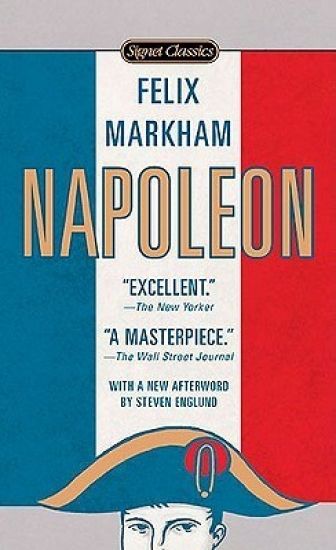
Napoleon

Napoleon

Markham Felix

Signet
2010
pokkari
This magnificent reconstruction of Napoleon's life and legend, written by a distinguished Oxford scholar, is based on intimate documents--including the personal letters of Marie-Louise and the decoded diaries of Grand Marshal Bertrand, who accompanied Napoleon to his final exile on St. Helena. It has been hailed as the most important single-volume work in Napoleonic literature.
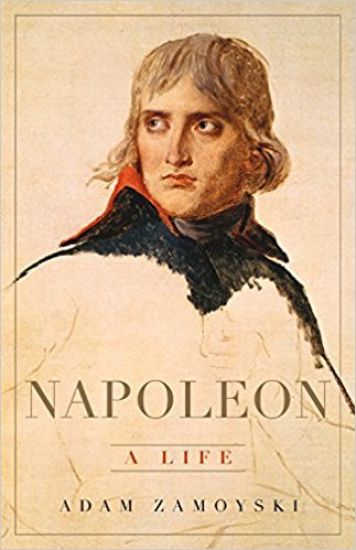
Napoleon: A Life

Napoleon: A Life

Adam Zamoyski

BASIC BOOKS
2018
sidottu
The definitive biography of Napoleon -- hailed as magnificent by The Economist. What a novel my life has been Napoleon once said of himself. Born into a poor family, the callow young man was, by twenty-six, an army general. Seduced by an older woman, his marriage transformed him into a galvanizing military commander. The Pope crowned him as Emperor of the French when he was only thirty-five. Within a few years, he became the effective master of Europe, his power unparalleled in modern history. His downfall was no less dramatic. The story of Napoleon has been written many times. In some versions, he is a military genius, in others a war-obsessed tyrant. Here, historian Adam Zamoyski cuts through the mythology and explains Napoleon against the background of the European Enlightenment, and what he was himself seeking to achieve. This most famous of men is also the most hidden of men, and Zamoyski dives deeper than any previous biographer to find him. Beautifully written, Napoleon brilliantly sets the man in his European context.
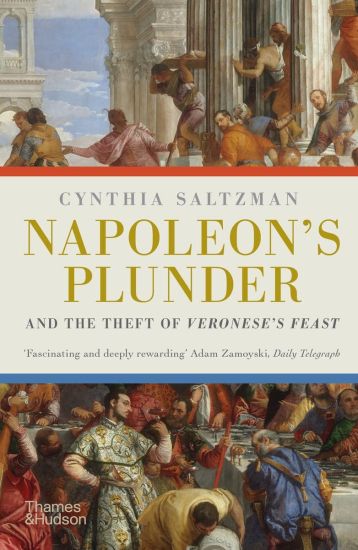
Napoleon's Plunder and the Theft of Veronese's Feast
‘A fascinating and deeply rewarding book’ Adam Zamoyski, Daily Telegraph Napoleon’s Plunder chronicles one of the most spectacular art appropriation campaigns in history and, in doing so, sheds new light on the complex origins of what was once called the Musée Napoléon, now known as the Louvre. It centres on the story of Napoleon’s theft of Paolo Veronese’s Wedding Feast at Cana, a vast, sublime canvas that in 1797 the French army tore from a wall of the monastery of San Giorgio Maggiore in Venice. Feast was just one of Napoleon’s spoils of war, which he claimed for the French nation and displayed in a public museum – the Louvre. He filled the former palace of the French kings with his acquisitions, and Europe flocked to Paris and hailed the Louvre as the greatest museum in the world. Did he take it for himself? Or for France? Or for the world at large? Saltzman interweaves the stories of Napoleon’s military campaigns, uncovering the treaties through which he obtained his loot, with the histories of the plundered works themselves, exploring how these masterpieces came into being. As much as a story of military might, this is an account of one of the most ambitious cultural projects ever conducted.
Napoleon and the Dardanelles

Napoleon and the Dardanelles

Vernon J. Puryear

University of California Press
2022
pokkari
This title is part of UC Press's Voices Revived program, which commemorates University of California Press’s mission to seek out and cultivate the brightest minds and give them voice, reach, and impact. Drawing on a backlist dating to 1893, Voices Revived makes high-quality, peer-reviewed scholarship accessible once again using print-on-demand technology. This title was originally published in 1951.
Napoleon and the Dardanelles

Napoleon and the Dardanelles

Vernon J. Puryear

University of California Press
2022
sidottu
This title is part of UC Press's Voices Revived program, which commemorates University of California Press’s mission to seek out and cultivate the brightest minds and give them voice, reach, and impact. Drawing on a backlist dating to 1893, Voices Revived makes high-quality, peer-reviewed scholarship accessible once again using print-on-demand technology. This title was originally published in 1951.
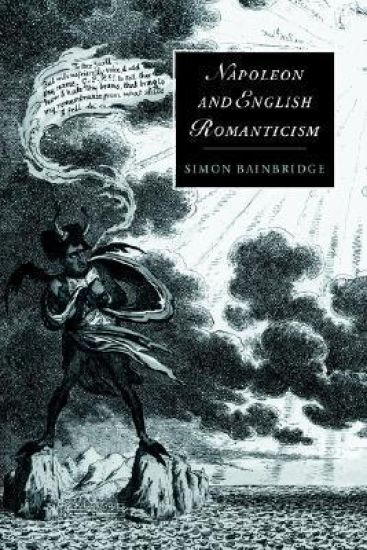
Napoleon and English Romanticism

Napoleon and English Romanticism

Simon Bainbridge

Cambridge University Press
2006
pokkari
Napoleon Bonaparte occupied a central place in the consciousness of many British writers of the Romantic period. He was a profound shaping influence on their thinking and writing, and a powerful symbolic and mythic figure whom they used to legitimize and discredit a wide range of political and aesthetic positions. In this first ever full-length study of Romantic writers' obsession with Napoleon, Simon Bainbridge focuses on the writings of the Lake poets Wordsworth, Coleridge and Southey, and of Byron and Hazlitt. Combining detailed analyses of specific texts with broader historical and theoretical approaches, and illustrating his argument with the visual evidence of contemporary cartoons, Bainbridge shows how Romantic writers constructed, appropriated, and contested different Napoleons as a crucial part of their sustained and partisan engagement in the political and cultural debates of the day.
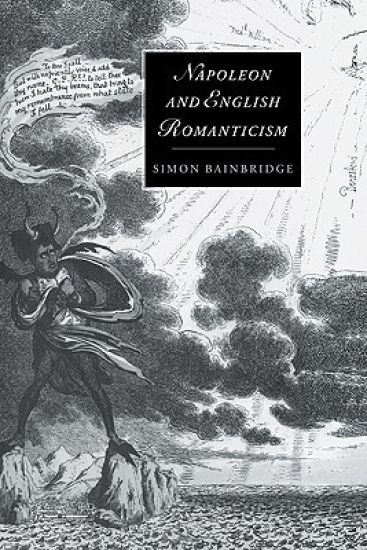
Napoleon and English Romanticism

Napoleon and English Romanticism

Simon Bainbridge

Cambridge University Press
1995
sidottu
Napoleon Bonaparte occupied a central place in the consciousness of many British writers of the Romantic period. He was a profound shaping influence on their thinking and writing, and a powerful symbolic and mythic figure whom they used to legitimise and discredit a wide range of political and aesthetic positions. In this first ever full-length study of Romantic writers’ obsession with Napoleon Simon Bainbridge focuses on the writings of the Lake poets Wordsworth, Coleridge, and Southey, and of Byron and Hazlitt. Combining detailed analyses of specific texts with broader historical and theoretical approaches, and illustrating his argument with the visual evidence of contemporary cartoons, Bainbridge shows how Romantic writers constructed, appropriated, and contested different Napoleons as a crucial part of their sustained and partisan engagement in the political and cultural debates of the day.