Eight essays explore key aspects of the lives and values of sixteenth-century French peasant, artisan, poor, and tradesmen as they reflect the competing claims of tradition and innovation. Bibliogs
These essays, three of them previously unpublished, explore the competing claims of innovation and tradition among the lower orders in sixteenth-century France. The result is a wide-ranging view of the lives and values of men and women (artisans, tradesmen, the poor) who, because they left little or nothing in writing, have hitherto had little attention from scholars. The first three essays consider the social, vocational, and sexual context of the Protestant Reformation, its consequences for urban women, and the new attitudes toward poverty shared by Catholic humanists and Protestants alike in sixteenth-century Lyon. The next three essays describe the links between festive play and youth groups, domestic dissent, and political criticism in town and country, the festive reversal of sex roles and political order, and the ritualistic and dramatic structure of religious riots. The final two essays discuss the impact of printing on the quasi-literate, and the collecting of common proverbs and medical folklore by learned students of the "people" during the Ancien Régime. The book includes eight pages of illustrations.
To receive a royal pardon in sixteenth-century France for certain kinds of homicide—unpremeditated, unintended, in self-defense, or otherwise excusable—a supplicant had to tell the king a story. These stories took the form of letters of remission, documents narrated to royal notaries by admitted offenders who, in effect, stated their case for pardon to the king. Thousands of such stories are found in French archives, providing precious evidence of the narrative skills and interpretive schemes of peasants and artisans as well as the well-born. This book, by one of the most acclaimed historians of our time, is a pioneering effort to us the tools of literary analysis to interpret archival texts: to show how people from different stations in life shaped the events of a crime into a story, and to compare their stories with those told by Renaissance authors not intended to judge the truth or falsity of the pardon narratives, but rather to refer to the techniques for crafting stories. A number of fascinating crime stories, often possessing Rabelaisian humor, are told in the course of the book, which consists of three long chapters. These chapters explore the French law of homicide, depictions of "hot anger" and self-defense, and the distinctive characteristics of women's stories of bloodshed. The book is illustrated with seven contemporary woodcuts and a facsimile of a letter of remission, with appendixes providing several other original documents. This volume is based on the Harry Camp Memorial Lectures given at Stanford University in 1986.
This book is about culture and comparison. Starting with the history of the discipline of comparative literature and its forgotten relation to the positivist comparative method, it inquires into the idea of comparison in a postcolonial world. Comparison was Eurocentric by exclusion when it applied only to European literature, and Eurocentric by discrimination when it adapted evolutionary models to place European literature at the forefront of human development. This book argues that inclusiveness is not a sufficient response to postcolonial and multiculturalist challenges because it leaves the basis of equivalence unquestioned. The point is not simply to bring more objects under comparison, but rather to examine the process of comparison. The book offers a new approach to the either/or of relativism and universalism, in which comparison is either impossible or assimilatory, by focusing instead on various forms of "incommensurability"—comparisons in which there is a ground for comparison but no basis for equivalence. Each chapter develops a particular form of such cultural comparison from readings of important novelists (Joseph Conrad, Simone Schwartz-Bart), poets (Aimé Césaire, Derek Walcott), and theorists (Edouard Glissant, Jean-Luc Nancy).
This book is about culture and comparison. Starting with the history of the discipline of comparative literature and its forgotten relation to the positivist comparative method, it inquires into the idea of comparison in a postcolonial world. Comparison was Eurocentric by exclusion when it applied only to European literature, and Eurocentric by discrimination when it adapted evolutionary models to place European literature at the forefront of human development. This book argues that inclusiveness is not a sufficient response to postcolonial and multiculturalist challenges because it leaves the basis of equivalence unquestioned. The point is not simply to bring more objects under comparison, but rather to examine the process of comparison. The book offers a new approach to the either/or of relativism and universalism, in which comparison is either impossible or assimilatory, by focusing instead on various forms of "incommensurability"—comparisons in which there is a ground for comparison but no basis for equivalence. Each chapter develops a particular form of such cultural comparison from readings of important novelists (Joseph Conrad, Simone Schwartz-Bart), poets (Aimé Césaire, Derek Walcott), and theorists (Edouard Glissant, Jean-Luc Nancy).
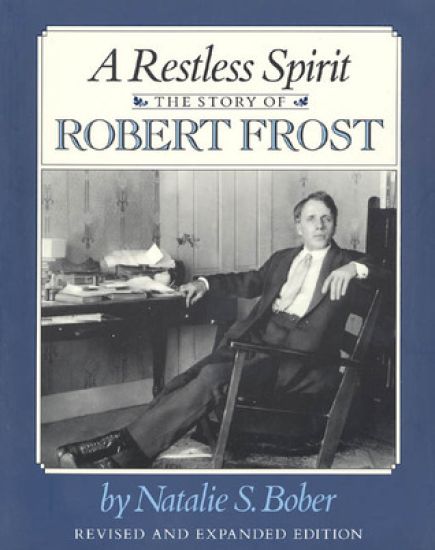
"When I was young, I was so interested in baseball that my family was afraid I'd waste my life and be a pitcher. Later they were afraid I'd waste my life and be a poet. They were right."
This text is designed to assist preservice and inservice teachers in creating a critical and reflective dialogue with themselves, their assigned classroom cultures, and the larger school environment. It engages readers in a series of classroom and school-based activities, observations, and exercises that can be used in any teacher education course with a field component. Different from other field experience guides, this text aims to disrupt traditional conceptions of teacher education and field experiences--by emphasizing the problematic nature and dynamics of public schooling, and encouraging readers to seek a greater awareness of their own attitudes toward and connections with these educational processes.Learning to Teach: A Critical Approach to the Field Experience, Second Edition:*dramatically reconceptualizes the field experience by asking preservice and inservice teachers to be active and critical researchers of classroom practices and processes;*provides a coherent framework for analyzing both structural and cultural aspects of schooling;*provides specific exercises to help preservice and inservice teachers evaluate and understand the intersections of race, class, gender, and culture in "real life" school settings; and*grounds the observations of everyday school life within critical, feminist, and poststructuralist discourses.New in the Second Edition: A new section,"No Child Left Untested," has been added to help preservice teachers explore the implications of a very changed post-September 11world in which xenophobia, violence, patriotism, citizenship, and democracy have taken on new meanings. The introduction to the book as a whole, the section introductions, the retained activities in existing sections, and the references have been throughly updated.
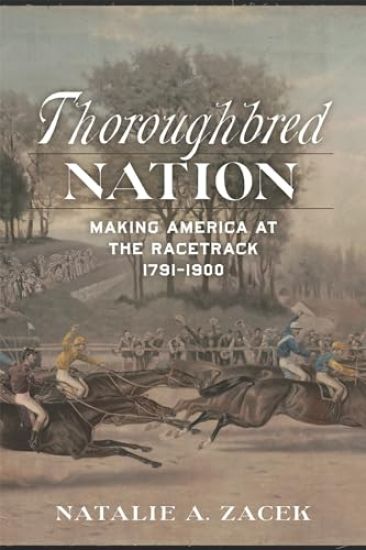
From the colonial era to the beginning of the twentieth century, horse racing was by far the most popular sport in America. Great numbers of Americans and overseas visitors flocked to the nation's tracks, and others avidly followed the sport in both general-interest newspapers and specialized periodicals. Thoroughbred Nation offers a detailed yet panoramic view of thoroughbred racing in the United States, following the sport from its origins in colonial Virginia and South Carolina to its boom in the Lower Mississippi Valley, and then from its post Civil War rebirth in New York City and Saratoga Springs to its opulent mythologization of the ""Old South"" at Louisville's Churchill Downs, home of the Kentucky Derby. Natalie A. Zacek introduces readers to an unforgettable cast of characters, from ""plungers"" such as Virginia plantation owner William Ransom Johnson (known as the ""Napoleon of the Turf"") and Wall Street financier James R. Keene (who would wager a fortune on the outcome of a single competition) to the jockeys, trainers, and grooms, most of whom were African American. While their names are no longer known, their work was essential to the sport. Zacek also details the careers of remarkable, though scarcely remembered, horses, whose achievements made them as famous in their day as more recent equine celebrities such as Seabiscuit or Secretariat. Based upon exhaustive research in print and visual sources from libraries, archives, and museums across the United States, Thoroughbred Nation will be of interest both to those who love the sport of horse racing for its own sake and to those who are fascinated by how this pastime reflects and influences American identities.
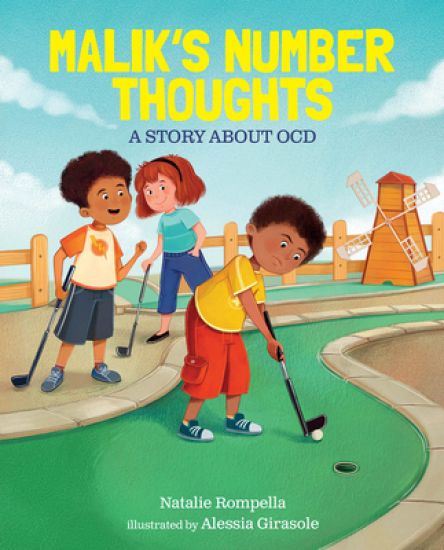
A determined boy learns to manage his OCD.Malik's obsessive-compulsive disorder means his brain wants him to do everything on the count of four. When he's invited to a mini golf birthday party, Malik is excited. But he worries about his Number Thoughts. If he has to take four tries to get the ball in the hole, he'll never win--and everyone might make fun of him. Can Malik say "no" to his Number Thoughts?
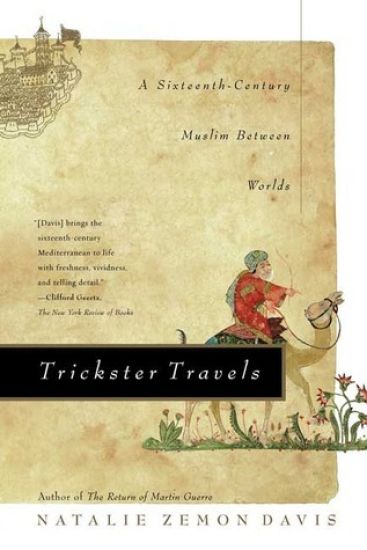
An engrossing study of Leo Africanus and his famous book, which introduced Africa to European readers Al-Hasan al-Wazzan--born in Granada to a Muslim family that in 1492 went to Morocco, where he traveled extensively on behalf of the sultan of Fez--is known to historians as Leo Africanus, author of the first geography of Africa to be published in Europe (in 1550). He had been captured by Christian pirates in the Mediterranean and imprisoned by the pope, then released, baptized, and allowed a European life of scholarship as the Christian writer Giovanni Leone. In this fascinating new book, the distinguished historian Natalie Zemon Davis offers a virtuoso study of the fragmentary, partial, and often contradictory traces that al-Hasan al-Wazzan left behind him, and a superb interpretation of his extraordinary life and work. In Trickster Travels, Davis describes all the sectors of her hero's life in rich detail, scrutinizing the evidence of al-Hasan's movement between cultural worlds; the Islamic and Arab traditions, genres, and ideas available to him; and his adventures with Christians and Jews in a European community of learned men and powerful church leaders. In depicting the life of this adventurous border-crosser, Davis suggests the many ways cultural barriers are negotiated and diverging traditions are fused.
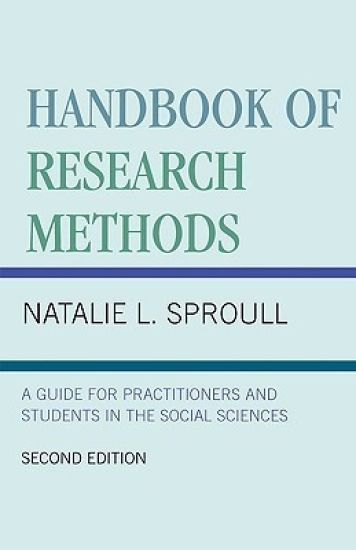
A ready reference and text designed for researchers, managers, and administrators who make research-based decisions, as well as students of the social sciences and business. The entire research process, from variables to final report, is covered step by step. New in this edition is a chapter overview of multivariate techniques. Special features include a glossary of 248 research terms, a summary of fourteen types of instruments with examples, a research proposal checklist, flow charts for selecting appropriate statistical tests, and a flow chart for the entire research process, with alternatives at each decision point. With every major concept are its definition, purpose, advantages, disadvantages, process, and an example. Readers are alerted to possible problems and cautioned.
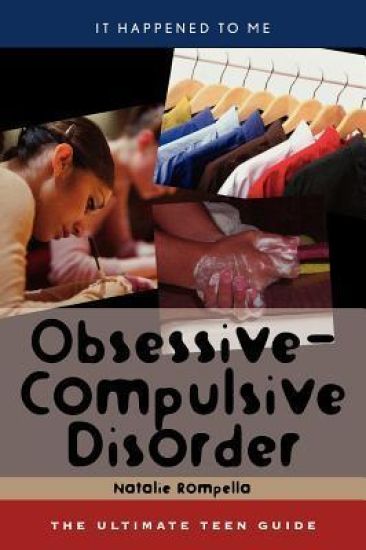
Obsessive-Compulsive Disorder strikes one in fifty adults. However, the disorder often remains untreated in young adults, despite advances in diagnostics. Though so many people suffer from OCD, very few seek professional help. Obsessive-Compulsive Disorder: The Ultimate Teen Guide helps teens understand OCD in greater detail. The guide explains different forms of OCD (checking, cleaning, scrupulosity) and related disorders (such as Obsessive-Compulsive Personality Disorder, Tourette's Syndrome, and Asperger's Disorder). Author Natalie Rompella voices many common concerns teens have when confronted with OCD, including how to deal with school, work, and friends. The book also discusses uncomfortable topics, such as obsessions with sexuality and other unwanted thoughts. The book features insights from teens who suffer from OCD, letting others know they are not alone. The book also encourages teens to seek help through treatment and provides details of different treatment options.
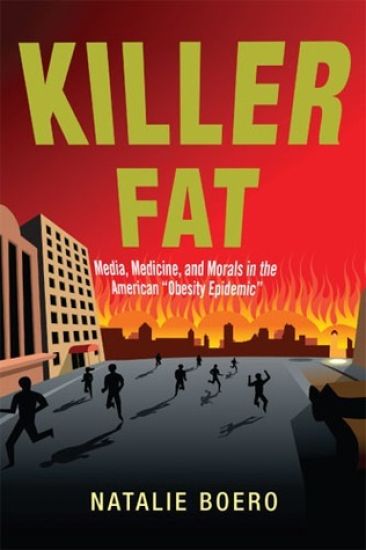
In the past decade, obesity has emerged as a major public health concern in the United States and abroad. At the federal, state, and local level, policy makers have begun drafting a range of policies to fight a war against fat, including body-mass index (BMI) report cards, “snack taxes,” and laws to control how fast food companies market to children. As an epidemic, obesity threatens to weaken the health, economy, and might of the most powerful nation in the world.In Killer Fat, Natalie Boero examines how and why obesity emerged as a major public health concern and national obsession in recent years. Using primary sources and in-depth interviews, Boero enters the world of bariatric surgeries, Weight Watchers, and Overeaters Anonymous to show how common expectations of what bodies are supposed to look like help to determine what sorts of interventions and policies are considered urgent in containing this new kind of disease.Boero argues that obesity, like the traditional epidemics of biological contagion and mass death, now incites panic, a doomsday scenario that must be confronted in a struggle for social stability. The “war” on obesity, she concludes, is a form of social control. Killer Fat ultimately offers an alternate framing of the nation’s obesity problem based on the insights of the “Health at Every Size” movement.
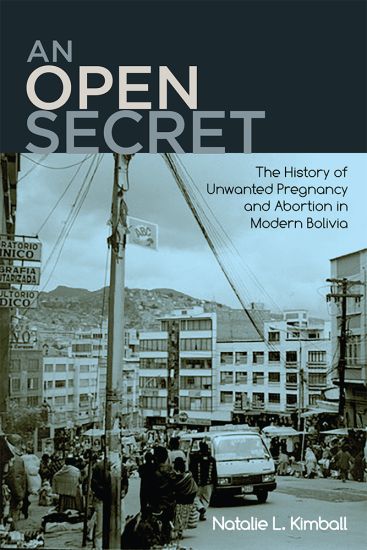
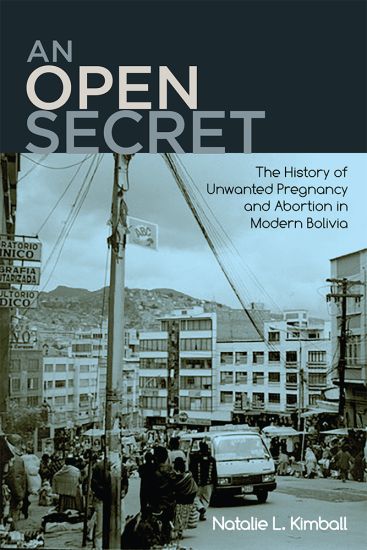
Many women throughout the world face the challenge of confronting an unexpected or an unwanted pregnancy, yet these experiences are often shrouded in silence. An Open Secret draws on personal interviews and medical records to uncover the history of women’s experiences with unwanted pregnancy and abortion in the South American country of Bolivia. This Andean nation is home to a diverse population of indigenous and mixed-race individuals who practice a range of medical traditions. Centering on the cities of La Paz and El Alto, the book explores how women decided whether to continue or terminate their pregnancies and the medical practices to which women recurred in their search for reproductive health care between the early 1950s and 2010. It demonstrates that, far from constituting private events with little impact on the public sphere, women’s intimate experiences with pregnancy contributed to changing policies and services in reproductive health in Bolivia.
Many women throughout the world face the challenge of confronting an unexpected or an unwanted pregnancy, yet these experiences are often shrouded in silence. An Open Secret draws on personal interviews and medical records to uncover the history of women’s experiences with unwanted pregnancy and abortion in the South American country of Bolivia. This Andean nation is home to a diverse population of indigenous and mixed-race individuals who practice a range of medical traditions. Centering on the cities of La Paz and El Alto, the book explores how women decided whether to continue or terminate their pregnancies and the medical practices to which women recurred in their search for reproductive health care between the early 1950s and 2010. It demonstrates that, far from constituting private events with little impact on the public sphere, women’s intimate experiences with pregnancy contributed to changing policies and services in reproductive health in Bolivia.
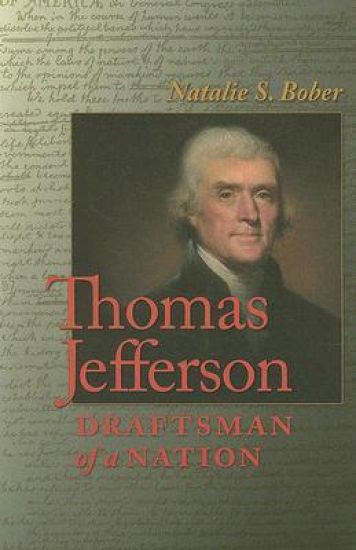
To many Americans, Thomas Jefferson is the architect of our freedom. And yet the author of the ""Declaration of Independence"" also participated in a society that depended on slavery, and was himself the owner of slaves. How are we to reconcile this contradiction? This new life of Jefferson by Natalie S. Bober does not evade this difficult question.From the first page, we are taken into Jefferson's world, to help us understand what it meant to be a man of his time. He stands before us as a shy, freckle-faced, and, for the eighteenth century, unusually tall young man. We follow him through a life in which he gave words to American independence, journeyed to France as ambassador, and triumphed in a bitter campaign not unlike our recent presidential elections. He served two terms in the White House, but the achievements most important to him were as the author of the ""Declaration of Independence"" and ""The Statute of Virginia for Religious Freedom"", and as architect and founder of the University of Virginia, which stands today as a living monument to his belief in the importance to a democracy of higher education open to everyone. His belief in the ""illimitable freedom of the human mind"" speaks to us even today.Thomas Jefferson taught us the power of the word. He showed us that words beautifully shaped can reshape lives. The Jefferson revealed here is distinguished by his often contradictory nature but also by his optimism, his curiosity, and his exceptional sense of his own place in history.Like Bober's earlier books on Abigail Adams and the American Revolution, ""Thomas Jefferson: Draftsman of a Nation"" will appeal to students of history of all ages. This book faces the fact that Jefferson was a flawed human being - yet insists that this does not disqualify him as a hero.
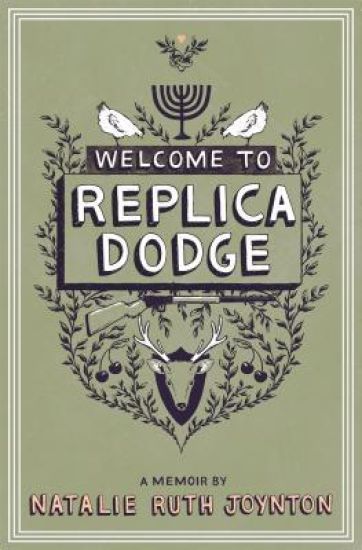
Not long after stumbling into Mason County, Natalie Ruth Joynton finds herself the owner of four acres, a big red barn, and a white farmhouse set among the picturesque rolling hills of Northern Michigan. But there's a catch. Right in her front lawn stands a life-size tribute to the Old West-specifically, Dodge City, Kansas. Replica Dodge boasts a one-room schoolhouse, a general store, a bank, a saloon, a bunkhouse, a jail, and a church. Who built Replica Dodge and why? What was this person hoping to do or attract? And what's stranger: a person who builds such a spectacle or the people who buy it? Welcome to Replica Dodge follows Joynton, a newly converted Jew with strong city roots, as she begins a new life with her fiancé in Michigan's Bible Belt. The irony of the situation is not lost on her. Jews are notorious city-dwellers. Even secular Jews tend to stay within urban Jewish communities. And yet, here she is: almost a hundred miles from the closest synagogue and marrying-despite the guidance of several rabbis-a partner outside the Jewish faith. Can that faith (and marriage) survive roadkill and rifle season and Replica Dodge? As Joynton toils to build her own version of home in the heartland, she begins to discover that rural America is not one thing. It is many stories, and as varied as her experiences and hopes are, so too are those of her neighbors. Welcome to Replica Dodge suggests that we move slowly through the new spaces in our lives-removing tape and Bubble Wrap, working with your partner to find a place for that weird chair, and wiping away the cobwebs to start fresh. Anybody who has ever felt like they didn't belong will take comfort in this enchanting memoir.
In this book, Barney explores her family tree, chronicles her friendships and associations through reprinted correspondence and recreated conversations, and evokes the golden age of her salon in gallery of literary portraits.