The New Testament epistles are much more than just a historical record of the early church -- they are also the heart and center of Christian proclamation, helping us to clearly understand how the life, death, and resurrection of Jesus Christ is part of God's cosmic plan of salvation. In this outstanding anthology of sermons based on the Second Readings from Cycle A of the Revised Common Lectionary, five distinguished preachers bring their insight to the pastoral letters and draw valuable lessons for the complex challenges posed by life in the 21st century. Each thought-provoking message is filled with compelling stories and illustrations, and offers a clear and authentic vision of Christian faith in the context of daily life. With material for every Sunday and major celebration throughout the entire church year, this resource provides abundant seeds for preaching, teaching, and meditation, and will become a treasured addition to anyone's reference library. This essential resource is useful for: - Fresh homiletical approaches to the lectionary texts - Inspiring preaching illustrations and sermon starters - Understanding scripture passages - Adult study and discussion groups - Personal devotions and Bible study John N. Brittain is Dean of the Chapel at Houghton College in Houghton, New York. A magna cum laude graduate of Brown University, Brittain has also earned degrees from Methodist Theological School in Delaware, Ohio (M.Div.) and St. Mary's Seminary and University in Baltimore, Maryland (D.Min.). David O. Bales was a Presbyterian minister for 33 years. Recently retired as the pastor of Bethany Presbyterian Church in Ontario, Oregon, he is also a freelance writer and editor for Stephen Ministries and Tebunah Ministries. Bales is a graduate of the University of Portland and San Francisco Theological Seminary. Steven E. Albertin is the pastor of Christ Lutheran Church of Zionsville, Indiana. Albertin has received degrees from Concordia College (B.A.), Concordia Seminary in Exile, St. Louis (M.Div.), Christ Seminary - Seminex (S.T.M.), and the Lutheran School of Theology at Chicago (D.Min.). Larry Lange and his wife, Julie Wrubbel-Lange, serve as the pastors of Grace Lutheran Church in Green Bay, Wisconsin. Lange is a graduate of Carthage College (B.A.), the University of Wisconsin-Milwaukee (M.A. in English), the Lutheran School of Theology at Chicago (M.Div.), and the Association of Chicago Theological Schools (D.Min. in Preaching). Mary S. Lautensleger is the pastor of Stony Hill United Methodist Church in Albemarle, North Carolina. Lautensleger is a graduate of the College-Conservatory of Music at the University of Cincinnati (B.M., M.M), United Theological Seminary (M.A. in theological studies), and Trinity Lutheran Seminary (M.Div.), and she is a D.Min. candidate at Hood Theological Seminary.
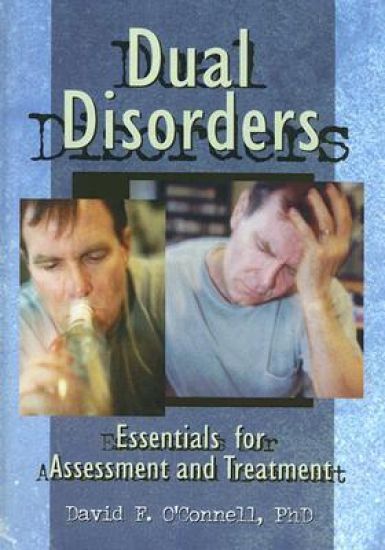
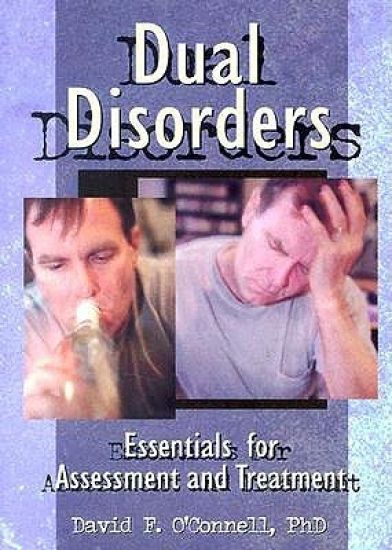
Dual Disorders: Essentials for Assessment and Treatment is a practical handbook for the assessment and clinical management of patients with addiction and psychiatric disorders. Addictions counselors, prevention specialists, and chemical dependency nurses will use this book to understand the nature of psychiatric disorders and uncover valuable guidelines on their treatment and management in the context of primary addictions treatment. It includes an introduction to the rationale and clinical approaches of cognitive therapy; a special section on psychiatric medications; and coverage of mood, anxiety, psychotic, cognitive, eating, and personality disorders.Dual Disorders: Essentials for Assessment and Treatment contains information that is vital and fundamental to effective treatment. It fills a void in the training and education of addictions counselors, helping you become a better diagnostician, develop better treatment plans, and communicate more meaningfully with psychiatrists and other mental health professionals. It will also increase your understanding of psychopathology and psychotherapy and decrease the frustration that can arise from a lack of understanding and planning. Specifics that you need to know to do this are thoroughly covered, including:elements of a comprehensive assessment of dual disorders clinical considerations in the treatment of the depressed addict pitfalls of treating patients with personality disorders the borderline patient--what to do and what not to do the psychopathic patient--anticipating and effectively addressing manipulation practical approaches in treating patients with eating disorders effective treatment of sexual trauma cognitive therapy approaches to treating dual disorders what to expect when your patient is referred to a psychiatrist for psychotropic medicationUnlike other books on this topic, Dual Disorders: Essentials for Assessment and Treatment is not a summary of research on dual diagnosis nor an overview of general programmatic considerations in treatment delivery. Rather, it is directed specifically to addictions counselors involved in the day-to-day treatment of dually diagnosed patients, providing detailed descriptions of the major psychiatric disorders as well as useful guidelines and treatment approaches.
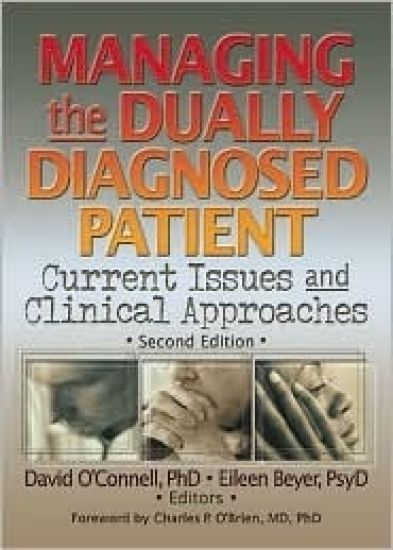
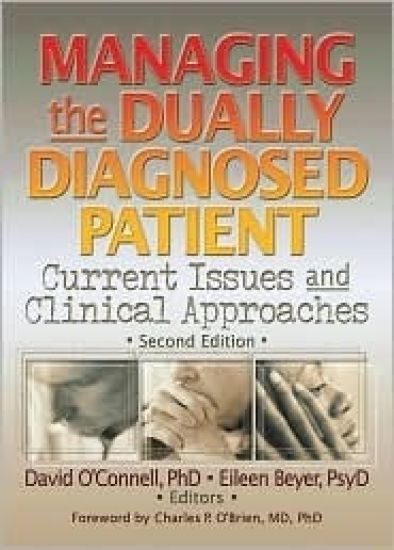
The classic text--thoroughly updated for 2002!Managing the Dually Diagnosed Patient: Current Issues and Clinical Approaches, Second Edition provides a wealth of useful information on effectively treating substance abusers who also suffer from mental illness. This second edition is updated to apply the latest information on the assessment, treatment, and management of co-existing disorders. It includes new information on special treatment considerations for women and adolescents and examines the restrictions placed on treatment in the age of managed care. Certain to enhance your knowledge about a highly misunderstood population, this updated volume addresses the theoretical, conceptual, and practical issues involved in caring for dually diagnosed patients. Treatment professionals from hospitals, medical schools, addiction treatment programs, and dual disorder units come together to examine the critical issues in the assessment and treatment of dually diagnosed individuals and offer an up-to-date review of the latest knowledge in research and rehabilitation.Managing the Dually Diagnosed Patient: Current Issues and Clinical Approaches, Second Edition delivers up-to-date information on: substance abuse and psychopathology psychodiagnostic assessment training issues for dealing with comorbidity how collaboration with other helping professionals can improve your treatment of dually diagnosed patients understanding and treating the psychiatric problems common within chemically dependent populations-affective disorders, anxiety disorders, personality disorders, and schizophreniaThis updated volume contains new case studies, treatment protocols, and a comprehensive overview of the existing literature on dual diagnosis assessment and treatment that integrates practical clinical considerations and approaches based on the authors’extensive experience. Add it to your reference shelf today!
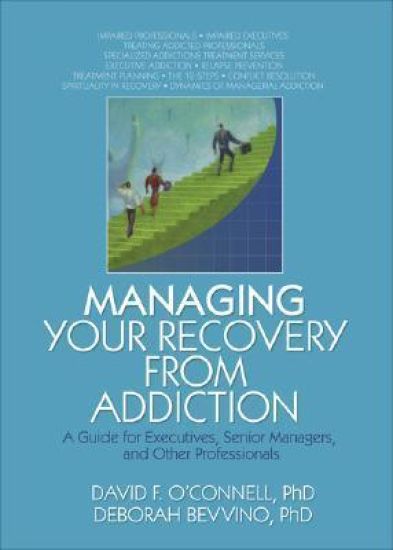
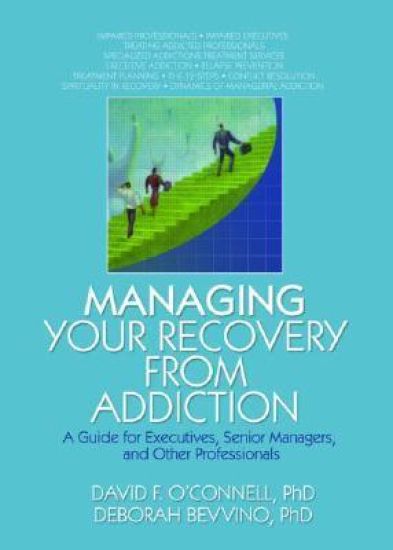
Learn how to get soberand stay that wayGetting and staying sober provides a special set of challenges for professional peoplephysicians, lawyers, corporate CEOs, accountants, and otherswho drive themselves to achieve and succeed in high-pressure surroundings. Managing Your Recovery from Addiction applies business approaches and ideas to the process of planning, implementing, and carrying out programs that really work for professionals in their first year of recovery. This unique self-help book provides guidance to impaired executives and professionals seeking recovery through inpatient and outpatient care, setting strategies for managing conflict, dealing with changing emotions and moods, and developing a solid spiritual program. Managing Your Recovery from Addiction helps professionals develop both short- and long-term programs for dealing with the challenges of maintaining sobriety. The book is based on the authors’ extensive experience treating impaired business personnel in a variety of settings, including the Caron Treatment Centers and Lifeworks of London, England, an internationally recognized addictions treatment center. Their rational, scientific approach complements ongoing counseling and other treatment approaches to help keep the professional’s career on track, saving the recovering individualand his or her employersignificant time and money due to lower productivity, arrested organizational development, absenteeism, and other problems associated with professional level addiction. Topics examined in Managing Your Recovery from Addiction include: a unique view of the 12 Steps for business personnel the dynamics of managerial addiction essential information to prevent relapse to active addiction coping with relapse basic tasks and fundamental recovery steps setting and tracking recovery goals recovery stages 10 tasks to recovery conflict management strategies spiritual development addictions treatment and much more!Managing Your Recovery from Addiction concludes with the O’Connell Dysfunctional Attitude Survey (ODAS). This book is vital for recovering executives and professionals and is an important resource for addictions and mental health treatment agencies that serve a professional population. It’s equally helpful for employee assistance program (EAP) personnel who regularly refer professionals for addictions treatment.
This dictionary breaks new ground by combining articles on Christian ethics and pastoral theology in one volume. It seeks to integrate moral, pastoral and practical theology in a way not attempted before in a single work of reference. Instead of the usual A-Z listing throughout, it is arranged in two parts. Part One consists of eighteen extended articles, arranged in theological order, introducing users to the main themes of Christian ethics and pastoral theology. Part Two contains articles, alphabetically arranged, which stem from the main themes. An easy-to-use reference system enables quick transition from the first to the second part and vice versa. Articles address a wide range of topics: reproductive technologies and transplant surgery, health and health care; issues of economic and social justice; prison and prison reform; psychotherapy and family therapy; business ethics and data protection; as well as such traditional subjects as atonement, the kingdom of God, suffering, death and dying, and heaven and hell. This dictionary will therefore appeal to many groups: pastors, counsellors, medical practitioners, people employed in the caring services, Christians in professional or commercial life, and indeed to all who want to live out their faith meaningfully and ethically in today's complex and challenging world. Its spacious layout, superb design and clear print make this volume a delight to use, and its carefully drawn-up bibliographies will help readers to deepen their knowledge of particular subject.
This work has been selected by scholars as being culturally important and is part of the knowledge base of civilization as we know it.This work is in the public domain in the United States of America, and possibly other nations. Within the United States, you may freely copy and distribute this work, as no entity (individual or corporate) has a copyright on the body of the work.Scholars believe, and we concur, that this work is important enough to be preserved, reproduced, and made generally available to the public. To ensure a quality reading experience, this work has been proofread and republished using a format that seamlessly blends the original graphical elements with text in an easy-to-read typeface.We appreciate your support of the preservation process, and thank you for being an important part of keeping this knowledge alive and relevant.
Peter Gray's evolutionary perspective and emphasis on critical thinking have made his rigorous yet accessible introduction to psychology a widely respected classroom favourite, edition after edition.
"They have done this with a rich, provocative, and creative conceptual vocabulary that will resonate for readers who practice, supervise others' practice, teach about or do research in group life and group work."—Paul H. Ephross, MSW, PhD, Professor, University of Maryland School of Social Work Group Communication Pitfalls: Overcoming Barriers to an Effective Group Experience treats groups and the work involved in grouping as useful tools humans have developed for responding to pressures or demands faced by group members. This book assumes an orientation that expects and detects group pitfalls as they arise, providing students with the foundation for overcoming barriers to effective group experiences. By assuming this orientation, authors John O. Burtis and Paul D. Turman offer readers a map of the group pitfall terrain and demonstrate how people working well together can use the struggle against such pitfalls to improve their groups. Key FeaturesProvides students with a unifying theoretical framework and pedagogical orientation, which organizes a very broad range of research findings into tight and useful classifications Takes a comprehensive approach that frames current small group communication literature through a theoretical lens provided by Breakdown-Conducive Group Theory Reviews research findings from a variety of methodological perspectives and directly describes applications of the concepts discussed across each chapter Offers extensive skills enhancing material to help students apply the theoretically based concepts discussed in the book While other texts cover cursory material on group pitfalls and miscommunication, it is the primary focus of this text and gives students practical recommendations to correct those pitfalls. Group Communication Pitfalls is an excellent textbook for advanced undergraduate and graduate courses on small group communication such as Advanced Group Communication, Group Dynamics, and Group Processes. It can also be used as a supplemental text in courses that focus on group interaction.
Leadership Communication as Citizenship explains the communication skills you need to help construct effective experiences for an organization, team, or community, whether in the role of doer, follower, guide, manager, or leader. It articulates the important role that communication plays in helping to co-construct group, organizational, or community direction. Effective leadership communication is explored in the context of citizenship, emphasizing the opportunities and responsibilities we each face for helping groups that matter to us, whether a business, a religious institution, or a government entity.Throughout the book, authors John O. Burtis and Paul D. Turman relay a compelling, readable story about how to create more successful organizations and communities through direction-giving stories, regardless of one's role in the group.Key FeaturesExplains the daily interplay between communication, citizenship, and direction-giving, thus challenging readers to realize the power they have to give direction in their own team, organization, or communityFocuses on common communication skills involved across seemingly disparate leadership contexts—from working in teams to communities to social movements or elsewhere—to help people succeed in the setting in which they find themselvesExplores times of crisis and use of leadership vision, discussing how direction-giving approaches may require adjustment in these times of extreme opportunity, threat, or change.Intended Audience: Leadership Communication as Citizenship is appropriate for anyone who wants to make a difference in their team, organization, or community, and for such courses as Leadership, Organizational and Group Communication, Industrial/ Organizational Psychology, Persuasion, and Management.
The study of health information seeking has become increasingly important in recent years due to the growing emphasis on the consumer/client relationship in the health arena. This trend implies a shift away from the development of health campaigns with one unitary message to a recognition that alternatives must be provided and options discussed. Indeed, health agencies are adopting the role of information-seeking facilitators through the creation of telephone services and sophisticated databases. A greater understanding of the public’s needs, especially why people seek information, may help us to accomplish the many behavioral changes that will lead toward decreases in morbidity and mortality and a more balanced approach to wellness and prevention. This is especially important in the context of the revolution in access to information brought about by the many recent advances in databases and telecommunication systems, perhaps best represented by the advent of the Internet. This book provides a comprehensive treatment of these issues appropriate for advanced undergraduate and graduate students, practitioners, and researchers.