Kirjojen hintavertailu. Mukana 11 717 486 kirjaa ja 12 kauppaa.

Kirjahaku

Etsi kirjoja tekijän nimen, kirjan nimen tai ISBN:n perusteella.

1000 tulosta hakusanalla PAUL MASON

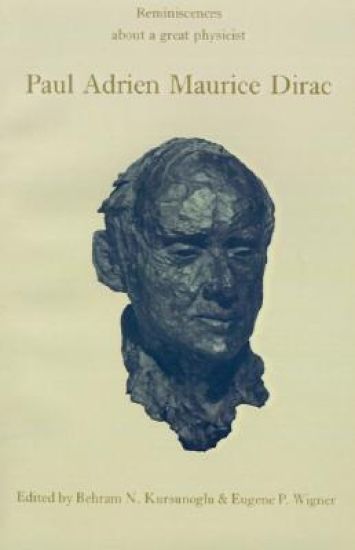
Paul Adrien Maurice Dirac

Paul Adrien Maurice Dirac

Cambridge University Press
1990
pokkari
Paul Dirac, who died in 1984, was without question one of the greatest physicists of the twentieth century. His revolutionary contribution to modern quantum theory is remembered for its insight and creativity. He is especially famous for his prediction of the magnetic moment and spin of the electron and for the existence of antiparticles. He was awarded the Nobel Prize for physics in 1933 at the age of 31. In this memorial volume, 24 of Dirac’s friends, colleagues and contemporaries remember him with affection. There are chapters describing Dirac’s personality, and many anecdotes about the man with a reputation for silence. Other chapters describe Dirac’s science and its impact on modern physics.
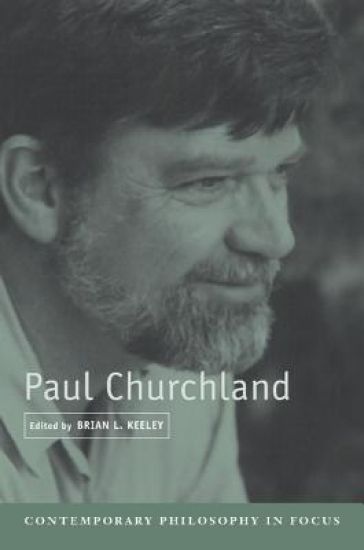
Paul Churchland

Paul Churchland

Cambridge University Press
2005
pokkari
For over three decades, Paul Churchland has been a provocative and controversial philosopher of mind and of science. He is most famous as an advocate of 'eliminative materialism', whereby he suggests that our commonsense understanding of our own minds is radically defective and that the science of brain demonstrates this (just as an understanding of physics reveals that our commonsense understanding of a flat and motionless earth is similarly false). This collection offers an introduction to Churchland's work, as well as a critique of some of his most famous philosophical positions. Including contributions by both established and promising young philosophers, it is intended to complement the growing literature on Churchland, focusing on his contributions in isolation from those of his wife and philosophical partner, Patricia Churchland, as well as on his contributions to philosophy as distinguished from those to Cognitive Science.
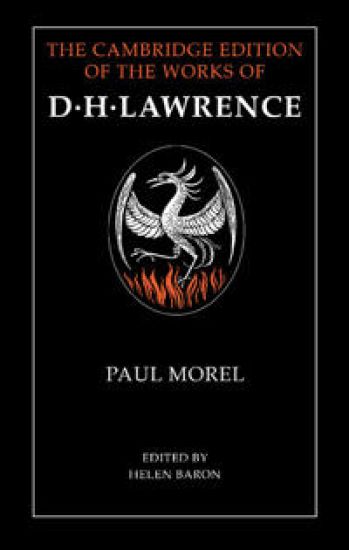
Paul Morel

Paul Morel

D. H. Lawrence

Cambridge University Press
2003
sidottu
This is the first ever edition of the early version of Sons and Lovers, D. H. Lawrence's highly popular autobiographical novel. Amongst all the surviving early drafts of Lawrence's works this is the most different from the final version; as he rewrote, Lawrence discarded many episodes, some of them stories from his childhood not recorded anywhere else. It is less polished than Sons and Lovers, but it is full of powerful, spontaneous, dramatic writing: there is more humour and charm, more raw violence and nervous energy. This volume also contains remarkable documents written by Lawrence's girlfriend Jessie Chambers, the model for Miriam in Paul Morel and in Sons and Lovers, in which she gives Lawrence some hostile criticisms and writes out for him her own versions of some of his episodes. In addition there is a fragment of a novel about his mother's childhood, facsimiles of manuscript pages, maps, and scholarly notes and apparatus.
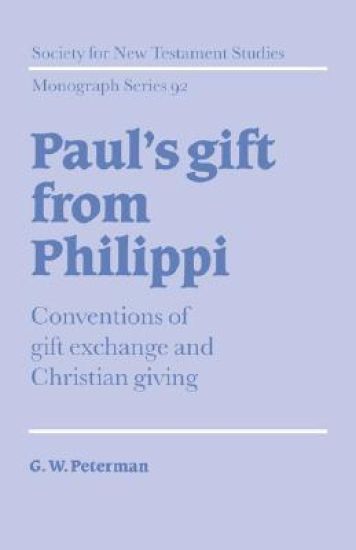
Paul's Gift from Philippi

Paul's Gift from Philippi

G. W. Peterman

Cambridge University Press
1997
sidottu
This book is a study of Paul’s response to the financial help he received from the church in Philippi whilst he was a prisoner in Rome. Philippians 4.10-20 has always puzzled commentators because of its seemingly strained and tortured mode of thanks. Word studies, psychological studies and literary studies have all failed to provide insight into the text, which is unique in the Pauline corpus. Using contemporary sources Dr Peterman re-examines this difficult passage in the light of Greek and Roman practices and language regarding the exchange of gifts and favours in society. He concludes that ‘gift exchange’ or ‘social reciprocity’, with its expectations and obligations, permeated every level of society in Paul’s day, and that Paul’s seemingly ungracious response was an attempt to create a new, Christian attitude to gifts and to giving.
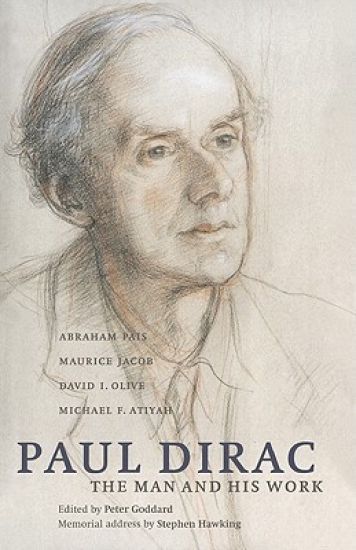
Paul Dirac

Paul Dirac

Abraham Pais; Maurice Jacob; Olive David I.; Atiyah Michael F.

Cambridge University Press
1998
sidottu
Paul Adrien Maurice Dirac was one of the founders of quantum theory. He is numbered alongside Newton, Maxwell and Einstein as one of the greatest physicists of all time. Together the lectures in this volume, originally presented on the occasion of the dedication ceremony for a plaque commemorating Dirac in Westminster Abbey, give a unique insight into the relationship between Dirac’s character and his scientific achievements. The text begins with the dedication address given by Stephen Hawking at the ceremony. Then Abraham Pais describes Dirac as a person and his approach to his work. Maurice Jacob explains how Dirac was led to introduce the concept of antimatter, and its central role in modern particle physics and cosmology, followed by an account by David Olive of the origin and enduring influence of Dirac’s work on magnetic monopoles. Finally, Sir Michael Atiyah explains the deep and widespread significance of the Dirac equation in mathematics.
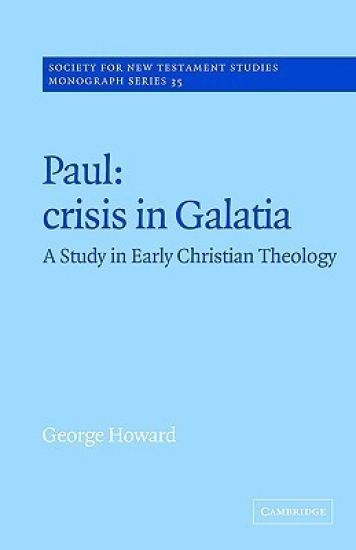
Paul: Crisis in Galatia

Paul: Crisis in Galatia

George Howard

Cambridge University Press
2004
pokkari
This is the second edition of a work which first appeared in 1979. The first edition gave an interpretation of Paul's Letters to the Galatians which proceeded along the following lines: firstly, Paul's opponents at Galatia were Jewish Christians who believed that Gentiles had to accept the Law in order to be saved; secondly, that Paul first revealed his noncircumcision gospel to James, Cephas and John at the Jerusalem Conference; thirdly, Paul's view of justification by faith was seen in terms of Christ keeping faith with Abraham's promise that all nations would be blessed; and fourthly, that Paul considered Torah as binding upon Jewish Christians, but not upon Gentiles. In his second edition, the author brings the discussion into line with his present thinking, and proposes a more nuanced view of the Galatian opponents. These, he feels, did not all share the same opinions, although they were Jewish Christians. The chief discrepancy in their views consisted in the fact that some believed all Gentiles would be saved at the present time if they kept the Law, while others thought the Gentiles would be saved, rather, at the dawn of the age to come.
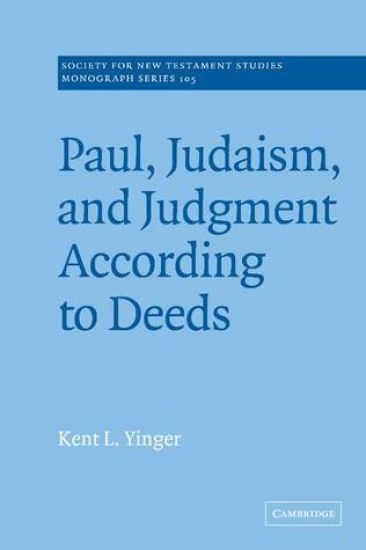
Paul, Judaism, and Judgment According to Deeds

Paul, Judaism, and Judgment According to Deeds

Kent L. Yinger

Cambridge University Press
1999
sidottu
Why does 'judgment according to deeds' produce no discernible theological tension for Paul, the apostle of justification by faith? For students of his writings, paradox, incoherence, or eschatological tension come more readily to mind. Paul felt no such theological tension because there was none - neither within his own soteriology, nor in that of the Judaism from which he learned to speak of 'judgment according to deeds'. For both, salvation is wholly by God's grace and the saved will be repaid (i.e. saved or condemned) in accordance with what they have done. Thus, Paul can promise eternal life to those who 'do good', while threatening wrath upon the disobedient (Rom 2:6-11), and without undermining justification by faith. This thorough 1999 examination of second temple and pauline texts interacts with discussions of 'covenantal nomism', justification, and the 'new perspective' on Paul to explore the Jewishness of the apostle's theology.
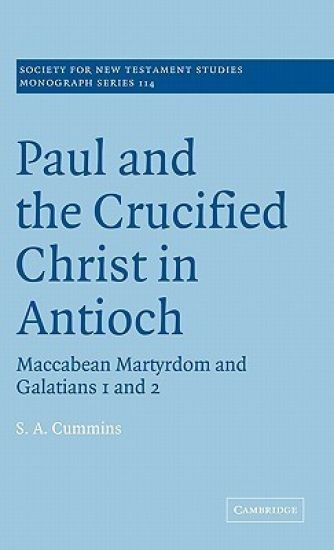
Paul and the Crucified Christ in Antioch

Paul and the Crucified Christ in Antioch

Stephen Anthony Cummins

Cambridge University Press
2001
sidottu
The so-called 'Antioch Incident' - the confrontation between the apostles Peter and Paul in Galatians 2.11-21 - continues to be a source of controversy in both scholarly and popular estimations of the emergence of the early Church and the development of Pauline theology. Paul and the Crucified Christ in Antioch offers an interesting interpretation of Paul's account of and response to this event, creatively combining historical reconstruction, detailed exegesis, and theological reflection. S. A. Cummins argues that the nature and significance of the central issue at stake in Antioch - whether the Torah or Jesus Christ determines who are the people of God - gains great clarity and force when viewed in relation to a Maccabean martyr model of Judaism as now christologically reconfigured and redeployed in the life and ministry of the apostle Paul.
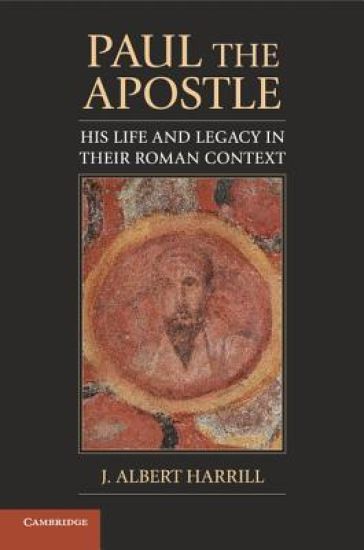
Paul the Apostle

Paul the Apostle

J. Albert Harrill

Cambridge University Press
2012
pokkari
This book is a controversial new biography of the apostle Paul that argues for his inclusion in the pantheon of key figures of classical antiquity, along with the likes of Socrates, Alexander the Great, Cleopatra and Augustus. It first provides a critical reassessment of the apostle's life in its historical context that focuses on Paul's discourse of authority, which was both representative of its Roman context and provocative to his rivals within Roman society. It then considers the legend that developed around Paul as the history of his life was elaborated and embellished by later interpreters, creating legends that characterized the apostle variously as a model citizen, an imperial hero, a sexual role model, an object of derision and someone to quote from. It is precisely this rewriting of Paul's history into legend that makes the apostle a key transformative figure of classical antiquity.
Paul the Apostle

Paul the Apostle

Harrill J. Albert

Cambridge University Press
2012
sidottu
This book is a controversial new biography of the apostle Paul that argues for his inclusion in the pantheon of key figures of classical antiquity, along with the likes of Socrates, Alexander the Great, Cleopatra and Augustus. It first provides a critical reassessment of the apostle's life in its historical context that focuses on Paul's discourse of authority, which was both representative of its Roman context and provocative to his rivals within Roman society. It then considers the legend that developed around Paul as the history of his life was elaborated and embellished by later interpreters, creating legends that characterized the apostle variously as a model citizen, an imperial hero, a sexual role model, an object of derision and someone to quote from. It is precisely this rewriting of Paul's history into legend that makes the apostle a key transformative figure of classical antiquity.
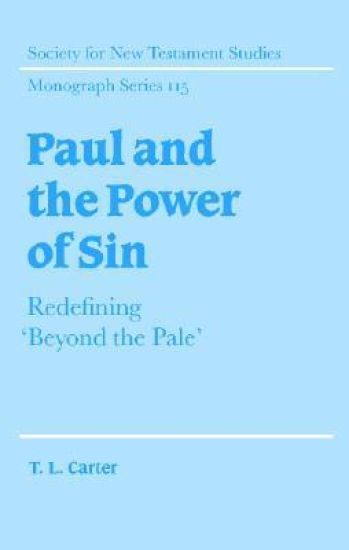
Paul and the Power of Sin

Paul and the Power of Sin

T. L. Carter

Cambridge University Press
2001
sidottu
Paul and the Power of Sin seeks to ground Paul’s language of sin in the socio-cultural context of his original letters. T. L. Carter draws on the work of social anthropologist Mary Douglas to conduct a cross-cultural analysis of the symbolism of the power of sin in the letters, examining thoroughly Douglas’ ‘Grid and Group’ model and defending its use as a heuristic tool for New Testament scholars. He uses this model to examine the social location of Paul and the communities to which he wrote and offers a fresh insight into key passages from 1 Corinthians, Galatians and Romans. Carter concludes that an important part of Paul’s purpose was to safeguard the position of law-free Gentile believers by redrawing social boundaries along eschatological rather than ethnic lines.
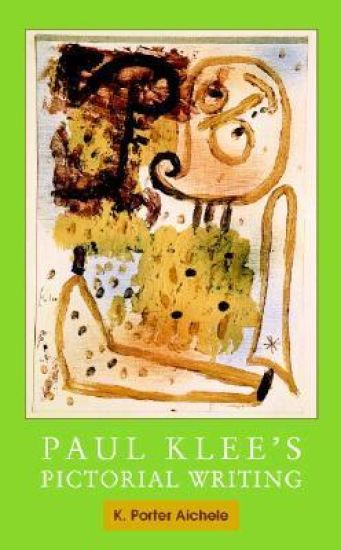
Paul Klee's Pictorial Writing

Paul Klee's Pictorial Writing

K. Porter Aichele

Cambridge University Press
2002
sidottu
Paul Klee's Pictorial Writing examines the artist's appropriation of verbal signs, literary texts and written scripts in his pictorial works. K. Porter Aichele's study is the first to examine how linguistic symbols function in Klee's work and what they mean. Reconstructing the artist's rich cultural milieu from his diaries, letters, lecture notes and visual allusions, Aichele shows how these sources provide the framework for fresh interpretations of works ranging from letter forms in pictorial settings to visual texts. Historically contextualized and interpreted as pictorial writing, Klee's familiar line drawings are shown to be a radical reinterpretation of the ut pictora poesis tradition through which the artist questioned whether there is a substantive difference between writing and drawing. Aichele's multilayered readings of works from every decade of Klee's career demonstrate that the artist's doubly coded language was his most far–reaching contribution to the aesthetics of modernism.
Paul Churchland

Paul Churchland

Cambridge University Press
2005
sidottu
For over three decades, Paul Churchland has been a provocative and controversial philosopher of mind and of science. He is most famous as an advocate of 'eliminative materialism', whereby he suggests that our commonsense understanding of our own minds is radically defective and that the science of brain demonstrates this (just as an understanding of physics reveals that our commonsense understanding of a flat and motionless earth is similarly false). This collection offers an introduction to Churchland's work, as well as a critique of some of his most famous philosophical positions. Including contributions by both established and promising young philosophers, it is intended to complement the growing literature on Churchland, focusing on his contributions in isolation from those of his wife and philosophical partner, Patricia Churchland, as well as on his contributions to philosophy as distinguished from those to Cognitive Science.
Paul, the Stoics, and the Body of Christ

Paul, the Stoics, and the Body of Christ

Michelle V. Lee

Cambridge University Press
2006
sidottu
At first glance, Paul's words to the Corinthians about being the body of Christ seem simple and straightforward. He compares them with a human body so that they may be encouraged to work together, each member contributing to the good of the whole according to his or her special gift. However, the passage raises several critical questions which point to its deeper implications. Does Paul mean that the community is 'like' a body or is he saying that they are in some sense a real body? What is the significance of being specifically the body of Christ? Is the primary purpose of the passage to instruct on the correct use of spiritual gifts or is Paul making a statement about the identity of the Christian community? Michelle Lee examines Paul's instructions in 1 Corinthians 12-14 against the backdrop of Hellenistic moral philosophy, and especially Stoicism.
Paul in Ecstasy

Paul in Ecstasy

Colleen Shantz

Cambridge University Press
2009
sidottu
While many readers of Paul's letters recognize how important his experience was to his life and thought, Biblical scholars have not generally addressed this topic head-on. Colleen Shantz argues that they have been held back both by a bias against religious ecstasy and by the limits of the Biblical texts: How do you responsibly access someone else's experience, particularly experience as unusual and debated as religious ecstasy? And how do you account responsibly for the role of experience in that person's thought? Paul in Ecstasy pursues these questions through a variety of disciplines - most notably neuroscience. This study provides cogent explanations for bewildering passages in Paul's letters, outlines a much greater influence of such experience in Paul's life and letters, and points to its importance in Christian origins.
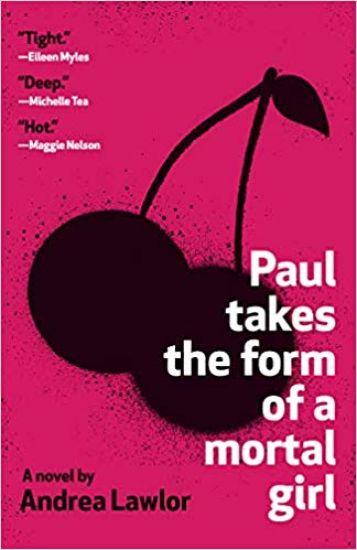
Paul Takes the Form of a Mortal Girl
"In these irreverent pages, a shapeshifter gets a crash course in gender and sexuality by inhabiting both sides of the binary and arriving precisely somewhere in the middle." --O, The Oprah Magazine "HOT" (Maggie Nelson) - "TIGHT" (Eileen Myles) - "DEEP" (Michelle Tea) A Kirkus Reviews Best Fiction Book of the Century It's 1993 and Paul Polydoris tends bar at the only gay club in a university town thrumming with politics and partying. He studies queer theory, has a dyke best friend, makes zines, and is a flaneur with a rich dating life. But Paul's also got a secret: he's a shapeshifter. Oscillating wildly from Riot Grrrl to leather cub, Paul transforms his body and his gender at will as he crossed the country--a journey and adventure through the deep queer archives of struggle and pleasure. Paul Takes the Form of a Mortal Girl is a riotous, razor-sharp bildungsroman whose hero/ine wends his/her way through a world gutted by loss, pulsing with music, and opening into an array of intimacy and connections.