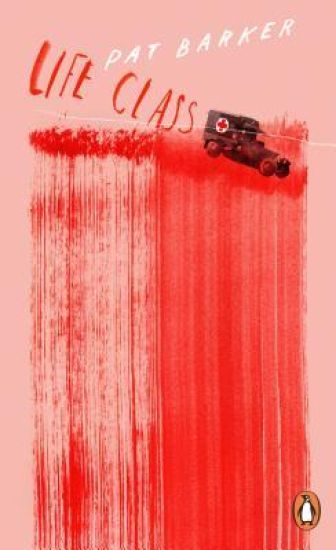
From the Booker Prize-winning and Women's Prize-shortlisted author of The Silence of the Girls The first novel in Pat Barker's acclaimed 'Life Class' trilogy - an unforgettable story of art and war, from one of our greatest writers on war and the human heart'Triumphant, inspiring, shattering' The Times'Barker writes as brilliantly as ever... With great tenderness and insight she conveys a wartime world turned upside down' Independent on Sunday'Masterly, gripping' Penelope Lively'Extraordinarily powerful' Sunday Telegraph Spring, 1914. The students at the Slade School of Art gather in Henry Tonks's studio for his life-drawing class. But for Paul Tarrant the class is troubling, underscoring his own uncertainty about making a mark on the world. When war breaks out and the army won't take Paul, he enlists in the Belgian Red Cross just as he and fellow student Elinor Brooke admit their feelings for one another. Amidst the devastation in Ypres, Paul comes to see the world anew - but have his experiences changed him completely?The Life Class trilogy:Life ClassToby's RoomNoonday
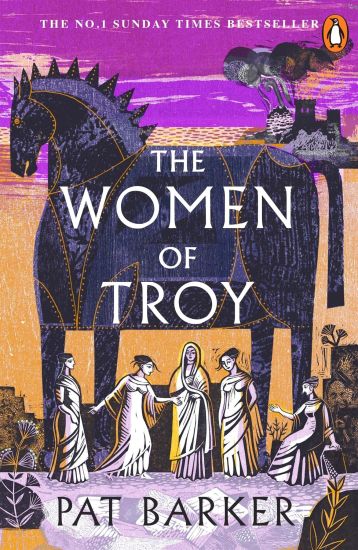
THE SUNDAY TIMES BESTSELLER Following her bestselling, critically acclaimed The Silence of the Girls, Pat Barker continues her extraordinary retelling of one of our greatest myths. 'Myth for a MeToo age. Pat Barker returns to Homer in this gory but unexpectedly uplifting novel' Sunday Times Troy has fallen. The Greeks have won their bitter war. They can return home as victors - all they need is a good wind to lift their sails. But the wind has vanished, the seas becalmed by vengeful gods, and so the warriors remain in limbo - camped in the shadow of the city they destroyed, kept company by the women they stole from it. The women of Troy. Helen - poor Helen. All that beauty, all that grace - and she was just a mouldy old bone for feral dogs to fight over. Cassandra, who has learned not to be too attached to her own prophecies. They have only ever been believed when she can get a man to deliver them. Stubborn Amina, with her gaze still fixed on the ruined towers of Troy, determined to avenge the slaughter of her king. Hecuba, howling and clawing her cheeks on the silent shore, as if she could make her cries heard in the gloomy halls of Hades. As if she could wake the dead. And Briseis, carrying her future in her womb: the unborn child of the dead hero Achilles. Once again caught up in the disputes of violent men. Once again faced with the chance to shape history. Masterful and enduringly resonant, ambitious and intimate, The Women of Troy continues Pat Barker's extraordinary retelling of one of our greatest classical myths, following on from the critically acclaimed The Silence of the Girls. 'Readers turn to Barker's novels for their plain truths and clear-eyed sense of our history and creation stories. But the sombre clarity of her writing is offset by a luminous wisdom' Sunday Times 'The Women Of Troy's immediate beauty is its accessibility and Barker's precise, elegant writing' Metro'Barker has always looked on the world with the combination of a cold eye and a sympathetic understanding. Her characterisation is sharp, her sympathy deep' ipaper
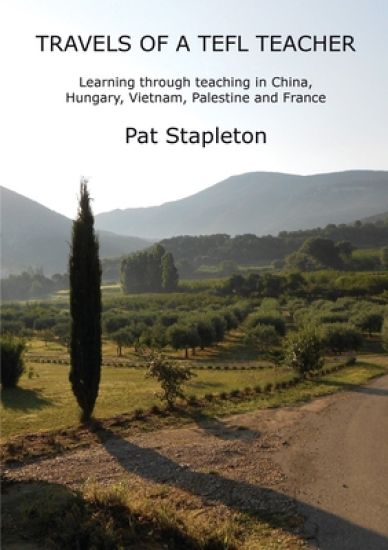
Learning through teaching in China, Hungary, Vietnam, Palestine and France. Pat Stapleton describes her experiences travelling to teach English. It wasn't planned that way, but it turned out to be a series of fascinating encounters with people in countries at times of transition and crisis: From France in 1947 to Vienna under Allied occupation and Nigeria immediately pre-Independence; A year in China after the Cultural revolution, when English teachers were scarce; Vietnam where she was entertained by General Giap who had fought the French at Dien Bien Phu, immediately after the visit from Francois Mitterand, the first Western leader to visit Vietnam since the war; Hungary just as the first election took place after years of rule from Moscow; Palestine at a time of increasing tension and danger with life dominated by checkpoints and the dividing wall; Based in France, where she acquired French citizenship and continues to take every opportunity to teach.
Through a Crack in the Door is a psychological thriller. The story begins with five-year-old George witnessing a terrible crime 'through a crack in the door' in his own house. What follows is a mix of suspense and surprises; family loyalty and betrayal; and some tender moments of new beginnings springing from the most tragic of losses.
Through a Crack in the Door is a modern day, British psychological thriller. The story begins with five-year-old George witnessing a terrible crime 'through a crack in the door' in his own house. What follows is a mix of suspense and surprises; family loyalty and betrayal; and some tender moments of new beginnings springing from the most tragic of losses.
La morte dei propri genitori, se improvvisa e inaspettata, pu innescare reazioni completamente diverse nei figli, soprattutto se questi sono ancora dei ragazzi. Alcuni reagiscono cercando l'affetto e l'amore che venuto a mancare in tutto ci che pu colmare il vuoto lasciato dalla loro scomparsa, ponendosi al centro dell'attenzione, nel tentativo di gratificare il proprio ego e la propria personalit . Altri rifiutano di accettare la tragedia, chiudendosi in loro stessi e tenendo lontano il mondo esterno, soffocando i propri sentimenti e senza nessuna voglia di provare amore e affetto per qualcun altro. Un ragazzo e una ragazza, entrambi vittime della stessa tragedia, si comportano in modo opposto: lui, l'ultimo rampollo di un'antica famiglia nobiliare, cerca il divertimento pi sfrenato e il lusso. Lei, giovane della buona borghesia, si isola da tutto e da tutti e ha cessato di vivere. Ma grazie ad una dimora storica, si incontrano, si scontrano, fanno amicizia e infine trovano l'amore.
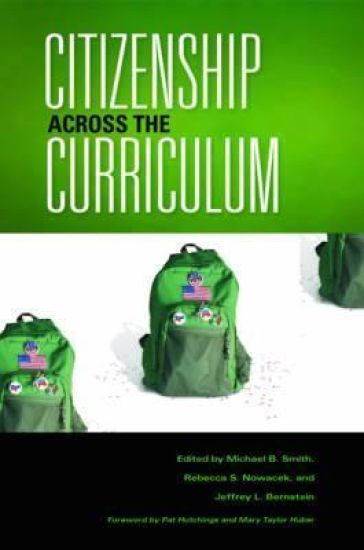
Citizenship Across the Curriculum advocates the teaching of civic engagement at the college level, in a wide range of disciplines and courses. Using "writing across the curriculum" programs as a model, the contributors propose a similar approach to civic education. In case studies drawn from political science and history as well as mathematics, the natural sciences, rhetoric, and communication studies, the contributors provide models for incorporating civic learning and evaluating pedagogical effectiveness. By encouraging faculty to gather evidence and reflect on their teaching practice and their students' learning, this volume contributes to the growing field of the scholarship of teaching and learning.
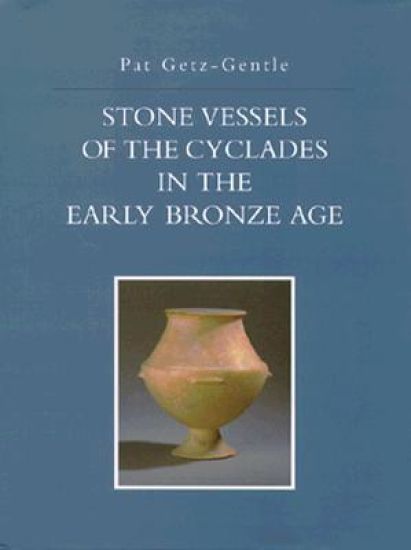
With the exception of early Egypt and Minoan Crete, no early culture had such a vigorous stone vase-making industry as the Cyclades. Figures and vessels of stone, overwhelmingly of marble, are the most distinctive and appealing products of the Early Cycladic culture. The vessels, like the better-known figures, formed a special class of object that conformed to a strict traditional typology. Ranging from charming miniatures to works of impressive size, they often show a striking purity of form, beauty of material, and excellence in their workmanship. Stone Vessels of the Cyclades in the Early Bronze Age is the first comprehensive study of these vessels.For each vessel type, Pat Getz-Gentle considers the material used, the size range, and the formal characteristics and the extent of their variation. She also discusses manufacturing methods, the incidence of repairs occasioned by accidental damage, and the possible function or functions, as well as the development, frequency, dating, and distribution of each vessel type within the Cyclades and beyond. She stresses the human element—how the vessels were used, held, and carried; how much they weigh; and how much they hold. She examines the sculptors who made them—how they might have designed and executed their works, how on occasion they seem to have modified their original plans, and how they stand out as individual artists working within a traditional craft. The 114 plates, with more than 500 separate photographs, illustrate works that show both the homogeneity and the diversity within each type.
An accessible, student-friendly handbook that covers all of the essential study skills that will ensure that science, engineering or technology students get the most out of their course.
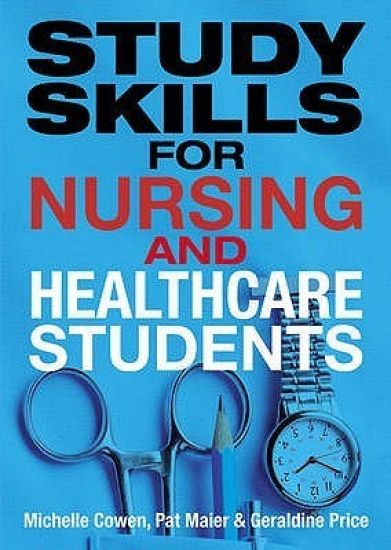
An accessible, student-friendly handbook that covers all of the essential study skills that ensure students get the most out of their nursing or healthcare course. The book has been developed to provide guidance on the most important academic and study skills that students require throughout their time at university and beyond.
Learn the powerful techniques of NLP to enhance your influence and gain the competitive edge in any sales pitch. This practical guide to using NLP in sales includes real life examples to illustrate techniques that have amazed sales people with many years experience. It also contains easy to follow exercises and tips to practice in real situations. This book will enable you to use powerful NLP techniques to; increase sales, develop trust & rapport, handle any challenge and close a sale elegantly and effectively. Focusing on the sales person as facilitator, this book will also:- - Reveal the 6 areas of limitation that sales people place on themselves, their prospects and their products and give readers the tools to remove them. - Enable readers to read and utilise a prospect s buying and decision making patterns. - Provide a set of NLP tools to achieve win/win outcomes for the sales person and their prospects.
This pioneering study examines the resources and well-being of older widowed, divorced or separated, and never-married men and women over time. The first comprehensive, longitudinal study of its kind ever published, The Unmarried in Later Life considers the effects of changes in health, finances, work, social networks, vulnerability, and psychological well-being and compares adaptations to these transitions for unmarried men and women. Because it focuses attention on one of the fastest growing--yet often neglected--segments of the population, this volume is an ideal supplemental text for courses in sociology, gerontology, family studies, and the psychology of aging.Several features make The Unmarried in Later Life a unique contribution to the social sciences literature: The author considers unmarried categories (widowed, never-married, etc.)_ separately, permitting more extended comparisons between groups; The study is based upon a nationally representative sample and contains data on more unmarried persons than are usually available for study; The use of longitudinal data facilitates the observation of the unmarried over a longer period of time than is often possible; The author offers a detailed evaluation of common assumptions about living alone, challenging widely held negative stereotypes of the unmarried. What emerges is a clear view of the changes in social relationships and their patterns by marital status and gender over the course of a decade. Researchers and practitioners will find here much new information about the social status of the aged unmarried.
Recent social trends, including the increased employment of women, the dramatic growth in single-parent households, heightened attention to the aging of the population and to older families, and changing attitudes toward gender roles, guide the focus of this study that considers personal characteristics and family relationships and how they are linked with well-being over the life course. Pat Keith and Robert Schafer discuss how these trends have profoundly affected work/family relationships and how the far-reaching social, demographic, and economic implications of these changes inform some of the vital concerns of particular groups including one and two-job families, single-parent women and their married counterparts, older and younger couples, and modern and traditional spouses. Throughout, the focus is on variation in well-being--self-concept, role strain, and mental health--over the adult life course and the factors that may foster it at various life stages and in different family situations. The study offers observations on persons in different circumstances across the life course that are not often included in the same research but that have produced and will continue to produce lasting changes in the structure of American society.Following two early chapters that set forth the study's guiding concepts, goals, and methodology, Chapters Three through Five assess work and well-being in one- and two-job families and equity in the marriage relationship and examine gender roles in the family, focusing on older families in particular. Typologies of marriages and the self-concept in an intimate relationship are investigated in the next two chapters. The final chapters study gender-role attitudes, characteristics of employment, and well-being of single and married employed mothers; food behavior and diet over the life stages; and families over the life stages. Scholars, students, and researchers in sociology of the family, sex roles, and aging, as well as demographers interested in the consequences of the marital status, will find the insights of this important new study timely and valuable to their work.
This work reviews the current thinking on guardianship of older persons, how the wards and the guardians are affected, and the process by which a person becomes a ward. The book, based on court records and a guardian questionnaire, considers the impact of current legislation on older wards. Recommendations for changes in the guardianship system are made in the final chapter, followed by a summary and conclusion section.
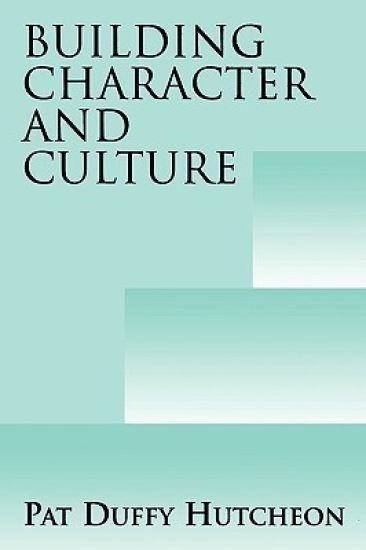
If we are ever to solve the problems of society we must understand how humans function as both the creators and creatures of an evolving culture. Only by viewing socialization as the ongoing product of social interaction in the context of a hierarchy of dynamic, self-organizing, feedback systems will we begin to build the scientifically reliable knowledge that can provide us with the conceptual tools necessary to ensure our survival and the health of our ecology. Pat Duffy Hutcheon stresses the importance of culture in human development, along with our collective responsibility for the direction in which that culture evolves. From the perspective of an evolutionary-systems model, she explains the ongoing interaction between nature and nurture, while identifying the devastating consequences of allowing nurture to occur in the absence of sound scientific analysis and proactive intervention, guided by universally applicable values and reliable knowledge. Hutcheon proceeds from an exploration of humans as creators and creatures of culture to a consideration of the key role of agents of socialization in cognitive development and character formation. Culture is presented as a hierarchy of nesting systems feeding into the socialization process from birth to death—beginning with the subcultures of the family, school, and peer group which are, in turn, influenced by their relationship to larger, enveloping systems. The most worrisome forms of the latter are identified as the culture of violence—that terrifying product of our modern electronic media; the destructive mirror images of the cultures of affluence and poverty; the incompatible cultures of pluralism and tribalism; and the culture of fantasy, with its seductive appeal of simplistic certainties in response to the threat of wholesale social breakdown. Hutcheon's message is far from pessimistic, however, in that the analyses of current problems are clearly seen to point the way to practical solutions.
If we are ever to solve the problems of society we must understand how humans function as both the creators and creatures of an evolving culture. Only by viewing socialization as the ongoing product of social interaction in the context of a hierarchy of dynamic, self-organizing, feedback systems will we begin to build the scientifically reliable knowledge that can provide us with the conceptual tools necessary to ensure our survival and the health of our ecology. Pat Duffy Hutcheon stresses the importance of culture in human development, along with our collective responsibility for the direction in which that culture evolves. From the perspective of an evolutionary-systems model, she explains the ongoing interaction between nature and nurture, while identifying the devastating consequences of allowing nurture to occur in the absence of sound scientific analysis and proactive intervention, guided by universally applicable values and reliable knowledge. Hutcheon proceeds from an exploration of humans as creators and creatures of culture to a consideration of the key role of agents of socialization in cognitive development and character formation. Culture is presented as a hierarchy of nesting systems feeding into the socialization process from birth to death—beginning with the subcultures of the family, school, and peer group which are, in turn, influenced by their relationship to larger, enveloping systems. The most worrisome forms of the latter are identified as the culture of violence—that terrifying product of our modern electronic media; the destructive mirror images of the cultures of affluence and poverty; the incompatible cultures of pluralism and tribalism; and the culture of fantasy, with its seductive appeal of simplistic certainties in response to the threat of wholesale social breakdown. Hutcheon's message is far from pessimistic, however, in that the analyses of current problems are clearly seen to point the way to practical solutions.
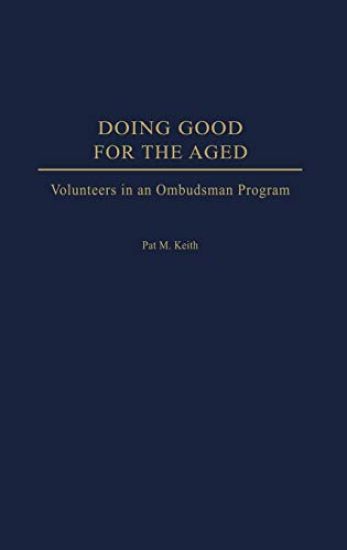
This book is about the subjective and objective outcomes of the work of volunteer advocates in nursing facilities. The majority of the volunteers were older, and they served older persons through their work in an ombudsman program. The extent of involvement of older persons in volunteering suggests its importance to them, and it increasingly sustains human service programs for both the young and old.Despite an increased emphasis on independent and assisted living for older persons, the need for oversight of care, welfare, and rights of the aged in nursing facilities remains. Indeed, in recognition of the need to provide advocacy services for vulnerable elderly, the Older Americans Act was amended in 1978 to require states to establish nursing home ombudsman/advocacy programs.Ombudsman programs are based on the assumption that community involvement through volunteers will have a watchdog effect on behalf of residents and increase accountability among staff and administrators of nursing homes. The present study reveals volunteers' experiences in ombudsman programs. It provides insight into volunteers' thoughts about their work and their capabilities prior to their involvement as well as independent measures of the work of volunteers.