Kirjojen hintavertailu. Mukana 12 390 323 kirjaa ja 12 kauppaa.

Kirjahaku

Etsi kirjoja tekijän nimen, kirjan nimen tai ISBN:n perusteella.

1000 tulosta hakusanalla Patricia R Labeda

Knowing Body, Moving Mind

Knowing Body, Moving Mind

Patricia Q Campbell

Oxford University Press Inc
2011
sidottu
Knowing Body, Moving Mind investigates ritualizing and learning in introductory meditation classes at two Buddhist centers in Toronto, Canada. The centers, Friends of the Heart and Chandrakirti, are led and attended by Western (sometimes called "convert') Buddhists: that is, people from non-Buddhist familial and cultural backgrounds. Inspired by theories that suggest that rituals impart new knowledge or understanding, Patricia Campbell examines how introductory meditation students learn through formal Buddhist practice. Along the way, she also explores practitioners' reasons for enrolling in meditation classes, their interests in Buddhism, and their responses to formal Buddhist practices and to ritual in general. Based on ethnographic interviews and participant-observation fieldwork, the text follows interview participants' reflections on what they learned in meditation classes and through personal practice, and what roles meditation and other ritual practices played in that learning. Participants' learning experiences are illuminated by an influential learning theory called Bloom's Taxonomy, while the rites and practices taught and performed at the centers are explored using performance theory, a method which focuses on the performative elements of ritual's postures and gestures. But the study expands the performance framework as well, by demonstrating that performative ritualizing includes the concentration techniques that take place in a meditator's mind. Such techniques are received as traditional mental acts or behaviors that are standardized, repetitively performed, and variously regarded as special, elevated, spiritual or religious. Having established a link between mental and physical forms of ritualizing, the study then demonstrates that the repetitive mental techniques of meditation practice train the mind to develop new skills in the same way that physical postures and gestures train the body. The mind is thus experienced as both embodied and gestural, and the whole of the body as socially and ritually informed.
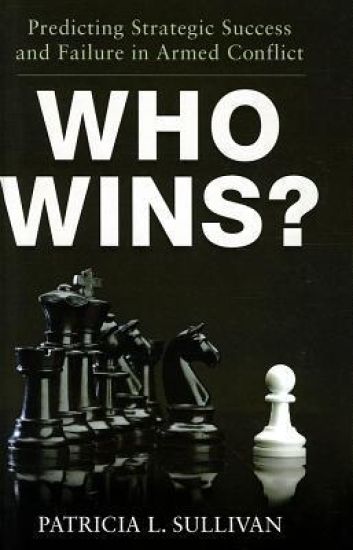
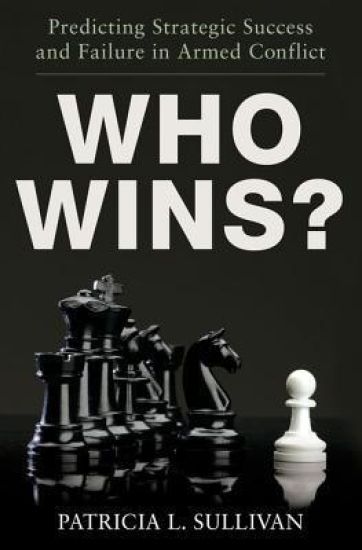
Who Wins?

Who Wins?

Patricia Sullivan

Oxford University Press Inc
2012
sidottu
Despite their immense war-fighting capacity, the five most powerful states in the international system have failed to attain their primary political objective in almost 40% of their military operations against weak state and non-state targets since 1945. Why are states with tremendous military might so often unable to attain their objectives when they use force against weaker adversaries? More broadly, under what conditions can states use military force to attain their political objectives and what conditions limit the utility of military force as a policy instrument? Can we predict the outcome of a war before the fighting begins? Scholars and military leaders have argued that poor military strategy choices, domestic political constraints on democratic governments, or failure to commit sufficient resources to the war effort can explain why strong states lose small wars. In contrast, Who Wins? by Patricia L. Sullivan argues that the key to understanding strategic success in war lies in the nature of the political objectives states pursue through the use of military force. Sullvian does not deny the importance of war-fighting capacity, military strategies, or resolve as determinants of war outcomes. But she provides both a coherent argument and substantial empirical evidence that the effects of these factors are dependent on the nature of the belligerents' political objectives. The theory's predictions about the conditions under which states are able to attain their political objectives through the use of military force are tested against the most widely accepted alternative explanations of war outcomes with an abundance of historical data on violent conflicts. The results support Sullivan's argument and challenge both existing theories and conventional wisdom about the impact of factors like military strength, resolve, regime type, and war-fighting strategies on war outcomes.
Who Wins?

Who Wins?

Patricia Sullivan

Oxford University Press Inc
2012
nidottu
Despite their immense war-fighting capacity, the five most powerful states in the international system have failed to attain their primary political objective in almost 40% of their military operations against weak state and non-state targets since 1945. Why are states with tremendous military might so often unable to attain their objectives when they use force against weaker adversaries? More broadly, under what conditions can states use military force to attain their political objectives and what conditions limit the utility of military force as a policy instrument? Can we predict the outcome of a war before the fighting begins? Scholars and military leaders have argued that poor military strategy choices, domestic political constraints on democratic governments, or failure to commit sufficient resources to the war effort can explain why strong states lose small wars. In contrast, Who Wins? by Patricia L. Sullivan argues that the key to understanding strategic success in war lies in the nature of the political objectives states pursue through the use of military force. Sullvian does not deny the importance of war-fighting capacity, military strategies, or resolve as determinants of war outcomes. But she provides both a coherent argument and substantial empirical evidence that the effects of these factors are dependent on the nature of the belligerents' political objectives. The theory's predictions about the conditions under which states are able to attain their political objectives through the use of military force are tested against the most widely accepted alternative explanations of war outcomes with an abundance of historical data on violent conflicts. The results support Sullivan's argument and challenge both existing theories and conventional wisdom about the impact of factors like military strength, resolve, regime type, and war-fighting strategies on war outcomes.
Frege's Conception of Logic

Frege's Conception of Logic

Patricia A. Blanchette

Oxford University Press Inc
2012
sidottu
In Frege's Conception of Logic Patricia A. Blanchette explores the relationship between Gottlob Frege's understanding of conceptual analysis and his understanding of logic. She argues that the fruitfulness of Frege's conception of logic, and the illuminating differences between that conception and those more modern views that have largely supplanted it, are best understood against the backdrop of a clear account of the role of conceptual analysis in logical investigation. The first part of the book locates the role of conceptual analysis in Frege's logicist project. Blanchette argues that despite a number of difficulties, Frege's use of analysis in the service of logicism is a powerful and coherent tool. As a result of coming to grips with his use of that tool, we can see that there is, despite appearances, no conflict between Frege's intention to demonstrate the grounds of ordinary arithmetic and the fact that the numerals of his derived sentences fail to co-refer with ordinary numerals. In the second part of the book, Blanchette explores the resulting conception of logic itself, and some of the straightforward ways in which Frege's conception differs from its now-familiar descendants. In particular, Blanchette argues that consistency, as Frege understands it, differs significantly from the kind of consistency demonstrable via the construction of models. To appreciate this difference is to appreciate the extent to which Frege was right in his debate with Hilbert over consistency- and independence-proofs in geometry. For similar reasons, modern results such as the completeness of formal systems and the categoricity of theories do not have for Frege the same importance they are commonly taken to have by his post-Tarskian descendants. These differences, together with the coherence of Frege's position, provide reason for caution with respect to the appeal to formal systems and their properties in the treatment of fundamental logical properties and relations.
Nurturing Language and Learning

Nurturing Language and Learning

Patricia Elizabeth Spencer; Lynne Sanford Koester

Oxford University Press Inc
2016
nidottu
Regardless of a child's hearing abilities, increasing parents' knowledge about their baby or toddler's expected development and their confidence in their parenting abilities supports positive early interactions and developmental progress. Fortunately, as early hearing screening has become widespread, more information is available about development of deaf and hard-of-hearing infants and ways to best support their developing learning and language abilities. This book combines a review of up-to-date research with theory and first-hand observations to provide a framework for parents and professionals as they promote developmental achievements of infants and toddlers with limited hearing. In what ways is development of deaf and hard-of-hearing babies and toddlers like that of those with typical hearing? What specific challenges are likely to be faced by child and parent - and when are they most likely to occur? What modifications in parenting and caregiver interactive behaviors can help avoid or overcome these challenges? A strong, supportive foundation for optimal learning throughout life grows from early, positive, and responsive interactive experiences. This book provides information and guidelines for professionals and parents helping deaf and hard-of-hearing infants and toddlers build that foundation.
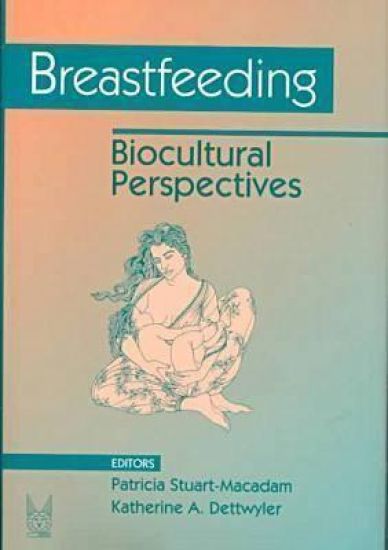
Breastfeeding

Breastfeeding

Patricia Stuart-Macadam

AldineTransaction
1995
sidottu
Breastfeeding is a biocultural phenomenon: not only is it a biological process, but it is also a culturally determined behavior. As such, it has important implications for understanding the past, present, and future condition of our species. In general, scholars have emphasized either the biological or the cultural aspects of breastfeeding, but not both. As biological anthropologists the editors of this volume feel that an evolutionary approach combining both aspects is essential. One of the goals of their book is to incorporate data from diverse fields to present a more holistic view of breastfeeding, through the inclusion of research from a number of different disciplines, including biological and social/cultural anthropology, nutrition, and medicine. The resulting book, presenting the complexity of the issues surrounding very basic decisions about infant nutrition, will fill a void in the existing literature on breastfeeding.
Breastfeeding

Breastfeeding

Patricia Stuart-Macadam

AldineTransaction
1995
nidottu
Breastfeeding is a biocultural phenomenon: not only is it a biological process, but it is also a culturally determined behavior. As such, it has important implications for understanding the past, present, and future condition of our species. In general, scholars have emphasized either the biological or the cultural aspects of breastfeeding, but not both. As biological anthropologists the editors of this volume feel that an evolutionary approach combining both aspects is essential. One of the goals of their book is to incorporate data from diverse fields to present a more holistic view of breastfeeding, through the inclusion of research from a number of different disciplines, including biological and social/cultural anthropology, nutrition, and medicine. The resulting book, presenting the complexity of the issues surrounding very basic decisions about infant nutrition, will fill a void in the existing literature on breastfeeding.
Making Words Fourth Grade

Making Words Fourth Grade

Patricia Cunningham; Dorothy Hall

Pearson
2008
nidottu
An active and innovative approach to making words that teachers and their students have grown to love is finally here! Based on its highly successful parent text, Phonics They Use, this new grade-level series Making Words offers teachers a fresh multi-level activity and lesson series written for the kindergarten through fifth grade classroom. Pat Cunningham and Dottie Hall present classroom teachers with effective tools for strengthening phonics and spelling skills that encourage students to move beyond learning and into a world of word discovery. Each research-based volume includes a wealth of friendly, hands-on, manipulative activities that guide teachers in teaching the development of words--from phonemic awareness to spelling. In Making Words Fourth Grade, Pat and Dottie introduce fourth grade teachers to 50 lessons that teach all the prefixes, suffixes, and root skills included in most fourth grade curriculums. Each Making Words activity leads children through a systematic and sequential spelling curriculum. All lessons include practice with prefixes and suffixes as children stretch out words they are making and blend the letters to make new words. Because teaching children letter-sound relationships is easier than teaching children to actually use these letter-sound relationships, all lessons include a transfer step in which children apply the sounds they are learning to spelling new words. Making Words Fourth Grade is the best resource you can have on hand for motivating your students to learn words! Features 50 fun and interactive lessons for building decoding and spelling skills. Presents a concise method for involving students in the process of identifying common contractions and compound words and more complex vowel patterns within words. Promotes student awareness of similarities in words that helps develop writing skills. Includes reproducible take-home record sheets to help students build their vocabularies.
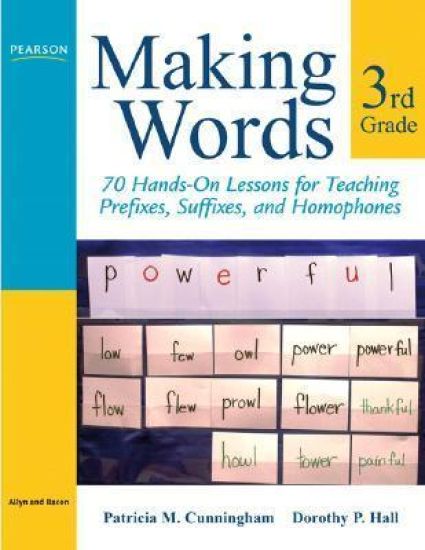
Making Words Third Grade

Making Words Third Grade

Patricia Cunningham; Dorothy Hall

Pearson
2008
nidottu
An active and innovative approach to making words that teachers and their students have grown to love is finally here! Based on its highly successful parent text, Phonics They Use, this new grade-level series Making Words offers teachers a fresh multi-level activity and lesson series written for the kindergarten through fifth grade classroom. Pat Cunningham and Dottie Hall present classroom teachers with effective tools for strengthening phonics and spelling skills that encourage students to move beyond learning and into a world of word discovery. Each research-based volume includes a wealth of friendly, hands-on, manipulative activities that guide teachers in teaching the development of words--from phonemic awareness to spelling. In Making Words Third Grade, Pat and Dottie introduce third grade teachers to 70 lessons that teach the homophones, spelling changes, prefixes and suffixes that most third grade curriculums cover. Each Making Words activity contains rhyming words which help children review the more complex vowel patterns. Including homophones, prefixes, suffixes, spelling changes, and complex rhyming patterns allowing third graders at all levels to make progress in their spelling and decoding ability. Making Words Third Grade is the best resource you can have on hand for motivating your students to learn words! Features 70 fun and interactive lessons for building rhyming and decoding skills. Presents a concise method for involving students in the process of identifying homophones, prefixes, and suffixes and how these change the meanings of words in sentences. Promotes student awareness of similarities in words that helps develop writing skills. Includes reproducible letter tiles, record sheets for each lesson, and take-home sheets to copy, cut, and/or laminate. Highlights a list of useful children's books to extend the Making Words lesson.
Making Words Second Grade

Making Words Second Grade

Patricia Cunningham; Dorothy Hall

Pearson
2008
nidottu
An active and innovative approach to making words that teachers and their students have grown to love is finally here! Based on its highly successful parent text, Phonics They Use, this new grade-level series Making Words offers teachers a fresh multi-level activity and lesson series written for the kindergarten through fifth grade classroom. Pat Cunningham and Dottie Hall present classroom teachers with effective tools for strengthening phonics and spelling skills that encourage students to move beyond learning and into a world of word discovery. Each research-based volume includes a wealth of friendly, hands-on, manipulative activities that guide teachers in teaching the development of words--from phonemic awareness to spelling. In Making Words Second Grade, Pat and Dottie introduce second grade teachers to 100 lessons that teach all the phonics, spelling, and phonemic awareness skills included in most second grade curricula. Each Making Words activity leads children through a systematic and sequential phonics curriculum. All lessons include practice with the phonemic awareness skills of segmenting and blending as children stretch out words they are making and blend the letters to make new words. Because teaching children letter-sound relationships is easier than teaching children to actually use these letter-sound relationships, all lessons include a transfer step in which children apply the sounds they are learning to spelling new words. Making Words Second Grade is the best resource you can have on hand for motivating your students to learn words! Features 100 fun and interactive lessons for building phonemic awareness, phonics, and spelling skills. Presents a concise method for involving students in the process of identifying phonological units and patterns within words. Promotes student awareness of similarities in words that helps develop writing skills. Includes reproducible letter tiles, record sheets for each lesson, and take-home sheets to copy, cut, and/or laminate. Highlights a list of useful children's books to extend the Making Words lesson.
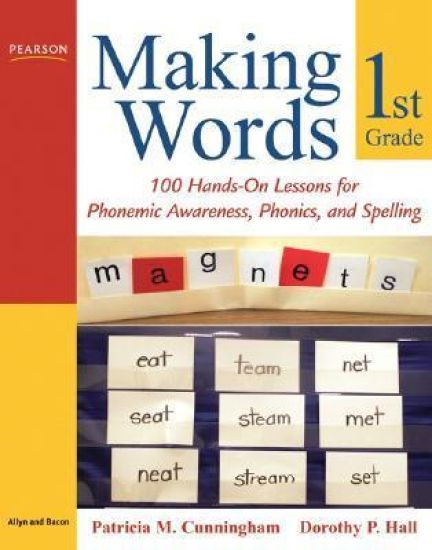
Making Words First Grade

Making Words First Grade

Patricia Cunningham; Dorothy Hall

Pearson
2008
nidottu
An active and innovative approach to making words that teachers and their students have grown to love is finally here! Based on its highly successful parent text, Phonics They Use, this new grade-level series Making Words offers teachers a fresh multi-level activity and lesson series written for the kindergarten through fifth grade classroom. Pat Cunningham and Dottie Hall present classroom teachers with effective tools for strengthening phonics and spelling skills that encourage students to move beyond learning and into a world of word discovery. Each research-based volume includes a wealth of friendly, hands-on, manipulative activities that guide teachers in teaching the development of words--from phonemic awareness to spelling. In Making Words First Grade, Pat and Dottie introduce first grade teachersto100 lessons that teach all the phonics, spelling, and phonemic awareness skills included in most first grade curriculums. Each Making Words activity leads children through a systematic and sequential phonics curriculum. All lessons include practice with the phonemic awareness skills of segmenting and blending as children stretch out words they are making and blend the letters to make new words. Because teaching children letter-sound relationships is easier than teaching children to actually use these letter-sound relationships, all lessons include a transfer step in which children apply the sounds they are learning to spelling new words. Making Words First Grade is the best resource you can have on hand for motivating your students to learn words! Features 100 fun and interactive lessons for building phonemic awareness, phonics, and spelling skills. Presents a concise method for involving students in the process of identifying phonological units and patterns within words. Promotes student awareness of similarities in words that helps develop writing skills. Includes reproducible letter tiles, record sheets for each lesson, and take-home sheets to copy, cut, and/or laminate. Highlights a list of useful children's books to extend the Making Words lesson.
Strategies in Teaching Anthropology

Strategies in Teaching Anthropology

Patricia C. Rice; David W. McCurdy

Pearson College Div
2010
pokkari
Unique in focus and content, Strategies In Teaching Anthropology focuses on the “how” of teaching anthropology across all the major sub-fields--Cultural, Biological, Archaeology, and Linguistics--and their two dimensions: research and applied studies. This text provides a wide array of associated learning outcomes and student activities. In addition, it is a valuable single-source compendium of strategies and teaching “tricks of the trade” from a group of seasoned teaching anthropologists—-working in a variety of teaching settings-—who share their pedagogical techniques, knowledge, and observations. Focused on the applied, “how to do it” side of teaching, this text is designed to fill the gap between students who are taking an anthropology class for the first time, and instructors who know their subject matter in depth. It helps professors who are not sure how to present anthropological subject matter and processes to their students in a way that will capture and relay their own excitement with the subject.
The Flash Press

The Flash Press

Patricia Cline Cohen; Timothy J. Gilfoyle; Helen Lefkowitz Horowitz

University of Chicago Press
2008
nidottu
Obscene, libidinous, loathsome, lascivious. Those were just some of the ways critics described the nineteenth-century weeklies that covered and publicized New York City's extensive sexual underworld. Publications like the "Flash" and the "Whip" - distinguished by a captivating brew of lowbrow humor and titillating gossip about prostitutes, theater denizens, and sporting events - were not the sort generally bound in leather for future reference, and despite their popularity with an enthusiastic readership, they quickly receded into almost complete obscurity. Recently, though, two sizable collections of these papers have resurfaced, and in "The Flash Press" three renowned scholars provide a landmark study of their significance, as well as a wide selection of their ribald articles and illustrations.Including short tales of urban life, editorials on prostitution, and moralizing rants against homosexuality, these selections epitomize a distinct form of urban journalism. Here, in addition to providing a thorough overview of this colorful reportage, its editors, and its audience, the authors examine nineteenth-century ideas of sexuality and freedom that mixed Tom Paine's republicanism with elements of the Marquis de Sade's sexual ideology. They also trace the evolution of censorship and obscenity law, showing how a string of legal battles ultimately led to the demise of the flash papers: editors were hauled into court, sentenced to jail for criminal obscenity and libel, and eventually pushed out of business - but not before they forever changed the debate over public sexuality and freedom of expression in America's most important city.
Presidential Mandates

Presidential Mandates

Patricia Heidotting Conley

University of Chicago Press
2001
nidottu
Presidents have claimed popular mandates for more than 150 years. How can they make such claims when surveys show that voters are uninformed about the issues? In this volume, the author argues that mandates are not mere statements of fact about the preferences of voters. By examining election outcomes from the viewpoints of the politicians, Conley uncovers the inferences and strategies that translate those outcomes into the national policy agenda.
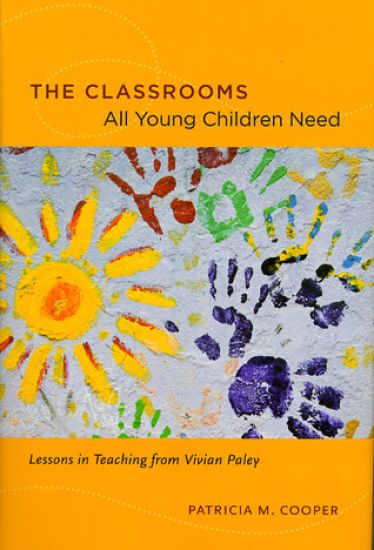
The Classrooms All Young Children Need

The Classrooms All Young Children Need

Patricia M. Cooper

University of Chicago Press
2009
sidottu
Teacher and author Vivian Paley is highly regarded by parents, educators, and other professionals for her original insights into such seemingly everyday issues as play, story, gender, and how young children think. In "The Classrooms All Young Children Need", Patricia M. Cooper takes a synoptic view of Paley's many books and articles, charting the evolution of Paley's thinking while revealing the seminal characteristics of her teaching philosophy. This careful analysis leads Cooper to identify a pedagogical model organized around two complementary principles: a curriculum that promotes play and imagination, and the idea of classrooms as fair places where young children of every color, ability, and disposition are welcome. With timely attention paid to debates about the reduction in time for play in the early childhood classroom, the role of race in education, and No Child Left Behind, "The Classrooms All Young Children Need" will be embraced by anyone tasked with teaching our youngest pupils.
The Classrooms All Young Children Need

The Classrooms All Young Children Need

Patricia M. Cooper

University of Chicago Press
2011
nidottu
Teacher and author Vivian Paley is highly regarded by parents, educators, and other professionals for her original insights into such seemingly everyday issues as play, story, gender, and how young children think. In "The Classrooms All Young Children Need", Patricia M. Cooper takes a synoptic view of Paley's many books and articles, charting the evolution of Paley's thinking while revealing the seminal characteristics of her teaching philosophy. This careful analysis leads Cooper to identify a pedagogical model organized around two complementary principles: a curriculum that promotes play and imagination, and the idea of classrooms as fair places where young children of every color, ability, and disposition are welcome. With timely attention paid to debates about the reduction in time for play in the early childhood classroom, the role of race in education, and No Child Left Behind, "The Classrooms All Young Children Need" will be embraced by anyone tasked with teaching our youngest pupils.
The Common Place of Law

The Common Place of Law

Patricia Ewick; Susan S. Silbey

University of Chicago Press
1998
nidottu
This study explores the different ways people view the law. It identifies three common narratives: one is based on the idea of the law as magisterial and remote; another views the law as a game with rules that can be manipulated to one's advantage; and a third narrative describes the law as an arbitrary power to be actively resisted. Drawing on more than 400 extensive case studies, the text presents individual experiences interwoven with an analysis that charts a coherent theory of legality. It depicts the institution as it is lived: strange and familiar, imperfect and ordinary, and at the centre of daily life.
Cultural Aesthetics

Cultural Aesthetics

Patricia Fumerton

University of Chicago Press
1993
nidottu
A brilliant postmodern critique of Renaissance subjectivity, Cultural Aesthetics explores the simultaneous formation and fragmentation of aristocratic "selfhood" in the late sixteenth and early seventeenth centuries. Patricia Fumerton situates the self within its sumptuous array of "trivial" arts—including the court literatures of chivalric romance, sonnet, and masque and the arts of architecture, miniature painting, stage design, and cuisine. Her integration of historicist and aesthetic perspectives makes this a provocative contribution to the vigorous field of Renaissance cultural studies.
Unsettled

Unsettled

Patricia Fumerton

University of Chicago Press
2005
sidottu
Poor migrants made up a growing class of workers in late sixteenth- and seventeenth-century England. By 1650, half of England's rural population consisted of homeless and itinerant laborers. "Unsettled" is an ambitious attempt to reconstruct the everyday lives of these dispossessed people. Patricia Fumerton offers a portrait of unsettledness in early modern England that includes the homeless and housed alike. Fumerton begins by building on recent studies of vagrancy, poverty, and servants, placing all in the light of a new domestic economy of mobility. She then looks at representations of the vagrant in a variety of pamphlets and literary works of the period. Since seamen were a particularly large and prominent class of mobile wage-laborers in the seventeenth century, Fumerton turns to seamen generally and to an individual poor seaman as a case study of the unsettled subject: Edward Barlow (b. 1642) provides a rare opportunity to see how the laboring poor fashioned themselves because he authored a journal of over 225,000 words and 147 pages of drawings. Barlow's journal, studied extensively here for the first time, vividly charts what he himself termed his "unsettled mind" and the perpetual anxieties of England's working and wayfaring poor.