Kirjojen hintavertailu. Mukana 11 365 334 kirjaa ja 12 kauppaa.

Kirjahaku

Etsi kirjoja tekijän nimen, kirjan nimen tai ISBN:n perusteella.

1000 tulosta hakusanalla Paul Clements

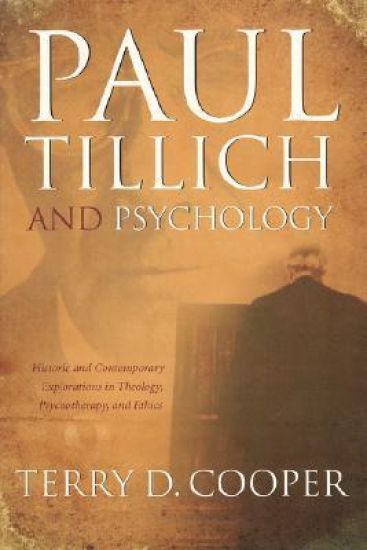
Paul Tillich and Psychology

Paul Tillich and Psychology

Terry D. Cooper

Mercer University Press
2001
nidottu
Paul Tillich, more than any other theologian of the twentieth century, maintained an energetic dialogue with psychology, and espe-cially psychotherapy. This book explores what Tillich’s theology has to offer psychologists and others working in the field of mental health, spiritual development, and pastoral counseling. Tillich’s inter-action with Carl Rogers, Erich Fromm, Rollo May, and other famous psychologists became an important part of his thinking. Tillich frequently pushed psychologists to see the underlying philosophical assumptions of their work. This investigation of the underpinnings of psychotherapy then encouraged psychotherapists to become more aware of the ultimate questions about meaning, purpose, and ethics that informed their work. Perhaps the greatest contribution this book offers is a careful narra-tive and analysis of the meetings of the New York Psychology Group, which involved such figures as Tillich, Fromm, May, Rogers, Seward Hiltner, Ruth Benedict, and David Roberts, to name just a few. This important group, which met from 1941 to 1945, dealt with issues that are very much with us today, such as whether faith can be psychologi-cally explained, the meaning of transcendence, the relationship between psychotherapy and ethics, the appropriateness of self-love, and whether human love is parallel with Divine love. Paul Tillich and Psychology then concludes with an update of Tillich’s influence on the current dialogue in theology and psychology. Listing several of Tillich’s important contributions to psychology, the book suggests that Tillich’s impact is far from over and that it will continue on into the twenty-first century.
Paul Jodrell's Chancery Reports (1737 to 1751)

Paul Jodrell's Chancery Reports (1737 to 1751)

W. H. Bryson

Arizona Center for Medieval Renaissance Studies,US
2020
sidottu
Paul Jodrell’s Chancery Reports cover the tenure one of the most famous of all English judges, Philip Yorke, Lord Hardwicke (1690-1764). These reports were well known and well respected in their original manuscript form by Lord Eldon and by Lord Campbell, who were themselves Hardwicke’s successors on the Chancery bench a century later. The manuscript was generally known to the lawyers of the late eighteenth century and they were widely cited. The cases reported here cover a wide range of the law, concentrating on the law of real property, wills and trusts, marriage settlements, commercial law and bankruptcy, and the law of debtor and creditor. The editor has added headnotes and footnotes that identify the cases cited by the court and the reporter in order to make them more useful to the modern user.
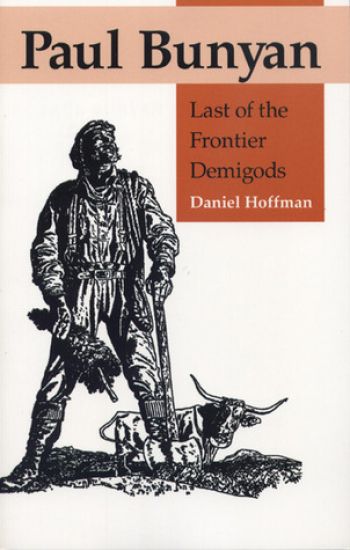
Paul Bunyan

Paul Bunyan

Michigan State University Press
1999
nidottu
Paul Bunyan is the giant of American folklore, so huge that several states claim him as their own - some say he was born in Michigan, others claim Minnesota, still others, Maine. Daniel Hoffman's book shows that the hero's origins are more surprising still.More than another recounting of Paul Bunyan's adventures, this book is a classic of American folklore. First published in 1949, this new edition traces the clues of origin to turn-of-the-century logging camps, to the sparse record of actual folktales, and then to the ways these yarns were repeated, revised, simplified, or distorted.
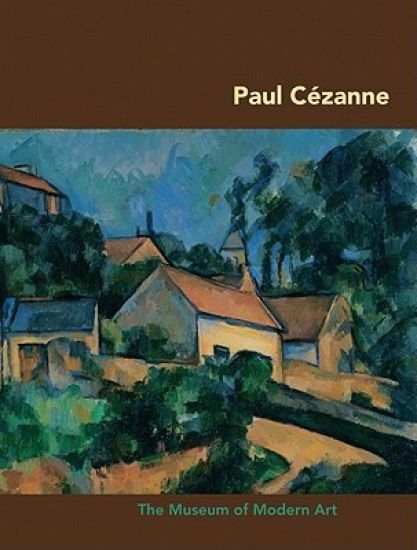
Paul Cézanne

Paul Cézanne

Carolyn Lanchner

Museum of Modern Art
2011
nidottu
Paul Cézanne, whom Pablo Picasso called ‘the father of us all’, is widely considered to be 20th-century modernism’s presiding genius. Cézanne’s pioneering synthesis of a theory of form with the visual immediacy of Impressionism in the late 19th century inspired Henri Matisse and the Fauves and led to the development of Cubism by Picasso and Georges Braque. This latest volume in the MoMA Artist Series guides readers through ten of Cézanne’s most memorable achievements, selected fromThe Museum of Modern Art’s substantial collection of his work. His iconic figure paintings The Bather and Boy in a Red Vest are featured, along with emblematic still lifes and landscapes from earlier and later years. A lively essay by Carolyn Lanchner accompanies each work, illuminating its significance and placing it in its historical moment in the development of modern art.
The Prints of Paul Klee

The Prints of Paul Klee

Paul Klee

Museum of Modern Art
2013
sidottu
Paul Klee (1879-1940) was an extraordinary draftsman, printmaker, teacher and theoretician with a singular style whose work greatly impacted the development of twentieth-century art. Klee's prints demonstrate, more fully than his works in any other medium, his remarkable evolution from a traditionalist to one of the most daring innovators of modern art. This limited-edition facsimile of The Prints of Paul Klee, originally published by The Museum of Modern Art, New York in 1947, presents 40 of Klee's etchings and lithographs from MoMA's collection, ranging in date from 1903 to 1931 and each printed on a separate sheet of stiff card, eight of which are in color. Accompanied by a 40-page booklet featuring an essay by James Thrall Soby (then Chairman of the museum's Department of Painting and Sculpture), and a new text by Christophe Cherix, MoMA's Chief Curator of Prints and Illustrated Books, the prints are encased in a cloth-covered and ribbon-bound box. This unique and luxurious portfolio is being reissued for the first time since its original publication, and is available in a limited edition of 2,000 numbered copies.
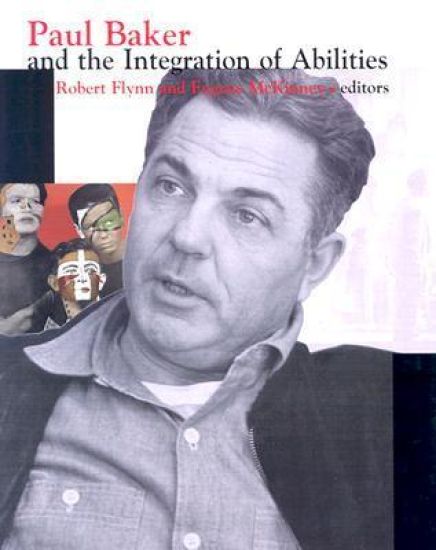
Paul Baker and the Integration of Abilities

Paul Baker and the Integration of Abilities

Texas Christian University Press,U.S.
2003
sidottu
Irritating, arrogant, nuts - and a genius, That's what Charles Laughton said of Paul Baker. He also said, ""Paul Baker is one of the most important minds in the world theater today. He seems to have invented new ways of doing things, and I think something big will come out of it."" Something big did come out of it. Stage productions such as Othella, Hamlet and A Cloud of Witnesses brought critics including Henry Hewes of Saturday Review and photographers such as Eliot Eliosofon of Life magazine to Baylor Theater in Waco. Baker's production of Eugene McKinney's A Different Drummer received an invitation from CBS TV's cultural program. ""Omnibus,"" to present the play live from their New York studio. Baker's production of As I Lay Dying, Robert Flynn's adaptation of William Faulkner's novel, brought an invitation to present the play at the Theater of Nations in Paris, the first non-Broadway production to compete there, where it won a Special Jury Award. That was Paul Baker the theater director. Equally important was Baker's role as teacher and mentor in the arts. Architect Arthur Rogers stated, ""No single person has contributed more to (theater architecture) development than Paul Baker."" Baker's architectural visions at Baylor Theater, the Dallas Theater Center, and Trinity University's Ruth Taylor Theater have inspired similar constructions not only in the United States but in unexpected places such as Manila and Seoul. Baker's teaching philosophy, based on his famous class. ""The Integration of Abilities,"" has been inspirational. In education Baker has been founder, mentor, or director of children's theaters where children are the creators of the drama, of the Booker T. Washington School of the Arts; of the Learning About Learning Foundation, a retail line of interactive kits that included books and toys; and dozens of creative programs for children, parents, and educators. In Paul Baker and the Integration of Abilities Baker tells how a summer in Paris gave him a new way of looking at theater. Eugene McKinney describes Baker's development of writers, and Glenn Allen Smith demonstrates the use of the elements in creating a play. In other chapters on acting, directing, speech, and design, Baker's ideas gave roots and wings to his students and colleagues. Despite invitations from theaters in other places including Austria, Germany, Yugoslavia and New Zealand and offers of positions at other universities Baker chose to remain in Texas where he was born and where he lives today.
Paul Ruffin

Paul Ruffin

TCU Press

Texas Christian University Press,U.S.
2010
sidottu
The Texas Legislature recently named Paul Ruffin 2009 Poet Laureate of Texas. To those who read literary journals or mid-list popular books, Paul Ruffin is a well-known author and poet. Ruffin is prolific in his writing, having published over a thousand poems, short stories, novels, and nonfiction pieces with decades of unfailing artistry. In the fifth installment of the ""TCU Texas Poet Laureate Series"", editor Billy Bob Hill writes in his introduction that he has long admired Paul Ruffin's use of poetic devices. Ruffin uses alliteration and subtle textured sounds throughout his poetry, making them likeably conversational while full of crafted sound patterns. Ruffin also employs whimsical narratives, coining the word 'Necrofiligumbo' in 'When the Mummy Became a Mommy'. But. Hill explains, the true power of this book comes from its storytelling. With the new material, readers will encounter compelling, often drop-dead funny storytelling. The state of Texas has honored Texas Poets Laureate for seventy-five years, but much of their work has gone unpublished and unrecognized. In a significant step toward recognizing their achievements, TCU Press publishes a series of the work of the Poets Laureate, with a volume dedicated to each poet. The series began with the 2005 and 2006 laureates and continues through each bi-annual appointment. These beautiful volumes collect the finest work of each individual poet. While a single volume may stand alone as a valuable selection of a poet's work, the series as a whole will draw their different voices together into a singular poetic expression of Texas. The next book in the series will focus on the work of 2010 laureate, Karla K. Morton.
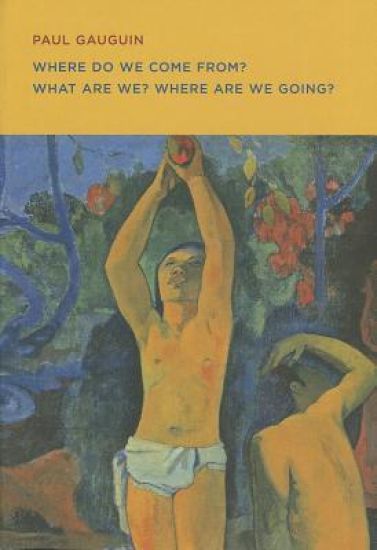
Paul Gauguin: Where Do we Come From? What Are We? Where Are we Going?
The life of Paul Gauguin (1848–1903) is one of the richest and most mythic in the history of Western art. Abandoning a career in banking, a family and his homeland, in the last decade of the nineteenth century he sailed from France to the South Seas to seek a life “in ecstasy, in peace and for art.” During his years in Tahiti, Gauguin brought forth a wealth of astonishing paintings, culminating in this monumental meditation on what he called the “ever-present riddle” of human existence posed in the work’s title. This compact introduction to Gauguin’s masterpiece explores its relation to European models as well as to the artist’s own companion pieces.
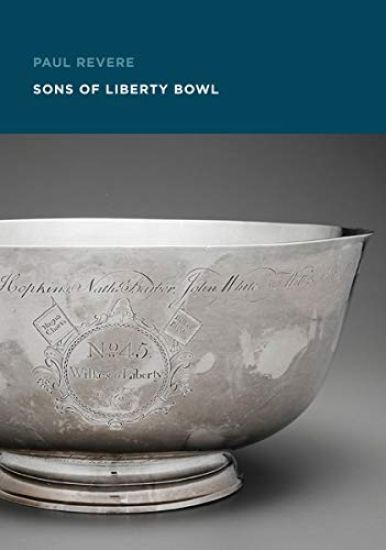
Paul Revere: Sons of Liberty Bowl

Paul Revere: Sons of Liberty Bowl

Gerald W. R. Ward

Museum of Fine Arts,Boston
2016
nidottu
American patriot Paul Revere is wrapped in the swirling mixture of myth and poetry through which history often descends, but as a craftsman and artist, he left behind more tangible traces, as well. In this volume, esteemed art historian Gerald W. R. Ward tells the true story of Revere’s most iconic creation, the Sons of Liberty bowl, bravely made and marked by the rebel and silversmith on the threshold of the Revolutionary War. John Singleton Copley’s portrait of Revere, created the same year, 1768, helps introduce the man he was and the legend he became. The painting and the silver bowl are both popularly reproduced and have joined re-tellings of his Midnight Ride to define Revere in the American imagination, in turn signifying the Revolution and the young country’s values.
Paul McCartney: Bass Master

Paul McCartney: Bass Master

Tony Bacon

Backbeat Books
2006
pokkari
Paul McCartney is one of the best pop bass players in the world, and this book presents a musical analysis of his consistently inventive and influential bass playing during his tenure in the Beatles. This indispensable guide offers full transcriptions (including tablature and chord names) of nine of McCartney's most revered bass parts: “Dear Prudence ” “Drive My Car ” “In My Life ” “Lovely Rita ” and more. Each track is analyzed and explained in detail to show today's bassists how much they can still learn from McCartney's remarkable skill and imagination.
Paul and the Resurrected Body

Paul and the Resurrected Body

Matt O'Reilly

Society of Biblical Literature
2020
sidottu
In Paul and the Resurrected Body: Social Identity and Ethical Practice, Matt O'Reilly makes the case that the social dimension of future bodily resurrection is just as important, if not more so, than individual salvation and resurrection. Through a close reading of key texts in the letters to the Corinthians, Romans, and Philippians, O'Reilly argues that resurrection is integral to Paul's understanding of Christian social identity. In Paul's theological reasoning, a believer's hope for the future depends on being identified as part of the people of God who will be resurrected.
Paul Unbound

Paul Unbound

Mark Given

Society of Biblical Literature
2022
sidottu
The essays in this second edition of Paul Unbound: Other Perspectives on the Apostle serve as an introduction for advanced undergraduate and graduate students to Paul's relationship to the Roman Empire, the economy, his opponents, ethnicity, the law, Judaism, women, and Greco-Roman rhetoric. Contributors Warren Carter, Charles H. Cosgrove, A. Andrew Das, Steven J. Friesen, Mark D. Given, Deborah Krause, Mark D. Nanos, and Jerry L. Sumney have expanded their original essays and updated the bibliography to take into account scholarship produced in the decade since the publication of the first edition.
Paul Cardinal Cullen and the Shaping of Modern Irish Catholicism

Paul Cardinal Cullen and the Shaping of Modern Irish Catholicism

Desmond Bowen

Wilfrid Laurier University Press
1983
sidottu
Paul Cullen (1803â78) was the outstanding figure in Irish history between the death of Daniel O'Connell and the rise of Charles Stewart Parnell. Yet this powerful prelate remains an enigmatic figure. This new study of his career sets out to reveal the real nature of his achievements in putting his stamp so indelibly on the Irish Catholic Church. After several years spent in Rome, at a time when the papal states were under constant attack, Cullen was sent back to Ireland as Archbishop of Armagh and subsequently of Dublin. He had been charged with reorganizing the Catholic Church in his native countryâa task which brought him into conflict with the authorities, many of his fellow-bishops and frequently nationalist opinion. The first Irishman to be made a cardinal, he played a leading part in securing the declaration of papal infallibility from the First Vatican Council (1870). Cardinal Cullen has not generally been well treated by historians. A brilliant scholar, whose intelligence was never underestimated by contemporaries, he has been dismissed as an âindustrious mediocrity.' A tough-minded, indefatigable political tactician, he has nevertheless been described as a world-denying spiritual leader. Cullen was the most devoted of papal servants, yet he was accused of âpreferring the ... principles of Irish nationalism to the opinions of his friend Pius IX.' Generations of Irish nationalist historians, however, have taken a different view, seeing the leading Irish churchman of the nineteenth century as a tool of the British government. In Paul Cardinal Cullen and the Shaping of Modern Irish Catholicism , Desmond Bowen shows the true purpose of Cullen's mission. An Ultramontanist of the most uncompromising typeââa Roman of the Romans'âneither the aspirations of the Irish nationalists nor the concerns of British governments were of primary importance to him. The mind and accomplishments of this most reserved and complex of men can be understood only in his total dedication to the mission of the papacy as he interpreted it during a time of crisis for the Catholic Church throughout Europe.
Paul Martin & Companies

Paul Martin & Companies

Alain Deneault

Talonbooks
2006
pokkari
The more one reads about Paul Martin's business affairs, the more troubling they appear. In Paul Martin & Companies, Alain Deneault offers a piercing look at what it means when a Canadian prime minister puts his private interests outside the laws he has been elected to apply. Using Martin's business dealings as an example, Deneault sheds light on the shadowy world of tax havens, offering insight into the functioning of these government-free fiscal zones and their relation to the growing world problems of capital flight, foreign debt, accountability for political power, endemic conflicts of interest in the public realm, media concentration, massacres, misery and even war. These sixty short theses lay bare the contradictions embodied in Paul Martin, the businessman and the politician, and those inherent in the emerging forms of economic globalization and the Canadian political system and its laws. Deneault delves beyond the superficial, albeit alarming, aspects of the Martin case to get at the heart of what political and economic power really mean in the age of globalization.He presents the Martin case as a symptom of a worldwide crisis of public ethics that goes far beyond the simple question of Martin's assets, and demonstrates that it is part of a lawless global culture that increasingly allows the world's largest financial transactions to escape all forms of control, regulation and contribution to our national economies. It has often been said that the appalling human misery endemic to third world countries is due not to their lack of natural resources, but to the self-interest and corruption of their leadership. Alain Deneault argues that this diversion of capital from the wealth of nations into the private bank accounts of their leaders is not particular to third world countries, and spells out what this means for all of us.
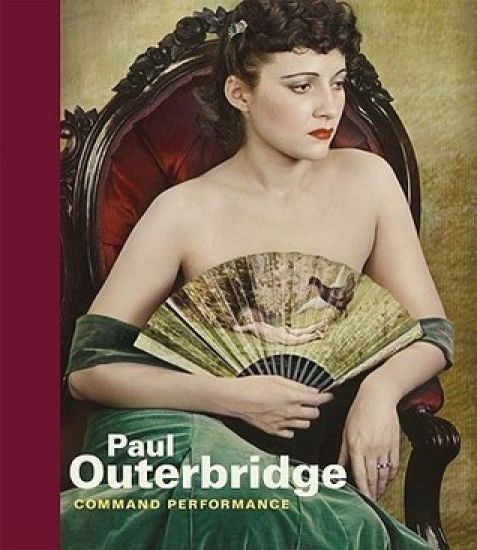
Paul Outerbridge – Command Performance

Paul Outerbridge – Command Performance

. Martineau

Getty Publications
2009
sidottu
In the 1920s, a young American - Paul Outerbridge (1896-1958) burst onto the photographic art scene with images that were visually fresh, technically adept, and decidedly Modernist. Not only did he re-invigorate the photographic art of the period, he also applied his talent for composition to the commercial world, introducing an artist's sensibilities to advertisements for everything from men's haberdashery to JELL-O, for magazines such as "Vogue" and "Vanity Fair". An early master of the complex carbo colour process, "Outerbridge" also photographed nudes in poses that skirted the limits of propriety at the time. "Paul Outerbridge: Command Performance" is a visually stunning volume that brings together one hundred photographs from the whole of Outerbridge's career, including his Cubist still-life images, commercial, and nude photography. This is a visually stunning celebration of the pioneering work of photographer Paul Outerbridge.