Kirjojen hintavertailu. Mukana 11 358 028 kirjaa ja 12 kauppaa.

Kirjahaku

Etsi kirjoja tekijän nimen, kirjan nimen tai ISBN:n perusteella.

1000 tulosta hakusanalla Peder Bundgaard

Peter Greenaway's Postmodern / Poststructuralist Cinema
Since the 1960s, British multi-media artist Peter Greenaway has shocked and intrigued audiences with his avant-garde approach to filmmaking and other artistic ventures. From early experimental films to provocative features, Greenaway has deployed strategies associated with structuralist cinema, only to challenge or critique the very limits of that cinema and of film in general. In this collection of essays, scholars from a variety of disciplines explore various postmodern and poststructuralist aspects of Greenaway's films, starting with his early shorts and delving into his feature-length works, including The Draughtman's Contract, The Belly of an Architect, A Zed and Two Noughts, The Cook, the Thief, His Wife and Her Lover, The Baby of Mâcon, and The Pillow Book. Other artistic productions, including his paintings and installations are also discussed. These essays examine the filmmaker's position within British and avant-garde cinema and his interest in constructing and deconstructing representational systems. In the years since the first edition of this book, Greenaway has enjoyed continued success in creating hybridized media projects for the stage and screen, as evidenced by additional essays for this revised edition. A new chapter addresses how Dutch political events and Dutch art have been crucial in shaping Greenaway's aesthetic, focusing on The Draughtsman's Contract, the 1991 opera Writing to Vermeer, and Nightwatching, the audio-visual installation and 2007 film of the same name, which were inspired by Rembrandt's Night Watch. Also new to this collection is an essay that examines Greenaway's most ambitious endeavor to date, The Tulse Luper Suitcases, which exists as four feature films, multiple websites, an online game, several books and installations, and a number of theatrical events. Peter Greenaway's Postmodern/Poststructuralist Cinema, Revised Edition explores the cultural, historical, and philosophical implication

Peter Singer Under Fire

Peter Singer Under Fire

Open Court Publishing Co ,U.S.
2009
pokkari
One of the leading ethical thinkers of the modern age, Peter Singer has repeatedly been embroiled in controversy. Protesters in Germany closed down his lectures, mistakenly thinking he was advocating Nazi views on eugenics. Conservative publisher Steve Forbes withdrew generous donations to Princeton after Singer was appointed professor of bioethics. His belief that infanticide is sometimes morally justified has appalled people from all walks of life. Peter Singer Under Fire gives a platform to his critics on many contentious issues. Leaders of the disability rights group Not Dead Yet attack Singer's views on disability and euthanasia. Economists criticize the effectiveness of his ideas for solving global poverty. Philosophers expose problems in Singer's theory of utilitarianism and ethicists refute his position on abortion. Singer's engaging "Intellectual Autobiography" explains how he came by his controversial views, while detailed replies to each critic reveal further surprising aspects of his unique outlook.
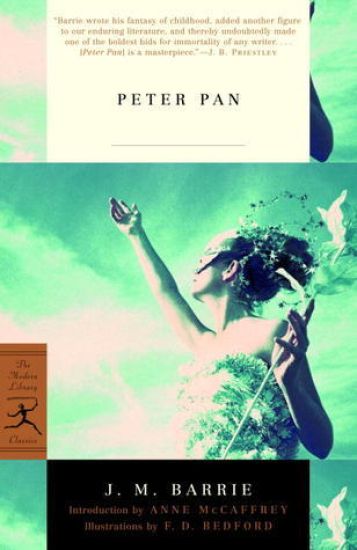
Peter Pan

Peter Pan

J.M. Barrie

Modern Library Inc
2004
pokkari
Adapted from Barrie's 1904 play, this novelized version of the classic tale--a reproduction of the 1911 American edition--features twelve original black-and-white illustrations by F.D. Bedford, and a reading group guide.
The Letters of Peter Damian, 151-180

The Letters of Peter Damian, 151-180

Peter Damian

The Catholic University of America Press
2014
nidottu
This volume concludes the series of Peter Damian's Letters in English translation. Among Letters 151-180 readers will find some of Damian's most passionate exhortations on behalf of eremitic ideals. These include Letter 152, in which Damian defends as consistent with the spirit and the letter of Benedict's Rule his practice of receiving into the eremitic life monks who had abandoned their cenobitic communities. In Letter 153 Damian encourages monks at Pomposa to pass beyond the minimum standards established in the Rule of St. Benedict for the higher and more demanding eremitic vocation. In Letter 165, addressed to a hermit, Albizo, and a monk, Peter, Damian reveals as well the importance of monastic life to the world: because the integrity of the monastic profession has weakened, the world has fallen even deeper into an abyss of sin and corruption and is rushing headlong to destruction. Let monks and hermits take refuge within the walls of the monastery, he urges, while outside the advent of Antichrist seems imminent. Only from within their walls can they project proper examples of piety and sanctity that may transform the world as a whole.Damian was equally concerned to address the moral condition of the larger Church. Letter 162 represents the last of Damian's four tracts condemning clerical marriage (Nicolaitism). Damian's condemnation of Nicolaitism also informed his rejection of Cadalus, the antipope Honorius II (see Letters 154 and 156), who was said to support clerical marriage, and therefore cast him into the center of a storm of ecclesiastical (and imperial) politics from which Damian never completely extricated himself.
The Letters of Peter Damian 1-30

The Letters of Peter Damian 1-30

Peter Damian

The Catholic University of America Press
2013
sidottu
Peter Damian (1007-1072), an eleventh-century monk and man of letters, left a large and significant body of correspondence. Over one hundred and eighty letters have been preserved, principally from Damian's own monastery of Fonte Avellana. Ranging in length from short memoranda to longer monographs, the letters provide a contemporary account of many of the controversies of the eleventh century: purgatory, the Eucharist, clerical marriage and celibacy, immorality, and others. Peter Damian, or ""Peter the Sinner"" as he often referred to himself, was one of the most learned men of his day, and his letters are filled with both erudition and zeal for reform. This first volume contains the first thirty letters, and covers the period before 1049. Here we see Peter Damian as an untiring preacher and uncompromising reformer, both of the monastic world and of the church at large. He attacks clerical laxity and monastic decadence in letter after letter. The first letter in the collection is of particular interest, containing a theological consideration of the Christian position against the Jews. Other important letters in this first volume are Damian's allegorical interpretation of the Divine Office, his letters on the Last Days and the Judgment, on canonical and legal points (such as the prohibited degrees of consanguinity in marriage), and on liturgical matters (particularly in monastic observance).
The Letters of Peter Damian 31-60

The Letters of Peter Damian 31-60

Peter Damian

The Catholic University of America Press
2014
sidottu
This second volumes of the Mediaeval Continuation contains Letters 31-60 of Peter Damian. While his epistolary style is varied--exhortatory, occasional, pastoral, reforming--his message is singular and simple in urging strict adherence to the canons of the Church.Letters 31 and 40 are long treatises, each published separately in critical editions. Letter 31, also known as the Book of Gomorrah, deplores the degradation of the priesthood through the vice of sodomy and appeals to Pope Leo IX to educate and purge the clergy. Letter 40, perhaps his most celebrated work, is also called the Liber gratissimus. In it Peter Damian opposes the reordination of those ordained simonists but writes that simonists are ""worthy of the supreme punishment that befits the incorrigible."" The very early reference to the ""heart of Jesus"" which is found in this letter was anticipated only by the Venerable Bede.Among the more personal letters are 55 and 57. In the former he writes of a long, debilitating illness, so serious that funeral preparations had been made, and of his immediate recovery when his brethren gave food to one hundred poor people. In the latter, he begs to be relieved of the administration of the diocese of Gubbio because of ill health, so that he may return to Fonte Avellana and his ""beloved solitude."" He also makes many references to folkloric tales and, perhaps, the earliest reference to the game of chess in Western literature.Letter 58 to Henry the archbishop of Ravenna in 1058 is the best example in the collection of Peter Damian's political and ecclesiastical influence. In it he gives his opinion of Benedict X and Nicholas II, the two candidates for the Apostolic See. He makes no effort to conceal his strong opinions but rather requests that this letter be made public so that all may learn what he has thought about the subject. This is perhaps, after all, what he would have hoped for the entire collection.
The Letters of Peter Damian 61-90

The Letters of Peter Damian 61-90

Peter Damian

The Catholic University of America Press
2014
sidottu
Peter Damian (1007-1072), an eleventh-century monk and man of letters, left a large and significant body of correspondence. Over one hundred and eighty letters have been preserved, principally from Damian's own monastery of Fonte Avellana. Ranging in length from short memoranda to longer monographs, the letters provide a contemporary account of many of the controversies of the eleventh century: purgatory, the Eucharist, clerical marriage and celibacy, immorality, and others. Peter Damian, or ""Peter the Sinner"" as he often referred to himself, was one of the most learned men of his day, and his letters are filled with both erudition and zeal for reform. This third volume of The Letters of Peter Damian is a careful, fluent, and annotated translation of Letters 61-90. These letters reveal the author's concern with the contemporary need for reforms, centering on clerical, especially episcopal, celibacy and on the ""heresy"" of simony which involved the purchase of ecclesiastical offices. In Letter 89, for example, Damian addresses the Selvismatic attempt of antipope Honorius II (Cadalus of Parma) to circumvent the election of Alexander II by the newly organized college of cardinal bishops. Also, among the letters here presented are several of a highly spiritual, even mystical content. These letters demonstrate that this active reformer was at heart a solitary soul who, when away from home, longed for his ""beloved solitude,"" where he could practice the contemplative life. Eventually, Damian grew weary of his efforts at reform and asked to be retired from his office of cardinal bishop of Ostia.Because Damian's Latin was a living language that surpasses the ability of classical Latin lexicography to cope with it, all disciplines that make use of medieval thought will welcome this English translation. Owen J. Blum's thorough notes to each letter indicate the vocabulary problems he encountered and how they were resolved. This third volume, like its companions, uses Damian's thought to understand an important and gripping period in the history of church and state. With these intimate revelations into his character and motivation, readers may more readily appreciate Damian's total dedication to his mission.
The Letters of Peter Damian 91-120

The Letters of Peter Damian 91-120

Peter Damian

The Catholic University of America Press
2013
sidottu
This fourth volume of the Mediaeval Continuation is the fourth of the letters of Peter Damian, an eleventh-century monk and man of letters. Written during the years 1062-1066, these letters deal with a wide variety of subjects. Some letters are of historical interest, others approach the size and scope of philosophical or theological treatises. Damian's correspondents range from simple hermits in his community to abbots, bishops, cardinals, and even to Pope Alexander II. Among these letters are to be found one addressed to the patriarch of Constantinopole, two to Damian's sisters, one to the Empress Agnes, and even a few to such distant personages as the young King Henry IV and the Archbishop Anno of Cologne.Like its companions, this volume uses Damian's thought to understand an important and gripping period in the history of church and state. Clearly, the most significant letter in this collection is Letter 119, written in 1063 to Abbot Desiderius of Monte Cassino and his monks, on the omnipotence of God. Translated here for the first time into English, Damian's treatise on Divine Omnipotence demonstrates his control of both theological and philosophical methodology. His opponents are contemporary rhetoricians whose denial of God's total potency in dealing with his creatures' contingencies in time past, present, and future opens them to the charge of heresy.Though Damian's vocabulary frequently challenges the combined dictionary resources of classical, patristic, and mediaeval Latin, Owen J. Blum's careful translation will guarantee the transmission of Damian's thought to all levels of readers throughout the world.
The Letters of Peter Damian 121-150

The Letters of Peter Damian 121-150

Peter Damian

The Catholic University of America Press
2014
sidottu
This volume, the fifth in the series of volumes containing the one hundred and eighty letters written by the eleventh-century monk Peter Damian, contains careful and annotated translations of Damian's Letters 121-150. Written during the years 1062-66, the letters deal with a wide variety of subjects and provide a contemporary account of many of the controversies of the gripping period in the history of church and state.While previous volumes have included Damian's correspondence to a range of people from simple hermits in his community to abbots, bishops, cardinals, Pope Alexander II, and young King Henry IV, this collection of letters includes several addressed to kinsmen. Letter 123 is Damian's rather lengthy exhortation to his nephew Damianus encouraging him to seek a pure and virtuous monastic life. Letter 132, written to his nephew Marinus, contains a comprehensive discussion of the virtues proper to the monastic life. And Letter 126 to Alberic of Monte Cassino, presents a good example of Damian's principles of biblical exegesis.The remaining letters (151-180) are currently being translated and will be published in the sixth and final volume in Spring 2005.
Peter Comestor's Lectures on the Glossed Gospel of John

Peter Comestor's Lectures on the Glossed Gospel of John

Peter Comestor

THE CATHOLIC UNIVERSITY OF AMERICA PRESS
2024
sidottu
This monograph encompasses the first critical edition, translation, and historical study of a series of lectures from the cathedral school of Notre-Dame, Peter Comestor's Glosses on the Glossed Gospel of John. Delivered in Paris in the mid-1150s, Comestor's expansive lecture course on the Glossa ordinaria on the Gospel of John has survived in no fewer than seventeen manuscript witnesses, being preserved in the form of continuous transcripts taken in shorthand by a student-reporter ( reportationes). The editor has selected the fifteen best witnesses to produce a critical edition and translation of the first chapter of Comestor's lectures on the Gospel of John. In addition to the text of the original lectures, the edition includes appendices containing accretions to the lecture materials added by Comestor and his students, as well as the corresponding text of the Glossa ordinaria from which Comestor lectured.The Latin text and translation of Peter Comestor's lectures are preceded by a wide-ranging critical study of the historical and intellectual context of Peter Comestor's biblical teaching. This study begins with an outline of Comestor's scholastic career and known works, with a detailed introduction to his Gospel lectures and the relevant historiography. Subsequently, a survey is made of the intellectual landscape of Comestor's lectures: namely, the tradition of biblical teaching originating at the School of Laon, preserved in the Glossa ordinaria, and developed in the classroom by Peter Lombard and a succession of Parisian masters, notably Comestor himself. The following section examines the portion of the lectures presented in this book, encompassing an overview of its contents and structure, a description of Comestor's teaching method and scholastic setting, a study of the text's sources, and a consideration of Comestor's participation and reception in the scholastic tradition. The final chapters contain a careful description of the manuscripts and editorial principles adopted in the Latin edition and translation.
Peter Comestor's Lectures on the Gospel of Luke and its Glosses

Peter Comestor's Lectures on the Gospel of Luke and its Glosses

Peter Comestor

THE CATHOLIC UNIVERSITY OF AMERICA PRESS
2025
sidottu
Through a partial critical edition and study of Peter Comestor's lectures, this volume recontextualizes the biblical exegesis of the twelfth-century Latin cathedral schools within the frameworks of the study of ars grammatica, underscoring the importance of the master-disciple relationship in forming medieval exegetical schools of thought. This study critically examines the Latin biblical lectures of Peter Comestor, a twelfth-century scholar based in Paris, focusing on his commentary on the Gospel of Luke and its glossing tradition. The study positions Comestor's lectures among Latin biblical commentaries produced in the cathedral schools of Laon and Paris, a vital intellectual movement shaped by well-known figures such as Anselm of Laon and Peter Lombard, and which provided the foundations for the University of Paris.Recent scholarship has sought to bridge the gap between biblical commentaries and systematic theological treatises by highlighting the shared didactic methodologies between the medieval study of the liberal arts and sacred scripture. This study of Comestor's Luke lectures expands these efforts, underscoring the role of classical philology and liberal arts pedagogy in shaping medieval theological thought.The volume highlights how the cathedral school scholars of northern France approached Christian theology as a work of textual criticism, exploring a wide range of subjects—from geometry to canon law—through biblical interpretation. By tracing these intellectual traditions, the study uncovers the pedagogical practices that informed the understanding of Christian biblical exegesis in the Latin Middle Ages, particularly in the period leading up to the establishment of Europe's first universities and theology faculties.
Peer Power

Peer Power

Peter Adler; Patricia Adler

Rutgers University Press
1998
nidottu
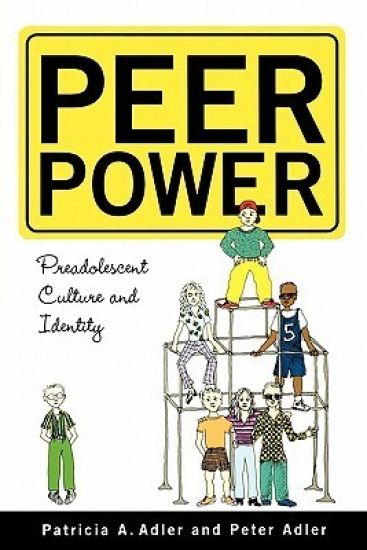
Peer Power seeks to explode existing myths about children's friendships, power and popularity, and the gender chasm between elementary school boys and girls. Based on eight years of intensive insider participant observation in their own children's community, Peter and Patti Adler discuss the vital components of the lives of preadolescents, popularity, friendships, cliques, social status, social isolation, loyalty, bullying, boy-girl relationships, and afterschool activities. They describe how friendships shift and change, how people are drawn into groups and excluded from them, how clique leaders maintain their power and popularity, and how individuals' social experiences and feelings about themselves differ from the top of the pecking order to the bottom. In so doing, the Adlers focus their attention on the peer culture of the children themselves and the way this culture extracts and modifies elements from adult culture. Children's peer culture, as it is nourished in those spaces where grown ups cannot penetrate, stands between individual children and the larger adult society. As such, it is a mediator and shaper, influencing the way children collectively interpret their surroundings and deal with the common problems they face. The Adlers explore some of the patterns that develop in this social space, noting both the differences in boys' and girls' gendered cultures and the overlap in many social dynamics, afterschool activities, role behaviour, romantic inclinations and social stratification. For example, children's participation in adult-organized afterschool activities - a now-prominent feature of many American children's social experience - has profound implications for their socialization and development, moving them away from the negotiated, spontaneous character of play into the formal systems of adult norms and values at ever-younger ages. When they retreat from adults, however, they still display distinctive peer group dynamics, forging strong ingroup/outgroup differentiation, loyalty and identification. Peer culture thus contains informal social mechanisms through which children create their social order, determine their place and identity, and develop positive and negative feelings about themselves. Studying children's peer culture is thus valuable as it reveals not only how this subculture parallels the adult world but also how it differs from it.
Peter

Peter

Eric C. Stewart

Liturgical Press
2012
pokkari
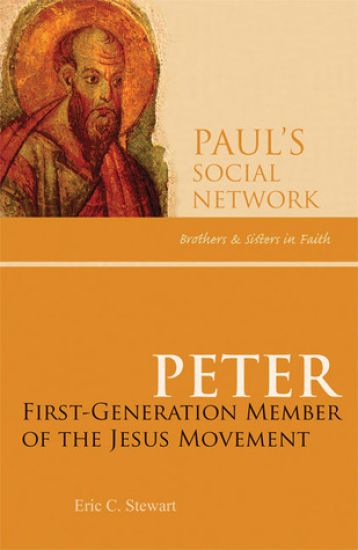
Unlike other New Testament persons described in the Paul's Social Network Series, Peter was a member of Jesus' inner circle during his life and ministry in Galilee. In Peter, Eric Stewart explores the depictions of Peter that appear throughout the New Testament for insights into who he was. Readers will learn what it means that Peter was a villager and a fisherman, a holy person, an authorized change agent, a moral entrepreneur, a healer, a speaker, and a writer. In the end, they will understand Peter's message, and the message of his Master, far more deeply.
Peer-Impact Diagnosis and Therapy

Peer-Impact Diagnosis and Therapy

Vivian Center Seltzer

New York University Press
2009
sidottu
Adolescents are infamous for their rebellious behavior. Indeed,much of the focus of therapy and clinical intervention with troubled adolescents focuses on their presumed need to rebel against their parents as they define their own identities. Yet psychologist Vivian Center Seltzer argues that approaching work with adolescent clients with this presumption in mind is likely to miss the roots of their problem behavior. Rather than acting out against parental authority, adolescents in need of clinical help are most often dealing with their disappointing comparisons with their peers—the most relevant others to them during this period of their development. Seltzer explains that it is countless interactions with their peers, at school and elsewhere outside of the home, that are the primary mode of psychological and social development for adolescents. Practitioners must recognize this crucial influence, and perhaps forgo traditional approaches, in order to better work with their adolescent clients. Peer-Impact Diagnosis and Therapy is a practical professional guide for how to approach and aid troubled teens by accessing the wealth of insight to be gained from understanding the influence of peer interactions on development and on behavior. Full of diagnostic categories and protocols for use with all types of adolescents, as well as guidance, tips, case studies, and offering a targeted model for adolescent group therapy, Seltzer provides professionals with all the tools they need to assist teens on their road to adulthood.
Peter Abelard and Heloise

Peter Abelard and Heloise

David Luscombe

CRC Press Inc
2018
sidottu
These essays provide original reflections and new evidence for the lives and work of an outstanding medieval couple, Peter Abelard and Heloise. The main themes of the author's studies are the careers and the thought of Peter Abelard, his philosophy, theology and monastic teaching, his relationship in marriage and in religious life with Heloise and their correspondence. The essays, now brought together in a single volume, show how much is still to be learned from the presentation of new evidence and the opening of new enquiries about the lives and calamities of Peter Abelard and Heloise.
Peter Nielsen's Story

Peter Nielsen's Story

Niels Thorpe

University of Minnesota Press
1949
nidottu
Peter Nielsen's Story was first published in 1949. Minnesota Archive Editions uses digital technology to make long-unavailable books once again accessible, and are published unaltered from the original University of Minnesota Press editions.
Peter Martyr Vermigli 1499-1562

Peter Martyr Vermigli 1499-1562

Mariano Di Gangi

University Press of America
1993
sidottu
Many people today are struggling with the problem of the church. Can the present structures be reformed within, or should they simply be abandoned as barriers to the recovery of community? Peter Martyr Vermigli faced this issue in the 16th century. He made a major contribution to the progress of the Reformation through his lectures, letters, and publications from teaching posts at Oxford, Strasbourg, and Zurich. This book is an intimate account of this theologian's life and work. Includes illustrations.