

Kirjahaku
Etsi kirjoja tekijän nimen, kirjan nimen tai ISBN:n perusteella.
1000 tulosta hakusanalla Perry Crowe

This is a critical bibliography of choral compositions accessible to the high school choir, representing major composers and stylistic trends during this century. The 1990 edition of the bibliography includes over 360 titles, providing a convenient sourcebook for secondary school choral directors, choral methods classes, and collegiate choral directors to use in building repertoire for their programs.
Critical essays on children's novels by Louisia May Alcott, Lloyd Alexander Frances Hodgson Burnett, Lewis Carroll, Carlo Collodi, Eleanor Estes, Louis Fitzhugh, Esther Forbes, Kenneth Grahame, Irene Hunt, Rudyard Kipling, Madeline L'Engle, C.S. Lewis, George MacDonald, A.A. Milne, L.M. Montgomery, E. Nesbit, Mary Norton, Robert C. O'Brien, Phillipa Pearce, Arthur Ransome, Johanna Spyri, Robert Louis Stevenson, J.R.R. Tolkien, Mark Twain, E.B. White, T.H. White, and Laura Ingalls Wilder.
Focuses on illustration and contains essays on why and how books were chosen, a list of all books in the three volumes, and predictions for future classics. Picture books covered include titles by Edward Ardizzone, L. Leslie Brooke, Virginia Lee Burton, Randolph Caldecott, Walter Crane, Wanda GD'ag, Kate Greenaway, Ezra Jack Keats, Robert Lawson, Leo Lionni, Robert McCloskey, Beatrix Potter, McCloskey Rackham, Maurice Sendak, and Dr. Seuss.
This book theorizes that models based on the classical sciences have misguided educational leadership. Dr. Rettig sees the open dynamics of twentieth-century science — specifically, quantum mechanics — as a better and more natural model, and describes what he sees as a method of leadership light years beyond those of today. Dr. Rettig illustrates his erudite critique of the contemporary school administration structure with the story of Leslie O'Connor, a fictional administrator, who makes her way through familiar-seeming training techniques. For anyone interested in the organization and administration of school systems, this book provides an original and compelling perspective.
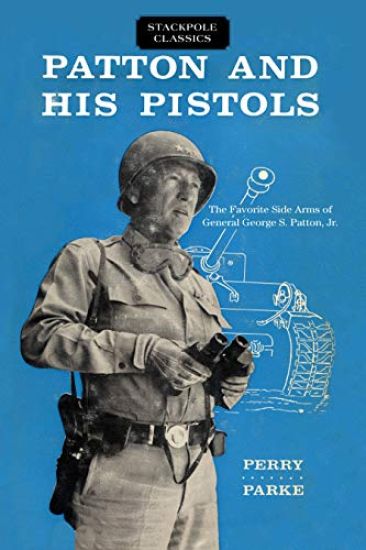
Intrigued by hints of “the bigger man” behind the war personality of Gen. George S. Patton, Jr., the Curator of History of the West Point Museum and a former “Army wife” studied and compared innumerable legends and stories about him. The resulting profile is the unvarnished Patton, as the public saw him and as his friends and soldiers knew him. Based solidly on contemporary sources, many of them never before tapped by historians, Patton’s exploited in Mexico, in France in 1918, and during World War II, are strung together by kernels of truth often more startling than the fiction which has surrounded them. One of America’s most famous and controversial generals is depicted through his attitude toward his famous hand guns and uniforms, and the manner in which he reacted to war and to peace. Four pistols are featured in the book, because four pistols were featured in his ife. Sixteen pages of pertinent illustrations, many published for the first time…including the only known photograph of Patton carrying two

Ideology and Change provides the first comprehensive record and analysis of the experience of leftist political movements, organizations, and trends in the English-speaking Caribbean.Perry Mars views the Left as a dynamic force that has made indelible contributions toward advancing democracy since the 1940s, and he here examines the contributions of leftist organizations at both theoretical and practical levels. He identifies their role in Caribbean political culture and processes, the problems they face, and the strategies they employ toward political change within a hazardous political and social environment.
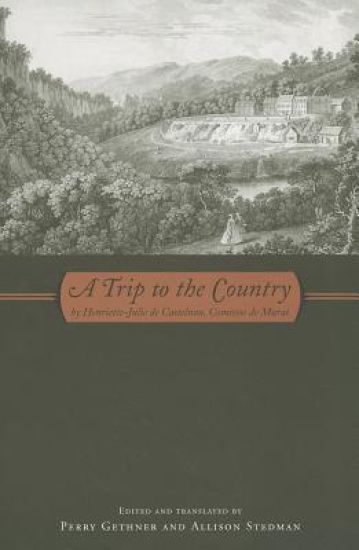
Translates an important example of late seventeenth-century French hybrid experimental fiction that shows the beginnings of the literary fairy tale.

In Brazil and throughout the African diaspora, black women, especially poor black women, are rarely considered leaders of social movements let alone political theorists. But in the northeastern city of Salvador, Brazil, it is these very women who determine how urban policies are established. Focusing on the Gamboa de Baixo neighborhood in Salvador’s city center, Black Women against the Land Grab explores how black women’s views on development have radicalized local communities to demand justice and social change. In Black Women against the Land Grab, Keisha-Khan Y. Perry describes the key role of local women activists in the citywide movement for land and housing rights. She reveals the importance of geographic location for understanding the gendered aspects of urban renewal and the formation of black women–led social movements. How have black women shaped the politics of urban redevelopment, Perry asks, and what does this kind of political intervention tell us about black women’s agency? Her work uncovers the ways in which political labor at the neighborhood level is central to the mass mobilization of black people against institutional racism and for citizenship rights and resources in Brazil. Highlighting the political life of black communities, specifically those in urban contexts often represented as socially pathological and politically bankrupt, Black Women against the Land Grab offers a valuable corrective to how we think about politics and about black women, particularly poor black women, as a political force.
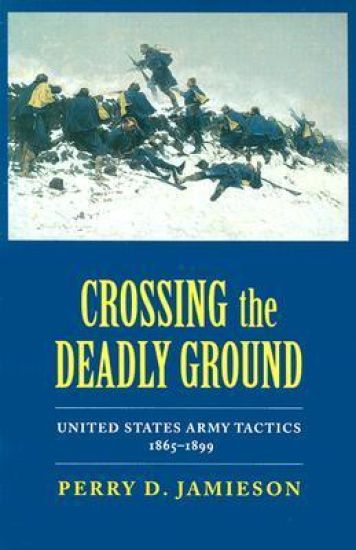
Weapons improved rapidly after the Civil War, raising difficult questions about the battle tactics employed by the United States Army. The most fundamental problem was the dominance of the tactical defensive, when defenders protected by fieldworks could deliver deadly fire from rifles and artillery against attackers advancing in close-ordered lines. The vulnerability of these offensive forces as they crossed the so-called ""deadly ground"" in front of defensive positions was even greater with the improvement of armaments after the Civil War.
A pioneering study of a unique narrative form, Words about Pictures examines the special qualities of picture books—books intended to educate or tell stories to young children. Drawing from a number of aesthetic and literary sources, Perry Nodelman explores the ways in which the interplay of the verbal and visual aspects of picture books conveys more narrative information and stimulation than either medium could achieve alone. Moving from "baby" books, alphabet books, and word books to such well-known children's picture books as Nancy Ekholm Burkert's Snow White and the Seven Dwarfs, Gerald McDermott's Arrow to the Sun, Maurice Sendak's Where the Wild Things Are, and Chris Van Allsburg's The Garden of Abdul Gasazi, Nodelman reveals how picture-book narrative is affected by the exclusively visual information of picture-book design and illustration as well as by the relationships between pictures and their complementary texts.
A pioneering study of a unique narrative form, Words about Pictures examines the special qualities of picture books—books intended to educate or tell stories to young children. Drawing from a number of aesthetic and literary sources, Perry Nodelman explores the ways in which the interplay of the verbal and visual aspects of picture books conveys more narrative information and stimulation than either medium could achieve alone. Moving from "baby" books, alphabet books, and word books to such well-known children's picture books as Nancy Ekholm Burkert's Snow White and the Seven Dwarfs, Gerald McDermott's Arrow to the Sun, Maurice Sendak's Where the Wild Things Are, and Chris Van Allsburg's The Garden of Abdul Gasazi, Nodelman reveals how picture-book narrative is affected by the exclusively visual information of picture-book design and illustration as well as by the relationships between pictures and their complementary texts.

This book provides the first time user of statistics with an understanding of how and why statistical experimental design and analysis can be an effective problem solving tool. It presents experimental designs which are useful for small screening and response surface experiments.
The second in a five volume series offering a comprehensive history of the state of Missouri. Volume two covers the turbulent years of Missouri's adolescence - from statehood to the outset of the Civil War.
Now available in a new and enlarged edition is the popular fourth-grade textbook, Missouri: Then and Now. Closely correlated with Missouri's Official Course Content Standards and profusely illustrated, with color pictures and maps distributed throughout the book, this text promises to meet the instructional needs of classrooms. Teachers will welcome the many special features designed to facilitate the mastery of the basic competencies measured by the Missouri Assessment Program. Missouri: Then and Now incorporates geography, civics, economics, anthropology, and sociology with history to give students an opportunity to learn about their world on several levels: the community (the origin and subsequent growth of towns), the region (the occupation and settlement of the Mississippi River Valley), the nation (the struggle for statehood, the westward movement, the Civil War, and the depression of the 1930s) and the world (exploration, world wars, the global economy, and the worldwide communications network). This edition also adds valuable new insights concerning the importance of scientific and technological innovations. Young Missourians will be introduced to a host of remarkable women, men, and children with stories that will help bring history to life. Individuals who have made special contributions to the state are featured in the ""Famous Missourians"" sections placed throughout the book, and the routines of daily life and ordinary people are also accorded significant coverage. An important new feature in this edition, ""In Their Own Words,"" gives students the opportunity to read excerpts from actual source documents. These brief passages from letters, diaries, reports, and other historical documents, which have been edited and made accessible to fourth graders, are ideally suited for active learning. In addition to its many new features, Missouri: Then and Now retains the attributes that made earlier editions practical for teaching history. Each chapter begins with guiding questions intended to help students formulate their own ideas and initiate individual and group research activities. A listing of recent books, videos, and web sites located at the end of each chapter will lead students to varied information sources specifically related to Missouri topics. The new words identified for each chapter and the glossary placed in the appendix remain useful tools for vocabulary building exercises. A separate Teacher's Guide includes suggested student research topics for each chapter along with guiding questions. An accompanying matrix helps teachers identify the applicable knowledge and process standards and includes sample learning activities appropriate to the specific topic. These and a host of other attractive features will make Missouri: Then and Now a popular choice.
Famous for its insight into a young, inexperienced soldier's psychology, Stephen Crane's ""The Red Badge of Courage"" has long been assumed to have been based on little more than magazine articles and veterans' reminiscences. It also has been subject to various misreadings, including ones dominated by fictional responses to the wars of the twentieth century. Perry Lentz now draws on more than three decades of teaching the novel and his own experience as a historical novelist to plumb the historical realities that actually shaped it and to confront these misreadings. Taking a new look at a classic work that many may feel they already know, Lentz shows how this apparently impressionistic novel is actually a faithful reflection of Civil War combat based on thorough knowledge about combat in general and the battle of Chancellorsville in particular. Anchoring the novel's action firmly in the Civil War, Lentz challenges the long-standing assumption that Crane did little research for the novel, arguing that he made extensive use of contemporary sources to fashion an accurate depiction of Chancellorsville. Rich with information about infantry combat in the Civil War, from uniforms and weaponry to formations and battlefield tactics, Lentz's study invites readers to follow the exploits of Private Henry Fleming of the 304th New York Volunteer Infantry Regiment as he and his fellow soldiers participate in this legendary battle. Lentz shows how Crane evokes a set of traditional responses from his reader and how close reading expands those responses. He examines Private Fleming's adventures behind the lines of battle in terms of the historical situations in which they are set, then explains how Crane repeatedly entices readers into imposing their initial expectations and final evaluations upon the experiences of this particular soldier. Lentz also investigates why the novel's portrayal of its hero's experiences on the second day of battle is sometimes ignored and always undervalued. By focusing on events both as they actually unfolded at Chancellorsville and as Crane depicted Fleming and his comrades experiencing them, he shows how these soldiers judge themselves, how others judge them, and how a reader can achieve a more sophisticated understanding of these judgments. Lentz's work reclaims a place for this novel in the American canon and enhances our understanding of Crane, of a legendary battle, and of war literature in general.
This is an accessible coursebook for those specifically engaged in playwork and those on Childhood Studies programmes. Most recognize that play is good for children yet we are confused by the dangers we see in the wider environment and so often restrict children's natural opportunities to play. As a result children's play has gained increased awareness amongst a variety of professions working with children, many of whom have different approaches to play and children. 'The Value of Play' is explained using the Integral Play Framework, a model that draws together differing views on the purpose of play and its various types. These ideas are then used as the basis for chapters of the book: showing why playing is valuable to our bodies, our minds, and culturally and socially.There are examples of how play can be supported both informally and formally, at home and in children's settings. As well as theory, there are relevant, practical approaches for play activities, and observations of playing children to help explain the processes. Key questions are asked at times to help those who may be engaged in a more reflective form of practice. "The Value of Play" has been written to be accessible by a broad spectrum of readers, including all those training to work with children; those specifically engaged in playwork as a field in itself; and, those on Childhood Studies programmes.
This is an accessible coursebook for those specifically engaged in playwork and those on Childhood Studies programmes. Most recognize that play is good for children yet we are confused by the dangers we see in the wider environment and so often restrict children's natural opportunities to play. As a result children's play has gained increased awareness amongst a variety of professions working with children, many of whom have different approaches to play and children.The Value of Play is explained using the Integral Play Framework, a model that draws together differing views on the purpose of play and its various types. These ideas are then used as the basis for chapters of the book: showing why playing is valuable to our bodies, our minds, and culturally and socially.There are examples of how play can be supported both informally and formally, at home and in children's settings. As well as theory, there are relevant, practical approaches for play activities, and observations of playing children to help explain the processes. Key questions are asked at times to help those who may be engaged in a more reflective form of practice." The Value of Play" has been written to be accessible by a broad spectrum of readers, including all those training to work with children; those specifically engaged in playwork as a field in itself; and those on Childhood Studies programmes.

Restoring the Soul of the University – Unifying Christian Higher Education in a Fragmented Age
Perry L. Glanzer; Nathan F. Alleman; Todd C. Ream
Inter-Varsity Press,US
2017
sidottu
Christianity Today's 2018 Book of the Year Award of Merit - Politics/Public Life Has the American university gained the whole world but lost its soul? In terms of money, prestige, power, and freedom, American universities appear to have gained the academic world. But at what cost? We live in the age of the fragmented multiversity that has no unifying soul or mission. The multiversity in a post-Christian culture is characterized instead by curricular division, the professionalization of the disciplines, the expansion of administration, the loss of community, and the idolization of athletics. The situation is not hopeless. According to Perry L. Glanzer, Nathan F. Alleman, and Todd C. Ream, Christian universities can recover their soul—but to do so will require reimagining excellence in a time of exile, placing the liberating arts before the liberal arts, and focusing on the worship, love, and knowledge of God as central to the university. Restoring the Soul of the University is a pioneering work that charts the history of the university and casts an inspiring vision for the future of higher education.
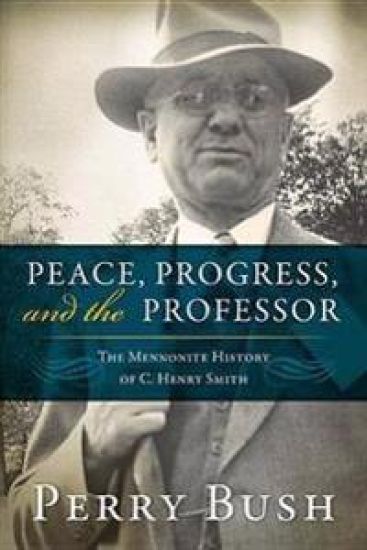
What does it mean to be Mennonite in the modern world? And what is the witness of a peace church that is always at risk of splintering? C. Henry Smith--son of an Amish family, erudite historian, urbane bank president, and pioneer of Mennonite scholarship--sought answers to these questions in the middle of the 20th century, and his answers reverberate through the church to this day.In this engaging narrative biography, historian Perry Bush chronicles Smith's childhood in an Illinois farming community, his youthful turn toward intellectual inquiry, and his confidence that Anabaptist faith and life offer gifts to the wider world. By recounting the story of one of the foremost Mennonite intellectuals, Bush surveys the storied terrain of 20th-century Mennonite identity in its selective borrowing from wider culture and its tentative embrace of progressive reforms and higher education, and growing conviction that Anabaptism served as a taproot of Western civilization. Bush argues that Smith's body of historical writing furnished a new generation of Mennonites with both an understanding of their shared past and the tools to navigate an ever-shifting present.Volume 49 in the Studies in Anabaptist and Mennonite History Series.