The diary of Colin Albert Perry, born in Camberwell in 1922. When war broke out on 3rd Sep 1939 he was a junior clerk with the California Standard Oil Company in the Royal Bank of Canada in the heart of London. His diary ended in November 1940 when he joined the Merchant Navy as a ship's writer.
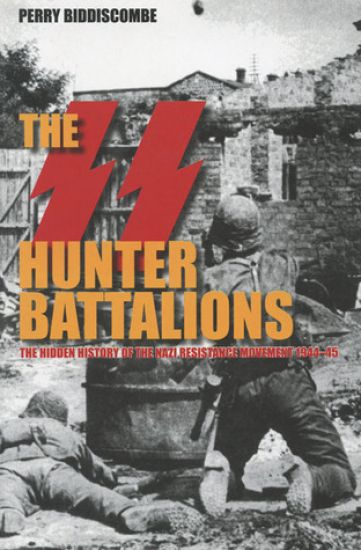
The history of the shadowy Werewolf guerrilla bands formed at end of the Second World War as the last desperate defence of Nazis. Founded by Heinrich Himmler in 1944 when it became clear Germany would be invaded, the Werewolf guerrilla movement was given the task of slowing down the Allied advance to allow time for the success of negotiations or wonder weapons. Staying behind in territory occupied by the Allies, its mission was to carry out acts of sabotage, arson and assassination, both of enemy troops and of defeatist Germans. Perry Biddiscombe has researched the movement exhaustively, and details Werewolf operations against the British, Russians and fellow Germans, on the Eastern and Western Fronts and in the post-war chaos of Berlin. Giving the lie to the established story of a cowed German population meekly submitting to defeat, this is a fascinating insight into what has been described as the death scream of the Nazi regime.
The history of the shadowy Werewolf guerrilla bands formed at end of the Second World War as the last desperate defence of Nazis. Founded by Heinrich Himmler in 1944 when it became clear Germany would be invaded, the Werewolf guerrilla movement was given the task of slowing down the Allied advance to allow time for the success of negotiations or wonder weapons. Staying behind in territory occupied by the Allies, its mission was to carry out acts of sabotage, arson and assassination, both of enemy troops and of defeatist Germans.Perry Biddiscombe has researched the movement exhaustively, and details Werewolf operations against the British, Russians and fellow Germans, on the Eastern and Western Fronts and in the post-war chaos of Berlin. Giving the lie to the established story of a cowed German population meekly submitting to defeat, this is a fascinating insight into what has been described as the death scream of the Nazi regime.
In 1945, the word Germany was synonymous with chaos. The country had become a scene of unprecedented devastation, wrought mainly by a trio of calamities - aerial bombardment, ground fighting and scorched earth measures. The nation's cities and industries lay in ruins, its transportation system was paralyzed and its population was desperately war weary. Millions had become refugees, Germans fleeing the bomb-battered cities and advancing enemy forces, and foreign slave labourers and concentration camp inmates, liberated by the Allies.Amidst a humanitarian crisis of almost unimaginable proportions, the occupiers ordered the mass dismissal of millions of Nazi Party members from government offices threatening the operation of local waterworks, food provisioning systems, hospitals and police forces. Perry Biddiscombe's new book is the first history of denazification of Germany, which has provided the model - albeit flawed - for the De-Communization of Eastern Europe and the De-Baathification of Iraq. The author explores the ideological basis of denazification, German reactions to denazification and assesses how successful the programme was.
The history of the shadowy Werewolf guerrilla bands formed at end of the Second World War as the last desperate defence of Nazis. Founded by Heinrich Himmler in 1944 when it became clear Germany would be invaded, the Werewolf guerrilla movement was given the task of slowing down the Allied advance to allow time for the success of negotiations or wonder weapons. Staying behind in territory occupied by the Allies, its mission was to carry out acts of sabotage, arson and assassination, both of enemy troops and of defeatist Germans.Perry Biddiscombe has researched the movement exhaustively, and details Werewolf operations against the British, Russians and fellow Germans, on the Eastern and Western Fronts and in the post-war chaos of Berlin. Giving the lie to the established story of a cowed German population meekly submitting to defeat, this is a fascinating insight into what has been described as the death scream of the Nazi regime.
Conventional wisdom suggests that the Allies and the Soviets were the only side in the Second World War to support resistance movements. This book shows that Hitler had his own version of the SOE and the OSS, and that the Nazis too encouraged underground resistance against their enemies, especially as Europe was liberated in 1944-5.
Stamping Out the Virus was a phrase used by Col. Fuller in an internal memeo in 1919 to describe Communism - to the Allies (French, British and U.S.) this is what the Russian Civil War was about. Thus, began a two year attempt to eradicate this virus. In 1918, over 15,000 Allied troops were sent and intervened in the Russian Civil war at Archangel on the White Sea (North Russia). This book covers the entire war in depth. Detailed text, battle maps, orders of battle, and rare photos provide a full picture of military operations.
In this new 8th Air Force unit history, Perry Watts sets out the history of the USAAF 467th Heavy Bombardment Group, which was based at Rackheath, Norfolk, in the east of England, during 1944-1945. In contrast to the operational focus of many books on the USAAF in the period, the author presents the B-24 Liberator Group’s story as a seamless whole. The main feature of this work lies in its usage of a wealth of primary sources, ranging from contemporaries’ diaries and notes of airmen of every rank from private to deputy base commander, to USAAF official records of incidents and occurrences in the line of duty. To date, many of the works on this subject have relied on secondary borrowing or hearsay – this book lets the men who were there speak for themselves with their own voices. Yet while offering direct access to their experience, it also is unafraid to note ambiguities in accounts where these should be noted and to present all available information to enable the readers to decide for themselves.
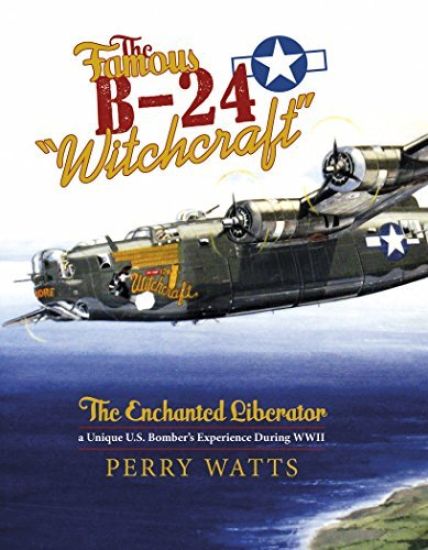
This book captures the story of "Witchcraft," a B-24 Liberator, based in Rackheath, England, toward the end of World War II, that had a unique record in the 8th Army Air Force of flying 130 credited missions without aborting.This is a sequel to author Perry Watts' 2006 book (also published by Schiffer) on the 467th Heavy Bombardment Group, which sets this Liberator in context. In this book, Watts starts with Witchcraft's creation in the then-largest factory in the world in Michigan, then chronicles its transit like many Liberators to the UK via Brazil and Africa. The narrative provides detailed stories of Witchcraft's often hazardous missions with its Group over occupied Europe and during the battle for Germany 1944-5. This is a special testimony to why and how the B-24 played a key role in the World War II liberation of occupied Europe.
"The story of every racetrack in North and South Carolina that held at least one big time race through 1971, but is no longer used for auto racing. Chapters cover each track's big time history, from early background through its racing years to its current status. Statistics chart every track's past winners, records, and wins by make"--Provided by publisher.
Independent stock car racers rarely won, often crashed, and flirted with death constantly, all for less money and fame than the money-backed star drivers of their day. This book includes interviews with 12 independent racers, including Curtis "Crawfish" Crider, "Jackhandle Joe" Frasson, and Gene "The Racing Marine" Hobby, among others. Laying the foundation for stock car racing as we know it, most of these racers plied their trade during the sport's early years, when racing required little more than a helmet and a great deal of courage. Readers will discover how each of these men managed to survive and stand out in their sport, despite running on second-hand or inferior equipment, receiving little to no outside support, and, in many cases, holding down another job off-track. The book is supplemented with 126 photographs, many from the personal collections of the author and the racers.
Explore and understand new approaches in Borderline therapy Borderline Personality Disorder (BPD) lags far behind other disorders such as schizophrenia in terms of research and treatment interventions. Debates about diagnosis, etiology, neurobiology, genetics, medication, and treatment still persist. Borderline Personality Disorder brings together over two dozen of the field’s leading experts in one enlightening text. The book also offers mental health providers a view of BPD from the perspectives of sufferers as well as family members to foster an understanding of the experiences of relatives who are often devastated by their loved ones’ struggles with this common disorder. Although there has been an increasing interest in BPD in terms of research funding, treatment advancement, and acknowledgment of family perspective over the last decade, the fact remains that the disorder is still highly stigmatized. Borderline Personality Disorder provides social workers and other mental health clinicians with practical access to the knowledge necessary for effective treatment in a single volume of the most current research, information, and management considerations. This important collection explores the latest methods and approaches to treating BPD patients and supporting their families. This useful text also features handy worksheets and numerous tables that present pertinent information clearly. Chapters in Borderline Personality Disorder include:an overview of Borderline Personality Disorder confronting myths and stereotypes about BPD biological underpinnings of BPD BPD and the need for community—a social worker’s perspective on an evidence-based approach to managing suicidal behavior in BPD patients Dialectical Behavior Therapy supportive psychotherapy for borderline patients Systems Training for Emotional Predictability and Problem Solving (STEPPS) Mentalization-based Treatment fostering validating responses in families Family Connections: an education and skills training program for family member wellbeing and much more!Full of practical, useable ideas for the betterment of those affected by BPD, Borderline Personality Disorder is a valuable resource for social workers, psychologists, psychiatrists, and counselors, as well as students, researchers, and academics in the mental health field, family members, loved ones, and anyone directly affected by BPD.
Termites for dinner. Bombs in the backyard. A nation torn by decades of war still on the brink. Can one life really make a difference? Born without her left hip and leg, Michele Perry is no stranger to seeming impossibilities. So when she arrived in war-torn Southern Sudan--with little more than her faith in god's promises--she did what everyone told her was crazy: she opened a home for orphaned children in the middle of guerilla warfare territory and has now become "mama" to over one hundred little lives. With a deft pen, she recounts unforgettable stories of life in the bush, stories that capture the reader with the stark realities of living in a war zone--and the power of God's love to transform them. Her own story is just as compelling as the ministry she is living. From working in the slums of India to finding her home in war-ravaged Africa, Michele's life has been a journey deeper into the supernatural power of God. Readers will be swept up in one woman's poignant spellbinding, captivatingly honest journey of love and the glimpses of God's tender grace and mercy in the midst of a broken and hurting world
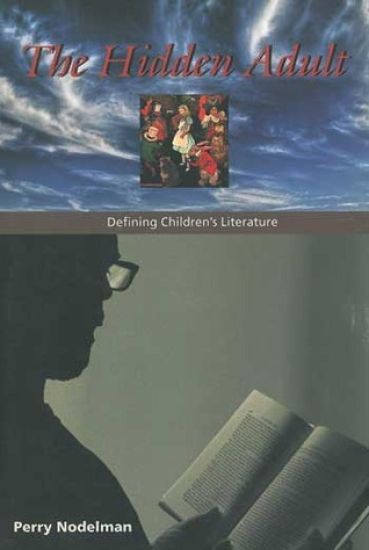
What exactly is a children's book? How is children's literature defined as a genre? A leading scholar presents close readings of six classic stories to answer these questions and offer a clear definition of children's writing as a distinct literary form. Perry Nodelman begins by considering the plots, themes, and structures of six works: "The Purple Jar," Alice in Wonderland, Dr. Doolittle, Henry Huggins, The Snowy Day, and Plain City-all written for young people of varying ages in different times and places-to identify shared characteristics. He points out markers in each work that allow the adult reader to understand it as a children's story, shedding light on ingrained adult assumptions and revealing the ways in which adult knowledge and experience remain hidden in apparently simple and innocent texts. Nodelman then engages a wide range of views of children's literature from authors, literary critics, cultural theorists, and specialists in education and information sciences. Through this informed dialogue, Nodelman develops a comprehensive theory of children's literature, exploring its commonalities and shared themes. The Hidden Adult is a focused and sophisticated analysis of children's literature and a major contribution to the theory and criticism of the genre.
What exactly is a children's book? How is children's literature defined as a genre? A leading scholar presents close readings of six classic stories to answer these questions and offer a clear definition of children's writing as a distinct literary form. Perry Nodelman begins by considering the plots, themes, and structures of six works: "The Purple Jar," Alice in Wonderland, Dr. Doolittle, Henry Huggins, The Snowy Day, and Plain City-all written for young people of varying ages in different times and places-to identify shared characteristics. He points out markers in each work that allow the adult reader to understand it as a children's story, shedding light on ingrained adult assumptions and revealing the ways in which adult knowledge and experience remain hidden in apparently simple and innocent texts. Nodelman then engages a wide range of views of children's literature from authors, literary critics, cultural theorists, and specialists in education and information sciences. Through this informed dialogue, Nodelman develops a comprehensive theory of children's literature, exploring its commonalities and shared themes. The Hidden Adult is a focused and sophisticated analysis of children's literature and a major contribution to the theory and criticism of the genre.
Near the end of the Second World War, a National Socialist resistance movement, known as the Werwolf, flickered briefly to life in Germany and its borderlands. Dedicated to delaying the advance of the Allies on both fronts, the Werwolf succeeded in scattered acts of sabotage and violence. By the spring of 1945, it also showed signs of becoming a vengeful Nazi reaction against the German populace itself. 'Collaborators' and 'defeatists' were frequently assassinated, and crude posters warned that certain death would follow any failure to resist the enemy. Werwolf violence failed to mobilize a spirit of national resistance. Biddiscombe argues that the group was poorly led, armed, and organized, and that it was doomed to failure given the war-weariness of the populace and the hesitancy of young Germans to sacrifice themselves on the funeral pyre of the regime. He also demonstrates that although the group failed to assume a popular character, its influence was still great and its revolutionary sentiments would have grave implications for the future. Werwolf! is the most complete history to date of the Nazi partisan movement. It will be of great interest to general readers as well as to military historians.
A sensitive resource for planning and conducting Christian funerals and providing pastoral care to the bereaved. Written from the perspective of the resurrection of the body rather than that of the immortality of the soul, this book seeks to make the funeral service a celebration of hope. Includes a selection of funeral rites, selecting music, and developing church policy statements.