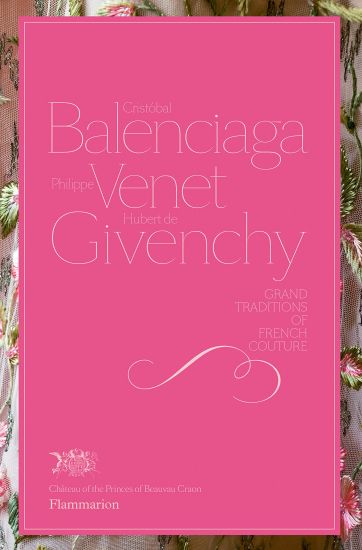
Exquisite dresses from three masters of the grand tradition of French fashion whose contributions have set the standard for haute couture. Crist bal Balenciaga, Philippe Venet, and Hubert de Givenchy are unparalleled masters, and their individual contributions have set the standard for haute couture. Not only did the great Spanish designer Crist bal Balenciaga create a style, but he also invented a technique. He was an architect of haute couture and has had a prevailing influence upon the international world of fashion. His trademarks were his astounding creativity, exceptional command of tailoring, and timeless elegance. Philippe Venet has experience and respect for the traditions of haute couture, but distinguishes himself with his use of colors, and his innovative and imaginative tailoring. The 1960s were marked by his "kite" coats whereas his designs of the 1980s and 1990s with their fresh, lively colors maintain a youthful appeal. Hubert de Givenchy, the aristocrat of haute couture, still inspires the fashion world with his sense of perfection. The Givenchy style was an alliance between pure, classic lines and high quality fabrics, whether lavish or light, black or colorful. His designs--often exhibiting floral and foliate themes--reveal his deep-rooted love for nature. Givenchy initiated and was actively involved in the creation of this handsome work, which recalls the precious "compacts" of centuries past--miniature gift cases of gold, enamel, or mother-of-pearl that were offered as a sign of friendship. These extraordinary evening gowns were selected by Hubert de Givenchy, President of the Crist bal Balenciaga Foundation, along with Philippe Venet, and the Princess of Ch teau Beauvau Craon. Highlights include Queen Fabiola of Belgium's wedding dress created by Balenciaga and the unforgettable black dress created by Givenchy for Audrey Hepburn in Breakfast at Tiffany's.
R impression inchang e de l' dition originale de 1845. La maison d' dition Antigonos est sp cialis e dans la publication de r impressions de livres historiques. Nous veillons ce que ces ouvrages soient mis la disposition du public dans de bonnes conditions afin de pr server leur patrimoine culturel.
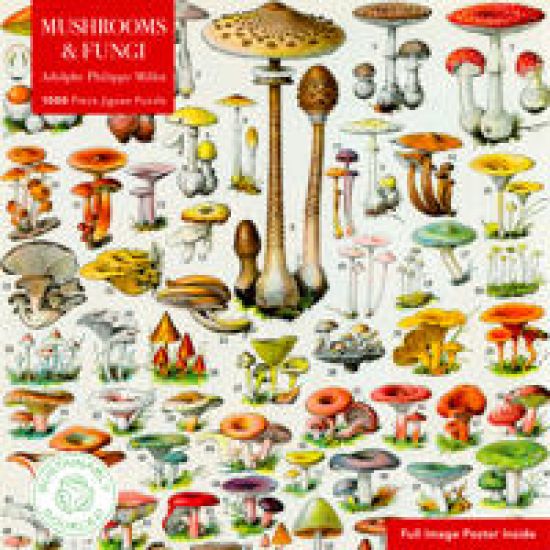
Part of a new, exciting series of ethical, sustainable and earth-friendly jigsaw puzzles that feature powerful and popular works of art. This high-quality, 1000-piece jigsaw puzzle from Flame Tree is made with all FSC-certified paper, board and bag, with sturdy pieces and no shrink-wrap. The 1000 pieces will satisfy your need for a challenge, with the wonderfully intricate Mushrooms illustration by Adolphe Philippe Millot originally created for the classic encyclopedias published by Larousse. Intended for adults and children over 13 years. Not suitable for children under 3 years due to small parts. Includes an A4 poster for reference. Finished Jigsaw size 735 x 510mm / 29 x 20 ins. Adolphe Philippe Millot (1857–1921) was a French illustrator and lithographer. His speciality was in entomology, and he provided a huge number of illustrations for the Larousse encyclopedias. His illustrations were beautifully intricate and rich in character, whether they depicted insects, fungi, flowers, reptiles, or the creatures of the ocean. Millot was also the senior illustrator at the Museum of Natural History in Paris, as well as a member of the French Entomological Society and the Salon des Artistes Français. SUSTAINABLY SOURCED. This puzzle is free of plastic packaging and created using FSC-certified paper and board. Flame Tree actively strives to promote ethical development and environmental conservation.