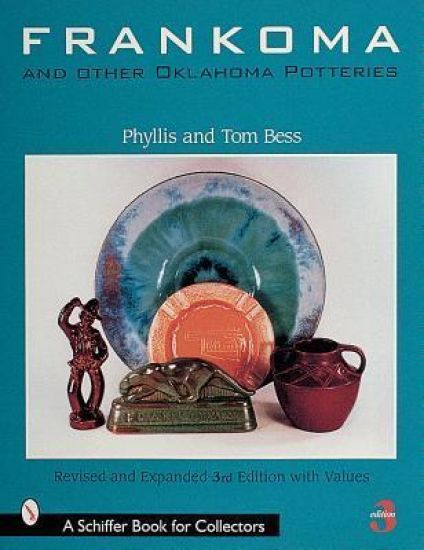
Now in its third edition, this immensely popular reference book about Frankoma Pottery features nearly 100 new photos! Beginning with the Frankoma Pottery, the authors present the histories of many Oklahoma firms, including Tamac, Sequoyah, Cherokee, and Winart, the clays, glazes, and trademarks by which each firm may be identified, and the variety of pottery they produced. The ceramics range from sculptures, masks, and limited edition series to vases, planters, and dinnerware available all over America. The new photographs and up-to-date price guide make this book required reading for all Frankoma enthusiasts.
From the very beginning, Carmen Cicero made an impression in the art world. He joined the acclaimed Periodot Gallery on Madison Avenue in New York in 1957 and by 1965, Cicero had won two Guggenheim Memorial Foundation Fellowships and a Ford Foundation prize, and was in important exhibitions at such venues as the Solomon R. Guggenheim Museum, the Museum of Modern Art, and the Whitney Museum of American Art. After a fire destroyed his studio and a large body of his work in 1971, Cicero returned to figurative expressionism in the later 1970s before embarking on a new approach to his work in the late 1980s: A kind of expression difficult to define and variously termed by critics as "fantasy," "mystery," "surrealism" and "visionary." These works produce a peculiar atmosphere, a strange, enigmatic spell—images that linger in the unconscious mind. Filled with beautiful pieces—watercolors, paintings, drawings, and collages—this fine book offers an expansive survey of the life work of Carmen Cicero.
With practical wisdom the authors of this handbook show parents how their daily lives, experiences, and relationships reinforce their role as parents. "The purpose of the family is the formation of people who are able to love...Learning about God is closely woven with love in the family, an integrated process." The book includes chapters on Parenting, Being a Family, Being a Catholic Family, and Rearing Children in a Christian Family. "Paperback"
Essential to Methodist revivalism was the personal conversion experience, which constituted the basis of salvation and church membership. Revivalism, maintains Airhart, was a distinctive form of piety and socialization that was critical in helping Methodists define who they were, colouring their understanding of how religion was to be experienced, practised, articulated, and cultivated. This revivalist piety, even more than doctrine or policy, was the identifying mark of Methodism in the nineteenth century. But, during the late Victorian era, the Methodist presentation of the religious life underwent a transformation. By 1925, when the Methodist Church was incorporated into the United Church of Canada, its most prominent leaders were espousing an approach to piety that was essentially, and sometimes explicitly, non-revivalist. The Methodist approach to personal religion changed during this transition and, significantly, Methodists increasingly became identified with social Christianity -- although experience remained a key aspect of their theology. There was also a growing tendency to associate revivalism with fundamentalism, a new religious development that used the Methodist language of conversion but was unappealing to Canadian Methodists. Airhart portrays the tensions between tradition and innovation through stories of the men and women who struggled to revitalize religion in an age when conventional social assumptions and institutions were being challenged by the ideals of the progressive movement. Serving the Present Age is an account of Canadian Methodist participation in a realignment of North American Protestantism which supporters believed would better enable them, in the words of a well-known Wesley hymn, "to serve the present age."
A child who is the centre of her parents' life, is torn away in the darkness from her comfortable urban home and left to grow up in the barren hills of northern mining country. Over time, recognizing that she has outgrown the kindly but uneducated couple who raise her, she begins a relationship with an artist who initiates her into the wider world and adulthood. Psyche is the gripping story of a mother's undying faith in her child's survival and the child's remarkable resilience as she embarks on a dramatic journey of self-discovery through art, education, and interaction with a varied cast of colourful characters. This 1959 international bestseller focuses on issues of character and environment in an unconventional coming-of-age story that draws the reader into an exploration of still decidedly modern themes: the search for biological roots and identity, and the question of what most influences that identity - nature or nurture?
Discover the secrets of your personality and destiny Master astrologer Phyllis Vega reveals what the stars hold for you--and everyone you know--with a detailed analysis for each birthday in the year, combining astrology and numerology to paint a true picture of the characteristics, desires, and destinies of people born on that day. Each day's analysis offers fresh, startlingly accurate insights into the character, personality, relationships, and prospects for success for those who share that birthday. Learn things you never knew about your spouse or lover, your family, your closest friends--and yourself. Born on January 18? You have a good head for business and an instinct for making and handling money. Born just three days later (January 21), however, and you are a consummate performer who loves center stage.Born on July 24? The tenacity and aggressiveness found in your fellow Leos is balanced out by the charming diplomacy associated with the number twenty-four.When it comes to relationships, nothing is hidden in the Aries personality--what you see is what you get. But depending on what day you were born, that could mean you're a volatile romantic who is constantly falling in and out of love (March 21) or an idealistic and devoted lover willing to sacrifice everything for your beloved (April 18).In addition to profiles of the twelve signs of the zodiac, you'll also get an introduction to numerology, learn how to calculate the root number derived from your birth date, and discover what these numbers disclose about you and your loved ones. What Your Birthday Reveals About You will tell you all you need to know about yourself--your personality, your wants, and your future.
This work examines how lesbian detective and mystery fiction represents lesbian characters and experience within the confines of the genre. As this book points out, such fiction reveals the lesbian's increasing visibility in the wider society. Nevertheless, it can still be difficult to find a complete representation of lesbian life in mainstream literature. Often the best place to find the lesbian represented in books is within the pages of genre fiction--especially the detective story. This book looks at how the lesbian characters' public and private lives intersect--often at the point of coming out, or of moving from isolation to connection with the community. Also considered is the lesbian detective's typical confrontation with two crucial elements of the investigator's role: the use of violence and the acquisition and expression of authority within police systems. Other topics of discussion include the cultural environments in which the stories are situated, and the use of humor as a key weapon in the lesbian detective's investigative arsenal.
Much of the modern-day vision of Santa Claus is owed to the Clement Moore poem "The Night Before Christmas." His description of Saint Nicholas personified the "jolly old elf" known to millions of children throughout the world. However, far from being the offshoot of Saint Nicholas of Turkey, Santa Claus is the last of a long line of what scholars call "Wild Men" who were worshipped in ancient European fertility rites and came to America through Pennsylvania's Germans. This pagan creature is described from prehistoric times through his various forms--Robin Hood, The Fool, Harlequin, Satan and Robin Goodfellow--into today's carnival and Christmas scenes. In this thoroughly researched work, the origins of Santa Claus are found to stretch back over 50,000 years, jolting the foundation of Christian myths about the jolly old elf.
When childbirth moved from women's homes into hospitals, women lost more than they had bargained for. As the event became increasingly male-dominated and medically oriented, women's control of the experience all but vanished. Worse, recent clinical trials have demonstrated that most modern interventions and technological practices have not improved delivery outcomes and are not necessary in normal labor and birth. From pre-classical to present times, this work describes childbirth practices as they have developed through the ages. The author describes and critiques the evolution of modern midwifery and obstetrics, focusing especially on how, why, and when the process of childbirth became an increasingly sterile, male-dominated, and medically oriented event. Each chapter focuses on a different period, from the age of the female midwife (who oversaw the childbirth process for several centuries), through the origins of modern obstetrics and gynecology, and finally, to the increasing influence of technology in the practices that have prevailed for most of the twentieth and twenty-first centuries.
This work covers the canon of playwright Edward Albee, perhaps best known as the author of Who's Afraid of Virginia Woolf? Comprehensive entries detail the plays and major characters. Other features include biographical information and insights into Albee's artistic beliefs, his understanding of the playwright's responsibility, the importance of music in drama, and the technical craft of writing plays.
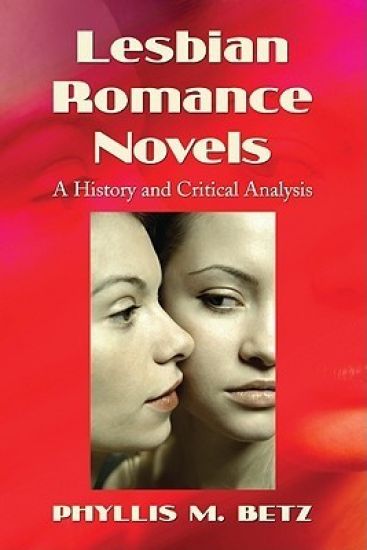
This critical analysis of the popular romance novel genre offers an evaluation of the field through the subgenre of the lesbian romance novel. A history of the lesbian romance novel is followed by analyses of both individual works by authors writing in the genre as well as the ways in which lesbian romance novels reflect and transform the techniques of heterosexual romance novels.
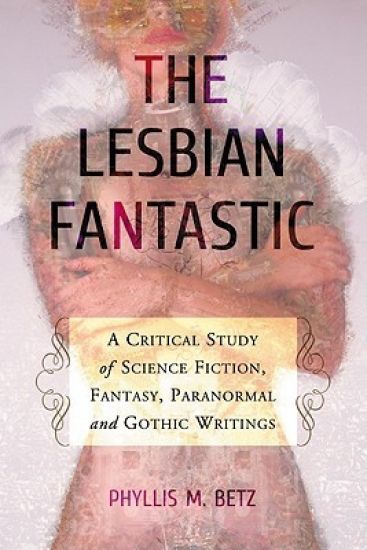
Science fiction has long been a haven for lesbian writers, allowing them to use the genre to discuss their marginalized status. This critical work examines how lesbian authors have used the structures and conventions of science fiction to embody characters, relationships and other themes that relate to their experience as the quintessential Other in the broader culture. Topics include lesbian gothic, fantasy, science fiction, mixed genre texts and historical background for the works discussed. A vital addition to the scholarship on homosexuality and culture.
Insomnia is a sleep disorder that affects people worldwide. This text provides those with sleep problems or chronic insomnia an overview of research on the causes of sleep loss and the physical effects of insomnia, as well as possible treatments. Disorders are summarized and illustrated with real-life stories about sleep experiences and remedies. This is a concise guide to help readers improve their sleep habits and lives.
In the second edition of her landmark book Negotiating at an Uneven Table, Phyllis Beck Kritek explores the process of resolving conflicts in situations where unacknowledged inequity influences disputes and their outcomes. Substantially revised and expanded, this new edition will help open minds and balance the negotiation process. Throughout the book, Kritek challenges traditional approaches to dealing with inequities at the negotiation table and offers alternatives for reframing the process.
The fascination of story telling is felt in these eleven sermons for the Pentecost season. Vibrantly illustrated, they powerfully communicate the good news of God's love. Wolkenhauer writes, "The use of story in preaching can be a memorable way to proclaim the Gospel. In these sermons I have sought a variety of examples for the use of story in sermons." Included here are sermons for the final third of the Season after Pentecost, Christ the King Sunday, All Saints' Sunday, Thanksgiving, and Reformation Sunday. Phyllis Faaborg Wolkenhauer holds degrees from San Jose State University and Luther Seminary, St. Paul, Minnesota. She has served parishes in North Dakota and Iowa. Her sermons have been published in Augsburg Sermons 3.
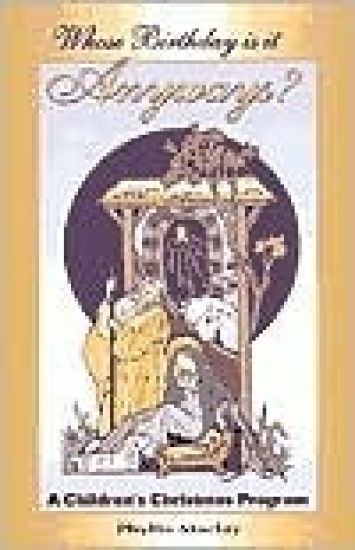
For the small church that does not have a lot of time to prepare, here is an ideal Christmas program and worship service. It can be presented as part of a Sunday School program or Sunday worship service. The true message of Christmas is spoken through the words of "the friendly beasts," which include two donkeys, three doves, four cows, and four sheep. This program enables children to become involved in a Christmas project in which they share their Christmas ornaments and angel food cake with the congregation. Phyllis Maclay is a freelance writer living in Sinton, Texas. She has contributed to church publications and the magazine Country Woman. She is a children's choir director and delivers children's sermons in her home congregation. Phyllis has also written What's The Matter With Christmas? She and her husband are the parents of five children.
Explore interventions and treatment methods designed to help curb the alarming trend toward violence in today's youth! Written in jargon-free lucid prose, Psychological Trauma and the Developing Brain: Neurologically Based Interventions for Troubled Children specifically shows how positive early experiences enhance brain development and how traumatic life experiences, especially child abuse and neglect, can affect a child's brain and behavior. Through carefully selected case studies, the book offers basic principles of treatment and a broad range of interventions that target the multiple symptoms and problems seen in children with a history of childhood trauma. Offering a new psychobiological model of child development, this book incorporates the influence of both genes and the environment and conceptualizes normal and pathological development in terms of common underlying processes. For readers concerned with promoting healthy development in children and helping children recover from childhood trauma, this engagingly written book describes exactly how a child's social/interpersonal environment can positively or negatively influence brain development. Throughout the book, the authors highlight the interrelationship between neurobiology and psychology. They present basic information about brain development and organization, describe exactly what is going on inside the brain at each stage of development, and illustrate these concepts through a detailed case study of a preschooler with severe problems in communicating and relating. They discuss the pernicious effects that traumatic stress has on brain and behavior, differentiating between simple and complex PTSD, and review the specific brain impairments currently attributed to a childhood history of maltreatment. Using their unique psychobiological perspective and illustrative case studies, the authors evaluate the principles and strategies of treatment, showing how relationships and experiences can mitigate the effects childhood trauma. After fleshing out the shocking cost to society of child maltreatment, the authors offer broad policy prescriptions that promote healthy development, including basic strategies for prevention and early intervention. Psychological Trauma and the Developing Brain: Neurologically Based Interventions for Troubled Children will show you: how interpersonal experience shapes brain development what is going on in the brain during the critical first six years how therapeutic relationships and interpersonal experience can promote emotional and cognitive development how childhood maltreatment can damage the brain and impair the developing mind what types of experiences and therapeutic strategies can mitigate the effects of childhood trauma what policy prescriptions, programs, and early intervention strategies can be implemented to promote healthy development
Explore interventions and treatment methods designed to help curb the alarming trend toward violence in today's youth! Written in jargon-free lucid prose, Psychological Trauma and the Developing Brain: Neurologically Based Interventions for Troubled Children specifically shows how positive early experiences enhance brain development and how traumatic life experiences, especially child abuse and neglect, can affect a child's brain and behavior. Through carefully selected case studies, the book offers basic principles of treatment and a broad range of interventions that target the multiple symptoms and problems seen in children with a history of childhood trauma. Offering a new psychobiological model of child development, this book incorporates the influence of both genes and the environment and conceptualizes normal and pathological development in terms of common underlying processes. For readers concerned with promoting healthy development in children and helping children recover from childhood trauma, this engagingly written book describes exactly how a child's social/interpersonal environment can positively or negatively influence brain development. Throughout the book, the authors highlight the interrelationship between neurobiology and psychology. They present basic information about brain development and organization, describe exactly what is going on inside the brain at each stage of development, and illustrate these concepts through a detailed case study of a preschooler with severe problems in communicating and relating. They discuss the pernicious effects that traumatic stress has on brain and behavior, differentiating between simple and complex PTSD, and review the specific brain impairments currently attributed to a childhood history of maltreatment. Using their unique psychobiological perspective and illustrative case studies, the authors evaluate the principles and strategies of treatment, showing how relationships and experiences can mitigate the effects childhood trauma. After fleshing out the shocking cost to society of child maltreatment, the authors offer broad policy prescriptions that promote healthy development, including basic strategies for prevention and early intervention. Psychological Trauma and the Developing Brain: Neurologically Based Interventions for Troubled Children will show you: how interpersonal experience shapes brain development what is going on in the brain during the critical first six years how therapeutic relationships and interpersonal experience can promote emotional and cognitive development how childhood maltreatment can damage the brain and impair the developing mind what types of experiences and therapeutic strategies can mitigate the effects of childhood trauma what policy prescriptions, programs, and early intervention strategies can be implemented to promote healthy development