Kirjojen hintavertailu. Mukana 11 244 527 kirjaa ja 12 kauppaa.

Kirjahaku

Etsi kirjoja tekijän nimen, kirjan nimen tai ISBN:n perusteella.

1000 tulosta hakusanalla Phyllis a. Fast

Santa Claus, Last of the Wild Men

Santa Claus, Last of the Wild Men

Phyllis Siefker

McFarland Co Inc
2006
pokkari
Much of the modern-day vision of Santa Claus is owed to the Clement Moore poem "The Night Before Christmas." His description of Saint Nicholas personified the "jolly old elf" known to millions of children throughout the world. However, far from being the offshoot of Saint Nicholas of Turkey, Santa Claus is the last of a long line of what scholars call "Wild Men" who were worshipped in ancient European fertility rites and came to America through Pennsylvania's Germans. This pagan creature is described from prehistoric times through his various forms--Robin Hood, The Fool, Harlequin, Satan and Robin Goodfellow--into today's carnival and Christmas scenes. In this thoroughly researched work, the origins of Santa Claus are found to stretch back over 50,000 years, jolting the foundation of Christian myths about the jolly old elf.
The Control of Childbirth

The Control of Childbirth

Phyllis L. Brodsky

McFarland Co Inc
2008
pokkari
When childbirth moved from women's homes into hospitals, women lost more than they had bargained for. As the event became increasingly male-dominated and medically oriented, women's control of the experience all but vanished. Worse, recent clinical trials have demonstrated that most modern interventions and technological practices have not improved delivery outcomes and are not necessary in normal labor and birth. From pre-classical to present times, this work describes childbirth practices as they have developed through the ages. The author describes and critiques the evolution of modern midwifery and obstetrics, focusing especially on how, why, and when the process of childbirth became an increasingly sterile, male-dominated, and medically oriented event. Each chapter focuses on a different period, from the age of the female midwife (who oversaw the childbirth process for several centuries), through the origins of modern obstetrics and gynecology, and finally, to the increasing influence of technology in the practices that have prevailed for most of the twentieth and twenty-first centuries.
Edward Albee

Edward Albee

Phyllis T. Dircks

McFarland Co Inc
2010
pokkari
This work covers the canon of playwright Edward Albee, perhaps best known as the author of Who's Afraid of Virginia Woolf? Comprehensive entries detail the plays and major characters. Other features include biographical information and insights into Albee's artistic beliefs, his understanding of the playwright's responsibility, the importance of music in drama, and the technical craft of writing plays.
Lesbian Romance Novels

Lesbian Romance Novels

Phyllis M. Betz

McFarland Co Inc
2009
pokkari
This critical analysis of the popular romance novel genre offers an evaluation of the field through the subgenre of the lesbian romance novel. A history of the lesbian romance novel is followed by analyses of both individual works by authors writing in the genre as well as the ways in which lesbian romance novels reflect and transform the techniques of heterosexual romance novels.
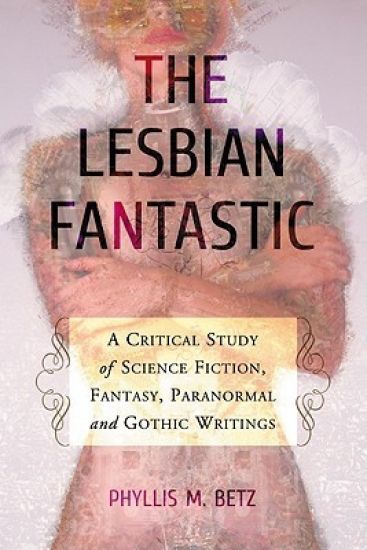
The Lesbian Fantastic

The Lesbian Fantastic

Phyllis M. Betz

McFarland Co Inc
2011
pokkari
Science fiction has long been a haven for lesbian writers, allowing them to use the genre to discuss their marginalized status. This critical work examines how lesbian authors have used the structures and conventions of science fiction to embody characters, relationships and other themes that relate to their experience as the quintessential Other in the broader culture. Topics include lesbian gothic, fantasy, science fiction, mixed genre texts and historical background for the works discussed. A vital addition to the scholarship on homosexuality and culture.
Living with Insomnia

Living with Insomnia

Phyllis L. Brodsky; Allen Brodsky

McFarland Co Inc
2011
pokkari
Insomnia is a sleep disorder that affects people worldwide. This text provides those with sleep problems or chronic insomnia an overview of research on the causes of sleep loss and the physical effects of insomnia, as well as possible treatments. Disorders are summarized and illustrated with real-life stories about sleep experiences and remedies. This is a concise guide to help readers improve their sleep habits and lives.
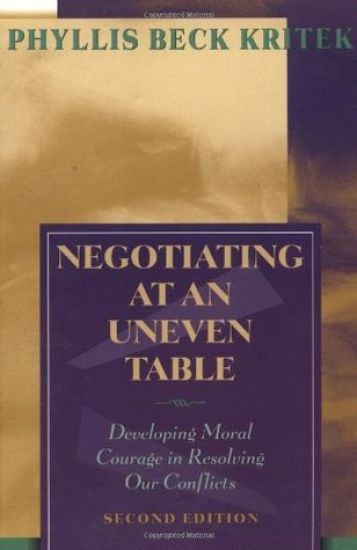
Negotiating at an Uneven Table

Negotiating at an Uneven Table

Phyllis Beck Kritek

Jossey-Bass Inc.,U.S.
2002
nidottu
In the second edition of her landmark book Negotiating at an Uneven Table, Phyllis Beck Kritek explores the process of resolving conflicts in situations where unacknowledged inequity influences disputes and their outcomes. Substantially revised and expanded, this new edition will help open minds and balance the negotiation process. Throughout the book, Kritek challenges traditional approaches to dealing with inequities at the negotiation table and offers alternatives for reframing the process.
Invitations to the Light

Invitations to the Light

Phyllis Faaborg Wolkenhauer

CSS Publishing Company
1995
pokkari
The fascination of story telling is felt in these eleven sermons for the Pentecost season. Vibrantly illustrated, they powerfully communicate the good news of God's love. Wolkenhauer writes, "The use of story in preaching can be a memorable way to proclaim the Gospel. In these sermons I have sought a variety of examples for the use of story in sermons." Included here are sermons for the final third of the Season after Pentecost, Christ the King Sunday, All Saints' Sunday, Thanksgiving, and Reformation Sunday. Phyllis Faaborg Wolkenhauer holds degrees from San Jose State University and Luther Seminary, St. Paul, Minnesota. She has served parishes in North Dakota and Iowa. Her sermons have been published in Augsburg Sermons 3.
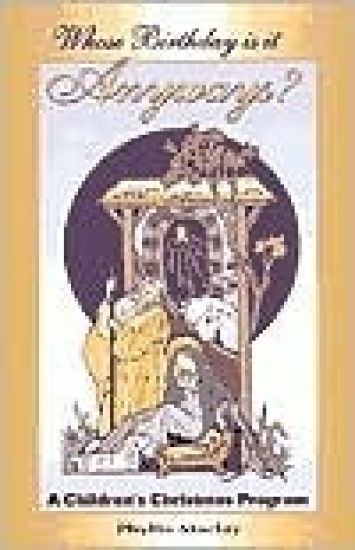
Whose Birthday Is It Anyway?

Whose Birthday Is It Anyway?

Phyllis Maclay

CSS Publishing Company
1997
pokkari
For the small church that does not have a lot of time to prepare, here is an ideal Christmas program and worship service. It can be presented as part of a Sunday School program or Sunday worship service. The true message of Christmas is spoken through the words of "the friendly beasts," which include two donkeys, three doves, four cows, and four sheep. This program enables children to become involved in a Christmas project in which they share their Christmas ornaments and angel food cake with the congregation. Phyllis Maclay is a freelance writer living in Sinton, Texas. She has contributed to church publications and the magazine Country Woman. She is a children's choir director and delivers children's sermons in her home congregation. Phyllis has also written What's The Matter With Christmas? She and her husband are the parents of five children.
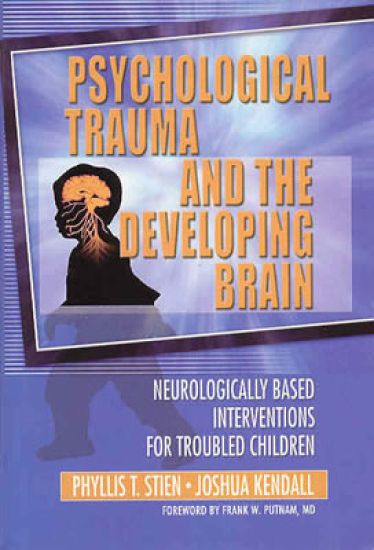
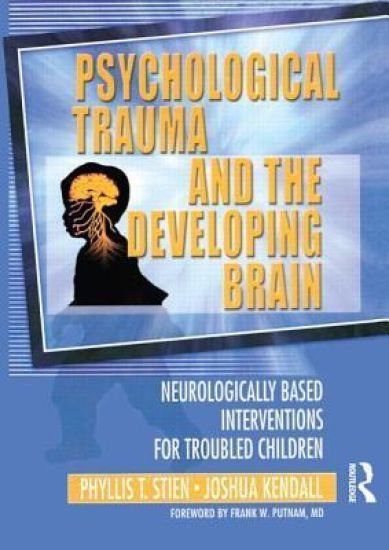
Psychological Trauma and the Developing Brain

Psychological Trauma and the Developing Brain

Phyllis Stien; Joshua C Kendall

Routledge Member of the Taylor and Francis Group
2003
sidottu
Explore interventions and treatment methods designed to help curb the alarming trend toward violence in today's youth! Written in jargon-free lucid prose, Psychological Trauma and the Developing Brain: Neurologically Based Interventions for Troubled Children specifically shows how positive early experiences enhance brain development and how traumatic life experiences, especially child abuse and neglect, can affect a child's brain and behavior. Through carefully selected case studies, the book offers basic principles of treatment and a broad range of interventions that target the multiple symptoms and problems seen in children with a history of childhood trauma. Offering a new psychobiological model of child development, this book incorporates the influence of both genes and the environment and conceptualizes normal and pathological development in terms of common underlying processes. For readers concerned with promoting healthy development in children and helping children recover from childhood trauma, this engagingly written book describes exactly how a child's social/interpersonal environment can positively or negatively influence brain development. Throughout the book, the authors highlight the interrelationship between neurobiology and psychology. They present basic information about brain development and organization, describe exactly what is going on inside the brain at each stage of development, and illustrate these concepts through a detailed case study of a preschooler with severe problems in communicating and relating. They discuss the pernicious effects that traumatic stress has on brain and behavior, differentiating between simple and complex PTSD, and review the specific brain impairments currently attributed to a childhood history of maltreatment. Using their unique psychobiological perspective and illustrative case studies, the authors evaluate the principles and strategies of treatment, showing how relationships and experiences can mitigate the effects childhood trauma. After fleshing out the shocking cost to society of child maltreatment, the authors offer broad policy prescriptions that promote healthy development, including basic strategies for prevention and early intervention. Psychological Trauma and the Developing Brain: Neurologically Based Interventions for Troubled Children will show you: how interpersonal experience shapes brain development what is going on in the brain during the critical first six years how therapeutic relationships and interpersonal experience can promote emotional and cognitive development how childhood maltreatment can damage the brain and impair the developing mind what types of experiences and therapeutic strategies can mitigate the effects of childhood trauma what policy prescriptions, programs, and early intervention strategies can be implemented to promote healthy development
Psychological Trauma and the Developing Brain

Psychological Trauma and the Developing Brain

Phyllis Stien; Joshua C Kendall

Routledge Member of the Taylor and Francis Group
2003
nidottu
Explore interventions and treatment methods designed to help curb the alarming trend toward violence in today's youth! Written in jargon-free lucid prose, Psychological Trauma and the Developing Brain: Neurologically Based Interventions for Troubled Children specifically shows how positive early experiences enhance brain development and how traumatic life experiences, especially child abuse and neglect, can affect a child's brain and behavior. Through carefully selected case studies, the book offers basic principles of treatment and a broad range of interventions that target the multiple symptoms and problems seen in children with a history of childhood trauma. Offering a new psychobiological model of child development, this book incorporates the influence of both genes and the environment and conceptualizes normal and pathological development in terms of common underlying processes. For readers concerned with promoting healthy development in children and helping children recover from childhood trauma, this engagingly written book describes exactly how a child's social/interpersonal environment can positively or negatively influence brain development. Throughout the book, the authors highlight the interrelationship between neurobiology and psychology. They present basic information about brain development and organization, describe exactly what is going on inside the brain at each stage of development, and illustrate these concepts through a detailed case study of a preschooler with severe problems in communicating and relating. They discuss the pernicious effects that traumatic stress has on brain and behavior, differentiating between simple and complex PTSD, and review the specific brain impairments currently attributed to a childhood history of maltreatment. Using their unique psychobiological perspective and illustrative case studies, the authors evaluate the principles and strategies of treatment, showing how relationships and experiences can mitigate the effects childhood trauma. After fleshing out the shocking cost to society of child maltreatment, the authors offer broad policy prescriptions that promote healthy development, including basic strategies for prevention and early intervention. Psychological Trauma and the Developing Brain: Neurologically Based Interventions for Troubled Children will show you: how interpersonal experience shapes brain development what is going on in the brain during the critical first six years how therapeutic relationships and interpersonal experience can promote emotional and cognitive development how childhood maltreatment can damage the brain and impair the developing mind what types of experiences and therapeutic strategies can mitigate the effects of childhood trauma what policy prescriptions, programs, and early intervention strategies can be implemented to promote healthy development
God and the Rhetoric of Sexuality

God and the Rhetoric of Sexuality

Phyllis Trible

Augsburg Fortress
1986
pokkari
Focusing on texts in the Hebrew Bible, and using feminist hermeneutics, Phyllis Trible brings out what she considers to be neglected themes and counter literature. After outlining her method in more detail, she begins by highlighting the feminist imagery used for God; then she moves on to traditions embodying male and female within the context of the goodness of creation. If Genesis 2-3 is a love story gone awry, the Song of Songs is about sexuality redeemed in joy. In between lies the book of Ruth, with its picture of the struggles of everyday life.
Rhetorical Criticism

Rhetorical Criticism

Phyllis Trible

Augsburg Fortress
1995
pokkari
Phyllis Trible examines rhetorical criticism as a discipline within biblical studies. In Part One she surveys the historical antecedents of the method from ancient times to the postmodern era: classical rhetoric, literary critical theory, literary study of the Bible, and form criticism. Trible then presents samples of rhetorical analysis as the art of composition and as the art of persuasion. In Part Two, formulated guidelines are applied to a detailed study of the book of Jonah. A close reading with respect to structure, syntax, style, and substance elicits a host of meanings embedded in text, enabling the relationship between artistry and theology to emerge with clarity. Rhetorical Criticism has many distinctive features. It is the first comprehensive treatment of biblical rhetorical criticism as it has emerged within the latter half of the twentieth century. a didactic treatise that combines theoretical discussion, practical guidelines, and detailed exegesis interdisciplinary in approach, engaging the rhetorical study of the Bible with expanding developments in secular literary criticism (structuralism, poetics, reader-response criticism, and deconstruction, for example) and in the similarly burgeoning field of contemporary rhetoric itself a model of the rhetorical analysis that it describes accessible both to the novice and to the scholar
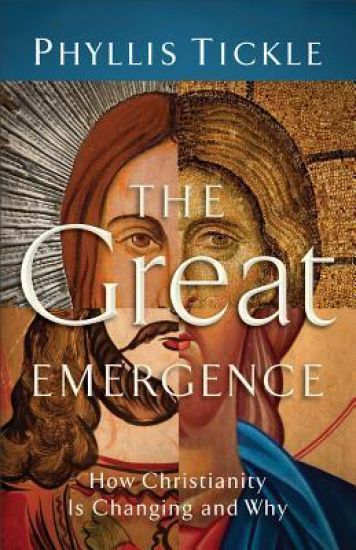
The Great Emergence – How Christianity Is Changing and Why

The Great Emergence – How Christianity Is Changing and Why

Phyllis Tickle

Baker Books, a division of Baker Publishing Group
2012
nidottu
Rooted in the observation that massive transitions in the church happen about every 500 years, Phyllis Tickle shows readers that we live in such a time right now. She compares the Great Emergence to other "Greats" in the history of Christianity, including the Great Transformation (when God walked among us), the time of Gregory the Great, the Great Schism, and the Great Reformation. Combining history, a look at the causes of social upheaval, and current events, The Great Emergence shows readers what the Great Emergence in church and culture is, how it came to be, and where it is going. Anyone who is interested in the future of the church in America, no matter what their personal affiliation, will find this book a fascinating exploration.Study guide by Danielle Shroyer.
Purchasing Identity in the Atlantic World

Purchasing Identity in the Atlantic World

Phyllis Whitman Hunter

Cornell University Press
2001
sidottu
Americans have always had a love-hate relationship with possessions. Early Americans suspected luxuries as a corrupting force that would lead to an aristocracy. In Purchasing Identity in the Atlantic World, Phyllis Whitman Hunter demonstrates how elite Americans not only became infatuated with their belongings, but also avidly pursued consumption to shape their world and proclaim their success. In eighteenth-century New England harbor towns, the commercial gentry led their communities into full participation in a flourishing Anglo-American consumer culture. Affluent traders constructed roads, wharves, and warehouses, built mansions and assembly buildings, adopted new forms of sociability, and fostered the rise of the public sphere. Using case studies of influential merchant families, Hunter brings alive the process by which Boston and Salem evolved from Puritan towns dominated by families of English origin to Georgian provincial cities open to a diversity of religious affiliations and European ethnicities. Hunter then explores how revolutionary politics overturned polite society and transformed the meanings of possessions. Patriots threw tea to the fish in Boston Harbor, donned homespun at Harvard commencements, and transformed a silver punch bowl into an icon of liberty. The wealthy either espoused republican values and muted their material displays or fled to exile. Purchasing Identity in the Atlantic World,reveals a critical link in the complex relationship between capitalism and culture: the process by which material goods become symbols of profound social and cultural significance.
The Politics of Race in New York

The Politics of Race in New York

Phyllis F. Field

Cornell University Press
2009
pokkari
Black suffrage was a crucial and volatile issue in the North during the Civil War era. In The Politics of Race in New York, Phyllis F. Field studies the development of racial policies in the Empire State. Asserting that it is not possible to understand the move toward black suffrage by examining national trends and the actions of individual politicians, she takes a close look at the social context of reform.Field assesses popular reaction to the idea of black suffrage by systematically analyzing the results of a series of referenda on the issue held in New York State between 1846 and 1869. Tracing the relation between changes in public opinion and the positions taken by political parties, Field concludes that party leaders tried both to express the views of their constituents and to mold those views so as to strengthen and unify their own political organizations. Inevitably, this intrusion of political considerations in the issue of race had long-term consequences for the process of social change in the United States.The Politics of Race in New York shows clearly how, in 1870, black suffrage could be achieved even though the battle for black equality had yet to begin.
Stages of History

Stages of History

Phyllis Rackin

Cornell University Press
1990
pokkari
Phyllis Rackin offers a fresh approach to Shakespeare's English history plays, rereading them in the context of a world where rapid cultural change transformed historical consciousness and gave the study of history a new urgency. Rackin situates Shakespeare's English chronicles among multiple discourses, particularly the controversies surrounding the functions of poetry, theater, and history. She focuses on areas of contention in Renaissance historiography that are also areas of concern in recent criticism-historical authority and causation, the problems of anachronism and nostalgia, and the historical construction of class and gender. She analyzes the ways in which the perfoace of history in Shakespeare's theater participated—and its representation in subsequent criticism still participates—in the contests between opposed theories of history and between the different ideological interests and historiographic practices they authorize. Celebrating the heroic struggles of the past and recording the patriarchal genealogies of kings and nobles, Tudor historians provided an implicit rationale for the hierarchical order of their own time; but the new public theater where socially heterogeneous audiences came together to watch common players enact the roles of their social superiors was widely perceived as subverting that order. Examining such sociohistorical factors as the roles of women and common men and the conditions of theatrical performance, Rackin explores what happened when elite historical discourse was trans porteto the public commercial theater. She argues that Shakespeare's chronicles transformed univocal historical writing into polyphonic theatrical scripts that expressed the contradictions of Elizabethan culture.
Erotic Fantasies

Erotic Fantasies

Phyllis Kronhausen; Eberhard Kronhausen

Avalon Travel Publishing
1994
nidottu
Gathers erotic folklore and writings about homosexuality, transsexualism, bondage, sadomasochism, incest, and fetishism, and discusses the psychological aspects of sexual fantasies
Journal Keeper

Journal Keeper

Phyllis Theroux

Grove Press / Atlantic Monthly Press
2011
nidottu
The Journal Keeper is the openhearted and unflinchingly honest memoir of six years in writer Phyllis Theroux's life. As she ages into her sixties, Theroux uses regular journal entries to reflect on the void left by the passing of her remarkable mother and the thrill of allowing a new source of joy into her life. A natural storyteller, Theroux slips her arm companionably into yours, like an old friend going for a stroll. But Theroux's stride is long and her eye sharp, and she swings easily between subjects that occupy us all: love, loneliness, growing old, financial worries, spiritual growth, and caring for an aging parent. A compelling tale in journal form, The Journal Keeper is a rich feast from the writing life -- with an unexpected twist. After the death of her mother leaves Theroux feeling adrift, she finds the love that she believed was closed to a woman of her age. Not until Theroux sat down to edit her journals for publication did she realize, in her words, "that a hand much larger and more knowing than my own was guiding my life and pen across the page." She makes a good case for this being true for us all.
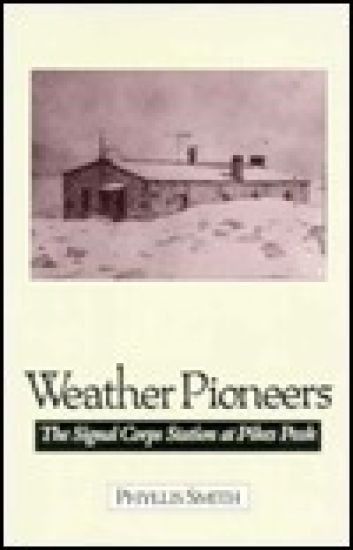
Weather Pioneers

Weather Pioneers

Phyllis Smith

Swallow Press
1993
sidottu
At 14,110 feet, the weather station atop Pikes Peak, Colorado, was the highest in the world in 1873. Young men trained by the Signal Corps took turns living year-round on the isolated mountain, where they endured loneliness, primitive living conditions, lack of financial support and appreciation, and deteriorating health. Most did so with dedication and good humor. Some suffered frostbitten hands, feet and ears when they became lost on the snowy mountain trail; others were jolted by lightning strikes. One man eventually died; another, evidently unsuited to the solitary life, went mad. Although weather records had been kept by private individuals and some universities since the early 1800s both here and abroad, a full U.S. weather reporting service had to await development and expansion of the electric telegraph. Both farmers and coastal shippers pressed the U.S. Congress to establish a weather prediction facility. By 1870 a network of such stations was in place. By late summer of 1873, workmen had finished the crude two-room station at the top of Pikes Peak. A telegraph line snaked through brush, trees, and boulders to the lofty summit. When daily logs and research records were completed, some of the Pikes Peak weather men amused themselves by writing tall tales, expanding on their already unusual adventures. Americans loved their stories and seldom disavowed the truth of sea monsters in Pikes Peak lakes, plagues of mountain rats, and mysterious volcanic eruptions. Their problems with governmental bureaucracy were at once humorous and sad. With fortitude and imagination these early meteorologists laid the groundwork for today’s sophisticated science of data-gathering satellites and computer models.