Kirjojen hintavertailu. Mukana 11 715 130 kirjaa ja 12 kauppaa.

Kirjahaku

Etsi kirjoja tekijän nimen, kirjan nimen tai ISBN:n perusteella.

1000 tulosta hakusanalla Primmer Jacob

A Primer on Clinical Experience in Medicine
Mastery of quality health care and patient safety begins as soon as we open the hospital doors for the first time and start acquiring practical experience. The acquisition of such experience includes much more than the development of sensorimotor skills and basic knowledge of the sciences. It relies on effective reasoning, decision making, and communication shared by all health professionals, including physicians, nurses, dentists, pharmacists, physiotherapists, and administrators.A Primer on Clinical Experience in Medicine: Reasoning, Decision Making, and Communication in Health Sciences is about these essential skills. It describes how physicians and health professionals reason, make decisions, and practice medicine. Covering the basic considerations related to clinical and caregiver reasoning, it lays out a roadmap to help those new to health care as well as seasoned veterans overcome the complexities of working for the well-being of those who trust us with their physical, mental, and spiritual health.The book provides a step-by-step breakdown of the reasoning process for clinical work and clinical care. It examines both general and medical ways of thinking, reasoning, argumentation, fact finding, and using evidence. Outlining the fundamentals of decision making, it integrates coverage of clinical reasoning, risk assessment, diagnosis, treatment, and prognosis in evidence-based medicine. It also:Describes how to evaluate the success (effectiveness and cure) and failure (error and harm) of clinical and community actions Considers communication with patients and outlines strategies, successes, failures, and possible remedies—including offices, bedside, intervention, and care settingsExamines strategies, successes, failures, and possible remedies for communication with peers—including interpersonal communication, morning reports, rounds, and research gatheringsThe book describes vehicles, opportunities, and environments for enhanced professional communication, including patient interviews, clinical case reports, and morning reports. It includes numerous examples that demonstrate the importance of sound reasoning, decision making, and communication and also considers future implications for research, management, planning, and evaluation.

A Primer of Human Behavioral Pharmacology

A Primer of Human Behavioral Pharmacology

Alan Poling

Springer-Verlag New York Inc.
2012
nidottu
vii Drugs and sex are two topics about which most people have strong opinions and weak understanding. Knowledge of each can be gained in many ways, all with associated rewards and risks. Like all textbooks, this one was written in the belief that reading can foster learning. The book is intended to introduce principles of behavioral pharmacology to readers with little or no knowledge of the discipline but with an interest in how drugs affect human behavior. Gleaning anything of value from the text requires two things from the reader. The first is a willingness to accept an analysis of drug effects that shares little with folklore or common sense no­ tions of drug action. The second is a willingness to accept the fact that the behavioral effects of drugs are complex and depend upon a sizable number of pharmacological and behavioral variables. Unless one is aware of these factors and how they determine a drug's actions, the behavioral effects of drugs can be neither pre­ dicted nor meaningfully explained. If it does nothing else, this volume will make it obvious that the behavioral effects of drugs are lawful and can be predicted and understood on the basis of well-established relations between empirical phenomena. De­ scribing these relations and exploring how they allow behavioral ix x PREFACE pharmacologists to make sense of drug effects that are otherwise incomprehensible was a major goal in preparing the text.
A Primer of Molecular Biology

A Primer of Molecular Biology

Robert Roberts

Springer-Verlag New York Inc.
2013
nidottu
In arecent plenary address to the American College of Cardiology, Dr. Leroy Hood stated that he expected the application of the techniques of recombinant DNA and molecular biology to medicine would advance the field more in the next twenty years than all of the progress that has been made in the past 2,000 years. Cardiology, as a discipline, has been one of the last to embrace the techniques of molecular biology, yet the advances made in the past five years have indeed been dramatic. Throm­ bolytic therapy, introduced with a bang through the use of recombinant tissue plasminogen activator (rt-PA), is now part of the routine arma­ mentarium in the treatment of patients with acute myocardial infarction. Tissue plasminogen activator was the first drug made with the use of recombinant DNA techniques to be used in cardiology and was approved by the Food and Drug Administration (FDA) in 1989. In the short time since then, five other drugs made by these techniques have been added to the treatment of patients with ischemic heart disease-hirudin, su­ peroxide dismutase, urokinase, prourokinase, and multiple mutant forms of rt-PA. The FDA has approved fewer than 100 drugs that are made by recombinant DNA techniques, but estimates that by the year 2000 over 50% of all drugs will be made by these techniques.
A Primer of Population Dynamics

A Primer of Population Dynamics

Krishnan Namboodiri

Springer-Verlag New York Inc.
2013
nidottu
A Primer of Population Dynamics introduces to the basics of population studies. Author Krishnan Namboodiri utilizes a question-and-answer format that explores topics such as population theories and conceptual schemes, demographic data, mortality, fertility, migration, family and household, food production, and the environment and much more. Questions are accompanied by detailed explanations as well as references for additional information. An extensive index and glossary allow for easy retrieval of information. This introductory textbook is written for students studying demography, population, sociology, and public health.
A Primer for Teaching Women, Gender, and Sexuality in World History

A Primer for Teaching Women, Gender, and Sexuality in World History

Merry E. Wiesner-Hanks; Urmi Engineer Willoughby

Duke University Press
2018
sidottu
A Primer for Teaching Women, Gender, and Sexuality in World History is a guide for college and high school teachers who are teaching women, gender, and sexuality in history for the first time, for experienced teachers who want to reinvigorate their courses, for those who are training future teachers to prepare their own syllabi, and for teachers who want to incorporate these issues into their world history classes. Merry E. Wiesner-Hanks and Urmi Engineer Willoughby present possible course topics, themes, concepts, and approaches while offering practical advice on materials and strategies helpful for teaching courses from a global perspective in today's teaching environment for today's students. In their discussions of pedagogy, syllabus organization, fostering students' historical empathy, and connecting students with their community, Wiesner-Hanks and Willoughby draw readers into the process of strategically designing courses that will enable students to analyze gender and sexuality in history, whether their students are new to this process or hold powerful and personal commitments to the issues it raises.
A Primer for Teaching Women, Gender, and Sexuality in World History

A Primer for Teaching Women, Gender, and Sexuality in World History

Merry E. Wiesner-Hanks; Urmi Engineer Willoughby

Duke University Press
2018
pokkari
A Primer for Teaching Women, Gender, and Sexuality in World History is a guide for college and high school teachers who are teaching women, gender, and sexuality in history for the first time, for experienced teachers who want to reinvigorate their courses, for those who are training future teachers to prepare their own syllabi, and for teachers who want to incorporate these issues into their world history classes. Merry E. Wiesner-Hanks and Urmi Engineer Willoughby present possible course topics, themes, concepts, and approaches while offering practical advice on materials and strategies helpful for teaching courses from a global perspective in today's teaching environment for today's students. In their discussions of pedagogy, syllabus organization, fostering students' historical empathy, and connecting students with their community, Wiesner-Hanks and Willoughby draw readers into the process of strategically designing courses that will enable students to analyze gender and sexuality in history, whether their students are new to this process or hold powerful and personal commitments to the issues it raises.
A Primer for Teaching Pacific Histories

A Primer for Teaching Pacific Histories

Matt K. Matsuda

Duke University Press
2020
sidottu
A Primer for Teaching Pacific Histories is a guide for college and high school teachers who are teaching Pacific histories for the first time or for experienced teachers who want to reinvigorate their courses. It can also serve those who are training future teachers to prepare their own syllabi, as well as teachers who want to incorporate Pacific histories into their world history courses. Matt K. Matsuda offers design principles for creating syllabi that will help students navigate a wide range of topics, from settler colonialism, national liberation, and warfare to tourism, popular culture, and identity. He also discusses practical pedagogical techniques and tips, project-based assignments, digital resources, and how Pacific approaches to teaching history differ from customary Western practices. Placing the Pacific Islands at the center of analysis, Matsuda draws readers into the process of strategically designing courses that will challenge students to think critically about the interconnected histories of East Asia, Southeast Asia, Australia, the Pacific Islands, and the Americas within a global framework.
A Primer for Teaching Pacific Histories

A Primer for Teaching Pacific Histories

Matt K. Matsuda

Duke University Press
2020
pokkari
A Primer for Teaching Pacific Histories is a guide for college and high school teachers who are teaching Pacific histories for the first time or for experienced teachers who want to reinvigorate their courses. It can also serve those who are training future teachers to prepare their own syllabi, as well as teachers who want to incorporate Pacific histories into their world history courses. Matt K. Matsuda offers design principles for creating syllabi that will help students navigate a wide range of topics, from settler colonialism, national liberation, and warfare to tourism, popular culture, and identity. He also discusses practical pedagogical techniques and tips, project-based assignments, digital resources, and how Pacific approaches to teaching history differ from customary Western practices. Placing the Pacific Islands at the center of analysis, Matsuda draws readers into the process of strategically designing courses that will challenge students to think critically about the interconnected histories of East Asia, Southeast Asia, Australia, the Pacific Islands, and the Americas within a global framework.
A Primer for Teaching Digital History

A Primer for Teaching Digital History

Jennifer Guiliano

DUKE UNIVERSITY PRESS
2022
sidottu
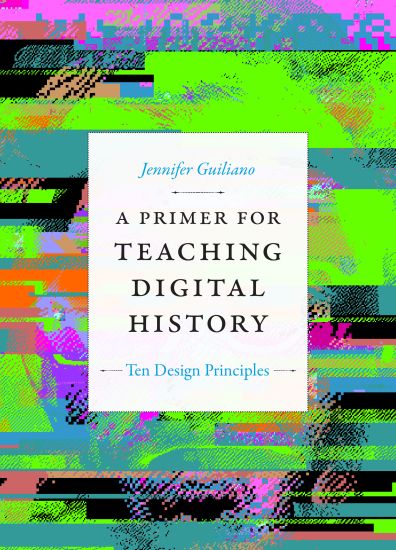
A Primer for Teaching Digital History is a guide for college and high school teachers who are teaching digital history for the first time or for experienced teachers who want to reinvigorate their pedagogy. It can also serve those who are training future teachers to prepare their own syllabi, as well as teachers who want to incorporate digital history into their history courses. Offering design principles for approaching digital history that represent the possibilities that digital research and scholarship can take, Jennifer Guiliano outlines potential strategies and methods for building syllabi and curricula. Taking readers through the process of selecting data, identifying learning outcomes, and determining which tools students will use in the classroom, Guiliano outlines popular research methods including digital source criticism, text analysis, and visualization. She also discusses digital archives, exhibits, and collections as well as audiovisual and mixed-media narratives such as short documentaries, podcasts, and multimodal storytelling. Throughout, Guiliano illuminates how digital history can enhance understandings of not just what histories are told but how they are told and who has access to them.
A Primer for Teaching Digital History

A Primer for Teaching Digital History

Jennifer Guiliano

DUKE UNIVERSITY PRESS
2022
pokkari
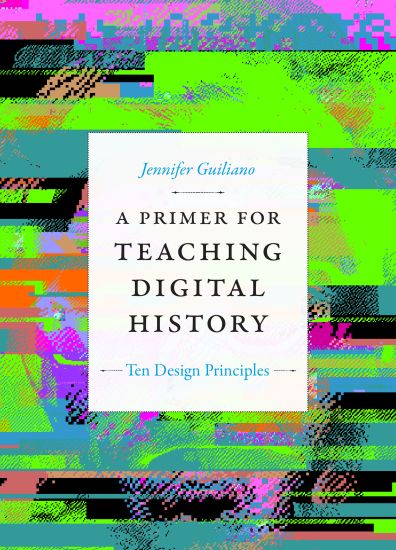
A Primer for Teaching Digital History is a guide for college and high school teachers who are teaching digital history for the first time or for experienced teachers who want to reinvigorate their pedagogy. It can also serve those who are training future teachers to prepare their own syllabi, as well as teachers who want to incorporate digital history into their history courses. Offering design principles for approaching digital history that represent the possibilities that digital research and scholarship can take, Jennifer Guiliano outlines potential strategies and methods for building syllabi and curricula. Taking readers through the process of selecting data, identifying learning outcomes, and determining which tools students will use in the classroom, Guiliano outlines popular research methods including digital source criticism, text analysis, and visualization. She also discusses digital archives, exhibits, and collections as well as audiovisual and mixed-media narratives such as short documentaries, podcasts, and multimodal storytelling. Throughout, Guiliano illuminates how digital history can enhance understandings of not just what histories are told but how they are told and who has access to them.
A Primer for Teaching Indian Ocean World History

A Primer for Teaching Indian Ocean World History

Edward A. Alpers; Thomas F. McDow

DUKE UNIVERSITY PRESS
2024
sidottu
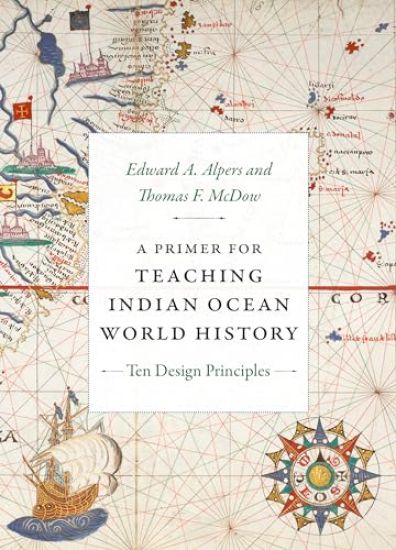
A Primer for Teaching Indian Ocean World History is a guide for college and high school educators who are teaching Indian Ocean histories for the first time or who want to reinvigorate their courses. It can also serve those who are training future teachers to prepare their own syllabi, as well as those who want to incorporate Indian Ocean histories into their world history courses. Edward A. Alpers and Thomas F. McDow offer course design principles that will help students navigate topics ranging from empire, geography, slavery, and trade to mobility, disease, and the environment. In addition to exploring non-European sources and diverse historical methodologies, they discuss classroom pedagogy and provide curriculum possibilities that will help instructors at any level enrich and deepen standard approaches to world history. Alpers and McDow draw readers into strategically designing courses that will challenge students to think critically about a vast area with which many of them are almost entirely unfamiliar.
A Primer for Teaching Indian Ocean World History

A Primer for Teaching Indian Ocean World History

Edward A. Alpers; Thomas F. McDow

DUKE UNIVERSITY PRESS
2024
pokkari
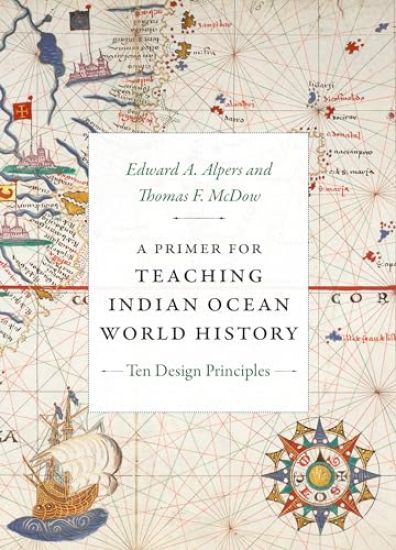
A Primer for Teaching Indian Ocean World History is a guide for college and high school educators who are teaching Indian Ocean histories for the first time or who want to reinvigorate their courses. It can also serve those who are training future teachers to prepare their own syllabi, as well as those who want to incorporate Indian Ocean histories into their world history courses. Edward A. Alpers and Thomas F. McDow offer course design principles that will help students navigate topics ranging from empire, geography, slavery, and trade to mobility, disease, and the environment. In addition to exploring non-European sources and diverse historical methodologies, they discuss classroom pedagogy and provide curriculum possibilities that will help instructors at any level enrich and deepen standard approaches to world history. Alpers and McDow draw readers into strategically designing courses that will challenge students to think critically about a vast area with which many of them are almost entirely unfamiliar.
El Primer Libro de Lectura en Inglés para Principiantes

El Primer Libro de Lectura en Inglés para Principiantes

Ronaldo Messi

Createspace Independent Publishing Platform
2012
pokkari
El libro contiene textos de nivel A1 y A2, paralelos en ingl s y espa ol. Esta edici n biling e incluye divertidas historias sobre situaciones cotidianas como nuevos amigos, estudiar en la universidad o buscar trabajo, para aumentar la motivaci n del alumno. El m todo usado se basa en la facultad humana de recordar palabras que aparecen sistem ticamente y repetidamente en el texto. Las frases son construidas a partir de las palabras ya aprendidas en los cap tulos anteriores. A partir del segundo cap tulo, cada uno s lo contiene 35 nuevas palabras.
A Primer on the Detection of Nuclear and Radiological Weapons

A Primer on the Detection of Nuclear and Radiological Weapons

David J. Nagel; Timothy Coffey; Gary W. Phillips

Createspace Independent Publishing Platform
2012
nidottu
Terrorist use of radioactive nuclear materials is a serious threat for mass destruction or disruption of civil and military activities. Most worrisome is the use of nuclear devices to cause massive casualties to people and damage to structures. Fortunately, the procurement of adequate material and the engineering design, construction, and transportation and triggering of a nuclear weapon are all difficult problems for terrorist organizations. More likely is a device that combines radioactive materials with conventional explosives to make a radiological dispersion device, commonly called a "dirty bomb". The procurement of nuclear materials for this purpose, the construction of the bomb and its use are all easier than for a nuclear weapon. Fortunately, the effects from the use of a radiological weapon would be much smaller than from a nuclear device, although they could still be very disruptive. Thus, it is important to detect the transport of nuclear weapons and radiological dispersion devices and the materials for their construction. These materials emit gamma rays or neutrons, which can be detected to show the presence and amounts of such materials.