Kirjojen hintavertailu. Mukana 11 627 220 kirjaa ja 12 kauppaa.

Kirjahaku

Etsi kirjoja tekijän nimen, kirjan nimen tai ISBN:n perusteella.

1000 tulosta hakusanalla ROSENTHAL MICHAEL

Prosthetic Immortalities

Prosthetic Immortalities

Adam R Rosenthal; David Wills

UNIVERSITY OF MINNESOTA PRESS
2024
sidottu
Examining the links between today’s ideas of radical life extension and age-old notions of immortality From Plato’s notion of generation to Derrida’s concept of survival to such modern phenomena as anti-aging treatments, cryogenics, cloning, and whole-brain uploads, Adam Rosenthal’s Prosthetic Immortalities shows how the dream of indefinite life has always been a technological one: a matter of prosthesis. He argues that every biological instance of perpetual life, from one-celled organisms to rejuvenating jellyfish to Henrietta Lacks’s “immortal” cancer cells, always results in the transformation of the original being. There can, therefore, be no certainty of immortality. Yet, because finite mortal life is already marked by difference, division, and change, as Rosenthal concludes: “the problem of immortality will not cease to haunt us.” Prosthetic Immortalities examines the persistence of humans’ aspirations of deathlessness, showing that the link between immortalization and prostheticization is not unique to a single period but is, rather, a ubiquitous element of the discourse of immortality, encompassing both modern technoscientific efforts and religious discourses of an afterlife. Rosenthal asks to what extent the emergence of a virtual, posited, immortal presence follows from the tenets of empirical science-and not simply from the discourse of biology but also, and more radically still, from biological organization itself. Rosenthal ultimately argues that the discovery of biological immortals-lifeforms that naturally have indefinitely long lifespans, such as cancer cells and bacteria-present novel conceptual difficulties for traditional philosophical approaches to mortality and selfhood, asking whether it is life itself that first births immortalizing prostheses.
Prosthetic Immortalities

Prosthetic Immortalities

Adam R Rosenthal; David Wills

UNIVERSITY OF MINNESOTA PRESS
2024
nidottu
Examining the links between today’s ideas of radical life extension and age-old notions of immortality From Plato’s notion of generation to Derrida’s concept of survival to such modern phenomena as anti-aging treatments, cryogenics, cloning, and whole-brain uploads, Adam Rosenthal’s Prosthetic Immortalities shows how the dream of indefinite life has always been a technological one: a matter of prosthesis. He argues that every biological instance of perpetual life, from one-celled organisms to rejuvenating jellyfish to Henrietta Lacks’s “immortal” cancer cells, always results in the transformation of the original being. There can, therefore, be no certainty of immortality. Yet, because finite mortal life is already marked by difference, division, and change, as Rosenthal concludes: “the problem of immortality will not cease to haunt us.” Prosthetic Immortalities examines the persistence of humans’ aspirations of deathlessness, showing that the link between immortalization and prostheticization is not unique to a single period but is, rather, a ubiquitous element of the discourse of immortality, encompassing both modern technoscientific efforts and religious discourses of an afterlife. Rosenthal asks to what extent the emergence of a virtual, posited, immortal presence follows from the tenets of empirical science-and not simply from the discourse of biology but also, and more radically still, from biological organization itself. Rosenthal ultimately argues that the discovery of biological immortals-lifeforms that naturally have indefinitely long lifespans, such as cancer cells and bacteria-present novel conceptual difficulties for traditional philosophical approaches to mortality and selfhood, asking whether it is life itself that first births immortalizing prostheses.

Uni the Unicorn

Uni the Unicorn

Amy Krouse Rosenthal

Random House Books for Young Readers
2017
pahvisivuinen
The New York Times bestselling story of friendship, unicorns, and the power of believing is now available as a board book Uni is just like all the other unicorns . . . except for one thing: she believes that little girls are REAL. This magical story by Amy Krouse Rosenthal (author of I Wish You More) illuminates Uni's not-so-fantastical dream and celebrates the sparkle of believing. This charming board book edition will allow the youngest readers to slide down glorious friendship rainbows alongside Uni and the little girl in whom she believes so very much. Be sure to look for the enchanting sequel, Uni the Unicorn and the Dream Come True, available as a hardcover picture book
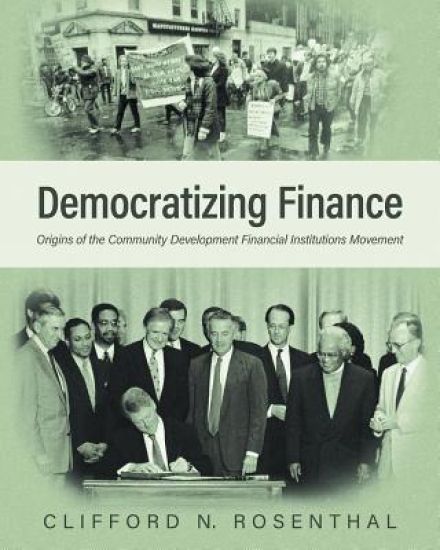
Democratizing Finance

Democratizing Finance

Clifford N Rosenthal; David Erickson

FriesenPress
2018
sidottu
Decades before Occupy Wall Street challenged the American financial system, activists began organizing alternatives to provide capital to "unbankable" communities and the poor. With roots in the civil rights, anti-poverty, and other progressive movements, they brought little training in finance. They formed nonprofit loan funds, credit unions, and even a new bank-organizations that by 1992 became known as "community development financial institutions," or CDFIs. By melding their vision with that of President Clinton, CDFIs grew from church basements and kitchen tables to number more than 1,000 institutions with billions of dollars of capital. They have helped transform community development by providing credit and financial services across the United States, from inner cities to Native American reservations. Democratizing Finance traces the roots of community development finance over two centuries, a history that runs from Benjamin Franklin, through an ill-starred bank for African American veterans of the Civil War, the birth of the credit union movement, and the War on Poverty. Drawn from hundreds of interviews with CDFI leaders, presidential archives, and congressional testimony, Democratizing Finance provides an insider view of an extraordinary public policy success. Democratizing Finance is a unique resource for practitioners, policymakers, researchers, and social investors....
Democratizing Finance

Democratizing Finance

Clifford N Rosenthal; David Erickson

FriesenPress
2018
pokkari
Decades before Occupy Wall Street challenged the American financial system, activists began organizing alternatives to provide capital to "unbankable" communities and the poor. With roots in the civil rights, anti-poverty, and other progressive movements, they brought little training in finance. They formed nonprofit loan funds, credit unions, and even a new bank-organizations that by 1992 became known as "community development financial institutions," or CDFIs. By melding their vision with that of President Clinton, CDFIs grew from church basements and kitchen tables to number more than 1,000 institutions with billions of dollars of capital. They have helped transform community development by providing credit and financial services across the United States, from inner cities to Native American reservations. Democratizing Finance traces the roots of community development finance over two centuries, a history that runs from Benjamin Franklin, through an ill-starred bank for African American veterans of the Civil War, the birth of the credit union movement, and the War on Poverty. Drawn from hundreds of interviews with CDFI leaders, presidential archives, and congressional testimony, Democratizing Finance provides an insider view of an extraordinary public policy success. Democratizing Finance is a unique resource for practitioners, policymakers, researchers, and social investors....
How to Avoid IRS Audits

How to Avoid IRS Audits

Morton D Rosenthal Esq

Createspace Independent Publishing Platform
2016
pokkari
I spent 50 years working as a CPA (Certified Public Accountant) and tax consultant defending taxpayers audited by the IRS. Accounting is not the most exciting job, but dealing with the IRS is. Fighting the IRS became the love of my life, next only to my family and my cat. I developed a passion for working against - and with - IRS auditors and appeals officers. I feel at home at the IRS and for good reasons - I win. I hold a very high rate of success - winning substantially all of my audits. And for the very few that I lost, I took most to Appeals where I won them all. Knowledge of the tax code is vital but psychology, credibility, humility, and humor are key ingredients to victory.This book is a compilation of tax tips that I penned for magazines and newspapers over several decades. My writings are based on actual battles with the IRS. My tales are born of experience, my tips from actual dealings with the IRS.Dealing with the IRS requires you to understand the Agency's culture: shoot first, ask later. You are guilty until proven innocent. It's a battle to overcome this culture. To win a battle against the IRS, you must unlock its secrets. To unlock its secrets, you must have fought wars in the trenches to see what tactics work and what don't. I've been there. Done that. And for these reasons, I wrote this book to help you avoid audits or survive one if you get chosen.
A Good Look at Evil

A Good Look at Evil

Abigail L Rosenthal

Wipf Stock Publishers
2018
pokkari
""Abigail Rosenthal proposes a new way of understanding one of the oldest mysteries--the nature of evil. Drawing on wide literary and philosophical resources, Rosenthal proposes that narrative self-understanding is the key to a good life. She traces the implications of this idea for understanding various types of evil, including the ultimate evil of Nazi genocide--which, she argues, cannot be understood in Arendtian terms as a kind of banality. Highly personal and original, Rosenthal's work offers new ways of grappling with some of the largest ethical questions."" Adam Kirsch, author of The Global Novel: Writing the World in the 21st Century (2016) ""Rosenthal pinpoints the characteristic feature of evil--at least the leading type of evil--that distinguishes it from what is only morally wrong or very, very bad. It is based on her basic notion of an ideal 'life story' or plot. She extends both concepts from individual victims to races and populations as victims. T]here is nothing banal or ordinary about evil, the intentional disrupting of the victim's 'ideal thread' or plot. ... In a fascinating new essay, Rosenthal revisits Hannah Arendt . . . applying her ""plot"" concept to Arendt herself in light of what is known about Arendt's long intellectual and personal relationship with Heidegger. Rosenthal argues that despite a splendid recovery from early adversity, Arendt went on to 'spoil' her own life story. And in a concluding piece, Rosenthal shows from her own experience how one can have reason to believe that a person's life story has been co-authored by God."" William G. Lycan, author of Real Conditionals (2001) ""It is a most compelling and creative work. Rosenthal is analyzing the 'stories' that people tell us about themselves, in terms of both their lives and their work. She does so in an effort to understand genocidal evil-doers, both those who perpetrate and collaborate with it and those who cover up such crimes."" Phyllis Chesler, author of An American Bride in Kabul: A Memoir (2013) ""As a person who wholeheartedly subscribes to the idea that we must be constantly attentive to, and increasingly watchful over, the 'plots' of our own unfolding stories, I found Abigail Rosenthal's A Good Look at Evil a welcome, revealing, and indispensable book about the slippery crevices of the moral life. I hope it is translated into many languages. Everyone should read it."" Gail Godwin, author of Heart: A Personal Journey Through Its Myths and Meanings (2001)
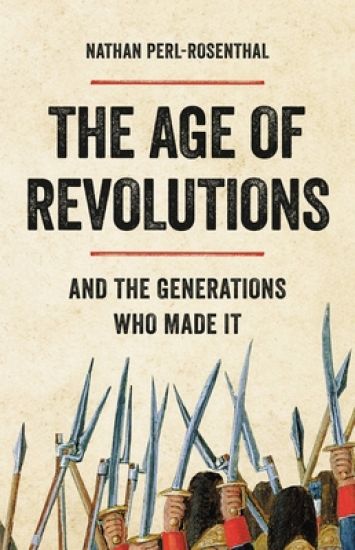
The Age of Revolutions

The Age of Revolutions

Nathan Perl-Rosenthal

BASIC BOOKS
2024
sidottu
A panoramic new history of the revolutionary decades between 1760 and 1825, from North America and Europe to Haiti and Spanish America, showing how progress and reaction went hand in handThe revolutions that raged across Europe and the Americas over seven decades, from 1760 to 1825, created the modern world. Revolutionaries shattered empires, toppled social hierarchies, and birthed a world of republics. But old injustices lingered on and the powerful engines of revolutionary change created new and insidious forms of inequality. In The Age of Revolutions, historian Nathan Perl-Rosenthal offers the first narrative history of this entire era. Through a kaleidoscope of lives both familiar and unknown-from John Adams, Toussaint Louverture, and Napoleon to an ambitious French naturalist and a seditious Peruvian nun-he retells the revolutionary epic as a generational story. The first revolutionary generation, fired by radical ideas, struggled to slip the hierarchical bonds of the old order. Their failures moulded a second generation, more adept at mass organizing but with an illiberal tint. The sweeping political transformations they accomplished after 1800 engrained forms of inequality and racial hierarchy in modern politics that remain with us today. A breath taking history spanning three continents, The Age of Revolutions uncovers how the period's grand political transformations emerged across oceans and, slowly and unevenly, over generations.
Ball Lightning

Ball Lightning

Daniel H Rosenthal

Createspace Independent Publishing Platform
2017
pokkari
A completely new theory which is definitely important. An experiment starting with very high powered radio waves would polarize the waves 2 times beyond plane polarization, and the super-polarized radio wave would no longer have to travel in straight lines. It would soon spin around in a circle and create Ball Lightning similar to the natural thing. Once a radio wave has been created, it does not actually need to have an alternating quality in order to continue its flight at the speed of light, it can be polarized further than the plane polarization known to science and become super-polarized. A super-polarized wave should be mildly magnetic and it would induce Direct currents in any electrical conductor. It can then spin around, creating a round spinning ball that turns at 200 Million turns a second. Several ideas for completely new experiments in physics. The cost of the experiment could be about $5,000 only.
Speaking Better French

Speaking Better French

Saul H Rosenthal

Wheatmark
2007
pokkari
This book, and "More Key Words and Expressions" which followed it, have been hailed by reviewers as a unique and innovative idea. They give you the absolutely essential words that you need to navigate everyday French conversation. Not the textbook formal words but the expressions that real people in France use when they talk to each other. You'll learn when to use, and when not to use words and expressions like truc, foutu, Oh-la-la, Coucou, payer en liquide, and merde. You'll learn how to faire un bise quelqu'un, how to say you are sorry, what les grandes surfaces are, and how to tell someone to shut up. You'll learn what a go ter is, and an ap ritif d natoire. You'll find out that Ce sale chat doesn't mean the cat is dirty, that passer an exam doesn't mean to pass the exam, and lots, lots more. And it's all written in a conversational style with each word or expression explained and illustrated with examples in French and their translations in English. You'll see why a reviewer of Key Words and Expressions on amazon.com said: "If you really want to learn spoken French, you need this book. You'll need other books as well, you'll need audio materials, and you'll need live language experience, preferably in France. But this book is a necessity." And why another wrote: "Perhaps the most amazing thing about this book is that it took until 2007 for anyone to think of writing it The author's insight is right on target. This book does indeed fill a huge and inexplicable gap in the otherwise very crowded market for books on learning French. (Come to think of it, I haven't found such books in any of the three foreign languages I've studied besides French.)" And it's FUN to read
What Can a Modern Jew Believe?

What Can a Modern Jew Believe?

Gilbert S Rosenthal

Wipf Stock Publishers
2007
pokkari
What Can a Modern Jew Believe? is an attempt to present to intelligent, contemporary Jews a brief summation of basic beliefs and tenets of Judaism. Divided into sixteen chapters and an introduction, the book deals with salient principles of faith: Why Religion? What Can a Modern Jew Believe? What Can We Believe About God? Can We Believe in Revelation? What Is a Human Being? Are Jews the Chosen People? Halakhah: Divine or Human? Why Ritual? Why Pray? Why Eretz Yisrael? Tolerance? Pluralism? Which? Why Evil? Can We Repair the World? How Can Jews Relate to Other Faiths? Messiah: Fact or Fancy? Is There an Afterlife? Each chapter analyzes traditional interpretations of the themes, citing appropriate biblical, rabbinic, medieval, and modern texts. The chapters also include the views of contemporary Jewish thinkers as well as the positions of the various modern Jewish religious movements. The author critiques the diverse opinions and then offers his own insights as to the significance and relevance of these principles for contemporary Jews. ""Points to Ponder"" follow each chapter and are designed to stimulate discussion and further reading and thinking. ""Rabbi Rosenthal combines academic erudition with a facility for language that makes the diversity and depth of what Jews have believed throughout Jewish history accessible, informative, and provocative. With equal respect for the core central affirmations of Jewish faith and for the many additional and alternative Jewish perspectives about that faith, Rabbi Rosenthal is able to embrace the pluralism in Jewish thought without reducing issues of belief to mere personal choice. We are challenged to think again about just what it is that we can affirm, what we are challenged to believe, and how we can take a respectful position regarding tradition without succumbing to a false fundamentalism."" --Rabbi Richard Hirsh, Executive Director, Reconstructionist Rabbinical Association ""Every once in a while, a book comes along that helps us understand our beliefs, enhances our lives, and gives meaning and substance to our daily existence. This is a book to remember."" --Rabbi Bernard M. Zlotowitz, Senior Scholar of the Union for Reform Judaism ""Rabbi Rosenthal in 'What Can a Modern Jew Believe' has once again produced a thought-provoking, scholarly, and controversial excursion into basic Jewish thought and belief. Written lucidly and with marvelous 'points to ponder' following each chapter, it is destined to become a basic text in all Synagogue adult education programs. ""Paralleling his leadership in inter-faith dialogue, Gil Rosenthal reaches across the barriers that separate Jews from one another to seek the common ground and shared beliefs that unite us."" --Rabbi Jeremiah Wohlberg, Past President, New York Board of Rabbis Rabbi Gilbert S. Rosenthal is executive director of the National Council of Synagogues. He served as a pulpit rabbi for thirty-three years and as executive vice president of The New York Board of Rabbis for ten years. He is the author and editor of eleven books including Contemporary Judaism and The Many Faces of Judaism.