
Kirjahaku
Etsi kirjoja tekijän nimen, kirjan nimen tai ISBN:n perusteella.
1000 tulosta hakusanalla Randall Calhoun

Application of Dual-Tree Complex Wavelet Transforms to Burst Detection and RF Fingerprint Classification
Randall W Klein
Hutson Street Press
2025
pokkari
This sequel to Randall Collins' world-influential micro-sociology of violence introduces the question of time-dynamics: what determines how long conflict lasts and how much damage it does. Inequality and hostility are not enough to explain when and where violence breaks out. Time-dynamics are the time-bubbles when people are most nationalistic; the hours after a protest starts when violence is most likely to happen. Ranging from the three months of nationalism and hysteria after 9/11 to the assault on the Capitol in 2021, Randall Collins shows what makes some protests more violent than others and why some revolutions are swift and non-violent tipping-points while others devolve into lengthy civil wars. Winning or losing are emotional processes, continuing in the era of computerized war, while high-tech spawns terrorist tactics of hiding in the civilian population and using cheap features of the Internet as substitutes for military organization. Nevertheless, Explosive Conflict offers some optimistic discoveries on clues to mass rampages and heading off police atrocities, with practical lessons from time-dynamics of violence.
This sequel to Randall Collins' world-influential micro-sociology of violence introduces the question of time-dynamics: what determines how long conflict lasts and how much damage it does. Inequality and hostility are not enough to explain when and where violence breaks out. Time-dynamics are the time-bubbles when people are most nationalistic; the hours after a protest starts when violence is most likely to happen. Ranging from the three months of nationalism and hysteria after 9/11 to the assault on the Capitol in 2021, Randall Collins shows what makes some protests more violent than others and why some revolutions are swift and non-violent tipping-points while others devolve into lengthy civil wars. Winning or losing are emotional processes, continuing in the era of computerized war, while high-tech spawns terrorist tactics of hiding in the civilian population and using cheap features of the Internet as substitutes for military organization. Nevertheless, Explosive Conflict offers some optimistic discoveries on clues to mass rampages and heading off police atrocities, with practical lessons from time-dynamics of violence.
Japan has many unique strengths, but it also faces numerous challenges, many of which are related to population ageing. Rapid demographic change is projected to reduce Japan’s population by one-quarter by 2060 while increasing the share of elderly people from 29% of the total population to 38%, which would be the highest share among advanced countries. This book analyses the Japanese economy and the challenges it faces, and suggests policies to promote wellbeing, high living standards, fiscal sustainability, social inclusion and environmental sustainability. The book’s 24 chapters focus on key aspects of Japan’s economy, including the labour market, innovation, education, women in the workforce, corporate governance, small and medium-sized enterprises, the service sector, agriculture, fiscal and monetary policy, income distribution and policies to address climate change. The volume aims to increase understanding of Japan, the world’s third-largest economy and a key player in the global economy. It will assist policymakers and serve as a resource for academics and students of economics and public policy. As Japan is a front-runner in population ageing, the book’s analysis and policy recommendations are highly relevant to other countries that are, or soon will be, facing similar challenges.
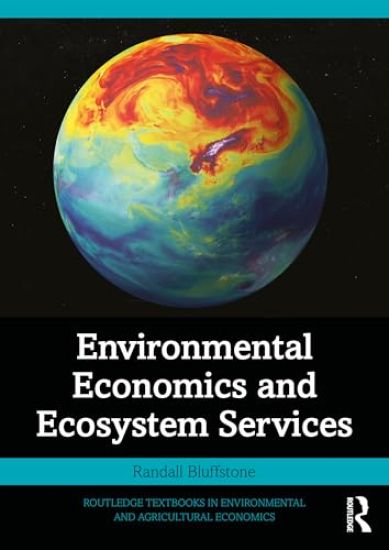
Environmental Economics and Ecosystem Services provides a rigorous yet accessible introduction to environmental economics, using ecosystem services as the underlying framework. Assuming no prior knowledge of economics, and using a conversational writing style, the focus is on exploring society’s linkages with the environment and how economics can help solve key environmental problems.Structured in three parts, the book first introduces readers to the key theories in environmental economics and ecosystem services, and then explores the challenges of conservation. The final section examines environmental policy options, such as cap-and-trade, behavioral nudges, community-based natural resource management and carbon taxes. There is a strong international focus throughout the book, with real-life examples taken from North America, Europe, Asia, Africa and other regions. Students are supported by a range of pedagogical features, including chapter objectives, chapter summaries, discussion questions and further reading suggestions. In addition, the book offers worked examples, analytical problems and “Challenge Yourself” boxes to develop critical thinking skills. Lecture slides and answers to questions for discussion and practice problems are available for instructors.This is the ideal text for introductory courses in environmental economics, ecological economics, economics of sustainability, environmental management, environmental policy and ecosystem services.
Environmental Economics and Ecosystem Services provides a rigorous yet accessible introduction to environmental economics, using ecosystem services as the underlying framework. Assuming no prior knowledge of economics, and using a conversational writing style, the focus is on exploring society’s linkages with the environment and how economics can help solve key environmental problems.Structured in three parts, the book first introduces readers to the key theories in environmental economics and ecosystem services, and then explores the challenges of conservation. The final section examines environmental policy options, such as cap-and-trade, behavioral nudges, community-based natural resource management and carbon taxes. There is a strong international focus throughout the book, with real-life examples taken from North America, Europe, Asia, Africa and other regions. Students are supported by a range of pedagogical features, including chapter objectives, chapter summaries, discussion questions and further reading suggestions. In addition, the book offers worked examples, analytical problems and “Challenge Yourself” boxes to develop critical thinking skills. Lecture slides and answers to questions for discussion and practice problems are available for instructors.This is the ideal text for introductory courses in environmental economics, ecological economics, economics of sustainability, environmental management, environmental policy and ecosystem services.

Challenging mainstream architecture’s understandings of place, this book offers an illuminating clarification that allows the idea’s centrality, in all aspects of everyday design thinking, to be rediscovered or considered for the first time.Rigorous but not dense, practical but not trivialising, the book unfolds on three fronts. First, it clearly frames the pertinent aspects of topology—the philosophy of place—importantly differentiating two concepts that architecture regularly conflates: place and space. Second, it rejects the ubiquitous notion that architecture “makes place” and, instead, reasons that place is what makes architecture and the built environment possible; that place “calls” for and to architecture; and that architecture is thus invited to “listen” and respond. Finally, it turns to the matter of designing responses that result not just in more places of architecture (demanding little of design), nor merely in architecture with some “sense of place” (demanding little more), but, rising above those, responses that constitute an architecture of place (demanding the greatest vigilance but offering the utmost freedom).Opening up a term regarded as so common that its meaning is seldom considered, the author reveals the actual depth and richness of place, its innateness to architecture, and its essentiality to practitioners, clients, educators, and students—including those in all spatial disciplines.

Challenging mainstream architecture’s understandings of place, this book offers an illuminating clarification that allows the idea’s centrality, in all aspects of everyday design thinking, to be rediscovered or considered for the first time.Rigorous but not dense, practical but not trivialising, the book unfolds on three fronts. First, it clearly frames the pertinent aspects of topology—the philosophy of place—importantly differentiating two concepts that architecture regularly conflates: place and space. Second, it rejects the ubiquitous notion that architecture “makes place” and, instead, reasons that place is what makes architecture and the built environment possible; that place “calls” for and to architecture; and that architecture is thus invited to “listen” and respond. Finally, it turns to the matter of designing responses that result not just in more places of architecture (demanding little of design), nor merely in architecture with some “sense of place” (demanding little more), but, rising above those, responses that constitute an architecture of place (demanding the greatest vigilance but offering the utmost freedom).Opening up a term regarded as so common that its meaning is seldom considered, the author reveals the actual depth and richness of place, its innateness to architecture, and its essentiality to practitioners, clients, educators, and students—including those in all spatial disciplines.
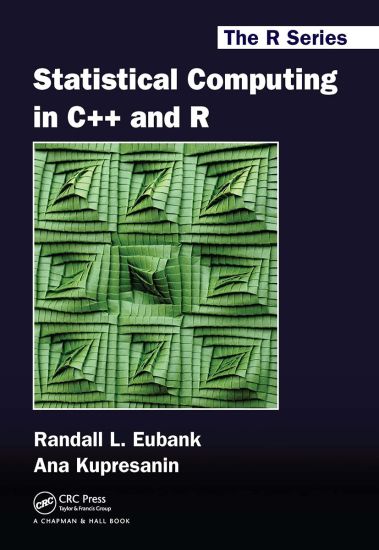
Statistical Computing in C++ and R
Randall L. Eubank; Ana Kupresanin
TAYLOR FRANCIS LTD
2023
nidottu
With the advancement of statistical methodology inextricably linked to the use of computers, new methodological ideas must be translated into usable code and then numerically evaluated relative to competing procedures. In response to this, Statistical Computing in C++ and R concentrates on the writing of code rather than the development and study of numerical algorithms per se. The book discusses code development in C++ and R and the use of these symbiotic languages in unison. It emphasizes that each offers distinct features that, when used in tandem, can take code writing beyond what can be obtained from either language alone. The text begins with some basics of object-oriented languages, followed by a "boot-camp" on the use of C++ and R. The authors then discuss code development for the solution of specific computational problems that are relevant to statistics including optimization, numerical linear algebra, and random number generation. Later chapters introduce abstract data structures (ADTs) and parallel computing concepts. The appendices cover R and UNIX Shell programming.Features Includes numerous student exercises ranging from elementary to challengingIntegrates both C++ and R for the solution of statistical computing problems Uses C++ code in R and R functions in C++ programs Provides downloadable programs, available from the authors’ website The translation of a mathematical problem into its computational analog (or analogs) is a skill that must be learned, like any other, by actively solving relevant problems. The text reveals the basic principles of algorithmic thinking essential to the modern statistician as well as the fundamental skill of communicating with a computer through the use of the computer languages C++ and R. The book lays the foundation for original code development in a research environment.
Understanding Religion and Artificial Intelligence
Randall Reed; Tracy J. Trothen
TAYLOR FRANCIS LTD
2025
sidottu
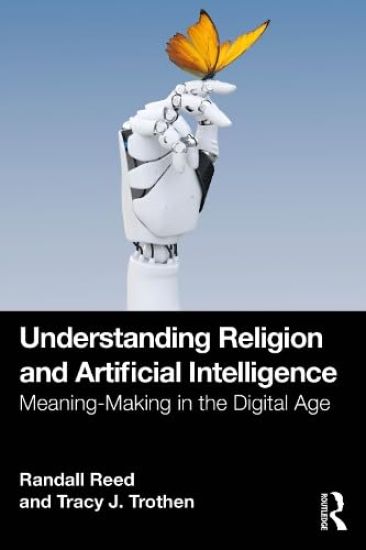
Is Artificial Intelligence just another tool, or is it something more… Special? In Understanding Religion and Artificial Intelligence: Meaning-Making in the Digital Age, Randall Reed and Tracy J. Trothen delve into this provocative question, revealing how our perceptions of AI are deeply intertwined with age-old human impulses to define the extraordinary.Introducing their innovative “Model of the Special,” Reed and Trothen illuminate how individuals, groups, and cultures dynamically shape AI’s meaning, ranging from the mundane to the Sacred and Demonic. Through compelling case studies – from AI chatbots, sport, and art to self-driving cars and “Deadbots” – the authors explore how narratives of awe, fear, and even transcendence position AI as a truly “Special thing” in our modern world.Drawing on insights from religious studies, ethics, and sociology, this interdisciplinary exploration provides a crucial framework for understanding the profound societal, ethical, and spiritual implications of AI. Understanding Religion and Artificial Intelligence invites readers to engage in vital conversations about AI’s impact on meaning, values, and the very fabric of human experience in this rapidly evolving digital age. Prepare to see AI—and ourselves—in a whole new light.
Understanding Religion and Artificial Intelligence
Randall Reed; Tracy J. Trothen
TAYLOR FRANCIS LTD
2025
nidottu
Is Artificial Intelligence just another tool, or is it something more… Special? In Understanding Religion and Artificial Intelligence: Meaning-Making in the Digital Age, Randall Reed and Tracy J. Trothen delve into this provocative question, revealing how our perceptions of AI are deeply intertwined with age-old human impulses to define the extraordinary.Introducing their innovative “Model of the Special,” Reed and Trothen illuminate how individuals, groups, and cultures dynamically shape AI’s meaning, ranging from the mundane to the Sacred and Demonic. Through compelling case studies – from AI chatbots, sport, and art to self-driving cars and “Deadbots” – the authors explore how narratives of awe, fear, and even transcendence position AI as a truly “Special thing” in our modern world.Drawing on insights from religious studies, ethics, and sociology, this interdisciplinary exploration provides a crucial framework for understanding the profound societal, ethical, and spiritual implications of AI. Understanding Religion and Artificial Intelligence invites readers to engage in vital conversations about AI’s impact on meaning, values, and the very fabric of human experience in this rapidly evolving digital age. Prepare to see AI—and ourselves—in a whole new light.
This book provides a critical psychosocial analysis of legal practice, documenting a mental health crisis among lawyers and judges and linking this crisis to a dysfunctional legal system they continue to control.Tracing studies of lawyers and judges over 40 years, this book demonstrates that decades of mental distress and social detachment in the legal profession have seriously damaged the legal system. Focusing largely on conditions in the United States but also drawing on studies from the UK, Canada, Germany, and Australia, the book depicts how this system is jeopardized by lawyers’ egocentrism, depression, anxiety, suicidal ideation, and substance abuse. To improve the legal system and lawyers’ mental health—integrating law, psychology, sociology, and policy making—the book advocates a renewed commitment to justice, compassion, respect, and fairness through an ethic of regenerative altruism.This book will appeal to legal academics concerned with the sociology of legal practice, as well as those involved in training lawyers; it will also be of interest to practicing lawyers, judges, and others engaged by issues of social justice and legal reform.
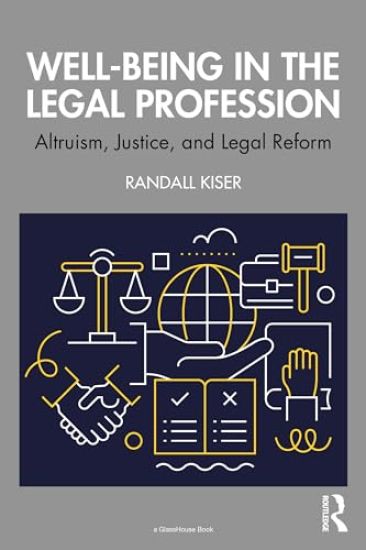
This book provides a critical psychosocial analysis of legal practice, documenting a mental health crisis among lawyers and judges and linking this crisis to a dysfunctional legal system they continue to control.Tracing studies of lawyers and judges over 40 years, this book demonstrates that decades of mental distress and social detachment in the legal profession have seriously damaged the legal system. Focusing largely on conditions in the United States but also drawing on studies from the UK, Canada, Germany, and Australia, the book depicts how this system is jeopardized by lawyers’ egocentrism, depression, anxiety, suicidal ideation, and substance abuse. To improve the legal system and lawyers’ mental health—integrating law, psychology, sociology, and policy making—the book advocates a renewed commitment to justice, compassion, respect, and fairness through an ethic of regenerative altruism.This book will appeal to legal academics concerned with the sociology of legal practice, as well as those involved in training lawyers; it will also be of interest to practicing lawyers, judges, and others engaged by issues of social justice and legal reform.

Written by the leading authority on legal decision making, Professional Judgment for Lawyers integrates empirical legal research, cognitive and social psychology, organizational behavior, legal ethics, and neuroscience to understand and improve decision making by attorneys, clients, judges, arbitrators, mediators, and juries.

Written by the leading authority on legal decision making, Professional Judgment for Lawyers integrates empirical legal research, cognitive and social psychology, organizational behavior, legal ethics, and neuroscience to understand and improve decision making by attorneys, clients, judges, arbitrators, mediators, and juries.
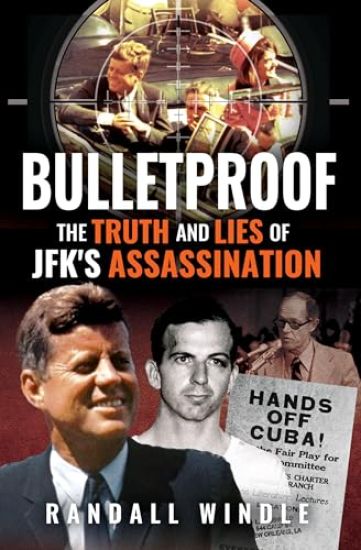
The Final Trigger: The Truth and Lies of JFK's Assassination
Randall Windle
PEN SWORD BOOKS LTD
2024
sidottu
From the glamour of Kennedy's presidency to the enigma of Lee Oswald and the murky world of Jack Ruby, learn their motivations, and see the shadows that continue to linger over one of the most significant moments in modern history. Unraveling the threads of the Cold War and the Cuban conflict, this historical backdrop fuels the paranoid tension leading up to that fateful day in Dallas, and offers fresh perspectives on a pivotal period in American history. Explore the Kennedy legacy. In an era marked by skepticism towards powerful institutions, Kennedy's legacy compels us to question, analyze, and seek transparency. JFK's assassination emerges as a stark reminder of the consequences of unchecked power
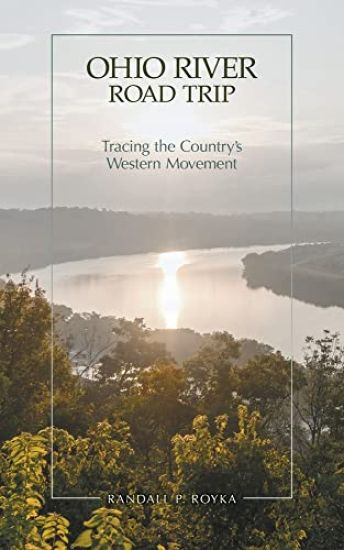
In 2018, author and historian Randall P. Royka set out with his wife to retrace the westward movement of pioneers along the Ohio River after American Independence. Part history, part travelogue, Ohio River Road Trip shares on-the-ground experience alongside historical context, told in engaging, readable prose.Royka interweaves his modern-day trip with the memoirs of a nineteenth century Frenchman who covered much of the same ground, imagined as a whimsical conversation across the centuries. It is a wondrous book about the joy of discovery, the freedom in travel, and the lessons to be learned from those that have walked before us. Complete with travel itinerary and maps, this book will appeal to anyone interested in American history and travel in the American Heartland.

In 2018, author and historian Randall P. Royka set out with his wife to retrace the westward movement of pioneers along the Ohio River after American Independence. Part history, part travelogue, Ohio River Road Trip shares on-the-ground experience alongside historical context, told in engaging, readable prose.Royka interweaves his modern-day trip with the memoirs of a nineteenth century Frenchman who covered much of the same ground, imagined as a whimsical conversation across the centuries. It is a wondrous book about the joy of discovery, the freedom in travel, and the lessons to be learned from those that have walked before us. Complete with travel itinerary and maps, this book will appeal to anyone interested in American history and travel in the American Heartland.