Kirjahaku
Etsi kirjoja tekijän nimen, kirjan nimen tai ISBN:n perusteella.
1000 tulosta hakusanalla Robert A. Cook
This book provides an introduction to the theory of elliptic modular functions and forms, a subject of increasing interest because of its connexions with the theory of elliptic curves. Modular forms are generalisations of functions like theta functions. They can be expressed as Fourier series, and the Fourier coefficients frequently possess multiplicative properties which lead to a correspondence between modular forms and Dirichlet series having Euler products. The Fourier coefficients also arise in certain representational problems in the theory of numbers, for example in the study of the number of ways in which a positive integer may be expressed as a sum of a given number of squares. The treatment of the theory presented here is fuller than is customary in a textbook on automorphic or modular forms, since it is not confined solely to modular forms of integral weight (dimension). It will be of interest to professional mathematicians as well as senior undergraduate and graduate students in pure mathematics.

The Medico-Legal Back: An Illustrated Guide
Robert A. Dickson; W. Paul Butt
Cambridge University Press
2011
pokkari
Back pain and back injury is an extremely common problem, producing chronic, debilitating symptoms for sufferers, and resulting in millions of pounds of lost revenue in absence from work and paid in compensation for spinal injuries. Originally published in 2004, The Medico-Legal Back addresses the problem for a legal readership, in a clear, concise and reader-friendly style. It does away with the need to search for and then extract complex information from many different sources, and as such will be an indispensable guide to the problem for all lawyers, judges and medico-legal experts, as well as being of value to the orthopaedic surgeon with an interest in the spine. Of particular value is the use throughout the book of analogies drawn on anatomical technicalities and common movements, situations and incidents of everyday life.
Sir Roderick Murchison (1792–1871) was a giant of the imperial age. His career was tied intimately to the expansion of the political, economic and scientific realm of the British Empire. A founding father of geological science and geographical exploration, he was both President of the Royal Geographical Society and Director-General of the Geological Survey. His identification of the Silurian system in geology - and subsequent prediction of the location of economic riches - are as notable as his patronage of David Livingstone and other figures of Victorian exploration. More than any contemporary, Murchison emerged as the eminent Victorian who 'sold' science to the imperial government, on the grounds of utility as much as prestige. Robert Stafford uses this study of a man's life and work to investigate the bargain struck between science and the forces of imperialism in mid-Victorian Britain. This illuminates the broader, and still present, intimacy between science and government.
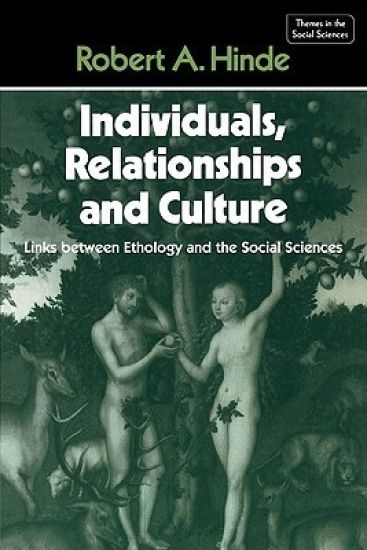
Both biologists and social scientists have much to say about human behaviour. Yet attempts to combine their approaches to provide a deeper understanding of human nature have not so far been generally successful. First published in 1987, this book offered an original way of bridging the gap between them. The key to bringing the two approaches together is, Professor Hinde suggests, to recognise crucial distinctions between levels of social complexity (individuals, interactions, relationships and groups), whilst at the same time bearing in mind that all are processes in dialectical relations with each other and with the socio-cultural structure of institutions, beliefs, values, norms and so on. Professor Hinde argues that principles derived from ethology are essential for understanding some aspects of behaviour at the lower levels of social complexity, but have severe limitations at higher ones. This innovative approach will interest research workers, lecturers and students of psychology, biology, anthropology and sociology, as well as other readers seeking a comprehensive understanding of the nature of human social behaviour.
Mass Spectrometry for Chemists and Biochemists
Robert A. W. Johnstone; Malcolm E. Rose
Cambridge University Press
1996
pokkari
This book describes the full range of mass spectrometry techniques and applications. This versatile technique is in ubiquitous use in universities and industry laboratories because of its ability to identify and quantify materials quickly and, if necessary, in minute amounts, and solve analytical problems in a huge variety of fields. The authors adopt an instructional approach and make use of recent examples to illustrate important points. This second edition includes new methods and applications that have developed in the last ten years. Powerful methods combining mass spectrometry with newer separation techniques, the increased use of computers, and analysis of once difficult polar and large-mass compounds such as proteins using new ionisation methods are all discussed. Requiring no previous knowledge of mass spectrometry, this is an ideal teaching text at both undergraduate and postgraduate level, and will also be of considerable interest to research workers.
Human Capital, Employment and Bargaining
Robert A. Hart; Thomas Moutos
Cambridge University Press
1995
sidottu
This book examines human capital investment, employment and bargaining at the level of the firm. It attempts the first summary of results that incorporate both human capital investment and employment decisions within firm union bargaining models, emphasising investment in teams, or groups, of workers. The authors also examine human capital in relation to labour demand as well as the delineation between neoclassical and coalitional firms. Further they investigate connections between, on the one hand, turnover costs and firm-specific human capital and, on the other, unemployment. Labour market policy topics recur throughout the book and include the choice between pure wage and profit sharing remuneration systems, the issue of whether training should be subsidised by governments, and work-sharing versus layoff decisions. This book is aimed mainly at the academic economics profession, but is easily accessible to final year undergraduate and postgraduate students.
Part of the Cambridge Illustrated Surgical Pathology series, this book provides a comprehensive account of the experienced gynecologic pathologists' diagnostic approach to uterine pathology. Discussion is built around major pathologic entities in the uterus and cervix while highlighting the diverse and complex spectrum of alterations encountered in daily practice. Emphasizing clear description, diagnostic algorithms and problem solving, the book's primary goal is to lay the foundation for diagnostic accuracy, reproducibility, and relevance. It also dispels common misconceptions and encourages an intelligent and thoughtful approach to diagnostic problems using all the tools available to the modern physician. The book is richly illustrated, with more than 700 color photomicrographs, all of which are also found in downloadable format on the accompanying CD-ROM.
Late Georgian and Regency England, 1760–1837
Robert A. Smith
Cambridge University Press
2004
pokkari
This handbook provides a guide to historical literature on England between 1760 and 1837, except for the literature and literary criticism of the period. Selected printed source material, bibliographies, catalogues, guides, reference articles are all included. The emphasis is works, secondary studies and scholarly on more recent work, not covered by earlier bibliographies, but all major work is included as arc leading studies of Scottish, Welsh and Irish affairs.
Sir Roderick Murchison (1792–1871) was a giant of the imperial age. His career was tied intimately to the expansion of the political, economic and scientific realm of the British Empire. A founding father of geological science and geographical exploration, he was both President of the Royal Geographical Society and Director-General of the Geological Survey. His identification of the Silurian system in geology - and subsequent prediction of the location of economic riches - are as notable as his patronage of David Livingstone and other figures of Victorian exploration. More than any contemporary, Murchison emerged as the eminent Victorian who ‘sold’ science to the imperial government, on the grounds of utility as much as prestige. Robert Stafford uses this study of a man’s life and work to investigate the bargain struck between science and the forces of imperialism in mid-Victorian Britain. This illuminates the broader, and still present, intimacy between science and government.
Where does the mind begin and end? Most philosophers and cognitive scientists take the view that the mind is bounded by the skull or skin of the individual. Robert Wilson, in this provocative and challenging new book, provides the foundations for the view that the mind extends beyond the boundary of the individual. The approach adopted offers a unique blend of traditional philosophical analysis, cognitive science, and the history of psychology and the human sciences. A forthcoming companion volume Genes and the Agents of Life will explore the theme in the biological sciences. Written with verve and clarity, this ambitious book will appeal to a broad swathe of professionals and students in philosophy, psychology, cognitive science, and the history of the behavioural and human sciences.
Genes and the Agents of Life undertakes to rethink the place of the individual in the biological sciences, drawing parallels with the cognitive and social sciences. Genes, organisms, and species are all agents of life but how are each of these conceptualized within genetics, developmental biology, evolutionary biology, and systematics? The book includes highly accessible discussions of genetic encoding, species and natural kinds, and pluralism above the levels of selection, drawing on work from across the biological sciences. The book is a companion to the author’s Boundaries of the Mind, also available from Cambridge, where the focus is the cognitive sciences. The book will appeal to a broad range of professionals and students in philosophy, biology, and the history of science.
Planning Clinical Research
Robert A. Parker; Nancy G. Berman
Cambridge University Press
2016
pokkari
Planning a clinical study is much more than determining the basic study design. Who will you be studying? How do you plan to recruit your study subjects? How do you plan to retain them in the study? What data do you plan to collect? How will you obtain this data? How will you minimize bias? All these decisions must be consistent with the ethical considerations of studying people. This book teaches how to choose the best design for your question. Drawing on their many years working in clinical research, Nancy G. Berman and Robert A. Parker guide readers through the essential elements of study planning to help get them started. The authors offer numerous examples to illustrate the key decisions needed, describing what works, what does not work, and why. Written specifically for junior investigators beginning their research careers, this guide will also be useful to senior investigators needing to review specific topics.
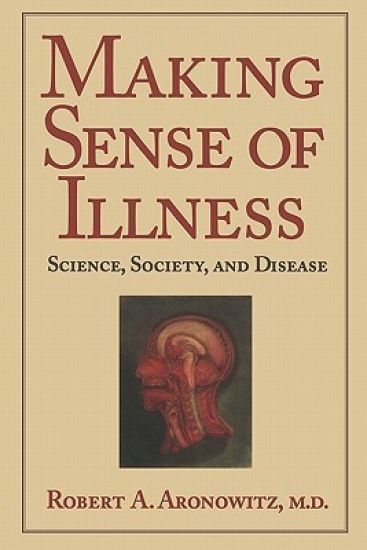
This book offers historical essays about how diseases change their meaning. Each of the diseases or etiologic hypotheses in this book has had a controversial and contested history: psychosomatic views of ulcerative colitis, twentieth-century chronic fatigue syndrome, Lyme disease, angina pectoris, risk factors for coronary heart disease, and the type A hypothesis. At the core of these controversies are disagreements among investigators, clinicians, and patients over the best way to deal with what individuals bring to disease. By juxtaposing the history of the different diseases, the author shows how values and interests have determined research programs, public health activities, clinical decisions, and the patient’s experience of illness. The approach is novel in its interweaving of historical research and the clinical experiences of the author. It should appeal to an audience of physicians, policy makers, social scientists and the general reader interested in broad intellectual currents in modern medicine.
This book provides a comprehensive overview of Japanese labour market institutions and practices with respect to employment issues and labour payments. It contains extensive discussion of the effects of industrial relations, small business activity, business cycles and schooling on work and pay. An early chapter is devoted to presenting, in an accessible manner, essential labour market ideas and concepts that recur throughout the text. Important topics covered include (i) unions and wage determination, (ii) the breakdown of total labour costs, (iii) the Japanese bonus system, (iv) the employment life-cycle, (v) small businesses and subcontracting, (vi) pay and productivity over the business cycle. A key feature is that subject areas and themes are examined within a comparative United States/European framework. This allows assessments of whether or not the structure and performance of the Japanese labour market has differed from experience elsewhere.
Child Care and Culture
Robert A. Levine; Sarah Levine; Suzanne Dixon; Amy Richman; P. Herbert Leiderman; Constance H. Keefer; T. Berry Brazelton
Cambridge University Press
1996
pokkari
Child Care and Culture examines parenthood, infancy, and early childhood in an African community, revealing patterns unanticipated by current theories of child development and raising provocative questions about ‘normal’ child care in the human species. Comparing the Gusii people of Kenya, whose practices were intensively observed from the combined perspectives of social anthropology, pediatrics, and developmental psychology, with the American white middle class, the authors show how divergent cultural priorities create differing conditions for early childhood development.
This book provides a comprehensive overview of Japanese labour market institutions and practices with respect to employment issues and labour payments. It contains extensive discussion of the effects of industrial relations, small business activity, business cycles and schooling on work and pay. An early chapter is devoted to presenting, in an accessible manner, essential labour market ideas and concepts that recur throughout the text. Important topics covered include (i) unions and wage determination, (ii) the breakdown of total labour costs, (iii) the Japanese bonus system, (iv) the employment life-cycle, (v) small businesses and subcontracting, (vi) pay and productivity over the business cycle. A key feature is that subject areas and themes are examined within a comparative United States/European framework. This allows assessments of whether or not the structure and performance of the Japanese labour market has differed from experience elsewhere.
Society in Time and Space is an important book which offers a geographical perspective on societal change, and sets out to show how understanding the geography of such change enables us to appreciate better the basic processes involved. Robert Dodgshon argues that, as a first step, we need to clarify the circumstances under which society becomes inertial and finds change difficult. Using a range of historical and contemporary examples, he shows that society's use of space is a powerful source of this inertia. Different sources of geographical inertia are explored, including society's symbolization and organizational structuring of space, together with its capitalization of landscape. Building on this mapping of inertia, Professor Dodgshon shows how society has long steered radical change around such spaces. Society in Time and Space will be of interest not only to geographers but also to historians and social theorists.
This book will show you the technique of star-hopping, or using the brighter stars and asterisms as guideposts on celestial paths to fainter stars or celestial objects. Twelve monthly star-hops form the heart of the book. Two or more tours are given for each month of the year. Each main hop is a step-by-step trip for you to follow. Taking these exciting tours reinforces the lessons of the methods of star-hopping. These celestial tours can be taken any time during the year. One chapter is devoted to the popular Messier Marathon. The book covers such techniques as reading star charts, finding celestial directions, telescopic types, and selecting and using light pollution reduction filters. Basic information is also given about what we know about the universe and the people who have made the discoveries, and the ancient mythology of the sky.