Kirjojen hintavertailu. Mukana 12 026 363 kirjaa ja 12 kauppaa.

Kirjahaku

Etsi kirjoja tekijän nimen, kirjan nimen tai ISBN:n perusteella.

1000 tulosta hakusanalla Rohan Candappa

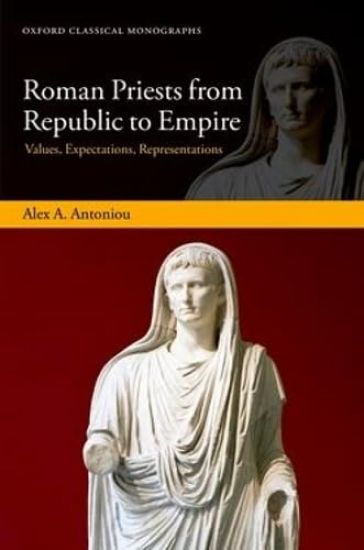
Roman Priests from Republic to Empire

Roman Priests from Republic to Empire

Alex A. Antoniou

Oxford University Press
2025
sidottu
This book reconstructs the values, expectations and representations of priests and priesthoods in ancient Rome from the republic to the early empire. Challenging preconceived assumptions that Rome's priests were important primarily because of their political currency, Roman Priests from Republic to Empire proposes a more nuanced reading of our ancient evidence for these significant men and women. Considering priests from Rome's mythical and legendary past through to the early second century CE, this study demonstrates that the social and moral worth of priests was fundamental to Roman thinking in the late republic and into the early empire. It reasserts the importance of the category of priesthood in ancient Rome, above and beyond other civic or magisterial roles for Romans (for example, those of magistrate or senator), and proves that priests were expected to be of greater moral and social worth than others. Alex A. Antoniou reveals first that there was a Roman vocabulary of virtues which had a particular resonance for Roman priests, which described both the qualities that priests were expected to maintain and the modus operandi of priests within Roman society. Second, this study demonstrates that priests and priesthoods were fundamental to the ways in which Romans both conceptualised Rome's legendary and historical past, and negotiated the challenges and successes of their current circumstances. Ultimately, this study proves that perceptions of the moral worth and virtue of Rome's priests were embedded in Roman socio-ethical discourse.
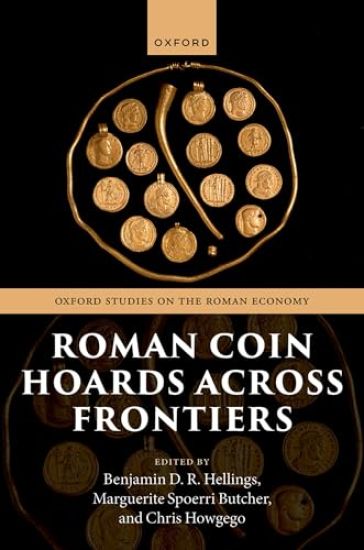
Roman Coin Hoards Across Frontiers

Roman Coin Hoards Across Frontiers

Oxford University Press
2026
sidottu
The spread of Roman coins and their imitations, from Ireland to Thailand, reaches well beyond a modern political map of the Roman provinces. Roman Coin Hoards Across Frontiers provides a broad survey of hoarding of Roman coins beyond the Roman Empire from c. 30 BC to AD 518 and its relevance to our understanding of the commercial, political, and cultural connections between Rome and its neighbours, near and far. Written by nineteen international scholars, it draws on data gathered for the Coin Hoards of the Roman Empire Project, an online database cataloguing all known Roman coin hoards. The volume starts with select studies on aspects of deposition within the Empire, followed by regional analyses covering Southern Scandinavia, Germany, and Eastern Europe, as well as the eastern part of the Roman Empire and its adjacent regions, from the Caucasus up to India. The last section looks outside the Roman hoard evidence itself, offering insights from a later period in the Viking north and from metallurgy. The concluding chapter provides an analysis of the key literary textual evidence for the export of coin outside the Empire. By studying the full reach of Roman material culture beyond the frontiers through the lens of coin hoards, this book reveals the nature of Roman imperialism, the importance of commerce, and the significance of borders.
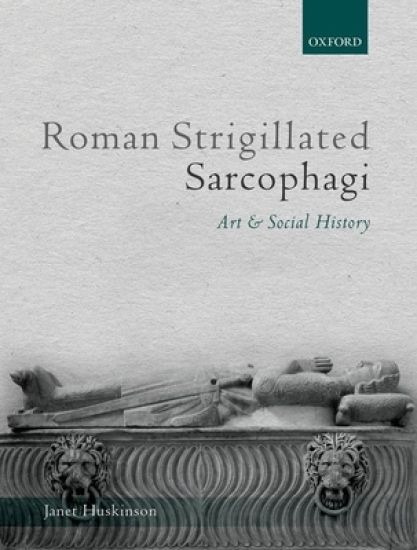
Roman Strigillated Sarcophagi

Roman Strigillated Sarcophagi

Janet Huskinson

Oxford University Press
2015
sidottu
This is the first full study of Roman strigillated sarcophagi, which are the largest group of decorated marble sarcophagi to survive in the city of Rome. Characterized by panels of carved fluting - hence the description 'strigillated', after the curved strigil used by Roman bathers to scrape off oil - and limited figure scenes, they were produced from the mid-second to the early fifth century AD, and thus cover a critical period in Rome, from empire to early Christianity. Roman Strigillated Sarcophagi focuses on their rich potential as an historical source for exploring the social and cultural life of the city in the later empire. The first part of the volume examines aspects of their manufacture, use, and viewing, emphasizing distinctive features. The second part looks at the figured representations carved on the sarcophagi, and at their social significance and creativity, concentrating on how their various arrangements allowed viewers to develop their own interpretations. The subjects represented by the figures and the flexibility with which they might be read, provide invaluable insights into how Romans thought about life and death during these changing times. The final part of the volume surveys how later societies responded to Roman strigillated sarcophagi. From as early as the fifth century AD their distinctive decoration and allusions to the Roman past made them especially attractive for reuse in particular contemporary contexts, notably for elite burials and the decoration of prominent buildings. The motif of curved fluting was also adopted and adapted: it decorated neo-classical memorials to Captain Cook, Napoleon's sister-in-law Christine Boyer, and Penelope Boothby, and its use continues into this century, well over one and a half millennia since it first decorated Roman sarcophagi.
Roman Religion

Roman Religion

J. A. North

Oxford University Press
2000
pokkari
The last forty years have brought about a transformation in the understanding of pagan Roman religion, rescuing it from the margins of the discipline and restoring its rituals and rhythms to their place at the centre of Roman life and literature. This book provides an up-to-date account of the religious history of Rome starting from its mythical origins, describing its character and development through the later Republican centuries and assessing the response of pagans to the coming of new religious forms during the centuries of Roman imperial rule. It places great emphasis on the fundamental difference between modern ideas of what a religion ought to be and the realities of ancient life. The book is designed to be accessible to all those approaching the subject for the first time, whether their interest is in the classical world or in comparing its religious forms with those of other times and places.
Roman Patrons of Greek Cities

Roman Patrons of Greek Cities

Claude Eilers

Oxford University Press
2002
sidottu
Patronage has long been an important topic of interest to ancient historians. It remains unclear what patronage entailed, however, and how it worked. Is it a universal phenomenon embracing all, or most, relationships between unequals? Or is it an especially Roman practice? In previous discussions of patronage, one crucial body of evidence has been under-exploited: inscriptions from the Greek East that borrow the Latin term 'patron' and use it to honour their Roman officials. The fact that the Greeks borrow the term patron suggests that there was something uniquely Roman about the patron-client relationship. Moreover, this epigraphic evidence implies that patronage was not only a part of Rome's history, but had a history of its own. The rise and fall of city patrons in the Greek East is linked to the fundamental changes that took place during the fall of the Republic and the transition to the Principate. Senatorial patrons appear in the Greek inscriptions of the Roman province of Asia towards the end of the second century BC and are widely attested in the region and elsewhere for the following century. In the early principate, however, they become less common and soon more or less disappear. Eilers's discursive treatment of the origins, nature, and decline of this type of patronage, and its place in Roman practice as a whole, is supplemented by a reference catalogue of Roman patrons of Greek communities.
Roman Europe

Roman Europe

Oxford University Press
2008
sidottu
This volume traces the rise of Rome and the extension of Roman power across Europe, from the viewpoints of both conquerors and conquered, and also Rome's barbarian heirs, covering the period from 1000 BC through to AD 400. The book reconstructs as far as possible the indigenous experience of contact with Rome, showing how Roman domination impacted upon the already complex world of Iron Age Europe, before leaving a new 'barbarian' world in its wake. Using both literary and archaeological evidence, the eight expert contributors analyse the transformation of Europe, and the laying of the foundations of the Middle Ages, including chapters on Iron Age Europe, Roman society, warfare and the army, economy and trade, religions, and the cultural implications of Roman conquest, as well as narrative chapters on war and politics.
Roman Europe

Roman Europe

Oxford University Press
2008
nidottu
This volume traces the rise of Rome and the extension of Roman power across Europe, from the viewpoints of both conquerors and conquered, and also Rome's barbarian heirs, covering the period from 1000 BC through to AD 400. The book reconstructs as far as possible the indigenous experience of contact with Rome, showing how Roman domination impacted upon the already complex world of Iron Age Europe, before leaving a new 'barbarian' world in its wake. Using both literary and archaeological evidence, the eight expert contributors analyse the transformation of Europe, and the laying of the foundations of the Middle Ages, including chapters on Iron Age Europe, Roman society, warfare and the army, economy and trade, religions, and the cultural implications of Roman conquest, as well as narrative chapters on war and politics.
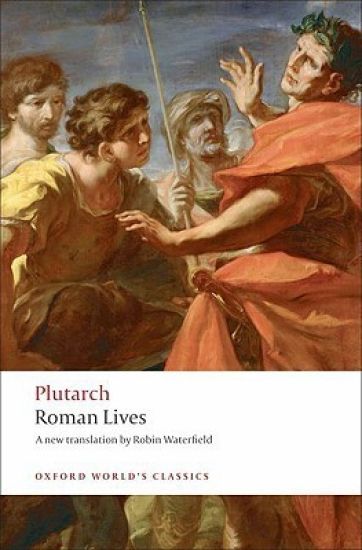
Roman Lives

Roman Lives

Plutarch

Oxford University Press
2008
nidottu
Marcus Cato Sulla Aemilius Paullus Pompey The Gracchi Marius Julius Caesar Anthony 'I treat the narrative of the Lives as a kind of mirror...The experience is like nothing so much as spending time in their company and living with them: I receive and welcome each of them in turn as my guest.' In the eight lives of this collection Plutarch introduces the reader to the major figures and periods of classical Rome. He portrays virtues to be emulated and vices to be avoided, but his purpose is also implicitly to educate and warn those in his own day who wielded power. In prose that is rich, elegant and sprinkled with learned references, he explores with an extraordinary degree of insight the interplay of character and political action. While drawing chiefly on historical sources, he brings to biography a natural story-teller's ear for a good anecdote. Throughout the ages Plutarch's Lives have been valued for their historical value and their charm. This new translation will introduce new generations to his urbane erudition. The most comprehensive selection available, it is accompanied by a lucid introduction, explanatory notes, bibliographies, maps and indexes. ABOUT THE SERIES: For over 100 years Oxford World's Classics has made available the widest range of literature from around the globe. Each affordable volume reflects Oxford's commitment to scholarship, providing the most accurate text plus a wealth of other valuable features, including expert introductions by leading authorities, helpful notes to clarify the text, up-to-date bibliographies for further study, and much more.
Roman Christianity and Roman Stoicism

Roman Christianity and Roman Stoicism

Runar Thorsteinsson

Oxford University Press
2010
sidottu
Christianity is commonly held to have introduced an entirely new and better morality into the ancient world, a new morality that was decidedly universal, in contrast to the ethics of the philosophical schools which were only concerned with the intellectual few. Runar M. Thorsteinsson presents a challenge to this view by comparing Christian morality in first-century Rome with contemporary Stoic ethics in the city. Thorsteinsson introduces and discusses the moral teaching of Roman Stoicism; of Seneca, Musonius Rufus, and Epictetus. He then presents the moral teaching of Roman Christianity as it is represented in Paul's Letter to the Romans, the First Letter of Peter, and the First Letter of Clement. Having established the bases for his comparison, he examines the similarities and differences between Roman Stoicism and Roman Christianity in terms of morality. Five broad themes are used for the comparison, questions of Christian and Stoic views about: a particular morality or way of life as proper worship of the deity; certain individuals (like Jesus and Socrates) as paradigms for the proper way of life; the importance of mutual love and care; non-retaliation and 'love of enemies'; and the social dimension of ethics. This approach reveals a fundamental similarity between the moral teachings of Roman Christianity and Roman Stoicism. The most basic difference is found in the ethical scope of the two: While the latter teaches unqualified universal humanity, the former seems to condition the ethical scope in terms of religious adherence.
Roman Christianity and Roman Stoicism

Roman Christianity and Roman Stoicism

Runar Thorsteinsson

Oxford University Press
2013
nidottu
Christianity is commonly held to have introduced an entirely new and better morality into the ancient world, a new morality that was decidedly universal, in contrast to the ethics of the philosophical schools which were only concerned with the intellectual few. Runar M. Thorsteinsson presents a challenge to this view by comparing Christian morality in first-century Rome with contemporary Stoic ethics in the city. Thorsteinsson introduces and discusses the moral teaching of Roman Stoicism; of Seneca, Musonius Rufus, and Epictetus. He then presents the moral teaching of Roman Christianity as it is represented in Paul's Letter to the Romans, the First Letter of Peter, and the First Letter of Clement. Having established the bases for his comparison, he examines the similarities and differences between Roman Stoicism and Roman Christianity in terms of morality. Five broad themes are used for the comparison, questions of Christian and Stoic views about: a particular morality or way of life as proper worship of the deity; certain individuals (like Jesus and Socrates) as paradigms for the proper way of life; the importance of mutual love and care; non-retaliation and 'love of enemies'; and the social dimension of ethics. This approach reveals a fundamental similarity between the moral teachings of Roman Christianity and Roman Stoicism. The most basic difference is found in the ethical scope of the two: While the latter teaches unqualified universal humanity, the former seems to condition the ethical scope in terms of religious adherence.
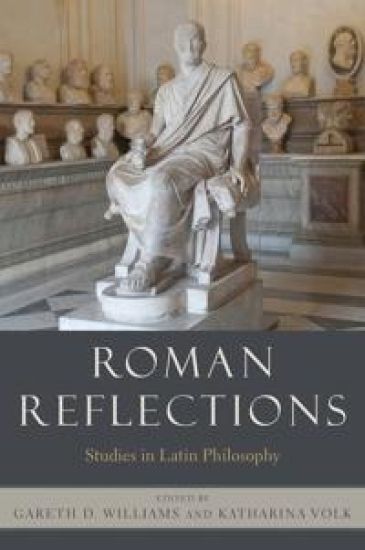
Roman Reflections

Roman Reflections

Oxford University Press Inc
2015
sidottu
When the Romans adopted Greek literary genres, artistic techniques, and iconographies, they did not slavishly imitate their models. Rather, the Romans created vibrant and original literature and art. The same is true for philosophy, though the rich Roman philosophical tradition is still too often treated as a mere footnote to the history of Greek philosophy. This volume aims to reassert the significance of Roman philosophy and to explore the "Romanness" of philosophical writings and practices in the Roman world. The contributors reveal that the Romans, in their creative adaptation of Greek modes of thought, developed sophisticated forms of philosophical discourse shaped by their own history and institutions, concepts and values-and last, but not least, by the Latin language, which nearly all Roman philosophers used to express their ideas. The thirteen chapters-which are authored by an international group of specialists in ancient philosophy, Latin literature, and Roman social and intellectual history-move from Roman attitudes to and practices of philosophy to the great late Republican writers Cicero and Lucretius, then onwards to the early Empire and the work of Seneca the Younger, and finally to Epictetus, Apuleius, and Augustine. Using a variety of approaches, the essays do not combine into one grand narrative but instead demonstrate the diversity and originality of the Roman philosophical discourse over the centuries.
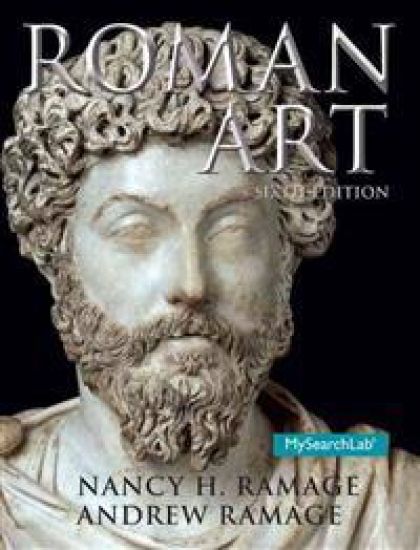
Roman Art

Roman Art

Nancy H. Ramage

Pearson
2013
nidottu
An absorbing introduction to Roman art and architecture Roman Art, 6/e helps students gain an understanding of the development of Roman art and architecture across the entire Roman empire. This title deals comprehensively with the architecture, sculpture, painting, mosaics, and the decorative arts of the Romans placing them in their proper historical context. Readers will examine these artworks in the context of the history, religion, and politics of each era, building a fuller picture of how the arts relate to what else is going on in the Roman Republic and Empire. This title is ideal for readers who are studying Roman art for the first time. It assumes no prior acquaintance with the classical world, and explains the necessary linguistic, historical, religious, social, and political background needed to fully understand Roman art. MySearchLab is a part of the Ramage / Ramage program. Research and writing tools, including access to academic journals, help students explore Roman Art in even greater depth. To provide students with flexibility, students can download the eText to a tablet using the free Pearson eText app. 0205998380 / 9780205998388 Roman Art Plus MySearchLab with Pearson eText -- Access Card Package Package consists of: 0205239927 / 9780205239924 MySearchLab with Pearson eText -- Valuepack Access Card 0205988954 / 9780205988952 Roman Art
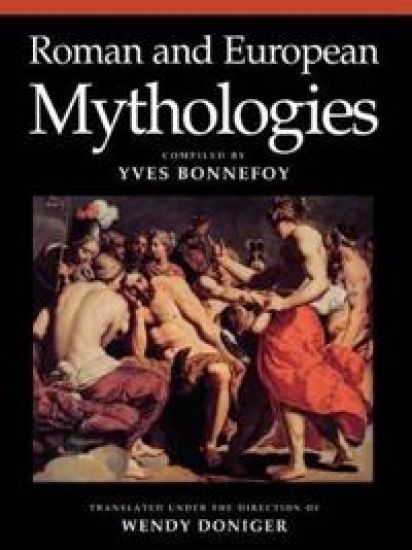
Roman and European Mythologies

Roman and European Mythologies

University of Chicago Press
1992
nidottu
This volume begins with Roman myths and traces their influence in early Christian and later European literature. Ninety-five entries by leading scholars cover subjects such as sacrificial cults and rites in pre-Roman Italy, Roman religion and its origins, the mythologies of paganism, the survival of the ancient gods in the Middle Ages and the Renaissance, gypsy myths and rituals, romanticism and myth in Blake, Nerval, and Balzac, and myth in twentieth-century English literature. Mythologies offers illuminating examples of the workings of myth in the structure of societies past and present--how we create, use, and are guided by systems of myth to answer fundamental questions about ourselves and our world. Many of the sections in Mythologies, originally published as a two-volume cloth set, will soon be available in four paperback volumes (two are announced here; two more are scheduled for 1993). These volumes will reproduce the articles, introductory essays, and illustrations as they appeared in the full Mythologies set.
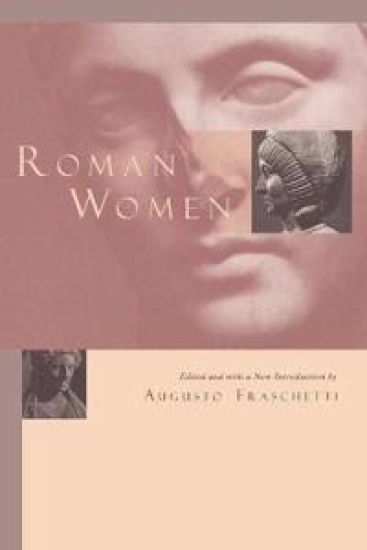
Roman Women

Roman Women

University of Chicago Press
1999
sidottu
This collection of essays features important Roman women who were active in politics, theatre, cultural life and religion from the 1st through the 4th centuries. The contributors draw on rare documents in an attempt to reconstruct the lives and accomplishments of these exceptional women, a difficult task considering that the Romans recorded very little about women. They thought it improper for a woman's virtues to be praised outside the home. Moreover, they believed that a feeble intellect, a weakness in character and a general incompetence prevented a woman from participating in public life. This investigation encounters a number of idiosyncratic personalities. They include the vestal virgin Claudia; Cornelia, a matron; the passionate Fulvia; a mime known as "Lycoris"; the politician Livia; the martyr and writer Vibia Perpetua; a hostess named Helena Augusta; the intellectual Hypatia; and the saint Melania the Younger. Unlike their silent female counterparts, these women stood out in a culture where it was terribly difficult and odd to do so.
Roman Women

Roman Women

University of Chicago Press
1999
nidottu
This collection of essays features important Roman women who were active in politics, theatre, cultural life and religion from the 1st through the 4th centuries. The contributors draw on rare documents in an attempt to reconstruct the lives and accomplishments of these exceptional women, a difficult task considering that the Romans recorded very little about women. They thought it improper for a woman's virtues to be praised outside the home. Moreover, they believed that a feeble intellect, a weakness in character and a general incompetence prevented a woman from participating in public life. This investigation encounters a number of idiosyncratic personalities. They include the vestal virgin Claudia; Cornelia, a matron; the passionate Fulvia; a mime known as "Lycoris"; the politician Livia; the martyr and writer Vibia Perpetua; a hostess named Helena Augusta; the intellectual Hypatia; and the saint Melania the Younger. Unlike their silent female counterparts, these women stood out in a culture where it was terribly difficult and odd to do so.
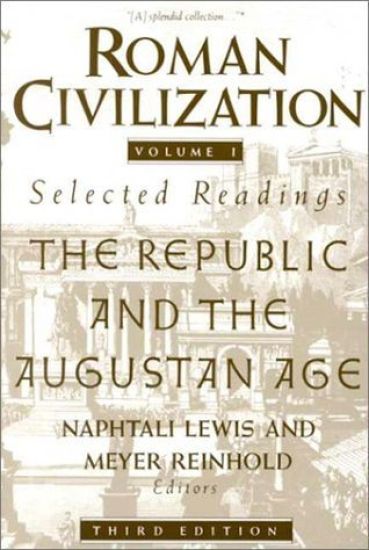
Roman Civilization: Selected Readings

Roman Civilization: Selected Readings

Naphtali Lewis; Meyer Reinhold

Columbia University Press
1990
pokkari
Naphtali Lewis and Meyer Reinhold's Roman Civilization is a classic. Originally published by Columbia University Press in 1955, the authors have undertaken another revision which takes into account recent work in the field. These volumes consist of selected primary documents from ancient Rome, covering a range of over 1,000 years of Roman culture, from the foundation of the city to its sacking by the Goths. The selections cover a broad spectrum of Roman civilization, including literature, philosophy, religion, education, politics, military affairs, and economics. These English translations of literary, inscriptional, and papyrological sources, many of which are available nowhere else, create a mosaic of the brilliance, the beauty, and the power of Rome.
Roman Civilization: Selected Readings

Roman Civilization: Selected Readings

Naphtali Lewis

Columbia University Press
1990
sidottu
Naphtali Lewis and Meyer Reinhold's Roman Civilization is a classic. Originally published by Columbia University Press in 1955, the authors have undertaken another revision which takes into account recent work in the field. These volumes consist of selected primary documents from ancient Rome, covering a range of over 1,000 years of Roman culture, from the foundation of the city to its sacking by the Goths. The selections cover a broad spectrum of Roman civilization, including literature, philosophy, religion, education, politics, military affairs, and economics. These English translations of literary, inscriptional, and papyrological sources, many of which are available nowhere else, create a mosaic of the brilliance, the beauty, and the power of Rome.
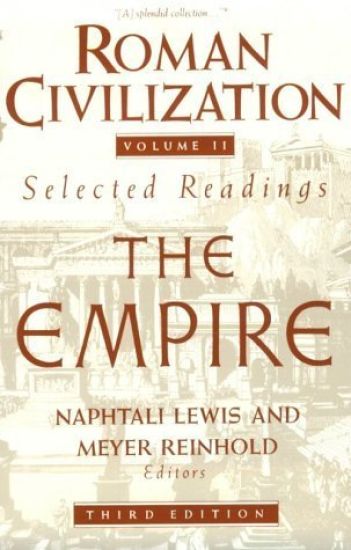
Roman Civilization: Selected Readings

Roman Civilization: Selected Readings

Naphtali Lewis

Columbia University Press
1990
pokkari
Naphtali Lewis and Meyer Reinhold's Roman Civilization is a classic. Originally published by Columbia University Press in 1955, the authors have undertaken another revision which takes into account recent work in the field. These volumes consist of selected primary documents from ancient Rome, covering a range f over 1,000 years of Roman culture, from the foundation of the city to its sacking by the Goths. The selections cover a broad spectrum of Roman civilization, including literature, philosophy, religion, education, politics, military affairs, and economics. These English translations of literary, inscriptional, and papyrological sources, many of which are available nowhere else, create a mosaic of the brilliance, the beauty, and the power of Rome.
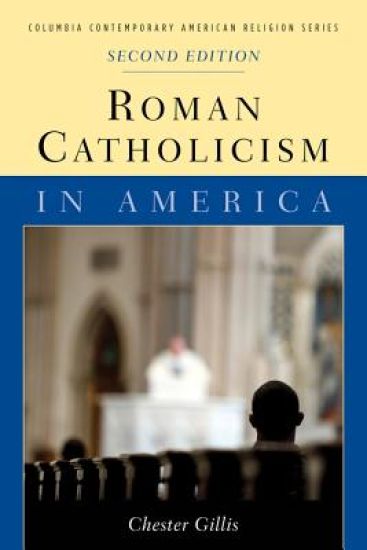
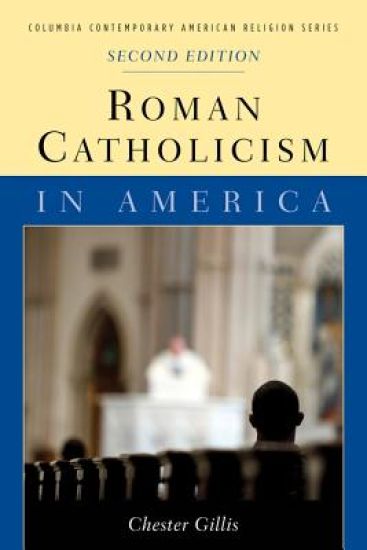
Roman Catholicism in America

Roman Catholicism in America

Chester Gillis

Columbia University Press
2020
sidottu
Who are American Catholics and what do they believe and practice? How has American Catholicism influenced and been influenced by American culture and society? This book examines the history of American Catholics from the colonial era to the present, with an emphasis on changes and challenges in the contemporary church.Chester Gillis chronicles America Catholics: where they have come from, how they have integrated into American society, and how the church has influenced their lives. He highlights key events and people, examines data on Catholics and their relationship to the church, and considers the church’s positions and actions on politics, education, and gender and sexuality in the context of its history and doctrines.This second edition of Roman Catholicism in America pays particular attention to the tumultuous past twenty years and points toward the future of the religion in the United States. It examines the unprecedented crisis of sexual abuse by priests—the legal, moral, financial, and institutional repercussions of which continue to this day—and the bishops’ role in it. Gillis also discusses the election of Pope Francis and the controversial role Catholic leadership has played in American politics.
Roman Catholicism in America

Roman Catholicism in America

Chester Gillis

Columbia University Press
2020
pokkari
Who are American Catholics and what do they believe and practice? How has American Catholicism influenced and been influenced by American culture and society? This book examines the history of American Catholics from the colonial era to the present, with an emphasis on changes and challenges in the contemporary church.Chester Gillis chronicles America Catholics: where they have come from, how they have integrated into American society, and how the church has influenced their lives. He highlights key events and people, examines data on Catholics and their relationship to the church, and considers the church’s positions and actions on politics, education, and gender and sexuality in the context of its history and doctrines.This second edition of Roman Catholicism in America pays particular attention to the tumultuous past twenty years and points toward the future of the religion in the United States. It examines the unprecedented crisis of sexual abuse by priests—the legal, moral, financial, and institutional repercussions of which continue to this day—and the bishops’ role in it. Gillis also discusses the election of Pope Francis and the controversial role Catholic leadership has played in American politics.