Kirjojen hintavertailu. Mukana 12 019 326 kirjaa ja 12 kauppaa.

Kirjahaku

Etsi kirjoja tekijän nimen, kirjan nimen tai ISBN:n perusteella.

1000 tulosta hakusanalla S. Englander

New England in U.S. Government Publications, 1789-1849
The period from 1789 to 1849 is one of the most eventful in U.S. history. It includes the growth of the United States from the first Congress, through the War of 1812, the Mexican War, and the territorial expansion of the United States. Through nearly 4000 annotated entries, this bibliography provides references to New England and New Englanders in U.S. government publications issued during that period. It traces the origin of many of the social, fiscal, and foreign policies that were instrumental in the development of the country and whose consequences still affect us today. It encompasses the development of the postal system and the Treasury Department, the distribution of the public lands, the exploration of the West, systems of defense and fortification, boundary disputes, the annexation of Texas, and the origin of the divisive differences between the South and North over tariffs and slavery. During these first 30 congresses, the United States government published and distributed a wealth of primary and secondary source material documenting these historical events and issues. Historians researching the history of New England and its peoples can find a variety of information in these publications on New England topics and concerns. Speeches from New England Representatives and Senators also offer their views and the views of their constituents on the regional and national issues of the day. Included in this bibliography are references in published government documents by and to the New England states, covering Connecticut, Maine, Massachusetts, New Hampshire, Rhode Island, and Vermont. Speeches by congressmen from these states, memorials and petitions voicing the opinion of the people of these states, and congressional and executive reports, documents, and references specifically about the states and their concerns are cited. Each citation is accompanied by a brief annotation. The volume has chapters on each state, and within each chapter, the entries are arranged chronologically by Congress and Session. Thus the reader can browse through a chapter to get a sense of the issues facing a state during the period, or can consult the extensive indexes to locate specific information more precisely.
The Matriarchs of England's Cooperative Movement

The Matriarchs of England's Cooperative Movement

Barbara J. Blaszak

Praeger Publishers Inc
1999
sidottu
Current thinking considers the Women's Cooperative Guild within the English Cooperative Movement to have been an independent and democratically run organization whose leaders built sisterhood across class lines and achieved many benefits for married working-class women. This study of the dynamics of gender within the movement between 1883 and 1921 arrives at different conclusions. Blaszak examines what freedoms of speech and activity women were permitted within the movement, as well as what resources they were given to accomplish their tasks. Ultimately, the parameters set by the men would determine the type of female leadership that emerged and whether it was able to realize its feminist and utopian agendas. Setting the organization's activities within the context of gender relations in the Cooperative Movement, Blaszak finds that the Guild was much more dependent and much less democratically directed than has usually been supposed. Restrictions established by male cooperators and enhanced by the realities of working-class life turned the Guild into a clique dominated by a few. Even the Guild's most revered leader, Margaret Llewelyn Davies, found it impossible to escape the gendered socio-economic circumstances in which she labored at her ministry to improve the lives of working-class women. Consequently, her leadership inadvertently assisted male cooperators in their attempts to limit possibilities for women.
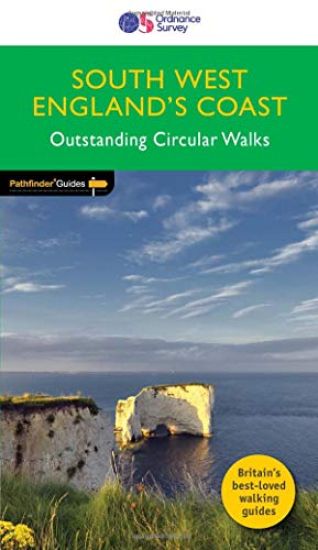
South West England's Coast

South West England's Coast

Sue Viccars

ORDNANCE SURVEY
2019
pokkari
New Pathfinder (R) walking guide to South West England featuring 30 circular walks ranging in length from 2 to 13 miles. Exploring the UK's most popular National Trail, the South West Coast Path, all walks are accompanied by GPS waypoints, Ordnance Survey maps and colour photography
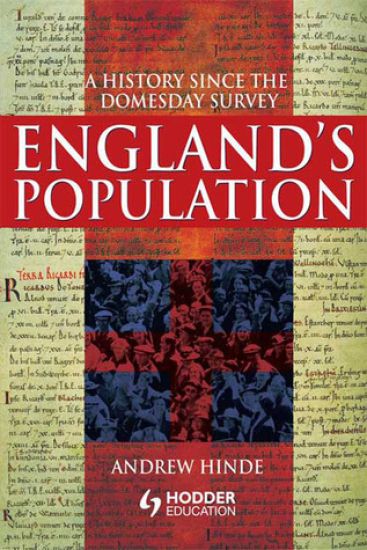
England's Population

England's Population

Andrew Hinde

Hodder Arnold
2003
sidottu
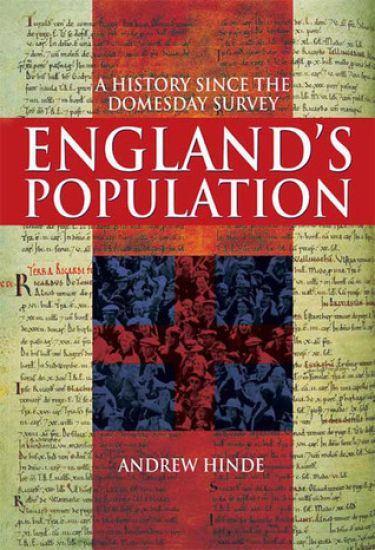
"England's Population" is the first single-volume demographic history of England covering the entire period since the Norman conquest. It charts the magnitude and characteristics of population change in England since the eleventh century, describes the major explanations for population change which have been proposed by historians over the years, and introduces the main historical sources which have been used to analyse the population history of England. Our knowledge of the population history of England has been transformed during the last 40 years by the research of historians and demographers. "England's Population" emphasises throughout the process by which ideas and evidence interact to create knowledge, using the latest research. It assumes no prior knowledge of technical demography and the few technical terms and concepts which are used are clearly explained. Three appendices describe the main documentary sources and how they can be exploited to yield vital demographic data. "England's Population" should appeal to anyone interested in how our ancestors lived: how they were born, grew up, courted, married, had children and died. It will be especially useful to students taking courses in English population history and society.
England's Population

England's Population

Andrew Hinde

Hodder Arnold
2003
nidottu
The first single-volume demographic history of England covering the entire period since the Norman conquest. It charts the magnitude and characteristics of population change in England since the eleventh century, describes the major explanations for population change which have been proposed by historians over the years, and introduces the main historical sources which have been used to analyze the population history of England.
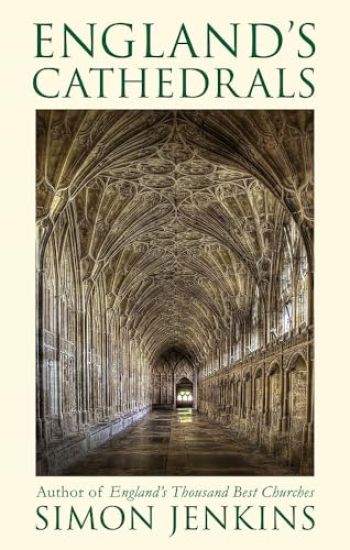
England's Cathedrals

England's Cathedrals

Simon Jenkins

Little, Brown Book Group
2025
nidottu
The author of the magisterial England's Thousand Best Churches turns his eye to England's cathedrals, with fascinating, personal - and often funny - insight into their history and their place in English lifeEngland's cathedrals are the nation's glory. They tower over its landscape, outranking palaces, castles and mansions. They attract roughly half the nation's population each year. For a millennium they have been objects of pilgrimage for those seeking faith, consolation and beauty. Still at the start of the twenty-first century, they remain unequalled in their size and splendour.More than any other English institution, cathedrals reflect the vicissitudes of history and should be treasured as such. They are custodians of culture and of the rituals of civic life. They offer welfare and relieve suffering. They uplift spirits with their beauty. In a real sense they are still what they were when first built a millennium ago, a glimpse of the sublime.England's Cathedrals takes us on an enthralling tour of the nation and its history, through some of our most astonishing buildings.'Inspired... encourages us to take a fresh look at the familiar' The Times'An essential supplement to his marvellously illuminating guidebook England's Thousand Best Churches' Evening Standard
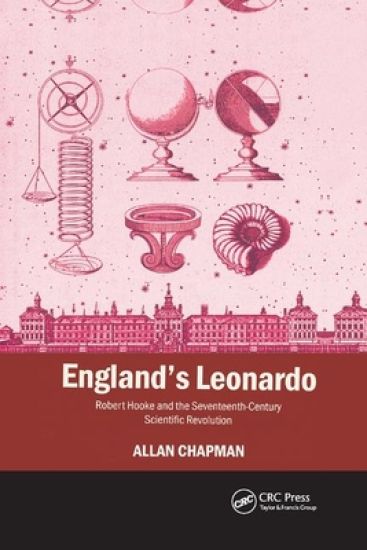
England's Leonardo

England's Leonardo

Allan Chapman

CRC Press
2019
nidottu
All physicists are familiar with Hooke's law of springs, but few will know of his theory of combustion, that his Micrographia was the first book on microscopy, that his astronomical observations were some of the best seen at the time, that he contributed to the knowledge of respiration, insect flight and the properties of gases, that his work on gravitation preceded that of Newton's, that he invented the universal joint, and that he was an architect of distinction and a surveyor for the City of London after the Great Fire. England's Leonardo is a biography of Hooke covering all aspects of his work, from his early life on the Isle of Wight through his time at Oxford University, where he became part of a group who would form the original Fellowship of the Royal Society. The author adopts a novel approach at this stage, dividing the book by chapter according to the fields of research-Physiology, Engineering, Microscopy, Astronomy, Geology, and Optics-in which Hooke applied himself. The book concludes with a chapter considering the legacy of Hooke and his impact on science.
Early Modern Literature and England’s Long Reformation
Assessing early modern literature and England’s Long Reformation, this book challenges the notion that the English Reformation ended in the sixteenth century, or even by the seventeenth century.Contributions by literary scholars and historians of religion put these two disciplines in critical conversation with each other, in order to examine a complex, messy, and long-drawn-out process of reformation that continued well beyond the significant political and religious upheavals of the sixteenth century. The aim of this conversation is to generate new perspectives on the constant remaking of the Reformation—or Reformations, as some scholars prefer to characterize the multiple religious upheavals and changes, both Catholic and Protestant—of the early modern period. This interdisciplinary book makes a major contribution to debates about the nature and length of England’s Long Reformation.Early Modern Literature and England’s Long Reformation is essential reading for scholars and students considering the interconnections between literature and religion in the early modern period.The chapters in this book were originally published as a special issue of the journal Reformation.
Early Modern Literature and England’s Long Reformation
Assessing early modern literature and England’s Long Reformation, this book challenges the notion that the English Reformation ended in the sixteenth century, or even by the seventeenth century.Contributions by literary scholars and historians of religion put these two disciplines in critical conversation with each other, in order to examine a complex, messy, and long-drawn-out process of reformation that continued well beyond the significant political and religious upheavals of the sixteenth century. The aim of this conversation is to generate new perspectives on the constant remaking of the Reformation—or Reformations, as some scholars prefer to characterize the multiple religious upheavals and changes, both Catholic and Protestant—of the early modern period. This interdisciplinary book makes a major contribution to debates about the nature and length of England’s Long Reformation.Early Modern Literature and England’s Long Reformation is essential reading for scholars and students considering the interconnections between literature and religion in the early modern period.The chapters in this book were originally published as a special issue of the journal Reformation.
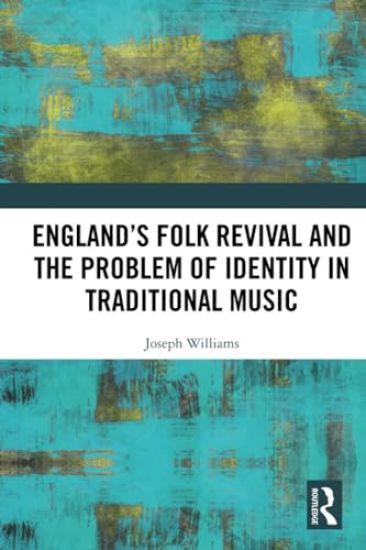
England’s Folk Revival and the Problem of Identity in Traditional Music
Establishing an intersection between the fields of traditional music studies, English folk music history and the philosophy of Gilles Deleuze and Félix Guattari, this book responds to the problematic emphasis on cultural identity in the way traditional music is understood and valued. Williams locates the roots of contemporary definitions of traditional music, including UNESCO-designated intangible cultural heritage, in the theory of English folk music developed in 1907 by Cecil Sharp. Through a combination of Deleuzian philosophical analysis and historical revision of England’s folk revival of the Victorian and Edwardian eras, Williams makes a compelling argument that identity is a restrictive ideology that runs counter to the material processes of traditional music’s production. Williams reimagines Sharp’s appropriation of Darwinian evolutionary concepts, asking what it would mean today to say that traditional music ‘evolves’, in light of recent advances in evolutionary theory. The book ultimately advances a concept of traditional music that eschews the term’s long-standing ontological and axiological foundations in the principle of identity. For scholars and graduate students in musicology, cultural studies, and ethnomusicology, the book is an ambitious and provocative challenge to entrenched habits of thought in the study of traditional music and the historiography of England’s folk revival.
England’s Folk Revival and the Problem of Identity in Traditional Music
Establishing an intersection between the fields of traditional music studies, English folk music history and the philosophy of Gilles Deleuze and Félix Guattari, this book responds to the problematic emphasis on cultural identity in the way traditional music is understood and valued. Williams locates the roots of contemporary definitions of traditional music, including UNESCO-designated intangible cultural heritage, in the theory of English folk music developed in 1907 by Cecil Sharp. Through a combination of Deleuzian philosophical analysis and historical revision of England’s folk revival of the Victorian and Edwardian eras, Williams makes a compelling argument that identity is a restrictive ideology that runs counter to the material processes of traditional music’s production. Williams reimagines Sharp’s appropriation of Darwinian evolutionary concepts, asking what it would mean today to say that traditional music ‘evolves’, in light of recent advances in evolutionary theory. The book ultimately advances a concept of traditional music that eschews the term’s long-standing ontological and axiological foundations in the principle of identity. For scholars and graduate students in musicology, cultural studies, and ethnomusicology, the book is an ambitious and provocative challenge to entrenched habits of thought in the study of traditional music and the historiography of England’s folk revival.
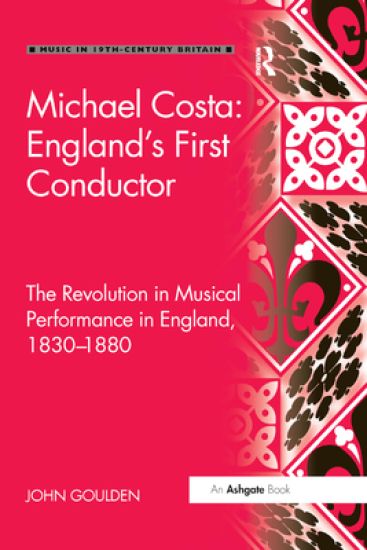
Michael Costa: England's First Conductor
Among the major changes that swept through the music industry during the mid-nineteenth century, one that has received little attention is how musical performances were managed and directed. Yet this was arguably the most radical change of all: from a loose control shared between the violin-leader, musical director and maestro al cembalo to a system of tight and unified control under a professional conductor-manager. This process brought with it not only baton conducting in its modern form, but also higher standards of training and discipline, a new orchestral lay-out and a more focused rehearsal regime. The resulting rise in standards of performance was arguably the greatest achievement of English music in the otherwise rather barren mid-Victorian period. The key figure in this process was Michael Costa, who built for himself unprecedented contractual powers and used his awesome personal authority to impose reform on the three main institutions of mid-Victorian music: the opera houses, the Philharmonic and the Sacred Harmonic Society. He was a central figure in the battles between the two rival opera houses, between the Philharmonic and the New Philharmonic, and between the venerable Ancient Concerts and the mass festival events of the Sacred Harmonic Society. Costa’s uniquely powerful position in the operatic, symphonic and choral world and the rapidity with which he was forgotten after his death provide a fascinating insight into the politics and changing aesthetics of the Victorian musical world.
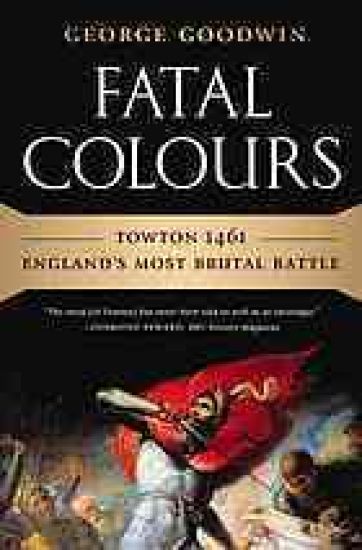
Fatal Colours: Towton 1461 - England's Most Brutal Battle
The battle of Towton in 1461 was unique in its ferocity and brutality, as the armies of two kings of England engaged with murderous weaponry and in appalling conditions to conclude the first War of the Roses. Variously described as the largest, longest, and bloodiest battle on English soil, Towton was fought with little chance of escape and none of surrender. Yet, as if too ghastly to contemplate, the battle itself and the turbulent reign of Henry VI were neglected for centuries. Combining medieval sources and modern scholarship, George Goodwin colorfully re-creates the atmosphere of fifteenth-century England. From the death of the great Henry V and his baby son's inheritance first of England and then of France, Goodwin chronicles the vicious infighting at home in response to the vicissitudes of the Hundred Years War abroad. He vividly describes the pivotal year of 1450 and a decade of breakdown for both king and kingdom, as increasingly embittered factions struggle for a supremacy that could be secured only after the carnage of Towton.Fatal Colours includes a cast of strong and compelling characters: a warrior queen, a ruthless king-making earl, even a papal legate who excommunicates an entire army. And at its center is the first full explanation for the crippling incapacity of the enduringly childlike Henry VI--founder of Eton and King's College, Cambridge. With a substantive and sparkling introduction by David Starkey, Fatal Colours brings to life a vibrant and violent age.
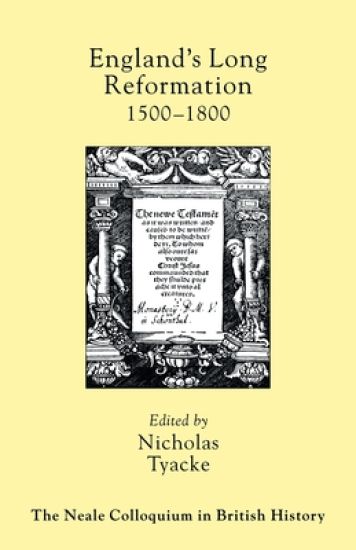
England's Long Reformation
England's Long Reformation" brings together a distinguished team of scholars, who seek to advance beyond current debates concerning the English Reformation. It puts the religious changes of the 16th century in longer perspective than has been traditional and counters the recent emphasis on the popularity of pre-Reformation Catholicism. Instead the case is argued for an underlying trajectory of evangelical activity from the 1520s. The contributors also examine some of the hybrid religious forms which developed and the propagation of the more uncompromising messages of Puritanism and Counter-Reformed Catholicism.; Taking their cue fom continental historians, the authors demonstrate the insights which can be derived by taking a long view of the Reformation in England. The processes of Protestantization and indeed Christianization were involved, with each new generation needing to be won over or at least re- educated. The interaction of religion and society - particularly as regards the so-called "reformation of manners" - is another central theme. Ranging from Tudor Norwich to Hanoverian Bristol, the work collectively breaks down some of the artificial barriers created by periodization and encourages a new way of looking at the English Reformation. This volume should prove valuable reading for those interested in the making of a Protestant nation.
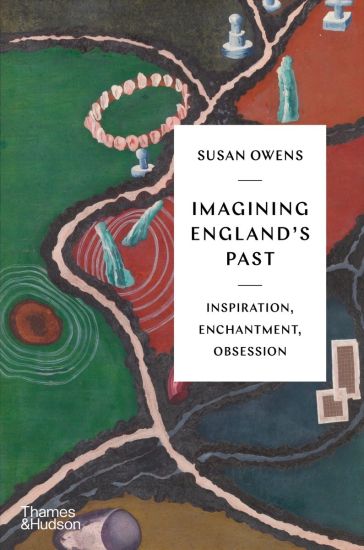
Imagining England's Past

Imagining England's Past

Susan Owens

THAMES HUDSON LTD
2023
sidottu
Imagining England’s Past takes a long look at the country’s invented histories, from the glamorous to the disturbing, from the eighth century to the present day. England has long built its sense of self on visions of its past. What does it mean for medieval writers to summon King Arthur from the post-Roman fog; for William Morris to resurrect the skills of the medieval workshop and Julia Margaret Cameron to portray the Arthurian court with her Victorian camera; or for Yinka Shonibare in the final years of the twentieth century to visualize a Black Victorian dandy? By exploring the imaginations of successive generations, this book reveals how diverse notions of the past have inspired literature, art, music, architecture and fashion. It shines a light on subjects from myths to mock-Tudor houses, Stonehenge to steampunk, and asks how – and why – the past continues so powerfully to shape the present. Not a history of England, but a history of those who have written, painted and dreamed it into being, Imagining England's Past offers a lively, erudite account of the making and manipulation of the days of old. Praise for Imagining England's Past 'Susan Owens conjures our imagined past with such vivacity and lyricism that I can see the dawn mist rising over fabled fields and hear the tread of fictional histories on the worn stairs of yesteryear. Packed full of myths, stories, poems and paintings I found this book impossible to put down!' Charlotte Mullins, broadcaster, art critic and author of A Little History of Art
England's Forgotten Past

England's Forgotten Past

Richard Tames

Thames Hudson Ltd
2018
nidottu
Richard Tames, the well-known popularizer of English history, offers an entertaining exploration of the bits of English history that have been sidelined, lost or somehow overlooked. Written in an engaging, easy-to-read and often humorous style, Tames brings to life the various colourful characters, famous in their day, who have now sunk into obscurity, from St Cuthbert and Nicholas Breakspear (the only English pope) to Octavia Hill and the Marquis of Granby. Tames also covers such diverse areas as sports, lost villages, forgotten war heroes and inventors. Did you know, for example, that Barking was once home to the largest fishing fleet in the world? Or that coffee houses were once known as ‘penny universities’? Peppered with quotes and anecdotes, and arranged into concise sections, this book is ideal for dipping into or reading from cover to cover.
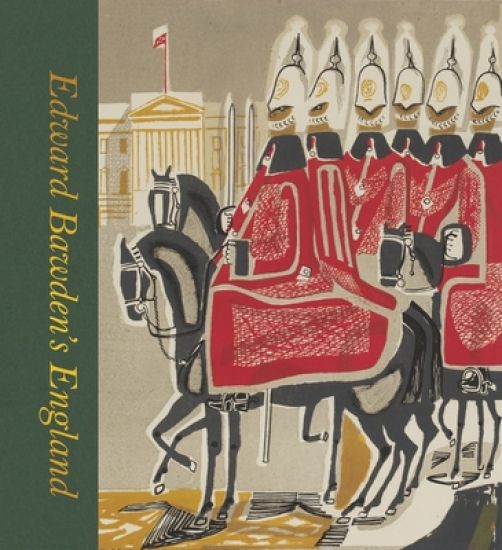
Edward Bawden’s England (Victoria and Albert Museum)
A beautiful and informative gift book devoted to Edward Bawden's representations of England. Edward Bawden (1903-1989) was a printmaker, painter, illustrator and designer. He studied and later taught at the Royal College of art, served as a war artist in WW2 and worked extensively as a commercial artist for companies including London Transport, Fortnum and Mason, Shell-Mex, the Folio Society and Chatto and Windus. Aside from the years he spent in France, the Middle East and North Africa while serving as a war artist, and later visits to Canada and Ireland, Bawden rarely travelled far from home, but found inspiration in the fields and farms of his native Essex, at the seaside, and in classic London scenes: Kew Gardens, the Royal Parks, the Tower of London and St Paul’s Cathedral, and the iron-and-glass monuments to Victorian engineering such as Liverpool Street station and the markets in Spitalfields and Smithfield. This book celebrates England as represented by Bawden in 85 works held in the V&A’s collection, including prints, posters, drawings, paintings, murals and advertising material. The illustrations include such early pieces as his poster Map of the British Empire for an exhibition in 1924; his mural English Garden Delights, designed for the Orient Line Navigation Company in 1946; illustrations for books including Good Food, The Gardener’s Diary and Life in an English Village; advertising work for London Transport, Shell and Fortnum & Mason; the poster Lifeguards, created to mark the coronation of Queen Elizabeth II in 1953; and a varied selection of linocuts and watercolours. As this book demonstrates, it was England, with its quiet landscapes, its pleasures and pastimes, its history and ceremonies, its traditions and recreations, that was the source of Bawden's finest and most engaging work.
England's Rise to Greatness, 1660-1763

England's Rise to Greatness, 1660-1763

University of California Press
2021
pokkari
In 1660 England was already prosperous, free, civilized, and the possessor of the makings of an empire. In the century to follow, the island nation became the world's greatest power. This cohesive collection of essays on a wide range of topics illuminates important facets of the political history of England from the Restoration to the American War of Independence. Arthur J. Slavin of the university of Louisville discusses and important problem in legal history in his "Craw v. Ramsey: New light on an Old Debate." Jacob M. Price of the University of Michigan takes another look at the Excise Crisis. Ragnhild M. Hatton of the London School of Economics sheds new light on George I. Daniel A. Baugh of Cornell University considers "pauperism, Protestantism, and Political Economy: English Attitudes toward the Poor 1660 - 1800." Anglo-Savoyard relations are the topic of Geoffrey Symocox of the University of California, Los Angeles. The late Arthur M. Wilson of Dartmouth is represented by a wise and charming paper entitled "The Enlightenment Came First to England." Lois G. Schwoerer of George Washington University finds new perspectives while examining the Glorious Revolution. John Brewer of Harvard explains "the Number 45: A Wilkite Political Symbol." Clayton Roberts of the Ohio State University discusses "Party and the Patronage in Later Stuart England," while Stephen Baxter of the University of North Carolina takes up some aspects of the conduct of the Seven Years War. All of the contributions were originally delivered at the Wiliam Andrews Clark Memorial Library during Stephen Baxter's tenure as Clark Library Professor in 1977 - 1978. Each of the essays will appeal to a learned audience of specialists, and the variety of topics will interest the general reader. This collection represents the leading scholarship on this remarkable period of English history. This title is part of UC Press's Voices Revived program, which commemorates University of California Press's mission to seek out and cultivate the brightest minds and give them voice, reach, and impact. Drawing on a backlist dating to 1893, Voices Revived makes high-quality, peer-reviewed scholarship accessible once again using print-on-demand technology. This title was originally published in 1983.
England's Rise to Greatness, 1660-1763

England's Rise to Greatness, 1660-1763

University of California Press
2021
sidottu
In 1660 England was already prosperous, free, civilized, and the possessor of the makings of an empire. In the century to follow, the island nation became the world's greatest power. This cohesive collection of essays on a wide range of topics illuminates important facets of the political history of England from the Restoration to the American War of Independence. Arthur J. Slavin of the university of Louisville discusses and important problem in legal history in his "Craw v. Ramsey: New light on an Old Debate." Jacob M. Price of the University of Michigan takes another look at the Excise Crisis. Ragnhild M. Hatton of the London School of Economics sheds new light on George I. Daniel A. Baugh of Cornell University considers "pauperism, Protestantism, and Political Economy: English Attitudes toward the Poor 1660 - 1800." Anglo-Savoyard relations are the topic of Geoffrey Symocox of the University of California, Los Angeles. The late Arthur M. Wilson of Dartmouth is represented by a wise and charming paper entitled "The Enlightenment Came First to England." Lois G. Schwoerer of George Washington University finds new perspectives while examining the Glorious Revolution. John Brewer of Harvard explains "the Number 45: A Wilkite Political Symbol." Clayton Roberts of the Ohio State University discusses "Party and the Patronage in Later Stuart England," while Stephen Baxter of the University of North Carolina takes up some aspects of the conduct of the Seven Years War. All of the contributions were originally delivered at the Wiliam Andrews Clark Memorial Library during Stephen Baxter's tenure as Clark Library Professor in 1977 - 1978. Each of the essays will appeal to a learned audience of specialists, and the variety of topics will interest the general reader. This collection represents the leading scholarship on this remarkable period of English history. This title is part of UC Press's Voices Revived program, which commemorates University of California Press's mission to seek out and cultivate the brightest minds and give them voice, reach, and impact. Drawing on a backlist dating to 1893, Voices Revived makes high-quality, peer-reviewed scholarship accessible once again using print-on-demand technology. This title was originally published in 1983.