Presents a spoken and musical performance for meditation, visualisation and instruction in Goetic Magia, accompanied by an interview with the author who is one of the foremost authorities on Psychic Phenomena and Black Magick. This production is suitable for serious magicians.
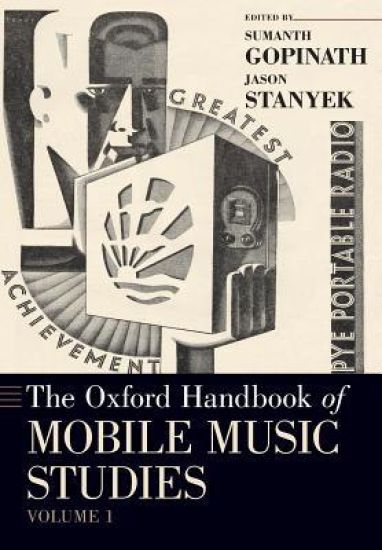
The two volumes of The Oxford Handbook of Mobile Music Studies consolidate an area of scholarly inquiry that addresses how mechanical, electrical, and digital technologies and their corresponding economies of scale have rendered music and sound increasingly mobile-portable, fungible, and ubiquitous. At once a marketing term, a common mode of everyday-life performance, and an instigator of experimental aesthetics, "mobile music" opens up a space for studying the momentous transformations in the production, distribution, consumption, and experience of music and sound that took place between the late nineteenth and the early twenty-first centuries. Taken together, the two volumes cover a large swath of the world-the US, the UK, Japan, Brazil, Germany, Turkey, Mexico, France, China, Jamaica, Iraq, the Philippines, India, Sweden-and a similarly broad array of the musical and nonmusical sounds suffusing the soundscapes of mobility. Volume 1 provides an introduction to the study of mobile music through the examination of its devices, markets, and theories. Conceptualizing a long history of mobile music extending from the late nineteenth century to the present, the volume focuses on the conjunction of human mobility and forms of sound production and reproduction. The volume's chapters investigate the MP3, copyright law and digital downloading, music and cloud computing, the iPod, the transistor radio, the automated call center, sound and text messaging, the mobile phone, the militarization of iPod usage, the cochlear implant, the portable sound recorder, listening practices of schoolchildren and teenagers, the ringtone, mobile music in the urban soundscape, the boombox, mobile music marketing in Mexico and Brazil, music piracy in India, and online radio in Japan and the US.
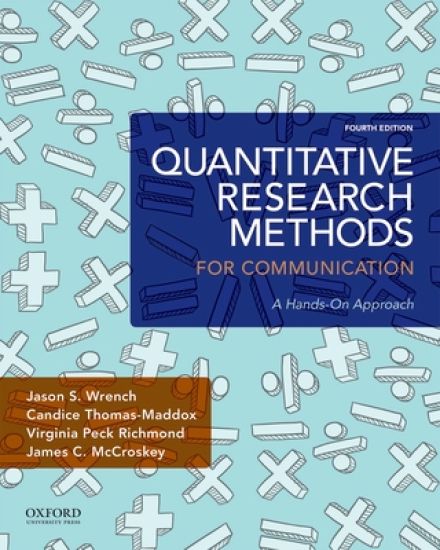
Quantitative Research Methods for Communication: A Hands-On Approach is a relevant and accessible guide to quantitative research. In clear, straightforward language, the authors encourage students to take an active, hands-on role in the learning process, giving them the tools they need to locate, conduct, collect and present their research. The authors use real communication studies and data sets to make communication research come alive for students. Students are not only introduced to new skills but also given the opportunity to immediately apply these skills in research scenarios. The text integrates helpful features throughout, including chapter objectives, case studies, data sheets, and key terms.
Ecosystem-based fishery management (EBFM) is rapidly becoming the default approach in global fisheries management. The clarity of what EBFM means is sharpening each year and there is now a real need to evaluate progress and assess the effectiveness and impacts. By examining a suite of over 90 indicators (including socioeconomic, governance, environmental forcing, major pressures, systems ecology, and fisheries criteria) for 9 major US fishery ecosystem jurisdictions, the authors systematically track the progress the country has made towards advancing EBFM and making it an operational reality. The assessment covers a wide range of data in both time (multiple decades) and space (from the tropics to the poles, representing over 10% of the world's ocean surface area). The authors view progress towards the implementation of EBFM as synonymous with improved management of living marine resources in general, and highlight the findings from a national perspective. Although US-centric, the lessons learned are directly applicable for all parts of the global ocean. Much work remains, but significant progress has already been made to better address many of the challenges facing the sustainable management of our living marine resources. This is an essential and accessible reference for all fisheries professionals who are currently practicing, or progressing towards, ecosystem-based fisheries management. It will also be of relevance and use to researchers, teachers, managers, and graduate students in marine ecology, fisheries biology, biological oceanography, global change biology, conservation biology, and marine resource management.
Consensus holds that Lucretius admired the literary prestige of Homeric epos, the form that Ennius famously introduced to Latin literature. However, some hold that Lucretius disagreed with Ennius' quasi-Pythagorean claim to be Homer reborn, and so uniquely qualified to adapt Homeric poetry to the Latin language. Likewise, received wisdom holds that Lucretius followed in the path of poets writing in the wake of Ennius' Annales, most of whom employed an Ennian style. However, throughout the De Rerum Natura, Lucretius' use of Ennius' Annales as a formal model for a long discursive poem in epic meter was neither inevitable nor predictable, on the one hand, nor meaningful in the simple way that critical consensus has always maintained. Jason Nethercut posits that Lucretius selected Ennius as a model precisely to dismantle the values for which he claimed Ennius stood, including the importance of history as a poetic subject and Rome's historical achievement in particular. As the first book to offer substantial analysis of the relationship between two of the ancient world's most impactful poets, Ennius Noster: Lucretius and the Annales fills an important gap not only in Lucretian scholarship, but also in our understanding of Latin literary history.
Co-operative enterprises, which are democratically owned and governed by their workers, customers, or suppliers, have long captured the imagination of activists and social scientists alike. In centering economic democracy and a collectivist-democratic logic, and in embodying a "third way" alternative to profit-maximizing corporations and state-owned enterprises, co-operatives offer the promise of a more sustainable and equitable economy. Despite extensive study of co-operatives' real and imagined benefits, we know little about the conditions under which they achieve the lasting scale needed to be a viable alternative and transform the economy. Under what conditions can co-operatives achieve such scale? And are such conditions present in the United States, where, despite repeated organizing efforts, co-operatives remain exceptionally rare at scale? Through a rigorous comparative-historical analysis of co-operative enterprises in different national contexts, this book seeks to answer these questions. Deploying two different variants of the new institutionalism, Spicer treats the United States as a central case of comparative failure, as contrasted to three rich democracies where the co-operative business model has been more successful: Finland, France, and New Zealand. The cause of co-operatives' comparative weakness in the United States is identified as reflecting the joint effect of economic liberalism and structural racism. Only in the United States did the co-operative face, in its initial development, two well-entrenched incumbents operating with competing ownership models: the investor-owned firm and the race-based chattel slavery system of ownership of people. Proponents of these two models acted to deprive the co-operative movement of resources, and undermined the solidarity at the co-operative business model's heart, splintering the American co-operative movement in the process. In subsequent waves of co-operative organizing, advocates have never fully succeeded in overcoming these initial obstacles, resulting in a different outcome in the United States, consistent with broader conceptions of the United States as a perennial outlier (i.e., ""American exceptionalism""). In contrast, in the successful cases, advocates were better able to leverage resources to animate a national solidarity and procure the necessary political and economic resources to achieve scale.
Prohibition Is Here to Stay focuses on the Reverend Edward S. Shumaker, a Methodist minister who for nearly twenty-five years led Indiana's influential chapter of the Anti Saloon League. Shumaker was one of the most powerful men in Indiana in the fight against demon rum, and his influence extended well beyond the boundaries of the state during the late nineteenth and early twentieth centuries. Jason Lantzer uses Shumaker's life and work to shed new light on the rise and fall of Prohibition and to better understand and appreciate the interplay of religion and politics in American culture. Drawing on Shumaker's personal papers as well as archival work, Lantzer argues that understanding the role of religious faith and in particular evangelical Protestantism is essential to understanding Prohibition. Shumaker's religious faith inspired his crusade against alcohol and his efforts to make the Indiana Anti Saloon League one of the strongest political pressure groups in the country. Lantzer argues that Edward Shumaker's life and the cause to which he devoted most of it were not aberrations but exemplars of central currents in American culture of the time. Lantzer also connects Shumaker and the prohibition movement in Indiana to larger issues of America's transition from a predominantly rural society to an urban culture, with the attendant fears of change, loss of values, the impact of industrialization, and foreign immigration.
Prohibition Is Here to Stay focuses on the Reverend Edward S. Shumaker, a Methodist minister who for nearly twenty-five years led Indiana's influential chapter of the Anti Saloon League. Shumaker was one of the most powerful men in Indiana in the fight against demon rum, and his influence extended well beyond the boundaries of the state during the late nineteenth and early twentieth centuries. Jason Lantzer uses Shumaker's life and work to shed new light on the rise and fall of Prohibition and to better understand and appreciate the interplay of religion and politics in American culture. Drawing on Shumaker's personal papers as well as archival work, Lantzer argues that understanding the role of religious faith and in particular evangelical Protestantism is essential to understanding Prohibition. Shumaker's religious faith inspired his crusade against alcohol and his efforts to make the Indiana Anti Saloon League one of the strongest political pressure groups in the country. Lantzer argues that Edward Shumaker's life and the cause to which he devoted most of it were not aberrations but exemplars of central currents in American culture of the time. Lantzer also connects Shumaker and the prohibition movement in Indiana to larger issues of America's transition from a predominantly rural society to an urban culture, with the attendant fears of change, loss of values, the impact of industrialization, and foreign immigration.
Designed for the pastor and Bible teacher, the Zondervan Exegetical Commentary on the Old Testament features today's top Old Testament scholars and brings together commentary features rarely gathered together in one volume. With careful discourse analysis and interpretation of the Hebrew text, the authors trace the flow of argument in each Old Testament book, showing that how a biblical author says something is just as important as what they say.Commentary on each passage follows a clear structure to help readers grasp the flow and meaning of the text:The Main Idea of the Passage: A one- or two-sentence summary of the key ideas the biblical author seeks to communicate.Literary Context: A brief discussion of the relationship of the specific text to the book as a whole and to its place within the broader argument.Translation and Exegetical Outline: Commentators provide their own translations of each text, formatted to highlight its discourse structure and accompanied by a coherent outline that reflects the flow and argument of the text.Structure and Literary Form: An overview of the literary structure and rhetorical style adopted by the biblical author, highlighting how these features contribute to the communication of the main idea of the passage.Explanation of the Text: A detailed commentary on the passage, paying particular attention to how the biblical authors select and arrange their materials and how they work with words, phrases, and syntax to communicate their messages.Canonical and Practical Significance: The commentary on each unit will conclude by building bridges between the world of the biblical author and other biblical authors and with reflections on the contribution made by this unit to the development of broader issues in biblical theology--particularly on how later Old Testament and New Testament authors have adapted and reused the motifs in question. The discussion also includes brief reflections on the significance of the message of the passage for readers today.The Zondervan Exegetical Commentary on the Old Testament series is the go-to resource for pastors and Bible teachers looking for deep but accessible study that equips them to connect the needs of Christians today with the biblical text.
Abstraction is one facet of intellectual functioning. The study of abstraction allows extremely valuable insights into human intelligence. While this monograph indicates that the ability to think abstractly declines slightly with age, there are a number of variables determining abstract thinking and its relation to intelligence over the life-span. This monograph defines abstraction from all angles of thought, contrasting it with high-order thinking and stereotyped thinking; it discusses and evaluates tests of abstract thinking; and it presents new findings in sociological and psychological research on abstraction.
An introduction reviews previous scholarship, and concludes that the cultic aspects of Judges 17-18 have not been examined in any depth. It then goes on to deal with the historical and redactional issues which previous scholars have found interesting. The issues of provenance and dating are then examined with the conclusion that the text was written down in the immediate aftermath of the Assyrian conquest of Dan in an attempt to preserve its sacred traditions. The text therefore reflects the self-understanding of the priests of Dan in the period immediately prior to its fall. The text of Judges 17-18 is then subjected to a rhetorical critical examination, followed by a more traditional form critical study. The next section is a comparison of similar cultic foundation stories from other cultures. Three major chapters examine the three major cultic issues raised by the text itself: images, priests and divination. Each chapter draws on evidence from the Hebrew Bible and its environment in an attempt to clarify the nature of the cult of Dan. Broadly, each chapter concludes that although there were some features peculiar to the cult reflected by Dan, in general, the Danite cult was not greatly different from that of its neighbours. A final chapter deals with what the text says about the tribe of Levi, with the conclusion that according to Judges 17-18, there was once a secular tribe of Levi. The conclusion draws a brief picture of cultic life in Dan in its final years.
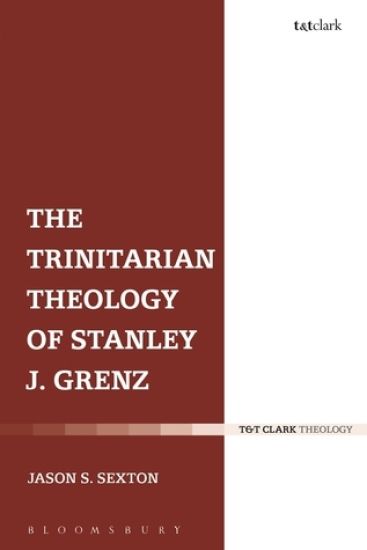
Exploring one of the most controversial figures in recent evangelical theology, this book thoroughly examines core features of Stanley J. Grenz’s Trinitarian vision.
Exploring one of the most controversial figures in recent evangelical theology, this book thoroughly examines core features of Stanley J. Grenz’s Trinitarian vision.
Interpreting the Prohibition Era at Museums and Historic Sites chronicles the rise and fall of one of the greatest attempted reforms in American History. Why were Americans so worried about alcohol? Why did they seek to ban an entire industry? How did those involved in the trade react? How did repeal come about? How should we remember the "noble crusade"? Such questions are important, both for historians and museums who seek to interpret the Prohibition Era, as well as for the general public who wants to know more about the Roaring Twenties and how it continues to shape the United States today. Case studies cover: · Breweries · Reformers · Women · Saloons, both before and after Prohibition · Gamblers and gumshoes This guide will help museum and history professionals make sense of a complex story, relate the history and legacy of political pressure groups, and help learners think about the era in new ways.
Interpreting the Prohibition Era at Museums and Historic Sites chronicles the rise and fall of one of the greatest attempted reforms in American history. Why were Americans so worried about alcohol? Why did they seek to ban an entire industry? How did those involved in the trade react? How did repeal come about? How should we remember the "noble crusade"? Such questions are important, both for historians and museums who seek to interpret the Prohibition Era, as well as for the general public who wants to know more about the Roaring Twenties and how it continues to shape the United States today. Case studies cover: · Breweries · Reformers · Women · Saloons, both before and after Prohibition · Gamblers and gumshoes This guide will help museum and history professionals make sense of a complex story, relate the history and legacy of political pressure groups, and help learners think about the era in new ways.
The XXX Filmography, 1968-1988 features more than 3,000 A to Z entries, covering the historic, artistic, and technical aspects of adult cinema from those years, including 35mm features, 16mm storefront features, and 8mm loops. It provides director, producer, cast, screenwriter, cinematographer, and composer listings, with a detailed synopsis for each film. Production company credits, release dates and running times are also given. A DVD appendix lists all titles currently available on DVD, and complete cast and director indexes make this work the most comprehensive guide to Golden Age triple-X films ever published.
Since the Revolutionary War, Mainline Christianity has been comprised of the Seven Sisters of American Protestantism—the Congregational Church, the Episcopal Church, the Evangelical Lutheran Church, the Presbyterian Church, the United Methodist Church, the American Baptist Convention, and the Disciples of Christ. These denominations have been the dominant cultural representatives since the nineteenth century of how and where the majority of American Christians worship. Today, however, the Seven Sisters no longer represent most American Christians. The Mainline has been shrinking while evangelical and fundamentalist churches, as well as non denominational congregations and mega churches, have been attracting more and more members. In this comprehensive and accessible book, Jason S. Lantzer chronicles the rise and fall of the Seven Sisters, documenting the ways in which they stopped shaping American culture and began to be shaped by it. After reviewing and critiquing the standard decline narrative of the Mainline he argues for a reconceptualization of the Mainline for the twenty-first century, a new grouping of Seven Sisters that seeks to recognize the vibrancy of American Christianity.
Since the Revolutionary War, Mainline Christianity has been comprised of the Seven Sisters of American Protestantism—the Congregational Church, the Episcopal Church, the Evangelical Lutheran Church, the Presbyterian Church, the United Methodist Church, the American Baptist Convention, and the Disciples of Christ. These denominations have been the dominant cultural representatives since the nineteenth century of how and where the majority of American Christians worship. Today, however, the Seven Sisters no longer represent most American Christians. The Mainline has been shrinking while evangelical and fundamentalist churches, as well as non denominational congregations and mega churches, have been attracting more and more members. In this comprehensive and accessible book, Jason S. Lantzer chronicles the rise and fall of the Seven Sisters, documenting the ways in which they stopped shaping American culture and began to be shaped by it. After reviewing and critiquing the standard decline narrative of the Mainline he argues for a reconceptualization of the Mainline for the twenty-first century, a new grouping of Seven Sisters that seeks to recognize the vibrancy of American Christianity.