Kirjojen hintavertailu. Mukana 11 699 587 kirjaa ja 12 kauppaa.

Kirjahaku

Etsi kirjoja tekijän nimen, kirjan nimen tai ISBN:n perusteella.

1000 tulosta hakusanalla Samuel Gardner Drake

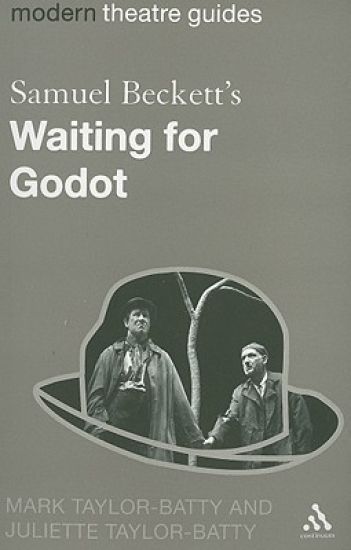
Samuel Beckett's Waiting for Godot

Samuel Beckett's Waiting for Godot

Mark Taylor-Batty; Juliette Taylor-Batty

Continuum International Publishing Group Ltd.
2009
nidottu
This title provides informative critical introduction to Beckett's "Waiting for Godot", one of the most commonly studied modern plays."Samuel Beckett's Waiting for Godot" is not only an indisputably important and influential dramatic text - it is also one of the most significant western cultural landmarks of the twentieth century. Originally written in French, the play first amazed and appalled Parisian theatre-goers and critics before receiving a harshly dismissive initial critical response in Britain in 1955. Its influence since then on the international stage has been significant, impacting on generations of actors, directors and audiences.This guide provides a comprehensive critical introduction to "Waiting for Godot" from the controversial first performances to recent productions."Continuum Modern Theatre Guides" offer concise, accessible and informed introductions to the key plays of modern times. Each book is carefully structured to offer a systematic study of the play in its biographical, historical, social and political context, an in-depth study of the text, an overview of the work's production history including screen adaptations, and practical workshopping exercises. They also include a timeline and suggestions for further reading which highlight key critical approaches. This will enable students to develop their understanding of playwrights and theatre-makers, as well as inspiring them to broaden their studies.
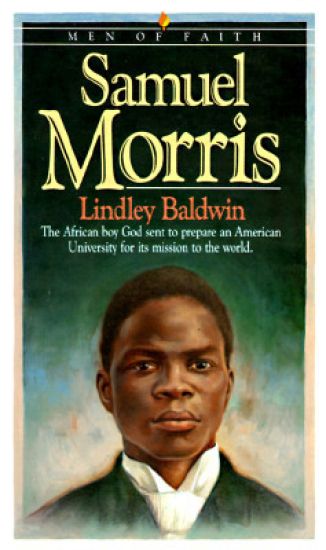
Samuel Morris – The African Boy God Sent to Prepare an American University for Its Mission to the World

Samuel Morris – The African Boy God Sent to Prepare an American University for Its Mission to the World

Lindley Baldwin

Bethany House Publishers, a division of Baker Publishing Group
1987
nidottu
The extraordinary story of the young African who came to be called "The Apostle of Simple Faith."While most missionary biographies detail the lives of Western missionaries, this is the story of the African missionary that God called to the United States when slavery and segregation were a way of life. Previously published under the title The March of Faith, this book details the moving life story of Samuel Morris.After a miraculous escape from certain death during the ravages of intertribal warfare in Liberia, Africa, Kaboo was converted to Christ by Methodist missionaries and baptized under the name Samuel Morris. Traveling to America for pastoral training in the late 1880's, his trip was a missionary voyage in itself when several seamen were lead to Christ through his godly life. At Taylor University his example of faith made him a leader among the students and a challenge to the faulty.An unforgettable biography which shows Christ's love felling all racial barriers.
Samuel May Williams Home

Samuel May Williams Home

Tshaother

Texas State Historical Association,U.S.
1992
nidottu
Built in the winter of 1839-1840, this house, and the Texas pioneer who inhabited it, are the central focus of this thoroughly researched and well-written study of Galveston's merchant elite--Gail Borden, Michel Menard, Thomas McKinney, and others--a generation of leaders who did much to shape their city and Texas itself.
Samuel Joseph May and...

Samuel Joseph May and...

Donald Yacovone

Temple University Press,U.S.
1991
sidottu
Born into Bostonâs elite and trained at Harvard University as a Unitarian minister, Samuel Joseph May rejected his upbringing to become a central figure in the antislavery and antebellum reform movements. With this intellectual biography, Donald Yacovone has written the first modern account of Mayâs life. Mayâs friendships with William Ellery Channing, William Lloyd Garrison, and Ralph Waldo Emerson, and his work in the major crusades of his era make his life a virtual history of antebellum religion and reform. Though his ideals threatened his clerical career and his family relationships, he feverishly devoted his life to the abolitionist, peace, and temperance movements, education reform, and womenâs rights. The Liberal Persuasion was an intellectual movement that arose out of New England during the golden age of the Unitarian faith. May was the leading representative of this humanist ideology that rejected slavery and racial prejudice, advanced free religious inquiry, promoted republicanism and a generous interpretation of civil liberties, supported the emancipation of women, and defended the social and political rights of the working classes. Author note: Donald Yacovone is a Research Associate at the Black Abolitionist Papers Project, Florida State University.
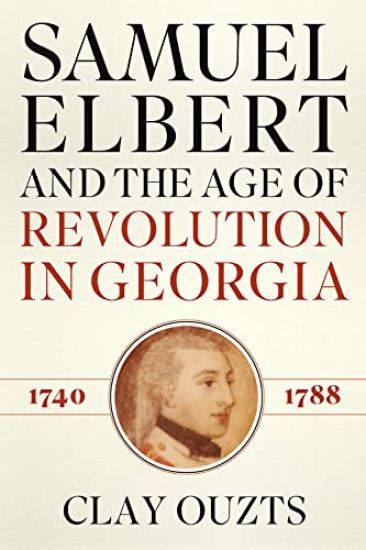
Samuel Elbert and the Age of Revolution in Georgia, 1740-1788
Brigadier General Samuel Elbert's story spans most of Georgia's history in the eighteenth century. He is best remembered for his role as a commander of Georgia troops during the American Revolution. Before the war, he was a prominent Savannah merchant and a member of the General Assembly when James Wright was Georgia's governor. In 1775, Elbert was instrumental in bringing the Revolution to Georgia and he soon commanded Continental forces in the conflict. He emerged as a significant leader in the age of Revolution in Georgia and participated in almost every major battle in the state prior to his capture at Brier Creek on March 3, 1779. Elbert was present at the Battle of the Rice Boats in 1776, a participant in two of Georgia's three campaigns into Florida, commanded American troops during the action on the Frederica River in 1778, and was in Savannah when it fell to the British on December 29, 1778. After his exchange, he went to Yorktown, Virginia, and joined George Washington's forces, where he witnessed the surrender of Lord Cornwallis's British army in 1781. In 1785, Elbert became Georgia's governor, but his one-year term was plagued by border conflicts, particularly with the Creek Indians over the Oconee Lands. Among his most enduring legacies are the creation of independent masonry in Georgia, the chartering of Franklin College which later became the University of Georgia, and a county in the northeast section of the state that bears his name.
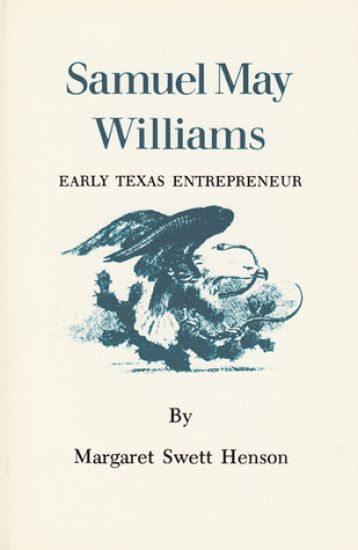
Samuel May Williams

Samuel May Williams

Texas A M University Press
1976
sidottu
Despite his important role in the development of early Texas--he was a close associate of Stephen F. Austin, a successful businessman and land speculator, father of the Texas navy, founder of Texas' first bank, and co-founder of Galveston--Samuel May Williams is unknown to many Texans. Elitist, arrogant, shrewd, sometimes sharp in his business dealings, and politically conservative, Williams made enemies easily, and contemporary prejudice has perhaps led modern scholars to overlook his genuine significance in Texas history. Margaret Swett Henson's biography examines the career of this early entrepreneur, whose interests were closely entwined with those of Texas. Arriving in Texas in 1822 under an assumed name with little but good family connections, some mercantile experience, and fluent Spanish, Williams was hired as secretary in charge of Austin's colonial land office at San Felipe and before long had acquired large holdings of his own. In partnership with Thomas F. McKinney he set up a commission house that did a thriving business and later added a small banking function. The two men helped found the Galveston City Company and in 1848 Williams opened his Commercial and Agricultural Bank in that city. Over three decades Williams participated in the events that determined the course of Texas history and did much to advance the development of Texas and its economy--a less romantic but no less vital role than that of more popular folk-heroes. This study makes extensive use of heretofore largely unexplored manuscript material, notably the Samuel May Williams Papers at the Rosenberg Library in Galveston, Texas.
Samuel May Williams

Samuel May Williams

Margaret Swett Henson

Texas A M University Press
2000
nidottu
Despite his important role in the development of early Texas--he was a close associate of Stephen F. Austin, a successful businessman and land speculator, father of the Texas navy, founder of Texas' first bank, and co-founder of Galveston--Samuel May Williams is unknown to many Texans. Elitist, arrogant, shrewd, sometimes sharp in his business dealings, and politically conservative, Williams made enemies easily, and contemporary prejudice has perhaps led modern scholars to overlook his genuine significance in Texas history. Margaret Swett Henson's biography examines the career of this early entrepreneur, whose interests were closely entwined with those of Texas. Arriving in Texas in 1822 under an assumed name with little but good family connections, some mercantile experience, and fluent Spanish, Williams was hired as secretary in charge of Austin's colonial land office at San Felipe and before long had acquired large holdings of his own. In partnership with Thomas F. McKinney he set up a commission house that did a thriving business and later added a small banking function. The two men helped found the Galveston City Company and in 1848 Williams opened his Commercial and Agricultural Bank in that city. Over three decades Williams participated in the events that determined the course of Texas history and did much to advance the development of Texas and its economy--a less romantic but no less vital role than that of more popular folk-heroes. This study makes extensive use of heretofore largely unexplored manuscript material, notably the Samuel May Williams Papers at the Rosenberg Library in Galveston, Texas.
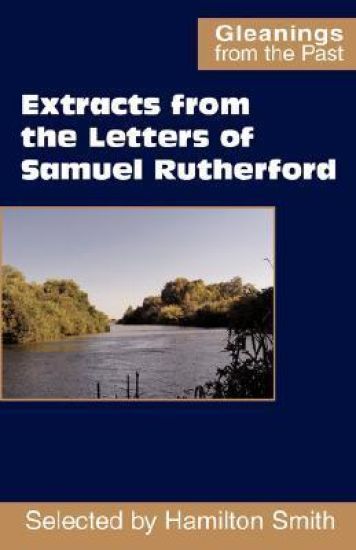
Extracts from the Letters of Samuel Rutherford

Extracts from the Letters of Samuel Rutherford

Samuel Rutherford

Scripture Truth Publications
2008
pokkari
The letters of Samuel Rutherford (1600-1661) have been a source of encouragement and inspiration to Christians for over 350 years; but to the modern reader their language and structure can often hinder the enjoyment of their true value. In 1913, Hamilton Smith (1862-1943) set out to make the heart of the letters (and of Rutherford himself) more accessible to the reader of his day. He organised a selection of extracts under topical headings covering such themes as warning, peace, evil, the Devil, death, comfort, pilgrimage, glory and, above all, Christ. Retaining Rutherford's original text, with occasional explanatory footnotes, he created a volume of devotional readings which have stood the test of time in sharing Rutherford's passion for the love of Christ. The publisher is pleased to make this classic work available once again.
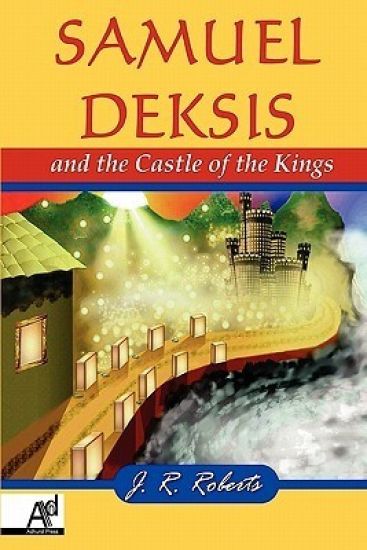
Samuel Deksis and the Castle of the Kings
Enter a world where newspapers speak, using magic carpets is a way of life and the deceased have power over the future. Learn about the dangerous magical sport of Levish, how curses really work and what an Igni is. The story follows the life of an orphaned boy (Samuel Deksis) who discovers he is next in line to the throne of a magnificent mystical city in another world. If you enjoy reading about magical worlds parallel to our own world then this is the book for you! The story is dark and thrilling, set within a humorous and exciting world which is a delight to read about. It was written over a period of eight years and is set to become a classic fantasy tale for older children and adults alike. Get your hands on a copy by placing your order today!
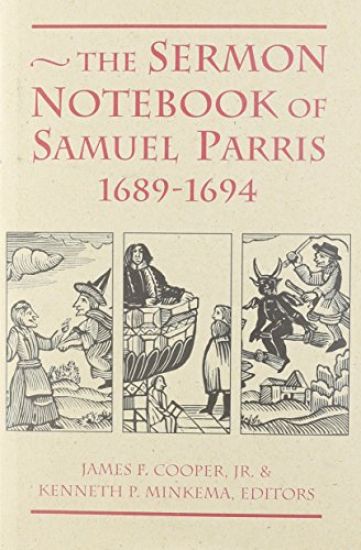
The Sermon Notebook of Samuel Parris, 1689-94

The Sermon Notebook of Samuel Parris, 1689-94

Samuel Parris

University of Virginia Press
1994
sidottu
This is the sermon notebook of the pastor of the local church in Salem at the time of the notorious witchcraft hysteria of 1692-93. These sermons were preached from his ordination in 1689, through the summer of trials and executions in 1692, and on into the aftermath of the controversy.
The Personal Writings of Samuel Roskelley

The Personal Writings of Samuel Roskelley

Samuel Roskelley

Caramon Press
2018
pokkari
Samuel Roskelley (1837-1914) was an English convert to Mormonism in the 1850s. He emigrated to Utah and spent the rest of his life in Cache Valley, Utah, though making two missionary journeys back to Britain. This volume provides textual reproductions of his manuscript diaries, documenting his two missionary efforts in southern Wales and London, the complexities of farming, polygamy, and church service in the late nineteenth century.
Samuel the Seer: The Last of the Judges, and the First of the Prophets
The Old Testament book of 1 Samuel belongs to those books of the Hebrew Bible known as the Former Prophets (Joshua, Judges, 1 & 2 Samuel, 1 & 2 Kings). In the original Hebrew Bible, 1 & 2 Samuel are one book. This Old Testament biography peers into the life of Samuel the Seer, King Saul and King David and examines this ancient text in which lies the birth of the the state of Israel as it exists today-with Jerusalem as its capital, surrounded by enemies, and constantly fighting for its survival. The first book of Samuel is the story of Samuel, the last of the Judges and first of the prophets since Moses. Samuel anointed the first two kings of Israel-King Saul, and King David. It was David who was responsible for Israel's Golden Era and the establishment of Jerusalem as its capital city. In this Old Testament Bible Study the reader is introduced to a perilous yet fascinating period in Israel's history in which God's people transitioned from a loose league of tribes, established by Moses at Mt. Sinai, into a Monarchy under Samuel and Israel's first king, King Saul. Samuel the Seer brings this narrative to life for the reader in an easy-to-read, yet insightful, Old Testament commentary on this very important Old Testament book. The lives and feats of King Saul and King David-including the dramatic and historic encounter between young David and the Philistine champion Goliath - are described in detail. The book dives into the founding of the monarchy in ancient Israel - which set the foundation for the nation of Israel today. Though ancient, 1 Samuel still holds relevance in today's rapidly changing world.
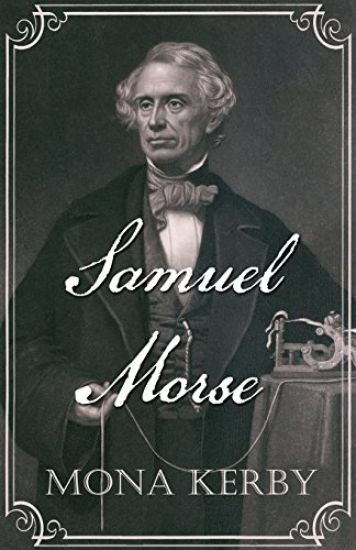
Samuel Morse

Samuel Morse

Mona Kerby

MK Publications
2018
nidottu
Samuel Morse was a painter and an American inventor who invented the telegraph key which forever changed communication. The biography describes his childhood, his life as a painter and inventor, and includes information on the Morse code and making a telegraph key. All quotations in the book are from Morse's writings. Now back in print, this new edition, revised and updated, will enchant readers seeking narrative biographies.REVIEWS"An appealing biography and an introduction to the telegraph and Morse code. Kerby describes how Morse overcame opposition and changed the world, emphasizing his persistence and spirit of experimentation. Clearly written instructions for the construction of a simple telegraph follow the narrative . . . An excellent choice, especially for those struggling to find quality nonfiction for younger and reluctant readers." School Library Journal
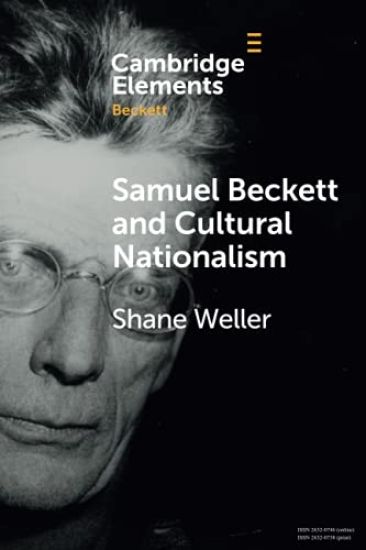
Samuel Beckett and Cultural Nationalism

Samuel Beckett and Cultural Nationalism

Shane Weller

Cambridge University Press
2021
pokkari
Drawing on evidence from his published works, manuscripts, and correspondence, Samuel Beckett and Cultural Nationalism explores Beckett's engagement with the theme of cultural nationalism throughout his writing life, revealing the various ways in which he sought to challenge culturally nationalist conceptions of art and literature, while never embracing a cosmopolitan approach. The Element shows how, in his pre-Second World War writings, Beckett sought openly to mock Irish nationalist ideas of culture and language, but that, in so doing, he failed to avoid what he himself described as a 'clot of prejudices'. In his post-war works in French and English, however, following time spent in Nazi Germany in 1936-7 as well as in the French Resistance during the Second World War, Beckett began to take a new approach to ideas of national-cultural affiliation, at the heart of which was a conception of the human as a citizen of nowhere.