Kirjojen hintavertailu. Mukana 11 699 587 kirjaa ja 12 kauppaa.

Kirjahaku

Etsi kirjoja tekijän nimen, kirjan nimen tai ISBN:n perusteella.

1000 tulosta hakusanalla Scott Stuart

Gilbert Scott Book of British Food

Gilbert Scott Book of British Food

Marcus Wareing

Transworld Publishers Ltd
2013
sidottu
Includes Yorkshire fishcakes, Dorset jugged steak, cock-a-leekie pie, Mrs Beeton's barbecue chicken, London Pride battered cod, gingerbread pudding, Kendal mint cake choc ices and the best lemon drizzle cake. This title allows you to celebrate these recipes at home, be it for brunch, lunch, or a terrific cocktail to ease you into your meal.
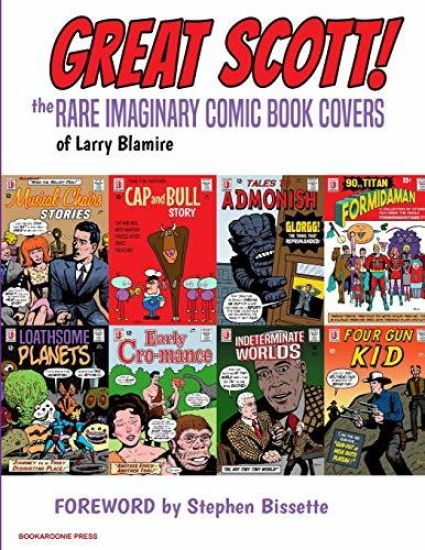
Great Scott

Great Scott

Larry Blamire

Bookaroonie Press
2018
pokkari
It's like browsing a spinner rack in another dimension, as artist, writer, filmmaker, bon vivant and nosy busybody Larry Blamire channels his love for 12-cent silver age comic books and sheer absurdity with a colorful volume of completely made up, but strangely convincing comic covers, ranging from slightly quirky to completely unhinged. DC, Marvel, Dell/Gold Key, Harvey, ACG--no type of Silver Age comic escapes his artistic madness as Blamire seeks to capture a wide variety of imaginary comic titles, and convincingly so, suggesting a collection of comic books from an alternate reality. Foreword by celebrated comic book artist/editor/publisher Stephen Bissette.
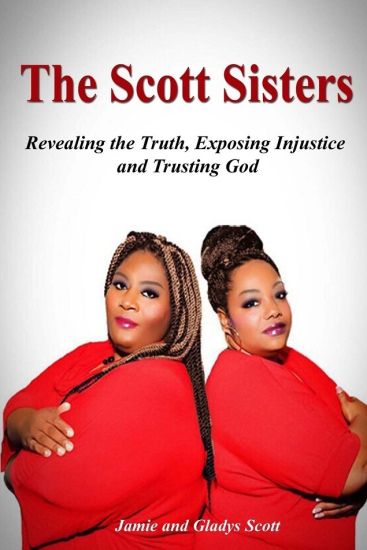
The Scott Sisters: Revealing the Truth, Exposing Injustice, and Trusting God
At nineteen and twenty-one, Jamie and Gladys Scott received double life sentences each for a crime that they did not commit. The crime? Armed robbery for only $11. Why was the prison sentence so severe? Why double life? After serving sixteen years in prison, the sisters are ready to share their story-the untold story.The sister's lives were taken and thrown into the hands of a callous Mississippi Prison. Nationally known for their bizarre case, Jamie and Gladys take readers behind closed doors of their early childhood in Chicago, behind the bars of the Central Mississippi Correctional Facility, and underneath the blindfold of Mississippi's blind justice. After being absent for sixteen years, Jamie and Gladys Scott were released and now both struggle to reestablish family relationships.Excerpts from the actual court transcripts of their trial and the signed affidavit supporting their innocence are included in this poignant and inspiring memoir. "The Scott Sisters, Revealing the Truth, Exposing Injustice, and Trusting God "will take you on a journey of faith and introduce you to two women who are so much more than just the "Scott Sisters"-Jamie and Gladys, who..". had nothing or nobody else to hold on to, but God "
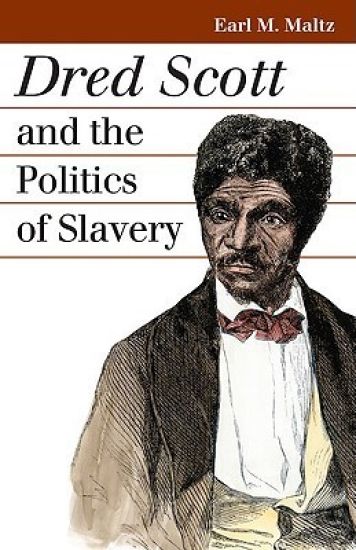
Dred Scott and the Politics of Slavery

Dred Scott and the Politics of Slavery

Earl M. Maltz

University Press of Kansas
2007
sidottu
The slave Dred Scott claimed that his residence in a free state transformed him into a free man. His lawsuit took many twists and turns before making its way to the Supreme Court in 1856. But when the Court ruled against him, the ruling sent shock waves through the nation and helped lead to civil war. Writing for the 7-to-2 majority, Chief Justice Roger Taney asserted that blacks were not and never could be citizens. Taney also ruled that the Missouri Compromise of 1820 was unconstitutional, upsetting the balance of slave and free states. Earl Maltz now offers a new look at this landmark case, presenting Dred Scott as a turning point in an already contentious national debate. Maltz's accessible account depicts Dred Scott as both a contributing factor to war and the result of a political climate that had grown so threatening to the South that overturning the Missouri Compromise was considered essential. As the nation continued its rapid expansion, Southerners became progressively more fearful of the free states' growing political clout. In that light, the ruling from a Court filled with justices sympathetic to the Southern cause, though far from surprising helped light the long fuse that eventually exploded into Civil War. Maltz offers an uncommonly balanced look at the case, taking Southern concerns seriously to cast new light on why proponents of slavery saw things as they did. He presents the arguments of all the parties impartially, tracks the sequence of increasingly strained compromises between pro- and anti-slavery forces, and demonstrates how political and sectional influences infiltrated the legal issues. He then traces the impact of the case on Northern and Southern public opinion, showing how a decision meant to resolve the question of slavery in the territories only aggravated sectional animosity. By presenting a more nuanced picture of the pro-Southern justices on the Court, Maltz offers readers a better understanding of how they came to their opinions, even as they failed to anticipate the impact their decision would have - a miscalculation that to some degree undermined the Court's power and authority within the American political system. Ultimately, as Maltz suggests, this is a story of judicial failure, one that remains a vital chapter in American law and one that must be mastered by anyone wishing to understand the peculiar nature of our national history.
Dred Scott and the Politics of Slavery

Dred Scott and the Politics of Slavery

Earl M. Maltz

University Press of Kansas
2007
nidottu
The slave Dred Scott claimed that his residence in a free state transformed him into a free man. His lawsuit took many twists and turns before making its way to the Supreme Court in 1856. But when the Court ruled against him, the ruling sent shock waves through the nation and helped lead to civil war. Writing for the 7-to-2 majority, Chief Justice Roger Taney asserted that blacks were not and never could be citizens. Taney also ruled that the Missouri Compromise of 1820 was unconstitutional, upsetting the balance of slave and free states. Earl Maltz now offers a new look at this landmark case, presenting Dred Scott as a turning point in an already contentious national debate. Maltz's accessible account depicts Dred Scott as both a contributing factor to war and the result of a political climate that had grown so threatening to the South that overturning the Missouri Compromise was considered essential. As the nation continued its rapid expansion, Southerners became progressively more fearful of the free states' growing political clout. In that light, the ruling from a Court filled with justices sympathetic to the Southern cause, though far from surprising helped light the long fuse that eventually exploded into Civil War. Maltz offers an uncommonly balanced look at the case, taking Southern concerns seriously to cast new light on why proponents of slavery saw things as they did. He presents the arguments of all the parties impartially, tracks the sequence of increasingly strained compromises between pro- and anti-slavery forces, and demonstrates how political and sectional influences infiltrated the legal issues. He then traces the impact of the case on Northern and Southern public opinion, showing how a decision meant to resolve the question of slavery in the territories only aggravated sectional animosity. By presenting a more nuanced picture of the pro-Southern justices on the Court, Maltz offers readers a better understanding of how they came to their opinions, even as they failed to anticipate the impact their decision would have - a miscalculation that to some degree undermined the Court's power and authority within the American political system. Ultimately, as Maltz suggests, this is a story of judicial failure, one that remains a vital chapter in American law and one that must be mastered by anyone wishing to understand the peculiar nature of our national history.
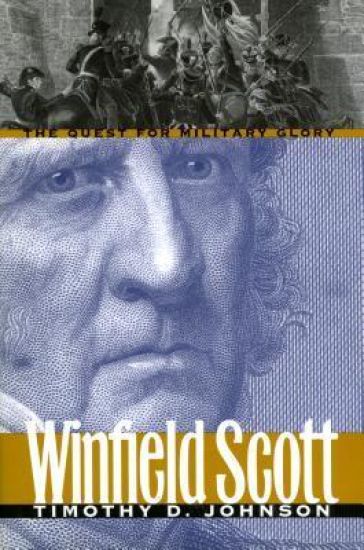
Winfield Scott

Winfield Scott

Timothy D. Johnson

University Press of Kansas
2015
nidottu
One of the most important public figures in antebellum America, Winfield Scott is known today more for his swagger than his sword. ""Old Fuss-and-Feathers"" was a brilliant military commander whose tactics and strategy were innovative adaptations from European military theory; yet he was often under appreciated by his contemporaries and until recently overlooked by historians. While John Eisenhower's Agent of Destiny provides a solid summary of Scott's remarkable life, Timothy D. Johnson's much deeper critical exploration of this flawed genius should become the standard work. Thoroughly grounded in an essential understanding of nineteenth-century military professionalism, it draws extensively on unpublished sources in order to reveal neglected aspects of Scott's life, present a more complete view of his career, and accurately balance criticism and praise. Johnson dramatically relates the key features of Scott's career: how he led troops to victory in the War of 1812 and the Mexican War, fought against the Seminoles and Creeks, and was instrumental in professionalizing the U.S. Army, which he commanded for two decades. He also tells how Scott tried to introduce French methods into army tactical manuals, and how he applied his study of the Napoleonic Wars during the Mexico City Campaign but found European strategy of little use against Indians. Johnson further suggests that Scott's creation of an officer corps that boasted Grant, Lee, McClellan and other veterans of the Mexican War raises important questions about his influence on Civil War generalship. More than a military history, this book tells how Scott's aristocratic pretensions placed him at odds with emerging notions of equality in Jacksonian America and made him an unappealing politician in his bid for the presidency. Johnson not only recounts the facets of Scott's personality that alienated nearly everyone who knew him but also reveals the unsavory methods he used to promote his career and the scandalous ways he attempted to relieve his lifelong financial troubles. Although his legendary vanity has tarnished his place among American military leaders, Scott is shown to have possessed great talent and courage. Johnson's biography offers the most balanced portrait available of Scott by never losing sight of the whole man.
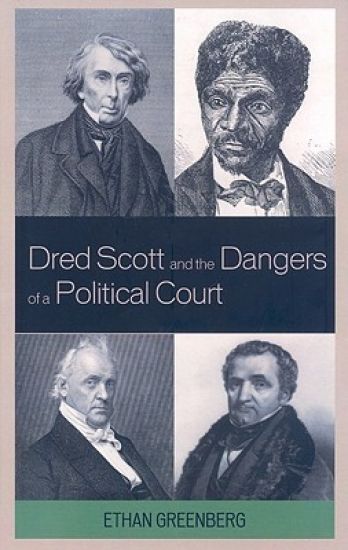
Dred Scott and the Dangers of a Political Court
The Dred Scott decision of 1857 is widely (and correctly) regarded as the very worst in the long history of the U.S. Supreme Court. The decision held that no African American could ever be a U.S. citizen and declared that the Missouri Compromise of 1820 was unconstitutional and void. The decision thus appeared to promise that slavery would be forever protected in the great American West. Prompting mass outrage, the decision was a crucial step on the road that led to the Civil War. Dred Scott and the Dangers of a Political Court traces the history of the case and tells the story of many of the key people involved, including Dred and Harriet Scott, President James Buchanan, Chief Justice Roger Taney, and Abraham Lincoln. The book also examines in some detail each of the nine separate Opinions written by the Court's Justices, connecting each with the respective Justices' past views on slavery and the law. That examination demonstrates that the majority Justices were willing to embrace virtually any flimsy legal argument they could find at hand in an effort to justify the pro-slavery result they had predetermined. Many modern commentators view the case chiefly in relation to Roe v Wade and related controversies in modern constitutional law: some conservative critics attempt to argue that Dred Scott exemplifies "aspirationalism" or "judicial activism" gone wrong; some liberal critics in turn try to argue that Dred Scott instead represents "originalism" or "strict constructionism" run amok. Here, Judge Ethan Greenberg demonstrates that none of these modern critiques has much merit. The Dred Scott case was not about constitutional methodology, but chiefly about slavery, and about how very far the Dred Scott Court was willing to go to protect the political interests of the slave-holding South. The decision was wrong because the Court subordinated law and intellectual honesty to politics. The case thus exemplifies the dangers of a political Court.
Dred Scott and the Dangers of a Political Court
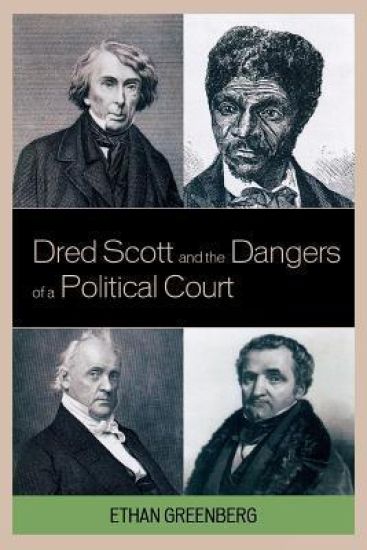
The Dred Scott decision of 1857 is widely (and correctly) regarded as the very worst in the long history of the U.S. Supreme Court. The decision held that no African American could ever be a U.S. citizen and declared that the Missouri Compromise of 1820 was unconstitutional and void. The decision thus appeared to promise that slavery would be forever protected in the great American West. Prompting mass outrage, the decision was a crucial step on the road that led to the Civil War. Dred Scott and the Dangers of a Political Court traces the history of the case and tells the story of many of the key people involved, including Dred and Harriet Scott, President James Buchanan, Chief Justice Roger Taney, and Abraham Lincoln. The book also examines in some detail each of the nine separate Opinions written by the Court's Justices, connecting each with the respective Justices' past views on slavery and the law. That examination demonstrates that the majority Justices were willing to embrace virtually any flimsy legal argument they could find at hand in an effort to justify the pro-slavery result they had predetermined. Many modern commentators view the case chiefly in relation to Roe v Wade and related controversies in modern constitutional law: some conservative critics attempt to argue that Dred Scott exemplifies 'aspirationalism' or 'judicial activism' gone wrong; some liberal critics in turn try to argue that Dred Scott instead represents 'originalism' or 'strict constructionism' run amok. Here, Judge Ethan Greenberg demonstrates that none of these modern critiques has much merit. The Dred Scott case was not about constitutional methodology, but chiefly about slavery, and about how very far the Dred Scott Court was willing to go to protect the political interests of the slave-holding South. The decision was wrong because the Court subordinated law and intellectual honesty to politics. The case thus exemplifies the dangers of a political Court.
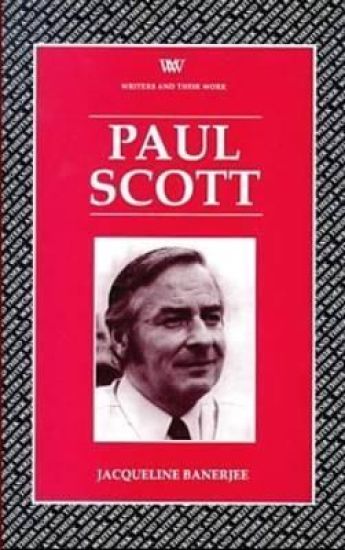
Paul Scott

Paul Scott

Jacqueline Banerjee

Liverpool University Press
1998
pokkari
Contrary to popular belief, Paul Scott was not a historical novelist in the realist tradition but a post-modernist who engaged with his readers in narrative of increasing self-consciousness and complexity. Having exposed the identity crisis of the twentieth-century male under army and post-war conditions, he moved on after the 1950’s to explore the need for commitment memorably and often brilliantly against various backdrops. This phase culminated in his most frankly experimental novel, The Corrida at San Feliu (1964). However, India, where Scott had served during the war, still exerted a strong pull on his imagination. And in his tour de forceThe Raj Quartet (1966-1975), and its coda, Staying On (1977; Booker Prize, 1978), Scott found in one of the great upheavals of recent times what he had long been seeking – evidence of human being’s capacity for moral integrity and love, even in the face of extraordinary challenges.
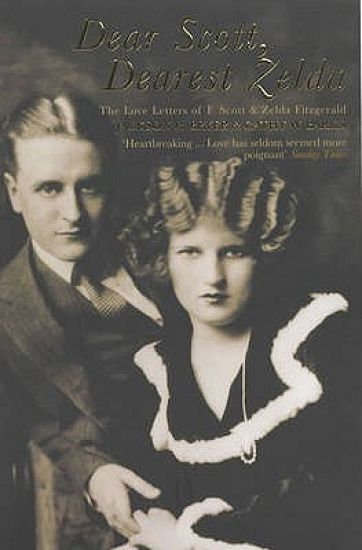
Dear Scott, Dearest Zelda

Dear Scott, Dearest Zelda

Bloomsbury Publishing PLC
2003
nidottu
____________________ ‘A superbly edited and evocatively illustrated collection that brings together everything that Scott wrote to his wife' - Sunday Telegraph 'Heartbreaking ... Love has seldom seemed more poignant' - Sunday Times 'Excellent ... the correspondence speaks for itself and the editors allow readers to draw their own conclusions' - Daily Telegraph ____________________ Through his alcoholism and her mental illness, his career highs (and lows) and her institutional confinement, Scott and Zelda Fitzgerald's devotion to each other endured for more than twenty-two years. Now, for the first time, the story of the love of these two glamorous and hugely talented writers can be given in their own letters. Introduced by an extensive narrative of the Fitzgeralds' marriage, the 333 letters - three-quarters of them previously unpublished or out of print - have been edited by the noted Fitzgerald scholars, Jackson R. Bryer and Cathy W. Barks. They are illustrated throughout with a generous selection of familiar and unpublished photographs.
Walter Scott and Modernity

Walter Scott and Modernity

Andrew Lincoln

Edinburgh University Press
2007
sidottu
Walter Scott and Modernity argues that, far from turning away from modernity to indulge a nostalgic vision of the past, Scott uses the past as means of exploring key problems in the modern world. This study includes critical introductions to some of the most widely read poems published in nineteenth-century Britain (which are also the most scandalously neglected), and insights into the narrative strategies and ideological interests of some of Scott's greatest novels. It explores the impact of the French revolution on attitudes to tradition, national heritage, historical change and modernity in the romantic period, considers how the experience of empire influenced ideas about civilized identity, and how ideas of progress could be used both to rationalise the violence of empire and to counteract demands for political reform. It also shows how current issues of debate - from relations between Western and Islamic cultures, to the political significance of the private conscience in a liberal society - are anticipated in the romantic era. Key Features * Explains the historical, political and aesthetic significance of Scott's 'Tory scepticism' * Considers the relationship between Scott's interests and twentieth-first-century debates about nation, empire, community, identity and state legitimacy * Includes detailed analyses of three of Scott's most influential poems * Offers detailed, and carefully historicised interpretations in an accessible style
Walter Scott and the Limits of Language

Walter Scott and the Limits of Language

Alison Lumsden

Edinburgh University Press
2010
sidottu
Scott's startlingly contemporary approach to theories of language and the creative impact of this on his work are explored in this new study. Alison Lumsden examines the linguistic diversity and creative playfulness of Scott's fiction and suggests that an evolving scepticism towards the communicative capacities of language runs throughout his writing. Lumsden re-examines this scepticism in relation to Scottish Enlightenment thought and recent developments in theories of the novel. Structured chronologically, the book covers Scott's output from his early narrative poems until the late, and only recently published, Reliquiae Trotcosienses Key Features *Grounded in the scholarship of the Edinburgh Edition of the Waverley Novels *Covers the well-known as well as often neglected poetry and late fiction *Demonstrates Scott's pivotal role in the development of the novel form *Provides a thoroughly modern approach to Scott
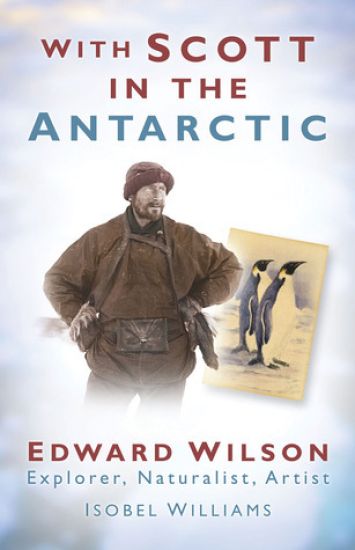
With Scott in the Antarctic

With Scott in the Antarctic

Isobel Williams

The History Press Ltd
2009
nidottu
Edward Wilson (1872-1912) accompanied Robert Falcon Scott on both his celebrated Antarctic voyages: the Discovery Expedition of 1901-1904 and the Terra Nova Expedition of 1910-1913.Wilson served as Junior Surgeon and Zoologist on Discovery and, on this expedition, with Scott and Ernest Shackleton he set a new Furthest South on 30 December 1902. He was Chief of Scientific Staff on the Terra Nova Expedition and reached the South Pole with Scott, Lawrence Oates, Henry Robertson Bowers and Edgar Evans on 18 January 1912, arriving there four weeks after the Norwegian explorer Roald Amundsen. Wilson and his four companions died on the return journey. Trained as a physician,Wilson was also a skilled artist. His drawings and paintings lavishly illustrated both expeditions. He was the last major exploration artist; technological developments in the field of photography were soon to make cameras practical as a way of recording journeys into the unknown. This biography, the first full account of the Antarctic hero, traces his life from childhood to his tragic death.