Kirjojen hintavertailu. Mukana 11 979 833 kirjaa ja 12 kauppaa.

Kirjahaku

Etsi kirjoja tekijän nimen, kirjan nimen tai ISBN:n perusteella.

1000 tulosta hakusanalla Spender

Edmund Spenser

Edmund Spenser

W. L. Renwick

TAYLOR FRANCIS LTD
2026
sidottu
First published in 1925, Edmund Spenser is a scholarly examination of Edmund Spenser's contributions to Renaissance literature. Renwick delves into Spenser's poetic artistry, exploring his major works, including The Faerie Queene, and their significance within the cultural and intellectual context of the Elizabethan era. The book analyzes Spenser's use of allegory, his innovative approach to language and form, and his influence on the development of English poetry. Renwick's essay remains a valuable resource for understanding Spenser's role in shaping Renaissance poetry and his enduring literary legacy.

El Sendero de la Venganza: Romance Histórico

El Sendero de la Venganza: Romance Histórico

Mar Álvarez

Independently Published
2019
nidottu
La promesa de un ni o ante la tumba de sus padres.La obsesi n de una ni a por quien cree el amor de su vida. El pasado une a Javi y a Ang lica de manera tr gica y desconocida para ambos: mientras l se siente sujeto a su juramento de venganza, intensificado por su sentido del honor, ella no est dispuesta a dejar pasar la nica oportunidad que le brinda el destino para enamorar al hombre con el que lleva so ando desde que era una cr a.Javier estaba convencido de que nada ser a capaz de apartarlo de su prop sito. Sin embargo, no contaba con que una hechicera de ojos verdes se le cruzase en el camino y que provocara, con su dulzura y belleza, un terremoto interior al comprobar como la atracci n que lo lleva en su direcci n est fuertemente en oposici n con el objetivo que se ha marcado.Ambos aprender n que la venganza es un sendero dif cil de transitar y que se mueve en ambas direcciones: al igual que tiene un camino de ida, tambi n lo tiene de vuelta. Qui n ganar la batalla en este enfrentamiento de voluntades en el que nadie est dispuesto a transigir, y en el que los dos pierden de todas formas? Desc brelo en esta tercera y ltima parte de la Serie Conquista: El Sendero de la Venganza.
Wolf Spencer: Book One in the Renegade series

Wolf Spencer: Book One in the Renegade series

Joe Prentis

Independently Published
2019
nidottu
When John Spencer returns to town after three years of living with the Cheyenne, he does not expect much of a welcome, but it doesn't matter that much, because he doesn't intend to stay that long. From the moment of his arrival he is confronted with the problems he ran away from when his parents were killed. There are those who will stop at nothing to make him leave, and others who are willing to pay any price to make him stay. The Indians called him Wolf and he has a reputation to match. There is a price on his head, bounty hunters on his back trail, and the army with a warrant for his arrest. And if that isn't trouble enough, there is Shannon the one he loves. This is the first book in The Renegade series.
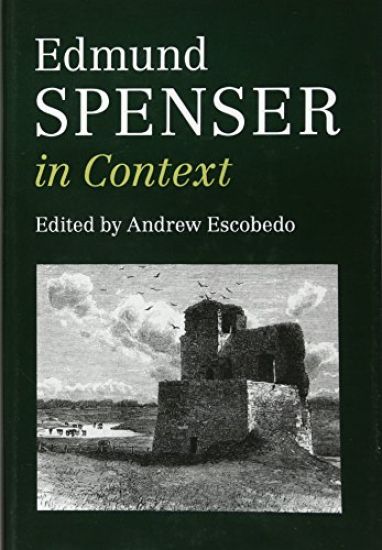
Edmund Spenser in Context

Edmund Spenser in Context

Cambridge University Press
2016
sidottu
Edmund Spenser's poetry remains an indispensable touchstone of English literary history. Yet for modern readers his deliberate use of archaic language and his allegorical mode of writing can become barriers to understanding his poetry. This volume of thirty-seven essays, written by distinguished scholars, offers a rich introduction to the literary, political and religious contexts that shaped Spenser's poetry, including the environment in which he lived, the genres he drew upon, and the influences that helped to fashion his art. The collection reveals the multiple personae that Spenser constructs within his work: to read Spenser is to read a rich archive of literary forms, and this volume provides the contexts in which to do so. A reading list at the end of the volume will prove invaluable to further study.
Edmund Spenser and the Eighteenth-Century Book

Edmund Spenser and the Eighteenth-Century Book

Hazel Wilkinson

Cambridge University Press
2017
sidottu
Edmund Spenser's epic poem The Faerie Queene (1590–6) occupied an important place in eighteenth-century culture. Spenser influenced almost every major writer of the century, from Alexander Pope to William Wordsworth. What was it like to read Spenser in the eighteenth century? Who made Spenserian books, and how did their owners use and interpret them? The first comprehensive study of all of the eighteenth-century editions of Edmund Spenser addresses these questions through bibliographical analysis, and through examination of the history of the book and of eighteenth-century literature and culture. Within these contexts, Hazel Wilkinson provides new information about the production, contents, texts, and reception of the eighteenth-century editions of Spenser, to illuminate how his cultural presence became so far-reaching. With each chapter structured around a major edition of Spenser's work, this volume provides a timely addition to arguments about the nature of literary history and the growing cult of great writers of the past.
Edmund Spenser in Context

Edmund Spenser in Context

Cambridge University Press
2019
pokkari
Edmund Spenser's poetry remains an indispensable touchstone of English literary history. Yet for modern readers his deliberate use of archaic language and his allegorical mode of writing can become barriers to understanding his poetry. This volume of thirty-seven essays, written by distinguished scholars, offers a rich introduction to the literary, political and religious contexts that shaped Spenser's poetry, including the environment in which he lived, the genres he drew upon, and the influences that helped to fashion his art. The collection reveals the multiple personae that Spenser constructs within his work: to read Spenser is to read a rich archive of literary forms, and this volume provides the contexts in which to do so. A reading list at the end of the volume will prove invaluable to further study.
Bibliotheca Spenceriana

Bibliotheca Spenceriana

Dibdin Thomas Frognall

Cambridge University Press
2012
pokkari
At his death, George Spencer (1758–1834) had created the greatest private library in Europe. At the time, many aristocrats were spending huge sums acquiring rare printed books. With monastic and aristocratic libraries in Europe being dissolved, collectors had access to thousands of examples. The Second Earl Spencer's interests were in English 'black-letter' printing, especially the works of Caxton, and continental incunables, particularly first editions of Greek and Latin classics. Thomas Dibdin (1776–1847) was employed as Spencer's librarian and visited Europe searching for new acquisitions. Published in 1814–15, this catalogue is of the earliest and rarest items in the collection. Each is described in detail, with reproductions of woodcuts and engravings, making this a fascinating record of one man's commitment to collecting the earliest examples of this revolutionary invention. Volume 1 covers the collection's oldest items, including a Gutenberg Bible and work by the great Nicholas Jenson.
Bibliotheca Spenceriana

Bibliotheca Spenceriana

Dibdin Thomas Frognall

Cambridge University Press
2012
pokkari
At his death, George Spencer (1758–1834) had created the greatest private library in Europe. At the time, many aristocrats were spending huge sums acquiring rare printed books. With monastic and aristocratic libraries in Europe being dissolved, collectors had access to thousands of examples. The Second Earl Spencer's interests were in English 'black-letter' printing, especially the works of Caxton, and continental incunables, particularly first editions of Greek and Latin classics. Thomas Dibdin (1776–1847) was employed as Spencer's librarian and visited Europe searching for new acquisitions. Published in 1814–15, this catalogue is of the earliest and rarest items in the collection. Each is described in detail, with reproductions of woodcuts and engravings, making this a fascinating record of one man's commitment to collecting the earliest examples of this revolutionary invention. Volume 2 covers the many first editions of Greek and Latin classics, predominantly from Italy, including examples by Valdarfer.
Bibliotheca Spenceriana

Bibliotheca Spenceriana

Dibdin Thomas Frognall

Cambridge University Press
2012
pokkari
At his death, George Spencer (1758–1834) had created the greatest private library in Europe. At the time, many aristocrats were spending huge sums acquiring rare printed books. With monastic and aristocratic libraries in Europe being dissolved, collectors had access to thousands of examples. The Second Earl Spencer's interests were in English 'black-letter' printing, especially the works of Caxton, and continental incunables, particularly first editions of Greek and Latin classics. Thomas Dibdin (1776–1847) was employed as Spencer's librarian and visited Europe searching for new acquisitions. Published in 1814–15, this catalogue is of the earliest and rarest items in the collection. Each is described in detail, with reproductions of woodcuts and engravings, making this a fascinating record of one man's commitment to collecting the earliest examples of this revolutionary invention. Volume 3 continues to catalogue the classics, along with early editions of Aquinas, St Augustine and Thomas à Kempis.
Bibliotheca Spenceriana

Bibliotheca Spenceriana

Dibdin Thomas Frognall

Cambridge University Press
2012
pokkari
At his death, George Spencer (1758–1834) had created the greatest private library in Europe. At the time, many aristocrats were spending huge sums acquiring rare printed books. With monastic and aristocratic libraries in Europe being dissolved, collectors had access to thousands of examples. The Second Earl Spencer's interests were in English 'black-letter' printing, especially the works of Caxton, and continental incunables, particularly first editions of Greek and Latin classics. Thomas Dibdin (1776–1847) was employed as Spencer's librarian and visited Europe searching for new acquisitions. Published in 1814–15, this catalogue is of the earliest and rarest items in the collection. Each is described in detail, with reproductions of woodcuts and engravings, making this a fascinating record of one man's commitment to collecting the earliest examples of this revolutionary invention. Volume 4 includes many examples of the earliest work of Caxton, alongside first editions of Boccacio and Dante.