Kirjojen hintavertailu. Mukana 12 390 323 kirjaa ja 12 kauppaa.

Kirjahaku

Etsi kirjoja tekijän nimen, kirjan nimen tai ISBN:n perusteella.

1000 tulosta hakusanalla Steven Clark

The Language Instinct

The Language Instinct

Steven Pinker

Penguin Books Ltd
2015
pokkari
'Dazzling... Pinker's big idea is that language is an instinct...as innate to us as flying is to geese... Words can hardly do justice to the superlative range and liveliness of Pinker's investigations'- Independent'A marvellously readable book... illuminates every facet of human language: its biological origin, its uniqueness to humanity, it acquisition by children, its grammatical structure, the production and perception of speech, the pathology of language disorders and the unstoppable evolution of languages and dialects' - Nature
How the Mind Works

How the Mind Works

Steven Pinker

Penguin Books Ltd
2015
pokkari
Why do we laugh? What makes memories fade? Why do people believe in ghosts? How the Mind Works explores every aspect of mental life, showing that our minds are not a mystery, but a system of organs of computation designed by natural selection.
To Explain the World

To Explain the World

Steven Weinberg

Penguin Books Ltd.
2016
pokkari
Moving from ancient Miletus to medieval Baghdad to Oxford, and from the Museum of Alexandria to the Royal Society of London, the author shows that the scientists of the past not only did not understand what we understand about the world - they did not understand what there is to understand.
When to Rob a Bank

When to Rob a Bank

Steven D. Levitt; Stephen J. Dubner

Penguin Books Ltd
2016
pokkari
This is the ultimate guide to the world of the Freak. Renegade thinkers and bestselling sensations Levitt and Dubner have carefully curated the very best of their blogs, conversations, wisecracks and advice from the last decade to reveal the outlandish truth about everything from lying to bankrobbing, fast food to sex taxes.'We are all Freakonomists now' Washington Post'A phenomenon ... their approach has won them a cult following' Observer'Lie back and let Levitt and Dubner's bouncy prose style carry you along from one peculiarity to the next' Sunday Telegraph'You are guaranteed a good time' Financial Times
A History of the Crusades I

A History of the Crusades I

Steven Runciman

Penguin Classics
2016
pokkari
The first volume of Steven Runciman's classic, hugely influential trilogy on the history of the Crusades'On a February day in the year AD 638 the Caliph Omar entered Jerusalem, riding upon a white camel'An enthralling work of grand historical narrative, Steven Runciman's A History of the Crusades overturned the traditional view of the Crusades as a romantic Christian adventure, and instead shifted the focus of the story to the East. With verve and drama, volume one of Runciman's trilogy tells the story of the First Crusade - from its unlikely beginnings in pilgrimage to the horrors of the siege of Jerusalem and the carving out of new territory on the edge of the eastern Mediterranean.'Without question one of the major feats of contemporary historical writing' The New York Times'The historian whose magisterial works transformed our understanding of Byzantium, the medieval church and the crusades' Guardian
Rationality

Rationality

Steven Pinker

PENGUIN BOOKS LTD
2022
pokkari
A TIMES BOOK OF THE YEAR 2021 'Punchy, funny and invigorating ... Pinker is the high priest of rationalism' Sunday Times 'If you've ever considered taking drugs to make yourself smarter, read Rationality instead. It's cheaper, more entertaining, and more effective' Jonathan Haidt, author of The Righteous Mind In the twenty-first century, humanity is reaching new heights of scientific understanding - and at the same time appears to be losing its mind. How can a species that discovered vaccines for Covid-19 in less than a year produce so much fake news, quack cures and conspiracy theorizing? In Rationality, Pinker rejects the cynical cliché that humans are simply an irrational species - cavemen out of time fatally cursed with biases, fallacies and illusions. After all, we discovered the laws of nature, lengthened and enriched our lives and set the benchmarks for rationality itself. Instead, he explains, we think in ways that suit the low-tech contexts in which we spend most of our lives, but fail to take advantage of the powerful tools of reasoning we have built up over millennia: logic, critical thinking, probability, causal inference, and decision-making under uncertainty. These tools are not a standard part of our educational curricula, and have never been presented clearly and entertainingly in a single book - until now. Rationality matters. It leads to better choices in our lives and in the public sphere, and is the ultimate driver of social justice and moral progress. Brimming with insight and humour, Rationality will enlighten, inspire and empower. 'A terrific book, much-needed for our time' Peter Singer
Birdsong in a Time of Silence

Birdsong in a Time of Silence

Steven Lovatt

PENGUIN BOOKS LTD
2022
pokkari
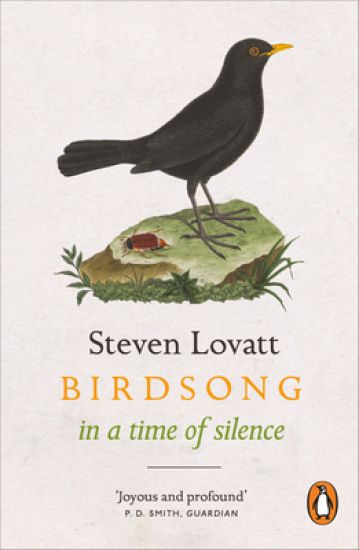
A lyrical celebration of birdsong, and the rekindling of a deep passion for nature.'At this time of year, blackbirds never simply fly: instead, like reluctantly retired officers, they're always "on manoeuvres", and it's easy to see from their constant agitation that for them every flower bed is a bunker, every shed a redoubt and every hedge-bottom a potential place of ambush'As the world went silent in lockdown, something else happened; for the first time, many of us started becoming more aware of the spring sounds of the birds around us. Birdsong in a Time of Silence is a lyrical, uplifting reflection on these sounds and what they mean to us.From a portrait of the blackbird - most prominent and articulate of the early spring singers - to explorations of how birds sing, the science behind their choice of song and nest-sites, and the varied meanings that people have brought to and taken from birdsong, this book ultimately shows that natural history and human history cannot be separated. It is the story of a collective reawakening brought on by the strangest of springs.
Enchanted Ground

Enchanted Ground

Steven Lovatt

PENGUIN BOOKS LTD
2026
pokkari
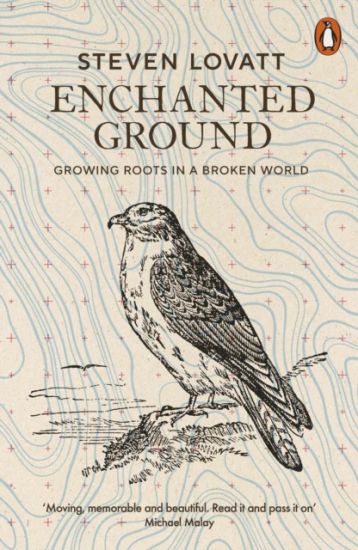
A quest for belonging through the forsaken landscapes of Britain When Steven Lovatt’s grandmother died, he lost not only a beloved family member but also his last link to the way of life she had represented: rooted in place, socially democratic, ecologically rich. Cut loose from the past and confronted with a present missing even the birds of his childhood, Steven’s mind cracked. Drawing on field work, local library archives and oral history, as well as dreams, diaries and visions, Enchanted Ground charts a fractured course from breakdown to belonging. For if he is to survive, Steven realises he must set out, like a pilgrim, across the motorways and monoculture wastes of Britain in search of enchanted ground – and those who have begun to rebuild it.
The Blank Slate: The Modern Denial of Human Nature

The Blank Slate: The Modern Denial of Human Nature

Steven Pinker

Penguin Publishing Group
2003
nidottu
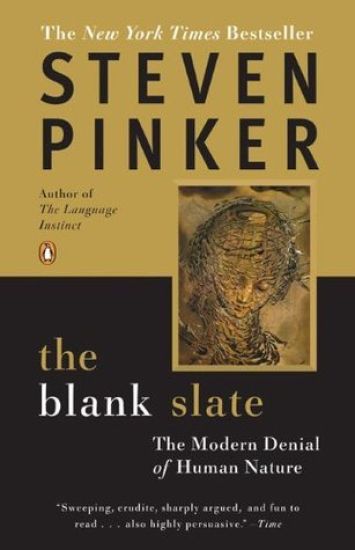
In The Blank Slate, Steven Pinker, one of the world's leading experts on language and the mind, explores the idea of human nature and its moral, emotional, and political colorings. With characteristic wit, lucidity, and insight, Pinker argues that the dogma that the mind has no innate traits-a doctrine held by many intellectuals during the past century-denies our common humanity and our individual preferences, replaces objective analyses of social problems with feel-good slogans, and distorts our understanding of politics, violence, parenting, and the arts. Injecting calm and rationality into debates that are notorious for ax-grinding and mud-slinging, Pinker shows the importance of an honest acknowledgment of human nature based on science and common sense. Author Biography: Steven Pinker is Peter de Florez Professor at MIT. He has received many prizes for his teaching, his research, and his bestselling books, The Language Instinct, How the Mind Works, and Words and Rules.
The Missing Mitten Mystery

The Missing Mitten Mystery

Steven Kellogg

Puffin Books
2002
nidottu
While playing, Annie loses her red mitten and must retrace her steps to all the places she had been in order to locate it, but she must give up her search when it gets dark, in a paperback edition of a charming tale, released with all-new, full-color artwork. Original.
The Mysterious Tadpole

The Mysterious Tadpole

Steven Kellogg

Penguin Books Ltd
2004
pokkari
It's Louis's birthday and Uncle McAllister has brought him a very special gift&150a tadpole all the way from Scotland Louis can hardly wait for Alphonse to grow into a frog. But it soon becomes clear that Alphonse is not turning into any ordinary frog. First Alphonse outgrows his jar, then the sink, and then the bathtub This new edition of The Mysterious Tadpole boasts reimagined story twists and entirely new illustrations. The lovable giant of a tadpole has grown into something even more wonderful
Enlightenment Now: The Case for Reason, Science, Humanism, and Progress
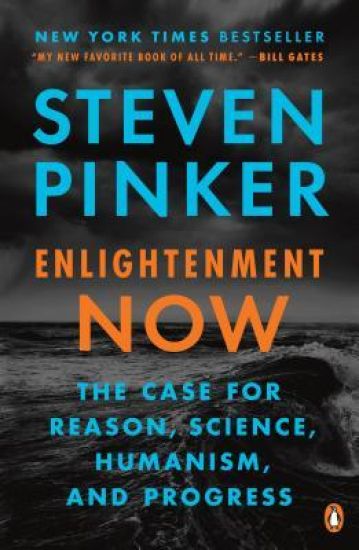
INSTANT NEW YORK TIMES BESTSELLER A NEW YORK TIMES NOTABLE BOOK OF 2018ONE OF THE ECONOMIST'S BOOKS OF THE YEAR"My new favorite book of all time." --Bill Gates If you think the world is coming to an end, think again: people are living longer, healthier, freer, and happier lives, and while our problems are formidable, the solutions lie in the Enlightenment ideal of using reason and science. By the author of the new book, Rationality. Is the world really falling apart? Is the ideal of progress obsolete? In this elegant assessment of the human condition in the third millennium, cognitive scientist and public intellectual Steven Pinker urges us to step back from the gory headlines and prophecies of doom, which play to our psychological biases. Instead, follow the data: In seventy-five jaw-dropping graphs, Pinker shows that life, health, prosperity, safety, peace, knowledge, and happiness are on the rise, not just in the West, but worldwide. This progress is not the result of some cosmic force. It is a gift of the Enlightenment: the conviction that reason and science can enhance human flourishing. Far from being a na ve hope, the Enlightenment, we now know, has worked. But more than ever, it needs a vigorous defense. The Enlightenment project swims against currents of human nature--tribalism, authoritarianism, demonization, magical thinking--which demagogues are all too willing to exploit. Many commentators, committed to political, religious, or romantic ideologies, fight a rearguard action against it. The result is a corrosive fatalism and a willingness to wreck the precious institutions of liberal democracy and global cooperation. With intellectual depth and literary flair, Enlightenment Now makes the case for reason, science, and humanism: the ideals we need to confront our problems and continue our progress.
The Stuff of Thought: Language as a Window Into Human Nature
This New York Times bestseller is an exciting and fearless investigation of language from the author of Rationality, The Better Angels of Our Nature and The Sense of Style and Enlightenment Now. "Curious, inventive, fearless, naughty." --The New York Times Book Review Bestselling author Steven Pinker possesses that rare combination of scientific aptitude and verbal eloquence that enables him to provide lucid explanations of deep and powerful ideas. His previous books - including the Pulitzer Prize finalist The Blank Slate - have catapulted him into the limelight as one of today's most important popular science writers. In The Stuff of Thought, Pinker presents a fascinating look at how our words explain our nature. Considering scientific questions with examples from everyday life, The Stuff of Thought is a brilliantly crafted and highly readable work that will appeal to fans of everything from The Selfish Gene and Blink to Eats, Shoots & Leaves.
A Nation Without Borders

A Nation Without Borders

Steven Hahn

Penguin USA
2017
nidottu
A Pulitzer Prize-winning historian's "breathtakingly original" (Junot Diaz) reinterpretation of the eight decades surrounding the Civil War. "Capatious and] buzzing with ideas." --The Boston Globe Volume 3 in the Penguin History of the United States, edited by Eric Foner In this ambitious story of American imperial conquest and capitalist development, Pulitzer Prize-winning historian Steven Hahn takes on the conventional histories of the nineteenth century and offers a perspective that promises to be as enduring as it is controversial. It begins and ends in Mexico and, throughout, is internationalist in orientation. It challenges the political narrative of "sectionalism," emphasizing the national footing of slavery and the struggle between the northeast and Mississippi Valley for continental supremacy. It places the Civil War in the context of many domestic rebellions against state authority, including those of Native Americans. It fully incorporates the trans-Mississippi west, suggesting the importance of the Pacific to the imperial vision of political leaders and of the west as a proving ground for later imperial projects overseas. It reconfigures the history of capitalism, insisting on the centrality of state formation and slave emancipation to its consolidation. And it identifies a sweeping era of "reconstructions" in the late-nineteenth and early twentieth centuries that simultaneously laid the foundations for corporate liberalism and social democracy. The era from 1830 to 1910 witnessed massive transformations in how people lived, worked, thought about themselves, and struggled to thrive. It also witnessed the birth of economic and political institutions that still shape our world. From an agricultural society with a weak central government, the United States became an urban and industrial society in which government assumed a greater and greater role in the framing of social and economic life. As the book ends, the United States, now a global economic and political power, encounters massive warfare between imperial powers in Europe and a massive revolution on its southern border―the remarkable Mexican Revolution―which together brought the nineteenth century to a close while marking the important themes of the twentieth.
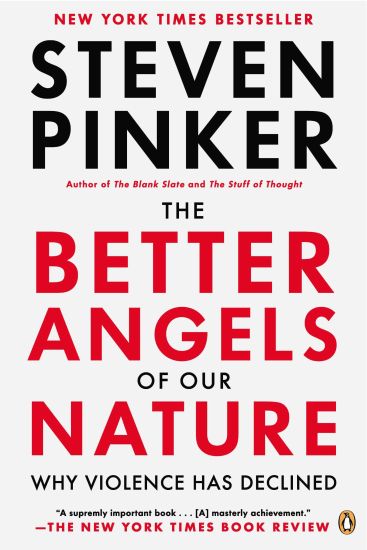
The Better Angels of Our Nature: Why Violence Has Declined
"If I could give each of you a graduation present, it would be this--the most inspiring book I've ever read." --Bill Gates A provocative history of violence--from the New York Times bestselling author of The Stuff of Thought, The Blank Slate, and Enlightenment Now.Believe it or not, today we may be living in the most peaceful moment in our species' existence. In his gripping and controversial new work, New York Times bestselling author Steven Pinker shows that despite the ceaseless news about war, crime, and terrorism, violence has actually been in decline over long stretches of history. Exploding myths about humankind's inherent violence and the curse of modernity, this ambitious book continues Pinker's exploration of the essence of human nature, mixing psychology and history to provide a remarkable picture of an increasingly enlightened world.
The Sense of Style: The Thinking Person's Guide to Writing in the 21st Century
"Charming and erudite," from the author of Rationality and Enlightenment Now, "The wit and insight and clarity he brings . . . is what makes this book such a gem." --Time.com Why is so much writing so bad, and how can we make it better? Is the English language being corrupted by texting and social media? Do the kids today even care about good writing--and why should we care? From the author of The Better Angels of Our Nature and Enlightenment Now. In this entertaining and eminently practical book, the cognitive scientist, dictionary consultant, and New York Times-bestselling author Steven Pinker rethinks the usage guide for the twenty-first century. Using examples of great and gruesome modern prose while avoiding the scolding tone and Spartan tastes of the classic manuals, he shows how the art of writing can be a form of pleasurable mastery and a fascinating intellectual topic in its own right. The Sense of Style is for writers of all kinds, and for readers who are interested in letters and literature and are curious about the ways in which the sciences of mind can illuminate how language works at its best.
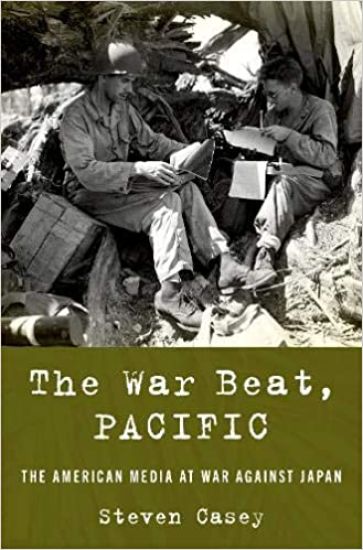
The War Beat, Pacific

The War Beat, Pacific

Steven Casey

Oxford University Press Inc
2021
sidottu
The definitive history of American war reporting in the Pacific theater of World War II, from the attack on Pearl Harbor to the atomic bombings of Hiroshima and Nagasaki. After almost two years slogging with infantrymen through North Africa, Italy, and France, Ernie Pyle immediately realized he was ill prepared for covering the Pacific War. As Pyle and other war correspondents discovered, the climate, the logistics, and the sheer scope of the Pacific theater had no parallel in the war America was fighting in Europe. From Pearl Harbor to Hiroshima and Nagasaki, The War Beat, Pacific provides the first comprehensive account of how a group of highly courageous correspondents covered America's war against Japan, what they witnessed, what they were allowed to publish, and how their reports shaped the home front's perception of some of the most pivotal battles in American military history. In a dramatic and fast-paced narrative based on a wealth of previously untapped primary sources, Casey takes us from MacArthur's doomed defense on the Philippines and the navy's overly strict censorship policy at the time of Midway, through the bloody battles on Guadalcanal, New Guinea, Tarawa, Saipan, Leyte and Luzon, Iwo Jima and Okinawa, detailing the cooperation, as well as conflict, between the media and the military, as they grappled with the enduring problem of limiting a free press during a period of extreme crisis. The War Beat, Pacific shows how foreign correspondents ran up against practical challenges and risked their lives to get stories in a theater that was far more challenging than the war against Nazi Germany, while the US government blocked news of the war against Japan and tried to focus the home front on Hitler and his atrocities.
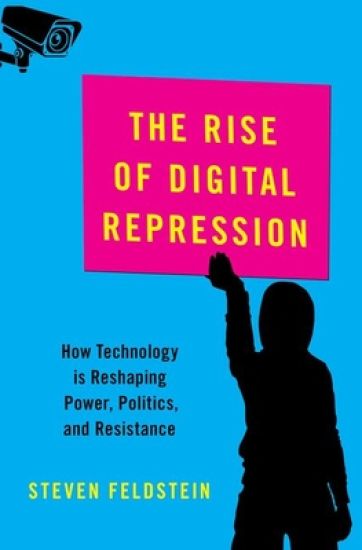
The Rise of Digital Repression

The Rise of Digital Repression

Steven Feldstein

Oxford University Press Inc
2021
sidottu
The world is undergoing a profound set of digital disruptions that are changing the nature of how governments counter dissent and assert control over their countries. While increasing numbers of people rely primarily or exclusively on online platforms, authoritarian regimes have concurrently developed a formidable array of technological capabilities to constrain and repress their citizens. In The Rise of Digital Repression, Steven Feldstein documents how the emergence of advanced digital tools bring new dimensions to political repression. Presenting new field research from Thailand, the Philippines, and Ethiopia, he investigates the goals, motivations, and drivers of these digital tactics. Feldstein further highlights how governments pursue digital strategies based on a range of factors: ongoing levels of repression, political leadership, state capacity, and technological development. The international community, he argues, is already seeing glimpses of what the frontiers of repression look like. For instance, Chinese authorities have brought together mass surveillance, censorship, DNA collection, and artificial intelligence to enforce their directives in Xinjiang. As many of these trends go global, Feldstein shows how this has major implications for democracies and civil society activists around the world. A compelling synthesis of how anti-democratic leaders harness powerful technology to advance their political objectives, The Rise of Digital Repression concludes by laying out innovative ideas and strategies for civil society and opposition movements to respond to the digital autocratic wave.
South Sudan's Fateful Struggle

South Sudan's Fateful Struggle

Steven C. Roach

OXFORD UNIVERSITY PRESS INC
2024
sidottu
The Comprehensive Peace Agreement marked the end of Sudan's second civil war between the North and South. But in creating an autonomous southern region and a pathway toward statehood, it failed to resolve the effects of rebel factionalism, party infighting, and corruption in the South. In South Sudan's Fateful Struggle, Steven C. Roach analyzes these persistent effects of the South-South war, showing how they disrupted the transition to statehood and divided the transitional government of national unity in South Sudan. Throughout, he stresses the centrality of elite mismanagement and the durable dynamics of war which have shaped the country's troubled political destiny. The government, plagued by patronage-fueled corruption and patrimonialism, continues to rely on the threat of violence to govern the country and to delay the transition to a new government of national unity. Roach argues that in naturally sowing division and distrust, government elites must ultimately learn to engage civil society to achieve long-term peace, accountability, and justice. Along with providing an overview of the country's trajectory in this century, Roach traces its state of war to colonial times and uses the notion of militarized patronage to describe the distinct nature of South Sudan's patronage networks. He shows how the Sudan People's Liberation Movement came to dominate the country's affairs to become a powerful deterrent to democracy, security, justice, and national unity. He then discusses the promising efforts by civil society actors to advance hybrid justice by pressuring the government to implement a truth commission, a war crimes court, and reparations commission. Comprehensive in scope, the book represents the first systematic examination of South Sudan's quandary both before and after its civil war.