Kirjojen hintavertailu. Mukana 11 521 844 kirjaa ja 12 kauppaa.

Kirjahaku

Etsi kirjoja tekijän nimen, kirjan nimen tai ISBN:n perusteella.

1000 tulosta hakusanalla Tell Cotten

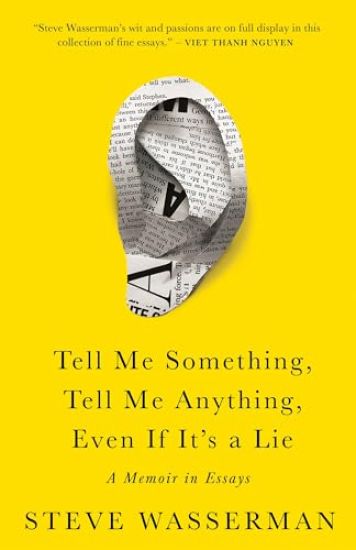
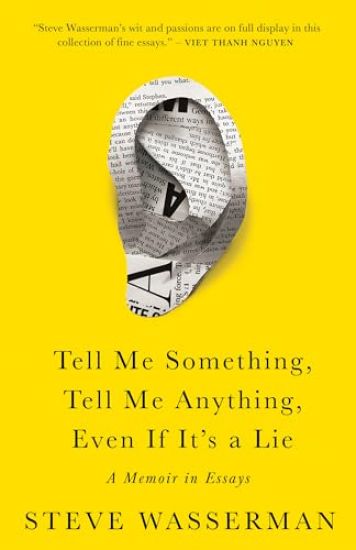
Tell Me Something, Tell Me Anything, Even If It's a Lie
An exhilarating journey through the world of books, featuring personal reflections on Susan Sontag, Huey Newton, Barbra Streisand, W. G. Sebald, and Christopher Hitchens."A troublemaker of the good kind since his youth, Wasserman continues to inspire with his vigorous dedication to the life of the mind, exhibited with clarity and grace in this book." —Viet Thanh NguyenBorn on the West Coast, the son of Bronx-born parents, Steve Wasserman is a generalist and public intellectual but is perhaps less well known as a cultural essayist and social critic of the first rank. In thirty splendid essays, originally published in such diverse publications as The New Republic and The Nation, The American Conservative and The Progressive, The Village Voice and The Economist, Wasserman delivers a riveting account of the awakening of an empathetic sensibility and a lively mind. Taken together, they reveal the depth and breadth of his enthusiasms and range over politics, literature, and the tumults of a world in upheaval.These essays include the remarkable tale of a bookstore owner who wouldn't let him buy the books he wanted, to his brave against-the-grain take on the Black Panthers, to his shrewd assessment of the fast-changing world of publishing. Here is, as Joyce Carol Oates notes, "arguably the very best concise history of Cuba and the legendary Fidel Castro; beautifully composed eulogies for two close friends, Susan Sontag and Christopher Hitchens; sharply perceptive commentary on Daniel Ellsberg; a thrillingly candid interview with W. G. Sebald."
Tell Me Something, Tell Me Anything, Even If It's a Lie
Now in paperback: an exhilarating journey through the world of books, ideas, and activism; a finalist for the Foreword Reviews INDIES Editor's Choice Prize for Nonfiction. "Steve Wasserman is a treasure of American letters and his book is a testament, above all, to a literary life lived to the fullest." —Héctor TobarBorn on the West Coast, the son of Bronx-born parents, Steve Wasserman is a generalist and public intellectual but is perhaps less well known as a cultural essayist and social critic of the first rank. In thirty splendid essays, originally published in such diverse publications as the New Republic and The Nation, The American Conservative and The Progressive, The Village Voice and the Los Angeles Times, Wasserman delivers a riveting account of the awakening of an empathetic sensibility and a lively mind. Taken together, they reveal the depth and breadth of his enthusiasms and range over politics, literature, and the tumults of a world in upheaval. They include the remarkable tale of a bookstore owner who wouldn't let him buy the books he wanted, to his brave against-the-grain take on the Black Panthers, to his shrewd assessment of the fast-changing world of publishing. Here is, as Joyce Carol Oates notes, "arguably the best concise history of Cuba and the legendary Fidel Castro; beautifully composed eulogies for two close friends, Susan Sontag and Christopher Hitchens; sharply perceptive commentary on Daniel Ellsberg; a thrillingly candid interview with W. G. Sebald."
Tell Us Our Names

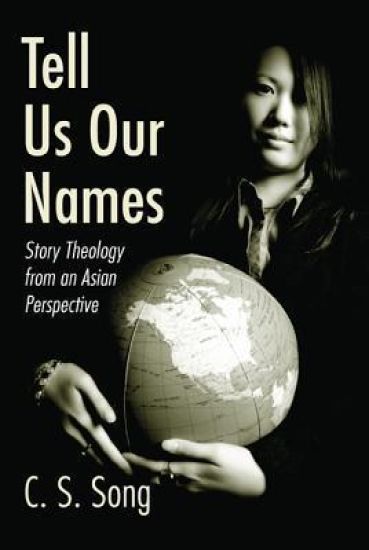
Tell Us Our Names

C S Song

Wipf Stock Publishers
2005
pokkari
'Tell Us Our Names' is a timely book, beautifully written and understandable by all. Its particular challenge lies in the folk and fairy tales that provide the text. Here are the roots of both faith and reason -- and the direct way to dump excess baggage and discover new and better questions. Scripture, Oriental wisdom, ecumenical theology: all receive calm and imaginative treatment in Song's hands."" --Joseph McLelland, McGill University, Montreal In this volume Dr. Song offers us 'golden keys to open the stonegates of religion.' Gathering together intercultural insights from the experience of people in many countries, these parables and stories usher us into the presence of Mystery. The easy flow of storytelling, smoothly mixed with sensitive interpretation, makes this volume very readable. To those who believe that theology has to do only with ideas and concepts, this volume may come as a surprise and a joyful discovery."" --S. J. Samartha, former Director, Dialogue Programme, World Council of Churches, Geneva C. S. Song explores the folk tales of the world and depicts God's answer to the thrust for the redemption of the people with 'one stroke of an Asian brush.' Here, the culture, religion, history, and suffering of the Asian people is the medium of God's redemptive revelation. Certainly, by this work he has contributed another 'transposition' of the biblical message to Asia, a monumental accomplishment in the formation of Asian theology. Reading this Theology of Folk Tales is exciting and illuminative."" --Nam-Dong Suh, Director, Institute for Mission Education, Seoul, Korea C. S. Song is Professor of Theology and Asian Cultures at Pacific School of Religion. His recent publications include 'The Believing Heart'.
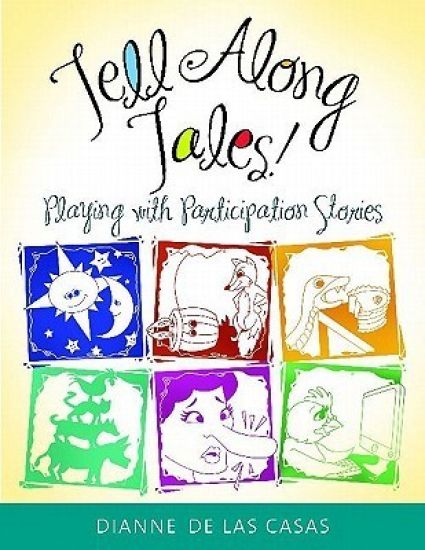
Tell Along Tales!

Tell Along Tales!

Dianne de Las Casas

Libraries Unlimited Inc
2011
nidottu
This book makes the perfect addition to teachers' and librarians' story time selections, containing 25 educational and entertaining tales from around the world as well as proven storytelling techniques.Storytelling predates reading. Storytelling is a vibrant tradition in nearly every culture on earth. And of course, storytelling serves as a perfect medium for educating young children and early readers.Specifically intended for elementary school and public librarians, teachers, storytellers, and camp counselors, Tell Along Tales!: Playing with Participation Stories contains 25 adapted tales from Czechoslovakia, Germany, Ireland, Korea, Norway, Spain, and West Africa that are appropriate for kindergarten through sixth grade students. These stories are linked to standards and are full of fun audience participation, making them perfect for the library, classroom, camp, or home. The book will illuminate the best methods for telling a tale, describe various types of audience participation and how to encourage it, identify elements in a story that provide opportunity for participation, explain when to include audience participation, and share the author's proven audience management techniques.
Tell Me No Secrets
They're baaaack Chyanne Johnson and Aric McHale took you on an emotional rollercoaster the last time you had the pleasure of meeting them in Full Figured 3, and this time around, they plan to leave you with more to shout about When Chyanne discovered that she was pregnant by Aric and then discovered that he was already married, she thought things couldn't get any worse. Unfortunately, she's learning that there are still plenty of secrets to go around. Add Aric's over-the-top wife to the equation, and the fact that he's questioning the paternity of Chyanne's child, and you've got yourself a scrumptious recipe for disaster. Chyanne must find a way to escape the drama that unfolds when dealing with a smooth-talking, swagger-walking man, because the journey that she's on comes with a guarantee to do her more harm than good. Changing course won't be easy, but if she plays her cards right, the Queen will become bigger than the King.
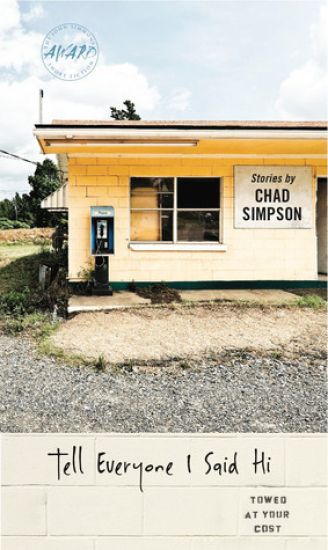
Tell Everyone I Said Hi

Tell Everyone I Said Hi

Chad Simpson

University of Iowa Press
2012
nidottu
The world of Tell Everyone I Said Hi is geographically small but far from provincial in its portrayal of emotionally complicated lives. With all the heartbreaking earnestness of a Wilco song, these eighteen stories by Chad Simpson roam the small-town playgrounds, blue-collar neighbourhoods, and rural highways of Illinois, Indiana, and Kentucky to find people who’ve lost someone or something they love and have not yet found ways to move forward.Simpson’s remarkable voice masterfully moves between male and female and adolescent and adult characters. He embraces their helplessness and shares their sad, strange, and sometimes creepy slices of life with grace, humour, and mounds of empathy. In “Peloma,” a steelworker grapples with his preteen daughter’s feeble suicide attempts while the aftermath of his wife’s death and the politics of factory life vie to hem him in. The narrator of “Fostering” struggles to determine the ramifications of his foster child’s past now that he and his wife are expecting their first biological child. In just two pages, “Let x” negotiates the yearnings and regrets of childhood through mathematical variables and the summertime interactions of two fifth-graders. Poignant, fresh, and convincing, these are stories of women who smell of hairspray and beer and of landscapers who worry about their livers, of flooded basements and loud trucks, of bad exes and horrible jobs, of people who remain loyal to sports teams that always lose. Displaced by circumstances both in and out of their control, the characters who populate Tell Everyone I Said Hi are lost in their own surroundings, thwarted by misguided aspirations and long-buried disappointments, but fully open to the possibility that they will again find their way.
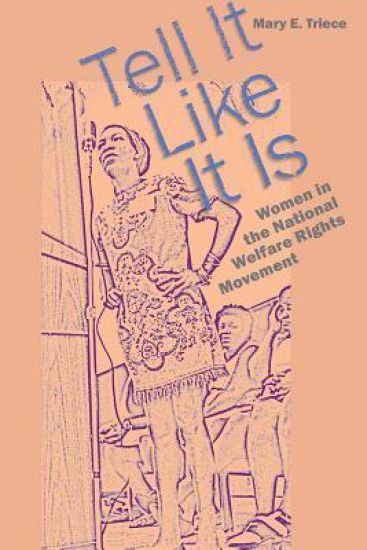
Tell It Like It Is

Tell It Like It Is

Mary E. Triece

University of South Carolina Press
2013
sidottu
In Tell It Like It Is, Mary E. Triece brings to light a lesser known yet influential social movement of the late 1960s and early 1970s—the welfare rights movement, led and run largely by poor black mothers in the National Welfare Rights Organization (NWRO). Her study combines theory and critical analysis to explore rhetorical strategies and direct actions women employed as they argued for fair welfare legislation in both formal policy debates and in the streets. Triece focuses on how welfare recipients spoke for themselves in forums often marked by widely held stereotypes.Triece explains the influence of racism on welfare legislation throughout the early 1900s and explores how welfare recipients cultivated agency while challenging stereotypes such as the ""welfare cheat"" and the ""welfare mother."" To illuminate her study, Triece uses historical documents including pamphlets, flyers, position statements, and convention materials. She examines the official newspaper of the NWRO, the Welfare Fighter, and draws on the congressional testimonies of welfare recipients, providing the first in-depth look at the ways that these women represented themselves in this formal political forum.Tell It Like It Is presents an interdisciplinary study touching on communication, rhetoric, politics, feminist theory, and the intersections of race, class, gender, and sexuality. It also engages in ongoing scholarly debate regarding language, knowledge, reality, and the potential for social change. Triece contributes to each of these disciplines as she explores how a marginalised and beleaguered people managed to mobilise a nationwide movement.
Tell It Like It Is

Tell It Like It Is

Mary E. Triece

University of South Carolina Press
2013
nidottu
In Tell It Like It Is, Mary E. Triece brings to light a lesser known yet influential social movement of the late 1960s and early 1970s—the welfare rights movement, led and run largely by poor black mothers in the National Welfare Rights Organization (NWRO). Her study combines theory and critical analysis to explore rhetorical strategies and direct actions women employed as they argued for fair welfare legislation in both formal policy debates and in the streets. Triece focuses on how welfare recipients spoke for themselves in forums often marked by widely held stereotypes.Triece explains the influence of racism on welfare legislation throughout the early 1900s and explores how welfare recipients cultivated agency while challenging stereotypes such as the ""welfare cheat"" and the ""welfare mother."" To illuminate her study, Triece uses historical documents including pamphlets, flyers, position statements, and convention materials. She examines the official newspaper of the NWRO, the Welfare Fighter, and draws on the congressional testimonies of welfare recipients, providing the first in-depth look at the ways that these women represented themselves in this formal political forum.Tell It Like It Is presents an interdisciplinary study touching on communication, rhetoric, politics, feminist theory, and the intersections of race, class, gender, and sexuality. It also engages in ongoing scholarly debate regarding language, knowledge, reality, and the potential for social change. Triece contributes to each of these disciplines as she explores how a marginalised and beleaguered people managed to mobilise a nationwide movement.
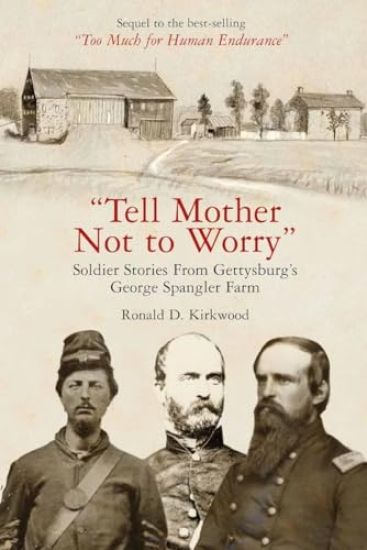
"Tell Mother Not to Worry"

"Tell Mother Not to Worry"

Ronald D Kirkwood

Savas Beatie
2024
sidottu
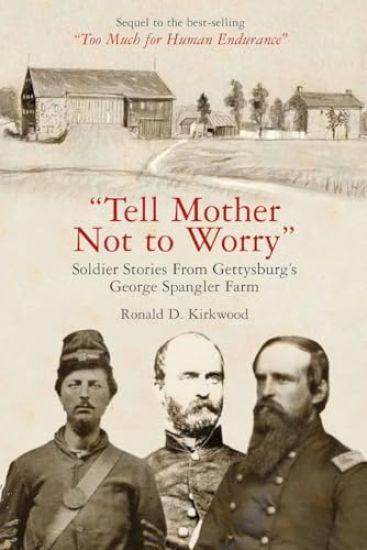
The George Spangler Farm in Gettysburg is a place of reverence. Nurses held the hands of dying soldiers and prayed and spoke last words with them amid the blood, stench, and agony of two hospitals. Heroic surgeons resolutely worked around the clock to save lives. Author Ronald D. Kirkwood’s best-selling “Too Much for Human Endurance”: The George Spangler Farm Hospitals and the Battle of Gettysburg established the military and medical importance of the Spangler farm and hospitals. “Tell Mother Not to Worry”: Soldier Stories From Gettysburg’s George Spangler Farm is Ron’s eagerly awaited sequel. Kirkwood researched thousands of pensions and military records, hospital files, letters, newspapers, and diaries of those present at the hospitals on Spangler land during and after the battle. The result is a deeper and richer understanding of what these men and women endured—suffering that often lingered for the rest of their lives. Their injuries and deaths, Yankee and Rebel alike, carried with it not only tragedy and sadness for parents, spouses, and children, but often financial devastation as well. “Tell Mother Not to Worry” profiles scores of additional soldiers and offers new information on events and experiences at the farm, including the mortally wounded Confederate Brig. Gen. Lewis Armistead. This sequel also includes another chapter on the often-overlooked First Division, II Corps hospital at Granite Schoolhouse, a wounded list for that division, and a chapter on Col. Edward E. Cross, who died at Granite Schoolhouse in the middle of Spangler land. Kirkwood concludes by continuing the story of George and Elizabeth Spangler and their four children after the war and ends with an uplifting chapter on their modern-day descendants and how they were found after the release of “Too Much for Human Endurance.” Kirkwood’s sequel increases the understanding of the lives of the soldiers and their families and adds depth to the story of George and Elizabeth Spangler’s farm.
"Tell Mother Not to Worry"

"Tell Mother Not to Worry"

Ronald D Kirkwood

Savas Beatie
2025
nidottu
The George Spangler farm in Gettysburg is a place of reverence. Nurses held the hands of dying soldiers and prayed and spoke last words with them amid the blood, stench, and agony of two hospitals. Heroic surgeons resolutely worked around the clock to save lives. Author Ronald D. Kirkwood’s best-selling “Too Much for Human Endurance”: The George Spangler Farm Hospitals and the Battle of Gettysburg established the military and medical importance of the Spangler farm and hospitals. Now in paperback, “Tell Mother Not to Worry”: Soldier Stories from Gettysburg’s George Spangler Farm is Ron’s eagerly awaited sequel. Kirkwood researched thousands of pension and military records, hospital files, letters, newspapers, and diaries of those present at the hospitals on Spangler land during and after the battle. The result is a deeper and richer understanding of what these men and women endured—suffering that often lingered for the rest of their lives. Their injuries and deaths, North and South, brought not only tragic sadness to parents, spouses, and children, but often financial devastation as well. “Tell Mother Not to Worry” profiles scores of additional soldiers and offers new information on events and experiences at the farm, including the mortally wounded Confederate Brig. Gen. Lewis Armistead. This sequel also includes another chapter on the often-overlooked First Division II Corps hospital at Granite Schoolhouse, a wounded list for that division, and a chapter on Col. Edward E. Cross, who died at Granite Schoolhouse in the middle of Spangler land. Kirkwood concludes by continuing the story of George and Elizabeth Spangler and their four children after the war and ends with an uplifting chapter on their modern-day descendants and how they were found after the release of “Too Much for Human Endurance.” With this sequel, Kirkwood brings further understanding of the lives of the soldiers and their families and completes the story of George and Elizabeth Spangler’s historic farm.
Tell Me About The Bible

Tell Me About The Bible

D. Min Claude R. Swanson

Xulon Press
2010
nidottu
"TELL ME ABOUT THE BIBLE" "This book makes the Holy Bible come alive for those who want to quickly appreciate the forest, but often get lost in the trees" - Cain Hope Felder, Ph.D. Howard University School of Divinity Professor of New Testament, and Chairman, Biblical Institute for Social Change, Inc. Washington, D.C. "Tell Me About The Bible is a foretaste of the rich soul food of the Bible and is sure to stimulate one to go further reading and studying" - Dr. Gene Rice Professor of Old Testament Howard University School of Divinity Washington, D. C. "... a ray of hope to all of us who seek a simpler approach to Biblical teaching" - Anthony G. Maclin, Senior Pastor The Sanctuary at Kingdom Square, Capitol Heights, MD. Rev. Claude R. Swanson, Sr., D-Min. is Pastor Emeritus of Craig Memorial Community Church, Chapel Oaks, Maryland where he served as the Senior Minister for over 18 years. Dr. Swanson's undergraduate studies were conducted at the University of the District of Columbia and the Wharton School of Business at the University of Pennsylvania. Dr. Swanson also holds a Master's of Divinity degree and a Doctorate degree in Church Administration from Howard University School of Divinity. Pastor Swanson recently received a Patent for his Bible Board Game: "Road to the Kingdom". (soon to be available)
Tell Me So I Can Hear You

Tell Me So I Can Hear You

Eleanor Drago-Severson; Jessica Blum-DeStefano

Harvard Educational Publishing Group
2016
nidottu
In Tell Me So I Can Hear You, Eleanor Drago-Severson and Jessica Blum-DeStefano show how education leaders can learn to deliver feedback in a way that strengthens relationships as well as performance and builds the capacity for growth. Drawing on constructive-developmental theory, the authors describe four stages of adult growth and development and explain how to differentiate feedback for colleagues with different “ways of knowing,” which include:Instrumental knowers, who tend to see things in black and white (“Did I do it right or wrong?”) and may need to develop the capacity for reflection.Socializing knowers, who are concerned with maintaining relationships (“What do you want me to do?”) and may need support developing their own ideas.Self-authoring knowers, who have strong ideologies and values (“How does this fit with my goals and vision?”) and may need help with perspective taking.Self-transformative knowers, who are able to examine issues from multiple points of view (“How can I understand this more deeply?”) and may need guidance in resolving tensions and contradictions.The authors show how leaders can provide feedback in ways that “meet people where they are” while expanding the developmental capacities educators bring to their work. Drago-Severson and Blum-DeStefano provide real-life examples with practical strategies for creating a safe space for feedback, finding the right words, and bridging feedback and action. Tell Me So I Can Hear You offers invaluable guidance to help educators support a culture of learning in classrooms, schools, and districts.
Tell Me So I Can Hear You

Tell Me So I Can Hear You

Eleanor Drago-Severson; Jessica Blum-DeStefano

Harvard Educational Publishing Group
2016
sidottu
In Tell Me So I Can Hear You, Eleanor Drago-Severson and Jessica Blum-DeStefano show how education leaders can learn to deliver feedback in a way that strengthens relationships as well as performance and builds the capacity for growth. Drawing on constructive-developmental theory, the authors describe four stages of adult growth and development and explain how to differentiate feedback for colleagues with different “ways of knowing,” which include:Instrumental knowers, who tend to see things in black and white (“Did I do it right or wrong?”) and may need to develop the capacity for reflection.Socializing knowers, who are concerned with maintaining relationships (“What do you want me to do?”) and may need support developing their own ideas.Self-authoring knowers, who have strong ideologies and values (“How does this fit with my goals and vision?”) and may need help with perspective taking.Self-transformative knowers, who are able to examine issues from multiple points of view (“How can I understand this more deeply?”) and may need guidance in resolving tensions and contradictions.The authors show how leaders can provide feedback in ways that “meet people where they are” while expanding the developmental capacities educators bring to their work. Drago-Severson and Blum-DeStefano provide real-life examples with practical strategies for creating a safe space for feedback, finding the right words, and bridging feedback and action. Tell Me So I Can Hear You offers invaluable guidance to help educators support a culture of learning in classrooms, schools, and districts.
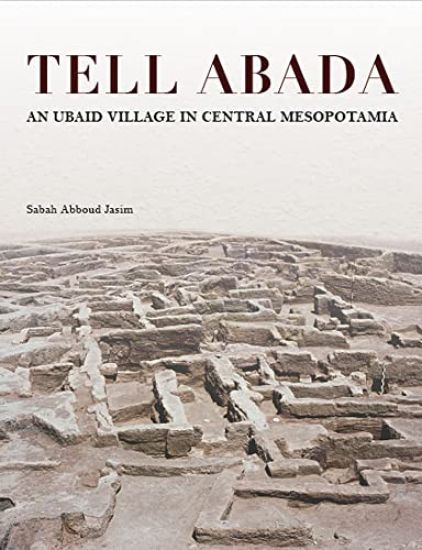
Tell Abada

Tell Abada

Sabah Abboud Jasim

Institute for the Study of Ancient Cultures
2022
sidottu
In the winter of 1978, an extensive archaeological campaign was launched in the Hamrin Basin area in the east-central part of Iraq to salvage many archaeological sites before their flooding, due to the construction of a large dam. This volume documents the excavations carried out in two of the sites-Tell Abada and Tell Rashid-dating back to the Ubaid period in the fifth millennium BC. The first site (Tell Abada) is of particular importance; it is an almost complete village with three occupational levels unearthed. Several residential houses and buildings with distinctive architectural features are exposed. Industrial workshops dedicated to the manufacture of pottery vessels are present. Of express interest was the first-time discovery of pottery-making equipment, notably the potter's wheel. An equally exciting discovery is the presence of many fire installations dedicated to pottery vessels' burning. The pottery products are enormous, varied, and richly decorated, reflecting aesthetic features and agility. The presence of the pottery in a very well stratified sequence enhances our understanding of Ubaid pottery, clarifies its chronological classifications, and establishes cultural links with other Ubaid sites in the region. Among other remarkable discoveries are many infant burial urns, granaries, water ducts, and proto-tablets. The varied aspects of the cultural material revealed throughout the excavations provides significant insight into daily life, settlement patterns, craft specialization, religious practices, and socioeconomic status, and sheds new light on the Ubaid period in general in Mesopotamia.
Tell Me Again How a Crush Should Feel

Tell Me Again How a Crush Should Feel

Sara Farizan

Algonquin Books (division of Workman)
2015
nidottu
At Armstead Academy, everyone knows everything about everyone. Well, everyone thinks they know everything . . . Leila has made it most of the way through Armstead Academy without having a crush on anyone, which is a relief. As an Iranian American, she’s different enough; if word got out that Leila liked girls, life would be twice as hard. But when beautiful new girl Saskia shows up, Leila starts to take risks she never thought she would. As she carefully confides in trusted friends about Saskia’s confusing signals, Leila begins to figure out that all her classmates are more complicated than they first appear to be, and some are keeping surprising secrets of their own “An empowering romance featuring a lovable, awkward protagonist who just needs a little nudge of confidence to totally claim her multifaceted identity.” —Booklist, starred review “Farizan exceeds the high expectations she set with her debut, If You Could Be Mine, in this fresh, humorous, and poignant exploration of friendship and love.” —Publishers Weekly, starred review “Funny, heartwarming, and wise.” —Kirkus Reviews • A 2015 ALA Top Ten Rainbow List Title • A 2015 YALSA Quick Pick for Reluctant Young Adult Readers