Kirjojen hintavertailu. Mukana 11 342 296 kirjaa ja 12 kauppaa.

Kirjahaku

Etsi kirjoja tekijän nimen, kirjan nimen tai ISBN:n perusteella.

1000 tulosta hakusanalla Terry Robson

Capital, Emerging High-Growth Firms and Public Policy

Capital, Emerging High-Growth Firms and Public Policy

Terry F. Buss

Praeger Publishers Inc
2001
sidottu
Policy makers--Republican and Democrat, liberal and conservative--call for federal intervention to fund emerging high-growth industries, believing they are starved for capital. Congressional hearings, newspapers, industry newsletters, and government reports all assert that capital gaps exist for these firms. But the widely held belief that emerging high-growth firms like those in high technology--so vital to the growth of the U.S. economy--face severe capital gaps, preventing them from starting up or growing to their full potential, is false. This book systematically brings together, for the first time, disparate sources of information from a wide variety of disciplines and synthesizes them into a compelling case against federal intervention.Scientific studies, conventional wisdom among entrepreneurs and investors, and economic reasoning all fail to support the existence of widespread capital gaps for start-up high-growth firms. Nor does this evidence show capital in short supply in some regions, in industrial sectors including high technology, or for women and minorities. Nor do existing federal programs providing capital to emerging high-growth businesses reveal capital gaps. Rather, they either unnecessarily duplicate private investment or represent poor investment decisions. This study shows that calls for increased federal intervention, using public monies to plug capital gaps, are unjustified.

The Conscience of Capitalism

The Conscience of Capitalism

Terry L. Besser

Praeger Publishers Inc
2002
sidottu
The common wisdom that business contributions to the common good are counterproductive in the new competitive global marketplace does not hold up to empirical research. In fact, doing good is good for business, and a majority of businesses do provide some form of community support, which Besser discovered in her exhaustive survey of the Iowa business community. Business owners and managers often act out of a sense of community spirit and a certain obligation to better the common good. While the increasingly globalized economy has encouraged a number of large corporations to become freewheelers, the vast majority of companies are firmly rooted in place and look at their locales with more than just a utilitarian eye.Extensive interviews with Iowa business owners, managers, and business and community leaders are combined with findings from prior studies of corporate citizenship, and the evidence clearly indicates that the majority of businesses provide some form of community support. Most owners feel they should do more than just make a profit, so they often seek ways to give back to their communities, a move that is usually nurtured within the business community itself. However, corporate altruism carries risks. Many business owners have unwittingly offended customers and clients by their acts of civic spirit. Besser concludes her book by addressing the potential threats to business social responsibility posed by globalization and recommends steps to enhance socially responsible capitalism. Anybody interested in the complex interaction of businesses and the communities they reside in will enjoy reading this positive revisitation of the mutually supportive relationship between trade and polity.
Africa's First Peacekeeping Operation

Africa's First Peacekeeping Operation

Terry M. Mays

Praeger Publishers Inc
2002
sidottu
In 1981 the Organization of African Unity (OAU) mandated and fielded the first regional peacekeeping operation since the Arab League's mission in Kuwait 20 years earlier. Battalion-sized contingents from Nigeria, Senegal, and Zaire were joined by smaller observer contingents from other OAU members in an effort to provide a buffer zone between the two main factions in the Chadian civil war.Mays opens his analysis by providing an overview of the concept of peacekeeping. Several definitions are offered to help distinguish between the various types of peace operations. After examining the concept hegemon, he looks at the ways regional and subregional hegemons utilize peacekeeping operations as foreign policy tools as they protect their interests. Mays argues that Nigeria, as a West African hegemon, served as the moving force behind the mandating and fielding of the OAU peacekeeping mission in Chad. Rather than being purely humanitarian in nature, Nigeria's motivation included the removal of French and later Libyan soldiers from a weak state on its border. However, Nigeria could not perform the task alone. France and the United States were instrumental as well in the mandating and fielding process. French and American interests stemmed from concern over Libyan motives in Chad. Nigeria kept the effort to mandate the peacekeeping operation alive for two years; France proved to be the stimulus behind persuading the Chadian government to accept the deployment of OAU peacekeepers and prompting the Senegalese to contribute a battalion to the mission; the United States contributed by keeping France and Nigeria focused on a peacekeeping solution and helping persuade Zaire to join the mission. Mays offers the first comprehensive examination of the OAU peacekeeping mission and reviews the political and military organization of the force as well as its deployment, redeployment plans, logistics, and operations between the Chadian factions. Utilizing an extensive collection of resources, including interviews with participants, diplomats, and government documents, he provdies a detailed examination of every meeting/conference between 1979 and 1981 that discussed a peacekeeping option for Chad. Factors of success in traditional peacekeeping operations are applied to the OAU mission, and he concludes by reviewing the impact of the 1981-1982 OAU operation on current African peacekeeping trends. An invaluable analysis for scholars, students, and other researchers involved with peacekeeping, international relations, and African studies.
Changing Attitudes Toward Economic Reform During the Yeltsin Era

Changing Attitudes Toward Economic Reform During the Yeltsin Era

Terry D. Clark; Ernest Goss; Larisa Kosova

Praeger Publishers Inc
2003
sidottu
On December 31, 1999, Boris Yeltsin stepped down as president of the Russian Federation, marking the end of an era. While scholars and observers alike continue to debate the degree to which Russia succeeded in establishing democracy or a free market economy, the enormity of the social transformation that occurred during the Yeltsin era is far less disputable. For the social stratification that emerged changed the very face of Russian society.Much criticism has been leveled at the political corruption that marred the Yeltsin era. However, the economic and political reforms enacted under Yeltsin also permitted the opening of new channels of social mobility, particularly in the larger cities. Those who benefited most from the reforms became its strongest supporters, allowing the creation of a nascent middle class. The book's focus on this socioeconomic group is unique, as most analyses of the Yeltsin era largely ignore it.
Language and Cultural Diversity in U.S. Schools

Language and Cultural Diversity in U.S. Schools

Terry A. Osborn

Praeger Publishers Inc
2005
sidottu
Diversity is at the heart of today's education debates. Often, school policies and programs designed to encourage and embrace diversity are met with public ire and a deep misunderstanding of how diversity serves learning. This work explains how diversity is an essential element in classroom settings. As children from around the world continue to pour into U.S. classrooms, an understanding of cultural and linguistic diversity in its broadest sense moves to the foreground. In a post 9/11 world, the benefits of understanding diversity take on urgent meaning.The introdutory chapter, Participating in Democracy Means Participating in Schools, sets the tone for the discussion to follow. As the geographic backgrounds of immigrants becomes increasingly diverse, religion must be added to previous discussions of race, ethnicity, and language. Thus, the need for the public to understand how shifts in population affect schools, makes this work a vital resource for anyone concerned with education today.
Out of the Silence

Out of the Silence

Terry Waite; Jenny Coles; Terry Waite Coles

SPCK Publishing
2016
pokkari
At the height of the Lebanese civil war in the 1980s over 100 foreign civilians were taken hostage by Islamic Jihad. As the Archbishop of Canterbury's special envoy, Terry Waite conducted several successful missions to negotiate the release of numerous hostages. But in January 1987, while on one of his many visits to Beirut, he was captured himself. Imprisoned for nearly five years, four of them in solitary confinement, he was chained, beaten, frequently blindfolded, and subjected to a mock execution. In this moving sequence of poems and reflections Terry Waite recalls the highs and lows of his life, both during that ordeal and throughout the happier years of humanitarian work that have followed. They give us a glimpse into the depths of faith, hope and love that sustained him through that intense time of suffering. They also take us into memories of his later life, reminding us of the joy and contentment to be found in meaningful work, and in the humanity we share each day with those around us. Out of the Silence not only offers a rare insight into one man's experience in the throes of a bitter conflict of the past; it also bears witness to the enduring power of forgiveness, truth and reconciliation in the face of adverse forces at work in the world today.
Solitude

Solitude

Terry Waite

SPCK Publishing
2017
sidottu
If anyone understands Solitude, it's Terry Waite. After five years spent in solitary confinement during his faught kidnapping in the 80s, Terry Waite has had decades to think about what being solitary means, and how it affects us. He explores why some people avoid being alone at every cost, whilst others can think of nothing more peaceful than being well and truly by themselves, and how those feelings can change with time. This book is all about his encounters with people who live a solitary life in many different ways and guises. Some who live out in the most remote of locations, shunning all manner of modern society; some who find themselves solitude in the anonymous flow of crowds in busy cities; and some whose remarkable circumstance, whether professionally or for their own safety, are forced to live a solitary life. There is more than one way to be alone, and these different voices all show how that works. Solitude is more than being alone, it is a retreat into the self shapes the soul. Through his pilgrimage through solitude, Terry Waite discovers how solitude (not loneliness), far from being something we should fear, but is instead something that can a force for good in we learn to embrace and live it out thoughtfully and bravely. Praise for Solitude: "This is a thoughtful and sensitive book from a man who endured the fear and loneliness of captivity. Now, years later, Terry Waite explores solitude in its many forms." Stella Rimington DBE, former Director General of MI5 "This is a wonderfully perceptive and engaging book. Terry Waite takes the reader deep into other worlds, both geographical and psychological, from which they will emerge enlightened and spiritually enriched." Ranulph Fiennes OBE, explorer, writer and poet
Solitude

Solitude

Terry Waite

SPCK Publishing
2018
nidottu
Some people long to find it, others long to escape it. But, whether we welcome or dread it, solitude is something we all experience in different forms at different points in our lives After enduring nearly five years of solitary confinement, in cruel and terrifying conditions, Terry Waite discovered that he was drawn to find out more about the power of solitude in the lives of other people. The result is this haunting book, in which he recalls his encounters with people who have experienced some very different ways of being solitary: among them the peaceful solitude of remote and beautiful places; the unsought and often unnoticed solitude of lonely people living in the midst of busy cities; the deceptive solitude of those living in the twilight world of espionage; the enforced solitude of the convict and the prisoner of war; and, finally, the inescapable solitude of those who are drawing near to death. Through all these encounters, and through the memories and reflections they trigger in the author's mind, we see how solitude shapes the human soul - and how it can be a force for good in our own lives, if we can only learn to use it well.
Travels with a Primate

Travels with a Primate

Terry Waite

SPCK Publishing
2019
pokkari
'This is Terry as he really is - wise and funny. A good book from a big man. If only he could be the Primate.' John Sergeant 'A travelogue that is refreshingly irreverent and deeply human.' James Naughtie From darkest Africa to the darker and infinitely wetter birthplace of John Knox, from the remote expanse of the Alaska Highway to part of the Antipodes that even Bill Bryson could not reach, Terry Waite takes us on a guided world tour in the company of Dr Robert Runcie. Even an archbishop has little control over wars and missed connections, floods and food poisoning. But this Primate sailed majestically through the most troubled of waters, as his companions (including Chaplain Richard Chartres) baled energetically in his wake. Hilarious and affectionate, Travels with a Primate offers an unashamedly nostalgic return to the 1980s. It is a delightful tribute to enduring friendship.
Tales of Tommy Twitchnose

Tales of Tommy Twitchnose

Terry Waite

SPCK Publishing
2020
nidottu
Meet Tommy Twitchnose, who lives with his wife and two children in a cosy little house under the floorboards in a converted barnhouse. Tommy and his family have a happy life, foraging for scraps of food and doing up their home with bits and pieces dropped by the humans who live above them. But then, one day, their peaceful life is rudely interrupted. A large family of town mice suddenly appears on their doorstep, led by a daring and determined mouse called Danny, who announces that they're moving in... The adventures that follow will charm, amuse and amaze all who read them - children and grown-ups alike! Contents 1. The surprise visitors Tommy Twitchnose and his family receive an unwelcome surprise when some unexpected visitors arrrive, led by the daring Danny Dockmouse (Tommy’s long-forgotten cousin), who has led his large family all the way from London to seek a better life in the country. 2. A happy Harvest Festival Tommy and his family join the church mice, who live nearby, to celebrate the Harvest Festival. The joyful service is conducted by a mouse by the name of the Reverend Albert Pew, who leads them in singing some funny animal versions of well-known harvest songs, and tells them about his new plan to make sure the church mice (who are very poor) will have enough food to last them another year. 3. Fun and games at a party All the mice are invited to the annual garden party held in the grounds of the stately home of Lord Whiskers of Whiskerton. They travel there on the Moles' Underground Express and when they arrive are amazed by a series of daring circus acts performed by a group of acrobatic frogs, two squirrels and the brave contestants in the annual Grand International Vole Swimming Race. 4. A visit to the Houses of Parliament Lord Whiskers is an honourable member of the House of Mice, which has its premises under the Houses of Parliament in Westminster. He invites his new friends Tommy and Danny to join him on one of his visits, but trouble follows when Danny decides to explore the House upstairs and ends up trapped in a Big Red Box used by the Prime Minister. 5. The Small Animal Rescue Service The Reverend Albert Pew asks Tommy to take charge of a new venture called the Small Animal Rescue Service, which is designed to transport sick animals quickly to the Small Animal Hospital. It is the day of the parish picnic at the seaside, and Tommy flies there on the back of a friendly seagull; but before they get there they notice an animal in distress on the rocks below, and swoop down to the rescue. 6. The very naughty squirrel Tommy's wife, Tiggy, helps to run the new village shop, but is alarmed when she discovers that someone is helping themselves to things without paying. PC Charles Catchem takes charge of the operation to find out who's behind crime, and with the help of Barney the Barn Owl he devises a clever trap to catch the thief red-handed.
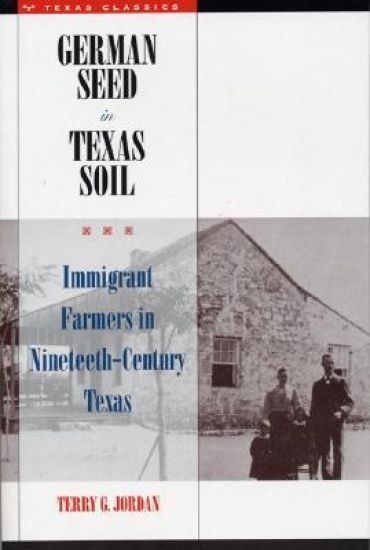
German Seed in Texas Soil

German Seed in Texas Soil

Terry G. Jordan

University of Texas Press
1994
pokkari
Terry Jordan explores how German immigrants in the nineteenth century influenced and were influenced by the agricultural life in the areas of Texas where they settled. His findings both support the notion of ethnic distinctiveness and reveal the extent to which German Texans adopted the farming techniques of their Southern Anglo neighbors.
Texas on the Table

Texas on the Table

Terry Thompson-Anderson

University of Texas Press
2014
sidottu
With a bounty of locally grown meats and produce, artisanal cheeses, and a flourishing wine culture, it’s a luscious time to be cooking in Texas. From restaurant chefs to home cooks, Texans are going to local dairies, orchards, farmers’ markets, ranches, vineyards, and seafood sellers to buy the very freshest ingredients, whether we’re cooking traditional favorites or the latest haute cuisine. We’ve discovered that Texas terroir-our rich variety of climates and soils, as well as our diverse ethnic cultures-creates a unique “taste of place” that gives Texas food a flavor all its own.Written by one of Texas’s leading cookbook authors, Terry Thompson-Anderson, Texas on the Table presents 150 new and classic recipes, along with stories of the people-farmers, ranchers, shrimpers, cheesemakers, winemakers, and chefs-who inspired so many of them and who are changing the taste of Texas food. The recipes span the full range from finger foods and first courses to soups and breads, salads, seafood, chicken, meat (including wild game), sides and vegetarian dishes, and sweets. Some of the recipes come from the state’s most renowned chefs, and all are user-friendly for home cooks. Finally, the authors and winemakers tell which recipes they turn to when opening their favorite wines.This delicious compilation of recipes and stories of the people behind them, illustrated with Sandy Wilson’s beautiful photographs, makes Texas on the Table the must-have cookbook for everyone who relishes the flavors of the Lone Star State.
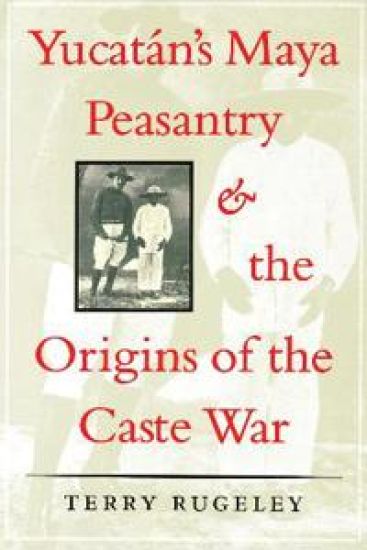
Yucatán's Maya Peasantry and the Origins of the Caste War

Yucatán's Maya Peasantry and the Origins of the Caste War

Terry Rugeley

University of Texas Press
1996
pokkari
Conflicts between native Maya peoples and European-derived governments have punctuated Mexican history from the Conquest in the sixteenth century to the current Zapatista uprising in Chiapas. In this deeply researched study, Terry Rugeley delves into the 1800-1847 origins of the Caste War, the largest and most successful of these peasant rebellions.Rugeley refutes earlier studies that seek to explain the Caste War in terms of a single issue. Instead, he explores the interactions of several major social forces, including the church, the hacienda, and peasant villagers. He uncovers a complex web of issues that led to the outbreak of war, including the loss of communal lands, substandard living conditions, the counterpoise of Catholicism versus traditional Maya beliefs, and an increasingly heavy tax burden.Drawn from a wealth of primary documents, this book represents the first real attempt to reconstruct the history of the pre-Caste War period. In addition to its obvious importance for Mexican history, it will be illuminating background reading for everyone seeking to understand the ongoing conflict in Chiapas.
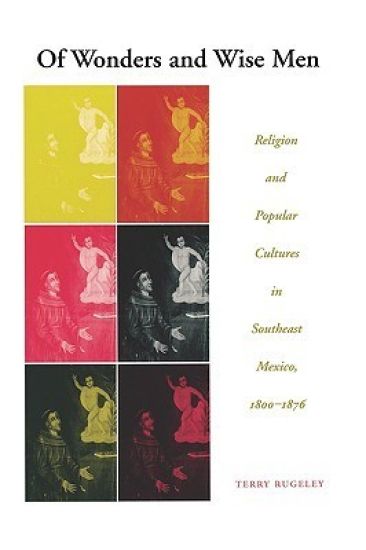
Of Wonders and Wise Men

Of Wonders and Wise Men

Terry Rugeley

University of Texas Press
2001
pokkari
2004 – Harvey L. Johnson Award – Southwest Council of Latin American StudiesIn the tumultuous decades following Mexico's independence from Spain, religion provided a unifying force among the Mexican people, who otherwise varied greatly in ethnicity and socioeconomic status. Accordingly, religion and the popular cultures surrounding it form the lens through which Terry Rugeley focuses this cultural history of southeast Mexico from independence (1821) to the rise of the dictator Porfirio Díaz in 1876.Drawing on a wealth of previously unused archival material, Rugeley vividly reconstructs the folklore, beliefs, attitudes, and cultural practices of the Maya and Hispanic peoples of the Yucatán. In engagingly written chapters, he explores folklore and folk wisdom, urban piety, iconography, and anticlericalism. Interspersed among the chapters are detailed portraits of individual people, places, and institutions, that, with the archival evidence, offer a full and fascinating history of the outlooks, entertainments, and daily lives of the inhabitants of southeast Mexico in the nineteenth century. Rugeley also links this rich local history with larger events to show how macro changes in Mexico affected ordinary people.
Texas Log Buildings

Texas Log Buildings

Terry G. Jordan

University of Texas Press
1994
pokkari
Once too numerous to attract attention, the log buildings of Texas now stand out for their rustic beauty. This book preserves a record of the log houses, stores, inns, churches, schools, jails, and barns that have already become all too few in the Texas countryside. Terry Jordan explores the use of log buildings among several different Texas cultural groups and traces their construction techniques from their European and eastern American origins.
Texas Graveyards

Texas Graveyards

Terry G. Jordan

University of Texas Press
1982
pokkari
Where more poignantly than in a small country graveyard can a traveler fathom the flow of history and tradition? During the past twenty years, Terry G. Jordan has traveled the back roads and hidden trails of rural Texas in search of such cemeteries. With camera in hand, he has visited more than one thousand cemeteries created and maintained by the Anglo-American, black, Indian, Mexican, and German settlers of Texas. His discoveries of sculptured stones and mounds, hex signs and epitaphs, intricate landscapes and unusual decorations represent a previously unstudied and unappreciated wealth of Texas folk art and tradition. Texas Graveyards not only marks the distinct ethnic and racial traditions in burial practices but also preserves a Texas legacy endangered by changing customs, rural depopulation, vandalism, and the erosion of time.
Wings of Power

Wings of Power

Terry M Sell

University of Washington Press
2015
sidottu
Through most of its history, the Boeing Company has been one of the biggest providers of jobs and wealth in western Washington State. But in the 1990s, the company found itself a target of local activists and politicians who saw urban sprawl and "growth politics" ruining the region's quality of life.T. M. Sell grew up in a Boeing family, near Boeing's Renton plant, and later covered the company as a reporter for the Valley Daily News and the Seattle Post-Intelligencer. He is a first-hand observer of the drama he unfolds--one personally interested in the future of his community, well informed about the details of its history, acquainted with many of the principal players, and conversant with the theoretical and historical literature that bears on the multifaceted questions he seeks to answer.After a lively sketch of the Boeing Company's history into the last decade of the 20th century, Sell looks at what happened when Boeing tried to expand its facilities in Renton and Everett. It was then that the "paradox of growth" first manifested itself, the point at which the benefits of economic expansion appeared to be outweighed by its costs.Sell examines political power management in Washington State, paying particular attention to Boeing's successful efforts to be a positive influence in the state, to the strategies it used to influence growth-management legislation in Olympia, and to its negotiations with the communities most affected by its efforts to grow. In each case, Sell gives not just an overview of positions and strategies but also sharply drawn portraits of the lobbyists, analysts, and politicians involved, many of whom explain their views in direct conversation. The balanced and comprehensive approach Sell brings to bear on the story is also his recommendation for dealing with inevitable future growth-related contentions. Fostering the continuing health of our economic and political environment, he concludes, will require just such a broad, evenhanded, and sensible approach to the politics of compromise.
Reason, Faith, and Revolution

Reason, Faith, and Revolution

Terry Eagleton

Yale University Press
2010
pokkari
One of our most influential literary critics challenges those who too easily dismiss religion and faith Terry Eagleton’s witty and polemical Reason, Faith, and Revolution is bound to cause a stir among scientists, theologians, people of faith and people of no faith, as well as general readers eager to understand the God Debate. On the one hand, Eagleton demolishes what he calls the “superstitious” view of God held by most atheists and agnostics and offers in its place a revolutionary account of the Christian Gospel. On the other hand, he launches a stinging assault on the betrayal of this revolution by institutional Christianity.There is little joy here, then, either for the anti-God brigade—Richard Dawkins and Christopher Hitchens in particular—nor for many conventional believers. Instead, Eagleton offers his own vibrant account of religion and politics in a book that ranges from the Holy Spirit to the recent history of the Middle East, from Thomas Aquinas to the Twin Towers.
On Evil

On Evil

Terry Eagleton

Yale University Press
2011
pokkari
An impassioned argument for the existence of evil from one of the most respected and influential critics of our day In this witty, accessible study, the prominent Marxist thinker Terry Eagleton launches a surprising defense of the reality of evil, drawing on literary, theological, and psychoanalytic sources to suggest that evil, no mere medieval artifact, is a real phenomenon with palpable force in our contemporary world.In a book that ranges from St. Augustine to alcoholism, Thomas Aquinas to Thomas Mann, Shakespeare to the Holocaust, Eagleton investigates the frightful plight of those doomed souls who apparently destroy for no reason. In the process, he poses a set of intriguing questions. Is evil really a kind of nothingness? Why should it appear so glamorous and seductive? Why does goodness seem so boring? Is it really possible for human beings to delight in destruction for no reason at all?
The Event of Literature

The Event of Literature

Terry Eagleton

Yale University Press
2013
pokkari
A renowned literary theorist reconsiders previous stances and offers his latest thinking on the nature of literature and literary study In this characteristically concise, witty, and lucid book, Terry Eagleton turns his attention to the questions we should ask about literature, but rarely do. What is literature? Can we even speak of "literature" at all? What do different literary theories tell us about what texts mean and do? In throwing new light on these and other questions he has raised in previous best-sellers, Eagleton offers a new theory of what we mean by literature. He also shows what it is that a great many different literary theories have in common.In a highly unusual combination of critical theory and analytic philosophy, the author sees all literary work, from novels to poems, as a strategy to contain a reality that seeks to thwart that containment, and in doing so throws up new problems that the work tries to resolve. The "event" of literature, Eagleton argues, consists in this continual transformative encounter, unique and endlessly repeatable. Freewheeling through centuries of critical ideas, he sheds light on the place of literature in our culture, and in doing so reaffirms the value and validity of literary thought today.