Kirjojen hintavertailu. Mukana 11 627 220 kirjaa ja 12 kauppaa.

Kirjahaku

Etsi kirjoja tekijän nimen, kirjan nimen tai ISBN:n perusteella.

1000 tulosta hakusanalla Timothy David Mack

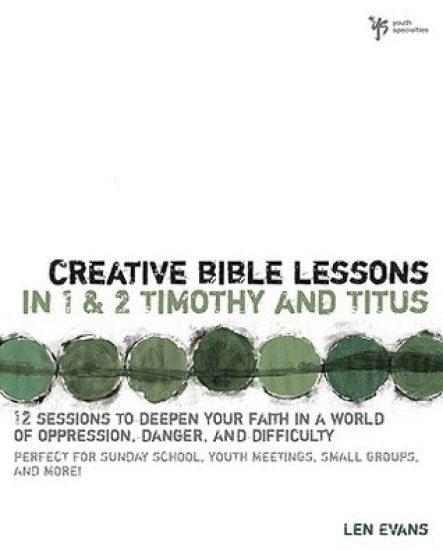
Creative Bible Lessons in 1 and 2 Timothy and Titus
This newest installment of the bestselling Creative Bible Lessons series provides practical faith-sustaining principles for Christian teenagers from every walk of life. These “pastoral epistles,” written by the Apostle Paul at the end of his life, give sound instruction on how to lead the young church in a world of oppression, danger, and difficulty. In twelve chapters this book covers leadership, worship, getting in shape, walking the talk, knowing your enemy, money, overcoming opposition, and the Bible.
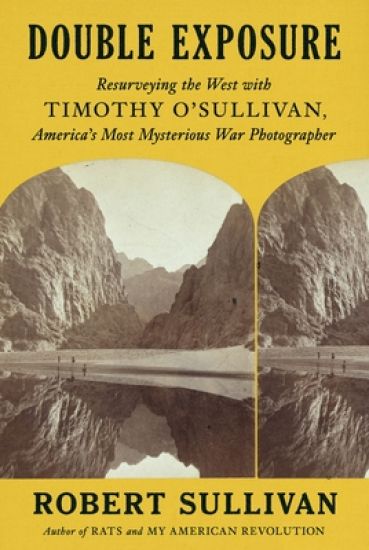
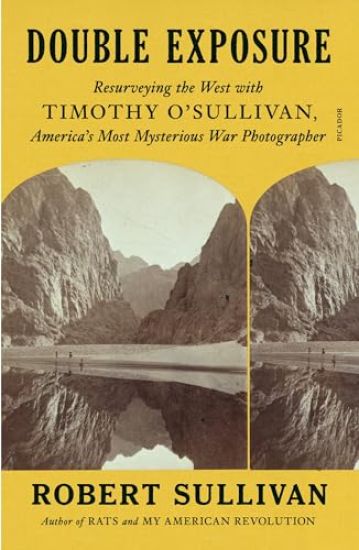
Double Exposure: Resurveying the West with Timothy O'Sullivan, America's Most Mysterious War Photographer
One of The New Yorker's best books of the year so far A Kirkus Reviews Best Nature Book of 2024"Singular . . . Virtuosic . . . Double Exposure is the best book I've read about America . . . in many, many years." --Corey Seymour, Vogue (a best book of 2024)"Extraordinary . . . A transformative experience for the reader." --Lucy Sante "A large-hearted, wide-angled book . . . I couldn't put it down." --Ian FrazierA personal exploration of the American West and the work of one of America's greatest photographers.Timothy O'Sullivan is America's most famous war photographer. You know his work even if you don't know his name: A Harvest of Death, taken at Gettysburg, is an icon of the Civil War. He was also among the first photographers to elevate what was then a trade to the status of fine art. The images of the American West he made after the war, while traveling with the surveys led by Clarence King and George Wheeler, display a prescient awareness of what photography would become; years later, Ansel Adams would declare his work "surrealistic and disturbing." At the same time, we know very little about O'Sullivan himself. Nor do we know--really know--much more about the landscapes he captured. Robert Sullivan's Double Exposure sets off in pursuit of these two enigmas. This book documents the author's own road trip across the West in search of the places, many long forgotten or paved over, that O'Sullivan pictured. It also stages a reckoning with how the changes wrought on the land were already under way in the 1860s and '70s, and how these changes were a continuation of the Civil War by other means. Sullivan, known for his probing investigations of place in the pages of The New Yorker and books like Rats and My American Revolution, has produced a work that, like O'Sullivan's magisterial photos of geysers and hot springs, exposes a fissure in the American landscape itself.
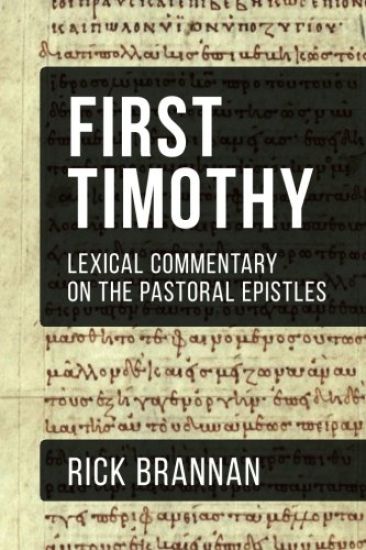
Lexical Commentary on the Pastoral Epistles: First Timothy
To responsibly exegete the text of First Timothy, one must become familiar with the vocabulary. But examination of word meanings involves more than simply looking up words in a lexicon and choosing a gloss that seems appropriate. Rick Brannan evaluates the vocabulary of the First Timothy in light of the New Testament, the Septuagint (LXX), the Apostolic Fathers, the works of Philo, the works of Josephus, the Old Testament Pseudepigrapha, and other material. Many commentaries and other works of exegesis mention material from these sources to provide background information or examples of word usage, duly noting references to such works in footnotes or endnotes. Brannan's work, however, provides full quotations (in translation) of the relevant references. Instead of relegating these citations to footnotes that are seldom if ever looked up, the cited text itself is reproduced for the reader to evaluate. Rick Brannan has produced a robust and rigorous exegetical introduction to First Timothy. This book is a great guide to the nuances of the Greek text that interpreters need to grapple with as they attempt to interpret this letter. Whether it is women "saved through childbirth" or how "you will save both yourself and your hearers," Brannan shows you what you need to know as you wrestle with First Timothy. - Dr. Michael F. Bird (PhD University of Queensland) is Lecturer in Theology at Ridley College in Melbourne, Australia. Rick Brannan's methodology for these word studies in First Timothy opens new semantic vistas because he takes into account the usage of the Greek words in contemporary Koine works like the Pseudepigrapha and Josephus. Furthermore, he illustrates the "effective" use of these lexemes in the Apostolic Fathers as well. He is careful not to be guilty of anachronism in the latter practice but simply illustrates how the word was understood in Christian literature written soon after the Pastorals. In some ways, this is a ground-breaking approach that deserves serious consideration by other commentators on the sacred text. - Dr. William Varner is Professor of Bible and Greek at The Master's College.
NKJV Bible Journal - 1-2 Timothy, Titus, Philemon, Paperback, Comfort Print
A unique Scripture-engagement format with room to write notes and prayers, ideally suited for following a sermon series in church, participating in small-group study, or for individual devotional and study time.Focus on one book at a time with this NKJV Bible Journal of the book of 1-2 Timothy, Titus, and Philemon. Ideal for personal or group study, each handy journaling paperback includes individual book introductions and a single-column Scripture layout with a full page of light journaling lines opposite each page of Scripture.Features include: Full-lined pages next to Scripture provide plenty of space to reflect, journal, or create art next to your favorite versesPremium paper limits bleed-through, ideal for taking notesFlexible sewn binding helps the journal to lay flat in your hand or on your deskBook introductions provide a concise overview of the background and historical context of the book about to be readTranslation notes provide a look into the thinking of the translators with alternative translations that could have been used and textual notes about manuscript variationsHandheld size allows you take God's Word wherever life takes you - work, small group, church, or anywhere elseClear and readable 12-point NKJV Comfort Print®
NET Abide Bible Journal - 1-2 Timothy, Titus, Philemon, Paperback, Comfort Print
Do you yearn for life-giving, intimate communion with God? The Abide Bible Journals are designed to help you experience the peace, hope, and growth that come from encountering the voice and presence of God in Scripture. This journal volume of the books of 1-2 Timothy, Titus, and Philemon will help you develop Scripture-engagement habits to help you know the power and spiritual nourishment of abiding in the Word.This Abide Bible Journal is designed to help you focus on the message of this section of the Bible. The format is ideal for personal or group study as each handy journaling paperback includes individual book introductions, a single-column Scripture layout, and powerful passage-specific prompts with light journaling lines opposite each page of Scripture.Created in partnership with Bible Gateway and the Taylor University Center for Scripture Engagement, the Abide Scripture engagement prompts are based on four ways of engaging deeply with the Bible:Praying Scripture: Pattern your prayers after biblical textsPicture It: Place yourself in a biblical narrative as a bystander or participantJournal: Focus and reflect on Scripture and its meaning for your lifeContemplate: Follow the simple 4-step practice of feasting in God’s Word Features include:Clear and readable Thomas Nelson NET TypefaceThick paper suited for journalingBrief book introductionsInnovative Scripture-engagement promptsHandheld size for personal and group studyFlexible sewn bindingStunning cover artwork by Stephen Crotts
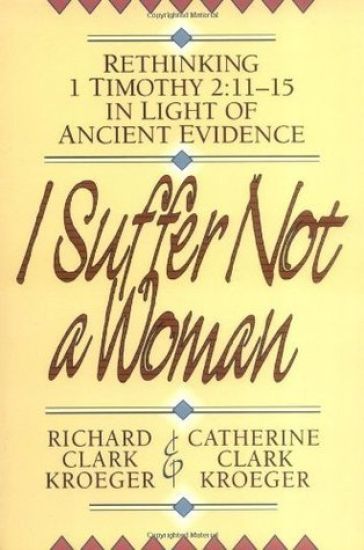
I Suffer Not a Woman – Rethinking I Timothy 2:11–15 in Light of Ancient Evidence

I Suffer Not a Woman – Rethinking I Timothy 2:11–15 in Light of Ancient Evidence

Richard Clark Kroeger; Catherine Clark Kroeger

Baker Academic, Div of Baker Publishing Group
1998
nidottu
"I suffer not a woman to teach, nor to usurp authority over the man, but to be in silence." --1 Timothy 2:12 KJV This passage troubles those who desire greater leadership roles for women in ministry but who also want to remain loyal to Scripture. Did Paul forbid a woman to exercise her leadership and teaching gifts, or was he dealing with a particular error in the church? According to I Suffer Not a Woman, Paul was reacting to a specific problem that was sweeping churches: a myth, taught mostly by women, which later became a foundation for gnosticism. This book offers an in-depth look at the Greek text of 1 Timothy 2:11-15 in the context of the Pastoral Epistles and in its historical context. By illuminating the first-century culture of Ephesus, the Kroegers shed light on the ancient world thought patterns Paul faced and offer a responsible alternative understanding of this much debated passage. I Suffer Not a Woman is well documented yet easily accessible. Illustrations and photographs provide a fascinating look at the ancient world. It was previously published by Baker in 1992.
The First and Second Letters to Timothy Vol 1

The First and Second Letters to Timothy Vol 1

Jerome Quinn; William Wacker

William B Eerdmans Publishing Co
1999
pokkari
This new commentary provides a fresh, readable translation of 1 and 2 Timothy together with notes and commentary on this important section of Scripture. The authors show that, in addressing such contemporary topics as church leadership, the roles of women, the use of wealth, heterodoxy, worship, and ethics, these Pauline letters remain highly relevant to church life today.
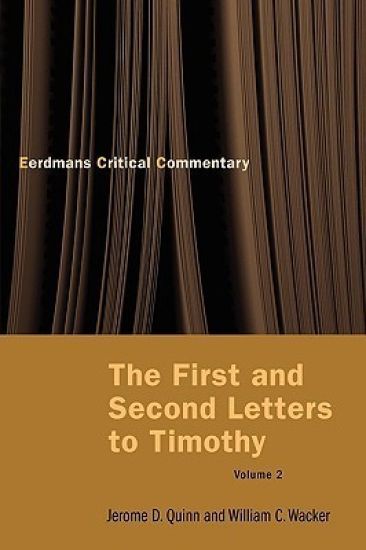
The First and Second Letters to Timothy Vol 2

The First and Second Letters to Timothy Vol 2

Jerome D. Quinn; William Wacker

William B Eerdmans Publishing Co
1999
pokkari
This new commentary provides a fresh, readable translation of 1 and 2 Timothy together with notes and commentary on this important section of Scripture. The authors show that, in addressing such contemporary topics as church leadership, the roles of women, the use of wealth, heterodoxy, worship, and ethics, these Pauline letters remain highly relevant to church life today.
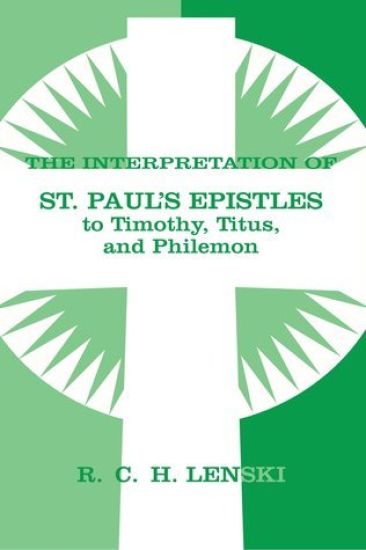
Interpretation of St Paul's Epistle to Timothy, Titus, and Philemon
Pastors and students of the Bible who seek deep and detailed engagement with the text of the New Testament have long relied on R. C. H. Lenski's classic text - now available again. Lenski's massive yet readable commentary has been deeply influential in pastoral circles that prize serious work with the Greek text, a strong theological exegesis (influenced by Lenski's Lutheran background and conservative theological convictions), and understanding how each text relates to life in Christ. Each passage is introduced by Lenski's original translation, followed by his exhaustive discussion of linguistic, historical, exegetical, and thematic points. Even though its historical-critical work has been surpassed, the strong narrative quality, accessibility, and "holy reverence for the the Word of God" (Moody Monthly) of Lenski's work have allowed his commentary to continue as an excellent resource for detailed study of the New Testament and sermon preparation. In this republication of Lenski's text, his twelve volumes are presented in a more manageable twenty books without altering the original at all.
Eliakim Doolittle (1772-1850) and Timothy Olmsted (1759-1848)
This volume brings together 79 sacred tunes by two Connecticut composers: Eliakim Doolittle, who wrote psalm and fuging tunes in an unpretentious, familiar idiom, and Timothy Olmsted, who wrote psalm tunes in a more sophisticated, florid musical style. This final edition in the Music of the New American Nation series includes a comprehensive index of tune names and first lines for all fifteen volumes.
Question-based Bible Study Guide -- I & II Timothy, Titus
13 ready-to-teach Bible studies on the books of I & II Timothy and Titus. If you can read 20 questions, you can lead a Bible Study Group.Each lesson consists of 20 or so ready-to-use questions that get groups talking. Answers are provided in the form of quotes from respected authors such as John Piper, Max Lucado and Beth Moore.These lessons will save you time as well as provide deep insights from some of the great writers and thinkers from today and generations past. I also include quotes from the same commentaries that your pastor uses in sermon preparation. Ultimately, the goal is to create conversations that change lives.
A Commentary of the First Epistle to Timothy, Chapter Two

A Commentary of the First Epistle to Timothy, Chapter Two

James Thomas Lee

Independently Published
2019
pokkari
In his first letter to Timothy, the Apostle Paul shared nine important truths. First, he spoke about the necessity for every saint to be called by the Holy Spirit into his or her specific ministry. Second, he indicated that salvation is by the Lord alone and that He is longsuffering with people because His desire is for them to be saved. Third, he told Timothy that the Lord wants everyone to come to the knowledge of the truth of the gospel so that they can be saved. Fourth, he told Timothy that Jesus performs the role of mediator in reconciling lost and saved sinners to God the Father. When they come to Him by faith, He forever sets them free from the penalty of their sin. Fifth, Paul had wanted to convey to Timothy the proper role of women in public worship services. Of course, the real question with that part of the chapter is whether his Holy Spirit-inspired instructions had been culturally-based or whether they had been actually intended to transcend all cultures. Sixth, he had identified a list of general qualifications for an individual desiring the position of bishop. Seventh, he had identified a similar list for one desiring the position of deacon. Once again, though, it will be important to see how his instructions apply to women. Are only men to be pastors and deacons or had Paul left open those positions for women, too? Eighth, he had wanted to tell Timothy that people would depart from the Faith in the last days. That is something that has been happening ever since he had first penned those words. Ninth, he had wanted to encourage him to be content with the simple, basic necessities of life. That has always been important for the saints of God to do. In the process of discussing those various truths, though, several other points will also be considered. One of those is that the popular "Roman's Road to Salvation" is often flawed in the way that it is presented and understood. One should note concerning that comment, however, that the problems which will be described have nothing to do with the actual verses from the book of Romans. Instead, it will be with how those verses have been used to try to lead other people to the Lord. That whole process does not always work. Plus it can be confusing to the new person in Christ. So because of those shortcomings, how people really get saved will be discussed. In fact, how the Old Testament saints had actually gotten saved will also be discussed. The point of that part of the discussion will be that the Old Testament saints were and that the New Testament saints are saved in the exact same way. Another interesting point that will be considered in this text is what Paul had meant when he had said that the woman will be saved in childbearing. He obviously did not mean that a woman can only be saved for all eternity by bearing children. But what did he mean? As always, the main purpose of this book is to honor and glorify the Lord. Beyond that, the second purpose is to edify and to educate the saints. Paul had always thought it important to educate people about true biblical salvation and also about how to faithfully live for the Lord. Thus, with diligent study come truth and understanding. With truth and understanding comes freedom. Those things are very important because freedom is precious. For that reason, John 8:31-32 says, "Then said Jesus to those Jews which believed on him, If ye continue in my word, then are ye my disciples indeed; And ye shall know the truth, and the truth shall make you free."
Double Exposure: Resurveying the West with Timothy O'Sullivan, America's Most Mysterious War Photographer
One of The New Yorker's best books of the year so far A Kirkus Reviews Best Nature Book of 2024"Singular . . . Virtuosic . . . Double Exposure is the best book I've read about America . . . in many, many years." --Corey Seymour, Vogue (a best book of 2024)"Extraordinary . . . A transformative experience for the reader." --Lucy Sante "A large-hearted, wide-angled book . . . I couldn't put it down." --Ian FrazierA personal exploration of the American West and the work of one of America's greatest photographers.Timothy O'Sullivan is America's most famous war photographer. You know his work even if you don't know his name: A Harvest of Death, taken at Gettysburg, is an icon of the Civil War. He was also among the first photographers to elevate what was then a trade to the status of fine art. The images of the American West he made after the war, while traveling with the surveys led by Clarence King and George Wheeler, display a prescient awareness of what photography would become; years later, Ansel Adams would declare his work "surrealistic and disturbing." At the same time, we know very little about O'Sullivan himself. Nor do we know--really know--much more about the landscapes he captured. Robert Sullivan's Double Exposure sets off in pursuit of these two enigmas. This book documents the author's own road trip across the West in search of the places, many long forgotten or paved over, that O'Sullivan pictured. It also stages a reckoning with how the changes wrought on the land were already under way in the 1860s and '70s, and how these changes were a continuation of the Civil War by other means. Sullivan, known for his probing investigations of place in the pages of The New Yorker and books like Rats and My American Revolution, has produced a work that, like O'Sullivan's magisterial photos of geysers and hot springs, exposes a fissure in the American landscape itself.