Kirjojen hintavertailu. Mukana 11 244 527 kirjaa ja 12 kauppaa.

Kirjahaku

Etsi kirjoja tekijän nimen, kirjan nimen tai ISBN:n perusteella.

1000 tulosta hakusanalla Vector Hasting

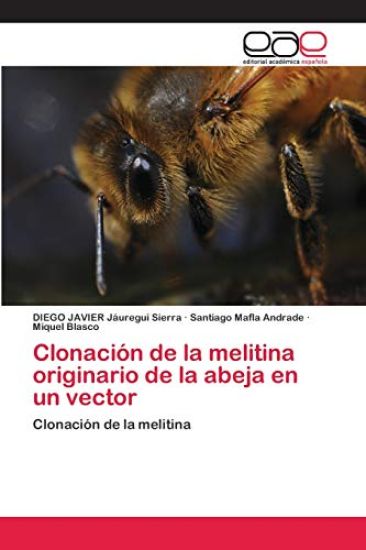
Clonación de la melitina originario de la abeja en un vector

Clonación de la melitina originario de la abeja en un vector

Diego Javier Jáuregui Sierra; Santiago Mafla Andrade; Miquel Blasco

Editorial Academica Espanola
2018
pokkari
La abeja occidental (Apis mellifera) es un insecto 'eusociale', que pertenece a la familia de las Hymen pteras. Las poblaciones se diferencian en reinas que producen cr as y trabajadores no reproductivos, los cuales recogen y procesan los alimentos y producen la apitoxina. El veneno de abeja est compuesto por varios p ptidos, uno de los cuales es la melitina, siendo este una prote na que posee un efecto bactericida y ayuda a mejorar el sistema inmunol gico.
Learning with Fractional Orthogonal Kernel Classifiers in Support Vector Machines
This book contains select chapters on support vector algorithms from different perspectives, including mathematical background, properties of various kernel functions, and several applications. The main focus of this book is on orthogonal kernel functions, and the properties of the classical kernel functions—Chebyshev, Legendre, Gegenbauer, and Jacobi—are reviewed in some chapters. Moreover, the fractional form of these kernel functions is introduced in the same chapters, and for ease of use for these kernel functions, a tutorial on a Python package named ORSVM is presented. The book also exhibits a variety of applications for support vector algorithms, and in addition to the classification, these algorithms along with the introduced kernel functions are utilized for solving ordinary, partial, integro, and fractional differential equations. On the other hand, nowadays, the real-time and big data applications of support vector algorithms are growing. Consequently, the Compute Unified Device Architecture (CUDA) parallelizing the procedure of support vector algorithms based on orthogonal kernel functions is presented. The book sheds light on how to use support vector algorithms based on orthogonal kernel functions in different situations and gives a significant perspective to all machine learning and scientific machine learning researchers all around the world to utilize fractional orthogonal kernel functions in their pattern recognition or scientific computing problems.
Learning with Fractional Orthogonal Kernel Classifiers in Support Vector Machines
This book contains select chapters on support vector algorithms from different perspectives, including mathematical background, properties of various kernel functions, and several applications. The main focus of this book is on orthogonal kernel functions, and the properties of the classical kernel functions—Chebyshev, Legendre, Gegenbauer, and Jacobi—are reviewed in some chapters. Moreover, the fractional form of these kernel functions is introduced in the same chapters, and for ease of use for these kernel functions, a tutorial on a Python package named ORSVM is presented. The book also exhibits a variety of applications for support vector algorithms, and in addition to the classification, these algorithms along with the introduced kernel functions are utilized for solving ordinary, partial, integro, and fractional differential equations. On the other hand, nowadays, the real-time and big data applications of support vector algorithms are growing. Consequently, the Compute Unified Device Architecture (CUDA) parallelizing the procedure of support vector algorithms based on orthogonal kernel functions is presented. The book sheds light on how to use support vector algorithms based on orthogonal kernel functions in different situations and gives a significant perspective to all machine learning and scientific machine learning researchers all around the world to utilize fractional orthogonal kernel functions in their pattern recognition or scientific computing problems.
Anti-Cancer Drug Resistance Causal Modeling from Lentiviral-Vector Integration Site Studies
Evolution plays a key role in cancer as the result of the accumulation of genetic alterations, which provide selective advantages to a tumor cell, allowing resistance to anti-cancer drugs. Unfortunately, however, the identification of the driver mutations and thus the mechanisms underlying anti-cancer drug resistance (ACDR) still remains a challenge. We previously demonstrated that lentiviral vectors (LVs), when properly modified, might integrate near specific genes, alter their expression and induce cancer or ACDR in vivo and in vitro. The analysis of vector-cellular genomic junctions in tumor or ACDR cells allowed identifying causative genes of HER2+ breast cancer cell line using a statistical approach defined Common Insertion Sites (CISs) that highlight genomic regions targeted at significantly higher frequency than expected by a random distribution. The reconstruction of cumulative cancer progression from CIS genes has not been yet addressed and may produce causative gene networks. The aim of this project is studying anti-cancer drug resistance from exclusive and co-occurring genes using cumulative cancer progression from cell line CIS genes and investigating the relation between them.
Algebra Through Practice: Volume 2, Matrices and Vector Spaces
Problem solving is an art that is central to understanding and ability in mathematics. With this series of books the authors have provided a selection of problems with complete solutions and test papers designed to be used with or instead of standard textbooks on algebra. For the convenience of the reader, a key explaining how the present books may be used in conjunction with some of the major textbooks is included. Each book of problems is divided into chapters that begin with some notes on notation and prerequisites. The majority of the material is aimed at the student of average ability but there are some more challenging problems. By working through the books, the student will gain a deeper understanding of the fundamental concepts involved, and practice in the formulation, and so solution, of other algebraic problems. Later books in the series cover material at a more advanced level than the earlier titles, although each is, within its own limits, self-contained.
Winter School on Mirror Symmetry, Vector Bundels and Lagrangian Submanifolds

Winter School on Mirror Symmetry, Vector Bundels and Lagrangian Submanifolds

Winter School on Mirror Symmetry (1999 Harvard University); Shing-Tung (EDT) Yau; Cumrun (EDT) Vafa

Amer Mathematical Society
2002
pokkari
The collection of articles in this volume are based on lectures presented during the Winter School on Mirror Symmetry held at Harvard University. There are many new directions suggested by mirror symmetry which could potentially have very rich connections in physics and mathematics. This book brings together the latest research in a major area of mathematical physics, including the recent progress in mirror manifolds and Lagrangian submanifolds. In particular, several articles describing homological approach and related topics are included. Other AMS titles edited by S.-T Yau published in the AMS/IP Studies in Advanced Mathematics series include, Mirror Symmetry III, Volume 10, Mirror symmetry II, Volume 1, and Mirror Symmetry I, Volume 9.
The Sardinian Project: An Experiment in the Eradication of an Indigenous Malarious Vector

The Sardinian Project: An Experiment in the Eradication of an Indigenous Malarious Vector

John Alexander Logan; Dean Rusk; Marston Bates

Literary Licensing, LLC
2012
sidottu
The Sardinian Project: An Experiment In The Eradication Of An Indigenous Malarious Vector is a book written by John Alexander Logan. It is a detailed account of an experiment conducted in Sardinia in the early 1950s, which aimed to eradicate an indigenous mosquito species that was responsible for the transmission of malaria. The book describes the background of the project, the methods used, and the results obtained. It also discusses the impact of the project on the local population and the environment. The author provides a comprehensive analysis of the project, including its successes and failures, and draws lessons for future efforts to control malaria and other vector-borne diseases. The book is written in a clear and accessible style, making it suitable for both experts and non-experts in the field of public health. It is a valuable resource for anyone interested in the history of malaria control and the challenges of designing and implementing effective vector control programs.Additional Contributors Include Thomas H. G. Aitken, Guido U. Casini, Frederick W. Knipe, John Maier, Athol J. Patterson And Harold Trapido. The American Journal Of Hygiene Monographic Series, No. 20.This scarce antiquarian book is a facsimile reprint of the old original and may contain some imperfections such as library marks and notations. Because we believe this work is culturally important, we have made it available as part of our commitment for protecting, preserving, and promoting the world's literature in affordable, high quality, modern editions, that are true to their original work.