Kirjojen hintavertailu. Mukana 11 717 486 kirjaa ja 12 kauppaa.

Kirjahaku

Etsi kirjoja tekijän nimen, kirjan nimen tai ISBN:n perusteella.

1000 tulosta hakusanalla Victoria Ferrante

The Victoria County History of Herefordshire: Bosbury

The Victoria County History of Herefordshire: Bosbury

Janet Cooper

Institute of Historical Research
2016
pokkari
Bosbury is the second parish history to be produced by the Trust for the Victoria County History of Herefordshire, following the history of Eastnor published in 2013. Like Eastnor, Bosbury is an agricultural parish, near the market town of Ledbury. It covers a relatively large area below the western slopes of the Malvern Hills. In the Middle Ages Bosbury was the site of one of the favourite residences of the bishops of Hereford; in the western part of the parish, called Upleadon, was an estate belonging first to the Knights Templar and then to the Hospitallers. From the 16th century onwards both estates passed into the hands of tenants, leaving the parish without a major resident landowner until John Stedman and Edward Higgins successively developed the Bosbury House estate in the late 18th and the 19th century. Much of that estate was given after the First World War to create the Bosbury Farm Settlement for former soldiers.The economy of the parish has always been agricultural, mixed farming being practised. Orchards have been important, particularly on the higher ground in the northern part of the parish, and hops have been grown since the 17th century. By the late 19th century the lack of industry, and indeed of any major roads, made the parish appear an oasis of rural peace. The many timber-framed buildings, particularly those along the village street, and the parish church with its detached bell tower, attracted visitors and some new residents, but the parish avoided any large-scale 20th-century development.
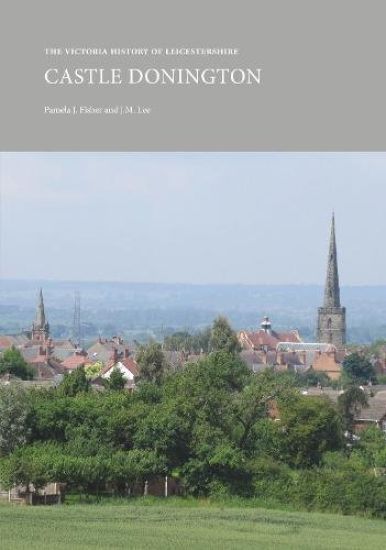
The Victoria History of Leicestershire: Castle Donington

The Victoria History of Leicestershire: Castle Donington

Pamela J. Fisher; J.M. Lee

Institute of Historical Research
2016
pokkari
The parish of Castle Donington in north-west Leicestershire lies on the south bank of the river Trent, 20 miles north-west of Leicester and 8 miles south-east of Derby. A nucleated village developed on the present site more than 1,000 years ago. A castle was built in the 1150s, and several features of a town soon developed, including a market, fair and hospital. Secondary settlements grew up alongside the Trent, by the King's Mills and at Cavendish Bridge, the site of an important medieval ferry. Donington Park, which originated in the early 13th century as a hunting park, became a separate estate of the earls of Huntingdon in the late 16th century. Later history has been shaped by strong religious nonconformity and the growth and then decline of traditional industries in the 18th and 19th centuries. Since then, modern transport links, including East Midlands Airport in the south of the parish, have delivered new employment opportunities. Castle Donington in the early 21st century is thriving. Many people travel in daily to work, and thousands more visit the motor-racing circuit at Donington Park and other leisure attractions each year, yet few know of the parish's rich history.This book, the first in the Leicestershire VCH series since 1964, examines the changing patterns of landscape, landownership, working lives, social structure and religious worship in Castle Donington across many centuries, and includes the settlements at King's Mills and Cavendish Bridge. It will be of interest to local residents, visitors, family and local historians.
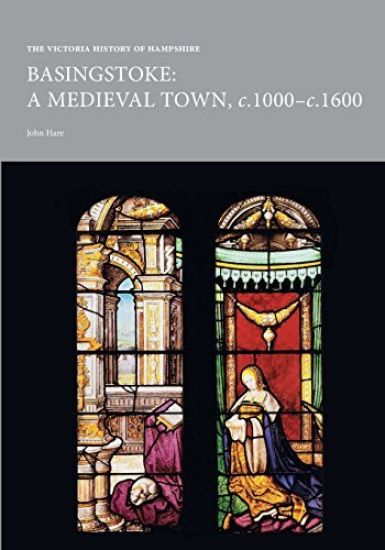
The Victoria History of Hampshire: Medieval Basingstoke

The Victoria History of Hampshire: Medieval Basingstoke

John Hare

Institute of Historical Research
2017
pokkari
Basingstoke is frequently seen as a very modern town, theproduct of the last decades of the 20th century. In reality it has a long, richand prosperous history. From its beginnings c.1000it became a significant market centre for the area around, and a place on theroute to London from the west. By 1500 it was among the top 60 towns in Englandby wealth and taxpayers, and the centre of a major industrial area, whosemanufactured cloths formed part of international patterns of trade. Moreover,it is well documented particularly for the 15th and 16th century, when it wasat its peak, and should provide a useful addition to the limited number ofstudies of small medieval towns. Much of the old town has been swept away by the shopping centre,but something of the medieval footprint survives in its streetbeyond this, in a few surviving buildings and above all in its magnificentchurch. This book examines these features as well as the families, whether outsiders orlocals, who made the most of the new thriving economic conditions, and whosedynamism helped create the town's expansion.
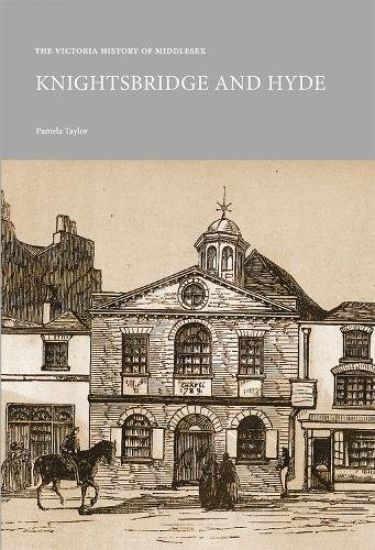
The Victoria History of Middlesex: Knightsbridge and Hyde

The Victoria History of Middlesex: Knightsbridge and Hyde

Pamela Taylor

Institute of Historical Research
2017
nidottu
Today's Knightsbridge, the wealthy shoppers' paradise, is a recent cross-border development. This book breaks new ground by uncovering an earlier, larger Knightsbridge and showing why its initial extent and history have been largely forgotten. Knightsbridge was the southern part of the Westminster abbey manor of Knightsbridge and Westbourne, and until 1900 covered the same area as the parish of St Margaret Westminster Detached. Pre-1900 Knightsbridge/Westminster included today's Kensington Palace, Kensington Gardens, almost half of 'South Kensington', and Hyde Park west of the Serpentine (or river Westbourne). So why was so much of Knightsbridge lost to memory, becoming thought of only in terms of Westminster, Hyde or (until 1900 entirely wrongly) Kensington?
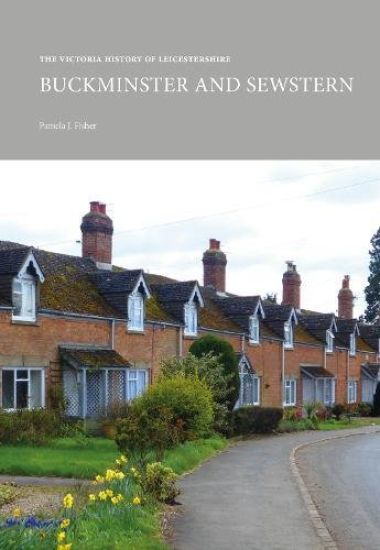
The Victoria History of Leicestershire: Buckminster and Sewstern

The Victoria History of Leicestershire: Buckminster and Sewstern

Pamela J. Fisher

Institute of Historical Research
2017
pokkari
Buckminster and Sewstern, in north-east Leicestershire, aretwo small villages within a single parish, and although both were establishedbefore 1086, they have developed different characters. Buckminster was purely an agricultural village until the1790s, when Sir William Manners enlarged a small park, built a mansion andbegan to create an estate village. Many of the houses are of red brick, andwere built for estate employees by the 9th earl of Dysart between 1878 and1935, as part of a programme of village improvements. All the land, residentialand commercial properties in Buckminster were held in 2017 by the Tollemachefamily, descendants of Sir William and Lord Dysart.In contrast, Sewstern's houses are individual in character,and mostly built from local limestone. Before the 20th century, many had largepaddocks to the rear. The village is near the presumed ancient route known asSewstern Lane, and a wide range of trades were followed between the 14th and19th centuries, until the age of the railways ended the passing trade. Land in both villages was quarried for ironstone in the 20thcentury, then reinstated for farmland, resulting in fields that are severalfeet below the level of the roads and property curtilages. This book exploresthe similarities and differences between the two villages over more than athousand years of recorded history.
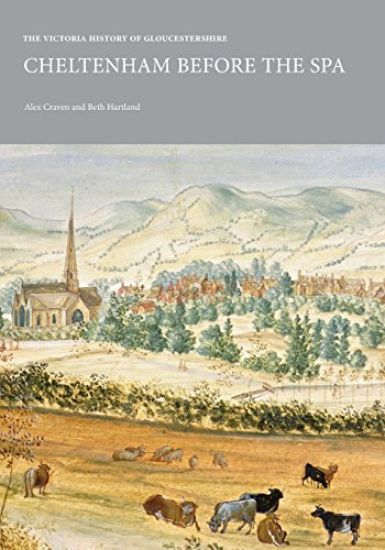
The Victoria History of Gloucestershire: Cheltenham Before the Spa
The familiar image of Cheltenham, a large and prosperousformer spa town, world-famous on account of its Georgian and Regencyarchitecture, its festivals and educational establishments, masks an earlierhistory. While numerous descriptions of the town have been published over theyears, most say little about the many centuries of its existence before the1740s, when it began to develop as a fashionable resort. This is the fullestaccount ever attempted to chronicle those centuries, from the late Saxon perioduntil the 18th century. In this period, Cheltenham developed into a successfulsmall town, ranged along a single main street, with the market and tradesserving not only its own needs but also those of the surrounding countryside.It draws on a range of documentary sources preserved in local and nationalarchives, many of them never examined in detail before. It therefore helps toexplain the foundations upon which present-day Cheltenham was constructed.
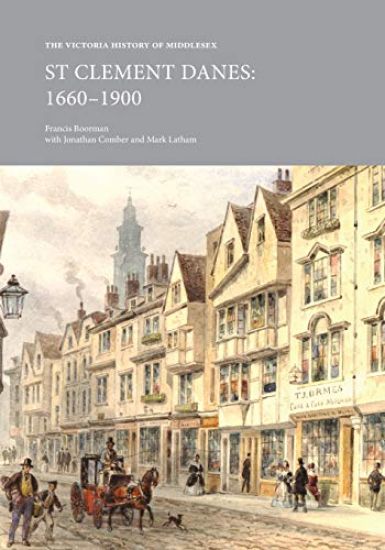
The Victoria History of Middlesex: St Clement Danes, 1660-1900
St Clement Danes, now the central RAF church in the Strand, is at the heart of the capital, sandwiched between `theatreland' and legal London, and connecting the dual historic centres of Westminster and the City. This book reveals the vibrant cultural, economic, political and religious life of the parish from the Restoration to its abolition in 1900.This period was one of rapid urban transformation in the parish, as the large aristocratic riverside houses of the 17th century gave way to a bustling centre of commerce and culture in the 18th. The slums that developed in the 19th century were then swept away by the grand constructions of the Royal Courts of Justice and the Victoria Embankment, followed by the new thoroughfares of Aldwych and Kingsway, which are still the major landmarks in the area.Characterised by its contrasts, St Clement Danes was home to a mix of rich and poor residents, including lawyers, artisans, servants and prostitutes. The history of this fascinating area introduces a cast of characters ranging from the Twinings tea-trading family, to the rowdy theatre-going butchers of Clare Market and from the famous Samuel Johnson, to the infamous pornographers of Holywell Street. This book also unpicks the complicated structure of local government in the parish, and provides detailed accounts of the parish schools and charities.
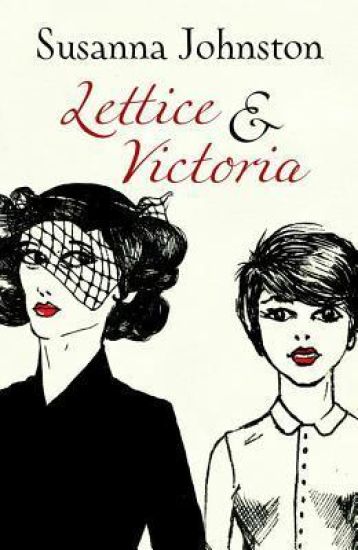
Lettice & Victoria

Lettice & Victoria

Susanna Johnston

Arcadia Books
2013
sidottu
This mischievous roman a clef revolves around the interactions of five main characters. Victoria, barely twenty, finds herself acting as amanuensis to Laurence, an elderly man of letters, now blind, who lives in a ravishing house by the sea in northern Italy. Soon after her arrival, she indulges in a heady night of passion with Edgar, a youthful Englishman. Their subsequent union introduces Edgar's pretentious mother Lettice, who is jealous and suspicious of her daughter-in-law's prettiness and her ability to amuse Lettice's intellectual friends. While Victoria struggles to adapt to her new surroundings, Lettice, in a bid to maintain her own social superiority, attempts to thwart her every move in hilarious fashion. Enter Archie, one of the inner circle, whose relationship with Victoria provokes a scandal that threatens to destroy her. Darkly funny and deeply insightful, Lettice & Victoria is not just a love story with a fanciful and flawed female protagonist, but a wonderful portrait of English society.
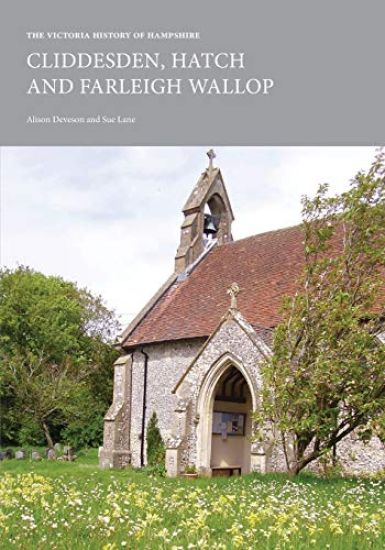
The Victoria History of Hampshire: Cliddesden, Hatch and Farleigh Wallop

The Victoria History of Hampshire: Cliddesden, Hatch and Farleigh Wallop

Alison Margaret Deveson; Sue Lane

Institute of Historical Research
2018
pokkari
Tracing the history of two small, closely-linked parisheswhich lie to the south of Basingstoke on the edge of the chalk downlands, and athird parish, Hatch (abandoned towards the end of the 14th century and hasformed part of both of the others), Cliddesden, Hatch and Farleigh Wallopis the latest publication from the Victoria County History of Hampshireproject. Each settlement has a common manorial descent from the 15th centuryonwards and they were managed as components of a single estate under thelordship of the Wallop family from their seat at Farleigh House. This volumediscusses the manorial owners and the development of the estate, and alsoincludes much more about the lives and activities of ordinary people living andworking in the settlements. Religious and social history of the area is covered and thesurvival of an unusually full set of records has enabled the history of theschool to be told in detail. This, coupled with lively tales of socialactivities, provides a fascinating picture of rural life as it was and as ithas become in the 21st century - largely a home for commuters, with Hatchabsorbed into an ever-growing Basingstoke and farming undertaken from onecentre across nearly all the land.Published by the Institute of Historical Research at theUniversity of London, this is the fourth volume from the Victoria CountyHistory of Hampshire following Mapledurwell, Steventon and Basingstoke:a Medieval Town c.1000-c.1600. Each title provides a scholarly account ofindividual villages and towns of interest to their inhabitants, those in thewider area and to those beyond Hampshire itself.
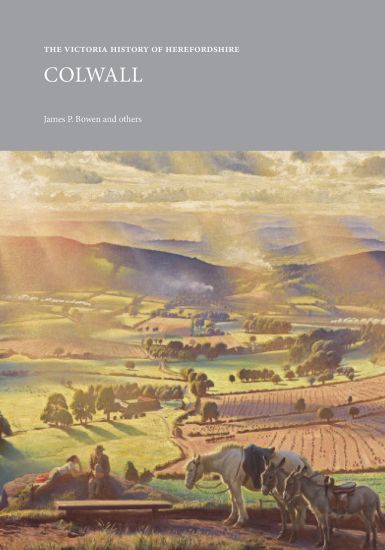
The Victoria History of Herefordshire: Colwall

The Victoria History of Herefordshire: Colwall

James P. Bowen; Alex Craven

Institute of Historical Research
2020
pokkari
Colwall lies on the western slopes of the MalvernHills, near the market town of Ledbury. The large villagecomprises Colwall Stone, Upper Colwall and Colwall Green. On the HerefordshireBeacon, in the south-eastern corner of the parish, is the Iron Age `BritishCamp'. At thetime of Domesday Book the bishop of Hereford's manor covered the whole parish,but shortly afterwards Barton Colwall manor was createdto endow a prebend in the cathedral. Between the 15th and 17th centuriesresident gentry established themselves on other estates, which came tocharacterise the pattern of landownership.Until the 19th century Colwall's economy waspredominantly agricultural, including cultivation of orchards and hops. Fromthe mid 19th century the northern part of the parish was transformed by thedevelopment of the spa at neighbouring Malvern, and by the arrival of therailway in 1861, following the construction oftunnels under the Malvern Hills by local engineer Stephen Ballard. Mineral waterfrom Colwall springs was bottled commercially, and in 1892 Schweppes opened abottling plant at Colwall Stone. Colwall's rural location, natural springs andbeautiful scenery attracted visitors to the numerous inns, hotels and boardinghouses. Others settled in the parish, occupying new houses including notablearts and crafts villas. Inthe 21st century the parish continues to attract both visitors and newresidents.
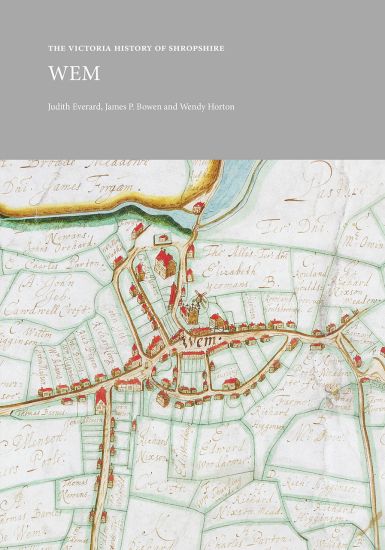
The Victoria History of Shropshire: Wem

The Victoria History of Shropshire: Wem

Judith Everard; James P. Bowen; Wendy Horton

Institute of Historical Research
2019
pokkari
Wem lies on the North Shropshire Plain, about nine miles north of Shrewsbury. The centre of a much larger medieval manor and parish, the township consists of the small medieval market town and its immediate rural hinterland. Anglo-Saxon in origin, the town developed after the Norman Conquest, with a castle, parish church, market and water mill. The urban area of the township, 'within the bars', was distinguished from the rural, 'without the bars'. Burgages were laid out, with a customary borough-hold tenure, but the borough never attained corporate status. Isolated from the main regional transport routes, Wem developed as a centre of local government and trade in agricultural produce, especially cheese. It was thrust onto the national stage in 1642 when Parliamentarians defeated a Royalist attack and held the town for the duration of the Civil War. The 'great fire' of 1677 then destroyed many of the existing buildings in the town centre, leading to its predominantly Georgian and Victorian appearance today. The decline in agricultural employment and the withdrawal of services and industries from small market towns like Wem in recent decades is a challenge, met by the advantage of the railway station to residents who work elsewhere but choose the town as a place to live. Wem is the first 'Short' history to be produced by the Victoria County History of Shropshire. It is intended to establish a model for the histories of other market towns in Shropshire. This book tells the story of the town, its people and institutions: the built environment, landownership, economy, social and religious life and local government. It reveals for the first time that Wem was a planted medieval castle-town, and presents the evolution of its urban topography. It offers detailed accounts of the town's medical profession and health care, trades and industries, and retailing, where Wem's weekly produce market is enjoying a 21st-century revival.
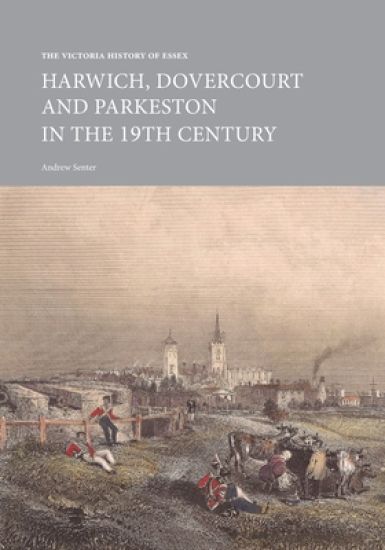
The Victoria History of Essex: Harwich, Dovercourt and Parkeston in the 19th Century
Exploringthe changing character of Harwich, Dovercourt and Parkeston through the courseof the 19th century, included in this book is the economic, social andpolitical history of the borough. The book provides an overview of thedevelopment of areas such as education, religion, public health with a strongfocus on Harwich's maritime history.Theborough of Harwich, including the parish of Dovercourt, lies in the far northeast corner of Essex. Its coastal location as a natural harbour at the mouth ofthe Orwell river dictated that Harwich had a prominent role as a port and navalbase from the 14th century onwards. In the 19th century Harwich retained itsmilitary function, particularly during the Napoleonic and Crimean wars. Theport declined economically as a result of losing the continental packet servicein the 1830s, but it was rejuvenated by the opening of the railway in 1854.Dovercourt grew as a residential area and seaside resort in the second half ofthe 19th century, although the rest of the parish retained much of itstraditional agricultural character. The opening of the port at nearby Parkestonin 1883 led to a rapid growth in both passenger traffic and trade to and fromthe continent.
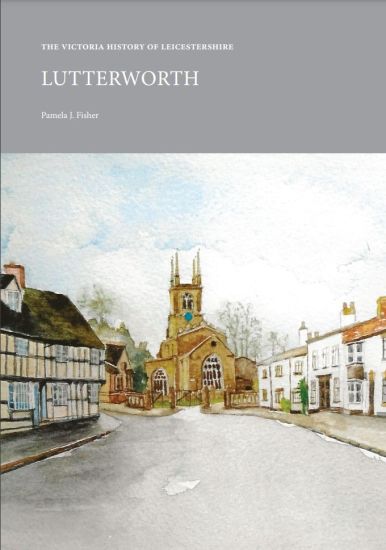
The Victoria History of Leicestershire: Lutterworth

The Victoria History of Leicestershire: Lutterworth

Pamela J. Fisher

UNIVERSITY OF LONDON
2022
nidottu
This volume in the Victoria County History series centers on the town of Lutterworth. From before the Norman Conquest to the development of the jet engine, this volume tells the history of Lutterworth, a small market town in the southwest of Leicestershire. A combination of factors ensured the town's success, including its position linking the rich agricultural land of south Leicestershire with the Warwickshire Arden and its natural resources of wood and coal. Lutterworth also played a role on the national stage, first in 1428, when the bones of the town rector, the theologian John Wyclif, were disinterred and desecrated on the instructions of the Pope. Lutterworth also made headlines between 1937 and 1942, when Frank Whittle developed the jet engine in a disused foundry in the town. This book focuses on the people of Lutterworth and the roles they played in shaping the economy, schools, hospitals, churches, and the social life of the community. The evolution and development of the town are described in these pages, from its humble beginnings to the challenges it faces today.
Queen Victoria

Queen Victoria

Adam West

Ingram Publishing
2019
pokkari
QUEEN ELIZABETHThis book aims to serve as a biography of the great Queen Victoria. Inside, you will receive an insight into what the life of Queen Victoria was like, from her tumultuous childhood, to her eventual death at the old age of 81. The Queen endured multiple assassination attempts, vicious rumours, the early death of her husband and also of multiple children during her more than 60 years on the throne. She ruled over 1/4 of the globe and over 400-million subjects during her incredible reign. The story of Queen Victoria is truly a fascinating one, filled with many trials and tribulations. So please, delve into the pages of history and learn about the interesting life of Queen Victoria Here Is What You'll Learn About... Who Was Queen Victoria Queen Victoria's Childhood Becoming A Queen Victoria's Romantic Life Assassination Attempts The Impact Of Queen Victoria Queen Victoria's Legacy Much, Much More
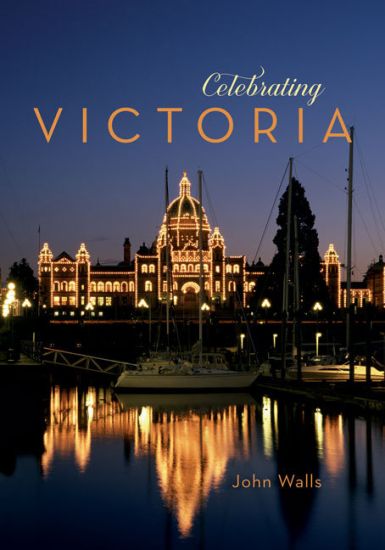
Celebrating Victoria

Celebrating Victoria

John Walls

Heritage House Publishing Co Ltd
2010
nidottu
Welcome to Victoria, Canada's most beautiful city. Explore the bustling Inner Harbour area, where hotels, shops and restaurants abound. Admire First Nations art at Thunderbird Park and see world-class exhibits in the Royal BC Museum. Amble the paths of Beacon Hill Park and watch goats frolic at its popular petting zoo. Revel in the beauty of The Butchart Gardens, one of the most magnificent show gardens in the world. You will see why Victoria is one of Canada's top tourist destinations, and this keepsake book will let you relive your visit time and again.
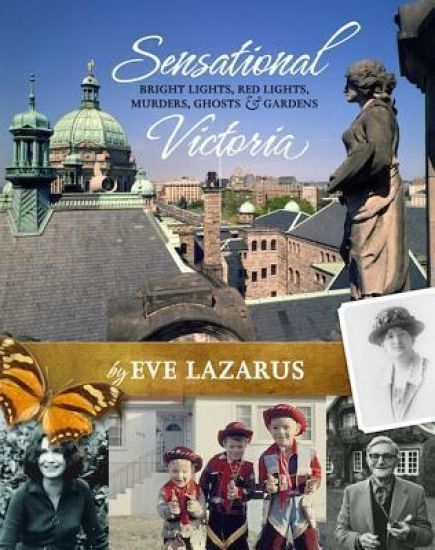
Sensational Victoria

Sensational Victoria

Eve Lazarus

Anvil Press Publishers Inc
2012
nidottu
The follow-up to Eve Lazarus's successful 'At Home with History: The Untold Secrets of Greater Vancouver's Heritage Homes', 'Sensational Victoria' gives us a glimpse into aspects of Victoria rarely talked about in the tourist brochures or flowery garden guidebooks. 'Sensational Victoria' covers legendary women, including Emily Carr, Nellie McClung, Gwen Cash, Sylvia Holland, and Myfanwy Pavelic; prominent madams and their brothels; murders in the capital-five ranging from 1898 to 1992; and, the homes of limners (painters of ornamental decoration), writers, and entertainers, including Herbert Siebner, Elza Mayhew, Pat Martin Bates, Robin Skelton, Carole Sabiston, Bruce Hutchison, Alice Munro, David Foster, Spoony Sundher, and Nell Shipman. Lavishly illustrated throughout with archival and contemporary photographs, 'Sensational Victoria' is a must-read for both history buffs and regular visitors to The Garden City. "This has already been a stellar year for books about localhistory. If you're still looking for a gift, there are more than a dozen top-quality choices on the shelves, from books on Victoria City Hall and the University of Victoria to ones on the Japanese community and Government Street. This late arrival, 'Sensational Victoria', is one of the year's best." - 'Times Colonist (Victoria)'