Kirjojen hintavertailu. Mukana 11 699 587 kirjaa ja 12 kauppaa.

Kirjahaku

Etsi kirjoja tekijän nimen, kirjan nimen tai ISBN:n perusteella.

1000 tulosta hakusanalla Wauter Mannaert

Water-Based Paint Formulations, Vol. 3

Water-Based Paint Formulations, Vol. 3

Ernest W. Flick

William Andrew Publishing
1994
sidottu
This collection of 463 water-based trade and industrial formulations will be of value to technical and managerial personnel in paint manufacturing companies and firms which supply raw materials or services to these companies, and to those interested in less hazardous, environmentally safer formulations. The data consists of selections of manufacturers' suggested formulations made at no cost to, or influence from, the makers and distributors of these materials. Only the most recent data is included. Any solvent containment is minimal.
Water-Based Paint Formulations, Vol. 4

Water-Based Paint Formulations, Vol. 4

Ernest W. Flick

William Andrew Publishing
1998
sidottu
This collection of 232 water-based trade and industrial formulations will be of value to technical and managerial personnel in paint manufacturing companies and firms which supply raw materials or services to these companies, and to those interested in less hazardous, environmentally safer formulations. The book will be useful to both those with extensive experience as well as those new to the field. This book includes new and different formulations than those included in the previous volumes. The data consist of selections of manufacturers' suggested formulations made at no cost to, nor influence from, the makers or distributors of these materials. The information given is presented as supplied; the manufacturer should be contacted if there are any questions. Only the most recent data supplied us has been included. Any solvent contained is minimal.The table of contents is organized in such a way as to serve as a subject index. The formulations described are divided into sections which cover exterior, interior, and exterior and/or interior water-based paints, enamels, and coatings, as indicated below. Included in the descriptive information for each formulations, where available, the following properties may be listed: viscosity, solids, content, % nonvolatiles, pigment volume concentration, density, pH, spatter, leveling, sag resistance, scrub stability, freeze-thaw stability, ease of application, gloss foaming, cratering, brightness, opacity, water spotting, adhesion to chalk, brush cleanup, reflectance, and sheen.
Water in the Hispanic Southwest

Water in the Hispanic Southwest

Michael C. Meyer

University of Arizona Press
1996
nidottu
When Spanish conquistadores marched north from Mexico's interior, they encountered one harsh reality that eclipsed all others: the importance of water in an arid land. Covering a time when legal precedents were being set for many water rights laws, this study contributes much to an understanding of the modern Southwest, especially disputes involving Indian water rights. The paperback edition includes a new afterword by the author which discusses the results of recent research.
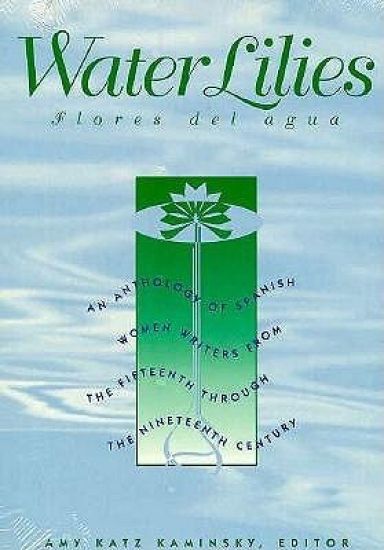
Water Lilies

Water Lilies

Amy Kaminsky

University of Minnesota Press
1995
nidottu
Poetry and prose by Spanish women presented here in both English and Spanish.A dazzling sampler, Water Lilies brings to light a rich and until now largely invisible version of Spanish literary history. These hard-to-find works, most translated for the first time, are printed on facing pages in Spanish and English and located within a critical, biographical, and historical overview. Here are five centuries of writing by Spanish women, the unknown recovered from obscurity, the well-known seen as they rarely have been-in the context of a women’s literary history. Some of these writers, like Rosalía de Castro in “The Bluestockings” and Teresa de Cartagena in Wonder at the Work of God, question the relationship between the woman writer and the act of writing. Some, like the poet Carolina Coronado in “The Twin Geniuses: Sappho and Saint Teresa of Jesus,” overtly seek a literary tradition. Others, like Saint Teresa in her Life and Luisa Sigea in her poetry, provide touchstones for women in search of such a tradition.Legends and stories of women’s friendships, the inconstancy of men, and the love of God; Spain’s first autobiographical text; secular and religious poetry from medieval through recent times; an excerpt from one of the few chivalresque novels written by a woman; a full-length Golden Age comedia: this is the wide range of works Water Lilies comprises. Brought together for the first time, the writers articulate their resistance to, and their complicity in, a literary history that, until now, has tried to exclude them.
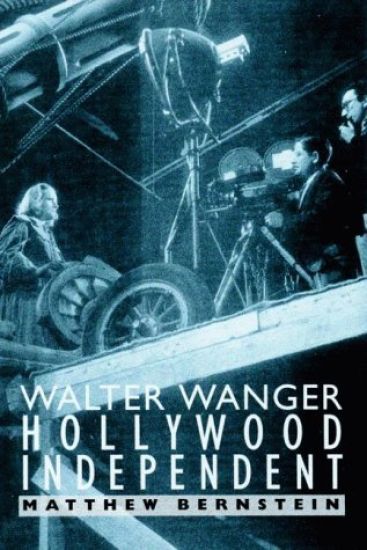
Walter Wanger, Hollywood Independent

Walter Wanger, Hollywood Independent

Matthew Bernstein

University of Minnesota Press
2000
nidottu
A portrait of the trailblazing film producer whose career spanned five decades.The long, colorful career of Walter Wanger (1894-1968) is one of Hollywood’s greatest untold stories. An intellectual and a socially conscious movie executive who produced provocative message movies and glittering romantic melodramas, Wanger’s career started at Paramount studios in the 1920s and led him to work at virtually every major studio as either a contract producer or an independent. He produced a series of American film classics, including Queen Christina, Stagecoach, Foreign Correspondent, and Invasion of the Body Snatchers, as well as a few notable flops, such as Cleopatra. This comprehensive biography brings to life a distinctive film personality and offers a new appreciation of the role of the producer in the history of American cinema.
Water and What We Know

Water and What We Know

Karen Babine

University of Minnesota Press
2015
nidottu
2016 Minnesota Book Award Winner for Memoir & Creative Nonfiction Consider your place, the place where you feel the most at home: a tree-lined lake, a bean field planted on stolen land, a rig drilling the golden prairie, city streets alive with energy. Written in the language of the northern landscape of experience, Karen Babine explores the meaning of being in your place on a particular day.In essays that travel from the wildness of Lake Superior to the order of an apple orchard, Babine traces an ethic of place, a way to understand the essence of inhabiting a place deeply rooted in personal stories. She takes us from moments of reflection, through the pages of her Minnesota family’s history, to the drama of the land and the shaping of the earth. From the Mississippi’s Headwaters in Itasca State Park-its name from veritas caput, or “true head”-she explores the desire that drives the idea of the North. The bite of a Honeycrisp apple grown in Ohio returns her to her origin in Minnesota and to pie-making lessons in her Gram’s kitchen. In the Deadwood, South Dakota, of her great-great-grandfather, briefly police chief; in the translation of her ancestors from Swedish to Minnesotan; on the outer edge of the New Madrid Fault in Nebraska; through the flatlands along I-90; at the foot of Mount St. Helens: Babine pursues what the Irish call dinnseanchas, place-lore. How, she asks, does land determine what kind of people grow in that soil? And through it all runs water, carrying a birch bark canoe with a bullet hole and a bloodstain, roaring over the Edmund Fitzgerald, flooding the Red River Valley, carving the glaciated land along with historical memory.As she searches out the stories that water has written upon human consciousness, Babine reveals again and again what their poignancy tells us about our place and what it means to be here.
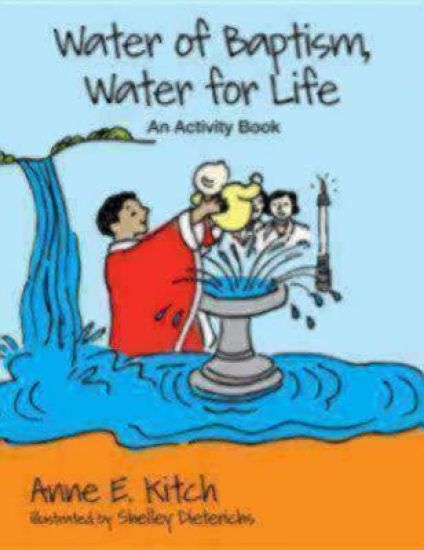
Water of Baptism, Water for Life

Water of Baptism, Water for Life

Anne E. Kitch

Morehouse Publishing
2012
pokkari
Water for Life is an illustrated activity book for 8-11 year olds (although adults will also find it informative) and families. It can be used in an educational or devotional setting at home, church, or school. Water connects all physical and spiritual life. Besides being essential for life, water is the visible sign of Baptism, which calls us to serve others in the world. Having clean water for all God’s children is an act of justice, love, respect and a core value of what it means to be a Christian. These illustrated workbook activities tap into multiple learning levels and offer a variety of ways for children to interact with this core value of our faith, making a direct connection for young people between their faith and daily life. Activities also connect clean water and the Millennium Development Goals.
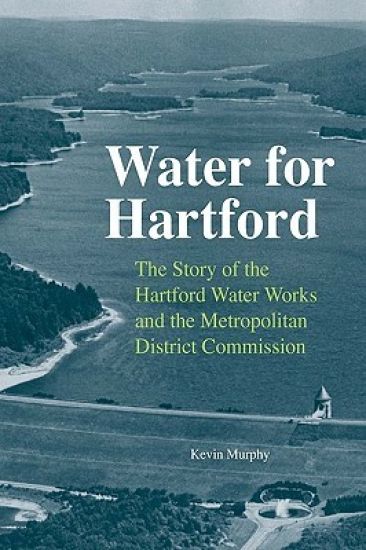
Water for Hartford

Water for Hartford

Kevin Murphy

Wesleyan University Press
2010
sidottu
As good health is inextricably wedded to pure drinking water-and this particular concern looms larger every day-understanding delivery systems is almost as important as the water itself. Water for Hartford chronicles the century-long effort, beginning in the 1850s, to construct a viable, efficient water system. The story of Hartford's water works is a fascinating one, for it recalls the hard work, great sacrifice, and extraordinary engineering feats necessary to deliver wholesome drinking water to a growing urban center. It also illuminates the ever-changing social, political, and economic milieu in which it was built.The story of its construction is also the story of three men-Hiram Bissell, Ezra Clark, and Caleb Saville. Readers are transported back in time and given a firsthand glimpse of what these champions of a water system faced on a daily basis: unforgiving geography, venal politicians, and an often-indifferent public. The book culminates in the exhilaration of having built a water works from scratch to deliver clean, safe drinking water to the masses. Water for Hartford is a human story, peopled by men of vision and achievement, who understood that their decisions and actions would affect millions of people for decades to come.
Walter Kasper's Response to Modern Atheism

Walter Kasper's Response to Modern Atheism

Ralph N. McMichael

Peter Lang Publishing Inc
2006
sidottu
The development and pervasiveness of modern atheism as well as secularization poses an acute challenge to Christian theology. Theologians have either ignored this challenge or have sought to meet it in a variety of ways. Throughout his theological career, Walter Kasper (1933-) has maintained that theology has the mutual tasks of exposition of the Christian faith and of responding to contemporary challenges to this faith. In his seminal work The God of Jesus Christ (1982), he argues that the proper Christian response to modern atheism is the confession of the Trinity. In making this response, Kasper begins to chart a course for all future Christian apologetics, for all efforts to give an account of Christian hope (1 Peter 3:15).
Water Quality Modeling

Water Quality Modeling

Mervin D. Palmer

World Bank Publications
2001
nidottu
Presenting a review of the state of water quality prediction models currently available to the practitioner, this book provides a broad-based understanding of the water quality prediction process and evaluates the merits and cost effectiveness in using water quality models under field conditions. This book builds on and revises the chapter on water quality modelling from the World Bank's Pollution Prevention and Abatement Handbook 1998. Surface water quality is a key to life, yet in many developing countries municipal and industrial pollution continues to pervade sources due to competing demands on scarce resources. Elementary environmental controls are being applied, but the optimal allocation of limited financial resources requires sophisticated analytical approaches. This volume provides an introduction to analytical tools, specifically water quality modelling, used in determining the quality of surface waters.
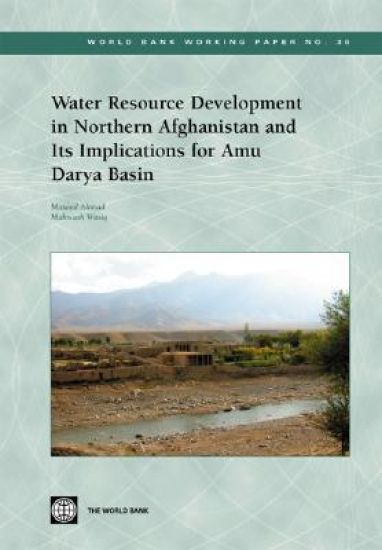
Water Resource Development in Northern Afghanistan and Its Implications for Amu Darya Basin
Water Resource Development in Northern Afghanistan and its Implications for Amy Darya Basin is part of the World Bank Working Paper series. These papers are published to communicate the results of the Bank's ongoing research and to stimulate public discussion. Development of water resources are critically important for economic development of Afghanistan. This report provides an understanding of Afghanistan's water resources in the northern areas of the country, falling under the Amu Darya basin. The focus of the report is the Amu Darya basin because great gains can be attained by moderate investments in rehabilitation of existing schemes, thus providing and improving livelihood of millions of inhabitants in the northern areas of Afghanistan. The report provides analysis of potential basin wide impact as a result of rehabilitation of irrigation systems in Afghanistan's Amu Darya basin.
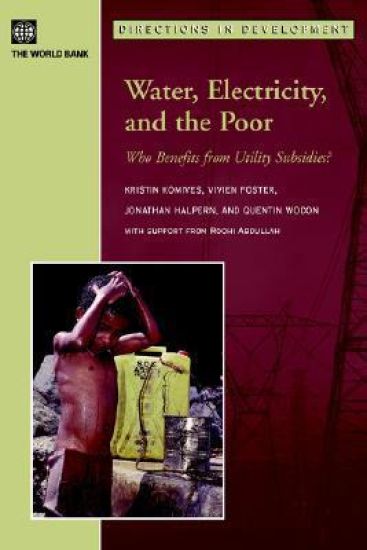
Water, Electricity, and the Poor

Water, Electricity, and the Poor

Kristin Komives; Vivien Foster; Jonathan Halpern; Quentin Wodon

World Bank Publications
2005
nidottu
While consumer utility subsidies are widespread in both the water and electricity sectors, their effectiveness in reaching and distributing resources to the poor is the subject of much debate. Water, Electricity, and the Poor brings together empirical evidence on subsidy performance across a wide range of countries. It documents the prevalence of consumer subsidies, provides a typology of the many variants found in the developing world, and presents a number of indicators useful in assessing the degree to which such subsidies benefit the poor, focusing on three key concepts: beneficiary incidence, benefit incidence, and materiality. The findings on subsidy performance will be useful to policy makers, utility regulators, and sector practitioners who are contemplating introducing, eliminating, or modifying utility subsidies, and to those who view consumer utility subsidies as a social protection instrument.
Water and Development

Water and Development

World Bank Publications
2010
nidottu
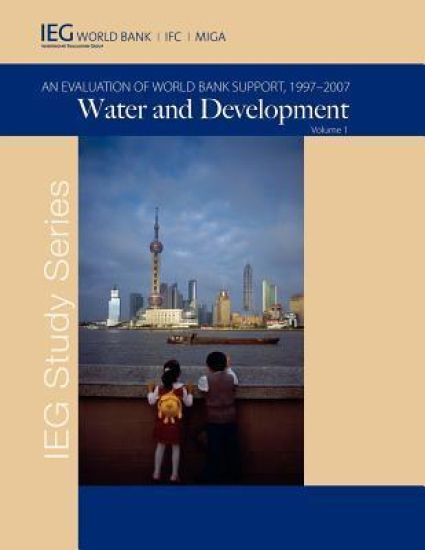
Development patterns, increasing population pressure, and the demand for better livelihoods in many parts of the globe all contribute to a steadily deepening global water crisis. Development redirects, consumes, and pollutes water. It also causes changes in the state of natural water reservoirs, directly by draining aquifers and indirectly by melting glaciers and the polar ice caps. Maintaining a sustainable relationship between water and development requires that current needs be balanced against the needs of future generations. The development community has transformed and broadened its approach to water since the 1980s. As stresses on the quality and availability of water have increased, donors have begun to move toward more comprehensive approaches that seek to integrate water into development in other sectors. This evaluation examines the full scope of the World Bank's lending and grant support for water activities. More than 30 background papers prepared for the evaluation have analyzed Bank lending by thematic area and by activity type. IDA and IBRD (the Bank) have supported countries in many water-related sectors. The evaluation, by definition, is retrospective, but it identifies changes that will be necessary going forward, including those related to strengthening institutions and increasing financial sustainability. Lessons and results from nearly 2,000 loans and credits, and work with 142 countries are identified.
Water Brings No Harm

Water Brings No Harm

Matthew V. Bender

Ohio University Press
2019
sidottu
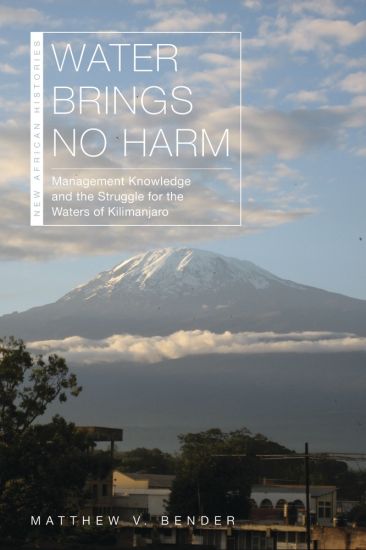
In Water Brings No Harm, Matthew V. Bender explores the history of community water management on Mount Kilimanjaro in Tanzania. Kilimanjaro's Chagga-speaking peoples have long managed water by employing diverse knowledge: hydrological, technological, social, cultural, and political. Since the 1850s, they have encountered groups from beyond the mountain—colonial officials, missionaries, settlers, the independent Tanzanian state, development agencies, and climate scientists—who have understood water differently. Drawing on the concept of waterscapes—a term that describes how people "see" water, and how physical water resources intersect with their own beliefs, needs, and expectations—Bender argues that water conflicts should be understood as struggles between competing forms of knowledge. Water Brings No Harm encourages readers to think about the origins and interpretation of knowledge and development in Africa and the global south. It also speaks to the current global water crisis, proposing a new model for approaching sustainable water development worldwide.
Water Brings No Harm

Water Brings No Harm

Matthew V. Bender

Ohio University Press
2019
pokkari
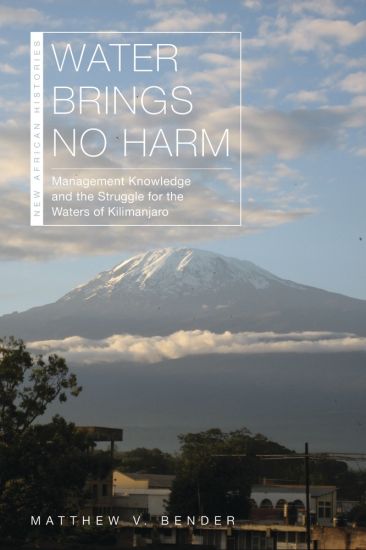
In Water Brings No Harm, Matthew V. Bender explores the history of community water management on Mount Kilimanjaro in Tanzania. Kilimanjaro's Chagga-speaking peoples have long managed water by employing diverse knowledge: hydrological, technological, social, cultural, and political. Since the 1850s, they have encountered groups from beyond the mountain—colonial officials, missionaries, settlers, the independent Tanzanian state, development agencies, and climate scientists—who have understood water differently. Drawing on the concept of waterscapes—a term that describes how people "see" water, and how physical water resources intersect with their own beliefs, needs, and expectations—Bender argues that water conflicts should be understood as struggles between competing forms of knowledge. Water Brings No Harm encourages readers to think about the origins and interpretation of knowledge and development in Africa and the global south. It also speaks to the current global water crisis, proposing a new model for approaching sustainable water development worldwide.